DUBAI, United Arab Emirates (AP) — Iran's supreme leader said Thursday that the Islamic Republic will protect its “nuclear and missile capabilities” as a national asset, likely seeking to draw a hard line as U.S. President Donald Trump seeks a wider deal to cement the shaky ceasefire now holding in the war.
Ayatollah Mojtaba Khamenei, speaking in a written statement read by a state television anchor as he has since taking over as Iran's supreme leader, struck a defiant tone, insisting the only place Americans belonged in the Persian Gulf is “at the bottom of its waters" and that a “new chapter” was being written in the region's history.
Click to Gallery
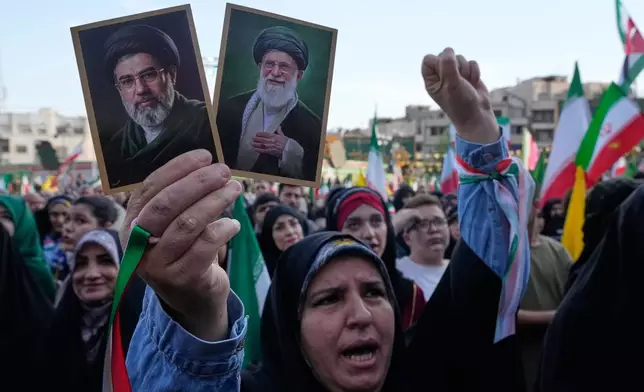
A woman holds up pictures of the Iranian Supreme Leader Ayatollah Mojtaba Khamenei, left, and his father, the slain Ayatollah Ali Khamenei in a state-organised rally celebrating the birthday of Imam Reza, the 8th Shiite Muslims' Imam, and supporting the supreme leader, in Tehran, Iran, Wednesday, April 29, 2026. (AP Photo/Vahid Salemi)
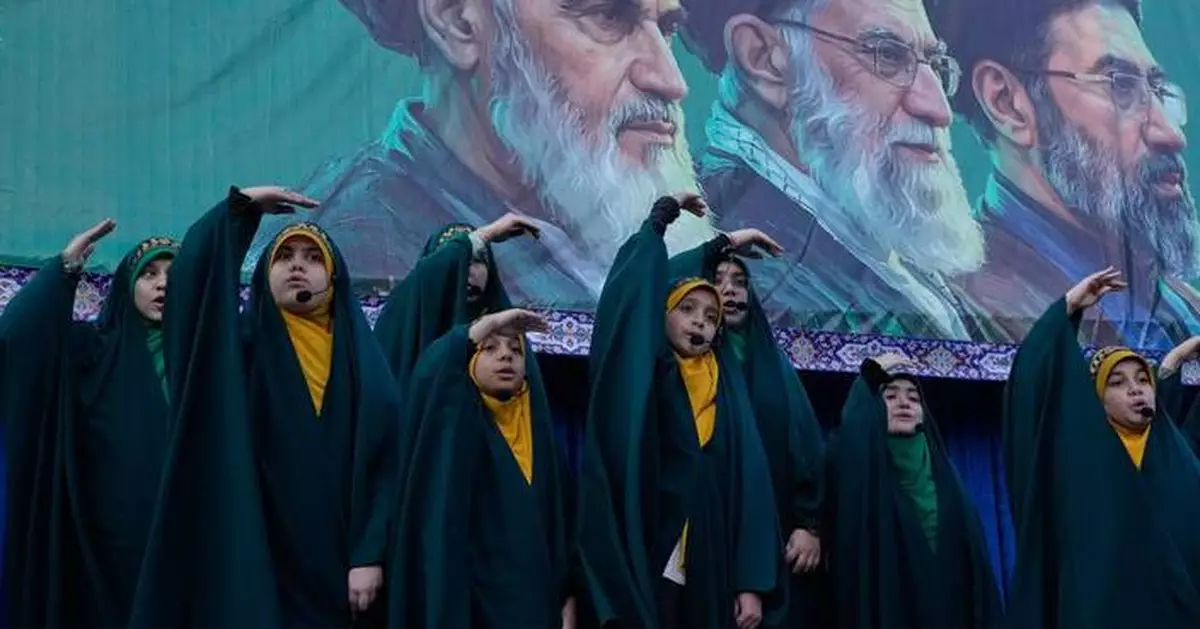
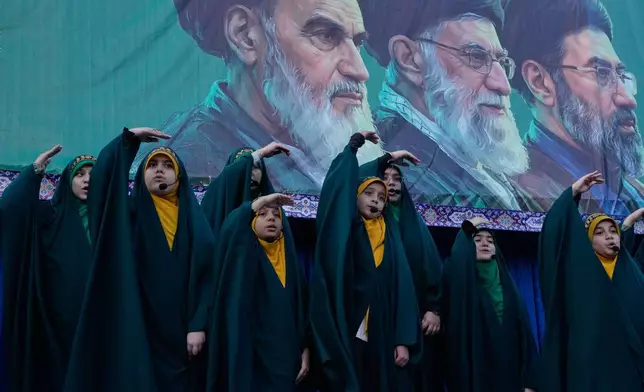
Girls sing a song as they show the movement of missiles with their hands next to the portraits of the late Iranian revolutionary founder Ayatollah Khomeini, left, late Supreme Leader Ayatollah Ali Khamenei, center, and Supreme Leader Ayatollah Mojtaba Khamenei, in a state-organised rally celebrating the birthday of Imam Reza, the 8th Shiite Muslims' Imam, and supporting the supreme leader, in Tehran, Iran, Wednesday, April 29, 2026. (AP Photo/Vahid Salemi)
A woman holds up pictures of the Iranian Supreme Leader Ayatollah Mojtaba Khamenei, left, and his father, the slain Ayatollah Ali Khamenei in a state-organised rally celebrating the birthday of Imam Reza, the 8th Shiite Muslims' Imam, and supporting the supreme leader, in Tehran, Iran, Wednesday, April 29, 2026. (AP Photo/Vahid Salemi)
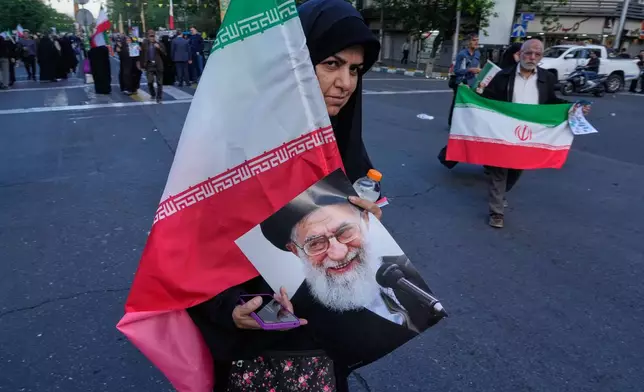
A woman carries an Iranian flag and a poster of the late Supreme Leader Ayatollah Ali Khamenei during a state-organised rally in Tehran, Iran, Wednesday, April 29, 2026, celebrating the birthday of Imam Reza, the 8th Shiite Muslims' Imam, and supporting Supreme Leader Ayatollah Mojtaba Khamenei. (AP Photo/Vahid Salemi)
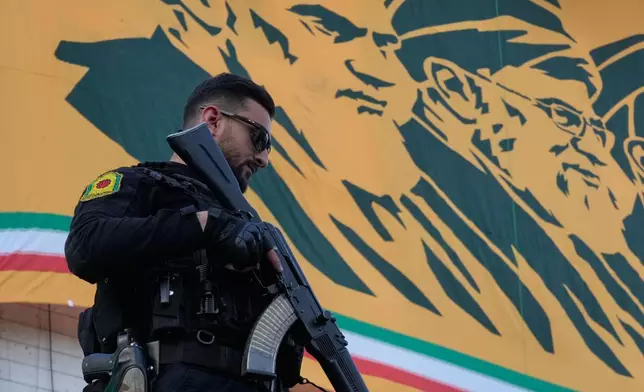
A police officer stands guard in front of a banner with portraits of the late Iranian revolutionary founder Ayatollah Khomeini, left, and late Supreme Leader Ayatollah Ali Khamenei in a state-organised rally celebrating the birthday of Imam Reza, the 8th Shiite Muslims' Imam, and supporting the supreme leader, in Tehran, Iran, Wednesday, April 29, 2026. (AP Photo/Vahid Salemi)
Girls sing a song as they show the movement of missiles with their hands next to the portraits of the late Iranian revolutionary founder Ayatollah Khomeini, left, late Supreme Leader Ayatollah Ali Khamenei, center, and Supreme Leader Ayatollah Mojtaba Khamenei, in a state-organised rally celebrating the birthday of Imam Reza, the 8th Shiite Muslims' Imam, and supporting the supreme leader, in Tehran, Iran, Wednesday, April 29, 2026. (AP Photo/Vahid Salemi)
However, his remarks come as Iran's oil industry has begun to be squeezed by a U.S. Navy blockade halting its oil tankers from getting out to sea. Meanwhile, benchmark Brent crude for June delivery reached as much as $126 a barrel in trading on Thursday as Iran maintains its chokehold on the Strait of Hormuz, the narrow mouth of the Persian Gulf through which a fifth of all crude oil and natural gas traded passes.
All this is putting additional pressure on the world's economy as Trump likely weighs how to respond.
“By God’s help and power, the bright future of the Persian Gulf region will be a future without America, one serving the progress, comfort and prosperity of its people,” Khamenei said. He reportedly was wounded in the Feb. 28 attack that killed his father, the 86-year-old Supreme Leader Ayatollah Ali Khamenei.
“We and our neighbors across the waters of the Persian Gulf and the (Gulf) of Oman share a common destiny. Foreigners who come from thousands of kilometers away to act with greed and malice there have no place in it — except at the bottom of its waters.”
With a fragile ceasefire in place, the U.S. and Iran are locked in a standoff over the strait. The U.S blockade is designed to prevent Iran from selling its oil, depriving it of crucial revenue while also potentially creating a situation where Tehran has to shut off production because it has nowhere to store oil.
The strait’s closure, meanwhile, has put pressure on Trump, as oil and gasoline prices have skyrocketed ahead of crucial midterm elections, and it has pressured his Gulf allies, which use the waterway to export their oil and gas.
A recent Iranian proposal would push negotiations on the country’s nuclear program to a later date. Trump said one of the major reasons he went to war was to deny Iran the ability to develop nuclear weapons. Iran long has maintained its program is peaceful, though it enriched uranium at near-weapons-grade levels of 60%.
Speaking to mark Persian Gulf Day in Iran, Khamenei's remarks signaled that nuclear issues and Iran's ballistic missile program wouldn't be traded away.
“Ninety million proud and honorable Iranians inside and outside the country regard all of Iran’s identity-based, spiritual, human, scientific, industrial and technological capacities — from nanotechnology and biotechnology to nuclear and missile capabilities — as national assets, and will protect them just as they protect the country’s waters, land and airspace,” Khamenei said.
He referred to America as the “Great Satan,” a long hurled insult by Iranian leaders toward the U.S. since the 1979 Islamic Revolution.
In his remarks, Khamenei seemed to signal Iran would maintain its control over the waterway, which sits in the territorial waters of Iran and Oman. Iran had been charging some ships reportedly $2 million apiece to travel through the strait.
He said that Iran's control of the Strait of Hormuz will make the Gulf more secure, and that Tehran's “legal rules and new management” of the strait will benefit all the region’s nations.
However, the world considered the strait an international waterway, open to all without paying tolls. Gulf Arab nations, chief among them the United Arab Emirates, have decried Iran's control of the strait as akin to piracy.
Associated Press writer Amir Vahdat in Tehran, Iran, contributed to this report.
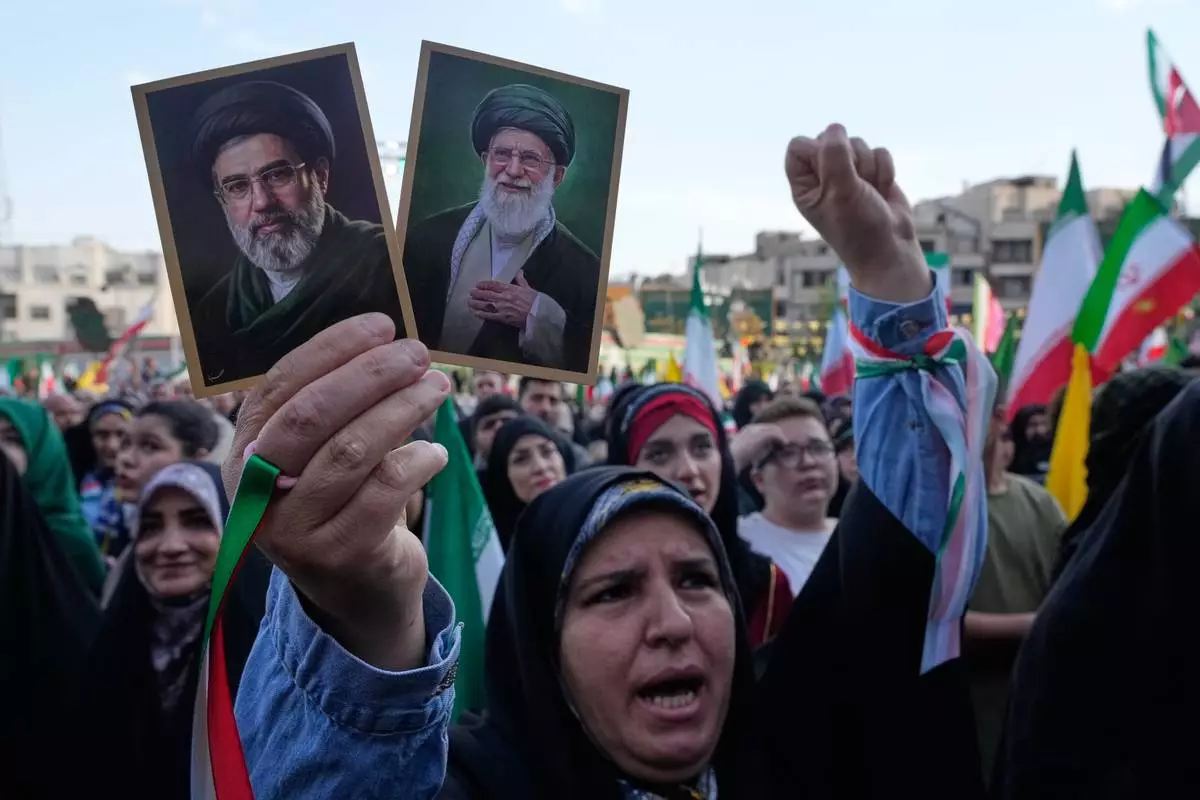
A woman holds up pictures of the Iranian Supreme Leader Ayatollah Mojtaba Khamenei, left, and his father, the slain Ayatollah Ali Khamenei in a state-organised rally celebrating the birthday of Imam Reza, the 8th Shiite Muslims' Imam, and supporting the supreme leader, in Tehran, Iran, Wednesday, April 29, 2026. (AP Photo/Vahid Salemi)
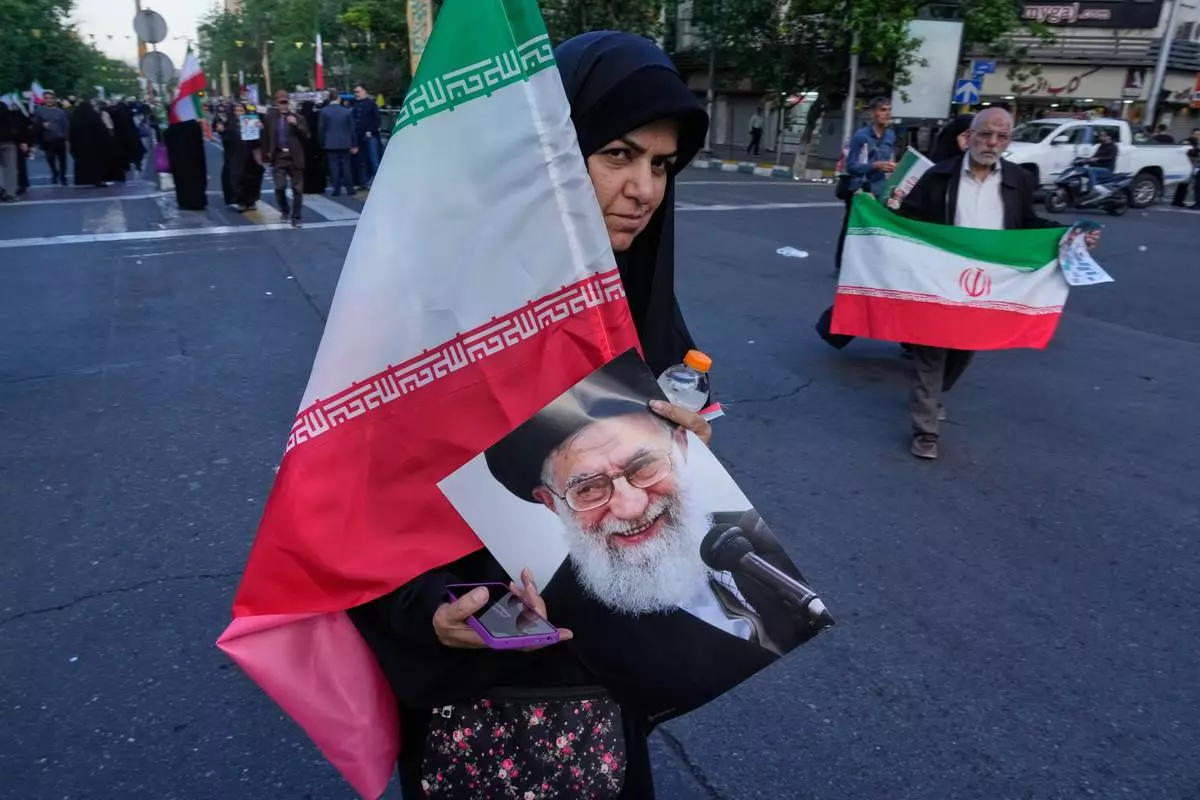
A woman carries an Iranian flag and a poster of the late Supreme Leader Ayatollah Ali Khamenei during a state-organised rally in Tehran, Iran, Wednesday, April 29, 2026, celebrating the birthday of Imam Reza, the 8th Shiite Muslims' Imam, and supporting Supreme Leader Ayatollah Mojtaba Khamenei. (AP Photo/Vahid Salemi)
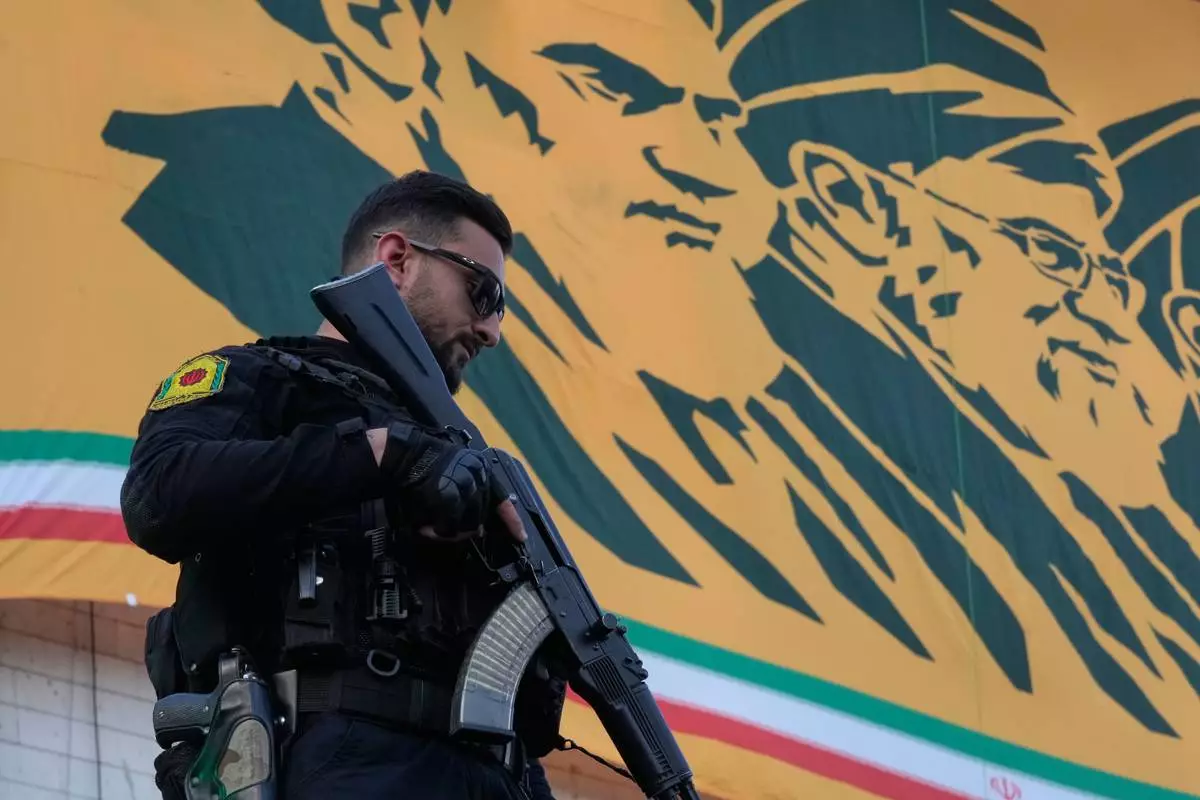
A police officer stands guard in front of a banner with portraits of the late Iranian revolutionary founder Ayatollah Khomeini, left, and late Supreme Leader Ayatollah Ali Khamenei in a state-organised rally celebrating the birthday of Imam Reza, the 8th Shiite Muslims' Imam, and supporting the supreme leader, in Tehran, Iran, Wednesday, April 29, 2026. (AP Photo/Vahid Salemi)
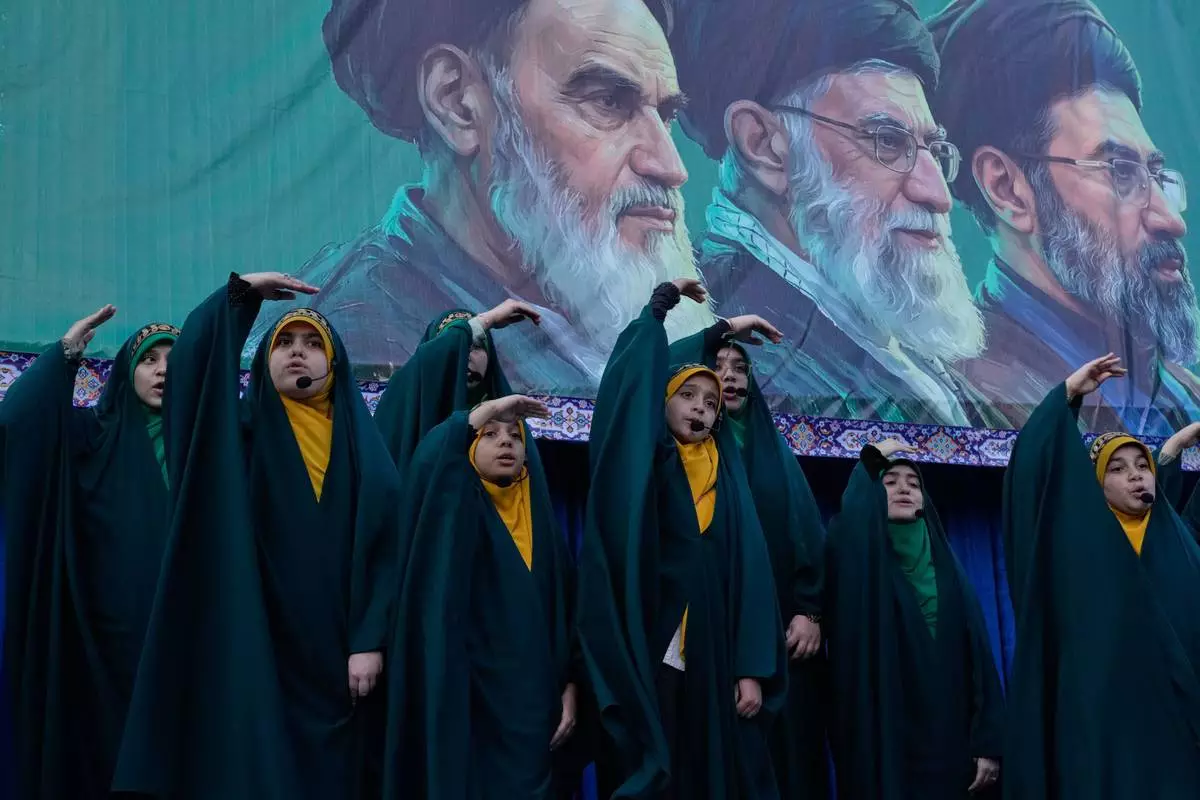
Girls sing a song as they show the movement of missiles with their hands next to the portraits of the late Iranian revolutionary founder Ayatollah Khomeini, left, late Supreme Leader Ayatollah Ali Khamenei, center, and Supreme Leader Ayatollah Mojtaba Khamenei, in a state-organised rally celebrating the birthday of Imam Reza, the 8th Shiite Muslims' Imam, and supporting the supreme leader, in Tehran, Iran, Wednesday, April 29, 2026. (AP Photo/Vahid Salemi)
HARET SAIDA, Lebanon (AP) — The warnings to flee come suddenly: Texts pinging thousands of phones, automated calls from strange numbers, hard-to-read maps shared on social media by an Israeli military spokesperson.
Some maps cover broad swaths of Lebanon; others show specific buildings. Sometimes there is no warning at all before strikes, which have continued despite a nominal ceasefire between Israel and the Iran-backed Hezbollah militant group.
The warnings cause a rush to collect children and older relatives, and leave families with agonizing choices as they race for the blurry edges of the red-shaded maps. Entire villages have emptied, with over a million people fleeing at the height of the fighting. Unlike Israel, Lebanon has no air raid sirens or missile defenses, and no designated bomb shelters.
Israel says the warnings aim to keep civilians out of harm's way. It says Hezbollah has positioned fighters, tunnels and weapons in civilian areas across southern Lebanon, from which it has launched hundreds of drones and missiles — without warning — into northern Israel.
International law experts say Israel's warnings are inconsistent and often overly broad and open-ended. They also come as Israel says it plans to occupy a 10 kilometer (6-mile) wide buffer zone along the border and prevent people from returning until the threat from Hezbollah has been eliminated.
The latest war erupted on March 2, when, after holding its fire since a 2024 truce, Hezbollah launched a surprise barrage of missiles into northern Israel in retaliation for the United States and Israel attacking Iran.
Israel has posted 132 online alerts since then — including seven covering over 50 towns in southern Lebanon since the ceasefire took effect on April 17.
Residents say the narrowly targeted warnings often come with short notice, causing chaos and confusion.
Ward Zein al-Din, 56, said that she heard glass shatter from shrapnel just minutes after her father received a call from the Israeli military that made him scream. They have since fled their southern village and taken shelter in a school. “I didn’t think we would survive,” she said.
Then there are the maps shared on social media by Israel's Arabic-speaking military spokesperson, Lt. Col. Avichay Adraee, urging the entire population to relocate north of the Litani River, some 30 kilometers (20 miles) from the border, and in some cases even further north.
His blanket warnings also emptied out Beirut's crowded southern suburbs, where Hezbollah has a strong presence, though many people have since returned. Large numbers of people remain displaced across the country, including over 115,000 in collective shelters, according to United Nations spokesperson Stephane Dujarric.
“A legal tool is being used to achieve forced displacement,” said Hussein Badreddine, a Lebanese expert in international law at the University of Sydney. “When you evacuate entire areas and keep the orders open-ended, that’s when the legality comes into question.”
In response to numerous questions, the Israeli military said it issues warnings by phone, text, radio broadcast, social media and leaflets dropped from the air, in accordance with the “principles of distinction, proportionality and feasible precautions” under international law.
There was no warning on April 8, when Israel struck a hundred targets in rapid succession, killing more than 350 people, including in downtown Beirut. It was one of the deadliest attacks in Lebanon's troubled history.
The military said Hezbollah commanders and operatives “were expected to be present at many of the sites.” It remains unclear how many Hezbollah members were killed. More than 100 of those killed were women and children.
There have also been warnings without strikes. Earlier this month, Israel warned it would attack the main border crossing between Lebanon and Syria, forcing it to close for several days. The strike never came.
Airstrikes shook the village of Kafr Tebnit when the war broke out. Adraee posted on X that residents should move to “no less than 1,000 meters (yards) outside the village.”
Hussein Farran headed to the city of Nabatiyeh, where he works for an electricity company. His wife, Rola Nahleh, and their 4-year-old daughter, Amal, joined relatives in Kfar Hatta, some 17 kilometers (10 miles) outside Adraee's red zone.
A month later, at 11:29 p.m. on April 4, Adraee called on residents to leave Kfar Hatta. It was one of 26 urgent warnings throughout the war posted between 10:30 p.m. and 6:30 a.m.
“When warnings are issued in the middle of the night, on platforms that not everyone uses, you can't expect everyone to get up and leave immediately,” said Kristine Beckerle of Amnesty International. “You have people stuck on the road for 12, 13 hours trying to leave. You have elderly people who can't move quickly.”
Nahleh told her husband by phone that hundreds of people were fleeing, many wearing their pajamas. They agreed it was safest to wait out the chaos until daybreak.
Two Israeli missiles hit their apartment at around 3 a.m., killing Nahleh, her mother, father, brother, sister and Amal, who had just started kindergarten.
“Even if they gave us a warning, how does it justify killing a civilian family?” Farran asked, gazing at their graves — cardboard signs smeared with handwritten Arabic because the war has made a proper burial in their village impossible.
“They weren't given a real chance,” he said.
At first, Ali al-Salim thought it was a prank call, or a scammer trying to rob his abandoned house, as happened to his family during a previous war. The country code said Germany, but the caller identified himself as an Israeli officer and told al-Salim to evacuate north immediately.
As airstrikes inched closer, al-Salim, his wife and three sons fled their southern village of Siddiqin and arrived at a school in Haret Saida after 18 hours in bumper-to-bumper traffic.
Analysts say the Israeli military often uses randomly generated international numbers since phone calls are not permitted between the two countries, technically at war for decades.
“There is no way to know if a call is real or fake,” said Roland Abi Najem, a Lebanese cybersecurity expert. “The Israeli military benefits from the chaos that helps create a mass exodus.”
The military declined to comment on how it calls Lebanese numbers.
Several days after fleeing, al-Salim heard that his home was hit by an Israeli missile. The shelter proved just as dangerous.
One of the targets that Israel hit without warning on April 8 was a neighboring Shiite mosque, where displaced people took showers. The explosion knocked al-Salim’s 14-year-old son, Ali, unconscious and shredded his left leg.
“The bombing can happen at any moment. There is no safety at all,” said Ali, now using crutches. “I've never felt this kind of fear.”
The ceasefire has done little to dispel it.
Forced to flee his southern hometown of Shaqra at the start of the war, Mohammad Shahadat waited a week into the ceasefire to return. Encouraged by neighbors who said the situation was calm, he made the journey home last week.
Days later, he was back in a flimsy tent in Beirut after another Israeli warning.
“We didn't know where to go,” he said.
Associated Press journalist Bassam Hatoum contributed.
This version corrects the number of people displaced in collective shelters in Lebanon to over 115,000, not over 150,000
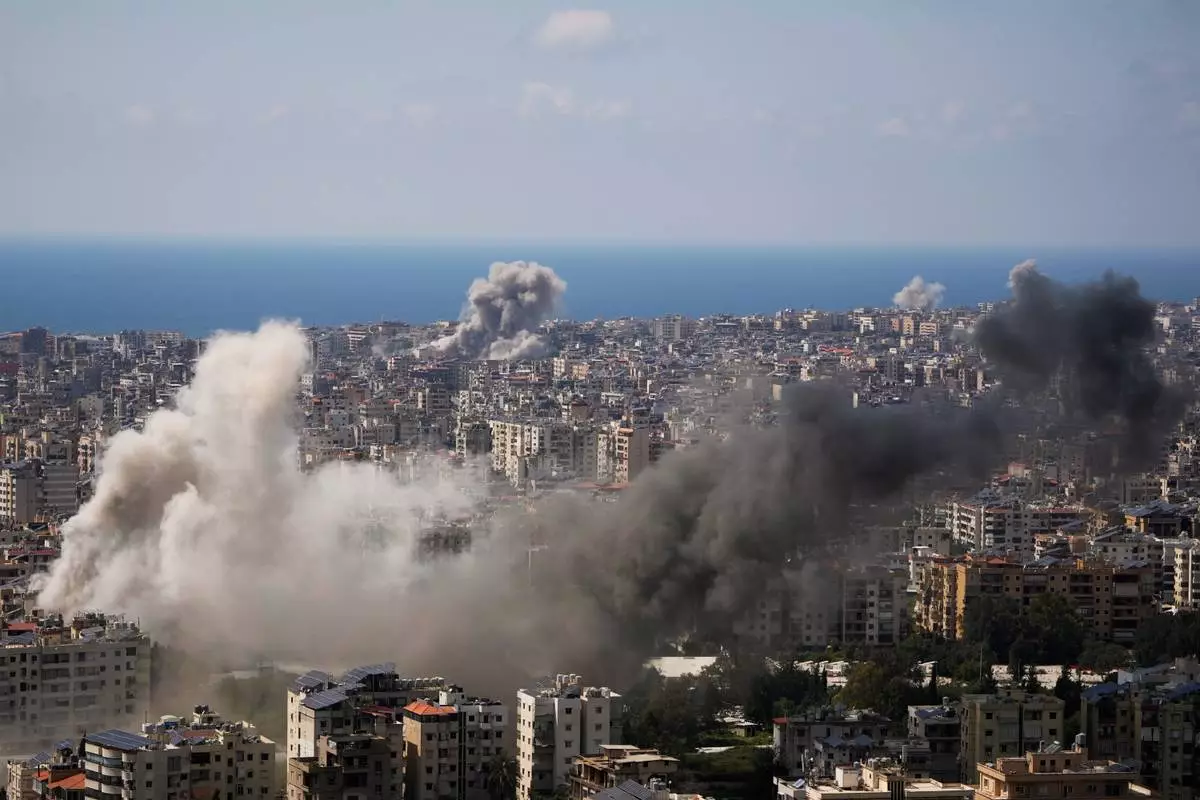
FILE - Smoke rises following several Israeli airstrikes that hit without previous warning Beirut's southern suburbs and central Beirut, Lebanon, Wednesday, April 8, 2026. (AP Photo/Hassan Ammar, File)
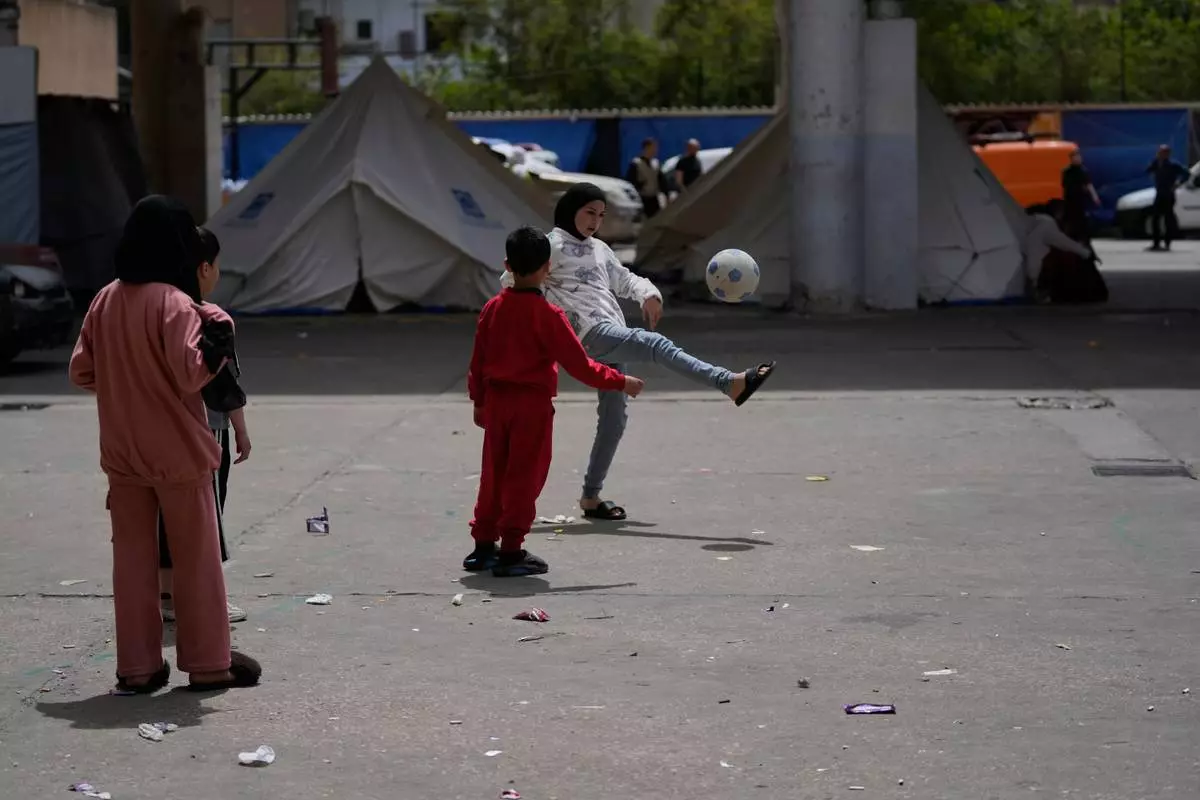
Displaced children play with a ball at a school backyard that turned into a shelter for people who fled the Israeli airstrikes on their villages, in the southern port city of Sidon, Lebanon, Tuesday, April 14, 2026. (AP Photo/Mohammed Zaatari)
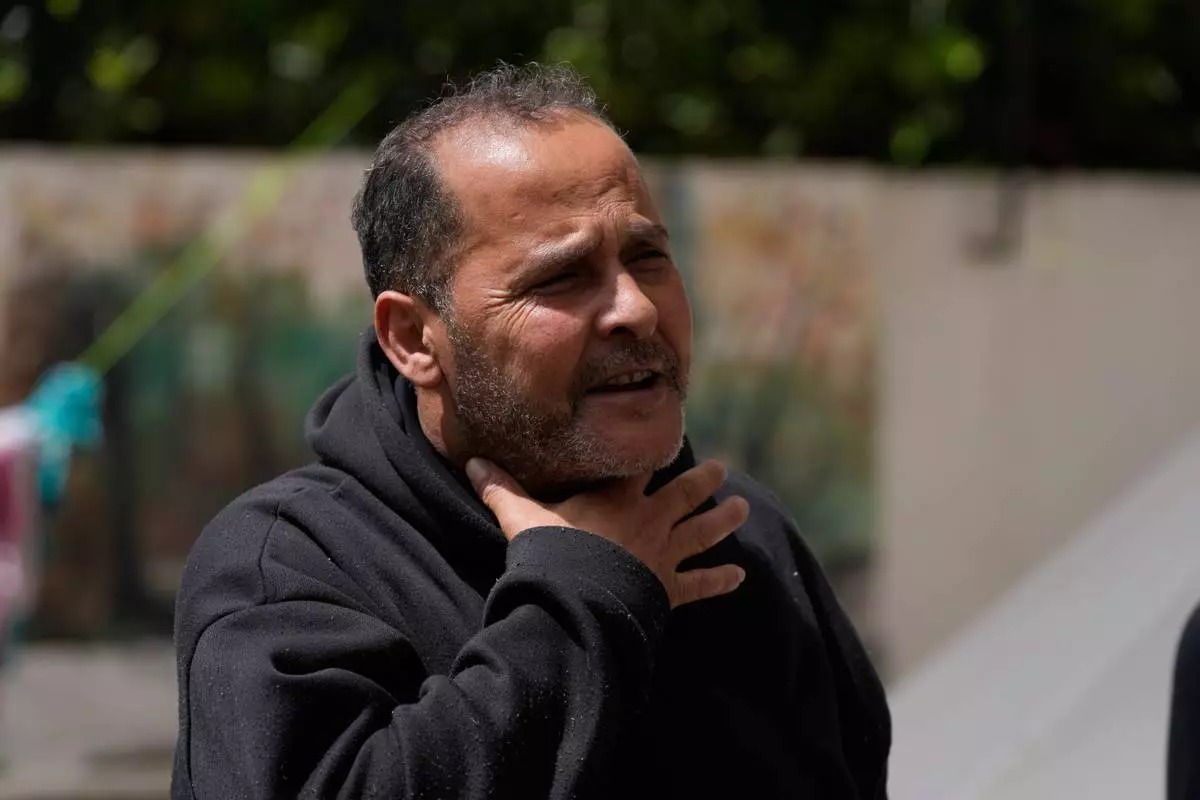
Ali al-Salim, who fled his southern hometown of Siddiqin for a school shelter in Haret Saida after an anonymous caller identifying himself as from the Israeli military urged him to flee, gestures during an interview with the Associated Press in the southern port city of Sidon, Lebanon, Tuesday, April 14, 2026. (AP Photo/Mohammed Zaatari)
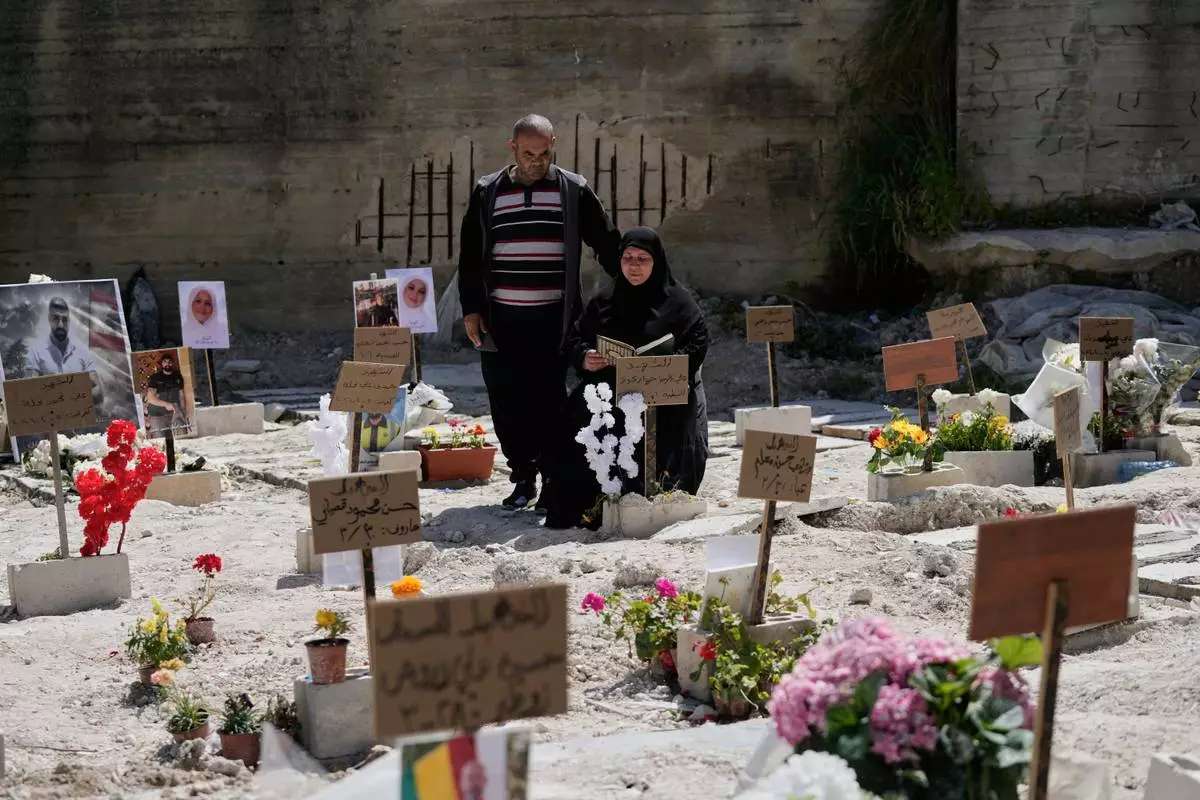
Zeinab Zeitoun, 50, right, and her husband Mohammed Farran, 60, whose six members of their family were killed in a an Israeli airstrike in Kfar Hatta village, visit their graves at a cemetery where civilians and Hezbollah fighters temporary buried in the southern port city of Sidon, Lebanon, Tuesday, April 14, 2026. (AP Photo/Mohammed Zaatari)
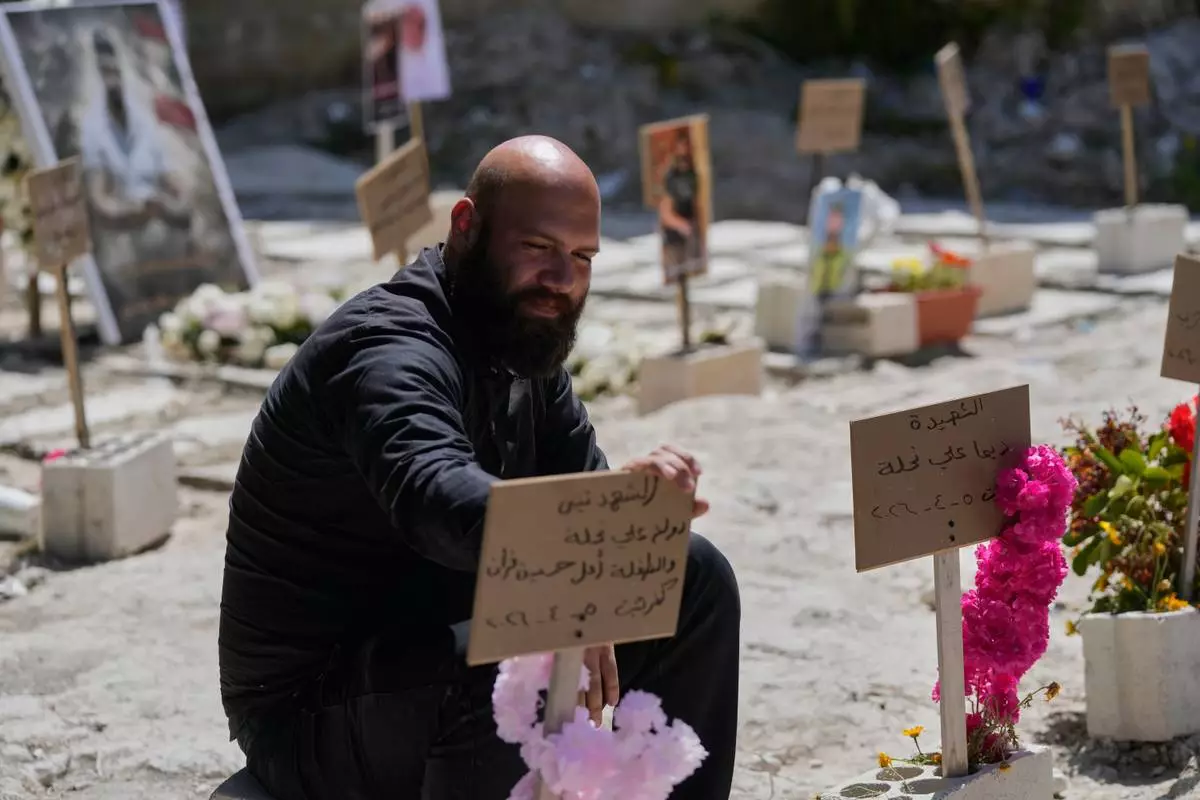
Hussein Farran whose six members of his family were killed in a Israeli airstrike in Kfar Hatta village, visits their graves at a cemetery where civilians and Hezbollah fighters are temporary buried in the southern port city of Sidon, Lebanon, Tuesday, April 14, 2026. (AP Photo/Mohammed Zaatari)