MUNSTER, Germany (AP) — President Donald Trump has again threatened that the United States could reduce its military presence in Germany, a key NATO ally and the European Union’s largest economy. Europeans have heard this before.
Trump's social media post on Wednesday followed comments by Chancellor Friedrich Merz that the U.S. was being “ humiliated ” by Tehran as it slow-walks its diplomacy over the U.S.-Israel war against Iran.
Trump has mused for years about reducing America's military presence in Germany, and has recently repeatedly railed against NATO for the its refusal to assist the U.S. in its two-month-old war.
U.S. allies at NATO have been waiting for the Trump administration to pull troops out since just after it came to office, warning that Europe would have to look after its own security, and that of Ukraine, in future.
Depending on operations, exercises and troop rotations, around 80,000-100,000 U.S. personnel are usually stationed in Europe. NATO allies have expected that U.S. troops deployed after Russia launched its war on Ukraine in 2022 would be first to leave.
Germany hosts several U.S. military facilities, including the headquarters of its European and Africa commands, Ramstein Air Base and a medical center in Landstuhl, where casualties from U.S. wars in places like Afghanistan and Iraq are treated. U.S. nuclear missiles are also stationed in the country.
Ed Arnold, an expert in European security at the Royal United Services Institute in London, said the U.S. gets a lot out of its presence in Germany — like logistics and support for Middle East combat operations — and was unlikely to withdraw.
Trump’s post is most likely “bluster,” he said.
“There is a difference between the military view and the political view,” Arnold said. “The issue with some of these threats is that they are not quite as galling as they were a couple of years ago.”
NATO and the German government did not immediately comment.
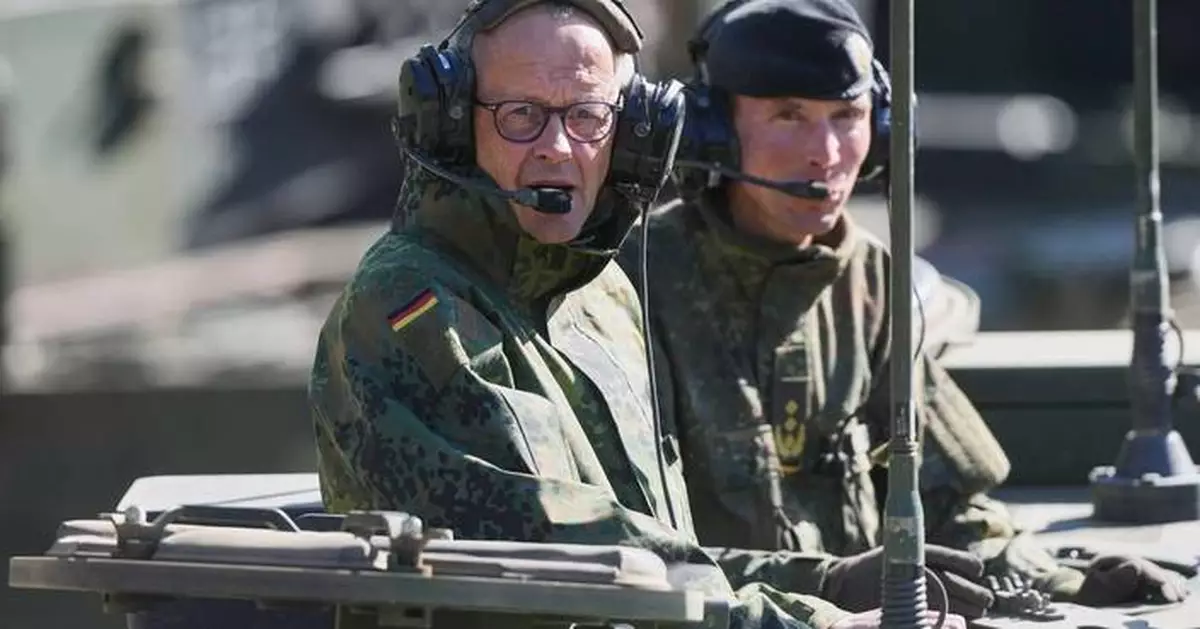
Merz, visiting troops at a military training area in Munster, northern Germany, on Thursday, did not directly address Trump’s comments, but alluded to working “shoulder to shoulder for mutual benefit and in deep trans-Atlantic solidarity,” and said his government over the last year has “made great efforts to strengthen Germany’s security.”
RUSI’s Arnold said Europe is more concerned about issues like a U.S. redeployment of Patriot missile systems and ammunition from Germany to the Middle East, and notifications to NATO countries such as Estonia that orders for American weapons will be delayed as the U.S. government is prioritized.
A senior Western official told The Associated Press they were not aware of any discussions between the U.S. and Germany or other allies regarding the possibility of troop reductions in Germany.
The official, who spoke on condition of anonymity to discuss sensitive matters, noted that Europe and Germany, which recently announced its new military strategy, is taking more responsibility for security on the continent.
Last October the U.S. confirmed that it would reduce its troop presence on NATO’s borders with Ukraine. The move to cut 1,500-3,000 troops came on short notice and unsettled ally Romania where the military organization runs an air base.
The U.S. administration informed the allies early last year that it has been reviewing its military “posture” in Europe and elsewhere. The findings of that review had been due to be made public in late 2025 but still have not surfaced.
However, the U.S. did commit to inform its allies in advance about any changes to ensure that no security gap is created at a time when Russia is increasingly confrontational.
Many European leaders believe that Russian President Vladimir Putin might try to launch an attack elsewhere in Europe by the end of the decade, especially if he wins his war on Ukraine.
The U.S.-Israel war on Iran only made the prospect of a withdrawal more likely, and a flurry of meetings has been held between administration officials, NATO Secretary-General Mark Rutte and European leaders since the conflict started on Feb. 28.
Over the last year, European allies and Canada have understood that they will have to provide Europe’s conventional defenses. The main U.S. contribution to NATO deterrence going forward will be the presence of American nuclear weapons and some troops.
The Trump administration has previously caused confusion in Europe with announcements of changes to defense support.
In September, plans to halt some security assistance funding to European countries along the border with Russia were greeted with confusion as some Baltic defense leaders said they had not received official notification.
Beyond the uncertainty over U.S. personnel, the allies have gotten used to Trump’s outbursts, having weathered insults as “cowards” or hearing NATO branded as a “paper tiger” by their most powerful ally in recent weeks.
Repeated threats to leave altogether, or over things like defense spending, have inured them to social media posts that Trump might be considering some action or another.
The real damage to NATO unity was done by Trump’s fixation on Greenland, and his intent to annex the island, which is a semiautonomous part of ally Denmark, including sending family members and administration officials there.
Burrows reported from London and Cook from Brussels. Jamey Keaten in Geneva contributed to this report.
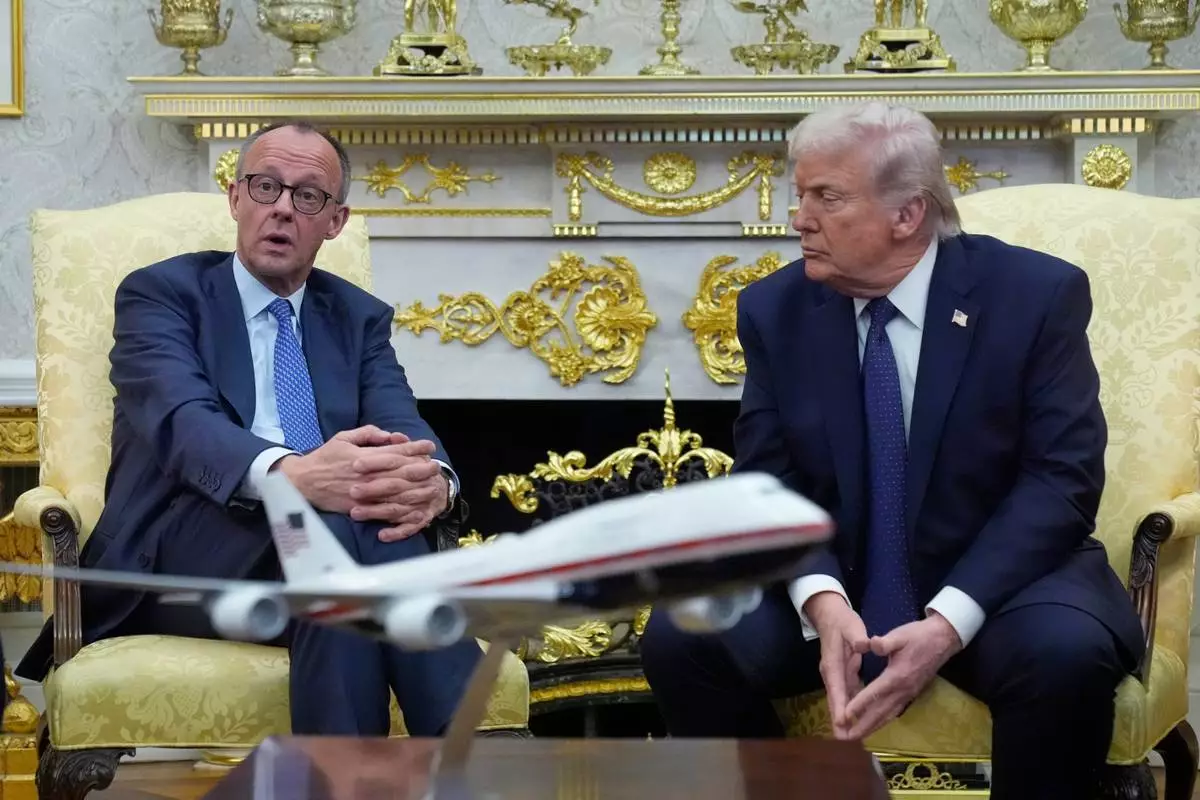
FILE - President Donald Trump meets with German Chancellor Friedrich Merz in the Oval Office at the White House, March 3, 2026, in Washington. (AP Photo/Mark Schiefelbein, File)
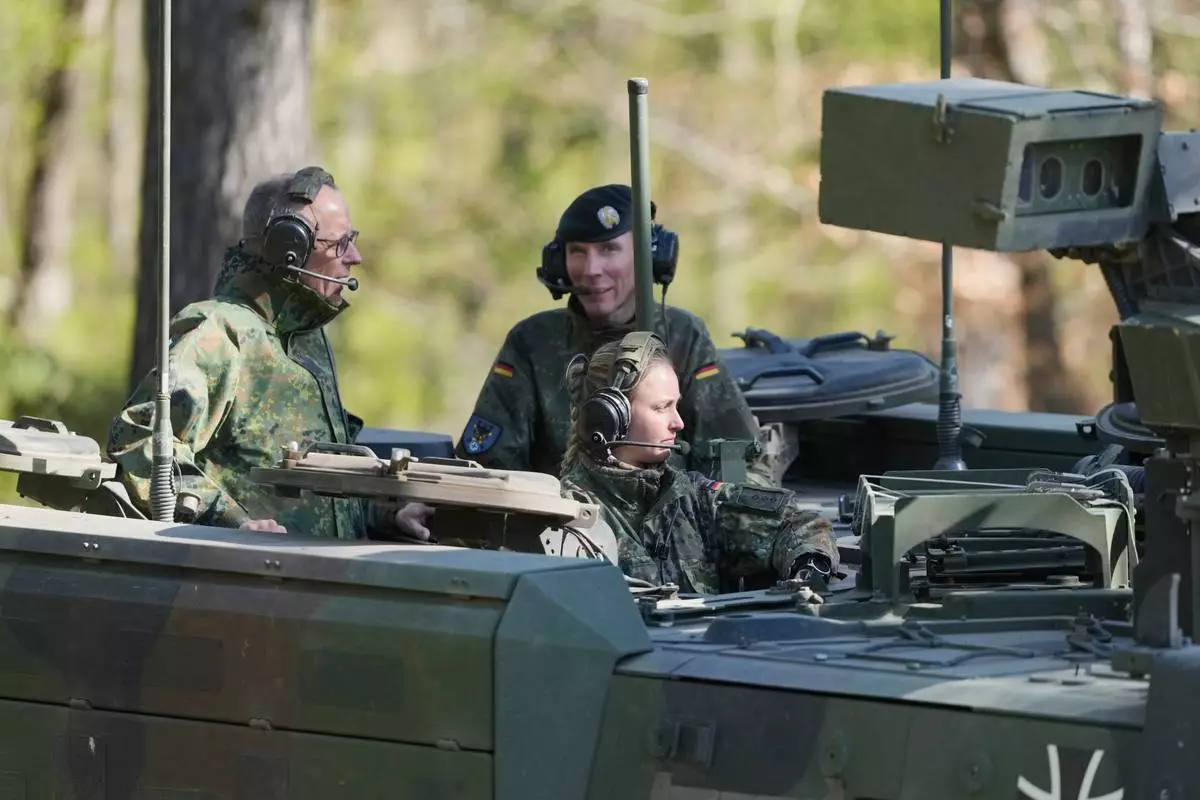
German Chancellor Friedrich Merz, left, drives in the armoured fighting vehicle Boxer during his visit to the army at the Bundeswehr base in Munster, Germany, Thursday, April, 30, 2026. (AP Photo/Markus Schreiber, Pool)
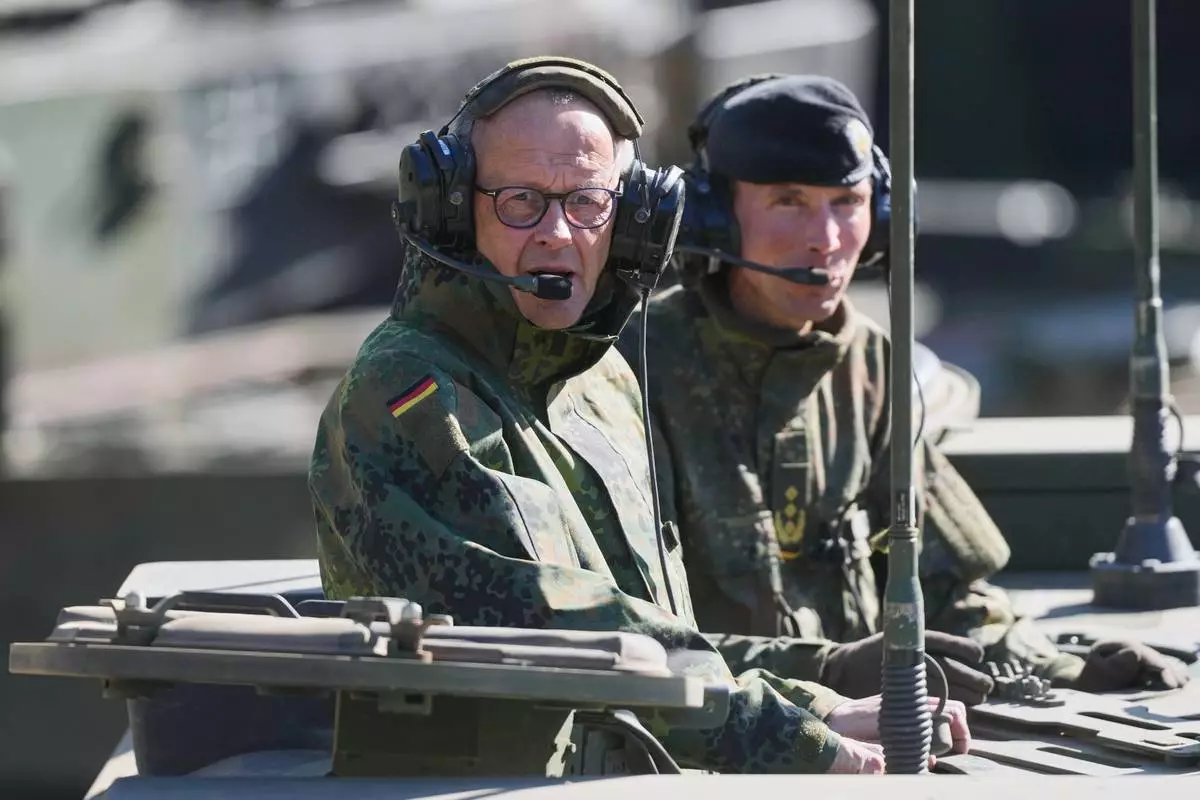
German Chancellor Friedrich Merz drives in the armoured fighting vehicle Boxer during his visit to the army at the Bundeswehr base in Munster, Germany, Thursday, April, 30, 2026. (AP Photo/Markus Schreiber, Pool)