Skip to Content Facebook Feature Image

Supreme Court hollows out a landmark law that had protected minority voting rights for 6 decades

News

Supreme Court hollows out a landmark law that had protected minority voting rights for 6 decades
News

News

Supreme Court hollows out a landmark law that had protected minority voting rights for 6 decades

2026-04-30 19:23 Last Updated At:19:30

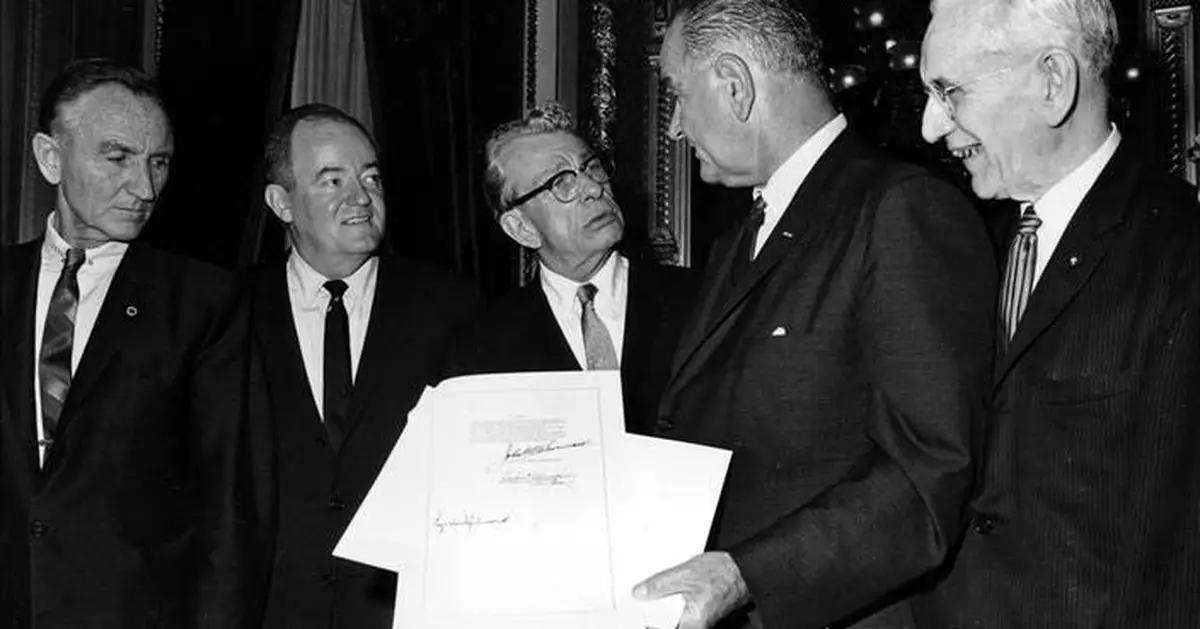
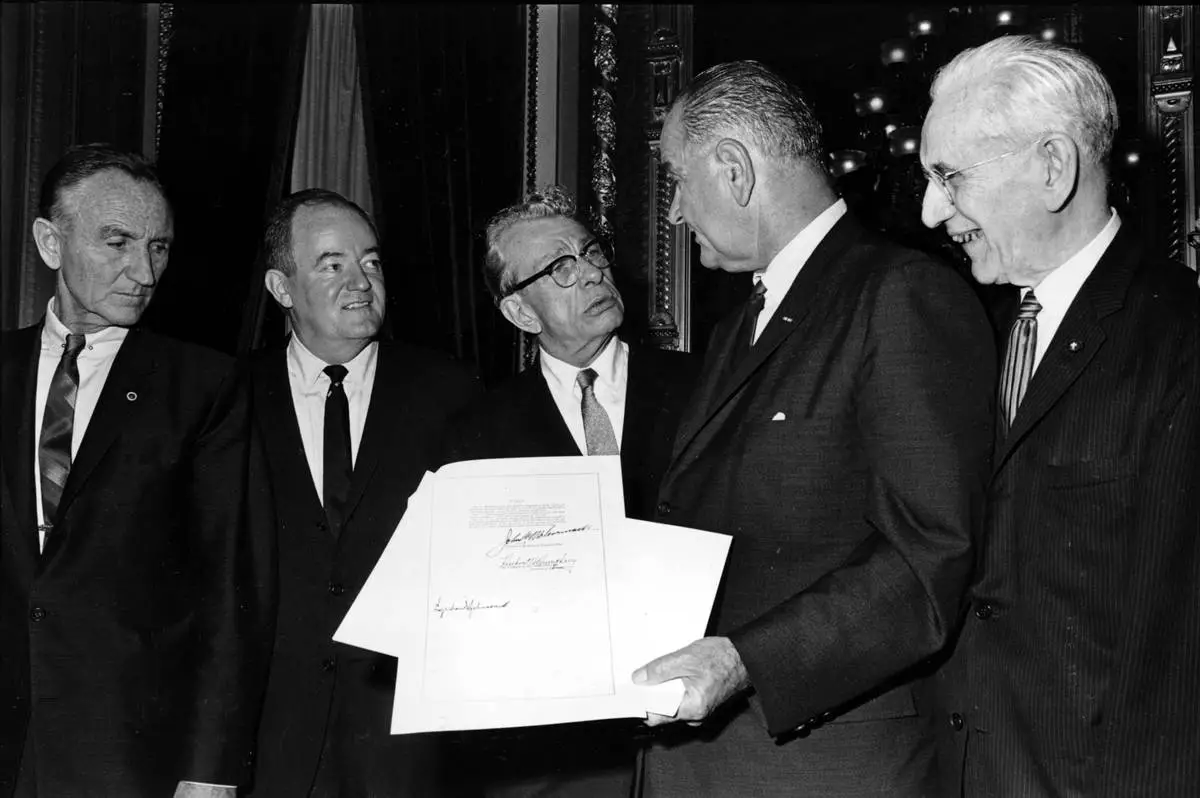
WASHINGTON (AP) — President Lyndon B. Johnson knew the legislation he was about to sign was momentous, one that took courage for certain members of Congress to pass since the vote could cost them their seats.

To honor that, he took the unusual step of leaving the Oval Office and going to Capitol Hill for the signing ceremony. It was Aug. 6, 1965, five months after the “Bloody Sunday” attack on civil rights marchers in Selma, Alabama, gave momentum to the bill that became known as the Voting Rights Act.

In the six decades since, it became one of the most consequential laws in the nation's history, preventing discrimination against minorities at the ballot box and helping to elect thousands of Black and Hispanic representatives at all levels of government.

On Wednesday, the U.S. Supreme Court knocked out a major pillar of the law that had protected against racial discrimination in voting and representation. It was a decision that came more than a decade after the court undermined another key tenet of the law and led to restrictive voting laws in a number of states. Voting and civil rights advocates were left fearful of what lies ahead for minority communities.

“It means that you have entire communities that can go without having representation,” said Cliff Albright, a co-founder of the group Black Voters Matter. "It is literally throwing us back to the Jim Crow era unapologetically, and that’s not exaggeration.”

Kareem Crayton, vice president of the Brennan Center for Justice’s Washington office, said the court’s steady work to erode the Voting Rights Act, culminating in Wednesday’s decision, amounted to “burying it without the funeral.”

The Supreme Court’s ruling came in a congressional redistricting case out of Louisiana after the state created a district that gave the state its second Black representative to Congress.

It found that map to be an unconstitutional gerrymander because it took race into account to draw the lines. In an opinion written by Justice Samuel Alito, the court's conservative majority said the provision of the Voting Rights Act in question, called Section 2, was designed to protect voters from intentional discrimination.

Justice Elena Kagan in her dissent said the bar to show intentional discrimination is “an almost insurmountable barrier for challenges to any voting rights issues to prove discrimination.”

Voting rights experts said the ruling leaves the Voting Rights Act only a shell of what it had been and will provide an open door for political mapmakers at every level — from local school districts to state legislatures to Congress — to undermine minority representation.

“We’re witnessing the evisceration of America’s greatest legislative landmark at the hands of a far right Supreme Court,” Democratic U.S. Rep. Ritchie Torres of New York said.

Maria Teresa Kumar, president of Voto Latino, said the decision will allow more aggressive “cracking and packing” of populations to dilute their votes, “not just in congressional districts but also in state legislatures, county commissions, school boards and city councils.”

Voting rights experts said there is no doubting the law's impact over the decades.

Sherrilyn Ifill, a law professor at Howard University and the former president of the NAACP Legal Defense Fund, said there were about 1,500 Black elected officials throughout the country in 1970. Today, that stands at more than 10,000.

"And it isn’t because of the goodness of people’s hearts,” she said.

She said that success was a direct result of Black communities, civil rights activists and lawyers having the tools, through the Voting Rights Act, to file challenges to efforts to diminish the voting strength of Black and Hispanic voters. Most of the Section 2 cases have been over representation in local governments.

It’s not just the numbers.

A loss of representation, especially in state legislatures and Congress, will translate into minority communities losing a voice on issues that matter to them, such as healthcare, education and needed public works upgrades, said Sophia Lin Lakin, deputy director of the American Civil Liberties Union's Voting Rights Project.

“States can now point to partisan objectives to justify maps that strip voters of color of representation, and federal courts will have little basis to intervene,” she said.

The landmark law signed by Johnson 61 years ago had been amended over the years, but the biggest change was in 2013, when the Supreme Court released its ruling in Shelby County v. Holder. That decision essentially ended a provision of the Voting Rights Act mandating the way states and local jurisdictions were included on a list of those needing to get advance approval, or preclearance, for voting-related changes.

That decision paved the way for mostly Republican states to pass a wave of restrictive election legislation, especially after President Donald Trump, a Republican, falsely claimed widespread fraud cost him reelection in 2020 against Democrat Joe Biden.

In a surprise ruling in 2023, the Supreme Court upheld Section 2 in a redistricting case out of Alabama, a ruling that it essentially reversed on Wednesday.

The question now is what comes next, for minority representatives and the communities they represent.

In Louisiana, the decision puts Democratic Rep. Cleo Fields on the endangered list. This isn’t the first time redistricting has complicated Fields’ political plans. He served for two terms in the 1990s before the state redrew his congressional district.

“I’ve been down this road before, you know, 33 years ago,” he said.

Shomari Figures, who won the seat created in Alabama after the court’s 2023 decision, said the decision doesn’t make changes to that state’s current congressional districts, but it has made proving future racial discrimination in redistricting cases significantly tougher.

“It will lead to states, primarily in the South, launching immediate efforts to redraw districts in ways that will dilute the impact of Black voters and drastically reduce the number of realistic opportunities to elect Black members to Congress,” he said.

Shalela Dowdy, an Alabama resident who was a plaintiff in the lawsuit that resulted in the creation of a new district now represented by Figures, said she is worried the decision will lead to the rollback of the district created in 2023, which she said gave Black voters a greater voice.

“Putting it in the hands of the states on this level is dangerous,” Dowdy said. “There’s just been a history of the states not doing the right thing based off their state population.”

Chandler reported from Montgomery, Ala. Associated Press writers Jeff Amy in Atlanta; Joey Cappelletti, Matt Brown and Haya Panjwani in Washington; and Graham Lee Brewer in Oklahoma City contributed to this report.
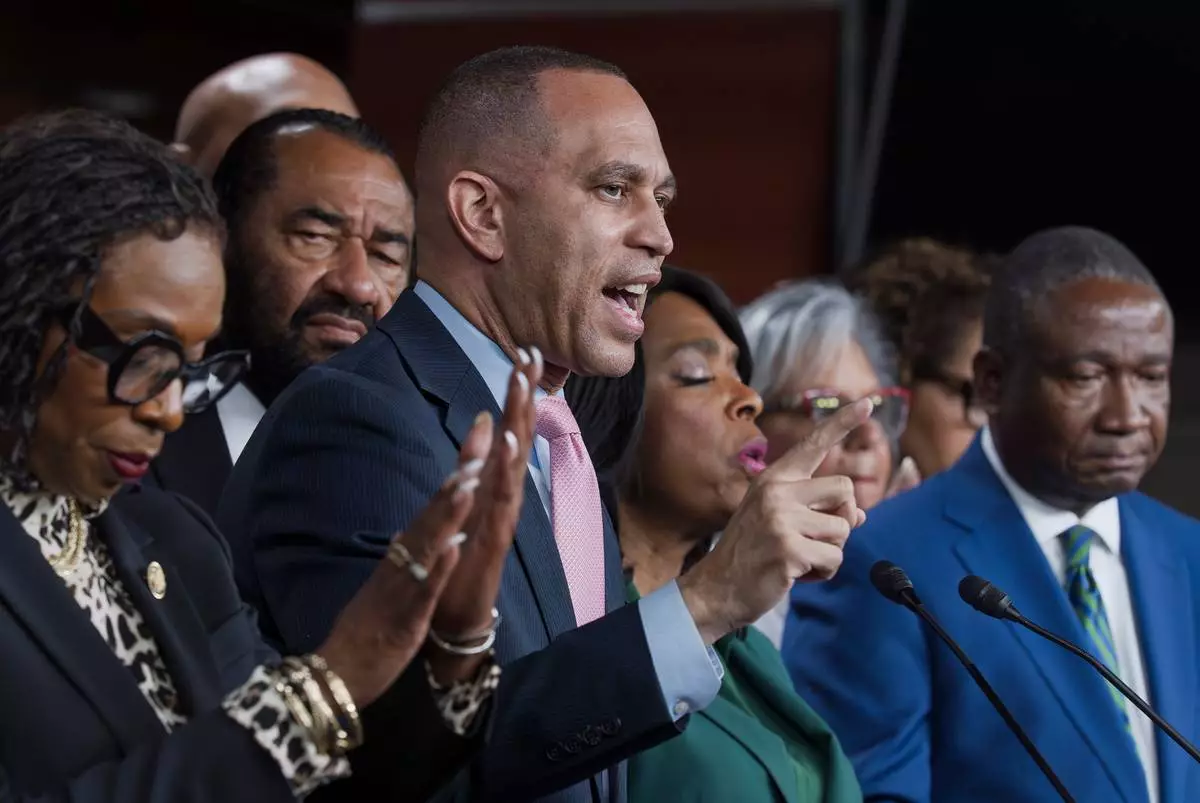
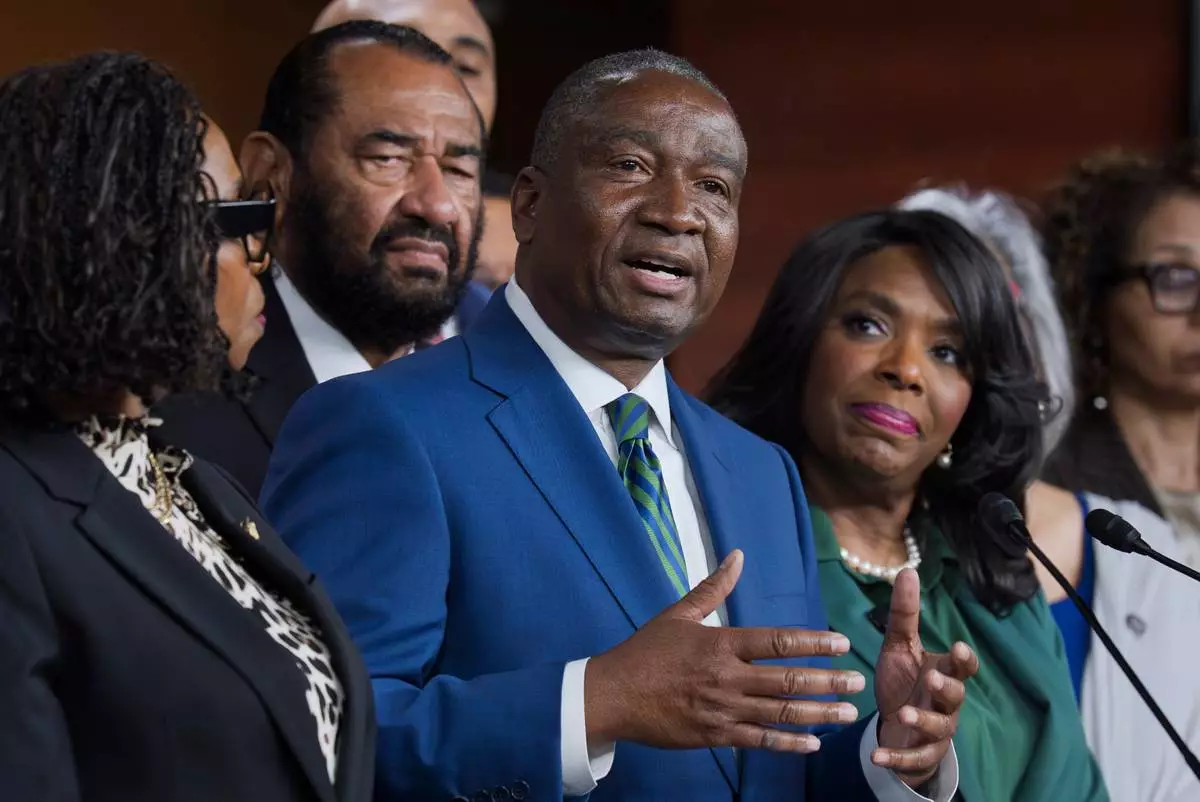
House Minority Leader Hakeem Jeffries, D-N.Y., and members of the Congressional Black Caucus speak to reporters in the wake of the Supreme Court ruling to strike down a majority Black congressional district in Louisiana, at the Capitol in Washington, Wednesday, April 29, 2026. (AP Photo/J. Scott Applewhite)
House Minority Leader Hakeem Jeffries, D-N.Y., and members of the Congressional Black Caucus speak to reporters in the wake of the Supreme Court ruling to strike down a majority Black congressional district in Louisiana, at the Capitol in Washington, Wednesday, April 29, 2026. (AP Photo/J. Scott Applewhite)

FILE - President Lyndon B. Johnson holds the signed document of the Voting Rights Act of 1965 as he chats with Sen. Everett Dirksen, R-Ill., in the President's Room in Washington, Aug. 6, 1965. Signatures that appear on the document are Johnson, left bottom; House Speaker John McCormack, upper, standing at right; and Vice President Hubert Humphrey, lower, standing second from left. Standing at far left is Sen. Mike Mansfield. (AP Photo)

FILE - President Lyndon B. Johnson holds the signed document of the Voting Rights Act of 1965 as he chats with Sen. Everett Dirksen, R-Ill., in the President's Room in Washington, Aug. 6, 1965. Signatures that appear on the document are Johnson, left bottom; House Speaker John McCormack, upper, standing at right; and Vice President Hubert Humphrey, lower, standing second from left. Standing at far left is Sen. Mike Mansfield. (AP Photo)
Black members of Congress are bracing for a crippling shake-up of their ranks after a Supreme Court ruling gutted a key section of the Voting Rights Act that had protected minority communities in political redistricting and helped boost their representation.

Wednesday's decision clears the way for Republican-led states to redraw U.S. House districts without regard to race, potentially creating many more GOP-friendly seats.

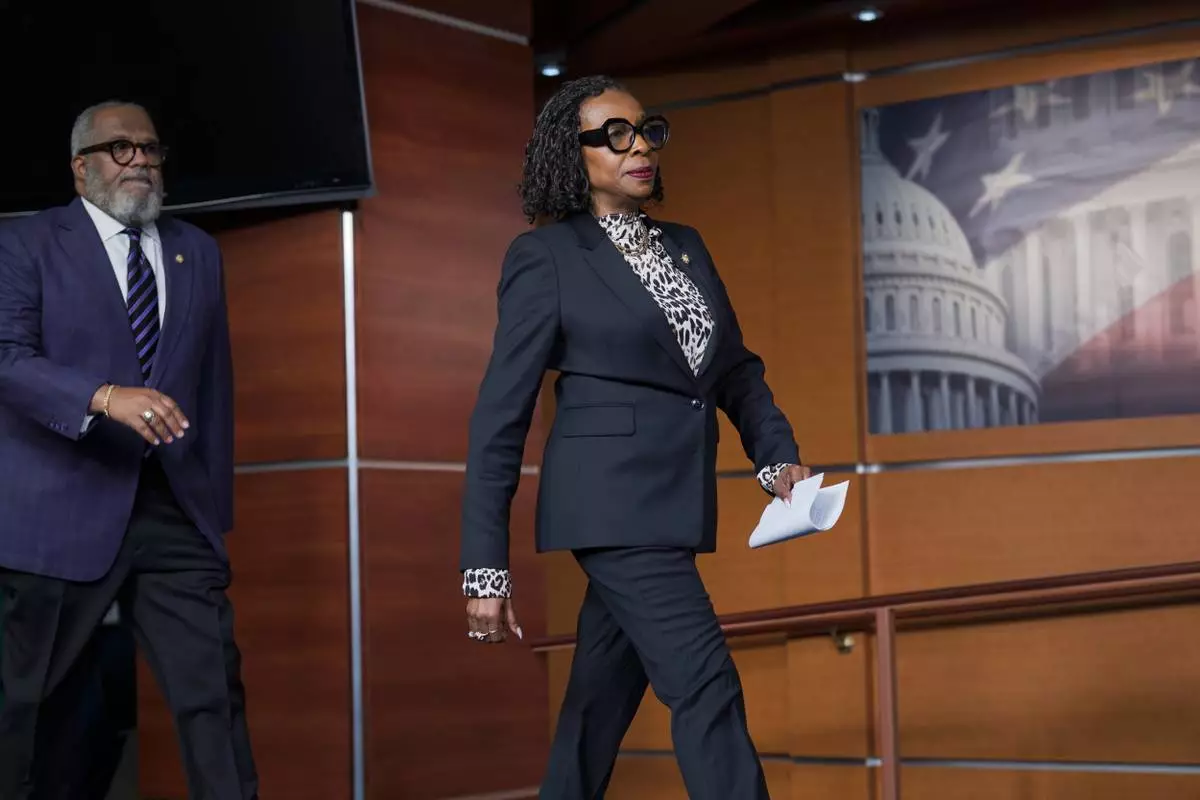
Rep. Yvette Clarke, chair of the Congressional Black Caucus, told reporters that its members and Democrats would fight the effects of the ruling.

“The Supreme Court has opened the door to a coordinated attack on Black voters across the country,” Clarke said. “This is an outright power grab.”

Under Section 2 of the Voting Rights Act, voters could challenge electoral maps that appeared to dilute the ability of minority communities to elect representatives of their choosing. The expected wave of congressional redistricting by Republican-controlled states after Wednesday's ruling, especially for the 2028 election and beyond, is likely to result in a much smaller Black Caucus.

Clarke was joined by over a dozen of the 60 Black Caucus members, including Democratic House Minority Leader Hakeem Jeffries. Their responses to the court's decision ranged from outrage to defiance to mourning.

It's not clear how many seats will ultimately be affected by the ruling, but redistricting experts predict that more than a dozen now held by minorities could be swept away.

Rep. Troy Carter, one of two Black Democrats from Louisiana, the state at the center of the case, called the ruling “a devastating blow to our democracy, plain and simple.”

Republican leaders in several Southern states already have been discussing how to apply the ruling and create new GOP-friendly congressional maps. In Florida, Republicans wasted no time approving a new U.S. House map, part of which redrew one district created to elect a Black representative.

“I would be surprised if we do not see former slave-holding states moving at lightning speed to target districts that provide Black voters and other voters of color an equal opportunity to elect candidates,” said Kristen Clarke, general counsel for the NAACP and the first Black woman to be assistant attorney general in the U.S. Department of Justice's civil rights division.

It's not clear whether state-level voting laws or constitutional prohibitions against racial discrimination will provide any protection, she added.

Republican officials and Black conservatives praised the decision as a victory against race-based mandates. Linda Lee Tarver, of the Project 21 Black Leadership Network, said in a statement civil rights laws were not intended “to institutionalize racial line-drawing as a default feature of our political system.”

The Congressional Black Caucus was formed in 1971 as court-ordered redistricting under the Voting Rights Act, passed just six years earlier, sent more minorities to Congress.

The number of Black representatives in Congress jumped from nine to 13. Shirley Chisholm, the first Black woman elected to Congress, decided to expand the Democracy Select Committee created in the 1960s by Democratic Rep. Charles Diggs into the more formal Congressional Black Caucus.

The CBC raised its profile in its first year when it boycotted President Richard Nixon's State of the Union address after he refused to meet with the group. Nixon eventually acquiesced. The group created a list of over 60 recommendations to help the Black community, including counteracting racism and building adequate housing. It earned the nickname the “conscience of the Congress.”

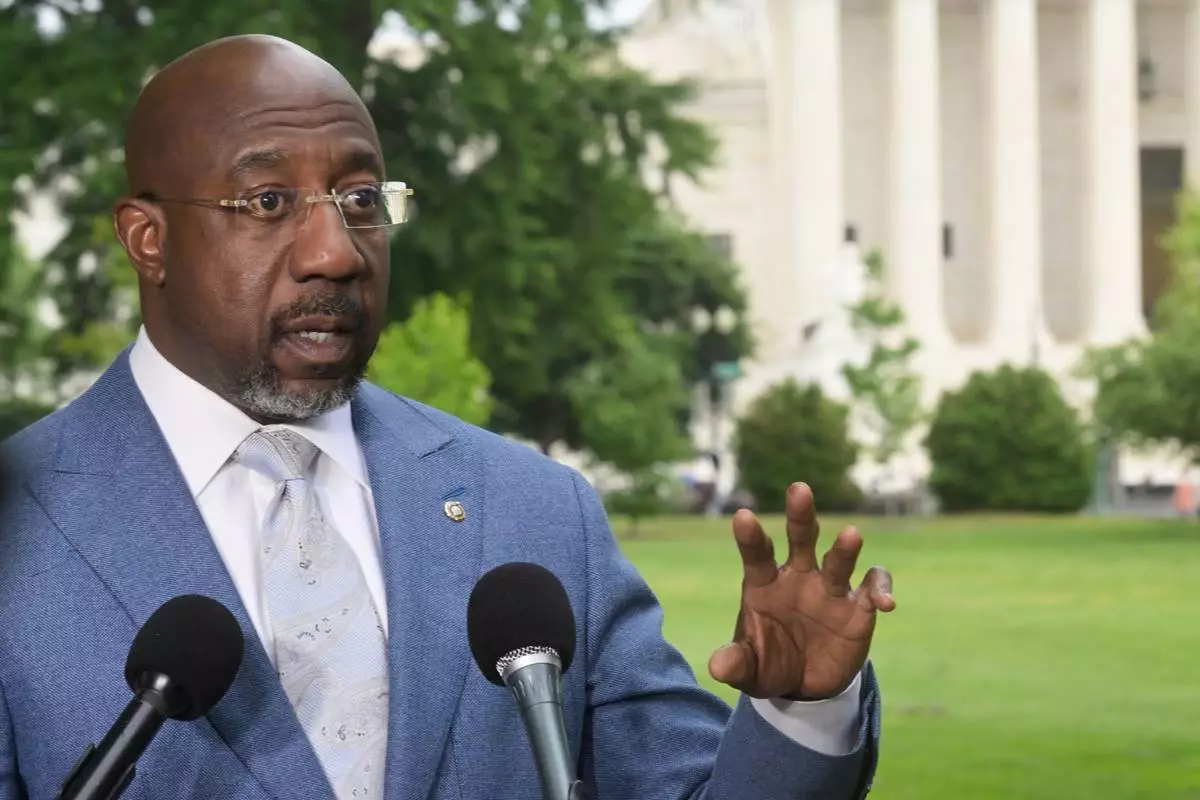
“That caucus has had such an important voice in American politics — the things that we’ve been able to achieve together, the creation of equity and access," Democratic Sen. Raphael Warnock of Georgia said during a separate news conference Wednesday. “And I’m afraid that with this ruling, we could see that caucus shrink in a hugely significant way.”

The ruling upset Thomas Johnson when he heard about it while visiting Louisiana's Capitol in Baton Rouge. Johnson, who is Black, is from New Orleans and represented by Carter. He fears Republicans could redraw the state’s congressional map in a way that dismantles predominately Black districts.

“I feel like this is an embarrassing attack upon the minorities, particularly the Black community,” Johnson said. “We have very little (voice) in Congress.”

Antjuan Seawright, a Democratic strategist who advises the Black Caucus, said he expects the group will be involved in multiple legal fights for members whose districts will be targeted after the Supreme Court ruling. He also said the ruling makes voter turnout efforts even more important "if we want to change course on some of the things that are likely to happen because of this decision.”

Democratic Rep. Terri Sewell of Alabama, whose state was at the center of a major Voting Rights Act case decided in favor of Black representation nearly three years ago, agreed that the party now needs to focus on getting voters motivated ahead of this year's midterm elections.

Sen. Raphael Warnock, D-Ga., holds a news conference regarding the Supreme Court Voting Rights decision on Capitol Hill, Wednesday, April 29, 2026, in Washington. (AP Photo/Rod Lamkey Jr.)

Sen. Raphael Warnock, D-Ga., holds a news conference regarding the Supreme Court Voting Rights decision on Capitol Hill, Wednesday, April 29, 2026, in Washington. (AP Photo/Rod Lamkey Jr.)

Rep. Yvette Clarke, D-N.Y., center, followed by Rep. Troy Carter, D-La., left, as members of the Congressional Black Caucus speak to reporters in the wake of the Supreme Court ruling to strike down a majority Black congressional district in Louisiana, at the Capitol in Washington, Wednesday, April 29, 2026. (AP Photo/J. Scott Applewhite)

Rep. Yvette Clarke, D-N.Y., center, followed by Rep. Troy Carter, D-La., left, as members of the Congressional Black Caucus speak to reporters in the wake of the Supreme Court ruling to strike down a majority Black congressional district in Louisiana, at the Capitol in Washington, Wednesday, April 29, 2026. (AP Photo/J. Scott Applewhite)

Rep. Cleo Fields, D-La., center, who represents Louisiana's 6th congressional district, is joined by members of the Congressional Black Caucus as they speak to reporters in the wake of the Supreme Court ruling to strike down his majority Black congressional district in Louisiana, at the Capitol in Washington, Wednesday, April 29, 2026. (AP Photo/J. Scott Applewhite)

Rep. Cleo Fields, D-La., center, who represents Louisiana's 6th congressional district, is joined by members of the Congressional Black Caucus as they speak to reporters in the wake of the Supreme Court ruling to strike down his majority Black congressional district in Louisiana, at the Capitol in Washington, Wednesday, April 29, 2026. (AP Photo/J. Scott Applewhite)

Recommended Articles