When Alma-Jade’s teeth started snapping and her hair began to fall out, she realised that her veganism was “killing her”.
A committed ethical vegan who swapped vegetables for a carnivorous “prehistoric” diet – eating up to 2kg of animal muscles, organs and bone marrow a day – has told how consuming “brains and bones” has saved her life.
Converting to veganism at just 13, after seeing shocking videos made by animal rights campaigners, life sciences student Alma-Jade Chanter, 25, originally from Bristol, soon ate only raw food – even travelling to India to give a talk on her dietary beliefs.
But last year she went from advocating an end to consuming animal products to eating only meat and eggs, when her health failed so badly her teeth were snapping in two, and a former vegan pal introduced her to The Carnivore Diet.
Alma-Jade, now a masters student at Wageningen University in Holland, said: “I was completely sucked into the narrative of veganism and bought it all entirely.”
She continued: “But it was making me so ill and eventually I realised that I couldn’t carry on because it was killing me.
“Within just a week of going carnivore I felt amazing, and for the first time in a long time my body was free of pain.”
Alma-Jade, who took her veganism so seriously that at 14 she became a raw vegan – eating only raw fruit and vegetables – and visited raw fruit festivals as far away as the USA and Spain, tried to ignore the fact that eating according to her principles was damaging her health.
Soon, though, she said being vegan began to have such an adverse effect on her well-being that she lost 10kg.
Concerned, Alma-Jade’s parents took her to see a doctor, who warned her that her diet lacked vital vitamins and minerals, insisting that, if she persisted with it, there could be long-term implications for her body.
Instead of heeding his advice, however, she tried fasting and juice diets – believing she could cure herself and remain a vegan.
She said: “I was so dogmatic and hard-headed that I didn’t listen to what anyone was telling me, just putting all my faith into the supposed health benefits of veganism.”
But, within a year of becoming a raw vegan, she had stopped menstruating – due to a lack of essential nutrients – and her nails were covered in deep ridges, because of calcium deficiency.
She continued: “My teeth were also in a terrible state, from the combination of having so much sugar from the fruit and not enough calcium.”
She continued: “I went to the dentist and my front tooth literally snapped in half, because the enamel had been so badly worn away.
“He asked me, ‘Are you drinking fizzy drinks for breakfast?'”
Eventually, however, the acceptance that her poor health was linked to her diet came in 2013, when she was diagnosed with Graves’ disease – an autoimmune condition affecting the thyroid – after experiencing alarming symptoms including hair loss, joint pain and insomnia.
“Graves’ disease makes your metabolism work faster, which effectively accelerates the ageing process,” said Alma-Jade, who finally realised she had to turn her back on veganism.
“Before then, I had been unwell but just about functioning. It was only when I really started not being able to cope that I decided I had to take action.”
Eating meat for the first time in six years was at first a struggle, having, through her years of veganism and after watching material produced by activists at People for the Ethical Treatment of Animals (PETA) developed a powerful aversion to it.
But gradually, after a few months of bloating and diarrhoea as her body adjusted to breaking down animal muscle, Alma-Jade once again became an omnivore, eating meat, fish and vegetables.
“My thyroid and metabolism improved and symptoms like hair thinning and joint pain got better,” she said. “But I’d still have flare ups of my old symptoms like joint pain and fatigue, so I was still pretty unstable.
Then in March 2018, Alma-Jade recalled having a nutritional epiphany when a former vegan friend suggested she listen to a podcast featuring the author of The Carnivore Diet, Dr Shawn Baker, in which he extolled the virtues of meat-only eating.
Intrigued and increasingly desperate to find a solution to her continuing ailments, she resolved to give being exclusively carnivorous a month-long trial.
It took just a week for her to realise she had found her very own elixir of life.
She said: “After only a few days, I felt amazing. Everything suddenly just clicked for me and, at long last, I felt as though my body was well-regulated.”
A year on, eating two meals a day, she mixes animal muscle meals – such as steak – with offal dishes of liver, heart and brain, as well as tallow, or animal fat, and bone marrow – and says she has never looked back.
Insisting that animal products provide her with all the necessary minerals needed to remain healthy, she continued: “Organ meat is very dense in nutrients and can provide you with everything you need – even vitamin C – and I get calcium from making bone broths.
“I really love brain, though, which has quite a mild and fluffy taste to it.
“I know people get a bit freaked out by that, but I just think if you’re going to kill an animal, you can at least be polite enough to eat the whole thing.”
She also insists that eating up to 2kg of these animal products a day is “balanced.”
“I know it is extreme, but it is the most balanced I have ever felt,” said Alma-Jade, whose staple carnivorous dishes include poached lamb’s brain and scrambled eggs with chicken hearts.
“I totally agree with vegans that industrial farming is wrong. That’s why I never buy anything from supermarkets and get all my meat either from a butcher or from the local farmer.”
She continued: “But just quitting meat entirely seems to me to be throwing the baby out with the bath water now.
“Spending so many years waking up in pain each morning doesn’t give you much hope in life, but this way of eating changed my life – and possibly even saved it.”
Maggie Baird says her vegan cinnamon rolls are a family favorite — including to her children, who happen to be the world-famous musicians Billie Eilish and Finneas.
Growing up, Baird stopped eating meat in part because she felt connected to animals. Her commitment grew as she learned about the environmental impact of animal agriculture. And her mother died of a heart attack at 57 — one of many in her family to die of heart disease.
“I always say I have the trifecta of reasons" for foregoing meat, said Baird, who in 2020 founded Support + Feed, a nonprofit that advocates for a more climate-friendly food system and provides plant-based meals to people in need.
That connection between what's healthy for people and the planet dominates the latest EAT-Lancet Commission report, an updated version of the 2019 analysis produced by leading food researchers from around the world. Besides detailing the food system's contribution to climate change, it outlines the most current version of a “planetary health diet,” which emphasizes fruits, vegetables, grains, legumes and nuts and encourages people, particularly in high-income countries, to reduce their intake of animal products, especially red meat.
“Nothing else on a pound for pound basis, except maybe refrigerants, comes close to the polluting power of beef,” said Jonathan Foley, executive director of independent climate solutions nonprofit Project Drawdown, at a Climate Week presentation in New York City. That "doesn’t mean everyone has to be vegan tomorrow,” but the goal should be to trim back high-polluting parts of one’s diet, he added.
We asked experts for some tips to center plants in your kitchen. Here's what they said.
Are you worried your home-cooked asparagus won't taste as good as your signature steak? That probably just means you haven't had as much practice with the right techniques, said Miguel Guerra, chef and owner of Washington, D.C.-based, vegetable-forward Latin American restaurant MITA, which received a Michelin star in 2024.
Guerra suggested working on the basics: learn how to blanch asparagus, steam broccoli so it doesn't get mushy or roast sweet potatoes so they get crispy on the outside. Even knife skills make a difference; Guerra said an onion chopped the right way tastes better.
“When I was a kid, I did not eat vegetables,” he said. Then culinary school, and a particularly delicious broccoli-cheddar soup, changed his mind. He realized selecting and preparing fresh ingredients with care and effort does make them better.
When you're out shopping, it's easier to pivot to whatever vegetables look freshest or are in season if you keep a stock pantry with canned and shelf-stable ingredients like sauces, said Joshua McFadden, a chef, restaurateur, farmer and cookbook author who has written about the “six seasons” approach to cooking.
There are also plenty of plant-based protein sources that keep for a long time in the pantry or freezer, like canned beans, tofu, nuts and lentils — all of which are highlighted in the EAT-Lancet report as ingredients that deserve a more central place in diets healthy for people and the planet.
Even just simple seasonings like salt, pepper and olive oil can help plant ingredients shine, said McFadden, speaking on a panel at a New York Climate Week event.
But Baird also suggested experimenting with ingredients that you might not normally keep in your kitchen, from pomegranate molasses to capers. If something you need for a new recipe isn't available at your grocery store, you can make substitutions while still aiming to be “a little bit daring," she said.
The comfort of familiar food, how much it costs and knowledge of how to cook it are top concerns for many of the people in the South Bronx who come to community gardens, said Sheryll Durrant, an urban farmer and educator who works with refugee communities, speaking on another panel at the same event as McFadden. “One of our roles is to grow diverse food, to grow culturally relevant foods, and to show you that you can utilize these foods in an affordable way,” she said.
Local, traditional foods tend to have a higher chance of being healthy for people and the planet than modern ones that have sprung from the industrial food system, said Johan Rockstrom, one of the authors of the EAT-Lancet Commission report.
Durrant pointed out that different cultures use ingredients differently, and that talking to people from other places in the world is a great way to learn new recipes even for plants you already think you know how to use.
Guerra, of MITA, grew up deeply rooted in Venezuelan cooking, and that still informs his work. He said he doesn’t like using the vegan label and he isn’t vegan himself — he just wants to cook with vegetables and make sure “they’re the star of the show.”
He described using mushrooms and other plant-based ingredients to recreate a sweet and tangy sauce traditionally made in the process of cooking meat, a dish “really close to our hearts and our country, and in a special way,” he said.
“I really think it’s important with plant-based food that you don’t just try to replicate. Just try to think of what is good,” Baird said.
For example, leaning into fully plant-based combinations that already make sense from a flavor perspective — for instance, a creme brulee with mango and coconut milk — “that’s going to be delicious,” she said.
Guerra follows the same principle. “We’re not like, ‘oh, how do we substitute the steak? Or how do we make something that looks like a steak on the plate?’” he said. “It’s just more like, we are true to the ingredients we use, and then the cuisine and the flavors that we want to showcase.”
Follow Melina Walling on X @MelinaWalling and Bluesky @melinawalling.bsky.social.
The Associated Press’ climate and environmental coverage receives financial support from multiple private foundations. AP is solely responsible for all content. Find AP’s standards for working with philanthropies, a list of supporters and funded coverage areas at AP.org.
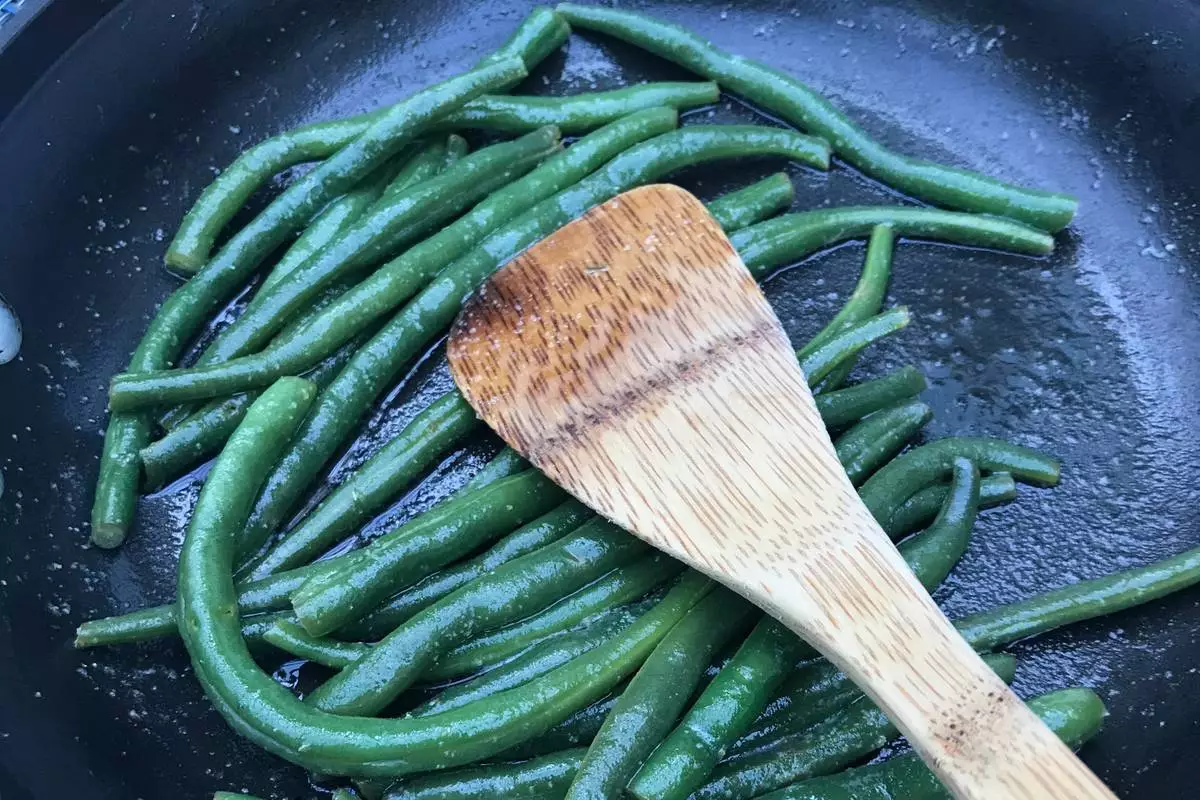
FILE - A plate of green beans picked from a home garden is prepared in a saute pan in Chatham, Mass., on July 28, 2021. (AP Photo/Carolyn Lessard, File)
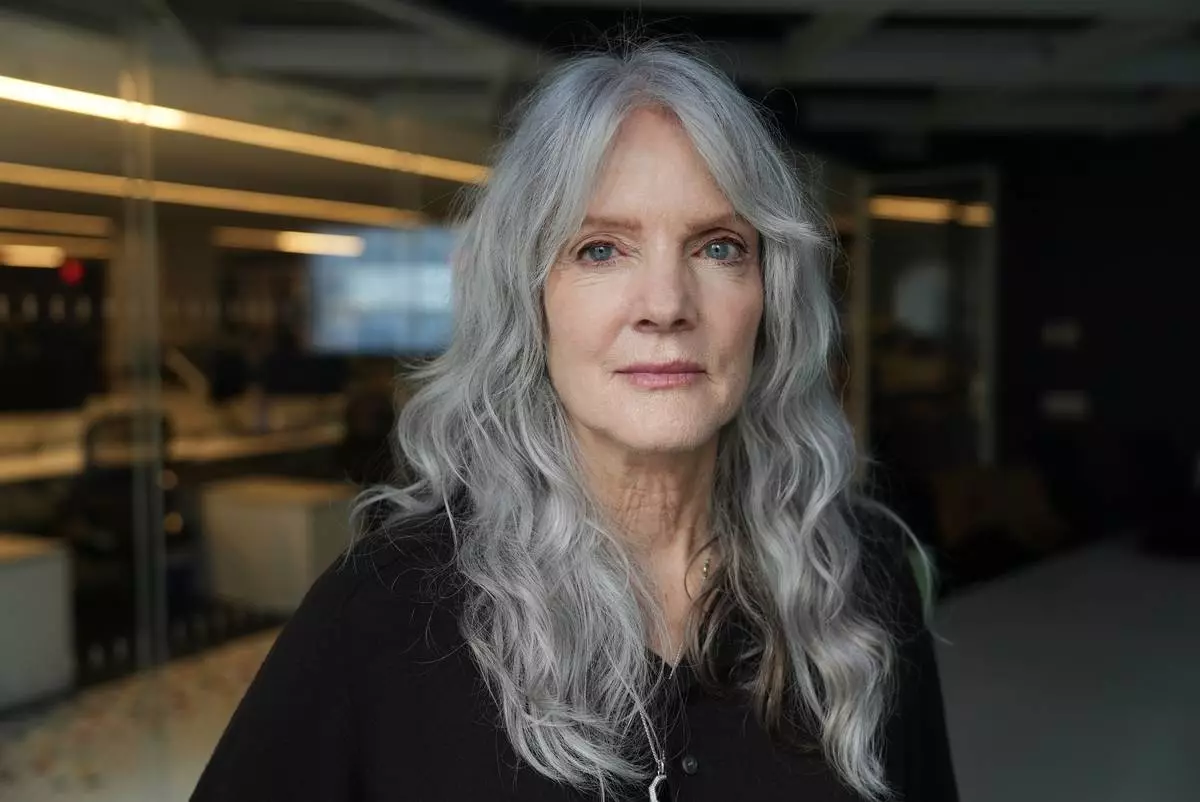
Maggie Baird, mother of world-famous musicians Billie Eilish and Finneas, poses for a photo Monday, Sept. 22, 2025, in New York. Baird founded Support + Feed, which is a nonprofit that advocates for a more climate-friendly food system and provides plant-based meals to people in need. (AP Photo/Mary Conlon)