Skip to Content Facebook Feature Image

Recovery of Falklands war helmets helps heal wounds

News

Recovery of Falklands war helmets helps heal wounds
News

News

Recovery of Falklands war helmets helps heal wounds

2019-03-19 12:07 Last Updated At:12:20

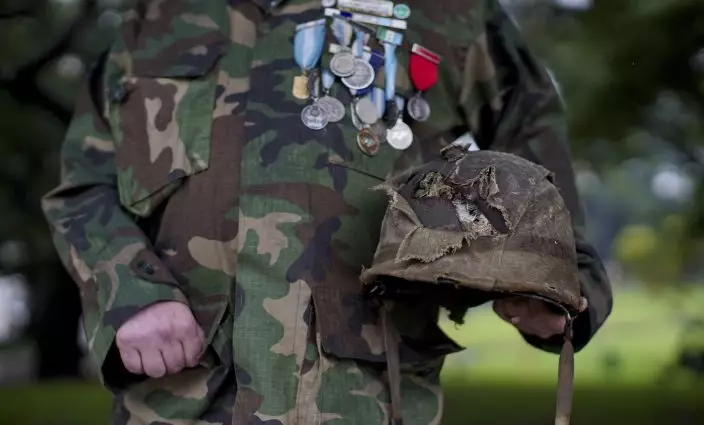
Jorge Altieri runs his hands over old blood stains on a helmet that saved his life in 1982 when Argentina and Britain went to war over the Falkland Islands.

Looking at the treasured object is still a novelty: The helmet was recently returned to Altieri decades after he lost it on the battlefield where he was almost killed by shrapnel.

More Images
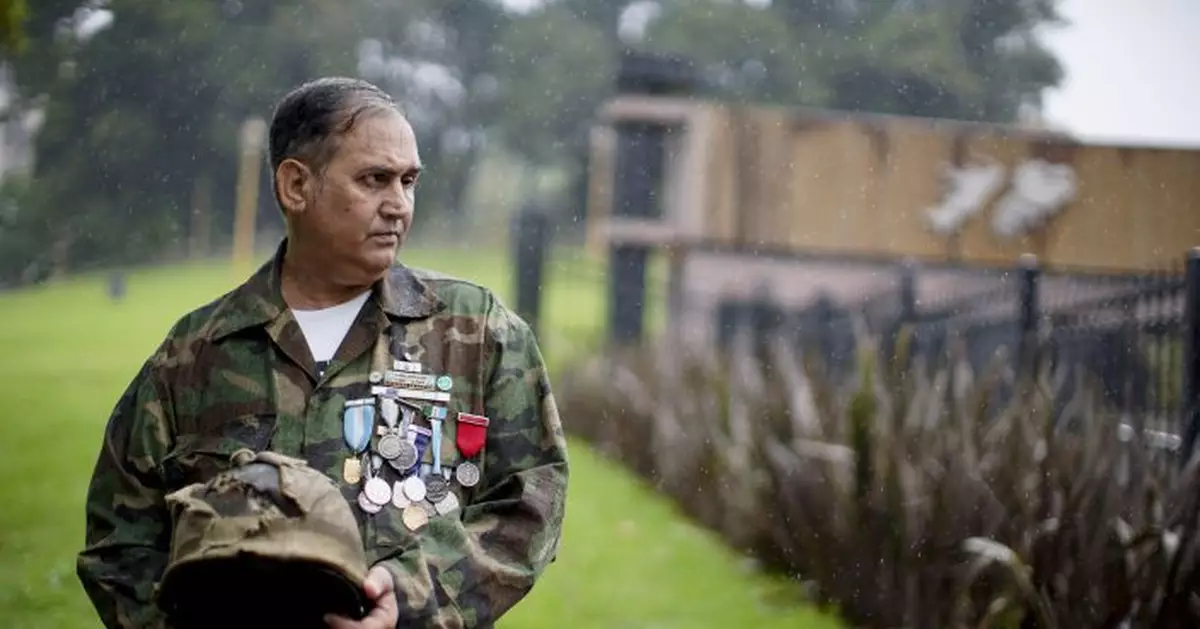
Argentine war veteran Jorge Altieri poses for a portrait with the blood-stained helmet, recently returned to him, that saved his life in 1982 during the Falklands war, in Buenos Aires, Argentina, Tuesday, March 12, 2019. "I have it next to me now and I use it like a teddy bear," Altieri said. "I look at it and I get teary-eyed from all the memories." (AP PhotoNatacha Pisarenko)
Argentine war veteran Jorge Altieri poses for a portrait with the blood-stained helmet, recently returned to him, that saved his life in 1982 during the Falklands war, in Buenos Aires, Argentina, Tuesday, March 12, 2019. "I have it next to me now and I use it like a teddy bear," Altieri said. "I look at it and I get teary-eyed from all the memories." (AP PhotoNatacha Pisarenko)

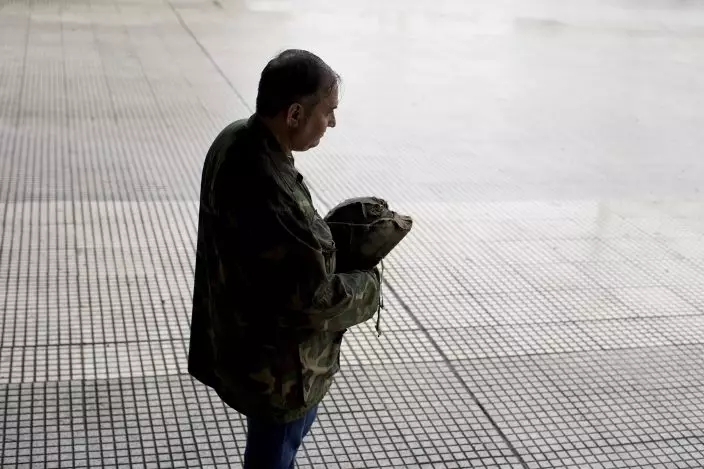
Argentine war veteran Jorge Altieri poses for a portrait with the blood-stained helmet, recently returned to him, that saved his life in 1982 during the Falklands war, in Buenos Aires, Argentina, Tuesday, March 12, 2019. For Altieri, having his helmet has helped him find similar closure. "All the memories of what I lived in the Malvinas came back to me," he said. (AP PhotoNatacha Pisarenko)
Argentine war veteran Jorge Altieri poses for a portrait with the blood-stained helmet, recently returned to him, that saved his life in 1982 during the Falklands war, in Buenos Aires, Argentina, Tuesday, March 12, 2019. For Altieri, having his helmet has helped him find similar closure. "All the memories of what I lived in the Malvinas came back to me," he said. (AP PhotoNatacha Pisarenko)

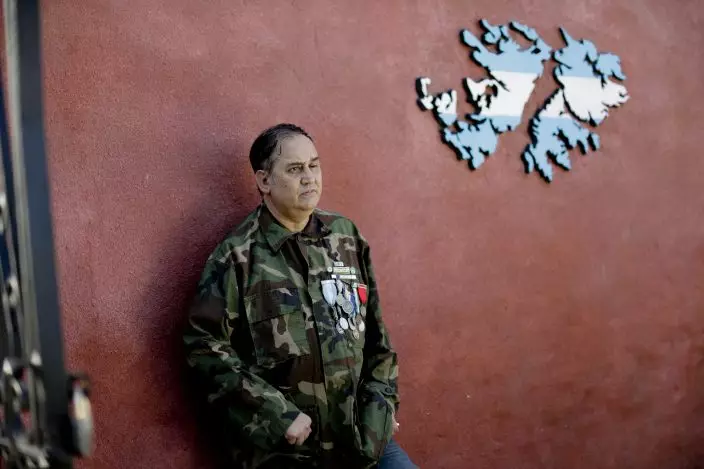
Argentine war veteran Jorge Altieri poses for a portrait outside the Malvinas War Museum, where a map of the islands is colored in the colors of Argentina's national flag, in Lanus, Buenos Aires, Argentina, Wednesday, March 6, 2019. Altieri lost an eye in a blast during the June 12, 1982 battle for Mount Longdon. (AP PhotoNatacha Pisarenko)
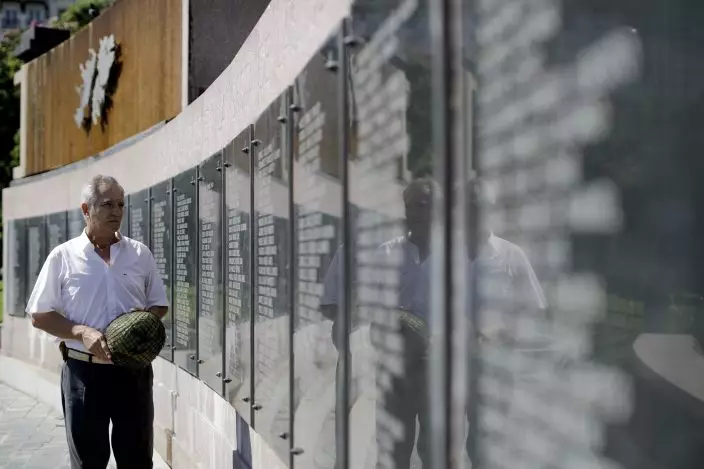
Argentine war veteran Jorge Altieri poses for a portrait outside the Malvinas War Museum, where a map of the islands is colored in the colors of Argentina's national flag, in Lanus, Buenos Aires, Argentina, Wednesday, March 6, 2019. Altieri lost an eye in a blast during the June 12, 1982 battle for Mount Longdon. (AP PhotoNatacha Pisarenko)

Diego Carlos Arreseigor poses with a British soldier's helmet that he found on the battlefield in 1982 at the monument that honors Argentine soldiers killed during the Falklands war in Buenos Aires, Argentina Wednesday, March 7, 2018. Arreseigor is planning to return the blood-stained helmet of fallen British soldier Alexander Shaw, who was killed in the battle of Mount Longdon at the age of 25, to Shaw's sister in April or May. (Diego Carlos Arreseigor via AP)
Diego Carlos Arreseigor poses with a British soldier's helmet that he found on the battlefield in 1982 at the monument that honors Argentine soldiers killed during the Falklands war in Buenos Aires, Argentina Wednesday, March 7, 2018. Arreseigor is planning to return the blood-stained helmet of fallen British soldier Alexander Shaw, who was killed in the battle of Mount Longdon at the age of 25, to Shaw's sister in April or May. (Diego Carlos Arreseigor via AP)

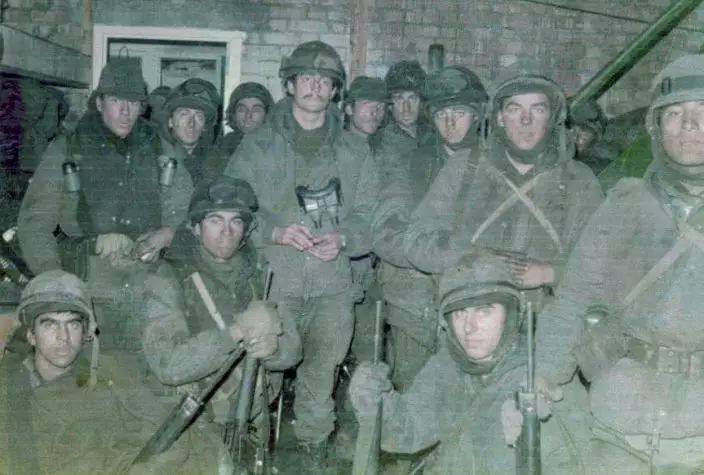
This 1982 photo courtesy of Diego Carlos Arreseigor shows him, standing center, with his battalion during the Falklands War where Argentina and Britain battled over the archipelago which Argentina calls Las Malvinas. Arreseigor found and kept the helmet of British soldier Alexander Shaw as a trophy of war. Thirty-seven years later, in 2019, he was able to contact the soldier's sister in order to arrange its return this year. "The story moved me. Knowing that he died just hours before the cease fire ... it's sad like all war stories," he said. (Diego Carlos Arreseigor via AP)
This 1982 photo courtesy of Diego Carlos Arreseigor shows him, standing center, with his battalion during the Falklands War where Argentina and Britain battled over the archipelago which Argentina calls Las Malvinas. Arreseigor found and kept the helmet of British soldier Alexander Shaw as a trophy of war. Thirty-seven years later, in 2019, he was able to contact the soldier's sister in order to arrange its return this year. "The story moved me. Knowing that he died just hours before the cease fire ... it's sad like all war stories," he said. (Diego Carlos Arreseigor via AP)

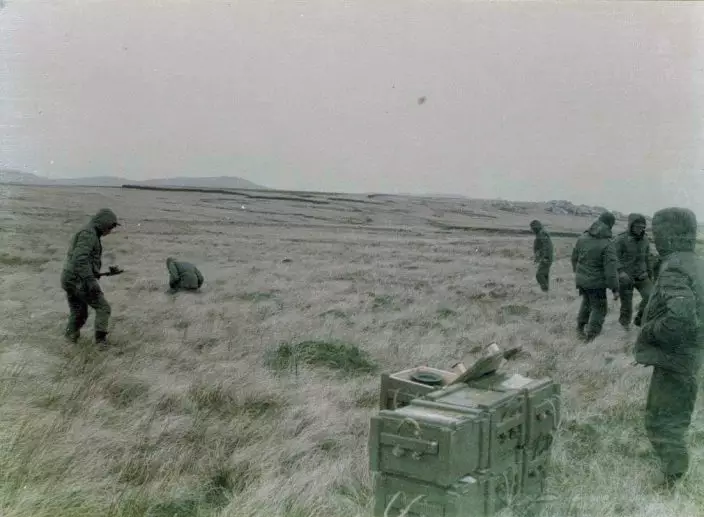
This 1982 photo courtesy of Diego Carlos Arreseigor, shows his unit of Argentine soldiers planting landmines during The Battle of Mount Longdon, part of the Falklands War where Argentine and British soldiers battled over the archipelago which Argentina calls Las Malvinas. Argentina lost the war for the South Atlantic archipelago after its troops embarked on an ill-fated invasion nearly 37 years ago, an international humiliation that claimed the lives of 649 Argentines and 255 British soldiers. (Diego Carlos Arreseigor via AP)

This 1982 photo courtesy of Diego Carlos Arreseigor, shows his unit of Argentine soldiers planting landmines during The Battle of Mount Longdon, part of the Falklands War where Argentine and British soldiers battled over the archipelago which Argentina calls Las Malvinas. Argentina lost the war for the South Atlantic archipelago after its troops embarked on an ill-fated invasion nearly 37 years ago, an international humiliation that claimed the lives of 649 Argentines and 255 British soldiers. (Diego Carlos Arreseigor via AP)

"I have it next to me now and I use it like a teddy bear," Altieri said. "I look at it and I get teary-eyed from all the memories."

Argentine war veteran Jorge Altieri poses for a portrait with the blood-stained helmet, recently returned to him, that saved his life in 1982 during the Falklands war, in Buenos Aires, Argentina, Tuesday, March 12, 2019. "I have it next to me now and I use it like a teddy bear," Altieri said. "I look at it and I get teary-eyed from all the memories." (AP PhotoNatacha Pisarenko)

Argentine war veteran Jorge Altieri poses for a portrait with the blood-stained helmet, recently returned to him, that saved his life in 1982 during the Falklands war, in Buenos Aires, Argentina, Tuesday, March 12, 2019. "I have it next to me now and I use it like a teddy bear," Altieri said. "I look at it and I get teary-eyed from all the memories." (AP PhotoNatacha Pisarenko)

Argentina lost the war for the South Atlantic archipelago after its troops embarked on an ill-fated invasion nearly 37 years ago, an international humiliation that claimed the lives of 649 Argentines and 255 British soldiers.

Argentina still claims the islands, which it calls the Malvinas. Britain says the Falklands are a self-governing entity under its protection.

After decades of tense relations, though, both countries have experienced a thaw, including a deal that allowed a multinational team of experts to exhume and identify the remains of dozens of Argentine soldiers.

Argentine war veteran Jorge Altieri poses for a portrait with the blood-stained helmet, recently returned to him, that saved his life in 1982 during the Falklands war, in Buenos Aires, Argentina, Tuesday, March 12, 2019. For Altieri, having his helmet has helped him find similar closure. "All the memories of what I lived in the Malvinas came back to me," he said. (AP PhotoNatacha Pisarenko)

Argentine war veteran Jorge Altieri poses for a portrait with the blood-stained helmet, recently returned to him, that saved his life in 1982 during the Falklands war, in Buenos Aires, Argentina, Tuesday, March 12, 2019. For Altieri, having his helmet has helped him find similar closure. "All the memories of what I lived in the Malvinas came back to me," he said. (AP PhotoNatacha Pisarenko)

Today, veterans and relatives of those who died also say the recovery of objects taken as war trophies has helped heal their scars.

"I can't stop looking at it, thinking of what it did to stop the bomb shrapnel blowing my head off," Altieri said about his helmet, although he still lost an eye and part of his brain in a blast during battle for Mount Longdon on June 12, 1982, two days before fighting stopped.

In a parallel tale of reconciliation, Argentine veteran Diego Carlos Arreseigor announced March 7 that he is planning to return the blood-stained helmet of fallen British soldier Alexander Shaw, who was killed at Mount Longdon at age 25.

Argentine war veteran Jorge Altieri poses for a portrait outside the Malvinas War Museum, where a map of the islands is colored in the colors of Argentina's national flag, in Lanus, Buenos Aires, Argentina, Wednesday, March 6, 2019. Altieri lost an eye in a blast during the June 12, 1982 battle for Mount Longdon. (AP PhotoNatacha Pisarenko)

Argentine war veteran Jorge Altieri poses for a portrait outside the Malvinas War Museum, where a map of the islands is colored in the colors of Argentina's national flag, in Lanus, Buenos Aires, Argentina, Wednesday, March 6, 2019. Altieri lost an eye in a blast during the June 12, 1982 battle for Mount Longdon. (AP PhotoNatacha Pisarenko)

The helmet is expected to be delivered to Shaw's sister, Susan, in April or May.

"Susan touched me with her spirituality. She was 15 when her brother left for the war," Arreseigor told The Associated Press.

Arreseigor said he had picked up the helmet in a pile of discarded equipment and hid it from a British soldier by keeping it under his jacket.

Diego Carlos Arreseigor poses with a British soldier's helmet that he found on the battlefield in 1982 at the monument that honors Argentine soldiers killed during the Falklands war in Buenos Aires, Argentina Wednesday, March 7, 2018. Arreseigor is planning to return the blood-stained helmet of fallen British soldier Alexander Shaw, who was killed in the battle of Mount Longdon at the age of 25, to Shaw's sister in April or May. (Diego Carlos Arreseigor via AP)

Diego Carlos Arreseigor poses with a British soldier's helmet that he found on the battlefield in 1982 at the monument that honors Argentine soldiers killed during the Falklands war in Buenos Aires, Argentina Wednesday, March 7, 2018. Arreseigor is planning to return the blood-stained helmet of fallen British soldier Alexander Shaw, who was killed in the battle of Mount Longdon at the age of 25, to Shaw's sister in April or May. (Diego Carlos Arreseigor via AP)

"I kept it these 37 years, always considering it a trophy of war, a sort of consolation for the loss and the pain of so many fallen friends," he said.

Some years ago he became curious about who had worn it and noticed it had a last name written on one of its interior belts.

Arreseigor eventually found out Shaw's identity and learned he had been a victim of Argentine artillery.

This 1982 photo courtesy of Diego Carlos Arreseigor shows him, standing center, with his battalion during the Falklands War where Argentina and Britain battled over the archipelago which Argentina calls Las Malvinas. Arreseigor found and kept the helmet of British soldier Alexander Shaw as a trophy of war. Thirty-seven years later, in 2019, he was able to contact the soldier's sister in order to arrange its return this year. "The story moved me. Knowing that he died just hours before the cease fire ... it's sad like all war stories," he said. (Diego Carlos Arreseigor via AP)

This 1982 photo courtesy of Diego Carlos Arreseigor shows him, standing center, with his battalion during the Falklands War where Argentina and Britain battled over the archipelago which Argentina calls Las Malvinas. Arreseigor found and kept the helmet of British soldier Alexander Shaw as a trophy of war. Thirty-seven years later, in 2019, he was able to contact the soldier's sister in order to arrange its return this year. "The story moved me. Knowing that he died just hours before the cease fire ... it's sad like all war stories," he said. (Diego Carlos Arreseigor via AP)

"The story moved me. Knowing that he died just hours before the cease-fire. ... it's sad like all war stories," he said. "I just turned 60 and I demand our sovereignty over Las Malvinas, but I also pay homage to all of those who died — Argentine and British — because I think that's the way to rebuild."

For Altieri, having his helmet has helped him find similar closure.

After the war's cease-fire, Altieri's helmet was taken to London by a British paratrooper who had pulled it from a heap of military equipment. After the man passed away, it was kept by his family until it was put up for auction four years ago.

This 1982 photo courtesy of Diego Carlos Arreseigor, shows his unit of Argentine soldiers planting landmines during The Battle of Mount Longdon, part of the Falklands War where Argentine and British soldiers battled over the archipelago which Argentina calls Las Malvinas. Argentina lost the war for the South Atlantic archipelago after its troops embarked on an ill-fated invasion nearly 37 years ago, an international humiliation that claimed the lives of 649 Argentines and 255 British soldiers. (Diego Carlos Arreseigor via AP)

This 1982 photo courtesy of Diego Carlos Arreseigor, shows his unit of Argentine soldiers planting landmines during The Battle of Mount Longdon, part of the Falklands War where Argentine and British soldiers battled over the archipelago which Argentina calls Las Malvinas. Argentina lost the war for the South Atlantic archipelago after its troops embarked on an ill-fated invasion nearly 37 years ago, an international humiliation that claimed the lives of 649 Argentines and 255 British soldiers. (Diego Carlos Arreseigor via AP)

At the time, Altieri offered about $520 (400 pounds), but a British man who collects war objects paid twice that amount and Altieri failed to persuade him to sell it.

"He'd say: 'Even if the queen comes asking for it, I won't give it away,'" Altieri recalled.

Some days ago, however, the helmet briefly went up for auction again on eBay for about $13,000 (10,500 pounds). When it was taken off the site, Altieri feared he had lost it for good until he heard the news: An anonymous Argentine entrepreneur had bought it for Altieri.

"All the memories of what I lived in the Malvinas came back to me," Altieri said.

He now hopes to display it at home before donating it to a Falklands war museum. "I want people to see it and see what happened to us there."

Associated Press journalists Paul Byrne and Natacha Pisarenko contributed to this report.

DUBAI, United Arab Emirates (AP) — Iran’s Supreme Leader Ayatollah Ali Khamenei on Saturday branded U.S. President Donald Trump a “criminal” for supporting protesters in Iran, and blamed demonstrators for causing thousands of deaths.

In a speech broadcast by state television, Khamenei said the protests had left “several thousand” people dead — the first indication from an Iranian leader of the extent of the casualties from the wave of protests that began Dec. 28 and led to a bloody crackdown.

“In this revolt, the U.S. president made remarks in person, encouraged seditious people to go ahead and said: ‘We do support you, we do support you militarily,'" said Khamenei, who has final say on all state matters. He reiterated an accusation that the U.S. seeks domination over Iran’s economic and political resources.

“We do consider the U.S. president a criminal, because of casualties and damages, because of accusations against the Iranian nation,” he said. He described the protesters as “foot soldiers” of the United States and said they had destroyed mosques and educational centers. “Through hurting people, they killed several thousand of them,” he said.

In response, Trump called for an end to Khamenei’s nearly 40-year reign.

“The man is a sick man who should run his country properly and stop killing people,” Trump told Politico in an interview Saturday. “His country is the worst place to live anywhere in the world because of poor leadership.”

“It’s time to look for new leadership in Iran," he added.

The back-and-forth rhetoric came a day after Trump sounded a conciliatory tone, saying that “Iran canceled the hanging of over 800 people,” and adding that “I greatly respect the fact that they canceled.” He did not clarify whom he spoke to in Iran to confirm the state of any planned executions. His comments were a sign he may be backing away from a military strike.

The official IRNA news agency reported that Tehran Prosecutor Gen. Ali Salehi, referring to Trump's remarks about the cancellation of the death sentence of 800 protesters, said: “Trump always makes futile and irrelevant statements. Our attitude is severe, preventive and fast.” He did not elaborate.

In recent days, Trump had told protesting Iranians that “ help is on the way ” and that his administration would “act accordingly” if the killing of demonstrators continued or if Iranian authorities executed detained protesters.

In his speech, Khamenei said rioters were armed with live ammunition that was imported from abroad, without naming any countries.

“We do not plan, we do not take the country toward war. But we do not release domestic offenders, worse than domestic offenders; there are international offenders. We do not let them alone either,” he said, and urged officials to pursue the cases.

Iran has returned to an uneasy calm after harsh repression of protests that began Dec. 28 over Iran’s ailing economy. The crackdown has left at least 3,308 people dead, according to the U.S.-based Human Rights Activists News Agency, exceeding that of any other round of protest or unrest in Iran in decades and recalling the chaos surrounding the 1979 revolution.

The agency has been accurate throughout the years of demonstrations, relying on a network of activists inside Iran that confirms all reported fatalities. The AP has been unable to independently confirm the toll.

Iranian officials have repeatedly accused the United States and Israel of fomenting unrest in the country. On Friday, Iran’s President Masoud Pezeshkian, in a phone conversation with Russian President Vladimir Putin, accused the U.S. and Israel of meddling in the unrest.

There have been no signs of protests for days in Tehran, where shopping and street life have returned to normal, and Iranian state media have not reported any new unrest.

During the protests, authorities blocked all internet access on Jan. 8. On Saturday, text messaging and very limited internet services began functioning again briefly in parts of Iran, witnesses said.

Cellphone text messaging began operating overnight, while users were able to access local websites through a domestic internet service. Some also reported limited access to international internet services via the use of a virtual private network, or VPN.

The extent of access and what was behind it wasn’t immediately clear. It's possible that officials were turning on some systems for the start of the Iranian working week, as the outage has affected businesses, particularly banks in the country, trying to handle transactions.

Internet traffic monitoring service Cloudflare and internet access advocacy group NetBlocks reported very slight increases in connectivity Saturday morning, while Iran’s semiofficial Mehr news agency also reported limited internet access. It did not offer an explanation.

A call by Iran’s exiled Crown Prince Reza Pahlavi for protesters to take to the streets again from Saturday to Monday did not appear to have been heeded by Saturday afternoon.

Pahlavi, whose father was overthrown by Iran’s 1979 Islamic Revolution, enjoys support from die-hard monarchists in the diaspora but has struggled to gain wider appeal within Iran. However, that has not stopped him from presenting himself as the transitional leader of Iran if the government were to fall.

A man holds a poster of the Iranian Supreme Leader Ayatollah Ali Khamenei during a funeral ceremony for a group of security forces, who were killed during anti-government protests, in Tehran, Iran, Wednesday, Jan. 14, 2026. (AP Photo/Vahid Salemi)

A man holds a poster of the Iranian Supreme Leader Ayatollah Ali Khamenei during a funeral ceremony for a group of security forces, who were killed during anti-government protests, in Tehran, Iran, Wednesday, Jan. 14, 2026. (AP Photo/Vahid Salemi)

Recommended Articles