The Environmental Protection Agency has declined to compel General Electric to restart dredging in the Hudson River, despite calls from New York officials and environmentalists.
EPA Regional Administrator Peter Lopez said Thursday more time and testing are needed to fully assess GE's $1.7 billion Hudson River cleanup. The federal agency issued a certificate to Boston-based GE that it completed its remedial action under the Superfund cleanup.
But Lopez said the certificate does not leave Boston-based GE "off the hook" for more work if the EPA later concludes additional cleanup is needed.

FILE- In this April 26, 2018, file photo, the Orient Dispatch, a bulk carrier ship, makes its way south on the Hudson River near Peekskill, N.Y. The Environmental Protection Agency is poised to make an announcement, Thursday, April 11, 2019, on General Electric's $1.7 billion Hudson River cleanup of PCBs. (AP PhotoJulie Jacobson, File)
Critics had urged the EPA to withhold the certificate, saying river PCB levels remain too high.
GE completed removal of 2.75 million cubic yards (2.1 million cubic meters) of PCB-contaminated river sediment north of Albany in 2015.
Retired professional baseball player Lenny Dykstra faces charges after Pennsylvania State Police said a trooper found drugs and paraphernalia in his possession during a traffic stop on New Year's Day.
Dykstra, 62, was a passenger when the vehicle was pulled over by a trooper with the Blooming Grove patrol unit in Pike County, about 25 miles (40 kilometers) east of Scranton, where Dykstra lives.
Police said in a statement that charges will be filed but did not specify what they may be or what drugs were allegedly involved.
Matthew Blit, Dykstra's lawyer, said in a statement that the vehicle did not belong to Dykstra and any charges brought against him “will be swiftly absolved.”
“Lenny was not accused of being under the influence of any substance at the scene, nor was he arrested or taken into custody at the scene,” Blit said.
Dykstra's gritty style of play over a long career with the New York Mets and Philadelphia Phillies earned him the nickname “Nails.” He spent years as a businessman before running into a series of legal woes.
Dykstra served time in a California prison for bankruptcy fraud, sentenced to more than six months for hiding baseball gloves and other items from his playing days. That ran concurrent with a three-year sentence for pleading no contest to grand theft auto and providing a false financial statement. He claimed he owed more than $31 million and had only $50,000 in assets.
In April 2012, Dykstra pleaded no contest to exposing himself to women he met through Craigslist.
In 2019, Dykstra pleaded guilty on behalf of his company, Titan Equity Group, to illegally renting out rooms in a New Jersey house that it owned. He agreed to pay about $3,000 in fines.
That same year a judge dropped drug and terroristic threat charges against Dykstra after an altercation with an Uber driver. Police said they found cocaine, MDMA and marijuana among his belongings. Dykstra's lawyer called that incident “overblown” and said he was innocent.
And in 2020 a New York Supreme Court judge dismissed a defamation lawsuit that Dykstra filed against former Mets teammate Ron Darling over his allegation that Dykstra made racist remarks toward an opponent during the 1986 World Series.
Justice Robert D. Kalish said Dykstra’s reputation “for unsportsmanlike conduct and bigotry” had already been so tarnished that it could not be damaged further.
“Based on the papers submitted on this motion, prior to the publication of the book, Dykstra was infamous for being, among other things, racist, misogynist, and anti-gay, as well as a sexual predator, a drug-abuser, a thief, and an embezzler,” Kalish wrote.
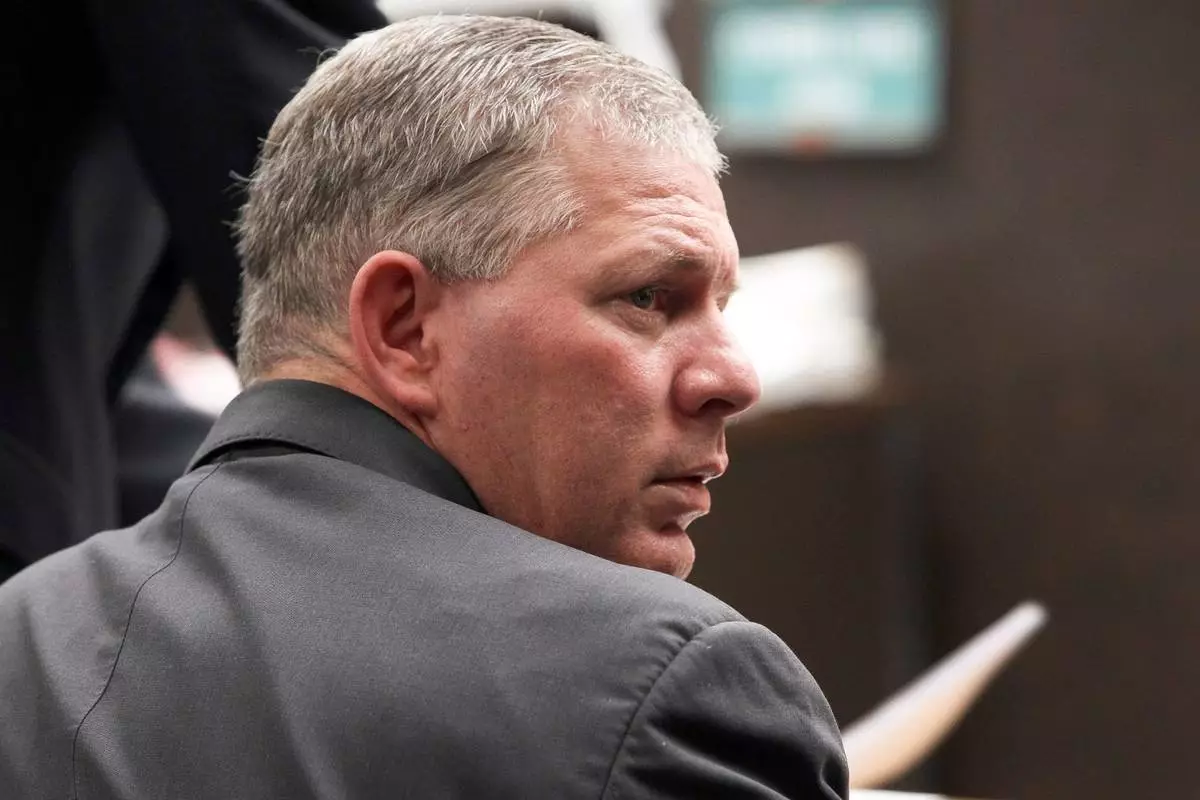
FILE - Former baseball player Lenny Dykstra sits during his sentencing for grand theft auto in Los Angeles, on Dec. 3, 2012. (AP Photo/Nick Ut, File)