Skip to Content Facebook Feature Image

Millennial Money: 'Tidy up' so each dollar sparks joy

News

Millennial Money: 'Tidy up' so each dollar sparks joy
News

News

Millennial Money: 'Tidy up' so each dollar sparks joy

2019-05-01 00:04 Last Updated At:00:10

Marie Kondo has inspired countless people to wipe out clutter. Her KonMari organizing method, popularized by her book and Netflix series, lays out how to get more joy from your life and possessions.

This approach can extend to your money, too. Applying her mindset can reduce the financial clutter in your life and help you make a better plan for each dollar. Here's how to "Marie Kondo" your finances.

COMMIT — AND IMAGINE A BETTER FUTURE
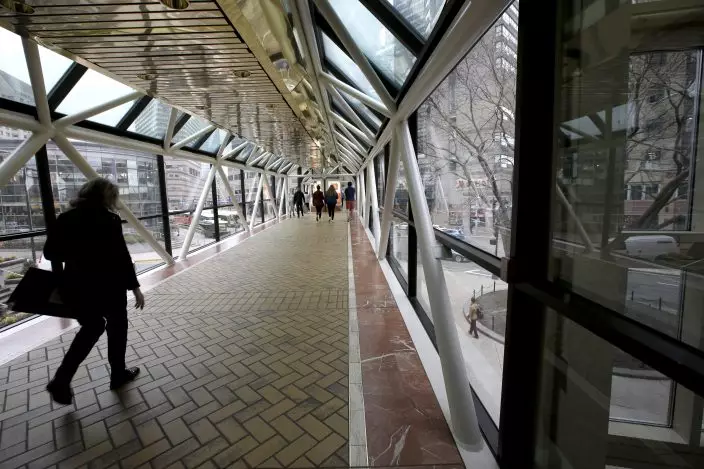
FILE - In this March 21, 2019 photo passers-by walk on a bridge between shopping centers, in Boston. Marie Kondo has inspired countless people to wipe out clutter. Her KonMari organizing method, popularized by her book and Netflix series, lays out how to get more joy from your life and possessions. This approach can extend to your money, too. Applying her mindset can reduce the financial clutter in your life and help you make a better plan for each dollar. (AP PhotoSteven Senne, File)

FILE - In this March 21, 2019 photo passers-by walk on a bridge between shopping centers, in Boston. Marie Kondo has inspired countless people to wipe out clutter. Her KonMari organizing method, popularized by her book and Netflix series, lays out how to get more joy from your life and possessions. This approach can extend to your money, too. Applying her mindset can reduce the financial clutter in your life and help you make a better plan for each dollar. (AP PhotoSteven Senne, File)

Before you dive in, commit yourself to the task and visualize what you'll gain.

Do you want to spend less on eating out? Are you saving up for a car or a house? Have a clear picture of your goal — a zero balance on your credit card, or that new car or home — to stay focused throughout the process.

"If you can create a mental image of what your life with your money will look like on the other side, it's a lot easier to create a path to get there," says Kimberly Zimmerman Rand, a Boston financial coach.

UNDERSTAND YOUR CATEGORIES

Kondo's method of tidying focuses on sorting through categories, like clothing, books and paperwork, and miscellaneous items.

Pull a few months of bank and credit card statements and take the same approach to your three main spending categories : needs, wants and savings.

NEEDS: The non-negotiables, like housing and debt payments, fall into this category. These monthly expenses may not bring you joy, but they keep a roof over your head and your credit score afloat.

If this category consumes an outsized portion of your income, see where you can trim. Trading in your car for a less expensive one, for example, could mean an extra $100 in your bank account every month. That gives you the ability to tuck a little more into savings.

Debt payments may be an unavoidable part of your budget, but you can find ways to make them fit more neatly. If you're sorting through a mess of credit card bills, for example, see about reworking the terms. By consolidating debt onto a credit card with an introductory 0% interest rate or via a personal loan, you can pay less in interest, though you'll need good credit to qualify. And you'll have less paperwork and fewer monthly payments to manage.

WANTS: Chances are this category brings you the most joy — but it's also likely where you can trim the most. Expenses like meals out, new clothes or vacations fit here.

Examine your spending on wants and ask if each one brings commensurate enjoyment. If not, trim or cut that expense. Keeping that money in your accounts could make you happier by reducing financial stress or helping you see progress on retirement savings.

Subscription services are an easy target, says Brian Walsh, a certified financial planner and manager of financial planning at SoFi, an online lender.

"When people start tracking their spending, they may see unused services come up," Walsh says. "Gym memberships, game memberships, Netflix and Hulu at the same time. These can be easy cuts to make."

SAVINGS: This category can be a little too easy to keep minimal. In fact, 4 in 10 Americans said they couldn't come up with $400 in an emergency or would have to borrow or sell something, according to a May 2018 report by the Federal Reserve.

Building up your savings helps keep your finances tidy when life gets messy, such as when a sudden car repair pops up. Tucking away even $50 a month can make a difference.

SET YOURSELF UP FOR SUCCESS

Once you've tidied up your spending categories, it's time to set yourself up to achieve financial goals. Streamline your money management and reduce paperwork you may have lying around.

Automating payments for things like utility bills, student loan payments and credit card payments is an easy option. It also protects you from accidentally missing a payment and tanking your credit score.

Shred old financial paperwork, such as bank statements or paid utility bills. Signing up for digital versions online means there's no need to keep them. Don't go overboard, though; you do want to hang on to tax documents .

To keep up the good habits in the long run, Kristen Holt, CEO of the nonprofit credit counseling agency GreenPath Financial Wellness, recommends focusing on your goals.

"Take steps to set and forget your finances, like automating payments," Holt says. "And continue to tie your work back to your dream."

RELATED LINKS:

NerdWallet: List These Monthly Expenses in Your Budget http://bit.ly/nerdwallet-DIY-budget

IRS: Topic Number 305 - Record Keeping https://www.irs.gov/taxtopics/tc305

MILWAUKEE (AP) — Four years after showing up late for the Beijing Olympics and missing one of his races because of a case of COVID-19, U.S. long track speedskater Casey Dawson is enjoying what he jokingly terms his “villain arc,” peaking at the right time ahead of the Milan Cortina Games.

Dawson secured a spot for next month in the men's 5,000 meters — an event he was forced to skip in 2022 while sick — by winning at that distance at the U.S. Olympic trials in 6 minutes, 12.857 seconds on Friday night.

“I actually got COVID two or three weeks before going to the competition. Tested positive for 50 straight tests,” said Dawson, a 25-year-old from Park City, Utah. “Couldn’t go over to the Games. I missed the opening ceremonies. Missed the 5,000 meters. Showed up 12 hours before my 1,500 meters. So I kind of got a little screwed over from that point of view. But this time around, I’m just looking forward to getting there smoothly and just getting a little bit of redemption.”

And then, with a chuckle, Dawson added: “It’s kind of fun to have, like, my villain arc, I would call it. Just coming back and having some fun.”

Ethan Cepuran was about 6 1/2 seconds back Friday, finishing next in 6:19.335.

The last American man to medal in the 5,000 at an Olympics was Chad Hedrick at the 2006 Turin Games.

Dawson already had secured the lone U.S. place for Milan in the men’s 10,000 — a race not being contested at these trials — and also will be part of the trio for men’s team pursuit at the Olympics.

Dawson, Cepuran and Emery Lehman took the bronze in that event in Beijing four years ago, set the world record in 2024 and claimed gold in the team pursuit at the world championships in March.

In the other race Friday, the women's 3,000, Greta Myers won in 4:06.799. As of now, the United States does not have a berth in Milan for that distance, but one of its athletes could end up in the field if another country relinquishes an opening.

“It's hard to wait,” said Myers, a 21-year-old from Lino Lakes, Minnesota. “But I'm very hopeful. I think it's at least a 50-50 chance that it'll happen.”

The U.S. Olympic roster for long track won't become official until the four-day trials at the Pettit National Ice Center wrap up on Monday. One element that could come into play is that the Americans are allowed to bring a maximum of eight men and six women to these Winter Games.

The biggest star of the team — and the sport — is scheduled to make his trials debut Saturday in the men's 1,000 meters: Jordan Stolz. The 21-year-old from Kewaskum, a town about 40 miles north of Milwaukee, is not just competing at home this week; he's racing at the same rink where he first began taking lessons as a kid.

He made his Olympic debut at age 17 in Beijing four years ago, finishing 13th in the 500 and 14th in the 1,000.

At both the 2023 and 2024 world championships, Stolz earned titles in each of the 500, 1,000 and 1,500 meters.

He's already pre-qualified for the Olympics based on performances at those three distances. All he really needs to do to lock down berths on the squad for the Feb. 6-22 Milan Cortina Games is show up at the starting line this week.

The 500 and 1,500 are slated for Sunday, and the mass start is Monday.

AP Winter Olympics: https://apnews.com/hub/milan-cortina-2026-winter-olympics

Casey Dawson, of Park City, Utah, right, and Ethan Cepuran, of Glen Ellyn, lllinois, left, compete in the men's 5,000 meters at the U.S. Olympic trials for long track speed skating at the Pettit National Ice Center in Milwaukee, Friday, Jan. 2, 2026. (AP Photo/Howard Fendrich)

Casey Dawson, of Park City, Utah, right, and Ethan Cepuran, of Glen Ellyn, lllinois, left, compete in the men's 5,000 meters at the U.S. Olympic trials for long track speed skating at the Pettit National Ice Center in Milwaukee, Friday, Jan. 2, 2026. (AP Photo/Howard Fendrich)

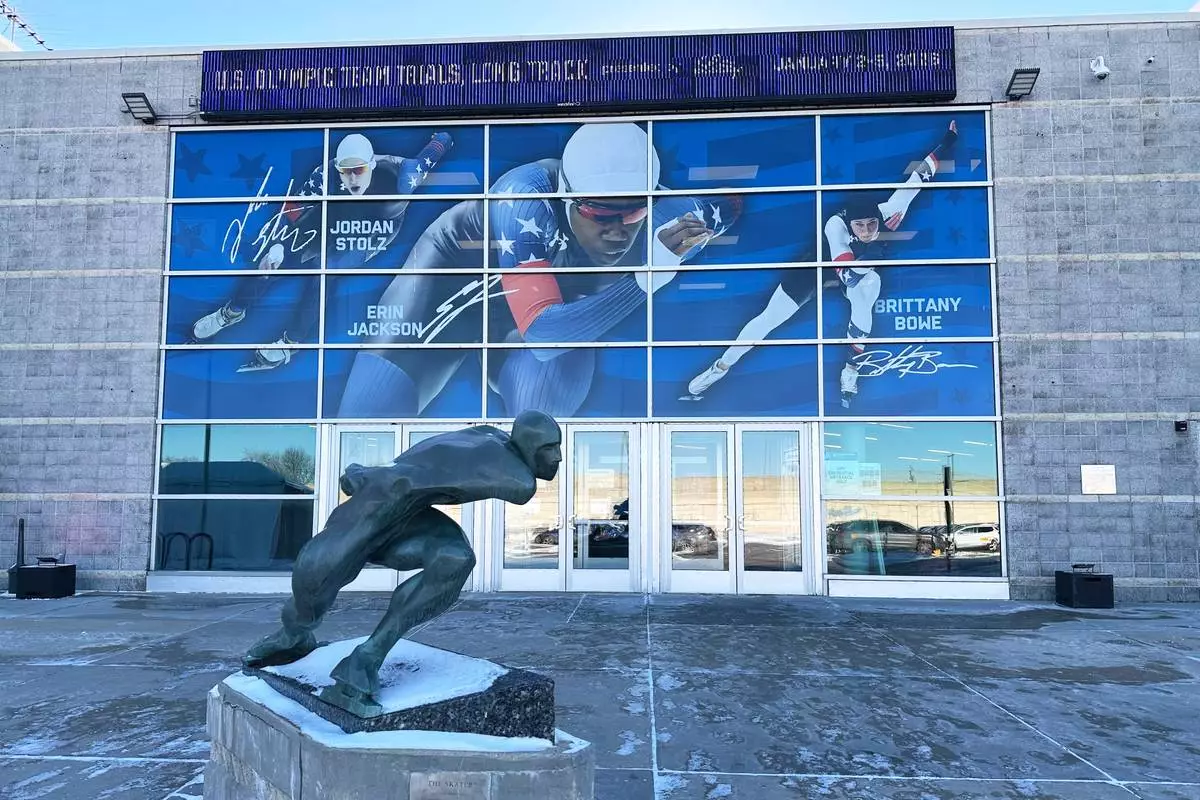
The Pettit National Ice Center is seen in Milwaukee on Friday, Jan. 2, 2026, the first day of the U.S. Olympic trials for long track speedskating. (AP Photo/Howard Fendrich)

The Pettit National Ice Center is seen in Milwaukee on Friday, Jan. 2, 2026, the first day of the U.S. Olympic trials for long track speedskating. (AP Photo/Howard Fendrich)

Recommended Articles