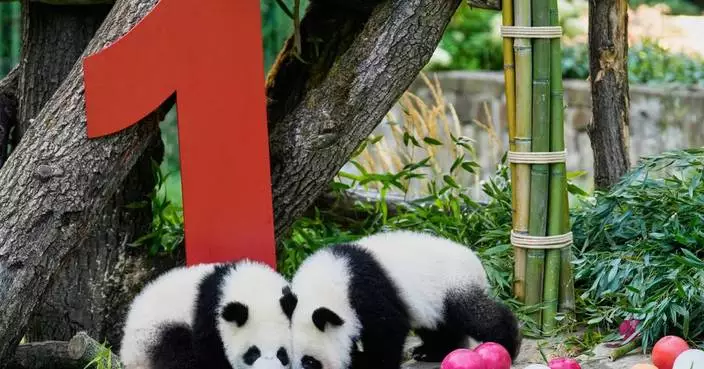
An addax, Arabian oryx, two Grevy’s zebra and two giant elands were born last week.
Zoo Miami has welcomed six new baby animals to six different mothers at its sanctuary.
All six animals are females and from species that have been classified as either endangered or vulnerable.
The first birth was a female addax born on July 2. Addaxes are African desert antelopes and are one of the most endangered animals in the world, with fewer than 100 left in the Sahara.
The second birth was a Grevy’s zebra born on July 5.
They have thin stripes and large ears, and are indigenous to north-eastern Africa.
Two days later, an Arabian oryx, a species that was recently successfully reintroduced to the wild, was born.
The week finished with the births of another Grevy’s zebra and two giant elands, large antelopes found in central Africa deemed vulnerable.
The zoo is also anticipating two more births any day now, of another giant eland and a giraffe.
RIO DE JANEIRO (AP) — Animals at Rio de Janeiro’s BioParque zoo received popsicles and frozen treats Tuesday as the city faced another day of extreme heat during Brazil’s summer.
Jaguars, monkeys and other animals were given an iced diet prepared according to each species’ needs, zoo officials said. Some received frozen fruit, while others were offered mixtures containing frozen blood.
A group of monkeys were handed watermelon popsicles by zoo keepers. A jaguar tried to fish out ground chicken popsicles from a tray that floated in its water tank.
“When she tries to fish out the frozen food, she ends up ingesting water as well,” said Letizia Feitoza, a biologist at the zoo. “This is important for her hydration.”
Zoo officials said the frozen foods are part of routine animal care and help provide thermal comfort during periods of extreme heat. Similar initiatives were carried out last summer as high temperatures affected much of Brazil’s southeast.
Temperatures in Rio de Janeiro rose over 40 degrees Celsius (104 Fahrenheit) on Sunday and Monday, prompting city authorities to issue a Level 3 heat alert and warn of health risks linked to prolonged exposure.
The high temperatures haven’t stopped residents from visiting the Bioparque Zoo, where they watched the animals licking on their red popsicles.
“I thought it was really cool,” said Lorena Carvalho, a teacher visiting the zoo. “I think it brings them more comfort.”
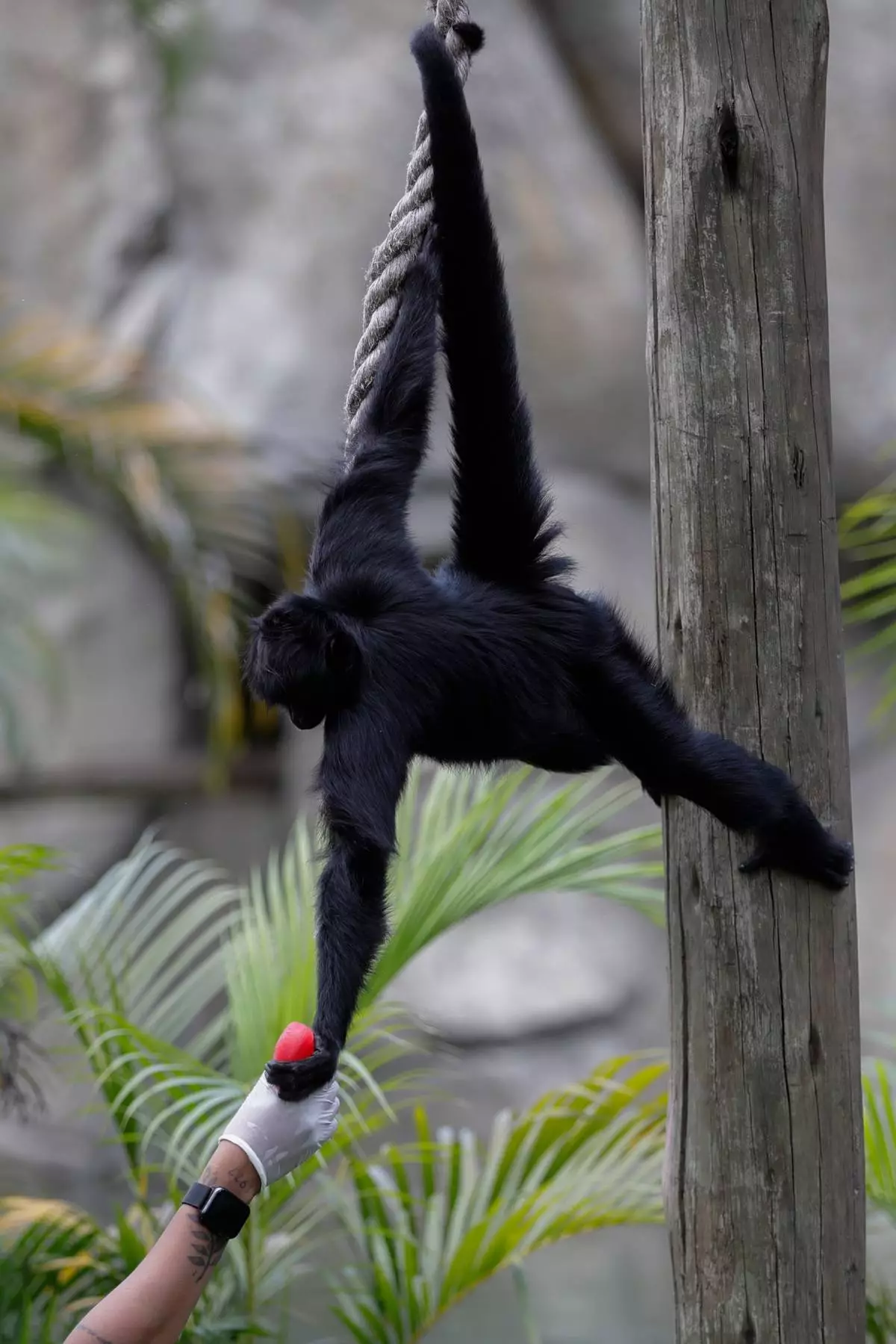
A zookeeper hands a popsicle to a chamek spider monkey during the summer heat at the BioParque do Rio in Rio de Janeiro, Tuesday, Jan. 13, 2026. (AP Photo/Bruna Prado)
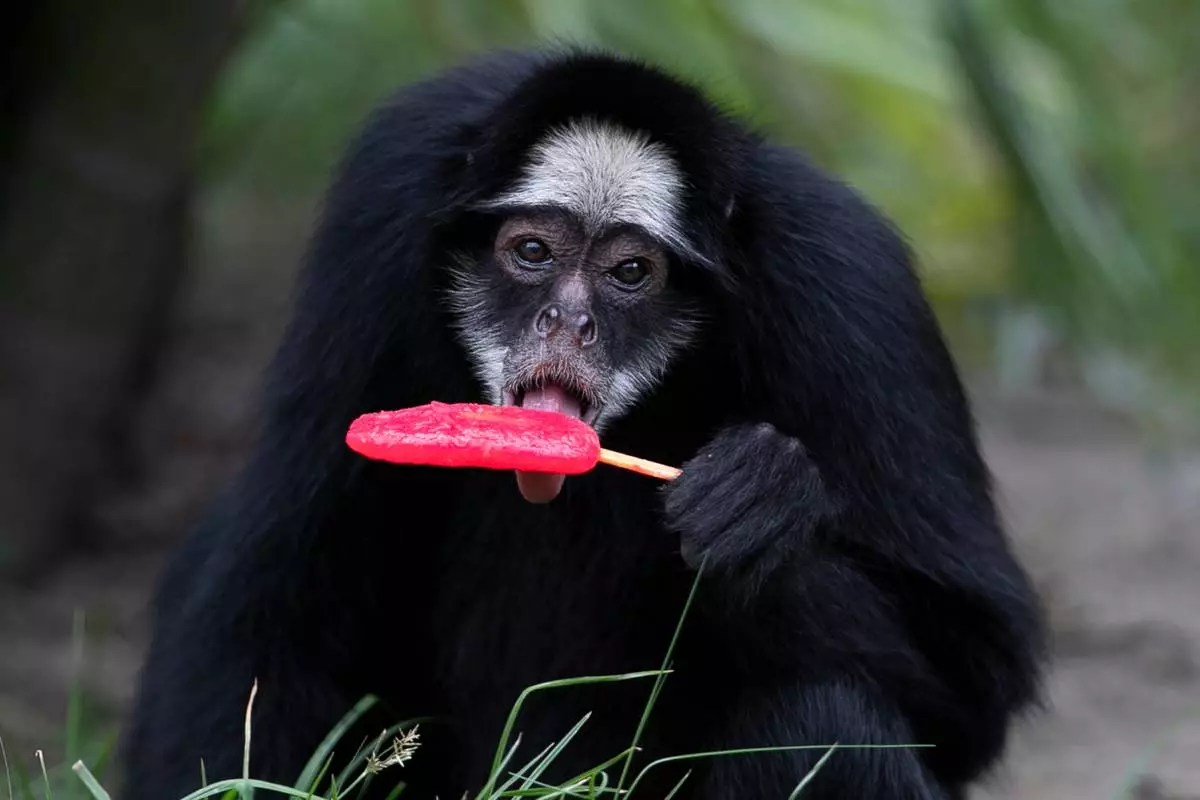
A white-cheeked spider monkey licks a popsicle in the summer heat at the BioParque do Rio in Rio de Janeiro, Tuesday, Jan. 13, 2026. (AP Photo/Bruna Prado)