Skip to Content Facebook Feature Image

Congress grills Big Tech over competition, money and power

News

Congress grills Big Tech over competition, money and power
News

News

Congress grills Big Tech over competition, money and power

2019-07-17 16:37 Last Updated At:16:40

Big Tech faced tough questions Tuesday as federal lawmakers focused on issues of potentially anticompetitive behavior by technology giants and expressed bipartisan skepticism over Facebook's plan for a new digital currency.

Companies such as Apple, Google, Facebook and Amazon have long enjoyed nearly unbridled growth and a mythic stature as once-scrappy startups — born in garages and a dorm room and a road trip across the United States — that grew up to dominate their rivals. But as they've grown more powerful, critics have also grown louder, questioning whether the companies stifle competition and innovation, and if their influence poses a danger to society.

More Images
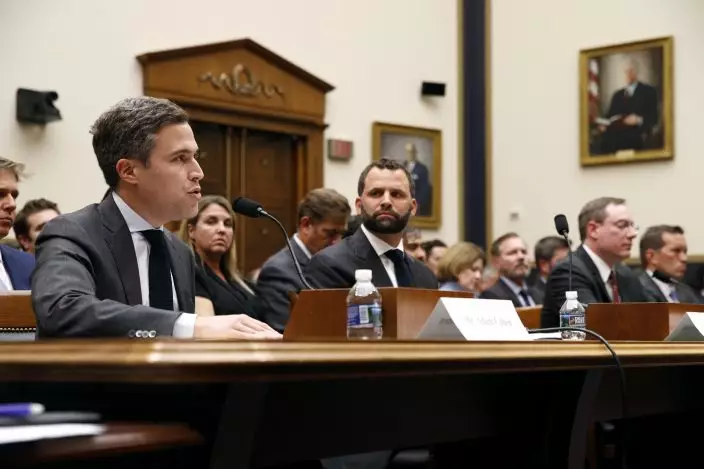
Google Director of Economic Policy Adam Cohen, left, testifies during a House Judiciary subcommittee hearing, Tuesday, July 16, 2019, on Capitol Hill in Washington. (AP PhotoPatrick Semansky)
Google Director of Economic Policy Adam Cohen, left, testifies during a House Judiciary subcommittee hearing, Tuesday, July 16, 2019, on Capitol Hill in Washington. (AP PhotoPatrick Semansky)
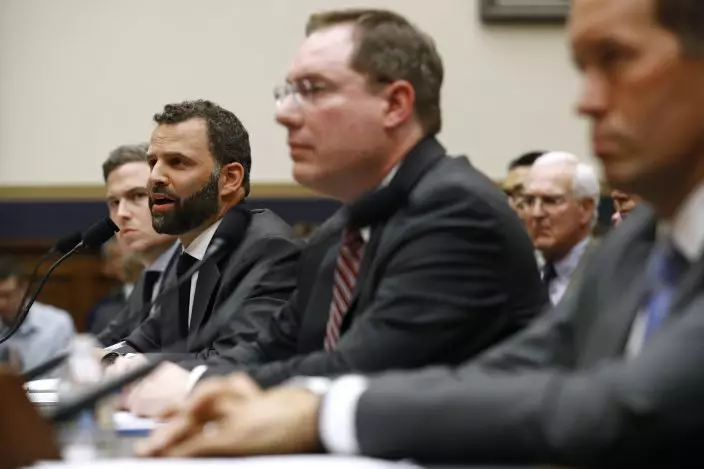
Facebook Head of Global Policy Development Matt Perault, second from left, testifies alongside Google Director of Economic Policy Adam Cohen, back left, Amazon Associate General Counsel Nate Sutton, second from right, and Apple Vice President for Corporate Law and Chief Compliance Officer Kyle Andeer during a House Judiciary subcommittee hearing, Tuesday, July 16, 2019, on Capitol Hill in Washington. (AP PhotoPatrick Semansky)
Facebook Head of Global Policy Development Matt Perault, second from left, testifies alongside Google Director of Economic Policy Adam Cohen, back left, Amazon Associate General Counsel Nate Sutton, second from right, and Apple Vice President for Corporate Law and Chief Compliance Officer Kyle Andeer during a House Judiciary subcommittee hearing, Tuesday, July 16, 2019, on Capitol Hill in Washington. (AP PhotoPatrick Semansky)
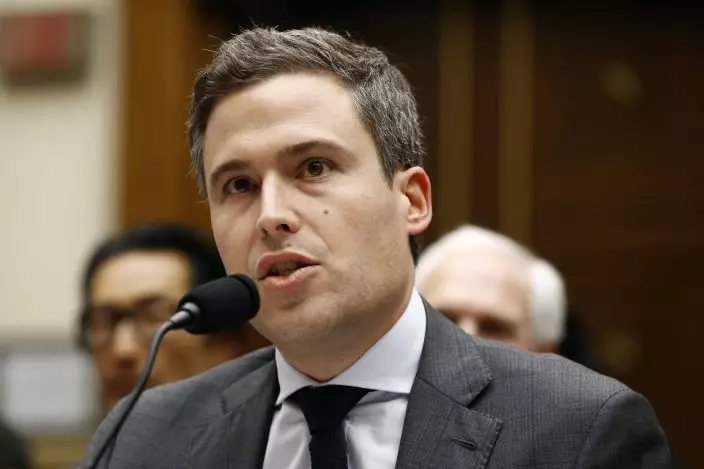
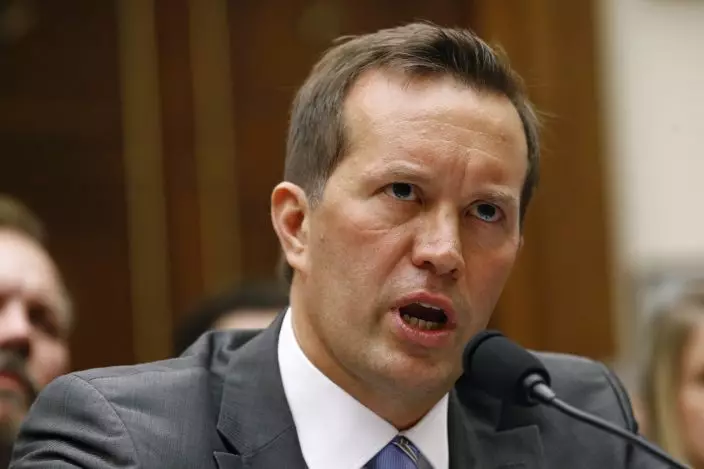
Apple Vice President for Corporate Law and Chief Compliance Officer Kyle Andeer testifies during a House Judiciary subcommittee hearing, Tuesday, July 16, 2019, on Capitol Hill in Washington. (AP PhotoPatrick Semansky)
Apple Vice President for Corporate Law and Chief Compliance Officer Kyle Andeer testifies during a House Judiciary subcommittee hearing, Tuesday, July 16, 2019, on Capitol Hill in Washington. (AP PhotoPatrick Semansky)
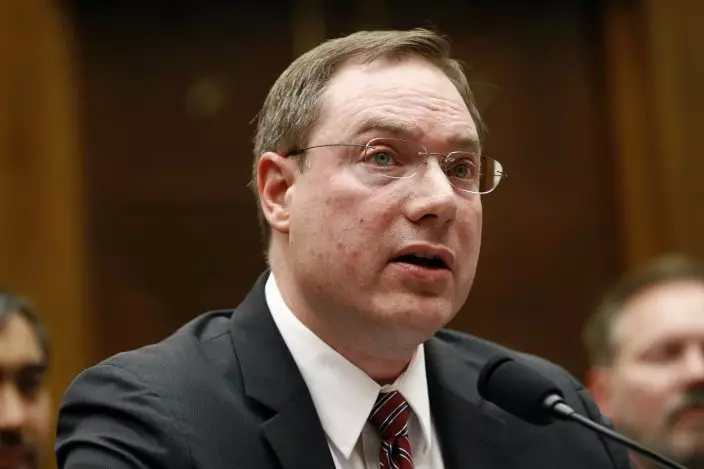
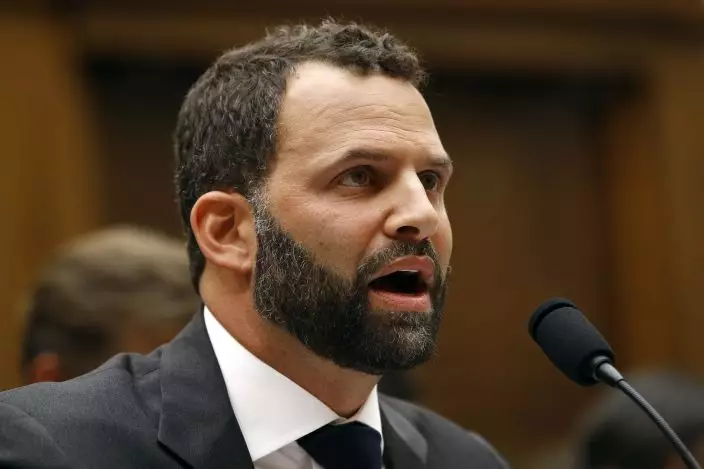
Amazon Associate General Counsel Nate Sutton testifies during a House Judiciary subcommittee hearing, Tuesday, July 16, 2019, on Capitol Hill in Washington. (AP PhotoPatrick Semansky)

Amazon Associate General Counsel Nate Sutton testifies during a House Judiciary subcommittee hearing, Tuesday, July 16, 2019, on Capitol Hill in Washington. (AP PhotoPatrick Semansky)

Google Director of Economic Policy Adam Cohen testifies during a House Judiciary subcommittee hearing, Tuesday, July 16, 2019, on Capitol Hill in Washington. (AP PhotoPatrick Semansky)

Google Director of Economic Policy Adam Cohen testifies during a House Judiciary subcommittee hearing, Tuesday, July 16, 2019, on Capitol Hill in Washington. (AP PhotoPatrick Semansky)

Facebook Head of Global Policy Development Matt Perault testifies during a House Judiciary subcommittee hearing, Tuesday, July 16, 2019, on Capitol Hill in Washington. (AP PhotoPatrick Semansky)

Facebook Head of Global Policy Development Matt Perault testifies during a House Judiciary subcommittee hearing, Tuesday, July 16, 2019, on Capitol Hill in Washington. (AP PhotoPatrick Semansky)

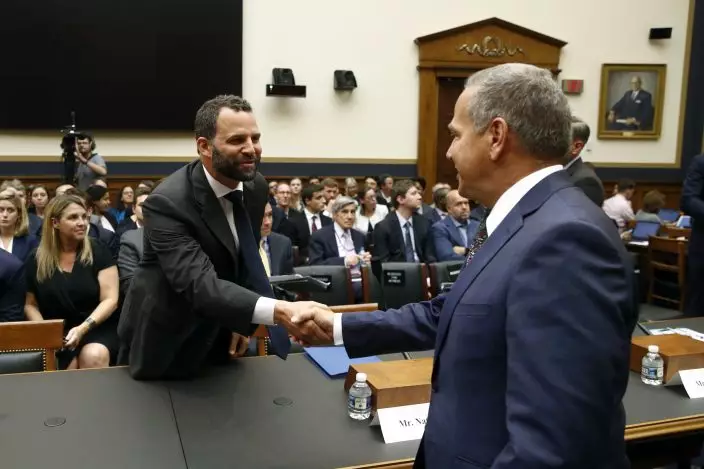
Facebook Head of Global Policy Development Matt Perault, left, shakes hands with Rep. David Cicilline, D-R.I., chair of the House Judiciary antitrust subcommittee, before testifying at a hearing, Tuesday, July 16, 2019, on Capitol Hill in Washington. (AP PhotoPatrick Semansky)
Facebook Head of Global Policy Development Matt Perault, left, shakes hands with Rep. David Cicilline, D-R.I., chair of the House Judiciary antitrust subcommittee, before testifying at a hearing, Tuesday, July 16, 2019, on Capitol Hill in Washington. (AP PhotoPatrick Semansky)

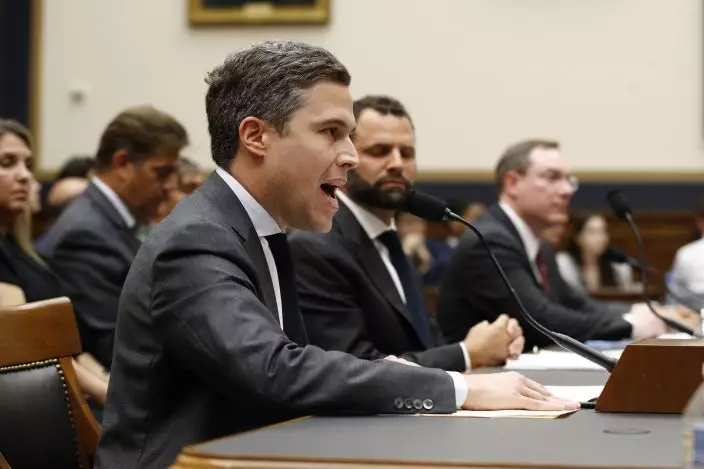
Google Director of Economic Policy Adam Cohen testifies alongside Facebook Head of Global Policy Development Matt Perault, back center, and Amazon Associate General Counsel Nate Sutton, back right, during a House Judiciary subcommittee hearing, Tuesday, July 16, 2019, on Capitol Hill in Washington. (AP PhotoPatrick Semansky)

Google Director of Economic Policy Adam Cohen testifies alongside Facebook Head of Global Policy Development Matt Perault, back center, and Amazon Associate General Counsel Nate Sutton, back right, during a House Judiciary subcommittee hearing, Tuesday, July 16, 2019, on Capitol Hill in Washington. (AP PhotoPatrick Semansky)
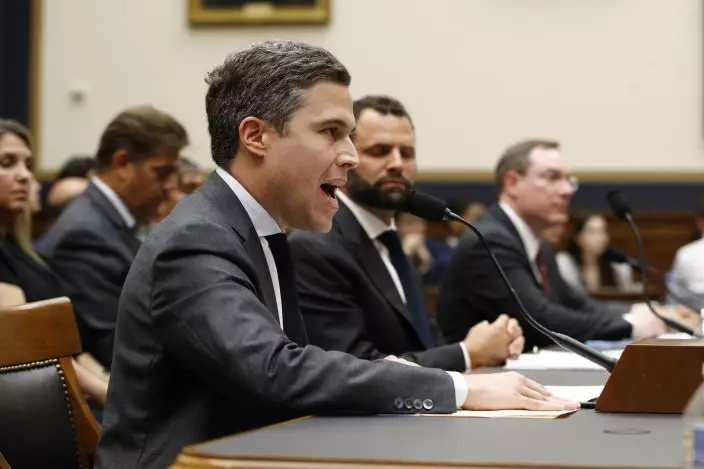
Google Director of Economic Policy Adam Cohen, left, testifies alongside Facebook Head of Global Policy Development Matt Perault, second from left, Amazon Associate General Counsel Nate Sutton and Apple Vice President for Corporate Law and Chief Compliance Officer Kyle Andeer during a House Judiciary subcommittee hearing, Tuesday, July 16, 2019, on Capitol Hill in Washington. (AP PhotoPatrick Semansky)
Google Director of Economic Policy Adam Cohen, left, testifies alongside Facebook Head of Global Policy Development Matt Perault, second from left, Amazon Associate General Counsel Nate Sutton and Apple Vice President for Corporate Law and Chief Compliance Officer Kyle Andeer during a House Judiciary subcommittee hearing, Tuesday, July 16, 2019, on Capitol Hill in Washington. (AP PhotoPatrick Semansky)


Google Director of Economic Policy Adam Cohen testifies during a House Judiciary subcommittee hearing, Tuesday, July 16, 2019, on Capitol Hill in Washington. (AP PhotoPatrick Semansky)

Google Director of Economic Policy Adam Cohen testifies during a House Judiciary subcommittee hearing, Tuesday, July 16, 2019, on Capitol Hill in Washington. (AP PhotoPatrick Semansky)

Amazon Associate General Counsel Nate Sutton testifies during a House Judiciary subcommittee hearing, Tuesday, July 16, 2019, on Capitol Hill in Washington. (AP PhotoPatrick Semansky)

Amazon Associate General Counsel Nate Sutton testifies during a House Judiciary subcommittee hearing, Tuesday, July 16, 2019, on Capitol Hill in Washington. (AP PhotoPatrick Semansky)
Both Democrats and Republicans had grievances to air, even if there wasn't much consensus on what to do about them.

Google Director of Economic Policy Adam Cohen, left, testifies during a House Judiciary subcommittee hearing, Tuesday, July 16, 2019, on Capitol Hill in Washington. (AP PhotoPatrick Semansky)

Google Director of Economic Policy Adam Cohen, left, testifies during a House Judiciary subcommittee hearing, Tuesday, July 16, 2019, on Capitol Hill in Washington. (AP PhotoPatrick Semansky)

An afternoon panel of the House Judiciary Committee focused on whether it's time for Congress to rein in these companies, which are among the largest on Earth by several measures. Central to that case is whether their business practices run afoul of century-old laws originally designed to combat railroad and oil monopolies.

For some legislators, mostly Democrats, those laws are in need of updates or at least more stringent enforcement. Ultimately such action could lead to breaking up big online platforms, blocking future acquisitions or imposing other limits on their actions.

Subcommittee chairman David Cicilline, a Rhode Island Democrat, charged that technology giants had enjoyed "de facto immunity" thanks to current antitrust doctrine, which typically equates anticompetitive behavior with higher prices for consumers. That allowed them to expand without restraint and to gobble up potential competitors, he argued, creating a "startup kill zone" that prevents smaller companies from challenging incumbents with innovative services and technology.

Facebook Head of Global Policy Development Matt Perault, second from left, testifies alongside Google Director of Economic Policy Adam Cohen, back left, Amazon Associate General Counsel Nate Sutton, second from right, and Apple Vice President for Corporate Law and Chief Compliance Officer Kyle Andeer during a House Judiciary subcommittee hearing, Tuesday, July 16, 2019, on Capitol Hill in Washington. (AP PhotoPatrick Semansky)

Facebook Head of Global Policy Development Matt Perault, second from left, testifies alongside Google Director of Economic Policy Adam Cohen, back left, Amazon Associate General Counsel Nate Sutton, second from right, and Apple Vice President for Corporate Law and Chief Compliance Officer Kyle Andeer during a House Judiciary subcommittee hearing, Tuesday, July 16, 2019, on Capitol Hill in Washington. (AP PhotoPatrick Semansky)

A panel of four mid-level executives from the companies countered that their firms continue to innovate, that they face vigorous competition on all fronts — including from one another — and, perhaps most of all, that they were not monopolists in any way, shape or form.

Facebook, for instance, has argued that it is not a monopoly because it has many competitors in businesses as diverse as private messaging, photo sharing and online advertising.

So Democratic Rep. Joe Neguse of Colorado asked Facebook's head of global policy development, Matt Perault, to name the world's largest social network by active users. (It is Facebook.) When Perault said he couldn't, Neguse ticked off four of the six largest — Facebook, Facebook Messenger, Instagram and WhatsApp — and had Perault verify that all are owned by Facebook.

Apple Vice President for Corporate Law and Chief Compliance Officer Kyle Andeer testifies during a House Judiciary subcommittee hearing, Tuesday, July 16, 2019, on Capitol Hill in Washington. (AP PhotoPatrick Semansky)

Apple Vice President for Corporate Law and Chief Compliance Officer Kyle Andeer testifies during a House Judiciary subcommittee hearing, Tuesday, July 16, 2019, on Capitol Hill in Washington. (AP PhotoPatrick Semansky)

"We have a word for that and that word is monopoly, or at least monopoly power," Neguse said.

The company representatives didn't help their case by pleading ignorance on multiple occasions. Google's director of economic policy, Adam Cohen, said he was "not familiar" with how much Google pays Apple for the right to supply the default search engine for Safari on iPhones. (Rep. Jamie Raskin, a Democrat from Maryland, said It was $9 billion in 2018 and $12 billion in 2019.) Cohen also said he was "not familiar" with allegations of widespread fraudulent listings on Google Maps.

Amazon also faced some pointed questioning. Cicilline asked Nate Sutton, an associate general counsel at the online retailer, whether it uses the data it collects about popular products to direct consumers to Amazon's own in-house products.

Amazon Associate General Counsel Nate Sutton testifies during a House Judiciary subcommittee hearing, Tuesday, July 16, 2019, on Capitol Hill in Washington. (AP PhotoPatrick Semansky)

Amazon Associate General Counsel Nate Sutton testifies during a House Judiciary subcommittee hearing, Tuesday, July 16, 2019, on Capitol Hill in Washington. (AP PhotoPatrick Semansky)

Sutton said the company doesn't use third-party sellers' data to "directly compete" with them. Cicilline, affecting disbelief, twice reminded Sutton that he was under oath. "Amazon is a trillion-dollar company that runs an online platform with real-time data," he said.

Expert witnesses suggested it might be time to reassess antitrust policy. Timothy Wu, a law professor at Columbia University who has advocated for more expansive antitrust enforcement, noted concerns about a fall in the number of startups being formed, and wondered aloud whether the U.S. will remain a place where startups thrive and launch new industries.

Fiona Scott Morton, a Yale economics professor, argued that stifled competition has hampered innovation and hurt both smaller businesses and consumers, who have no choice but to surrender their privacy and watch more advertising.

Google Director of Economic Policy Adam Cohen testifies during a House Judiciary subcommittee hearing, Tuesday, July 16, 2019, on Capitol Hill in Washington. (AP PhotoPatrick Semansky)

Google Director of Economic Policy Adam Cohen testifies during a House Judiciary subcommittee hearing, Tuesday, July 16, 2019, on Capitol Hill in Washington. (AP PhotoPatrick Semansky)

Others, mostly Republicans, rejected what they described as a big-is-bad approach in favor of keeping antitrust enforcers narrowly focused on protecting consumers when there's clear evidence of harm such as price gouging.

Attorney Maureen Ohlhausen, a former Republican commissioner and acting chairwoman of the Federal Trade Commission, said the government can still protect against anticompetitive behavior without "reducing the focus on consumer welfare." She warned against "drastic" steps such as breakups that carry "serious risk of doing more harm than good for competition and consumers."

Earlier in the day, a Facebook executive appeared before a Senate panel to defend the company's ambitious plan to create a digital currency and pledged to work with regulators to achieve a system that protects the privacy of users' data. David Marcus, who leads the Libra project, faced sharp criticism from both Democrats and Republicans.

Facebook Head of Global Policy Development Matt Perault testifies during a House Judiciary subcommittee hearing, Tuesday, July 16, 2019, on Capitol Hill in Washington. (AP PhotoPatrick Semansky)

Facebook Head of Global Policy Development Matt Perault testifies during a House Judiciary subcommittee hearing, Tuesday, July 16, 2019, on Capitol Hill in Washington. (AP PhotoPatrick Semansky)

"Facebook is dangerous," asserted Sen. Sherrod Brown of Ohio, the committee's senior Democrat. Like a toddler playing with matches, "Facebook has burned down the house over and over," he told Marcus. "Do you really think people should trust you with their bank accounts and their money?"

Republican Sen. Martha McSally of Arizona said "the core issue here is trust." Users won't be able to opt out of providing their personal data when joining the new digital wallet for Libra, McSally said.

AP business writer Marcy Gordon contributed to this article from Washington, D.C.

Facebook Head of Global Policy Development Matt Perault, left, shakes hands with Rep. David Cicilline, D-R.I., chair of the House Judiciary antitrust subcommittee, before testifying at a hearing, Tuesday, July 16, 2019, on Capitol Hill in Washington. (AP PhotoPatrick Semansky)

Facebook Head of Global Policy Development Matt Perault, left, shakes hands with Rep. David Cicilline, D-R.I., chair of the House Judiciary antitrust subcommittee, before testifying at a hearing, Tuesday, July 16, 2019, on Capitol Hill in Washington. (AP PhotoPatrick Semansky)

Google Director of Economic Policy Adam Cohen testifies alongside Facebook Head of Global Policy Development Matt Perault, back center, and Amazon Associate General Counsel Nate Sutton, back right, during a House Judiciary subcommittee hearing, Tuesday, July 16, 2019, on Capitol Hill in Washington. (AP PhotoPatrick Semansky)

Google Director of Economic Policy Adam Cohen testifies alongside Facebook Head of Global Policy Development Matt Perault, back center, and Amazon Associate General Counsel Nate Sutton, back right, during a House Judiciary subcommittee hearing, Tuesday, July 16, 2019, on Capitol Hill in Washington. (AP PhotoPatrick Semansky)

Google Director of Economic Policy Adam Cohen, left, testifies alongside Facebook Head of Global Policy Development Matt Perault, second from left, Amazon Associate General Counsel Nate Sutton and Apple Vice President for Corporate Law and Chief Compliance Officer Kyle Andeer during a House Judiciary subcommittee hearing, Tuesday, July 16, 2019, on Capitol Hill in Washington. (AP PhotoPatrick Semansky)

Google Director of Economic Policy Adam Cohen, left, testifies alongside Facebook Head of Global Policy Development Matt Perault, second from left, Amazon Associate General Counsel Nate Sutton and Apple Vice President for Corporate Law and Chief Compliance Officer Kyle Andeer during a House Judiciary subcommittee hearing, Tuesday, July 16, 2019, on Capitol Hill in Washington. (AP PhotoPatrick Semansky)

Google Director of Economic Policy Adam Cohen testifies during a House Judiciary subcommittee hearing, Tuesday, July 16, 2019, on Capitol Hill in Washington. (AP PhotoPatrick Semansky)

Google Director of Economic Policy Adam Cohen testifies during a House Judiciary subcommittee hearing, Tuesday, July 16, 2019, on Capitol Hill in Washington. (AP PhotoPatrick Semansky)

Amazon Associate General Counsel Nate Sutton testifies during a House Judiciary subcommittee hearing, Tuesday, July 16, 2019, on Capitol Hill in Washington. (AP PhotoPatrick Semansky)

Amazon Associate General Counsel Nate Sutton testifies during a House Judiciary subcommittee hearing, Tuesday, July 16, 2019, on Capitol Hill in Washington. (AP PhotoPatrick Semansky)

HAVANA (AP) — Cuban President Miguel Díaz-Canel said Monday that his administration is not in talks with the U.S. government, a day after President Donald Trump threatened the Caribbean island in the wake of the U.S. attack on Venezuela.

Díaz-Canel posted a flurry of brief statements on X after Trump suggested that Cuba “make a deal, BEFORE IT IS TOO LATE.” He did not say what kind of deal.

Díaz-Canel wrote that for “relations between the U.S. and Cuba to progress, they must be based on international law rather than hostility, threats, and economic coercion.”

He added: “We have always been willing to hold a serious and responsible dialogue with the various US governments, including the current one, on the basis of sovereign equality, mutual respect, principles of International Law, and mutual benefit without interference in internal affairs and with full respect for our independence.”

His statements were reposted by Cuban Foreign Minister Bruno Rodríguez on X.

On Sunday, Trump wrote that Cuba would no longer live off oil and money from Venezuela, which the U.S. attacked on Jan. 3 in a stunning operation that killed 32 Cuban officers and led to the arrest of President Nicolás Maduro.

Cuba was receiving an estimated 35,000 barrels a day from Venezuela before the U.S. attacked, along with some 5,500 barrels daily from Mexico and roughly 7,500 from Russia, according to Jorge Piñón of the Energy Institute at the University of Texas at Austin, who tracks the shipments.

On Monday, Mexican President Claudia Sheinbaum once again declined to provide data on current oil shipments or say whether such shipments would increase when Venezuelan supplies end. She insisted that the aid “has been ongoing for a long time; it’s not new.”

Sheinbaum said Mexico’s fuel supply to Cuba is not a concern for her country because “there is enough oil” — even though production of state-owned oil company Petróleos Mexicanos is steadily declining. She reiterated that her government is willing to facilitate dialogue between the U.S. and Cuba if both agree.

Even with oil shipments from Venezuela, widespread blackouts have persisted across Cuba given fuel shortages and a crumbling electric grid. Experts worry a lack of petroleum would only deepen the island's multiple crises that stem from an economic paralysis during the COVID-19 pandemic and a radical increase in U.S. sanctions following the first Trump administration, which aim to force a change in Cuba's political model.

The communist government has said U.S. sanctions cost the country more than $7.5 billion between March 2024 and February 2025, a staggering sum for an island whose tourism revenue reached some $3 billion annually at its peak in the previous decade.

The crisis also has triggered a large wave of migration primarily to the United States, where Cubans enjoyed immigration privileges as exiles. Those privileges were curtailed before Trump closed U.S. borders.

The situation between the U.S. and Cuba is “very sad and concerning,” said Andy S. Gómez, retired dean of the School of International Studies and senior fellow in Cuban Studies at the University of Miami.

He said he sees Díaz-Canel’s latest comments “as a way to try and buy a little bit of time for the inner circle to decide what steps it’s going to take.”

Gómez said he doesn’t visualize Cuba reaching out to U.S. officials right now.

“They had every opportunity when President (Barack) Obama opened up U.S. diplomatic relations, and yet they didn’t even bring Cuban coffee to the table,” Gómez said. “Of course, these are desperate times for Cuba.”

Michael Galant, senior research and outreach associate at the Center for Economic and Policy Research in Washington, D.C., said he believes Cuba might be willing to negotiate.

“Cuba has been interested in finding ways to ease sanctions,” he said. “It's not that Cuba is uncooperative.”

Galant said topics for discussion could include migration and security, adding that he believes Trump is not in a hurry.

“Trump is hoping to deepen the economic crisis on the island, and there are few costs to Trump to try and wait that out,” he said. “I don’t think it’s likely that there will be any dramatic action in the coming days because there is no rush to come to the table.”

Cuba's president stressed on X that “there are no talks with the U.S. government, except for technical contacts in the area of ​​migration.”

As tensions remained heightened, life went on as usual for many Cubans, although some were more concerned than others.

Oreidy Guzmán, a 32- year-old food delivery person, said he doesn't want anything bad to happen to Cubans, “but if something has to happen, the people deserve change.”

Meanwhile, 37-year-old homemaker Meilyn Gómez said that while she doesn't believe the U.S. would invade Cuba, she was preparing for any possible outcome under Trump: “He'll find entertainment anywhere.”

The current situation is dominating chatter among Cubans on the island and beyond.

“Cuban people talk and talk,” said 57-year-old bartender Rubén Benítez, “but to be honest, eleven, eight or nine million will take to the streets to defend what little we have left.”

Coto reported from San Juan, Puerto Rico. Associated Press reporter María Verza in Mexico City contributed to this report.

The Cuban flag flies at half-mast at the Anti-Imperialist Tribune near the U.S. embassy in Havana, Cuba, Monday, Jan. 5, 2026, in memory of Cubans who died two days before in Caracas, Venezuela during the capture of Venezuelan President Nicolas Maduro by U.S. forces. (AP Photo/Ramon Espinosa)

The Cuban flag flies at half-mast at the Anti-Imperialist Tribune near the U.S. embassy in Havana, Cuba, Monday, Jan. 5, 2026, in memory of Cubans who died two days before in Caracas, Venezuela during the capture of Venezuelan President Nicolas Maduro by U.S. forces. (AP Photo/Ramon Espinosa)

Recommended Articles