HAVANA (AP) — Cuban President Miguel Díaz-Canel said Monday that his administration is not in talks with the U.S. government, a day after President Donald Trump threatened the Caribbean island in the wake of the U.S. attack on Venezuela.
Díaz-Canel posted a flurry of brief statements on X after Trump suggested that Cuba “make a deal, BEFORE IT IS TOO LATE.” He did not say what kind of deal.
Díaz-Canel wrote that for “relations between the U.S. and Cuba to progress, they must be based on international law rather than hostility, threats, and economic coercion.”
He added: “We have always been willing to hold a serious and responsible dialogue with the various US governments, including the current one, on the basis of sovereign equality, mutual respect, principles of International Law, and mutual benefit without interference in internal affairs and with full respect for our independence.”
His statements were reposted by Cuban Foreign Minister Bruno Rodríguez on X.
On Sunday, Trump wrote that Cuba would no longer live off oil and money from Venezuela, which the U.S. attacked on Jan. 3 in a stunning operation that killed 32 Cuban officers and led to the arrest of President Nicolás Maduro.
Cuba was receiving an estimated 35,000 barrels a day from Venezuela before the U.S. attacked, along with some 5,500 barrels daily from Mexico and roughly 7,500 from Russia, according to Jorge Piñón of the Energy Institute at the University of Texas at Austin, who tracks the shipments.
On Monday, Mexican President Claudia Sheinbaum once again declined to provide data on current oil shipments or say whether such shipments would increase when Venezuelan supplies end. She insisted that the aid “has been ongoing for a long time; it’s not new.”
Sheinbaum said Mexico’s fuel supply to Cuba is not a concern for her country because “there is enough oil” — even though production of state-owned oil company Petróleos Mexicanos is steadily declining. She reiterated that her government is willing to facilitate dialogue between the U.S. and Cuba if both agree.
Even with oil shipments from Venezuela, widespread blackouts have persisted across Cuba given fuel shortages and a crumbling electric grid. Experts worry a lack of petroleum would only deepen the island's multiple crises that stem from an economic paralysis during the COVID-19 pandemic and a radical increase in U.S. sanctions following the first Trump administration, which aim to force a change in Cuba's political model.
The communist government has said U.S. sanctions cost the country more than $7.5 billion between March 2024 and February 2025, a staggering sum for an island whose tourism revenue reached some $3 billion annually at its peak in the previous decade.
The crisis also has triggered a large wave of migration primarily to the United States, where Cubans enjoyed immigration privileges as exiles. Those privileges were curtailed before Trump closed U.S. borders.
The situation between the U.S. and Cuba is “very sad and concerning,” said Andy S. Gómez, retired dean of the School of International Studies and senior fellow in Cuban Studies at the University of Miami.
He said he sees Díaz-Canel’s latest comments “as a way to try and buy a little bit of time for the inner circle to decide what steps it’s going to take.”
Gómez said he doesn’t visualize Cuba reaching out to U.S. officials right now.
“They had every opportunity when President (Barack) Obama opened up U.S. diplomatic relations, and yet they didn’t even bring Cuban coffee to the table,” Gómez said. “Of course, these are desperate times for Cuba.”
Michael Galant, senior research and outreach associate at the Center for Economic and Policy Research in Washington, D.C., said he believes Cuba might be willing to negotiate.
“Cuba has been interested in finding ways to ease sanctions,” he said. “It's not that Cuba is uncooperative.”
Galant said topics for discussion could include migration and security, adding that he believes Trump is not in a hurry.
“Trump is hoping to deepen the economic crisis on the island, and there are few costs to Trump to try and wait that out,” he said. “I don’t think it’s likely that there will be any dramatic action in the coming days because there is no rush to come to the table.”
Cuba's president stressed on X that “there are no talks with the U.S. government, except for technical contacts in the area of migration.”
As tensions remained heightened, life went on as usual for many Cubans, although some were more concerned than others.
Oreidy Guzmán, a 32- year-old food delivery person, said he doesn't want anything bad to happen to Cubans, “but if something has to happen, the people deserve change.”
Meanwhile, 37-year-old homemaker Meilyn Gómez said that while she doesn't believe the U.S. would invade Cuba, she was preparing for any possible outcome under Trump: “He'll find entertainment anywhere.”
The current situation is dominating chatter among Cubans on the island and beyond.
“Cuban people talk and talk,” said 57-year-old bartender Rubén Benítez, “but to be honest, eleven, eight or nine million will take to the streets to defend what little we have left.”
Coto reported from San Juan, Puerto Rico. Associated Press reporter María Verza in Mexico City contributed to this report.
Follow AP’s coverage of Latin America and the Caribbean at https://apnews.com/hub/latin-america
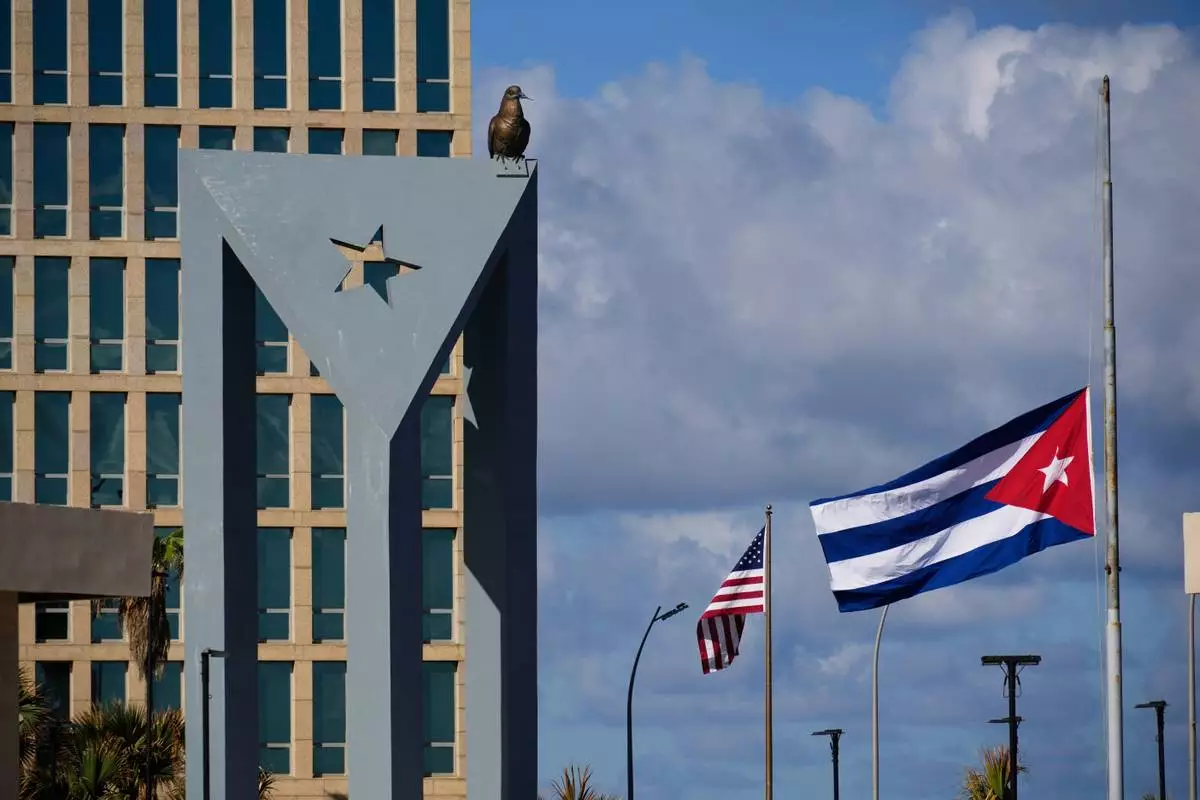
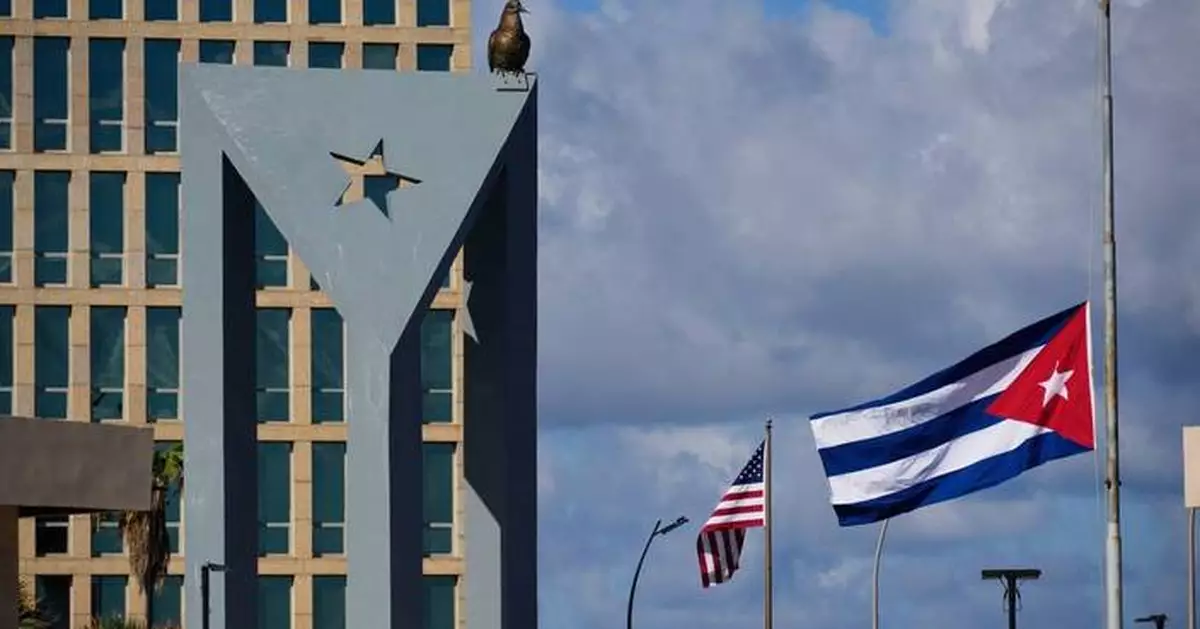
The Cuban flag flies at half-mast at the Anti-Imperialist Tribune near the U.S. embassy in Havana, Cuba, Monday, Jan. 5, 2026, in memory of Cubans who died two days before in Caracas, Venezuela during the capture of Venezuelan President Nicolas Maduro by U.S. forces. (AP Photo/Ramon Espinosa)
RALEIGH, N.C. (AP) — Laurie Buckhout, a 2024 congressional candidate who fell just short of unseating North Carolina Democratic Rep. Don Davis, will get another chance this year after winning Tuesday’s Republican primary for a district recently redrawn favorably for the GOP.
Buckhout defeated four other candidates competing for the Republican nomination in the 1st Congressional District. The victory sets up a rematch with Democratic Rep. Don Davis, who defeated Buckhout in the 2024 general election by less than 2 percentage points. Davis faced no primary opposition.
Since then, the Republican-controlled General Assembly altered the 1st District as part of President Donald Trump’s multistate redistricting campaign ahead of the 2026 elections to retain the House.
A now more right-leaning 1st District covers all or parts of 25 counties from the coast inland to Raleigh’s outer suburbs.
Buckhout is a retired U.S. Army colonel who started a military technology consulting company before later selling it and moving to North Carolina.
Republicans currently hold 10 of the state’s 14 U.S. House districts.
THIS IS A BREAKING NEWS UPDATE. AP’s earlier story follows below.
RALEIGH, N.C. (AP) — Former Democratic Gov. Roy Cooper and ex-Republican National Committee Chairman Michael Whatley each won their party’s U.S. Senate nominations in North Carolina on Tuesday, setting them up for a fall campaign that could determine control of Congress' upper chamber.
Whatley and Cooper are seeking the seat being vacated by Republican Sen. Thom Tillis, who chose last June not to seek a third term. The two announced their campaigns weeks later and easily won their respective primary elections over crowded fields.
Cooper’s candidacy brought optimism to Democrats aiming to take back the Senate this year with a net gain of four seats. Whatley, who is also a former state Republican chairman, entered the race when President Donald Trump endorsed him after Lara Trump, the president’s daughter-in-law, declined to run.
North Carolina, a traditional battleground where Democrats have been able to hold the governor’s seat even as voters helped send Trump to the White House, was one of three states kicking off this year’s midterm elections, along with Texas and Arkansas. Tuesday’s slate of primaries came against the backdrop of the U.S. and Israel attack on Iran, which began over the weekend.
North Carolina’s election this year could be crucial for determining which party controls the U.S. Senate, where Republicans currently have the majority. The seat is open because Tillis decided to retire after clashing with Trump and the president threatened to support a primary challenger. Political experts say a typhoon of outside money could make the race the most expensive Senate campaigns in U.S. history, perhaps reaching $1 billion.
Many Democrats see Cooper, who served two terms as governor and has been successful in state politics for decades, as the party’s best shot at victory. Democrats think their most likely path to regaining the Senate majority includes winning in North Carolina, Maine, Alaska and Ohio.
Whatley promises to keep pushing Trump’s agenda if elected, one that he says has cut taxes and spending and restored U.S. military might.
“His leadership has changed our country, and I am proud to stand with him in the fight to secure our border, to strengthen our economy, and put America first,” Whatley said while giving his nomination acceptance speech in Charlotte.
Moments later in his own speech in Raleigh, Cooper said inflation and health care cuts caused by Republican policies are hurting North Carolina residents.
“These are not ordinary times. Everyday people are being left behind,” Cooper said. “And we see the chaos that’s coming out of Washington only making it worse.”
Some primary voters say Congress needs Democratic control as a counterweight to Trump and what they consider disastrous policies.
“I just think we’re not headed in the right direction as a country, so I needed to express that opinion,” said Shailendra Prakash, 65, of Raleigh, an unaffiliated voter who chose to vote in the Democratic primary on Tuesday and picked Cooper. “My hope is that it needs to flip.”
Republican voter Lisa Weaver, 64, of Apex, said she was picking Whatley because as the former RNC chairman, “he’s in tune with the issues that we care most about” and would assist the president.
“It’s not that I love everything that Trump does, but I do believe in the framework that he is offering for our country,” Weaver said.
A Democrat hasn’t won a Senate race in North Carolina since 2008. Meanwhile, Cooper, 68, hasn’t lost a North Carolina election going back to first running for the state House in the mid-1980s, leading to 16 years as attorney general and eight as governor through 2024.
Whatley, 57, previously worked in President George W. Bush’s administration, for then-North Carolina Sen. Elizabeth Dole and as an energy lobbyist.
Whatley, Trump and other Republicans have blistered Cooper on criminal justice matters, accusing him of promoting soft-on-crime policies while governor. They’ve repeatedly highlighted last August’s fatal stabbing of Ukrainian refugee Iryna Zarutska on a Charlotte light-rail train. Trump identified Zarutska’s mother in attendance at last week’s State of the Union address.
The fall election will be “a choice between a conservative champion for North Carolina, who will be an ally for President Trump in the Senate, or a champion for the failed policies of the left,” Whatley said Tuesday night.
Cooper told reporters recently that his career is about “prosecuting violent criminals and keeping thousands of them behind bars.”
In turn, Cooper and his allies have centered campaign attacks on Whatley’s allegiance to the president and to his past lobbying, with Cooper calling him an "out-of-touch D.C. insider.”
Repeating recent comments, Cooper said Tuesday night that if elected he would be a “strong, independent senator who will work with this president when I can and stand up to him when the people need me to.”
Tuesday’s election also included primary elections in all but one of North Carolina’s U.S. House districts. They include a five-candidate Republican primary in the northeastern 1st Congressional District, which is currently represented by Democratic Rep. Don Davis, who faced no primary opposition.
The Republican-controlled General Assembly created last fall a more right-leaning 1st District to join Trump’s multistate redistricting campaign ahead of the 2026 elections to retain the House. Davis won in 2024 by less than 2 percentage points.
Associated Press journalists Erik Verduzco in Charlotte and Allen G. Breed in Raleigh contributed to this report.
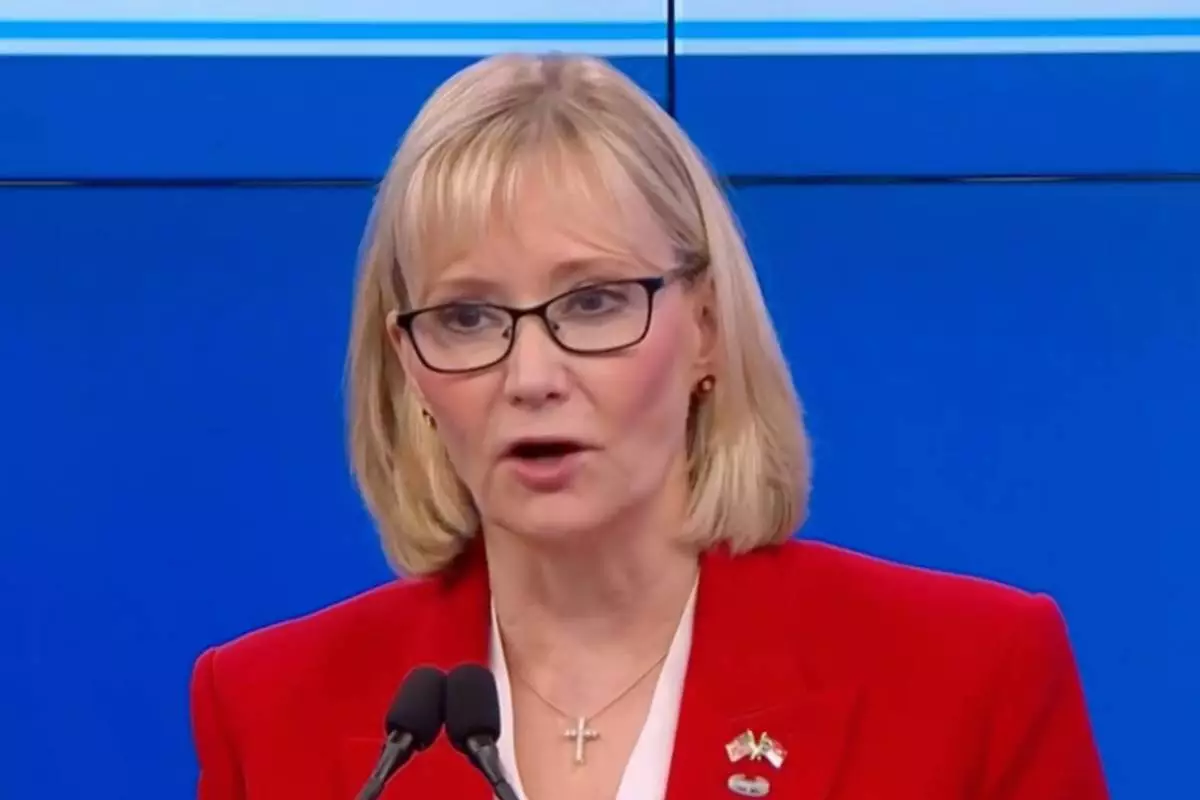
In this image from video provided by WNCT, Laurie Buckhout speaks during a debate with Republican candidates running in the primary for North Carolina’s Congressional District 1, in Greenville, N.C., Thursday, Feb. 19, 2026. (WNCT via AP)
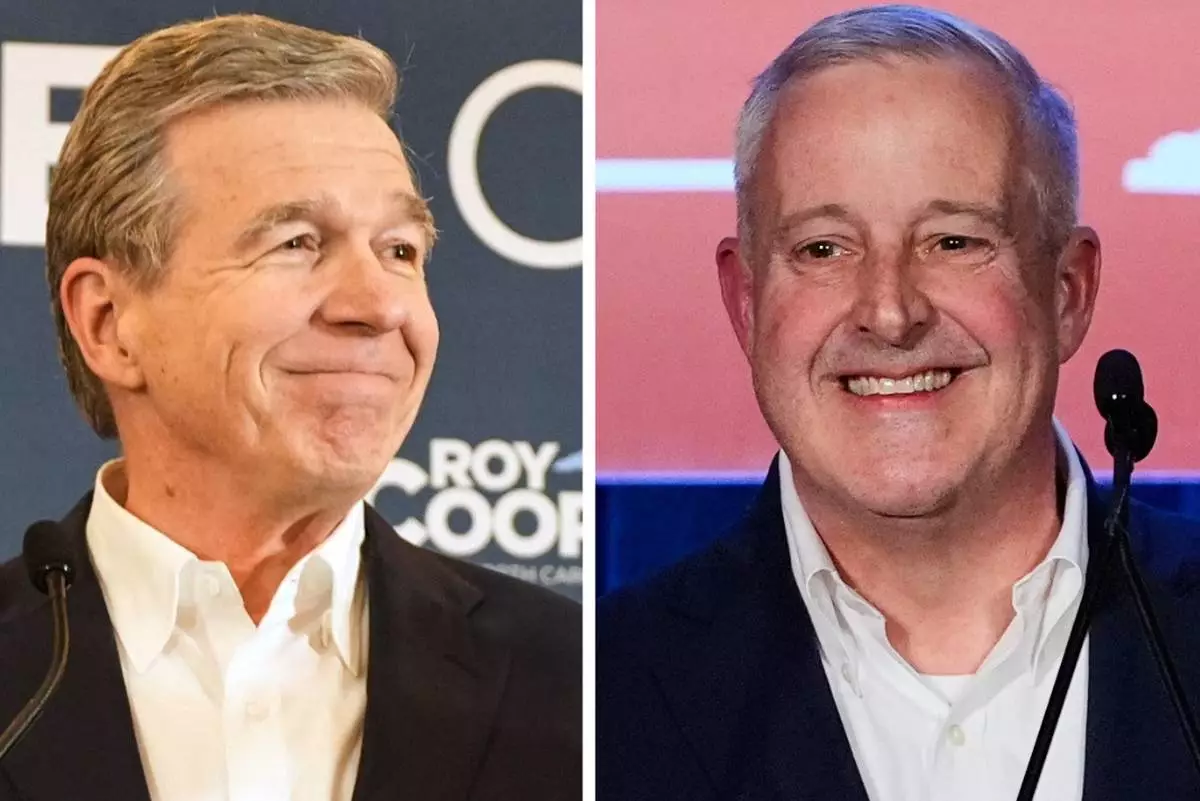
This combo image shows North Carolina Democratic Senate candidate former Gov. Roy Cooper, left, and Republican candidate former RNC Chairman Michael Whatley, both speaking at separate primary election night watch parties Tuesday, March 3, 2026, in Raleigh, N.C. (AP Photo/Matt Ramey, Erik Verduzco)
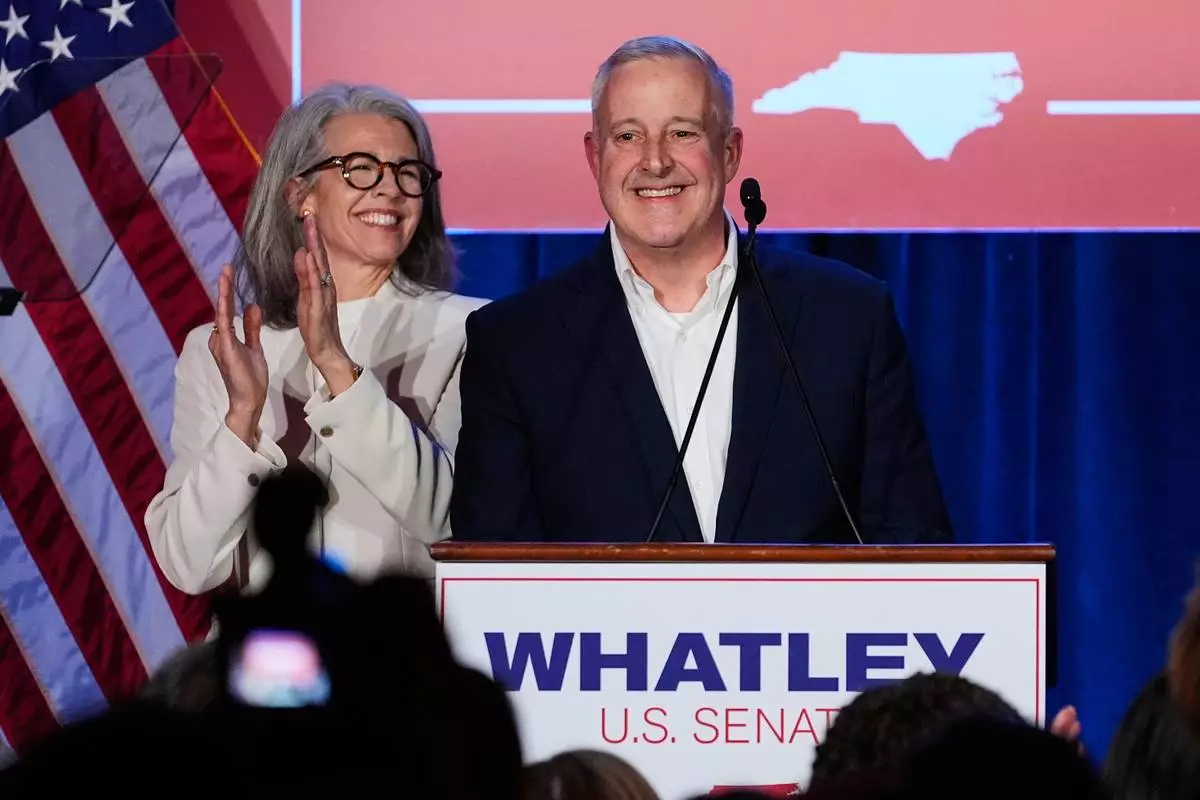
North Carolina Republican Senate candidate former RNC Chairman Michael Whatley speaks at a primary election night watch party Tuesday, March 3, 2026, in Charlotte, N.C. (AP Photo/Erik Verduzco)
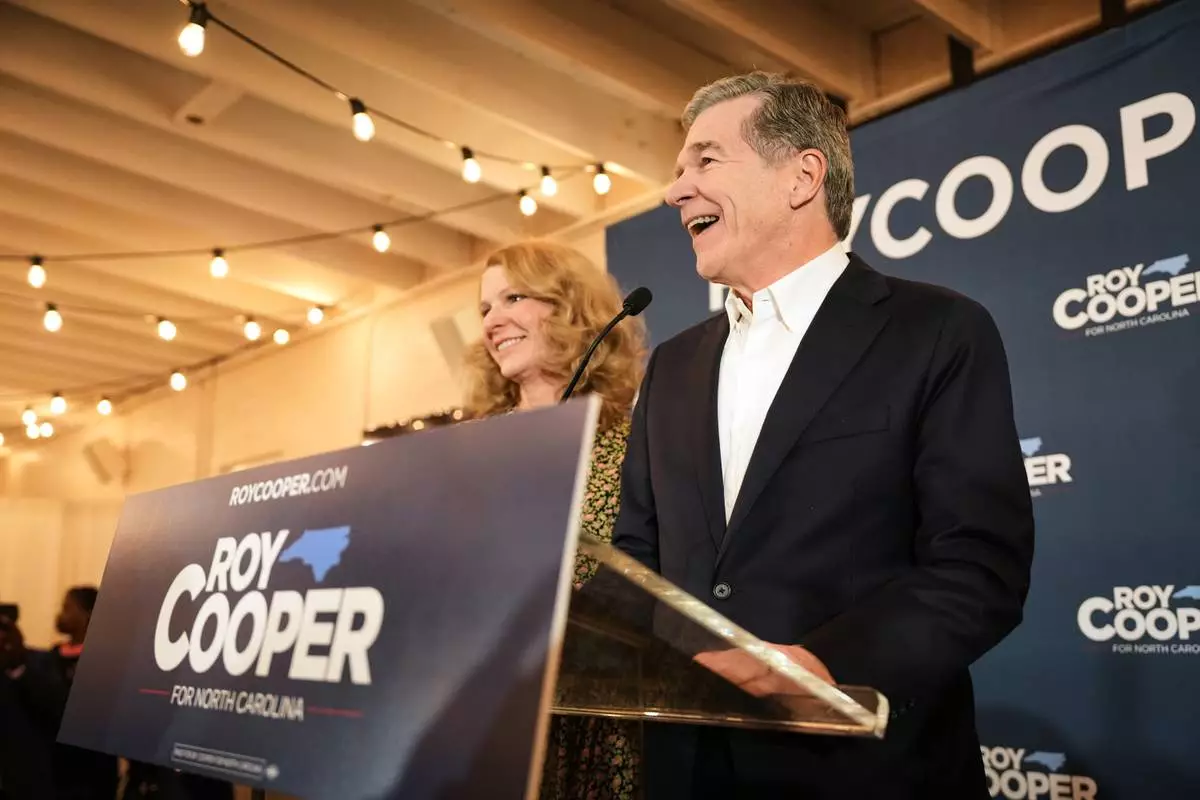
North Carolina Democratic Senate candidate former Gov. Roy Cooper speaks at a primary election night watch party Tuesday, March 3, 2026, in Raleigh, N.C. (AP Photo/Matt Ramey)
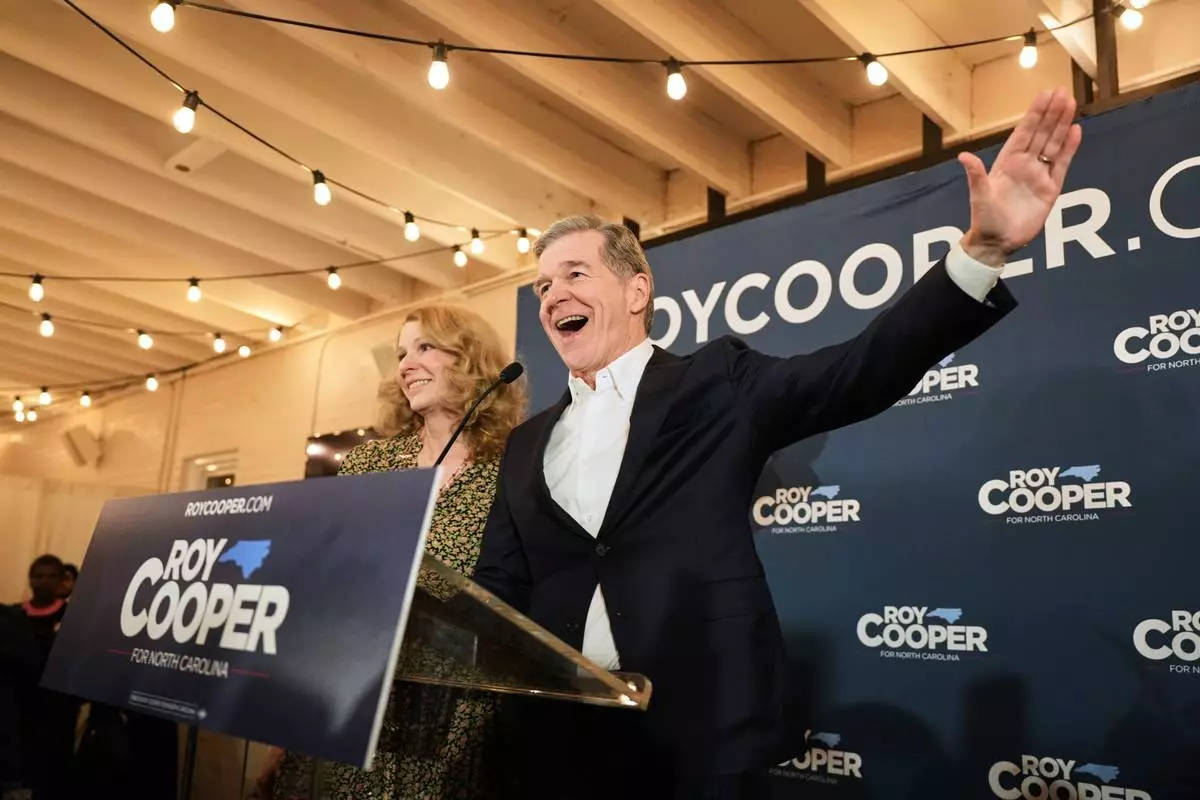
North Carolina Democratic Senate candidate former Gov. Roy Cooper speaks at a primary election night watch party Tuesday, March 3, 2026, in Raleigh, N.C. (AP Photo/Matt Ramey)
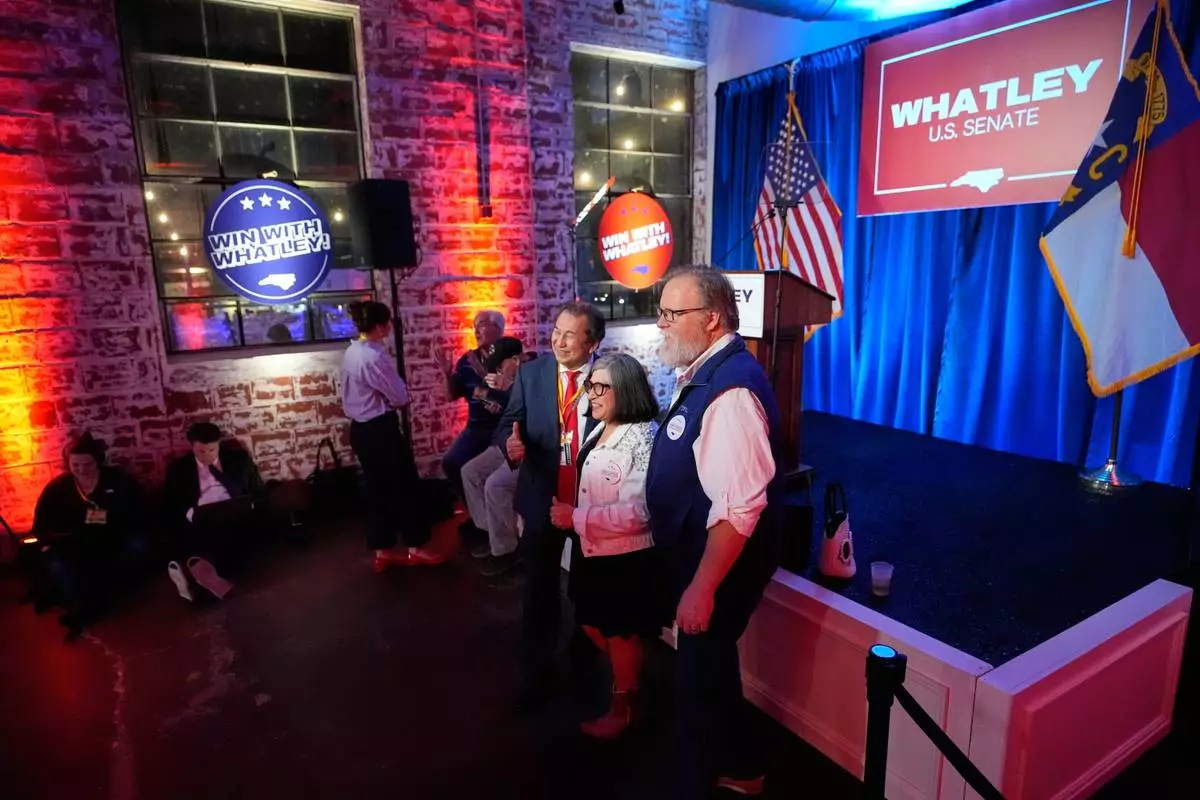
From left, Viet Tran, Lorena Castillo-Ritz and John Steward pose for a photo together at the primary election night watch party for former RNC Chairman Michael Whatley, a Republican candidate for the U.S. Senate, Tuesday, March 3, 2026, in Charlotte, N.C. (AP Photo/Erik Verduzco)
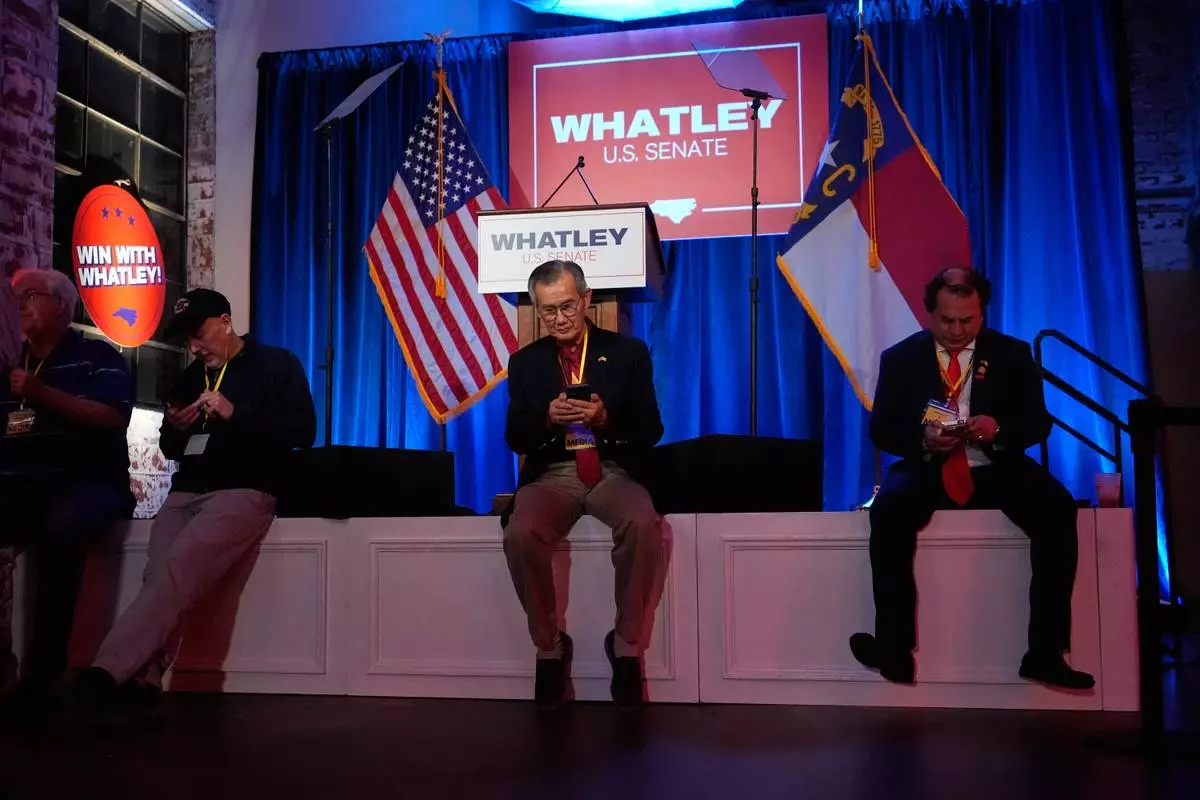
People attend the primary election night watch party for former RNC Chairman Michael Whatley, a Republican candidate for the U.S. Senate, Tuesday, March 3, 2026, in Charlotte, N.C. (AP Photo/Erik Verduzco)
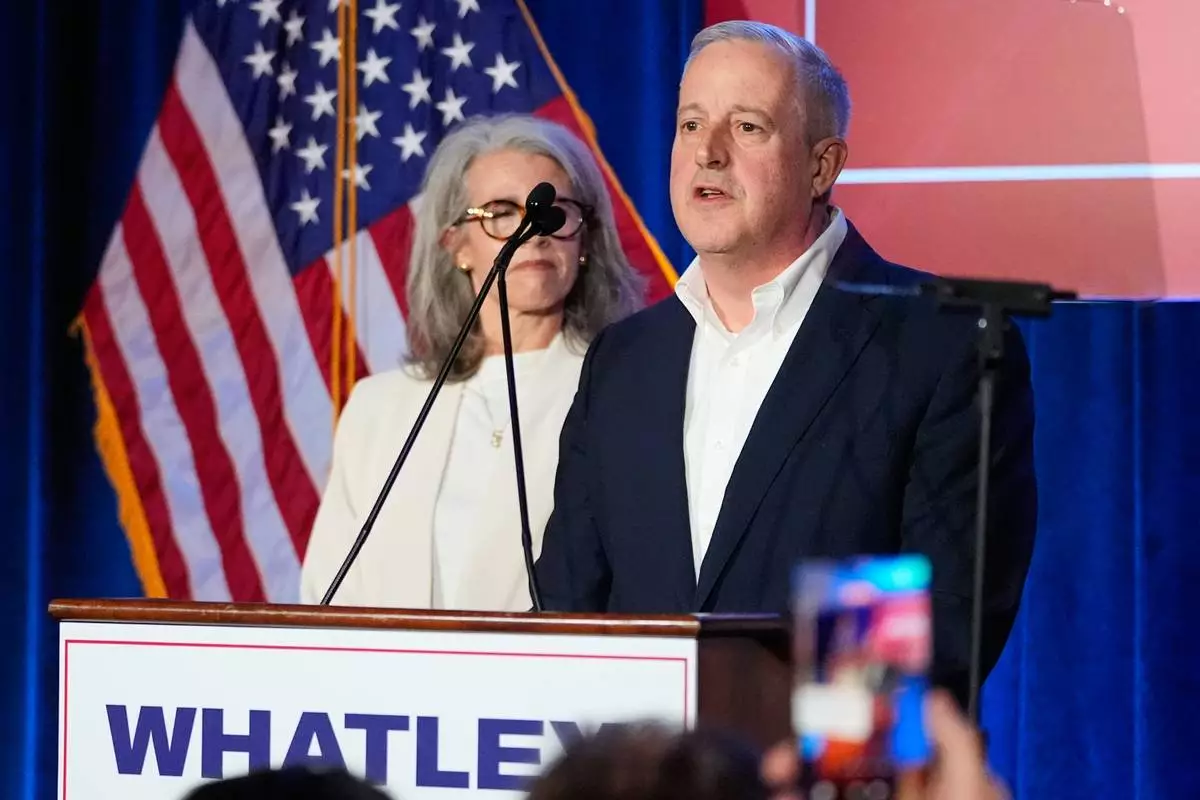
North Carolina Republican Senate candidate former RNC Chairman Michael Whatley speaks at a primary election night watch party Tuesday, March 3, 2026, in Charlotte, N.C. (AP Photo/Erik Verduzco)