RALEIGH, N.C. (AP) — Former Democratic Gov. Roy Cooper and ex-Republican National Committee Chairman Michael Whatley each won their party’s U.S. Senate nominations in North Carolina on Tuesday, setting them up for a fall campaign that could determine control of Congress' upper chamber.
Whatley and Cooper are seeking the seat being vacated by Republican Sen. Thom Tillis, who chose last June not to seek a third term. The two announced their campaigns weeks later and easily won their respective primary elections over crowded fields.
Click to Gallery
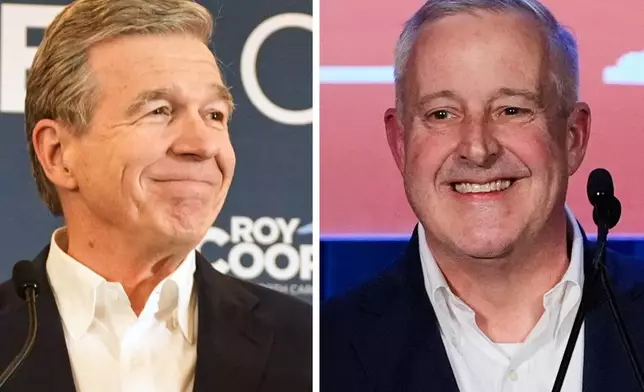
This combo image shows North Carolina Democratic Senate candidate former Gov. Roy Cooper, left, and Republican candidate former RNC Chairman Michael Whatley, both speaking at separate primary election night watch parties Tuesday, March 3, 2026, in Raleigh, N.C. (AP Photo/Matt Ramey, Erik Verduzco)
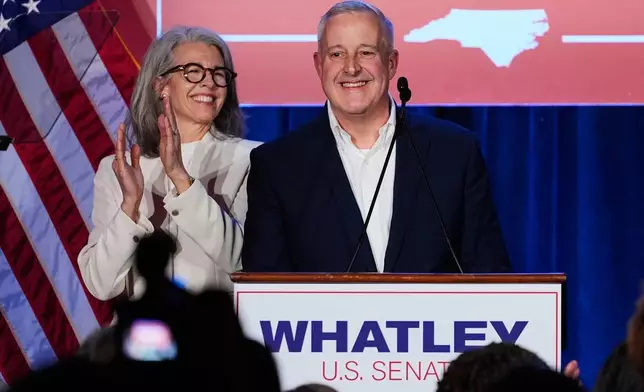
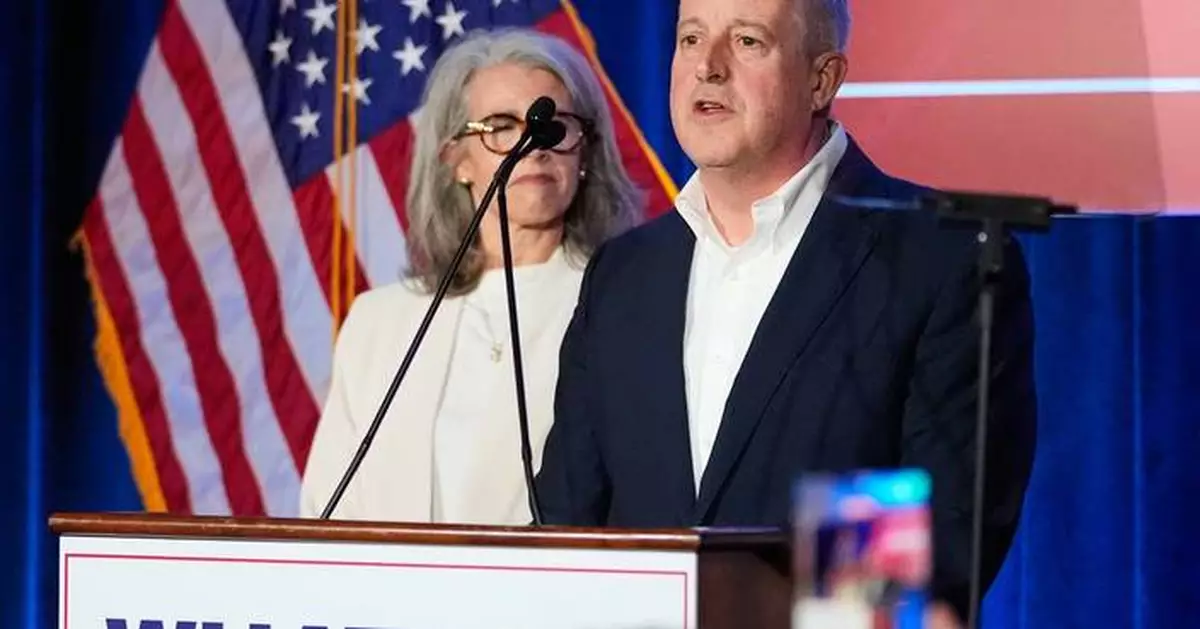
North Carolina Republican Senate candidate former RNC Chairman Michael Whatley speaks at a primary election night watch party Tuesday, March 3, 2026, in Charlotte, N.C. (AP Photo/Erik Verduzco)
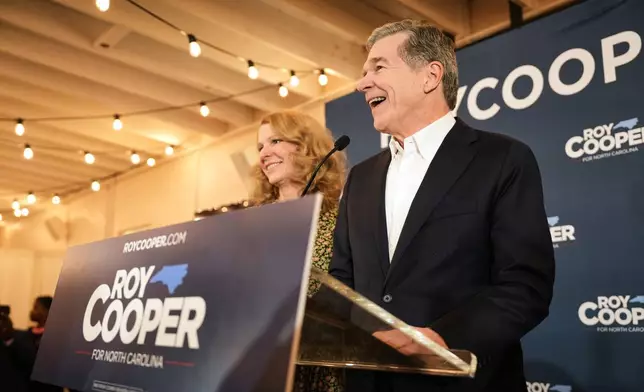
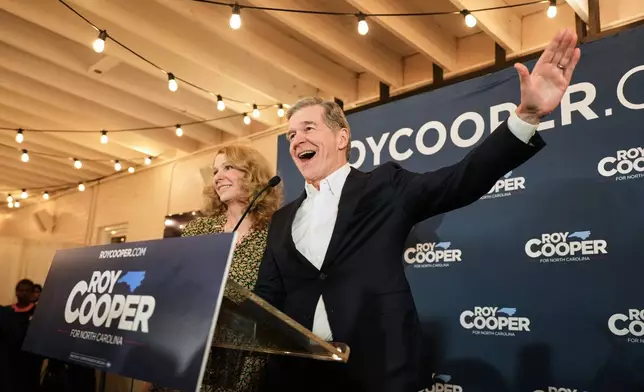
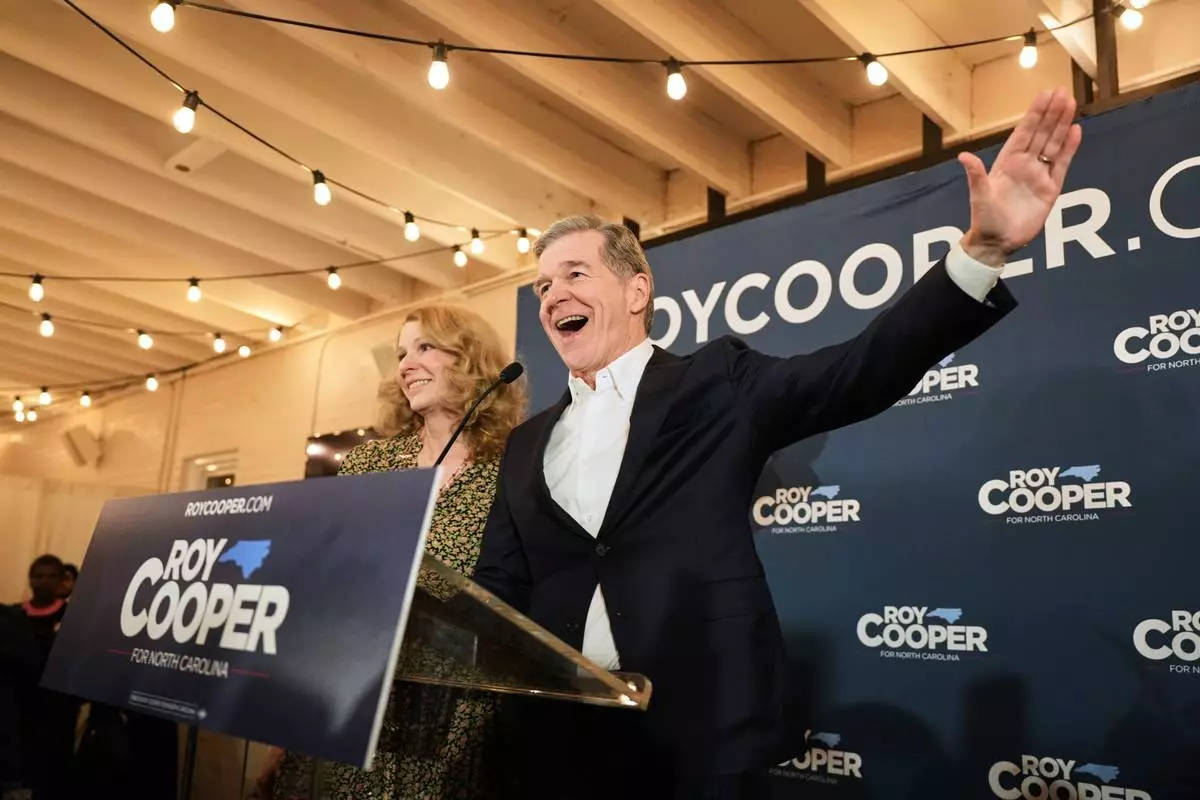
North Carolina Democratic Senate candidate former Gov. Roy Cooper speaks at a primary election night watch party Tuesday, March 3, 2026, in Raleigh, N.C. (AP Photo/Matt Ramey)
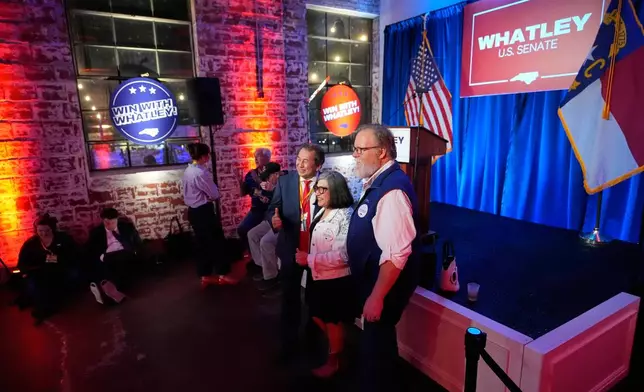
From left, Viet Tran, Lorena Castillo-Ritz and John Steward pose for a photo together at the primary election night watch party for former RNC Chairman Michael Whatley, a Republican candidate for the U.S. Senate, Tuesday, March 3, 2026, in Charlotte, N.C. (AP Photo/Erik Verduzco)
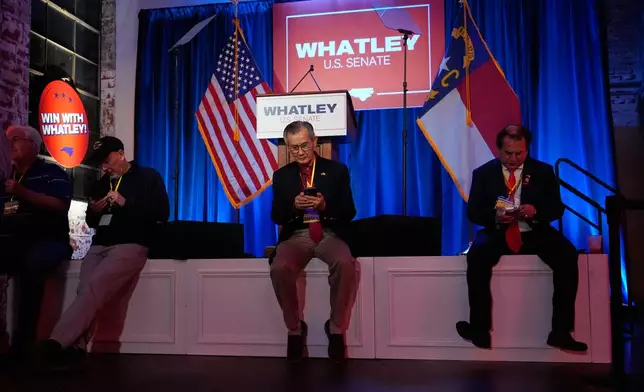
People attend the primary election night watch party for former RNC Chairman Michael Whatley, a Republican candidate for the U.S. Senate, Tuesday, March 3, 2026, in Charlotte, N.C. (AP Photo/Erik Verduzco)
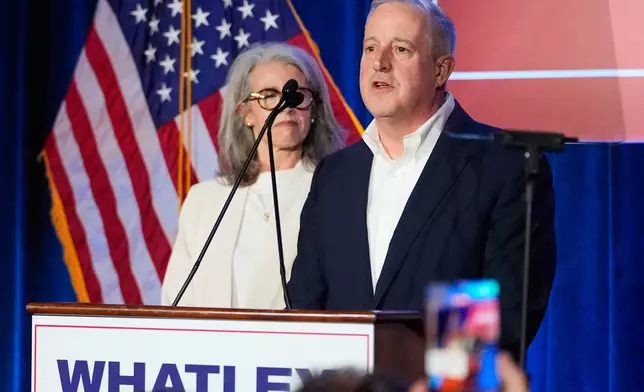
North Carolina Republican Senate candidate former RNC Chairman Michael Whatley speaks at a primary election night watch party Tuesday, March 3, 2026, in Charlotte, N.C. (AP Photo/Erik Verduzco)
Cooper’s candidacy brought optimism to Democrats aiming to take back the Senate this year with a net gain of four seats. Whatley, who is also a former state Republican chairman, entered the race when President Donald Trump endorsed him after Lara Trump, the president’s daughter-in-law, declined to run.
North Carolina, a traditional battleground where Democrats have been able to hold the governor’s seat even as voters helped send Trump to the White House, was one of three states kicking off this year’s midterm elections, along with Texas and Arkansas. Tuesday’s slate of primaries came against the backdrop of the U.S. and Israel attack on Iran, which began over the weekend.
North Carolina’s election this year could be crucial for determining which party controls the U.S. Senate, where Republicans currently have the majority. The seat is open because Tillis decided to retire after clashing with Trump and the president threatened to support a primary challenger. Political experts say a typhoon of outside money could make the race the most expensive Senate campaigns in U.S. history, perhaps reaching $1 billion.
Many Democrats see Cooper, who served two terms as governor and has been successful in state politics for decades, as the party’s best shot at victory. Democrats think their most likely path to regaining the Senate majority includes winning in North Carolina, Maine, Alaska and Ohio.
Whatley promises to keep pushing Trump’s agenda if elected, one that he says has cut taxes and spending and restored U.S. military might.
“His leadership has changed our country, and I am proud to stand with him in the fight to secure our border, to strengthen our economy, and put America first,” Whatley said while giving his nomination acceptance speech in Charlotte.
Moments later in his own speech in Raleigh, Cooper said inflation and health care cuts caused by Republican policies are hurting North Carolina residents.
“These are not ordinary times. Everyday people are being left behind,” Cooper said. “And we see the chaos that’s coming out of Washington only making it worse.”
Some primary voters say Congress needs Democratic control as a counterweight to Trump and what they consider disastrous policies.
“I just think we’re not headed in the right direction as a country, so I needed to express that opinion,” said Shailendra Prakash, 65, of Raleigh, an unaffiliated voter who chose to vote in the Democratic primary on Tuesday and picked Cooper. “My hope is that it needs to flip.”
Republican voter Lisa Weaver, 64, of Apex, said she was picking Whatley because as the former RNC chairman, “he’s in tune with the issues that we care most about” and would assist the president.
“It’s not that I love everything that Trump does, but I do believe in the framework that he is offering for our country,” Weaver said.
A Democrat hasn’t won a Senate race in North Carolina since 2008. Meanwhile, Cooper, 68, hasn’t lost a North Carolina election going back to first running for the state House in the mid-1980s, leading to 16 years as attorney general and eight as governor through 2024.
Whatley, 57, previously worked in President George W. Bush’s administration, for then-North Carolina Sen. Elizabeth Dole and as an energy lobbyist.
Whatley, Trump and other Republicans have blistered Cooper on criminal justice matters, accusing him of promoting soft-on-crime policies while governor. They’ve repeatedly highlighted last August’s fatal stabbing of Ukrainian refugee Iryna Zarutska on a Charlotte light-rail train. Trump identified Zarutska’s mother in attendance at last week’s State of the Union address.
The fall election will be “a choice between a conservative champion for North Carolina, who will be an ally for President Trump in the Senate, or a champion for the failed policies of the left,” Whatley said Tuesday night.
Cooper told reporters recently that his career is about “prosecuting violent criminals and keeping thousands of them behind bars.”
In turn, Cooper and his allies have centered campaign attacks on Whatley’s allegiance to the president and to his past lobbying, with Cooper calling him an "out-of-touch D.C. insider.”
Repeating recent comments, Cooper said Tuesday night that if elected he would be a “strong, independent senator who will work with this president when I can and stand up to him when the people need me to.”
Tuesday’s election also included primary elections in all but one of North Carolina’s U.S. House districts. They include a five-candidate Republican primary in the northeastern 1st Congressional District, which is currently represented by Democratic Rep. Don Davis, who faced no primary opposition.
The Republican-controlled General Assembly created last fall a more right-leaning 1st District to join Trump’s multistate redistricting campaign ahead of the 2026 elections to retain the House. Davis won in 2024 by less than 2 percentage points.
Associated Press journalists Erik Verduzco in Charlotte and Allen G. Breed in Raleigh contributed to this report.
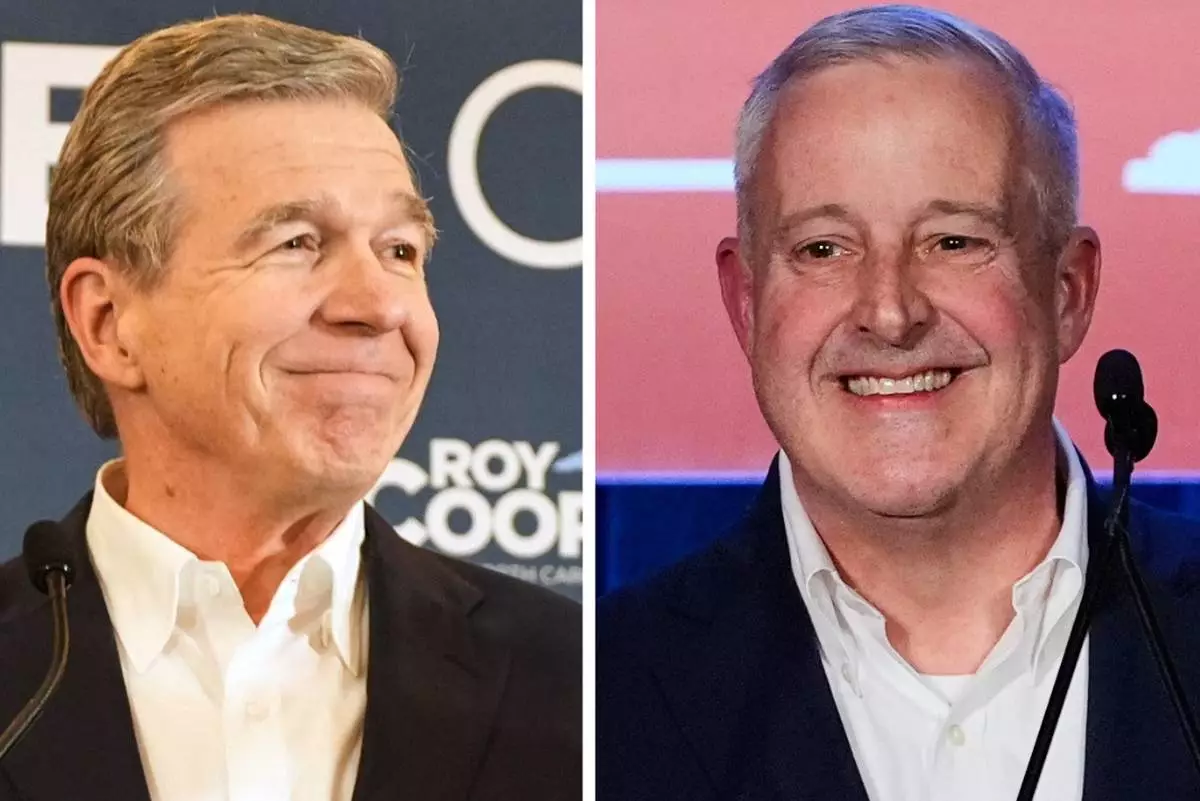
This combo image shows North Carolina Democratic Senate candidate former Gov. Roy Cooper, left, and Republican candidate former RNC Chairman Michael Whatley, both speaking at separate primary election night watch parties Tuesday, March 3, 2026, in Raleigh, N.C. (AP Photo/Matt Ramey, Erik Verduzco)
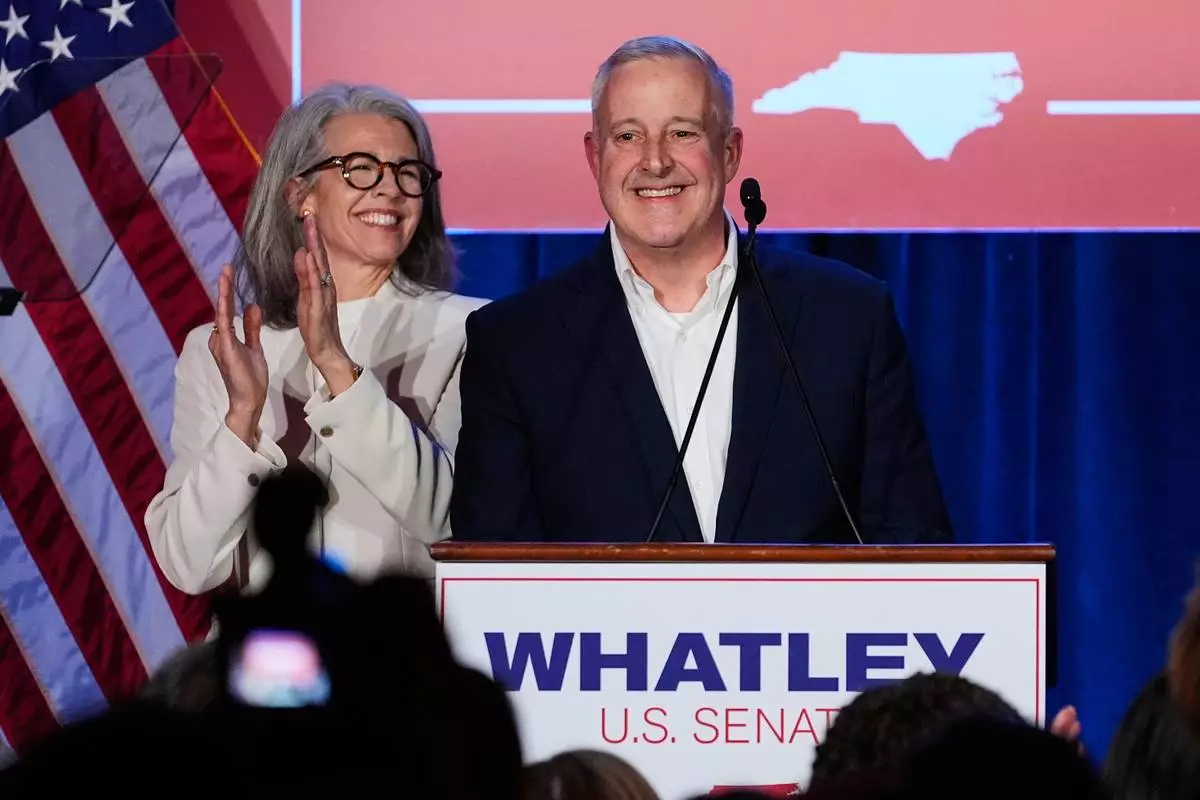
North Carolina Republican Senate candidate former RNC Chairman Michael Whatley speaks at a primary election night watch party Tuesday, March 3, 2026, in Charlotte, N.C. (AP Photo/Erik Verduzco)
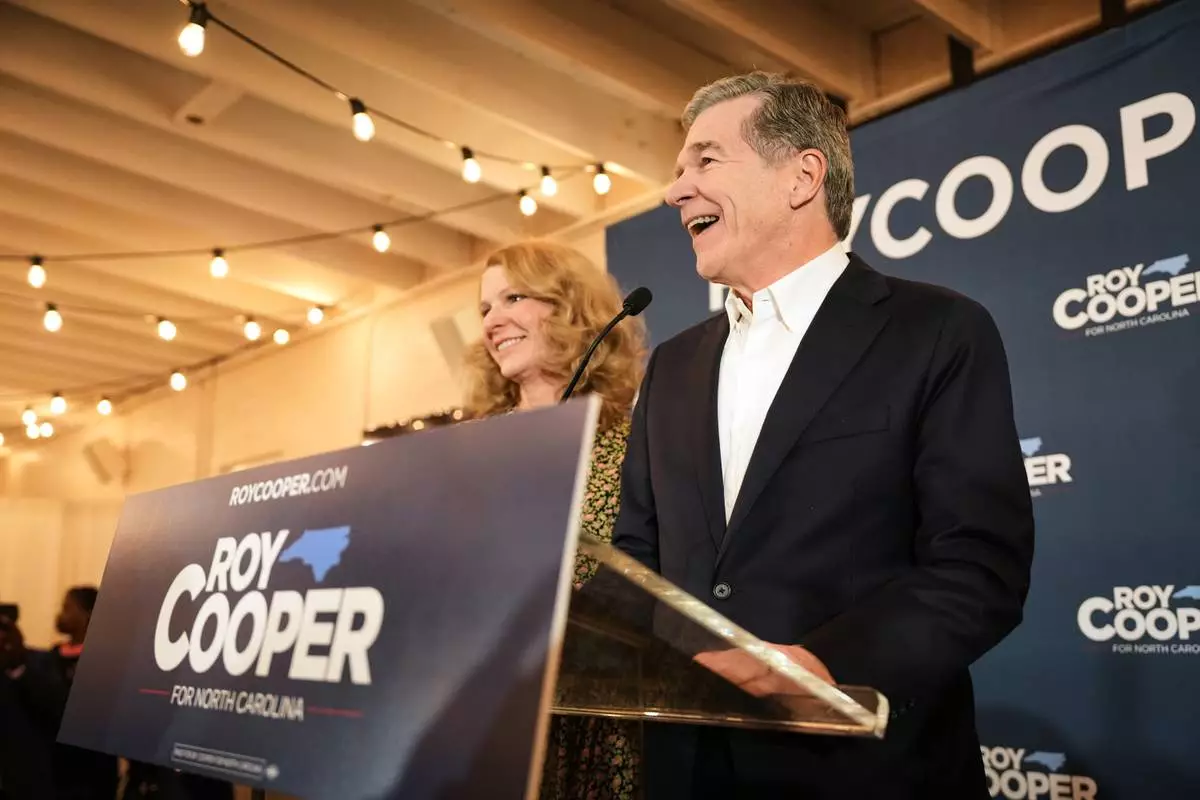
North Carolina Democratic Senate candidate former Gov. Roy Cooper speaks at a primary election night watch party Tuesday, March 3, 2026, in Raleigh, N.C. (AP Photo/Matt Ramey)
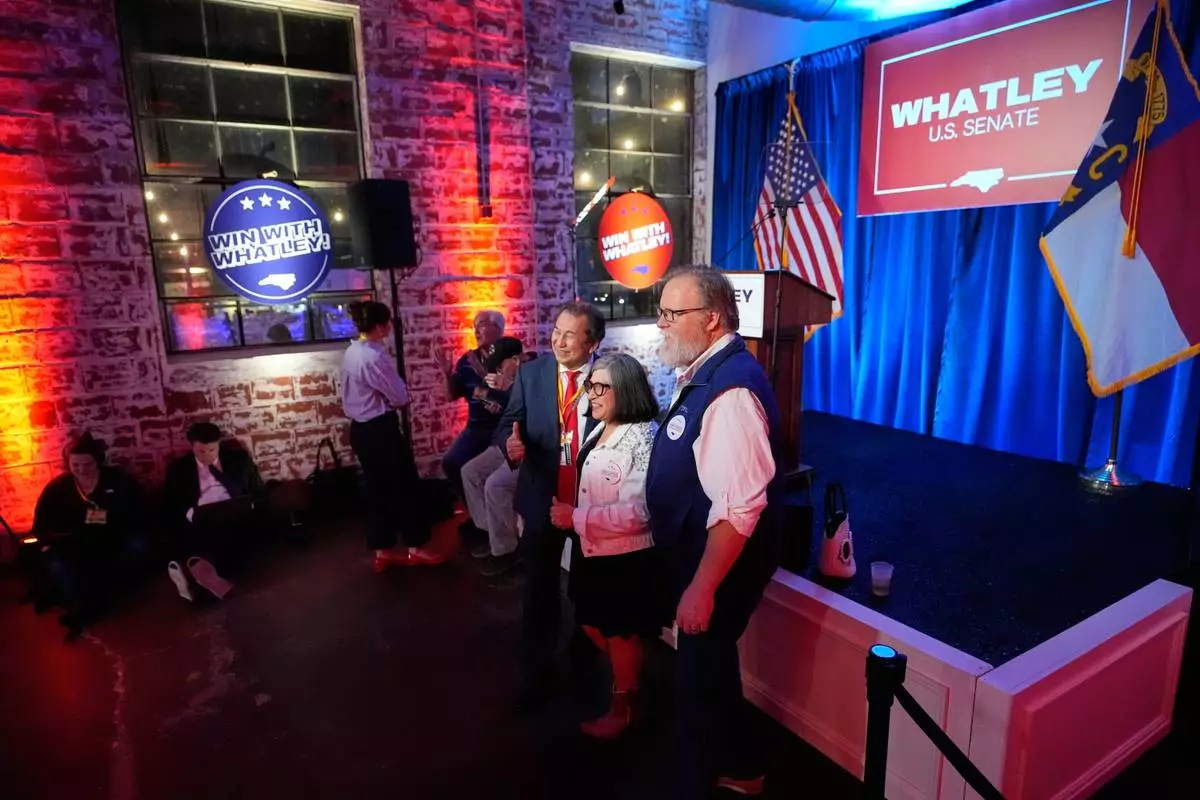
From left, Viet Tran, Lorena Castillo-Ritz and John Steward pose for a photo together at the primary election night watch party for former RNC Chairman Michael Whatley, a Republican candidate for the U.S. Senate, Tuesday, March 3, 2026, in Charlotte, N.C. (AP Photo/Erik Verduzco)
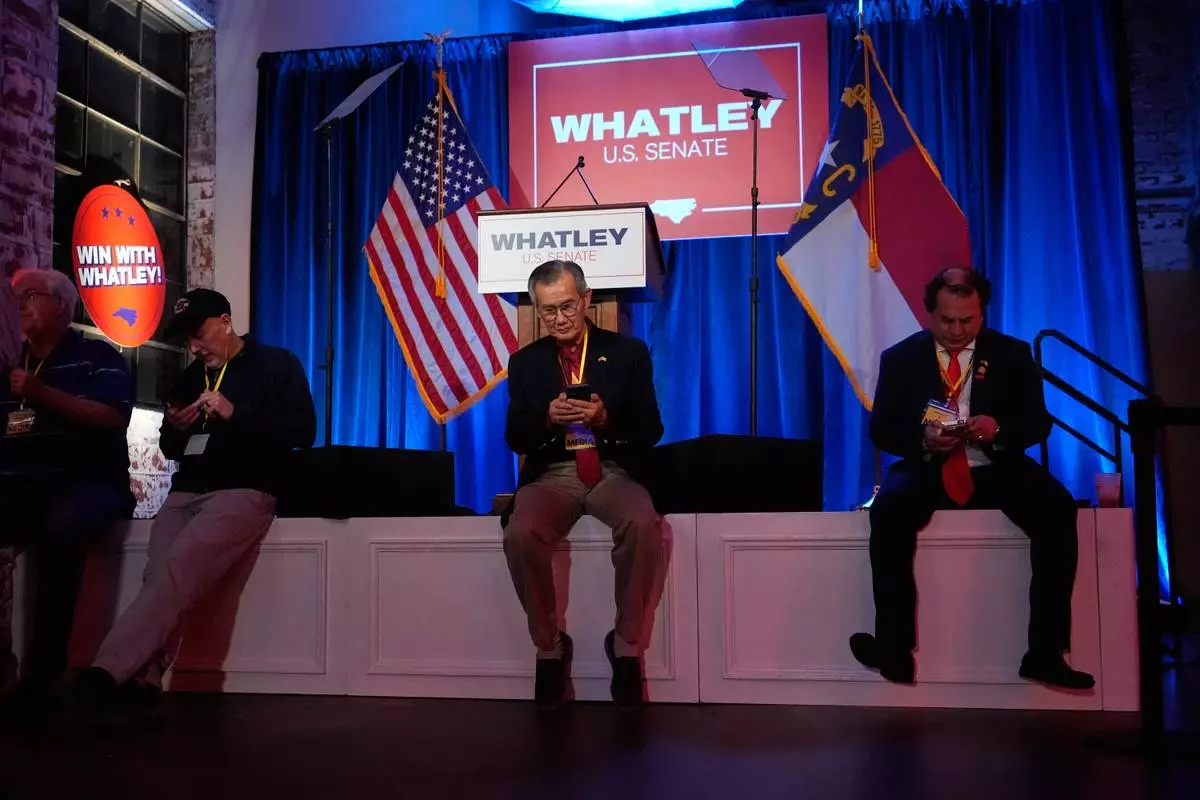
People attend the primary election night watch party for former RNC Chairman Michael Whatley, a Republican candidate for the U.S. Senate, Tuesday, March 3, 2026, in Charlotte, N.C. (AP Photo/Erik Verduzco)
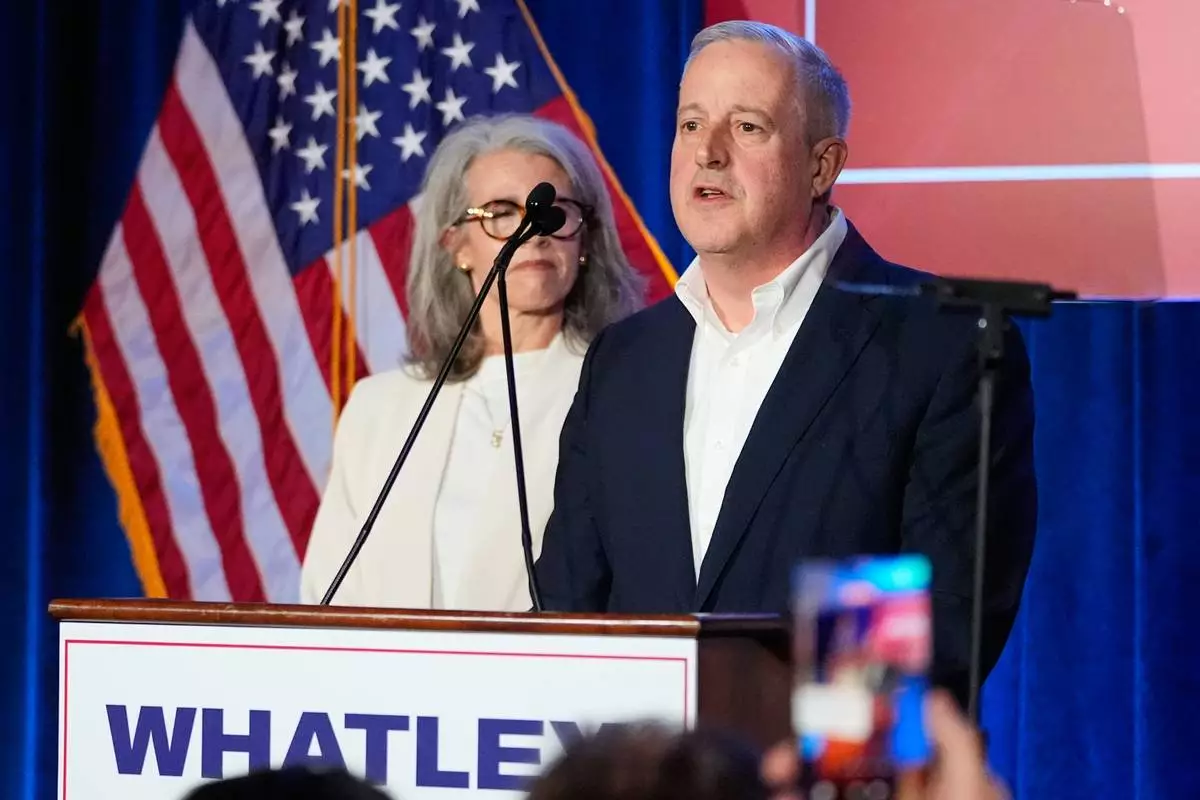
North Carolina Republican Senate candidate former RNC Chairman Michael Whatley speaks at a primary election night watch party Tuesday, March 3, 2026, in Charlotte, N.C. (AP Photo/Erik Verduzco)
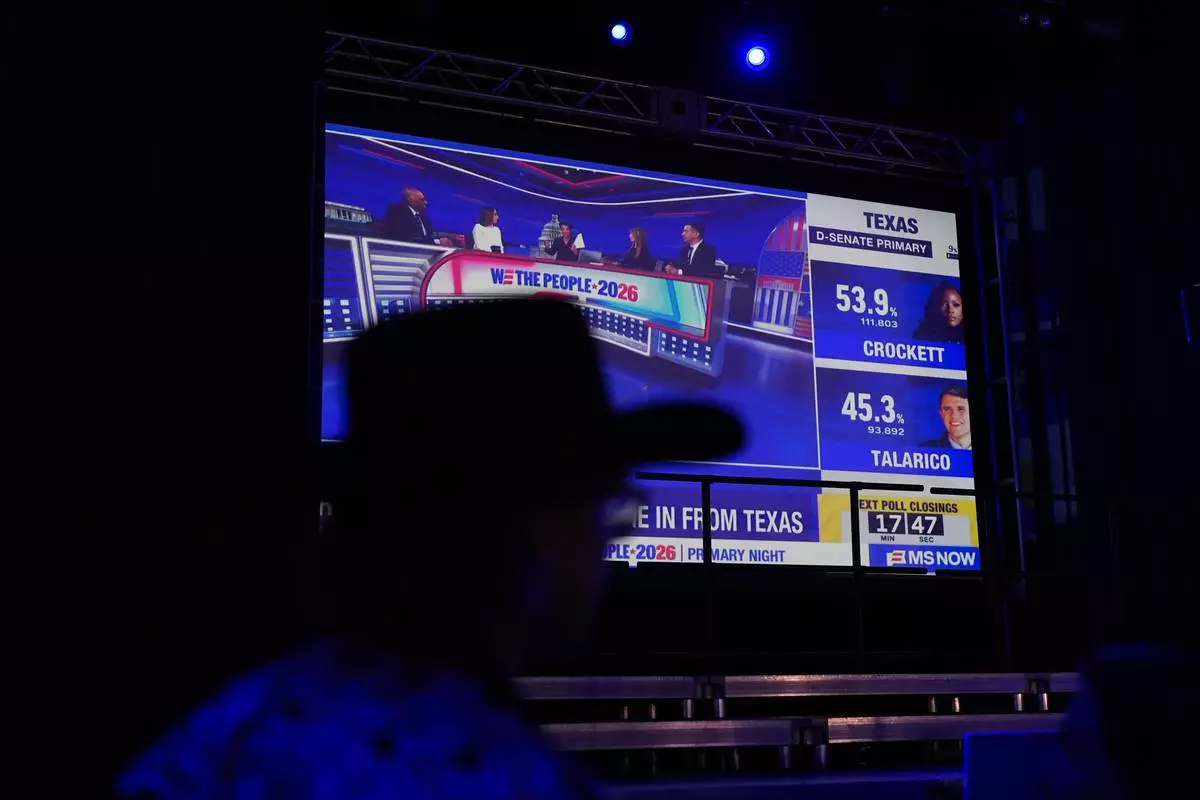
DALLAS (AP) — Texas Republican Sen. John Cornyn is trying to hold on for a fifth term in Tuesday's GOP primary, while Democrats will choose whether to send Congresswoman Jasmine Crockett or state Rep. James Talarico to a November general election where the party once again hopes it has a chance.
Texas is one of three states kicking off this year’s midterm elections with primaries that come as the U.S. and Israel are at war with Iran. At least six U.S. service members have been killed in a growing regional confrontation that sent oil and natural gas prices soaring. President Donald Trump, who campaigned on an “America First” agenda and hasn't sought congressional authorization, faces mounting questions over its rationale and an exit strategy.
Races in North Carolina and Arkansas also mark the first primaries of the 2026 midterms as Democrats look to break the GOP’s hold on Washington and derail Trump.
Cornyn faces a challenge from MAGA favorite Ken Paxton, the Texas attorney general, and U.S. Rep. Wesley Hunt in a contest expected to advance to a May runoff. The three Republicans campaigned on their ties to Trump, who has not endorsed in the race.
Crockett and Talarico each argue that they are the stronger general election candidate in a state that backed Trump by almost 14 percentage points in 2024 and where a Democrat hasn’t won a statewide race in over 30 years.
Voting was extended in Dallas County and Williamson County, outside Austin, after voters reported being turned away and directed to different voting precincts because of new primary rules. Paxton’s office later challenged a decision keeping the polls open longer, and the state Supreme Court ruled that ballots cast by people not in line by 7 p.m. should be separated from others.
It was not immediately clear how the court’s action would be carried out.
The races also featured new congressional district boundaries that GOP lawmakers — urged on by Trump — redrew to help elect more Republicans.
Cornyn is hoping to avoid becoming the first Republican senator in Texas history not to be renominated.
His cool relationship with Trump is part of what makes Cornyn vulnerable. He and allied groups have spent at least $64 million in television advertising alone since July to try stabilize his support.
Paxton began campaigning in earnest only last month. He's made national headlines for filing lawsuits against Democratic initiatives. He remained popular in Texas despite a 2023 impeachment trial on corruption charges, of which he was acquitted, and accusations of marital infidelity by his wife.
On Tuesday evening a man wearing a camouflage hat, sunglasses and a mask covering his mouth and nose entered the Uptown Marriott hotel in Dallas, where Paxton was expected to address supporters later. He was asked to leave, and it was not clear whether his presence was connected to Paxon's event. The man was later detained by police, who removed ammunition magazines and shotgun shells from his vehicle. Paxton's campaign declined to comment.
All three Republicans have run ads boasting of their coziness with Trump. But Senate GOP leaders, who are backing Cornyn, worry that Paxton's liabilities would make it harder to defend the seat if he is the nominee — and require significant spending that could be better used elsewhere.
“Republican voters are going to need to decide, do we want to win?” Cornyn told Fox News Channel.
Hunt's entry into the race in October made it trickier for any primary candidate to win at least 50%, the threshold needed to avoid a May 26 runoff.
Crockett and Talarico waged a spirited race as Democrats look for their first Senate win in Texas since 1988.
Talarico, a seminarian who often references the Bible, has held rallies across the state including in heavily Republican areas. Crockett has built a national profile for zinger attacks on Republicans and has focused on turning out Black voters in the Dallas and Houston areas.
As vote counting continued, Crockett told supporters who gathered in Dallas that she did not plan to make a public appearance before them.
Tanu Sani, who cast a Democratic ballot in Dallas, said she'd been undecided until recently but opted for Talarico because he “really spoke to me in the way he tries to unify.”
Andrew Kern, another Democratic voter in Texas, explained his support of Talarico similarly, describing “an approach that’s bridging some of the divisiveness.”
Tomas Sanchez, a voter in Dallas County, said he supported Crockett because “she cares about immigrants, she cares about the American people in a way that a lot of the Republicans have proven they haven’t.”
Talarico had outspent Crockett on television advertising by more than four to one as of late February. He got a burst of attention — and campaign contributions — last month from CBS' decision not to air his interview with late-night host Stephen Colbert, who said the network pulled the interview for fear of angering Trump's FCC.
Texas Republicans' mid-decade redistricting was aimed at helping the GOP pick up Democratic-held seats and maintain its threadbare House majority in Washington. The result matched several Democratic incumbents in primary fights and set up new general election battlegrounds.
In the 34th District, former Rep. Mayra Flores is attempting a comeback. Flores made history in a 2022 special election as the first Republican to win in the Rio Grande Valley in 150 years, but lost her bid for a full term later that year. She faces Eric Flores, a lawyer endorsed by Trump, for the nomination to run against Democratic Rep. Vicente Gonzalez.
In the 23rd District, Rep. Tony Gonzales is considered vulnerable after an alleged affair with a staffer who killed herself. He's being challenged by gun manufacturer and YouTube influencer Brandon Herrera, who calls himself “the AK guy.” The district includes Uvalde, site of a deadly 2022 shooting at Robb Elementary School.
Republican Rep. Dan Crenshaw is challenged in the 2nd District by state Rep. Steve Toth, who was endorsed by Sen. Ted Cruz.
Former Major League Baseball star Mark Teixeira is running as a Republican to succeed Republican Chip Roy in southwest Texas’ District 21. Roy is running for attorney general.
Democrat Bobby Pulido, a Latin Grammy winner, is running in South Texas' 15th District against physician Ada Cuellar. The nominee will face two-term Republican Rep. Monica De La Cruz.
In the 33rd District, Democratic Rep. Julie Johnson faces former Rep. Colin Allred, a former NFL linebacker and 2024 Senate nominee.
Democratic Rep. Al Green also is fighting to stay in office after his Houston-based 9th District was drawn to be lean Republican. Green, 78, is now running in a newly drawn 18th District against Democratic Rep. Christian Menefee, 37, who won a January special election for the current 18th District.
Republican Gov. Greg Abbott easily won his primary and is expected to face Democratic state Rep. Gina Hinojosa.
Roy is seeking the GOP nomination for state attorney general, with Paxton running for Senate. Roy has been a prominent member of the conservative Freedom Caucus.
Weissert reported from Washington. Associated Press writers Sara Cline and Jamie Stengle in Dallas and Bill Barrow in Atlanta contributed.
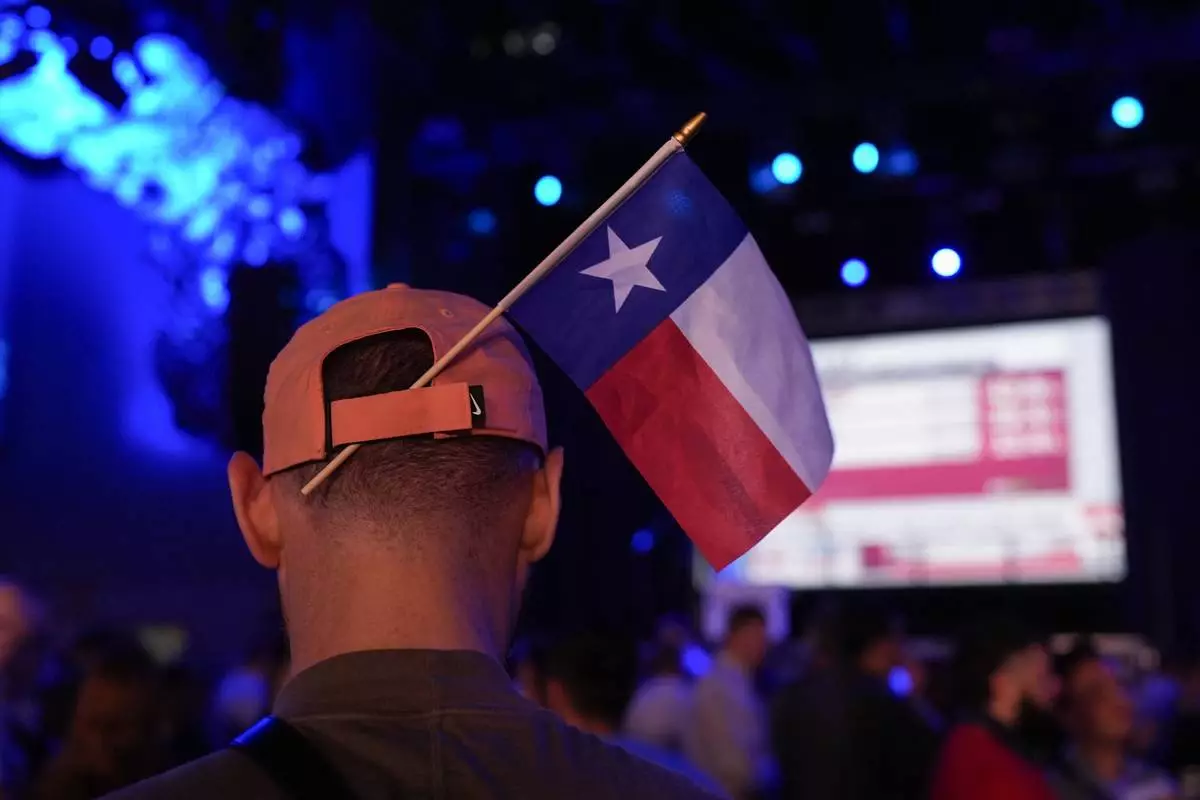
A supporter of Texas state Rep. James Talarico, D-Austin, a Democratic candidate for the U.S. Senate, watches as results come in during a primary election night watch party Tuesday, March 3, 2026, in Austin, Texas. (AP Photo/Eric Gay)
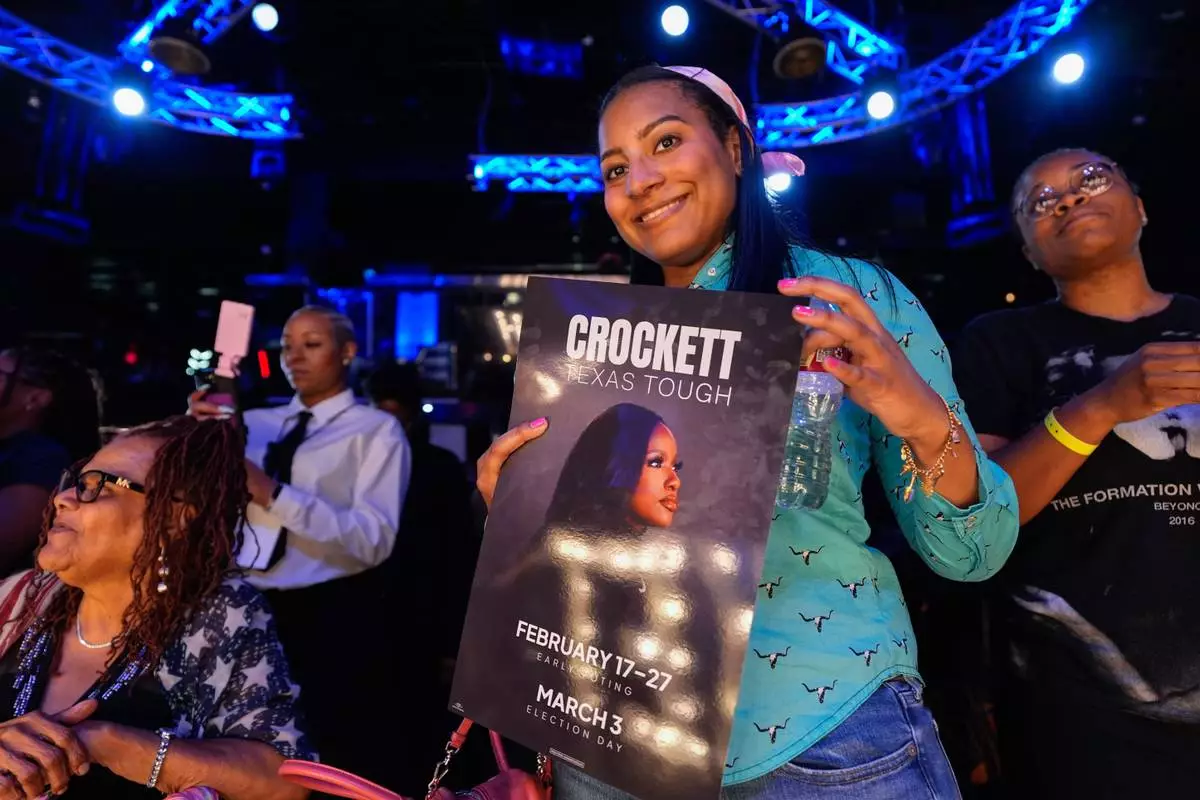
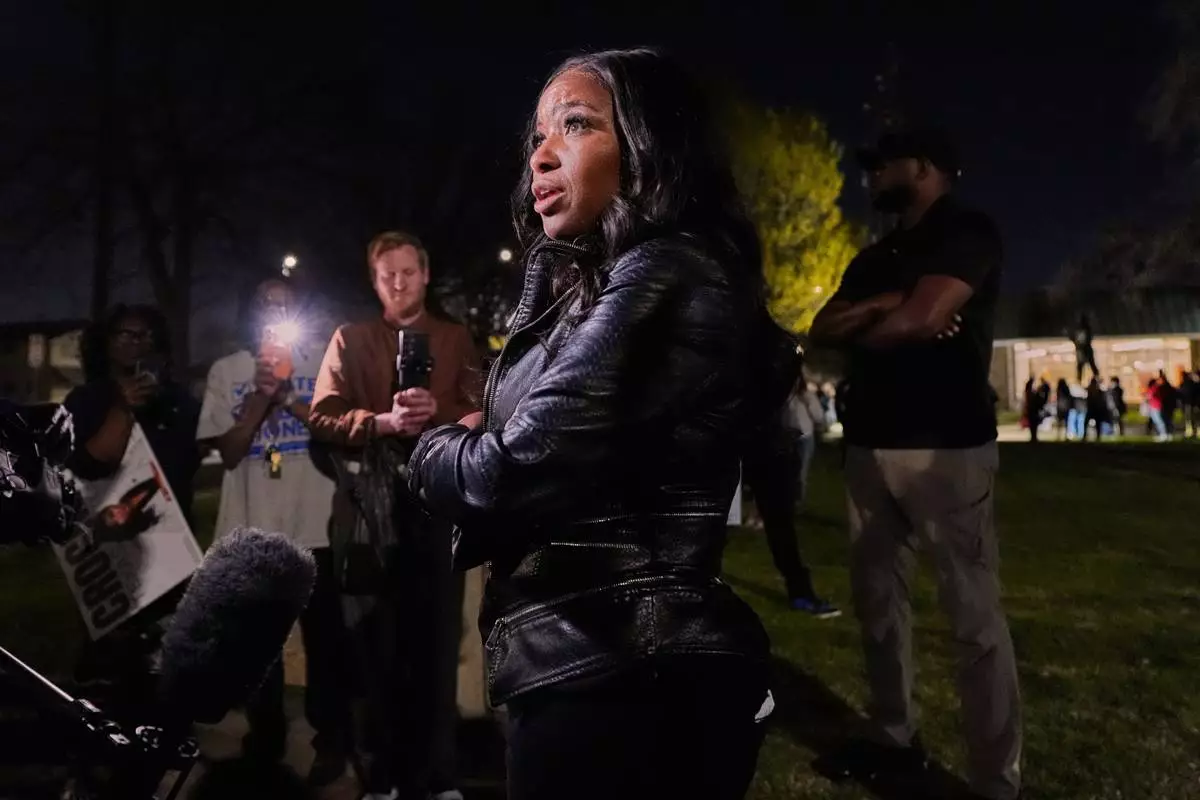
Supporters of Rep. Jasmine Crockett, D-Texas, a Democratic candidate for U.S. Senate, arrive for a primary election night watch party Tuesday, March 3, 2026, in Dallas. (AP Photo/Tony Gutierrez)
A supporter of Texas state Rep. James Talarico, D-Austin, a Democratic candidate for the U.S. Senate, wears a Texas state flag in their hat during a primary election watch party Tuesday, March 3, 2026, in Austin, Texas. (AP Photo/Eric Gay)
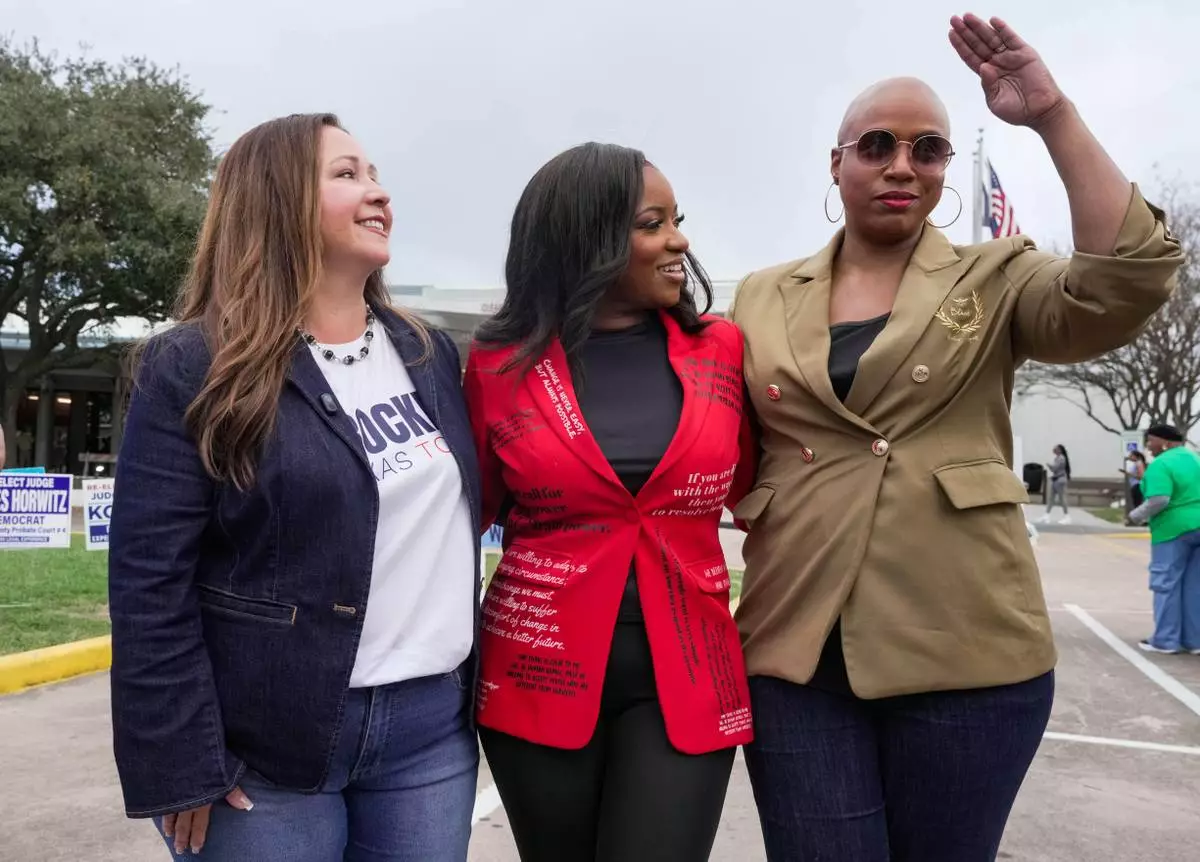
U.S. Reps. Adelita Grijalva of Arizona, Jasmine Crockett of Texas and Ayanna Pressley of Massachusetts, speak with voters during primary election day at the West Gray Metropolitan Multi-Service Center in Houston on Tuesday, March 3, 2026. (Raquel Natalicchio /Houston Chronicle via AP)
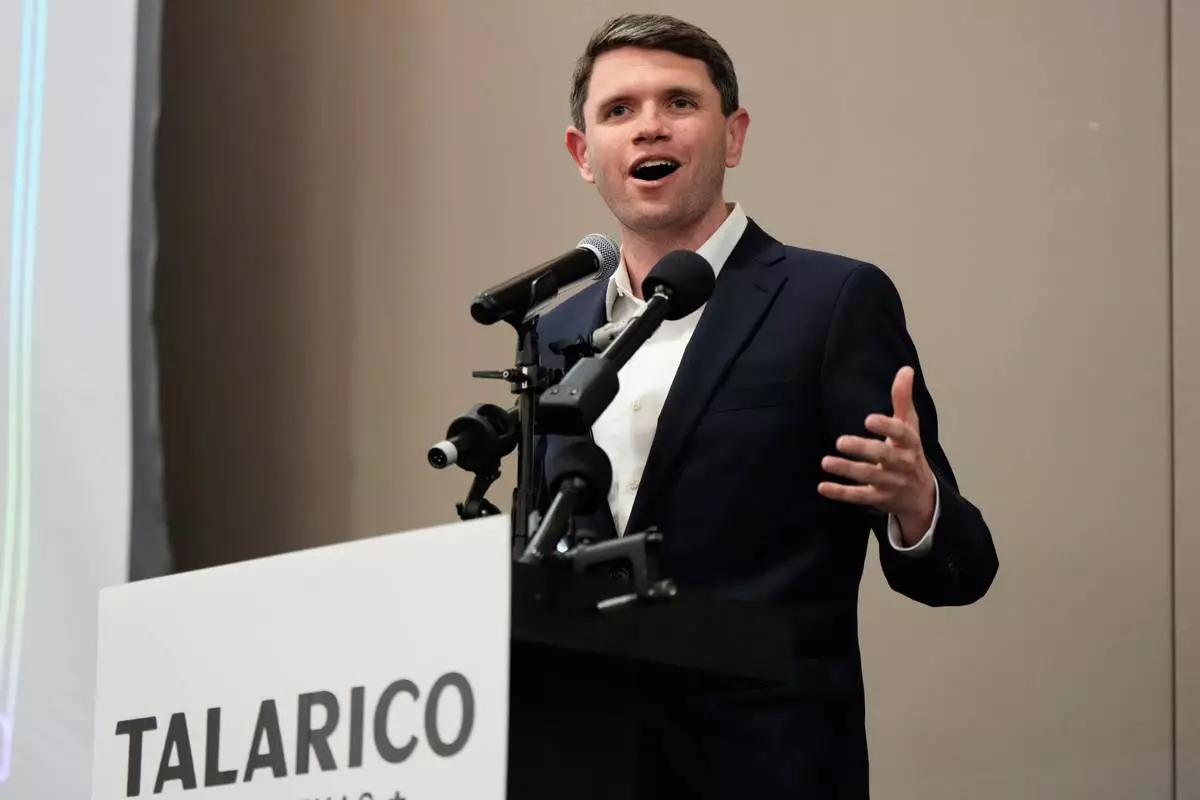
James Talarico, a Texas Democratic primary candidate for U.S. Senate, speaks during an event at the University of Houston Monday, March 2, 2026, in Houston. (AP Photo/Ashley Landis)
Primary candidate for U.S. Senate Rep. Jasmine Crockett, D-Texas, responds to a question during a broadcast interview at a campaign stop in Dallas, Friday, Feb. 27, 2026. (AP Photo/Tony Gutierrez)
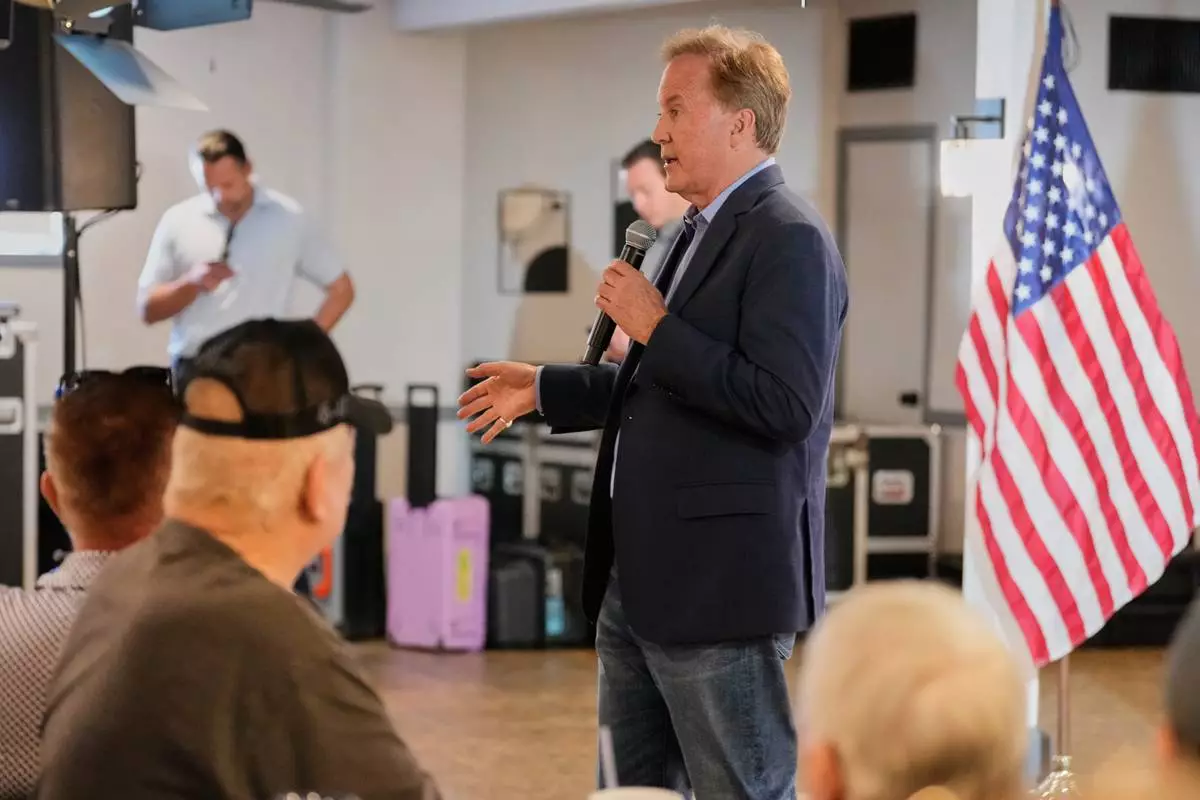
Texas Attorney General Ken Paxton, a Republican candidate for the U.S. Senate, addresses supporters during a campaign stop, Monday, March 2, 2026, in Waco, Texas. (AP Photo/Tony Gutierrez)
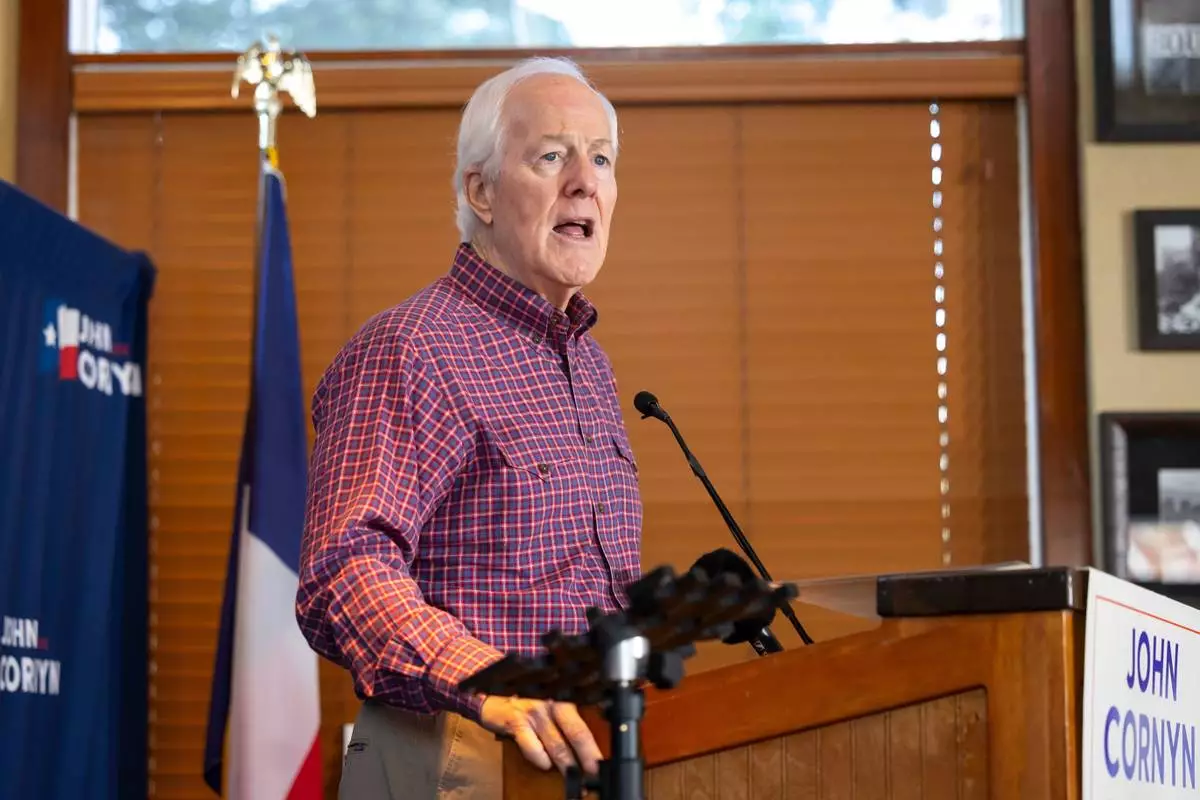
Sen. John Cornyn, R-Texas, speaks during a campaign stop in The Woodlands, Texas, Saturday, Feb. 28, 2026. (AP Photo/Annie Mulligan)