A wholesale drug distributor linked to the flood of opioids into Appalachia and two of its former executives were charged with conspiring to illegally distribute millions of painkiller pills, federal authorities said Thursday.
The former executives of Ohio-based Miami-Luken — the president and compliance officer — along with two pharmacists in West Virginia were indicted by a federal grand jury in Cincinnati, said U.S. Attorney Benjamin Glassman. The conspiracy allegedly involved pharmacies from Portsmouth, Ohio, along the Ohio River to rural towns through West Virginia and Kentucky, a region particularly hard-hit by painkiller overprescribing and overuse.
Glassman said authorities mean to "hold accountable" anyone criminally involved at any point in drug distribution.
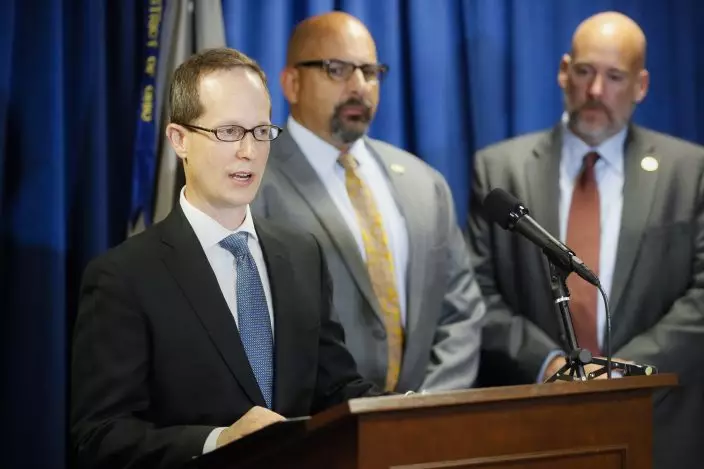
Benjamin Glassman, United States Attorney of the Southern District of Ohio, speaks during a news conference, Thursday, July 18, 2019, in Cincinnati. Federal authorities say Miami-Luken, an Ohio-based wholesale drug distributor that's been linked before to the opioid drug crisis, has been charged in a painkiller pill conspiracy cases. (AP PhotoJohn Minchillo)
"If you are intentionally violating the law, you can and should and will face justice regardless of where you are," Glassman said. "Whether you are on the street corner or in a boardroom."
Prescription opioid statistics made public this week underscored how pill distribution soared as the nation's overdose epidemic grew.
Miami-Luken distributed 120 million pills from 2006 through 2012, according to newly public federal data published by The Washington Post.
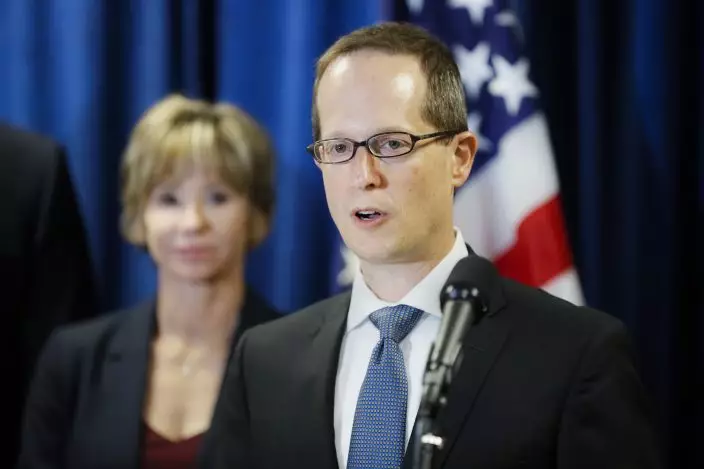
Benjamin Glassman, United States Attorney of the Southern District of Ohio, speaks during a news conference, Thursday, July 18, 2019, in Cincinnati. Federal authorities say Miami-Luken, an Ohio-based wholesale drug distributor that's been linked before to the opioid drug crisis, has been charged in a painkiller pill conspiracy cases. (AP PhotoJohn Minchillo)
An Associated Press analysis found that 11.4 million of those pills, or nearly 10%, went to Mingo County, West Virginia, an area with a population of about 24,000. The company was the top opioid pill distributor in the county over that stretch; it was in the top five of only one neighboring county, Kentucky's Martin County, where the company distributed 574,000 pills over that span.
Richard Blake, an attorney who has previously represented Miami-Luken, said Thursday he was unaware of the charges.
There was no answer Thursday at the phone number listed for the company in Springboro, a suburban city 18 miles (29 kilometers) south of Dayton. The Dayton Daily News reported earlier this year that the company was in the process of dissolving amid mounting legal problems
Miami-Luken has been named in lawsuits pending before a federal judge in Cleveland. More than 2,000 state, local and tribal governments have sued members of the drug industry. West Virginia's attorney general in 2016 settled a lawsuit for $2.5 million against Miami-Luken, resolving allegations that the company failed to detect, report and stop the flood of suspicious drug orders into the state.
As part of the settlement, Miami-Luken was required to report suspicious orders to West Virginia State Police and the attorney general's office within 72 hours of discovering them.
"Today's announcement represents yet another step in law enforcement's continuing effort to fight this epidemic," West Virginia Attorney General Patrick Morrisey said in a statement.
Federal authorities identified the indicted as:
— Miami-Luken's former president, Anthony Rattini, 71, of Colorado Springs, Colorado.
— Miami-Luken's former compliance officer, James Barclay, 72, of Springboro.
— Samuel "Randy" Ballengee, 54, of Lovely, Kentucky, identified as a pharmacist who owned Tug Valley Pharmacy in Williamson, West Virginia.
— Devonna Miller-West, 49, of Oceana, West Virginia, identified as a pharmacist who owned Westside Pharmacy.
Barclay remained at large Thursday, Glassman said, while the other three were arrested without incident and will face a court appearance in Cincinnati later this month. They each face up to 20 years in prison if convicted.
Investigators have said that as early as 2011, Miami-Luken was aware that the Westside Pharmacy in Oceana (population 1,394) was filling prescriptions for doctors located hours away, and that a large number of prescriptions for hydrocodone and oxycodone were paid for with cash. Yet, congressional findings said the company continued to supply the pharmacy with more than 3.36 million opioids over the next four years.
Glassman said Miami-Luken allegedly distributed more than 3.7 million hydrocodone pills in 2008-2011 to an unnamed pharmacy in Kermit, West Virginia (population around 400).
Several other pharmacies were mentioned but not named in the indictment, and Glassman said investigations are continuing across the region.
"It looks like a war zone down here," Perry County, Kentucky, Sheriff Joseph Engle said Wednesday after release of federal data showed that on average, 175 pills a year per person were distributed in Perry County during the period covered.
Associated Press writers John Raby in Charleston, West Virginia; Claire Galofaro in Louisville, Kentucky; Goff Mulvihill in Cherry Hill, New Jersey, Matthew Perrone in Washington D.C.; John Seewer in Toledo, Ohio, and Kantele Franko, Julie Carr Smyth and Andrew Welsh-Huggins in Columbus contributed to this report.
The new Moana. The 20-year-old wunderkind filmmaker. The multi Tony Award winner. The “Saturday Night Live” comedians. The next generation of Emilys. And the Australians at the heart of one of Sundance’s biggest hits.
There’s more than a few up-and-coming talents to get excited about in the movies this summer. The Associated Press spoke to 11 ones to watch.
Catherine Lagaʻaia (“lung-uh-aye-uh”) found out she got “Moana” on a school day. It was around 8:15 a.m. and she’d just heard the best news of her life after a very stressful year of auditioning. But the celebration would have to wait: It was swimming carnival day and she was on deck for the 400-meter backstroke.
“I guess, like, the water vibes carried through,” said Lagaʻaia, 20, laughing.
Lagaʻaia, who is one of eight children, grew up around acting in Sydney, Australia. Her father played Captain Typho in the “Star Wars” prequels, she went to a performing arts high school and a lot of her siblings are in theater. Two of her sisters even auditioned for “Moana” alongside her, but she was just the right age at the right time, she said.
The animated film meant the world to Lagaʻaia, who is of Samoan heritage, and she’s acutely aware of the big expectations for the live action film (out July 10) — she has them for herself too.
“I felt a fair bit of impostor syndrome stepping into it,” she said. “I think we’ve made some great changes, and we’ve kept a lot of the stuff that holds the heart of the film the same.”
Teenage boys Ryan (Stacy Clausen, 21) and Naim (Joe Bird, 19) are drawn to one another in their backwater Australian community in “Leviticus,” the “conversion therapy” horror that broke out at the Sundance Film Festival. It hits theaters on June 19.
“It is about growing up queer and how the fear of growing up queer can block someone mentally from acting on their desires, and physically,” Clausen said. “But I think that there is something in it for everyone, like whether you’re LGBTQIA or not, it’s about love.”
They knew they had made something special, but it’s been affirming to see it resonate with audiences. When the trailer posted on YouTube, Bird noticed one commenter who wrote that they wished they’d had this film when they were younger.
“It just takes one person to be inspired, or you know say, ‘Oh, I wish I had a film like this’ to know that you’ve kind of done your job,” Bird said. “It’s all about connecting.”
Aleshea Harris chose a two-time Tony-winner, Kara Young, and a relative newcomer, Mallori Johnson, to anchor the big screen adaptation of her Obie-winning play “Is God Is.” The story is centered on twin sisters searching for their abusive father, who burned and scarred them as babies.
Young plays Racine the Rough One; Johnson is Anaia the Quiet One. After fending for themselves their entire lives are set on an epic road trip and a journey of revenge and reckoning. It’s in theaters on May 15.
“Anaia depends a lot on Racine to protect her,” Johnson said. “I think that they’ve set up a dynamic since they were children … they have this kind of codependent relationship.”
And although both Young and Johnson are in different phases of their careers, their enthusiasm for the material, and getting to be part of it, is identical.
“Getting into the world of ‘Is God Is’ feels like an ancestral calling in some wild, beautiful, almost like indescribable way,” Young said. “It’s an epic road trip. It’s a Greek tragedy. It’s a love story between two sisters …. I lost my train of thought because I just got so hyped.”
Kane Parsons was a teenager when he was signed to direct his first feature, based on his viral YouTube series “Backrooms.”
The concept was inspired by an internet creepypasta that imagined never-ending expanse rooms and hallways full of fluorescent lights, old carpet and monotonous yellow paint; He took that idea and ran with it, creating unnerving videos from his bedroom with the help of the open-source 3D graphics software Blender. Soon both James Wan and Shawn Levy’s companies were interested in taking it to the next level.
In the film, out May 29, Chiwetel Ejiofor plays a struggling furniture store owner who seemingly slips out of reality. Renate Reinsve co-stars.
“I don’t think of this as inherently horror-driven; it’s definitely not a building full of monsters,” Parsons, 20, said. “I’ve always been more interested in the sort of man looking in the mirror version.”
“SNL” cast members Kam Patterson, 27, and Ben Marshall, 30, play a couple of Gen Z guys on a bachelor trip, with Marcello Hernández, groom-to-be Mason Gooding and a middle-aged colleague (Kevin Hart) who was accidentally added to the group chat in the new Netflix comedy “72 Hours” (streaming July 24).
“It was the most fun you could possibly have shooting a movie,” Marshall said.
Between goofing around in a mansion in New Jersey and hanging in Miami with Hernández, it was, Patterson said, like summer camp. And Hart was their de facto counselor. They teased Gooding about never having his shirt on, Marshall for being so uniquely bad at jet skiing and Patterson for that time someone left him with one of the production assistant’s walkie talkies and for 5 minutes he had an open mic to the entire crew. That energy continued when the cameras were on too.
“I don’t think we said one word that’s actually in the script,” Marshall laughed.
Patterson chimed in: “Not at all. We take that script and threw it out the window.”
Call them the new Emilys. Or, maybe don’t. But there’s a new batch of smart, young things manning the desks at “Runway” in “The Devil Wears Prada 2” (now in theaters).
Simone Ashley, of “Bridgerton” fame, is Miranda Priestly’s first assistant Amari, who screenwriter Aline Brosh McKenna didn’t want to be Emily 2.0.
“With Amari the comedy comes from, like, flick of the wrist kind of sassiness and her quiet confidence,” Ashley, 31, said. “Me and Aline kind of had this inside joke that Amari is like secretly the next Miranda.”
Comedian Caleb Hearon, 31, is Miranda’s second assistant, Charlie, who is not allowed to leave his desk. Ever. But he’s not mad about it: This is literally the dream.
“I really thought a lot about a guy like Charlie and what it would mean to him to be in this office and why he wouldn’t mind staying at the desk all day,” Hearon said.
And finally, there is Helen J Shen, 26, who after breaking out on stage in “Maybe Happy Ending” makes her big screen debut as Andy’s assistant, Jin.
Shen said she “was excited to see that the dialogue was so silly to me, but Jin doesn’t find it silly.”
“I felt like that was a fresh take on someone who knows exactly what they’re trying to do,” Shen added. “She has a lot of wonderful things under her belts, intelligence wise, and she’s just trying to like, show that and be as helpful to Andy as possible.”
For more coverage of this summer’s upcoming films, visit: https://apnews.com/hub/movies
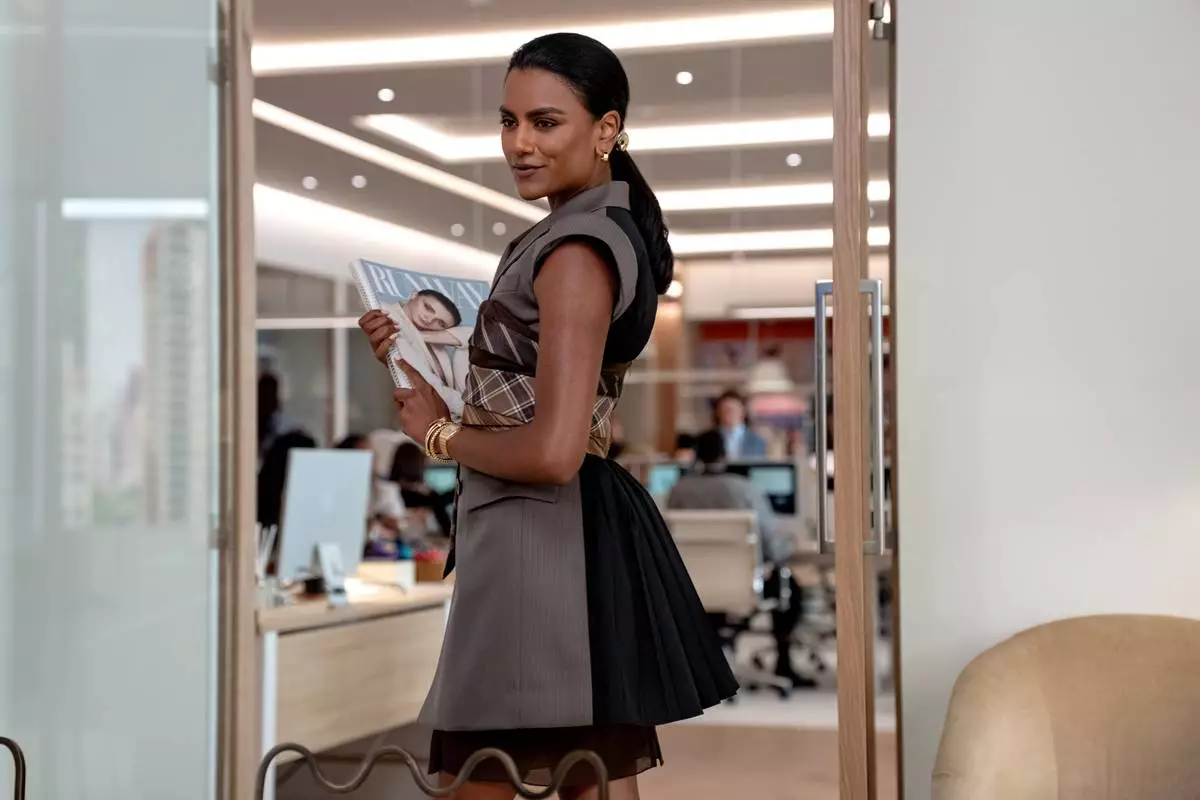
This image released by 20th Century Studios shows Simone Ashley in a scene from the film "The Devil Wears Prada 2." (20th Century Studios via AP)
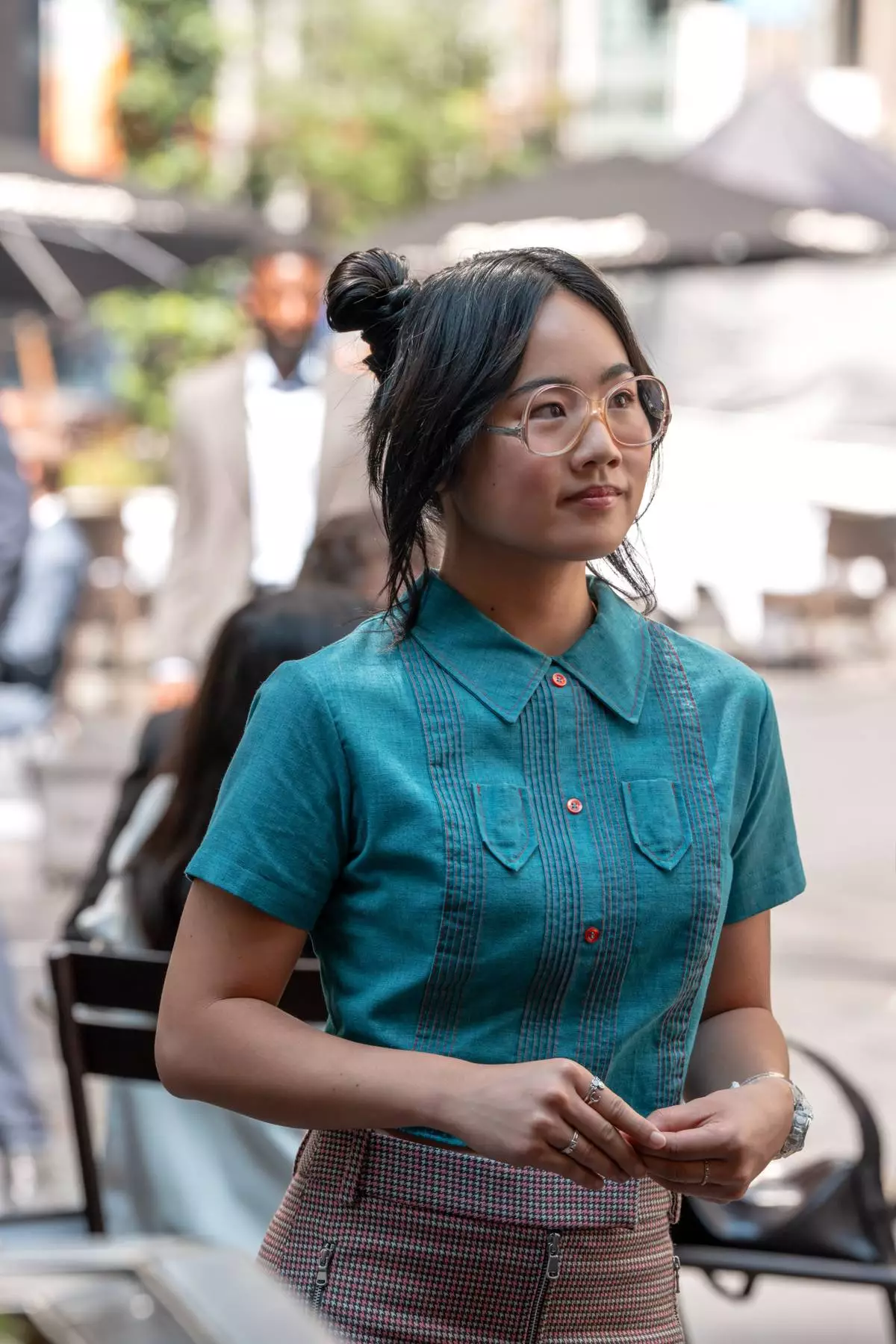
This image released by 20th Century Studios shows Helen J. Shen in a scene from the film "The Devil Wears Prada 2." (20th Century Studios via AP)
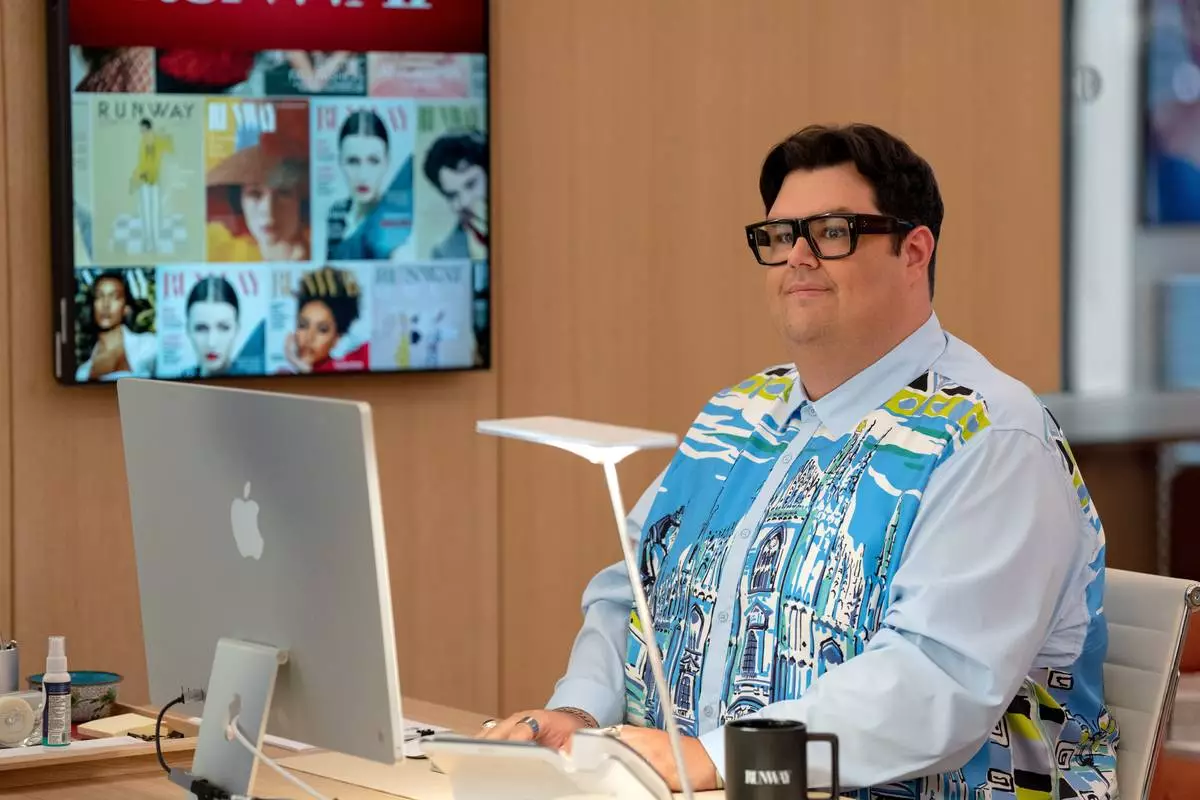
This image released by 20th Century Studios shows Caleb Hearon in a scene from the film "The Devil Wears Prada 2." (20th Century Studios via AP)