Skip to Content Facebook Feature Image

Key takeaways: Should Democrats go big or get real?

Key takeaways: Should Democrats go big or get real?

Key takeaways: Should Democrats go big or get real?

2019-07-31 11:33 Last Updated At:11:40

Should Democrats be going big or getting real? That's the question that dominated Tuesday's Democratic primary debate, as progressive favorites Elizabeth Warren and Bernie Sanders fended off attacks from lesser-known moderates. The display amounted to a sometimes testy public airing of the party's anxieties about how far left is too left and how to beat President Donald Trump. Here are the key takeaways from the debate:

EVOLUTION VS. REVOLUTION

The battle lines were clear from the opening remarks. This was the pragmatists against the front-runners seeking transformational change.

Over and over, moderate candidates like Montana Gov. Steve Bullock, former Colorado Gov. John Hickenlooper and former Rep. John Delaney argued Sens. Elizabeth Warren and Bernie Sanders' plans — from Medicare for All to the Green New Deal — are unrealistic and would scare off voters.

Bullock bemoaned the candidates' "wish-list economics." Minnesota Sen. Amy Klobuchar dismissed free college — even for wealthy families — as unworkable and touted her ideas "grounded in reality."

Hickenlooper called for "an evolution, not a revolution" on health care.

The attacks weren't shocking in a debate that featured the progressive standouts Warren and Sanders onstage with a handful of lesser-known moderates looking to seize the spotlight. But the two senators' unified front in fighting them off was notable. Though they are jockeying for some of the same voters, Warren and Sanders didn't bother going after each other. They largely beat back the moderate critique of their call for sweeping, systemic change with similar arguments.

Sanders argued his health plan is "not radical" and achievable. Warren said the country's problems can't be solved with "small ideas and spinelessness."

PLAYING INTO TRUMP'S HANDS?

Donald Trump loomed large over the Democratic debate stage. Repeatedly, the candidates mixed their policy plans with political strategy — arguing over whether their party's leftward push will only open them up to GOP criticism.

On topics from Medicare for All to immigration, Warren and Sanders found themselves under attack as their more moderate competitors told them their policies only played into Trump's hands.

The notion of taking away private insurance from millions and a Green New Deal that "makes sure that every American's guaranteed a government job that they want" is "a disaster at the ballot box," Hickenlooper said.

"You might as well FedEx the election to Donald Trump," Hickenlooper said. Delaney wondered, "Why do we have to be so extreme?" Even self-help author Marianne Williamson chimed in to say she does "have concern about what the Republicans would say."

South Bend, Indiana, Mayor Pete Buttigieg tried to end the unusually public display of anxiety, declaring, "it is time to stop worrying about what the Republicans will say."

"If it's true that if we embrace a far left agenda they're going to say we're a bunch of crazy socialists," Buttigieg said. "If we embrace a conservative agenda, you know what they're going to do? They're going to say we're a bunch of crazy socialists. So let's just stand up for the right policy, go out there, and defend it."

MEDICARE FOR ALL TAKES HEAT

If the fight was between centrists and progressives, Medicare for All was the weapon.

The early moments of the debate was dominated by a fight over whether Sanders' plan to eliminate private insurance in favor of a universal government health plan is possible, practical or political suicide.

At times, with Medicare for All supporters Sanders and Warren outnumbered, the centrists piled on, raising doubts about the quality of care it could offer, the costs and the disruption to the health care system. Ohio Rep. Tim Ryan called it "bad policy and bad politics." Bullock said he couldn't support a plan that "rips away" insurance from Americans who have it.

"It used to be Republicans who wanted to do repeal and replace," Bullock said, referring to the Republican refrain on getting rid of President Barack Obama's Affordable Care Act.

Sanders, who has spent much of his career on the issue, grew agitated as he defended the plan. The coverage would actually be better, he argued.

"You don't know that, Bernie," Ryan interjected.

"I do know," Sanders fired back. "I wrote the damn bill!"

UNITED AGAINST TRUMP ON RACE

For all the divisions onstage Tuesday, the candidates were unified in rebuking Trump's racist comments and using race as a campaign theme.

Trump in recent weeks has told four congresswomen of color to "go back" to the countries they came from and criticized Rep. Elijah Cummings' Baltimore-area district as a "rat and rodent infested mess."

"I have had it with the racist attacks," Klobuchar said in her opening statement.

Sanders said Trump exploited racism. Warren said, "The president is advancing environmental racism, economic racism, criminal justice racism, health care racism." Warren won strong applause from the Detroit audience when she declared her administration would treat white supremacy as a form of domestic terrorism.

Buttigieg also directed criticism at members of Congress he said are supportive of or silent on "naked racism" in the White House.

"If you are a Republican member of Congress, consider the fact that when the sun sets on your career, and they are writing your story of all the good and bad things you did in your life, the thing you will be remembered for is whether in this moment, with this president, you found the courage to stand up to him or you continued to put party over country," he said. It was one of the loudest applause lines of the night.

Associated Press writer Hunter Woodall contributed from Detroit.
ISLAMABAD (AP) — U.S. President Donald Trump said Friday he was “not satisfied” with Iran’s latest proposal in negotiations to end the war between the countries, rejecting the plan almost as soon as it was delivered.

Iran handed over its latest proposal for negotiations to mediators in Pakistan on Thursday night, Iran’s state-run IRNA news agency reported.

“They want to make a deal, I’m not satisfied with it, so we’ll see what happen,” Trump told reporters Friday at the White House.

The shaky three-week ceasefire between the U.S. and Iran appears to still be holding though both countries have traded accusations of violations.

Trump did not elaborate on what he saw as the latest proposal’s shortcomings. “They’re asking for things I can’t agree to,” he said.

Negotiations have continued by phone after Trump called off his envoys’ trip to Pakistan last week, the president said. He expressed frustration with Iran’s leadership, describing it as fractured.

“It’s a very disjointed leadership,” he said. “They all want to make a deal, but they’re all messed up.”

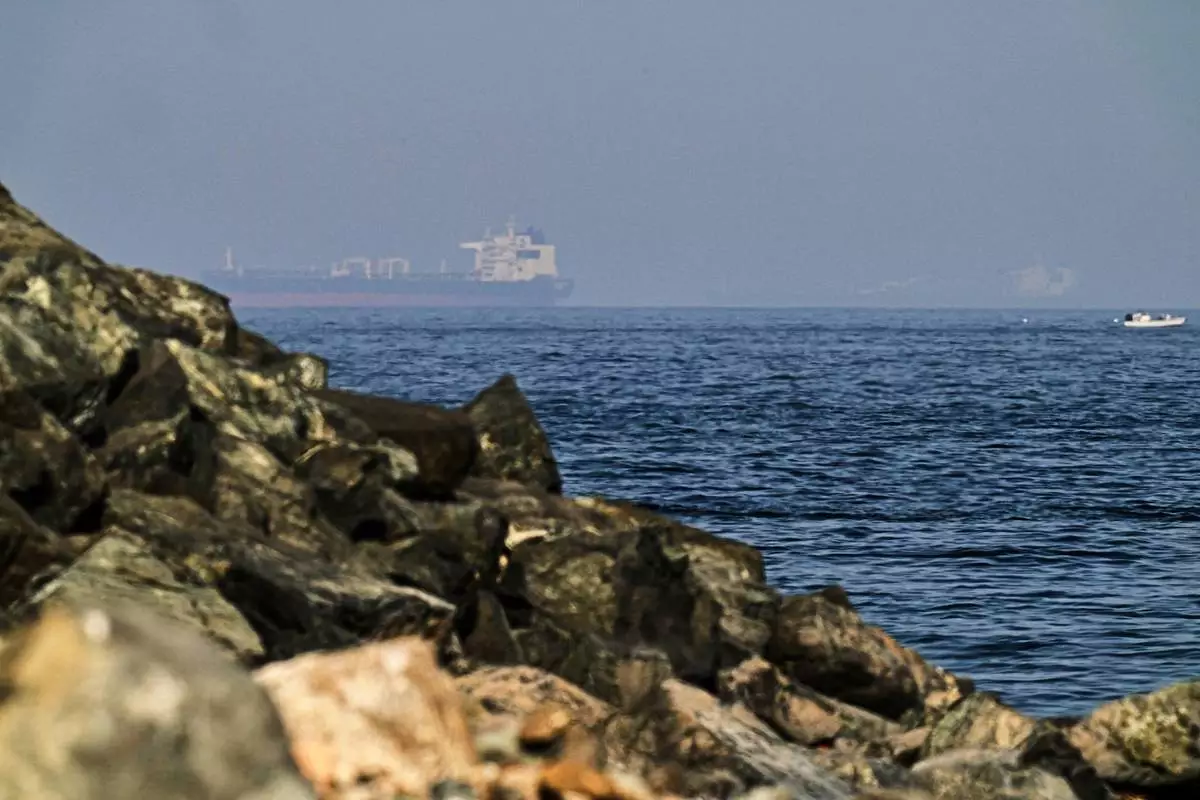
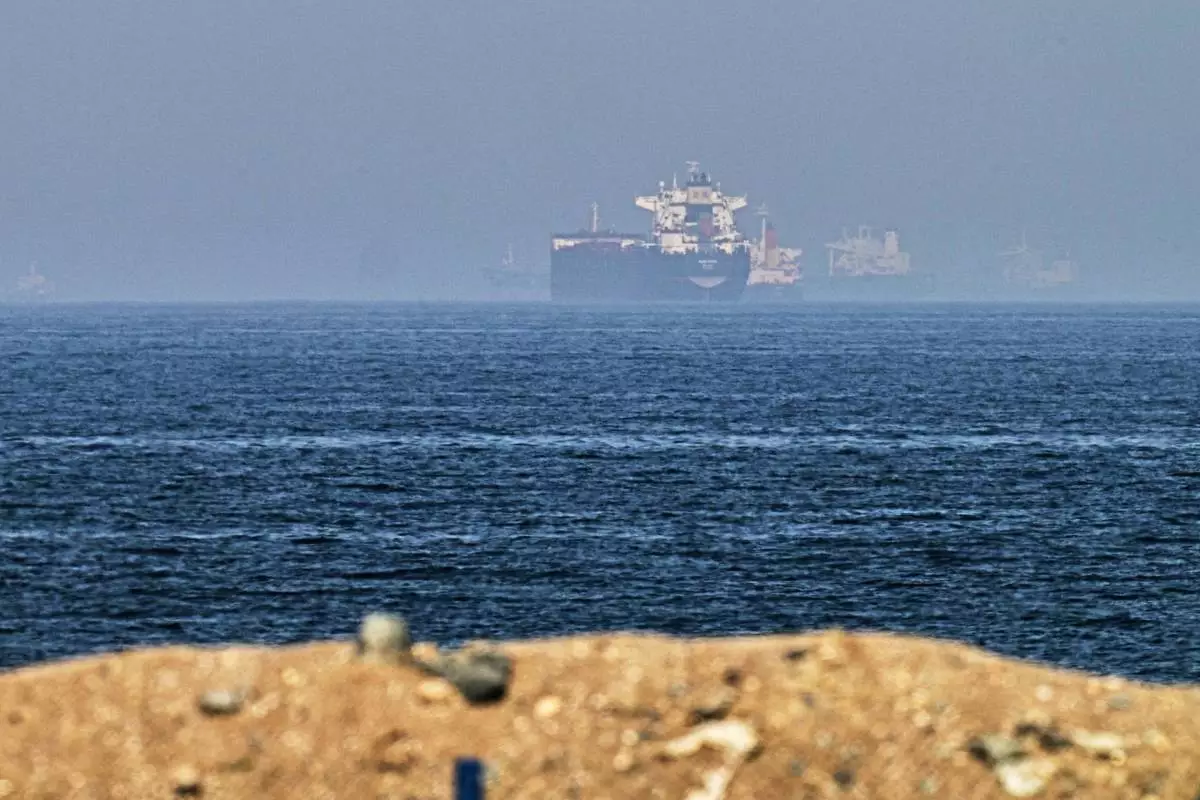
While the ceasefire has largely halted fighting in Iran, the U.S. and Iran are locked in a standoff over the Strait of Hormuz, through which a fifth of the world’s traded oil and gas passes in peacetime. A U.S. Navy blockade stopping Iran's tankers from getting out to sea has Iran’s economy reeling. The world economy is also under pressure as Iran maintains its chokehold on the strait.

Trump this week floated a new plan to reopen the critical passageway used by America's Gulf allies to export their oil and gas.

Iran’s Foreign Minister Abbas Araghchi held a flurry of calls on Friday with many of his regional counterparts, including from Turkey, Egypt, Qatar, Saudi Arabia, Iraq and Azerbaijan, to brief them on his country’s latest initiatives to end the war, according to his social media.

European Union foreign policy chief Kaja Kallas also spoke over phone Friday with Araghchi. They discussed ongoing diplomatic efforts to reopen the Strait of Hormuz and long-term security arrangements, Kallas’ office said in a statement. Kallas also has been in contact with the EU's Gulf partners.

Pakistan officials have said efforts were continuing to ease tensions between Iran and the U.S. Pakistan Prime Minister Shehbaz Sharif told a Cabinet meeting on Wednesday that a response from Iran was still awaited.

Meanwhile, Iran’s imprisoned Nobel Peace Prize laureate Narges Mohammadi has been urgently transferred from prison to a hospital in northwestern Iran after a “catastrophic deterioration” of her health, her foundation said Friday.

The Narges Mohammadi Foundation said the Nobel Prize laureate had two episodes of complete loss of consciousness and a severe cardiac crisis. She was believed to have suffered a heart attack in late March, according to her lawyers who visited her a few days after the incident.

The hospital transfer comes “after 140 days of systematic medical neglect,” since her arrest on Dec. 12, the foundation said.

Earlier this week, Trump told Axios that he had rejected Iran’s proposal to reopen the strait in exchange for the U.S. Navy lifting its blockade of Iranian ports.

The Iranian proposal would have pushed negotiations on the country’s nuclear program to a later date, two regional officials said earlier this week. The officials with knowledge of the proposal spoke on condition of anonymity to discuss closed-door negotiations between Iranian and Pakistani officials.

One of the major reasons Trump has said he went to war was to deny Iran the ability to develop nuclear weapons.

Since the war began on Feb. 28, at least 3,375 people have been killed in Iran, and more than 2,600 people in Lebanon, where new fighting between Israel and the Iran-backed militant group Hezbollah broke out two days after the war started, according to authorities.

Additionally, 24 people have died in Israel and more than 20 in Gulf Arab states. Seventeen Israeli soldiers in Lebanon and 13 U.S. service members throughout the region have been killed.

Ezzidin reported from Cairo and Binkley from Washington. Associated Press writers Sylvie Corbet in Paris and Sarah El Deeb in Beirut contributed to this report.

Cargo ships are seen at sea near the Strait of Hormuz, as viewed from a rocky shoreline near Khor Fakkan, United Arab Emirates, Friday, May 1, 2026. (AP Photo/Fatima Shbair)

Cargo ships are seen at sea near the Strait of Hormuz, as viewed from a rocky shoreline near Khor Fakkan, United Arab Emirates, Friday, May 1, 2026. (AP Photo/Fatima Shbair)

Cargo ships are seen at sea in the Gulf of Oman near the Strait of Hormuz, as viewed from a rocky shoreline near Khor Fakkan, United Arab Emirates, Friday, May 1, 2026.(AP Photo/Fatima Shbair)

Cargo ships are seen at sea in the Gulf of Oman near the Strait of Hormuz, as viewed from a rocky shoreline near Khor Fakkan, United Arab Emirates, Friday, May 1, 2026.(AP Photo/Fatima Shbair)

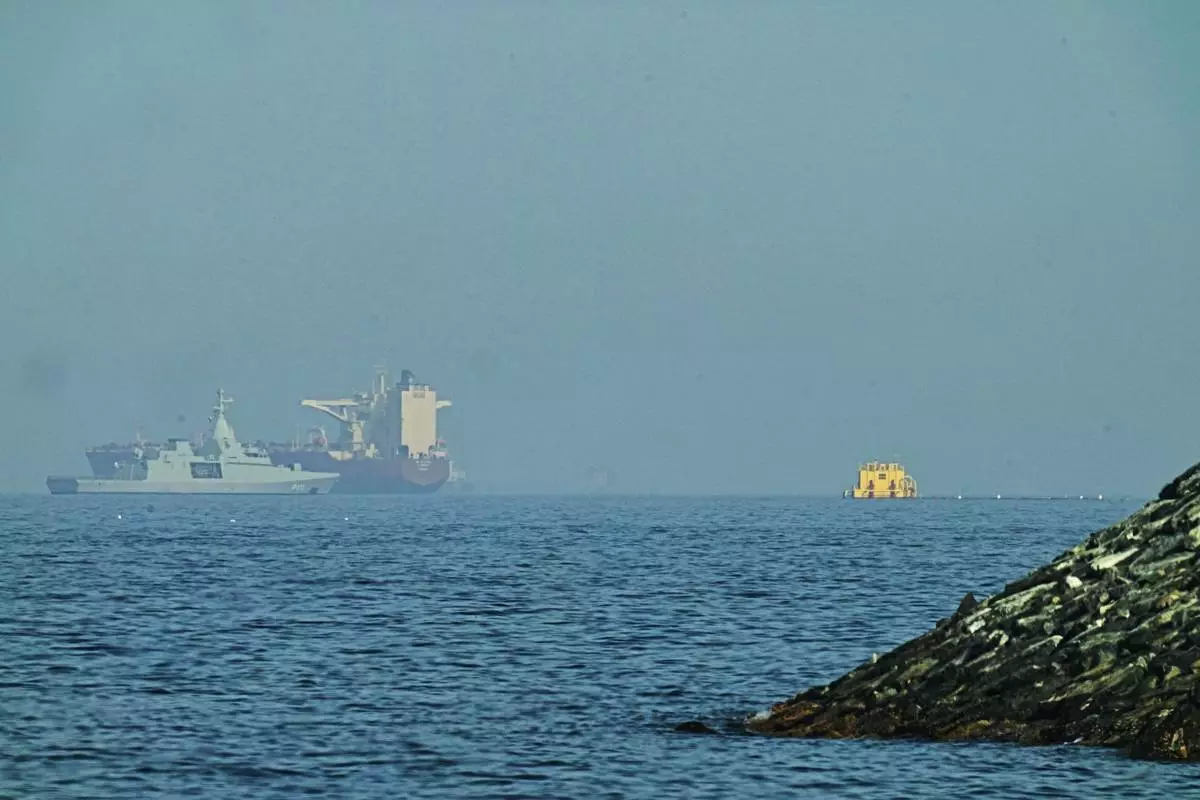
An Emirati patrol boat, left, is near a tanker anchored in the Gulf of Oman near the Strait of Hormuz, as seen from a coastal road near Khor Fakkan, United Arab Emirates, Friday, May 1, 2026. (AP Photo/Fatima Shbair)

An Emirati patrol boat, left, is near a tanker anchored in the Gulf of Oman near the Strait of Hormuz, as seen from a coastal road near Khor Fakkan, United Arab Emirates, Friday, May 1, 2026. (AP Photo/Fatima Shbair)

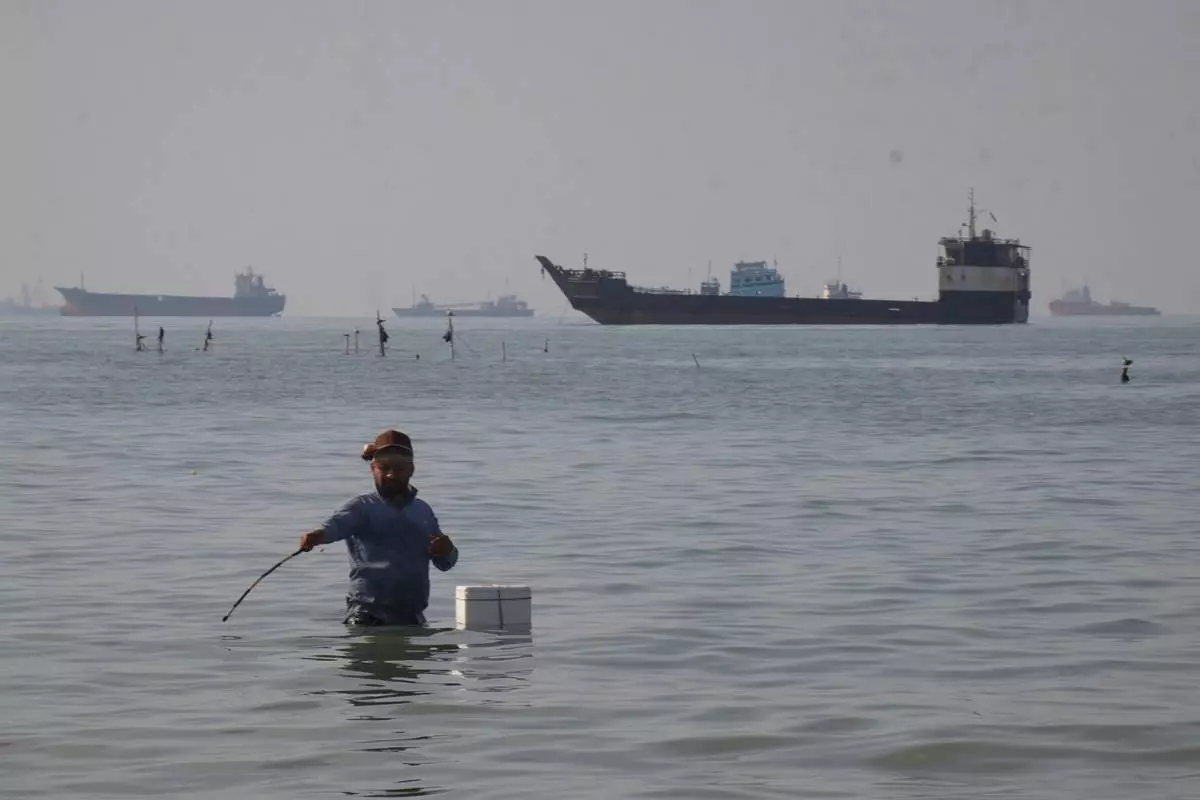
A man stands in the water, appearing to fish, as bulk carriers, cargo ships, and service vessels line the horizon in the Strait of Hormuz off Bandar Abbas, Iran, Monday, April 27, 2026.(Razieh Poudat/ISNA via AP)

A man stands in the water, appearing to fish, as bulk carriers, cargo ships, and service vessels line the horizon in the Strait of Hormuz off Bandar Abbas, Iran, Monday, April 27, 2026.(Razieh Poudat/ISNA via AP)

Recommended Articles