
Skip to Content Facebook Feature Image

Republicans face tough vote on Trump-backed budget bill

News

Republicans face tough vote on Trump-backed budget bill
News

News

Republicans face tough vote on Trump-backed budget bill

2019-07-31 12:23 Last Updated At:12:30

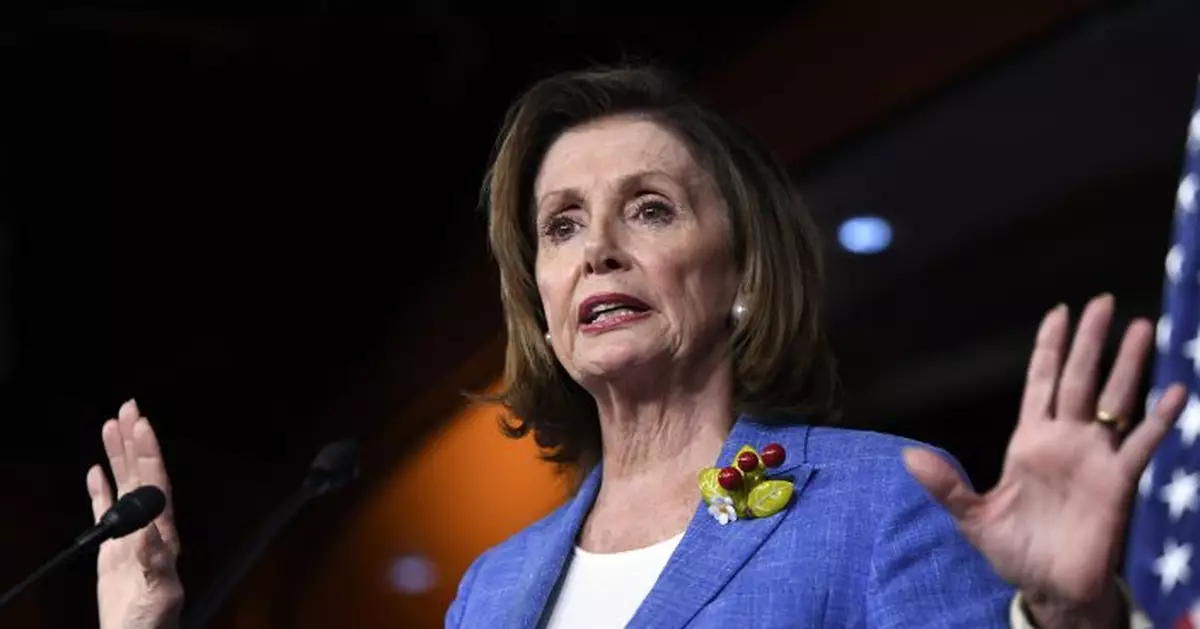
A hard-won, warts-and-all budget pact between House Speaker Nancy Pelosi and President Donald Trump is facing a key vote in the GOP-held Senate, with many conservatives torn between supporting the president and risking their political brand with an unpopular vote to add $2 trillion or more to the government's credit card.

The Trump-supported legislation backed by the Democratic speaker would also stave off a government shutdown and protect budget gains for both the Pentagon and popular domestic programs. It's attached to a must-do measure to lift the so-called debt limit to permit the government to borrow freely to pay its bills.

For many Republicans it's a tough vote, expected Wednesday afternoon. The tea party-driven House GOP conference broke against it by a 2-1 margin, but most pragmatists see the measure as preferable to an alternative fall landscape of high-wire deadlines and potential chaos. The government otherwise would face a potential debt default, an Oct. 1 shutdown deadline, and the return in January of across-the-board spending cuts known as sequestration.

Senate Majority Leader Mitch McConnell, R-Ky., is confident it will pass despite the misgivings of many Republicans.

But for new arrivals to the Senate, particularly those who ran against a broken Washington culture, the sweeping measure represents a lot of what they ran against: unrestrained borrowing and trillion-dollar deficits, fueled by a bipartisan thirst for new spending.

"This budget process, if we can even call it a process, put taxpayers at the mercy of a House Speaker who has no interest in prudent budgeting," said freshman Sen. Josh Hawley, R-Mo. "Our system is not supposed to work this way. When the entire federal budget depends on four or five people striking a deal among themselves, something is not right."

The budget and debt bill, however, is a top priority for McConnell, who set up the initial talks — taken over by Pelosi and Treasury Secretary Steven Mnuchin earlier this month — and pushed to isolate conservative forces in the White House who were disruptive. Top Senate Democrat Chuck Schumer of New York and House GOP leader Kevin McCarthy of California are also supporting the deal.

For House Republicans, as the minority party, it was easy to take a pass on voting for the legislation. Pelosi also made a point of showing she had enough Democratic votes to push it through without their help. But it's a different dynamic in the Senate, where Republicans hold the majority and are expected to deliver a strong vote for a Trump-backed agreement.

"Given the realities of divided government, it is a strong deal that achieves my Republican colleagues' and my No. 1 priority," McConnell said, citing gains for the military. "The Trump administration has negotiated their way to a major win on defense. The House has passed the compromise legislation. The president is ready and waiting to sign it."

Minority Whip Dick Durbin, D-Ill., said he expected a strong showing by the Senate's Democrats in favor of the bill. And GOP leadership stalwarts like Sens. Roy Blunt, R-Mo., Roger Wicker, R-Miss., and John Cornyn, R-Texas, swiftly swung behind the measure, calling it about the best result possible in a legislating matrix that demands Pelosi's blessing for bills to become law.

"So what price did we have to pay to get this? We had to give Nancy Pelosi a 4% increase this year in domestic spending and zero increase next year for an average annual increase that's less than the growth in (gross domestic product)," Wicker said, adding that many House Republicans took the "vote no, hope yes" approach to the legislation.

"I want to know what better deal anybody could have crafted that got Nancy Pelosi's sign-off in the House and Mitch McConnell's sign-off in the Senate, along with McCarthy and Schumer," Wicker said.

The agreement between the administration and Pelosi lifts the limit on the government's $22 trillion debt for two years and averts the risk of the Pentagon and domestic agencies from being hit with $125 billion in automatic spending cuts that are the last gasp of the 2011 budget deal.

ISLAMABAD (AP) — U.S. President Donald Trump said Friday he was “not satisfied” with Iran’s latest proposal in negotiations to end the war between the countries, rejecting the plan almost as soon as it was delivered.

Iran handed over its latest proposal for negotiations to mediators in Pakistan on Thursday night, Iran’s state-run IRNA news agency reported.

“They want to make a deal, I’m not satisfied with it, so we’ll see what happen,” Trump told reporters Friday at the White House.

The shaky three-week ceasefire between the U.S. and Iran appears to still be holding though both countries have traded accusations of violations.

Trump did not elaborate on what he saw as the latest proposal’s shortcomings. “They’re asking for things I can’t agree to,” he said.

Negotiations have continued by phone after Trump called off his envoys’ trip to Pakistan last week, the president said. He expressed frustration with Iran’s leadership, describing it as fractured.

“It’s a very disjointed leadership,” he said. “They all want to make a deal, but they’re all messed up.”

While the ceasefire has largely halted fighting in Iran, the U.S. and Iran are locked in a standoff over the Strait of Hormuz, through which a fifth of the world’s traded oil and gas passes in peacetime. A U.S. Navy blockade stopping Iran's tankers from getting out to sea has Iran’s economy reeling. The world economy is also under pressure as Iran maintains its chokehold on the strait.

Trump this week floated a new plan to reopen the critical passageway used by America's Gulf allies to export their oil and gas.

Iran’s Foreign Minister Abbas Araghchi held a flurry of calls on Friday with many of his regional counterparts, including from Turkey, Egypt, Qatar, Saudi Arabia, Iraq and Azerbaijan, to brief them on his country’s latest initiatives to end the war, according to his social media.

European Union foreign policy chief Kaja Kallas also spoke over phone Friday with Araghchi. They discussed ongoing diplomatic efforts to reopen the Strait of Hormuz and long-term security arrangements, Kallas’ office said in a statement. Kallas also has been in contact with the EU's Gulf partners.

Pakistan officials have said efforts were continuing to ease tensions between Iran and the U.S. Pakistan Prime Minister Shehbaz Sharif told a Cabinet meeting on Wednesday that a response from Iran was still awaited.

Meanwhile, Iran’s imprisoned Nobel Peace Prize laureate Narges Mohammadi has been urgently transferred from prison to a hospital in northwestern Iran after a “catastrophic deterioration” of her health, her foundation said Friday.

The Narges Mohammadi Foundation said the Nobel Prize laureate had two episodes of complete loss of consciousness and a severe cardiac crisis. She was believed to have suffered a heart attack in late March, according to her lawyers who visited her a few days after the incident.

The hospital transfer comes “after 140 days of systematic medical neglect,” since her arrest on Dec. 12, the foundation said.

Earlier this week, Trump told Axios that he had rejected Iran’s proposal to reopen the strait in exchange for the U.S. Navy lifting its blockade of Iranian ports.

The Iranian proposal would have pushed negotiations on the country’s nuclear program to a later date, two regional officials said earlier this week. The officials with knowledge of the proposal spoke on condition of anonymity to discuss closed-door negotiations between Iranian and Pakistani officials.

One of the major reasons Trump has said he went to war was to deny Iran the ability to develop nuclear weapons.

Since the war began on Feb. 28, at least 3,375 people have been killed in Iran, and more than 2,600 people in Lebanon, where new fighting between Israel and the Iran-backed militant group Hezbollah broke out two days after the war started, according to authorities.

Additionally, 24 people have died in Israel and more than 20 in Gulf Arab states. Seventeen Israeli soldiers in Lebanon and 13 U.S. service members throughout the region have been killed.

Ezzidin reported from Cairo and Binkley from Washington. Associated Press writers Sylvie Corbet in Paris and Sarah El Deeb in Beirut contributed to this report.

Cargo ships are seen at sea near the Strait of Hormuz, as viewed from a rocky shoreline near Khor Fakkan, United Arab Emirates, Friday, May 1, 2026. (AP Photo/Fatima Shbair)

Cargo ships are seen at sea near the Strait of Hormuz, as viewed from a rocky shoreline near Khor Fakkan, United Arab Emirates, Friday, May 1, 2026. (AP Photo/Fatima Shbair)

Cargo ships are seen at sea in the Gulf of Oman near the Strait of Hormuz, as viewed from a rocky shoreline near Khor Fakkan, United Arab Emirates, Friday, May 1, 2026.(AP Photo/Fatima Shbair)

Cargo ships are seen at sea in the Gulf of Oman near the Strait of Hormuz, as viewed from a rocky shoreline near Khor Fakkan, United Arab Emirates, Friday, May 1, 2026.(AP Photo/Fatima Shbair)

An Emirati patrol boat, left, is near a tanker anchored in the Gulf of Oman near the Strait of Hormuz, as seen from a coastal road near Khor Fakkan, United Arab Emirates, Friday, May 1, 2026. (AP Photo/Fatima Shbair)

An Emirati patrol boat, left, is near a tanker anchored in the Gulf of Oman near the Strait of Hormuz, as seen from a coastal road near Khor Fakkan, United Arab Emirates, Friday, May 1, 2026. (AP Photo/Fatima Shbair)

A man stands in the water, appearing to fish, as bulk carriers, cargo ships, and service vessels line the horizon in the Strait of Hormuz off Bandar Abbas, Iran, Monday, April 27, 2026.(Razieh Poudat/ISNA via AP)

A man stands in the water, appearing to fish, as bulk carriers, cargo ships, and service vessels line the horizon in the Strait of Hormuz off Bandar Abbas, Iran, Monday, April 27, 2026.(Razieh Poudat/ISNA via AP)

Recommended Articles