Your daily look at late-breaking news, upcoming events and the stories that will be talked about today:
1. LONG STANDOFF IN PHILLY ENDS
A gunman who opened fire on police as they were serving a drug warrant in Philadelphia, wounding six officers and triggering an hourslong standoff, is in police custody.

Assamese Rabha tribal women perform traditional fishing dance during the Independence Day celebrations in Gauhati, India, Thursday, Aug. 15, 2019. Indian Prime Minister Narendra Modi defended his government's controversial measure to strip the disputed Kashmir region of its statehood and special constitutional provisions in an Independence Day speech Thursday, as about 4 million Kashmiris stayed indoors for the 11th day of an unprecedented security lockdown and communications blackout. (AP PhotoAnupam Nath)
2. US SEEKS SEIZURE OF IRANIAN TANKER IN GIBRALTAR
A newspaper says that the U.S. Department of Justice has moved to halt the release of Iranian tanker held in the British overseas territory over an oil shipment to Syria.
3. MANY IN INDIA APPROVE MODI'S MOVE
The prime minister's unprecedented clampdown on Kashmir — India's only Muslim-majority state — to near-totalitarian levels is backed by his Hindu nationalist supporters and also some in the opposition camp.
4. WHERE 'TRUMPGRET' IS REAL
Not all are feeling the prosperity in New Hampshire, and when the tumult of his presidency is thrown in, the state's flinty voters may not be receptive to his appeals.
5. EPSTEIN'S CARIBBEAN ISLANDS A CURIOSITY AFTER HIS DEATH
Tourists and locals alike are powering up boats to take a closer look at a place nicknamed "Pedophile Island" that lies just off the southeast coast of St. Thomas.
6. 23 INJURED IN RUSSIAN PLANE'S EMERGENCY LANDING
The Ural Airlines A321 carrying 226 passengers lands in a field outside of one of Moscow's airports after colliding with a flock of birds.
7. CHINA UPS ANTE IN TRADE WAR
Beijing warns to retaliate if Washington goes ahead with planned Sept. 1 tariff hikes on additional Chinese imports.
8. DEMOCRATIC FIELD NARROWS
John Hickenlooper, a moderate and former Colorado governor, will drop out of the presidential primary, AP learns.
9. CLIMATE CHANGE THREATENS US WEST RIVER DESPITE WET WINTER
A wet winter likely will fend off mandated water shortages for states in the U.S. West that rely on the Colorado River but won't erase the impact of climate change.
10. WHAT'S COMING TO TIFFANY'S
The upscale chain launches its first comprehensive jewelry collection for men in October, tapping into a trend popularized by the likes of Jay-Z and John Mayer.
HARARE, Zimbabwe (AP) — When Tafara Muvhevhi, a Zimbabwean driving instructor, began work 16 years ago, his job was simple: teach the highway code and prepare learners to ace their driving test.
Today, his priorities have changed. His main concern is no longer just the exam, but whether his students will survive some of the world’s deadliest roads. This is vital in a country where road crashes rank among the top killers, according to the national statistics agency, and road accident fatality rates are among the continent's worst. In Zimbabwe, a crash hits every 15 minutes and five die and 38 are injured each day, according to the country's traffic safety agency.
“Back then we were teaching by the book, it was all by the book,” Muvhevhi said while coaching his latest student through parallel parking and smooth reversing into spaces marked by blue drums on a dusty and worn-out tarmac training ground on the outskirts of the capital, Harare.
Once known for orderly traffic and well-kept roads, Zimbabwe's road safety steadily has deteriorated since the 2000s, degenerating into traffic chaos in the 2010s as economic decline gutted road maintenance, informal public transport boomed and enforcement weakened. Despite renewed repairs and policing efforts, dangerous driving remains deeply entrenched.
"The other drivers are no longer patient with us, they hoot, they overtake illegally, putting pressure on the students so our students are basically trying to adjust,” he said, before his student navigated through streets where both drivers and pedestrians have little regard for rules.
For the student, 19-year-old Winfrida Chipashu, a university accounting major, the roads of Harare are more intimidating than balancing ledgers.
“You cannot really compare it to accounting because (in accounting) you have all the concepts," Chipashu said. “When you are driving in the jungle, you are confused by other people who are not following the road rules.”
The southern African nation’s roads turn most lethal during festive seasons and other holidays, but peril lurks daily, driven largely by dangerous driving that the government says is of alarming concern.
Zimbabwe has one of Africa’s highest road accident fatality rates, with the World Health Organization estimating nearly 30 deaths per 100,000 people.
On the roads, the contradictions are stark. Minibus taxis bearing “safety first” signs swerve wildly into pedestrian lanes and oncoming traffic. Fare collectors hang off doors and the back of moving vehicles shouting for customers. Sedans jammed with 12 passengers, including in the trunk, defy five-seat limits.
Authorities say 94% of road accidents in the country of 15 million people are caused by human error. Cellphone distractions among drivers and pedestrians cause about 10% of deaths, said Munesu Munodawafa, head of the Traffic Safety Council of Zimbabwe.
“That is frightening,” said Munodawafa. “For such a small population, those numbers are alarming.”
Zimbabwe's crisis mirrors a wider African pattern. Road accidents here kill about 300,000 people annually, about a quarter of the global toll. The continent has the world’s highest fatality rate at 26.6 deaths per 100,000 people, compared with a global average of about 18, according to the U.N. Economic Commission for Africa. This is despite the continent of 1.5 billion people accounting for just about 3% of the global vehicle population.
Road traffic deaths in Africa are also rising quicker than in any other region, with fatalities jumping 17% between 2010 and 2021, according to the World Health Organization’s latest Africa road safety report released in mid-2024.
The WHO links the surge in part to weak road safety laws and enforcement, reckless driving, and rapid urbanization and motorization. Vehicle registrations in Africa nearly tripled between 2013 and 2021, driven by imported used vehicles and a sharp rise in motorcycles and three-wheelers. Pedestrians, cyclists and riders of two- and three-wheelers account for about half of all fatalities, according to the U.N. agency.
In Uganda, where unregulated motorcycles dominate transport, reckless overtaking and speeding caused 44.5% of crashes in 2024, police there say, while in neighboring Kenya and across East Africa, frequent accidents on poor roads and dangerous driving fuel repeated calls for tougher road safety rules.
To increase road safety, police in Zimbabwe have recently acquired body cameras and breathalyzers and are pushing for a review of the driver licensing system, including docking points for offenders and a revamp of driver training programs to highlight the dangers of reckless driving.
“Drivers are not licensed to be killers, they are licensed to practice road safety and safeguard lives on the road but sadly that is not the case,” said police spokesperson Paul Nyathi.
For instructors like Muvhevhi, survival has become the lesson.
“When we are teaching our students, it’s no longer an issue of just obtaining the driver’s license,” he said. “We teach them to stay alive in spite of incorrect actions of other road users.”
For more on Africa and development: https://apnews.com/hub/africa-pulse
The Associated Press receives financial support for global health and development coverage in Africa from the Gates Foundation. The AP is solely responsible for all content. Find AP’s standards for working with philanthropies, a list of supporters and funded coverage areas at AP.org.
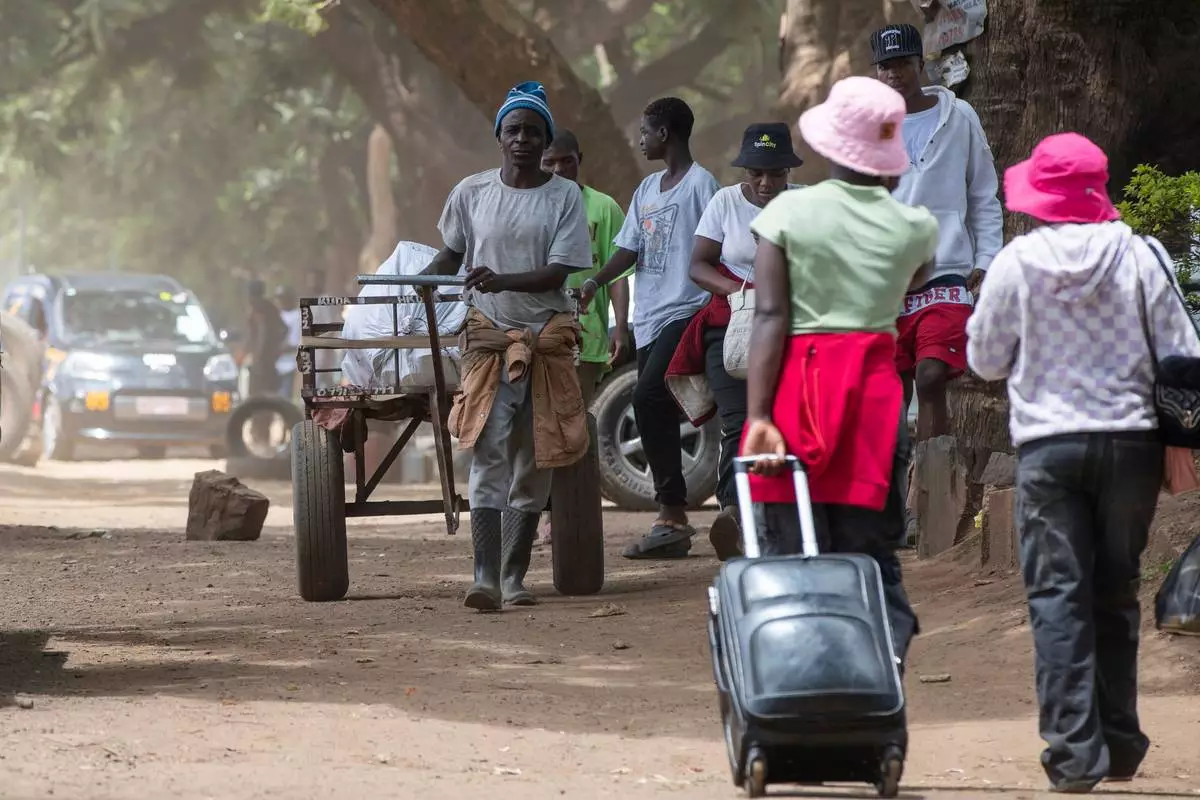
People walk on the sidewalk on the outskirts of Harare, Zimbabwe, Tuesday, Dec. 16, 2025. (AP Photo/Aaron Ufumeli)
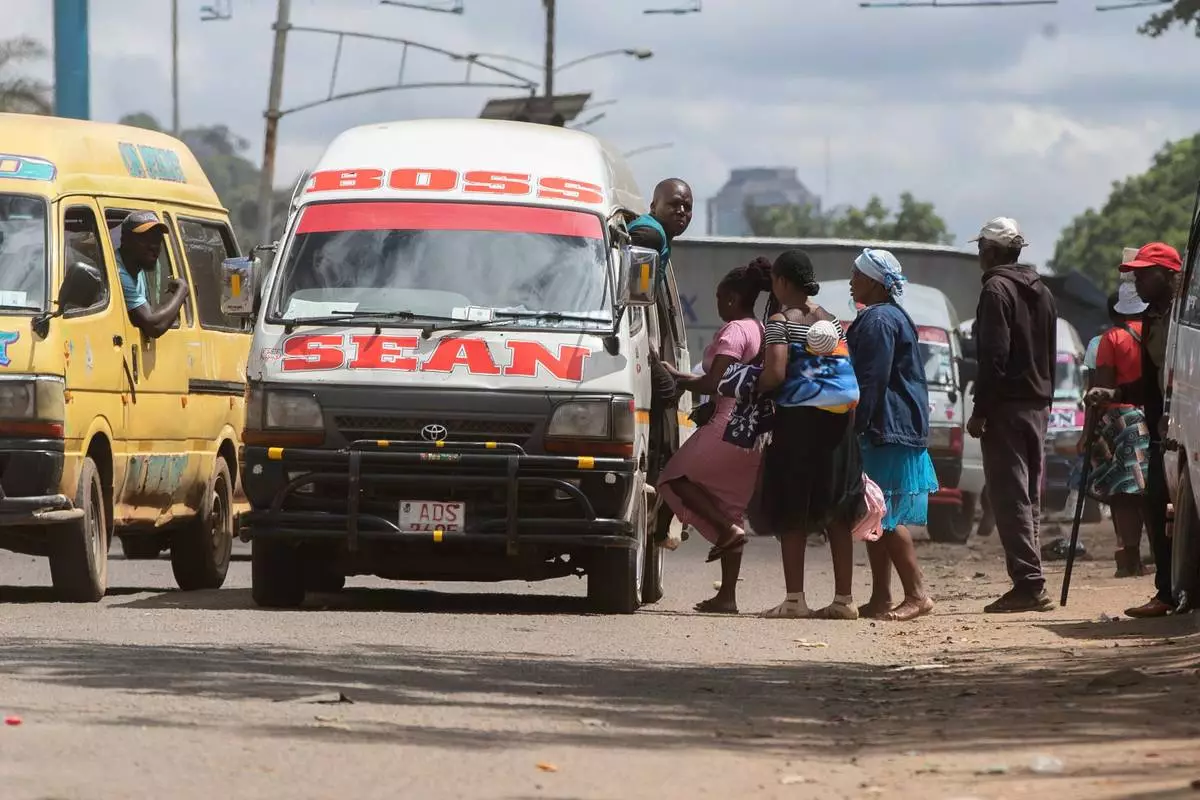
People board a minibus in Harare, Zimbabwe, Tuesday, Dec. 16, 2025. (AP Photo/Aaron Ufumeli)
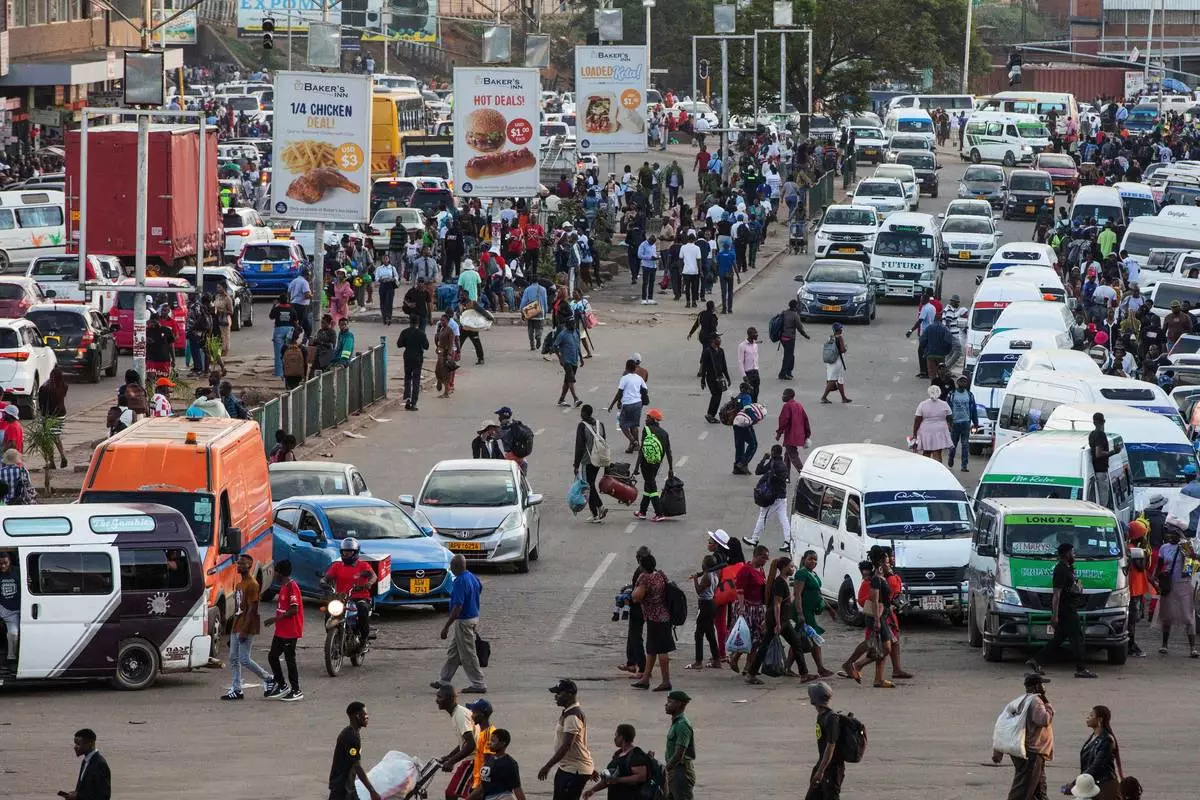
An overview of commuters at a minibus taxi area during rush hour in downtown Harare, Zimbabwe, Tuesday, Dec. 16, 2025.(AP Photo/Aaron Ufumeli)
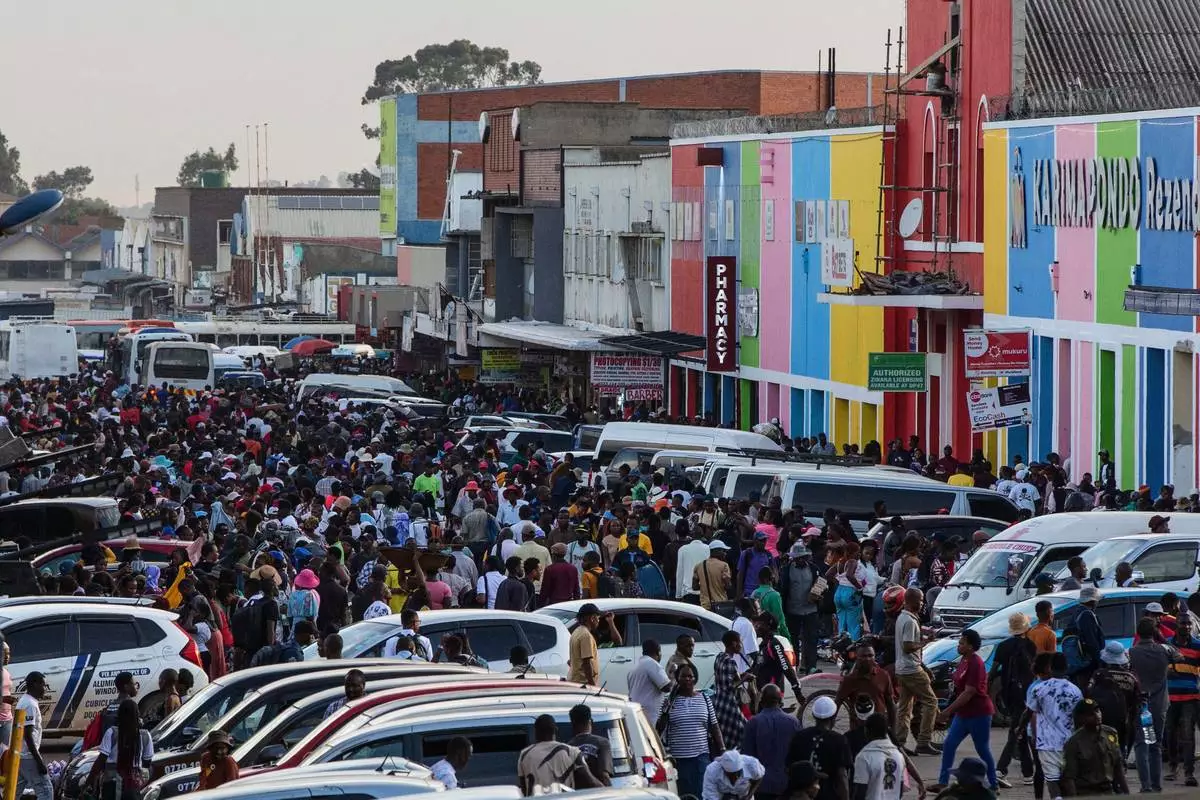
Commuters walk through parked vehicles during rush hour in downtown Harare, Zimbabwe, Tuesday, Dec. 16, 2025. (AP Photo/Aaron Ufumeli)
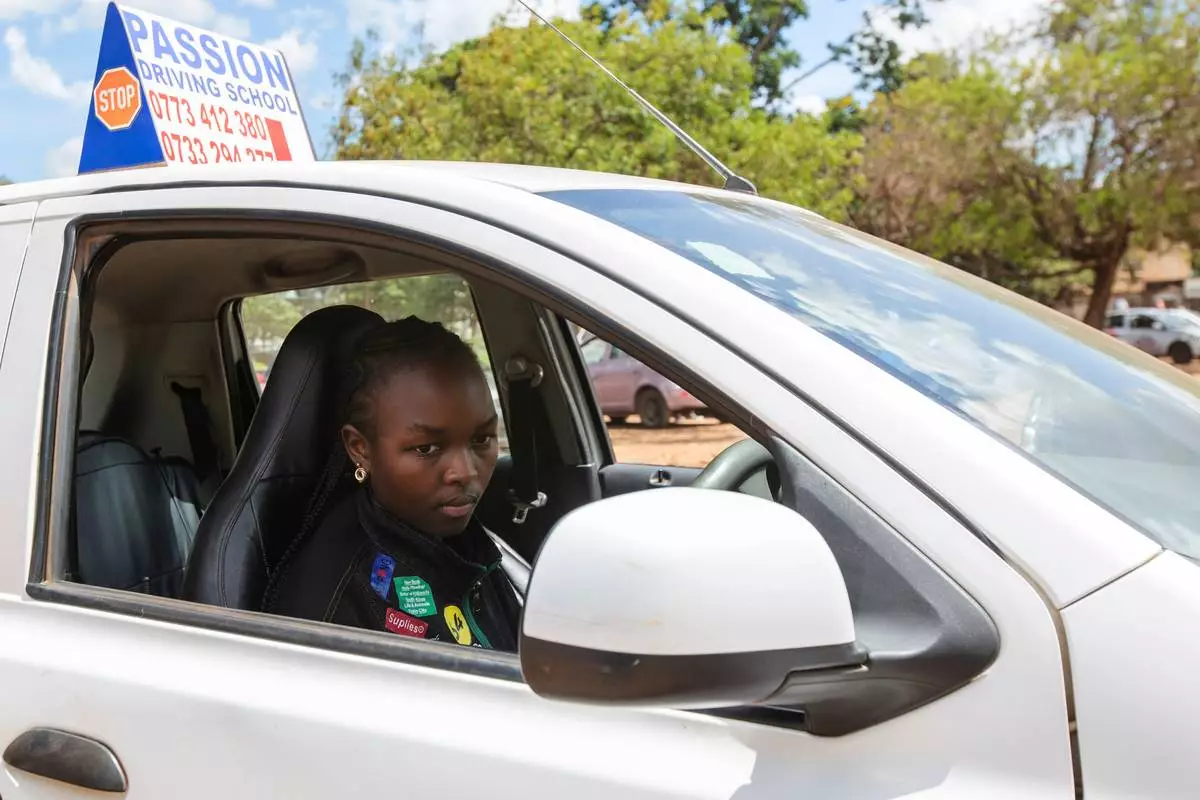
Winfrida Chipashu takes road driving lessons in Harare, Zimbabwe, Tuesday, Dec. 16, 2025. (AP Photo/Aaron Ufumeli)