Skip to Content Facebook Feature Image

Spanish village gears up for dictator Franco's remains

Spanish village gears up for dictator Franco's remains

Spanish village gears up for dictator Franco's remains

2019-10-23 18:39 Last Updated At:18:50

For visitors wondering why a tranquil cemetery outside Madrid suddenly needs around-the-clock police security, the answer is simple: an empty burial space awaits the remains of Gen. Francisco Franco, who is being reunited with his wife 44 years after he died.

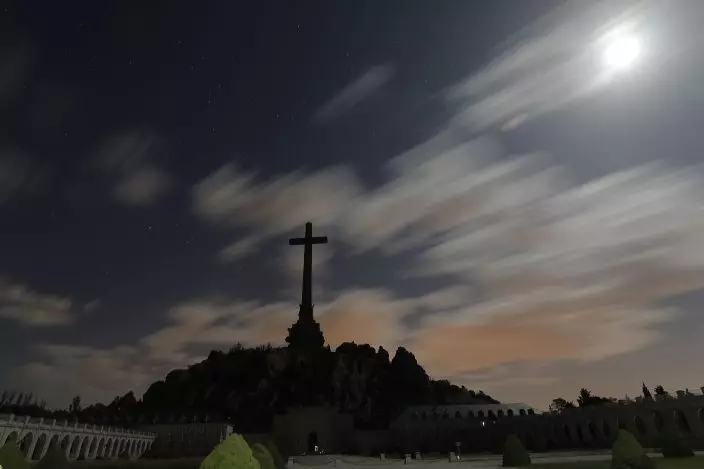
Weather permitting, the Spanish dictator's preserved body will be flown Thursday by helicopter to the Franco family's private chapel in the Mingorrubio cemetery. It's a discrete site compared to the Valley of the Fallen, a vainglorious mausoleum and basilica that Franco built and where he was buried in 1975. The complex, which is topped by a 152-meter (500-foot) granite cross that can be seen for miles, still remains a National Heritage site.

More Images
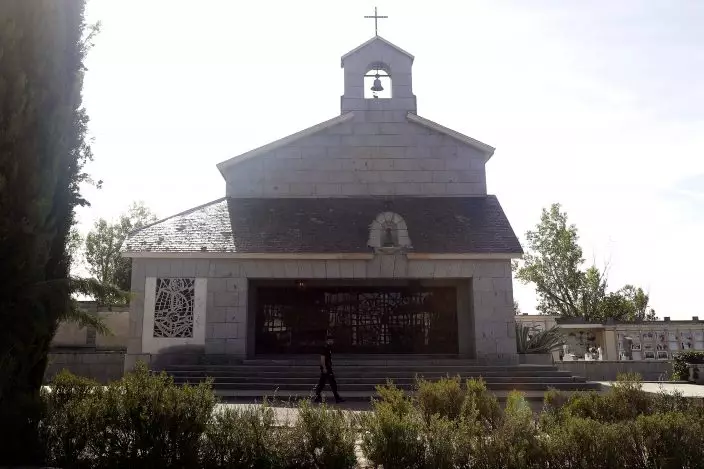
In this photo taken on Thursday, Oct. 3, 2019, a Spanish police walks past Franco's family tomb in Mingorrubio's cemetery, outskirts of Madrid. After a tortuous judicial and public relations battle, Spain's Socialist government has announced that Gen. Francisco Franco's embalmed body will be relocated from a controversial shrine to a small public cemetery where the former dictator's remains will lie along his deceased wife. (AP PhotoManu Fernandez)
In this photo taken on Thursday, Oct. 3, 2019, a Spanish police walks past Franco's family tomb in Mingorrubio's cemetery, outskirts of Madrid. After a tortuous judicial and public relations battle, Spain's Socialist government has announced that Gen. Francisco Franco's embalmed body will be relocated from a controversial shrine to a small public cemetery where the former dictator's remains will lie along his deceased wife. (AP PhotoManu Fernandez)

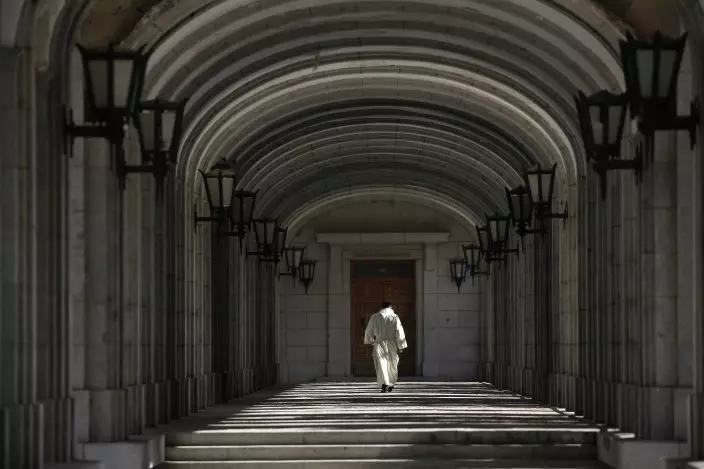
In this photo taken on Monday, Oct. 14, 2019, A friar walks next to The Valley of the Fallen mausoleum near El Escorial, outskirts of Madrid, After a tortuous judicial and public relations battle, Spain's Socialist government has announced that Gen. Francisco Franco's embalmed body will be relocated from a controversial shrine to a small public cemetery where the former dictator's remains will lie along with his deceased wife. (AP PhotoManu Fernandez)
In this photo taken on Monday, Oct. 14, 2019, A friar walks next to The Valley of the Fallen mausoleum near El Escorial, outskirts of Madrid, After a tortuous judicial and public relations battle, Spain's Socialist government has announced that Gen. Francisco Franco's embalmed body will be relocated from a controversial shrine to a small public cemetery where the former dictator's remains will lie along with his deceased wife. (AP PhotoManu Fernandez)
In this photo taken on Monday, Oct. 14, 2019, The Valley of the Fallen mausoleum near El Escorial, outskirts of Madrid, After a tortuous judicial and public relations battle, Spain's Socialist government has announced that Gen. Francisco Franco's embalmed body will be relocated from a controversial shrine to a small public cemetery where the former dictator's remains will lie along with his deceased wife. (AP PhotoManu Fernandez)

In this photo taken on Monday, Oct. 14, 2019, The Valley of the Fallen mausoleum near El Escorial, outskirts of Madrid, After a tortuous judicial and public relations battle, Spain's Socialist government has announced that Gen. Francisco Franco's embalmed body will be relocated from a controversial shrine to a small public cemetery where the former dictator's remains will lie along with his deceased wife. (AP PhotoManu Fernandez)

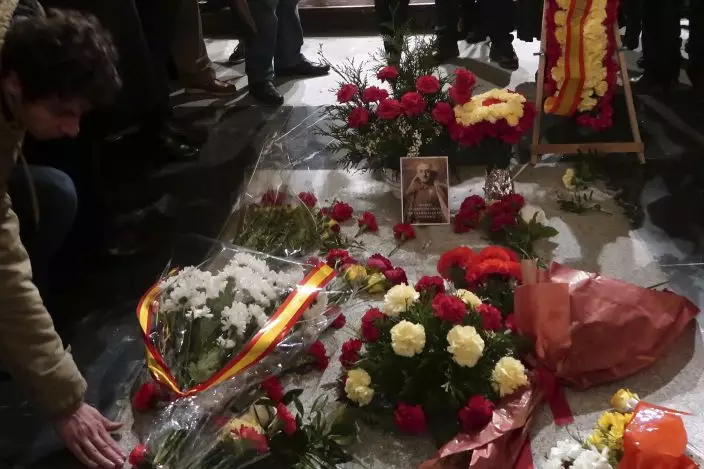
In this photo taken on Tuesday, Nov. 20, 2018, flowers are placed on the tomb of former Spanish dictator Francisco Franco inside the basilica at the the Valley of the Fallen monument near El Escorial, outside Madrid. After a tortuous judicial and public relations battle, Spain's Socialist government has announced that Gen. Francisco Franco's embalmed body will be relocated from a controversial shrine to a small public cemetery where the former dictator's remains will lie along his deceased wife. (AP PhotoManu Fernandez)
In this photo taken on Tuesday, Nov. 20, 2018, flowers are placed on the tomb of former Spanish dictator Francisco Franco inside the basilica at the the Valley of the Fallen monument near El Escorial, outside Madrid. After a tortuous judicial and public relations battle, Spain's Socialist government has announced that Gen. Francisco Franco's embalmed body will be relocated from a controversial shrine to a small public cemetery where the former dictator's remains will lie along his deceased wife. (AP PhotoManu Fernandez)
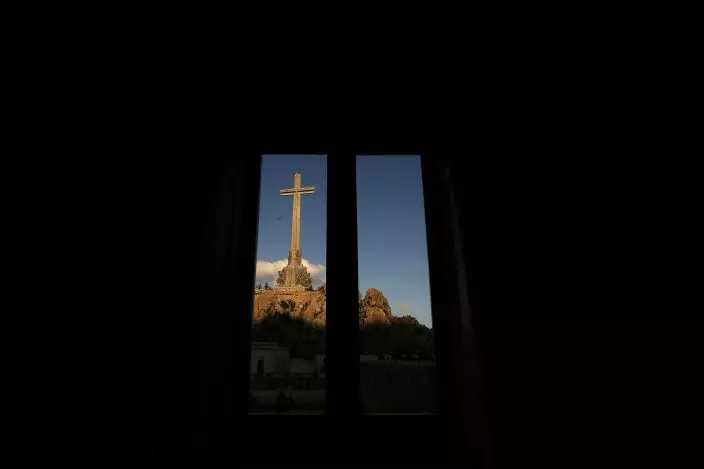
The Valley of the Fallen mausoleum is framed by a window near El Escorial, outskirts of Madrid, Spain, Sunday, Oct. 13, 2019. After a tortuous judicial and public relations battle, Spain's Socialist government has announced that Gen. Francisco Franco's embalmed body will be relocated from a controversial shrine to a small public cemetery where the former dictator's remains will lie along his deceased wife. (AP PhotoManu Fernandez)

The Valley of the Fallen mausoleum is framed by a window near El Escorial, outskirts of Madrid, Spain, Sunday, Oct. 13, 2019. After a tortuous judicial and public relations battle, Spain's Socialist government has announced that Gen. Francisco Franco's embalmed body will be relocated from a controversial shrine to a small public cemetery where the former dictator's remains will lie along his deceased wife. (AP PhotoManu Fernandez)

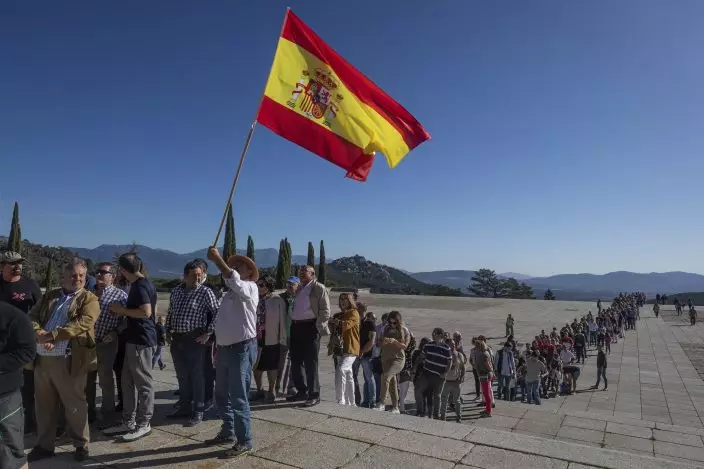
In this Saturday, Oct. 5, 2019 photo, visitors queue to enter at the Valley of the Fallen mausoleum near El Escorial, outskirts of Madrid, Spain, Saturday, Oct. 5, 2019. After a tortuous judicial and public relations battle, Spain's Socialist government has announced that Gen. Francisco Franco's embalmed body will be relocated from a controversial shrine to a small public cemetery where the former dictator's remains will lie along his deceased wife. (AP PhotoBernat Armangue)
In this Saturday, Oct. 5, 2019 photo, visitors queue to enter at the Valley of the Fallen mausoleum near El Escorial, outskirts of Madrid, Spain, Saturday, Oct. 5, 2019. After a tortuous judicial and public relations battle, Spain's Socialist government has announced that Gen. Francisco Franco's embalmed body will be relocated from a controversial shrine to a small public cemetery where the former dictator's remains will lie along his deceased wife. (AP PhotoBernat Armangue)

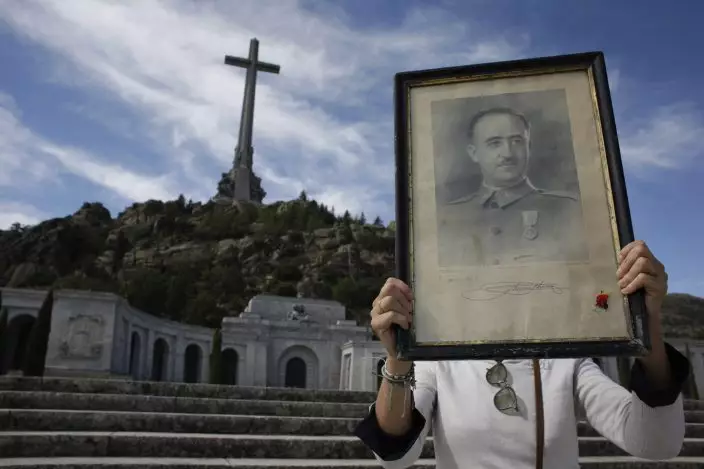
In this Friday, Oct. 4, 2019 photo, a visitors holds a portrait of former Spanish dictator Francisco Franco at the Valley of the Fallen mausoleum near El Escorial, outskirts of Madrid, Spain. After a tortuous judicial and public relations battle, Spain's Socialist government has announced that Gen. Francisco Franco's embalmed body will be relocated from a controversial shrine to a small public cemetery where the former dictator's remains will lie along his deceased wife. (AP PhotoAlfonso Ruiz)
In this Friday, Oct. 4, 2019 photo, a visitors holds a portrait of former Spanish dictator Francisco Franco at the Valley of the Fallen mausoleum near El Escorial, outskirts of Madrid, Spain. After a tortuous judicial and public relations battle, Spain's Socialist government has announced that Gen. Francisco Franco's embalmed body will be relocated from a controversial shrine to a small public cemetery where the former dictator's remains will lie along his deceased wife. (AP PhotoAlfonso Ruiz)
If fog or heavy winds impede the takeoff, a hearse will ride in motorcade along the 57-kilometer (35-mile) route between the old and new burial places, accompanied by live video. A private Mass will be held in the crypt, attended by only 22 of the dictator's relatives and a handful of officials.

In this photo taken on Thursday, Oct. 3, 2019, a Spanish police walks past Franco's family tomb in Mingorrubio's cemetery, outskirts of Madrid. After a tortuous judicial and public relations battle, Spain's Socialist government has announced that Gen. Francisco Franco's embalmed body will be relocated from a controversial shrine to a small public cemetery where the former dictator's remains will lie along his deceased wife. (AP PhotoManu Fernandez)

In this photo taken on Thursday, Oct. 3, 2019, a Spanish police walks past Franco's family tomb in Mingorrubio's cemetery, outskirts of Madrid. After a tortuous judicial and public relations battle, Spain's Socialist government has announced that Gen. Francisco Franco's embalmed body will be relocated from a controversial shrine to a small public cemetery where the former dictator's remains will lie along his deceased wife. (AP PhotoManu Fernandez)

Spanish Prime Minister Pedro Sánchez's interim center-left government has meticulously planned Franco's exhumation and reburial to be "simple, respectful and discrete but ensuring that the world sees how the dictator is no longer in a state tomb," said a top Sánchez aide who wasn't authorized to be identified by name in media reports.

Sánchez fought a tortuous judicial and public relations battle to fulfill the desire of many in Spain who considered the mausoleum an affront to his victims and to the country's standing as a modern European state.

"No enemy of democracy deserves a place of reverence or institutional respect," the Socialist leader said, celebrating a ruling last month that paved the way for digging up the dictator's tomb.

In this photo taken on Monday, Oct. 14, 2019, A friar walks next to The Valley of the Fallen mausoleum near El Escorial, outskirts of Madrid, After a tortuous judicial and public relations battle, Spain's Socialist government has announced that Gen. Francisco Franco's embalmed body will be relocated from a controversial shrine to a small public cemetery where the former dictator's remains will lie along with his deceased wife. (AP PhotoManu Fernandez)

In this photo taken on Monday, Oct. 14, 2019, A friar walks next to The Valley of the Fallen mausoleum near El Escorial, outskirts of Madrid, After a tortuous judicial and public relations battle, Spain's Socialist government has announced that Gen. Francisco Franco's embalmed body will be relocated from a controversial shrine to a small public cemetery where the former dictator's remains will lie along with his deceased wife. (AP PhotoManu Fernandez)

Sánchez and the Socialists are eager to get the exhumation done before Spain holds a general election on Nov. 10. All those at Thursday's private Mass will be screened for recording devices in an effort to head off anything that could make the dictator a martyr.

Other controversial political figures, such as Dominican Republic dictator Rafael Trujillo, are also buried at the Mingorrubio graveyard. Franco's body will lie not far from Luis Carrero Blanco, whom he had anointed as his successor, and Carlos Arias Navarro, who eventually took over as the dictatorship's last prime minister after Basque separatists blew up Carrero Blanco's car. On Nov. 20, 1975, Arias Navarro announced Franco's death with a trembling voice, a televised scene seared into the minds of many Spaniards.

Despite Spain's democratic progress since then, the Valley of the Fallen is a rarity on European soil, where many traces of past authoritarian regimes have long been erased. Nestled among rocky hills, the cavernous complex both attracts tourists and those nostalgic for Franco's ultra-Catholic Spanish nationalism.

In this photo taken on Monday, Oct. 14, 2019, The Valley of the Fallen mausoleum near El Escorial, outskirts of Madrid, After a tortuous judicial and public relations battle, Spain's Socialist government has announced that Gen. Francisco Franco's embalmed body will be relocated from a controversial shrine to a small public cemetery where the former dictator's remains will lie along with his deceased wife. (AP PhotoManu Fernandez)

In this photo taken on Monday, Oct. 14, 2019, The Valley of the Fallen mausoleum near El Escorial, outskirts of Madrid, After a tortuous judicial and public relations battle, Spain's Socialist government has announced that Gen. Francisco Franco's embalmed body will be relocated from a controversial shrine to a small public cemetery where the former dictator's remains will lie along with his deceased wife. (AP PhotoManu Fernandez)

The dictator now lies surrounded by decrepit graves, most anonymous, of 34,000 people who died during and after the Spanish Civil War (1936-39) that pitched those who backed the democratic Republican government against Franco's rebellious military Nationalists.

The tomb is seen as an insult by left-wing parties and relatives of his victims. Throughout the country, an estimated 100,000 people remain unidentified and are still buried, often in unmarked mass graves, from the war and the following years of Franco's regime, despite pressure from relatives' associations and a Historical Memory Law that in 2007 sought to redress the issue.

Paul Preston, a historian with the London School of Economics, said the move "was long overdue" because such monument "would be unconceivable in Germany."

In this photo taken on Tuesday, Nov. 20, 2018, flowers are placed on the tomb of former Spanish dictator Francisco Franco inside the basilica at the the Valley of the Fallen monument near El Escorial, outside Madrid. After a tortuous judicial and public relations battle, Spain's Socialist government has announced that Gen. Francisco Franco's embalmed body will be relocated from a controversial shrine to a small public cemetery where the former dictator's remains will lie along his deceased wife. (AP PhotoManu Fernandez)

In this photo taken on Tuesday, Nov. 20, 2018, flowers are placed on the tomb of former Spanish dictator Francisco Franco inside the basilica at the the Valley of the Fallen monument near El Escorial, outside Madrid. After a tortuous judicial and public relations battle, Spain's Socialist government has announced that Gen. Francisco Franco's embalmed body will be relocated from a controversial shrine to a small public cemetery where the former dictator's remains will lie along his deceased wife. (AP PhotoManu Fernandez)

"The political consequences of keeping the mausoleum are different in a country where there hasn't been a process of de-Nazification," said Preston, an author of a Franco biography.

The autocrat died at 82, outliving most of his European peers, and "oversaw a great brainwashing, or sociological Francoism," Preston said. "Even with democracy, Spain didn't go through any 'de-Francoization'."

In addition to being the burial site of Franco's wife, Carmen Polo, the government chose the Mingorrubio cemetery because it's at the end of a road that passes military and police barracks and is near the palace that Franco once called home. Old hunting grounds surrounding the nearby village still bear the dictator's mark, and few residents will complain about the return of an old neighbor.

The Valley of the Fallen mausoleum is framed by a window near El Escorial, outskirts of Madrid, Spain, Sunday, Oct. 13, 2019. After a tortuous judicial and public relations battle, Spain's Socialist government has announced that Gen. Francisco Franco's embalmed body will be relocated from a controversial shrine to a small public cemetery where the former dictator's remains will lie along his deceased wife. (AP PhotoManu Fernandez)

The Valley of the Fallen mausoleum is framed by a window near El Escorial, outskirts of Madrid, Spain, Sunday, Oct. 13, 2019. After a tortuous judicial and public relations battle, Spain's Socialist government has announced that Gen. Francisco Franco's embalmed body will be relocated from a controversial shrine to a small public cemetery where the former dictator's remains will lie along his deceased wife. (AP PhotoManu Fernandez)

"If they can't find a place to bury him, I'll go and dig up the grave of my late husband to lend the Caudillo a space," said Juanita Pañero as she swept leaves by a house adorned with the Spanish flag. The 91-year-old, whose late husband was a member of Franco's guard, moved to the Mingorrubio community in the 1960s, as did many others serving at the El Pardo Palace.

Police vehicles guarding the cemetery are the only sign of the impending reburial. Circumspect officers checked visitors' IDs and zealously followed reporters around the cemetery, while outside the graveyard gun-carrying military cadets doing drills ran past spandex-clad cyclists. Further down, gardeners pruned tree branches.

At the local bar, 68-year-old Ramón Muñoz said most in the community disliked the unwanted attention that Franco's return is bringing.

In this Saturday, Oct. 5, 2019 photo, visitors queue to enter at the Valley of the Fallen mausoleum near El Escorial, outskirts of Madrid, Spain, Saturday, Oct. 5, 2019. After a tortuous judicial and public relations battle, Spain's Socialist government has announced that Gen. Francisco Franco's embalmed body will be relocated from a controversial shrine to a small public cemetery where the former dictator's remains will lie along his deceased wife. (AP PhotoBernat Armangue)

In this Saturday, Oct. 5, 2019 photo, visitors queue to enter at the Valley of the Fallen mausoleum near El Escorial, outskirts of Madrid, Spain, Saturday, Oct. 5, 2019. After a tortuous judicial and public relations battle, Spain's Socialist government has announced that Gen. Francisco Franco's embalmed body will be relocated from a controversial shrine to a small public cemetery where the former dictator's remains will lie along his deceased wife. (AP PhotoBernat Armangue)

"A lot of people here were well treated by the dictatorship. Others have come later, just because the place is just gorgeous," the retired civil servant said. "We all like how peaceful it is around here."

In this Friday, Oct. 4, 2019 photo, a visitors holds a portrait of former Spanish dictator Francisco Franco at the Valley of the Fallen mausoleum near El Escorial, outskirts of Madrid, Spain. After a tortuous judicial and public relations battle, Spain's Socialist government has announced that Gen. Francisco Franco's embalmed body will be relocated from a controversial shrine to a small public cemetery where the former dictator's remains will lie along his deceased wife. (AP PhotoAlfonso Ruiz)
In this Friday, Oct. 4, 2019 photo, a visitors holds a portrait of former Spanish dictator Francisco Franco at the Valley of the Fallen mausoleum near El Escorial, outskirts of Madrid, Spain. After a tortuous judicial and public relations battle, Spain's Socialist government has announced that Gen. Francisco Franco's embalmed body will be relocated from a controversial shrine to a small public cemetery where the former dictator's remains will lie along his deceased wife. (AP PhotoAlfonso Ruiz)
BRUSSELS (AP) — The European Union will unlock 16.4 billion euros (around $19 billion) in funds for Hungary, officials said Friday, after new Prime Minister Péter Magyar enacted rapid reforms to roll back the democratic backsliding that occurred under his predecessor.

The release of the funds was a signal of Brussels’ embrace of the new government in Budapest after the 16-year tenure of Viktor Orbán, who was allied with Russia and antagonized the EU.

The agreement, announced during a media briefing in Brussels on Friday by European Commission President Ursula von der Leyen, capped off weeks of negotiations between Magyar’s government and the EU to release the crucial funding that is badly needed by Hungary’s slumping economy.

Magyar called the deal “a historic breakthrough” for the nation, and said that his government was "very grateful, and we are ready to continuing cooperating together in the interest of the Hungarian people and all the European citizens.”

Partly by campaigning on forging stronger ties with the EU, Magyar's earthquake success in the April election ended the long tenure of Orbán, who had vilified von der Leyen and other powerbrokers in the 27-nation bloc as he hollowed out institutional checks and balances in Hungary.

Those actions, and concerns over corruption and the erosion of judicial independence, prompted the EU to freeze the billions in funding to Budapest in 2022. A year later, the commission found that the government had carried out sufficient reforms to have around 10.2 billion euros ($12.1 billion) released.

On Friday, von der Leyen said that only a few weeks since Magyar's new government took office, "we can already feel a strong wind of change across Hungary.”

“A great deal of work has already been achieved in very short time, and markets are already taking notice. Investors confidence is returning. Trust is being rebuilt,” she said.

After Magyar's party Tisza won a super-majority in parliament, which enabled deep and quick reforms, leaders in Brussels and Budapest prioritized releasing the funds as soon as possible to help Hungary's economy, which has stagnated for years.

The funds are split between 10 billion euros ($11.6 billion) of COVID-19 recovery funds and more than 6.3 billion euros ($7.3 billion) in the cohesion funds designed to lift up struggling economies within the EU.

Magyar's government has undertaken crucial changes like restoring judicial independence, academic and media freedom, and launching broad anti-corruption efforts in order to get access to the money.

On Friday, Magyar formally submitted Hungary's request to sign on to the European Public Prosecutor's Office, the EU’s corruption watchdog based in Luxembourg that Orbán's government had long refused to join.

He told reporters that Orbán's government — which frequently portrayed the EU as an oppressive force bent on punishing Hungary for its anti-immigration and anti-LGBTQ+ policies — had “lied to the Hungarian people constantly" about why the funds had been frozen.

“The real reason the European institutions and the European Union were not in a position to release (the funds) was corruption,” he said. “There was a degree of corruption that for a long time was unthinkable in the European Union, and in Hungary as well.”

Von der Leyen also announced deeper integration of Hungary into EU institutions. For example, Hungarian students will once again be able to join the Erasmus scholarship program that allows students to attend schools across the EU, an opportunity that had been suspended under Orbán.

Justin Spike reported from Budapest, Hungary.

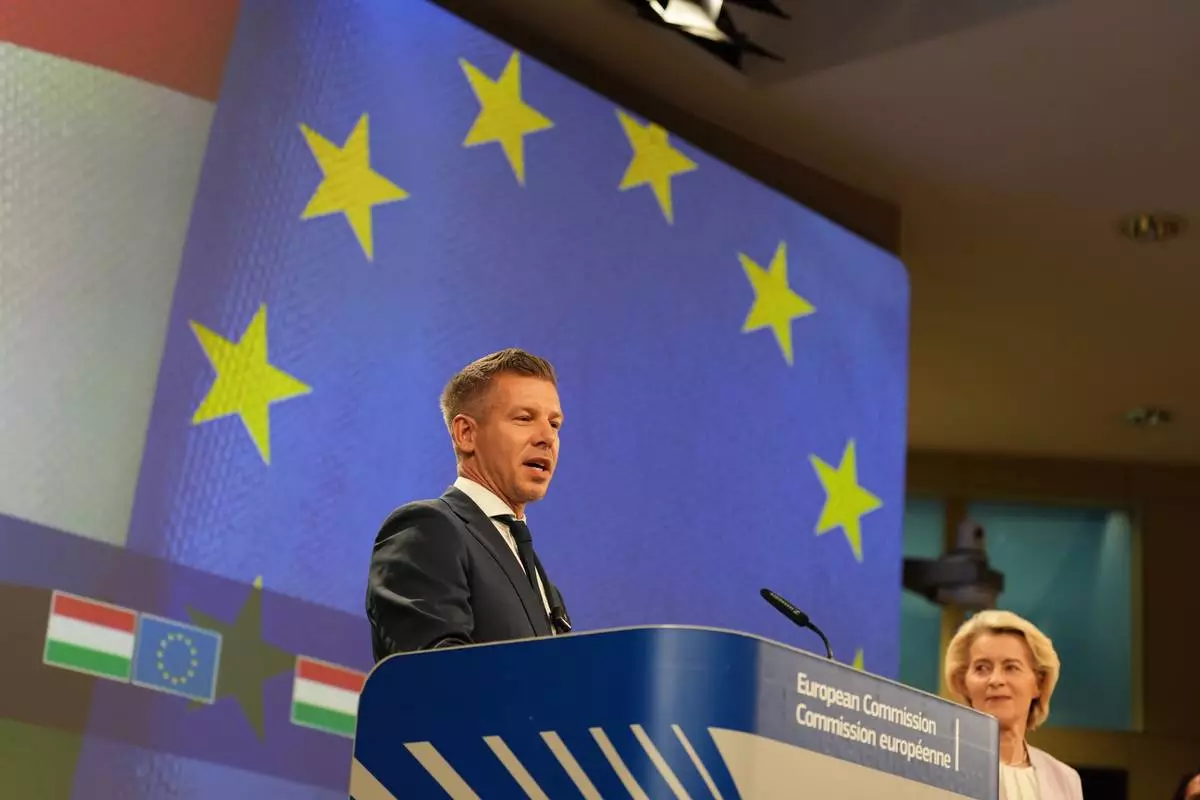
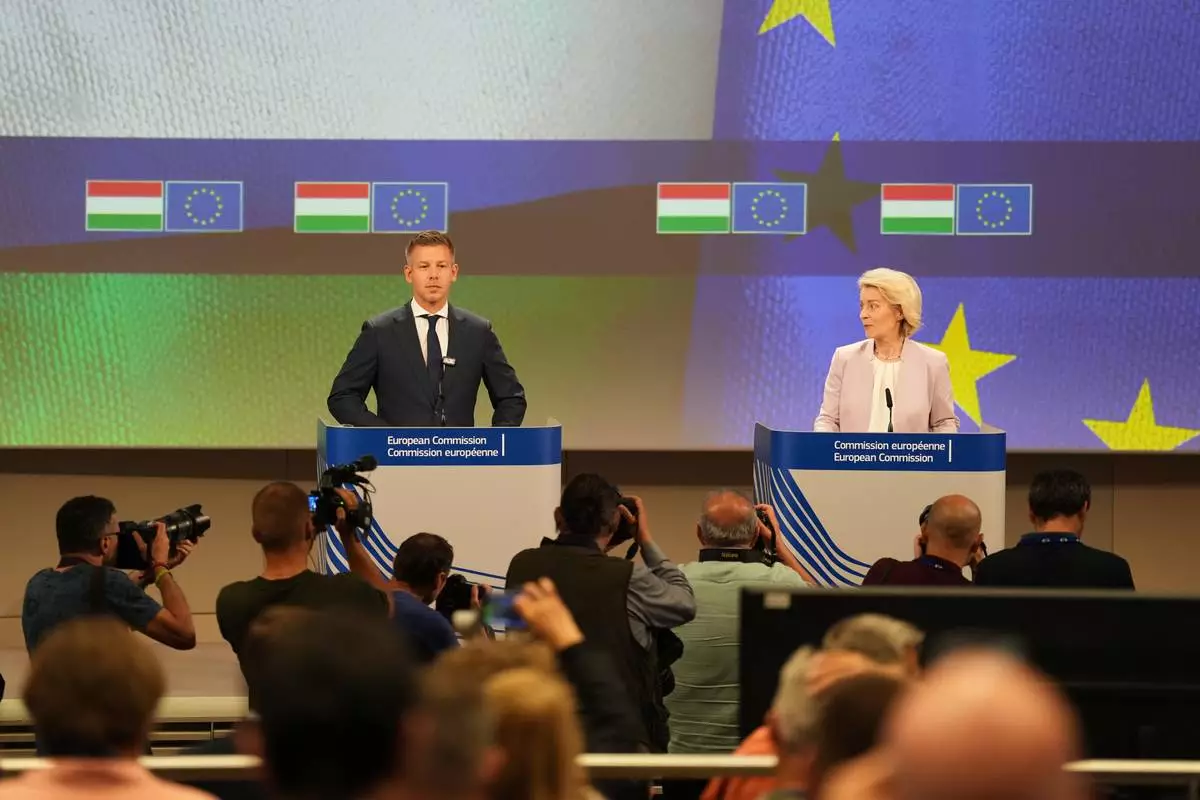
European Commission President Ursula von der Leyen, right, and Hungary's Prime Minister Peter Magyar address the media at EU headquarters in Brussels, Friday, May 29, 2026. (AP Photo/Virginia Mayo)

European Commission President Ursula von der Leyen, right, and Hungary's Prime Minister Peter Magyar address the media at EU headquarters in Brussels, Friday, May 29, 2026. (AP Photo/Virginia Mayo)

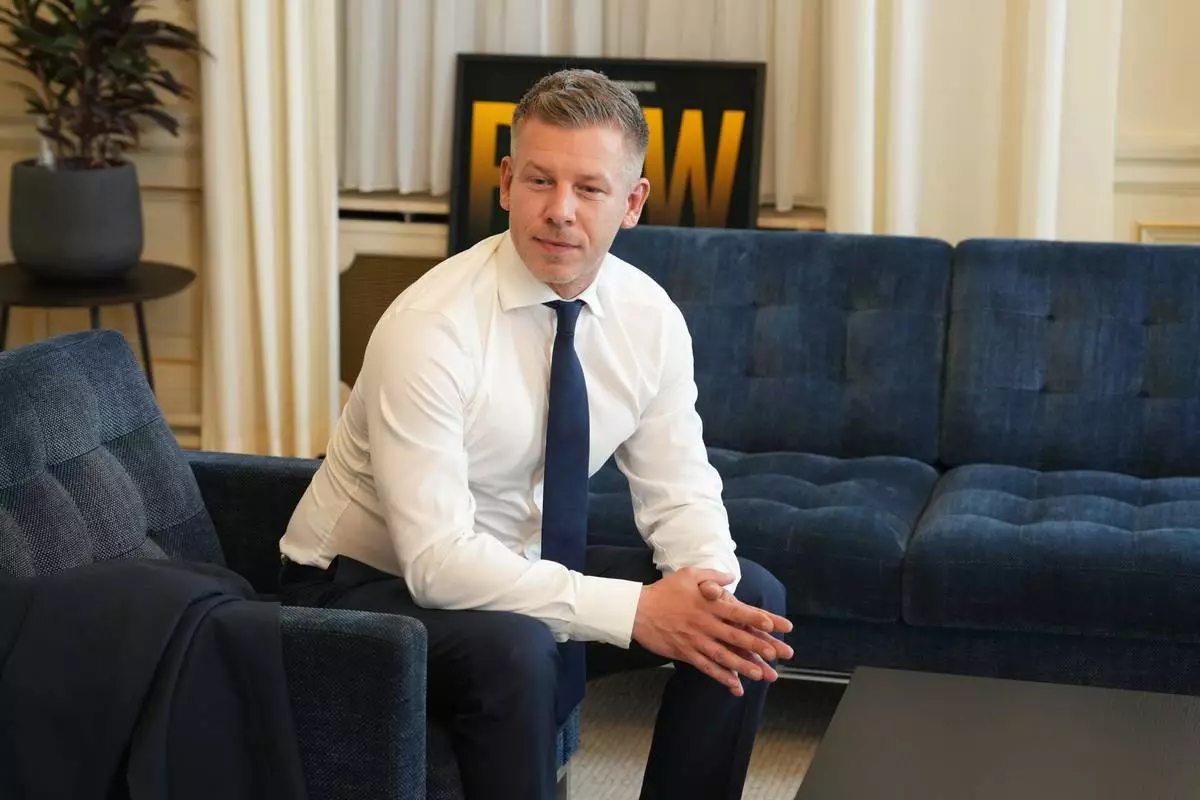
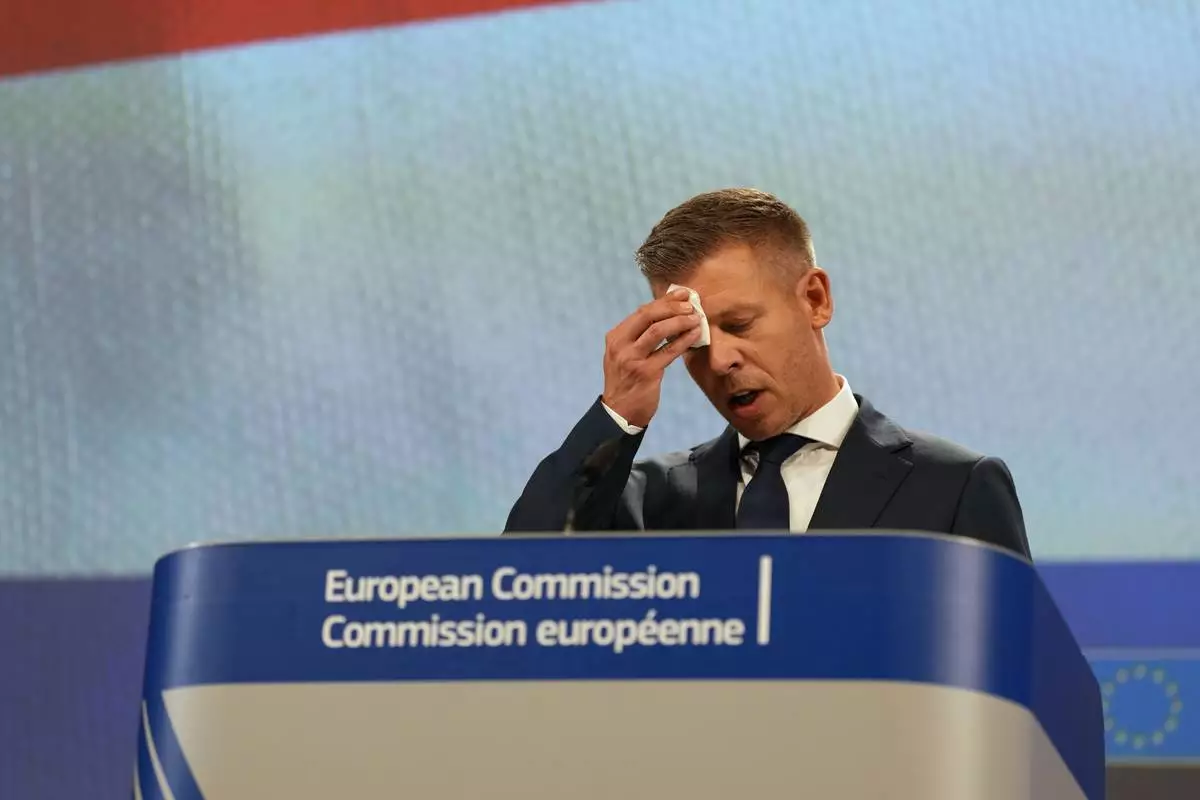
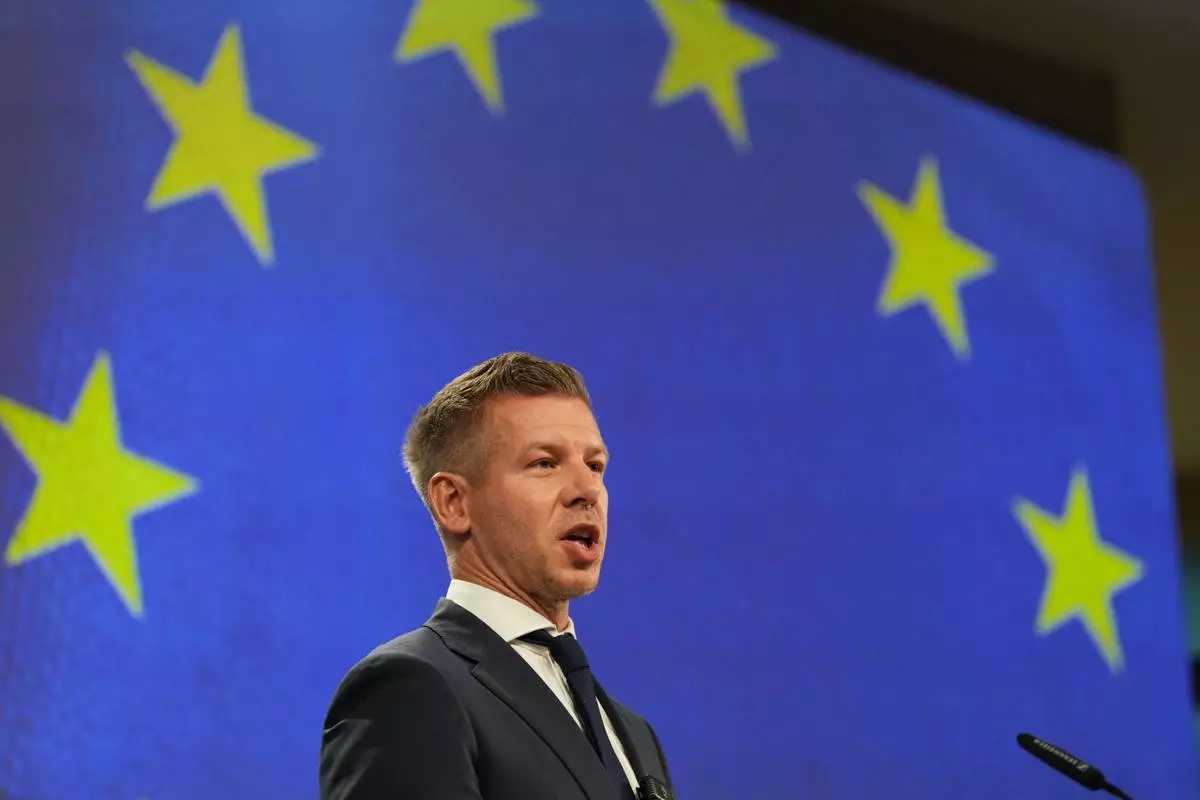
Hungary's Prime Minister Peter Magyar addresses the media at EU headquarters in Brussels, Friday, May 29, 2026. (AP Photo/Virginia Mayo)

Hungary's Prime Minister Peter Magyar addresses the media at EU headquarters in Brussels, Friday, May 29, 2026. (AP Photo/Virginia Mayo)

European Commission President Ursula von der Leyen, right, and Hungary's Prime Minister Peter Magyar address the media at EU headquarters in Brussels, Friday, May 29, 2026. (AP Photo/Virginia Mayo)

European Commission President Ursula von der Leyen, right, and Hungary's Prime Minister Peter Magyar address the media at EU headquarters in Brussels, Friday, May 29, 2026. (AP Photo/Virginia Mayo)

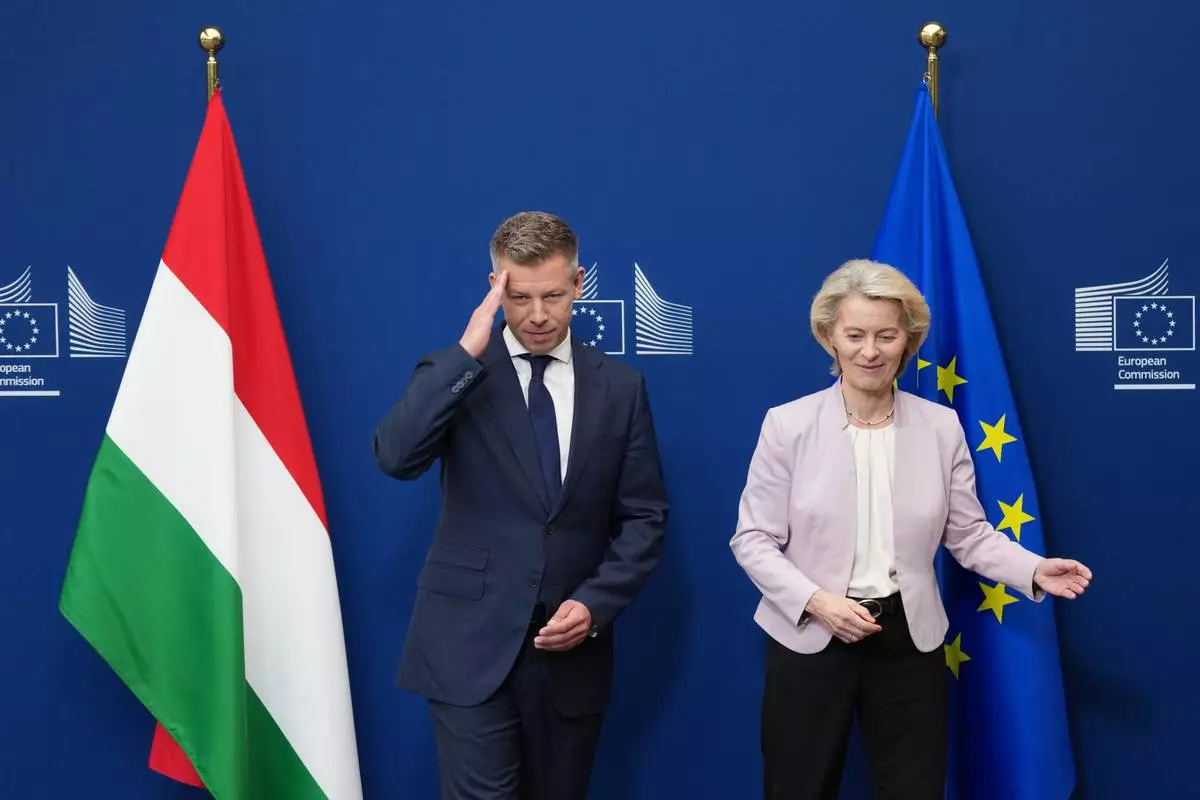
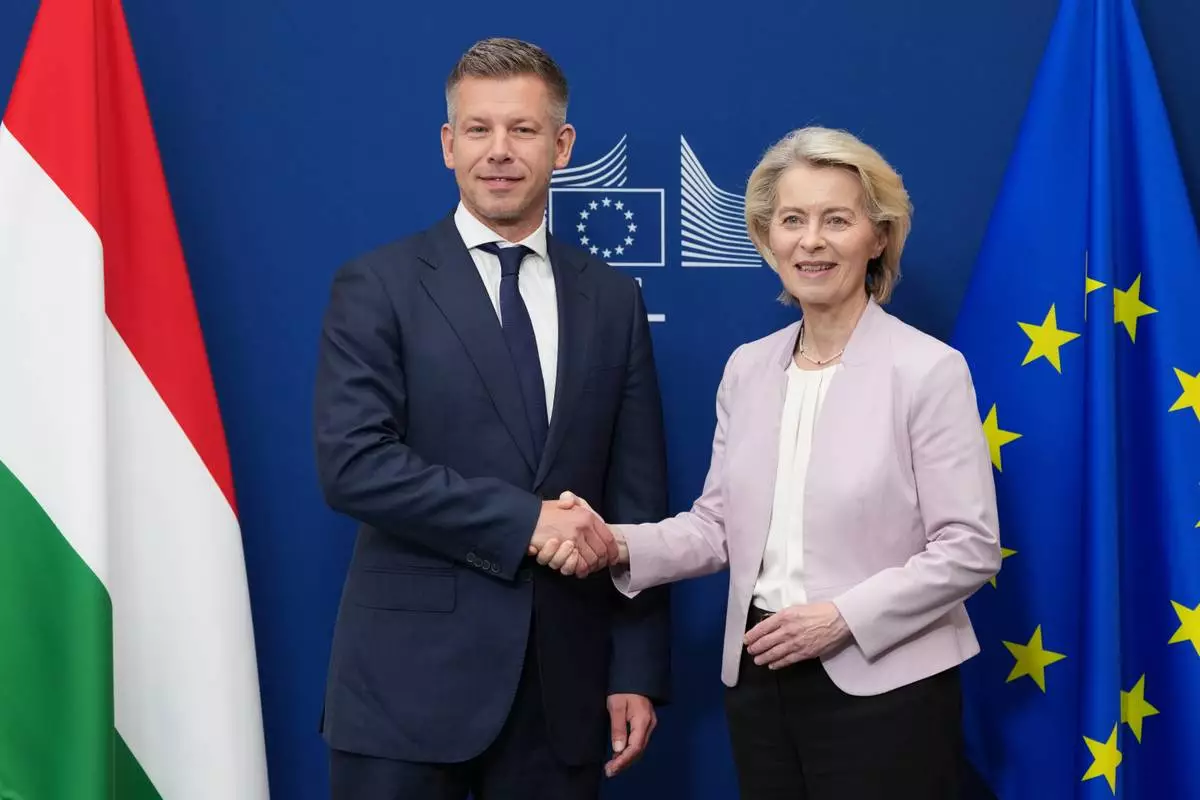
European Commission President Ursula von der Leyen, right, greets Hungary's Prime Minister Peter Magyar prior to a meeting at EU headquarters in Brussels, Friday, May 29, 2026. (AP Photo/Virginia Mayo)

European Commission President Ursula von der Leyen, right, greets Hungary's Prime Minister Peter Magyar prior to a meeting at EU headquarters in Brussels, Friday, May 29, 2026. (AP Photo/Virginia Mayo)

Hungary's Prime Minister Peter Magyar addresses the media at EU headquarters in Brussels, Friday, May 29, 2026. (AP Photo/Virginia Mayo)

Hungary's Prime Minister Peter Magyar addresses the media at EU headquarters in Brussels, Friday, May 29, 2026. (AP Photo/Virginia Mayo)

European Commission President Ursula von der Leyen, right, greets Hungary's Prime Minister Peter Magyar prior to a meeting at EU headquarters in Brussels, Friday, May 29, 2026. (AP Photo/Virginia Mayo)

European Commission President Ursula von der Leyen, right, greets Hungary's Prime Minister Peter Magyar prior to a meeting at EU headquarters in Brussels, Friday, May 29, 2026. (AP Photo/Virginia Mayo)

Hungary's Prime Minister Peter Magyar poses as he meets with Belgium's Prime Minister Bart De Wever in Brussels, Thursday, May 28, 2026. (AP Photo/Marius Burgelman)

Hungary's Prime Minister Peter Magyar poses as he meets with Belgium's Prime Minister Bart De Wever in Brussels, Thursday, May 28, 2026. (AP Photo/Marius Burgelman)

Recommended Articles