President Donald Trump's decision Wednesday to impose a 30-day ban on most Europeans entering the United States is the latest stunning setback for an airline industry that is reeling from a drop in bookings and a surge in people who are canceling reservations for fear of contracting the coronavirus.
The ban, to begin at midnight Friday, won't apply to Americans trying to return home — though they will be subject to “enhanced” health screening — or to citizens of the United Kingdom. But Trump's move is sure to drastically escalate the disruptions facing global airlines and travelers on some of the most heavily traveled routes.
The disruption to air travel is also certain to ripple through economies, causing widespread damage to hotels, car rental companies, museums and restaurants.
In his address from the Oval Office, Trump said U.S. restrictions on people coming from China and other countries with early outbreaks of COVID-19 had held down the number of cases in the United States compared with Europe. He blamed the European Union for failing to immediately stop travel from China "and other hot spots," which he said had led to clusters of outbreaks in the U.S being "seeded by travelers from Europe."
“After consulting with our top government health professionals,” Trump said, "I have decided to take several strong but necessary actions to protect the health and well-being of all Americans. To keep new cases from entering our shores, we will be suspending all travel from Europe to the United States for the next 30 days.”
Homeland Security officials later clarified that the restrictions would apply only to most foreign nationals who have been in the 26-nation Schengen area of Europe in the 14 days before their scheduled arrival in the United States. The Schengen countries, which do not restrict travel among each other, include Germany, France, Italy and Spain.
The ban won't apply to legal permanent residents of the United States or to immediate relatives of U.S. citizens. This category of people will be detailed in a formal proclamation, the officials said.
Airlines have been slashing their flight schedules, especially on international routes, to cope with a sharp decline in travel demand among fearful customers. Business travel is slowing as companies impose restrictions on employee travel and major conferences are canceled.
Shares of the leading U.S. airlines have tumbled in the past few weeks, and an industry trade group warned that airlines worldwide could lose up to $113 billion in revenue from the virus — several times the damage caused by the 2001 terror attacks in the U.S. United Airlines and American Airlines have lost more than a third of their value since Feb. 21. Shares of Delta are down more than 25%. Shares of aircraft maker Boeing have fallen 43% in that time.
It isn't just American and European airlines feeling the pain. Travel restrictions around Asia are taking a toll on that region's airlines. Cathay Pacific Airways warned Wednesday that it faces a “substantial loss” in the first half of this year. The Hong Kong-based airline canceled 90% of its flight capacity to the mainland at the start of February after Beijing told the public to avoid travel as part of efforts to contain the outbreak centered on the city of Wuhan.
With air travel and airline revenue plummeting, airlines are losing their appetite for new planes. On Wednesday, Boeing’s stock fell 18% — its biggest one-day percentage drop since 1974 — and the iconic airplane manufacturer announced a hiring freeze.
Trump's Homeland Security Secretary acknowledged that the ban will further upend the airline industry.
“While these new travel restrictions will be disruptive to some travelers, this decisive action is needed to protect the American public from further exposure to the potentially deadly coronavirus,” DHS Secretary Chad Wolf said in a statement issued shortly after the president's address.
Wolf said he will issue further details on extra screening for Americans who have been to Europe. They will be routed through select airports, but he did not name them.
American Airlines is “in contact with the federal government to understand and comply with this directive,” said airline spokeswoman Shannon Gilson. "The health and safety of our customers and team members remains our highest priority.”
American operates up to 15 flights a day to five countries that will be affected by the ban including France and Germany.
In January, the U.S. issued a similar ban on people coming into the country from China. That policy was later extended to people who had been in Iran.
The World Health Organization has labeled COVID-19 a pandemic, citing its alarming spread and severity.
MINNEAPOLIS (AP) — A federal officer shot a person in the leg in Minneapolis after being attacked with a shovel during an arrest Wednesday, a person familiar with the matter told The Associated Press.
The person cautioned the information was still preliminary, and the investigation was in its early stages. The person could not discuss details of the investigation publicly and spoke to AP on condition of anonymity.
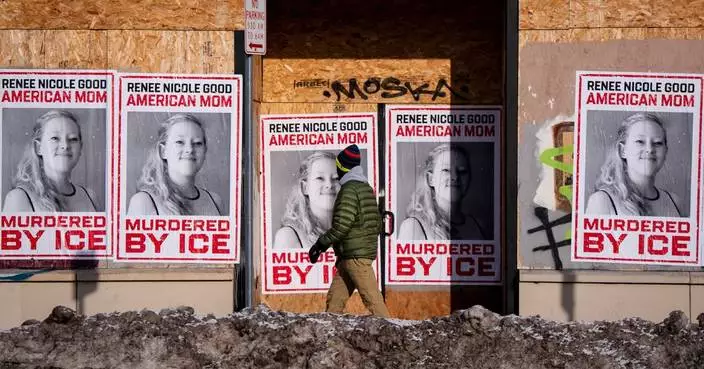
The shooting took place about 4.5 miles (7.2 kilometers) north of where an immigration agent fatally shot Renee Good in the head on Jan. 7 as she drove away.
A large group of federal agents and Minneapolis Police wearing gas masks fired tear gas into a crowd gathered at a north Minneapolis intersection near where Wednesday's shooting took place.
The city of Minneapolis said on the social media platform X that, “We are aware of reports of a shooting involving federal law enforcement in North Minneapolis. We are working to confirm additional details.”
Earlier Wednesday, a judge gave the Trump administration time to respond to a request to suspend its immigration crackdown in Minnesota, while the Pentagon looked for military lawyers to join what has become a chaotic law enforcement effort in the state.
Plumes of tear gas, bursts of chemical irritants and the screech of protest whistles have become common on the streets of Minneapolis, especially since Good's shooting.
Agents have yanked people from cars and homes and been confronted by angry bystanders who are demanding that officers pack up and leave.
“What we need most of all right now is a pause. The temperature needs to be lowered," state Assistant Attorney General Brian Carter said during the first hearing in a lawsuit filed by Minnesota and the cities of Minneapolis and St. Paul.
Local leaders say the government is violating free speech and other constitutional rights with the surge of law enforcement. U.S. District Judge Katherine Menendez promised to keep the case “on the front burner” and gave the U.S. Justice Department until Monday to file a response to a request for a restraining order.
The judge said these are "grave and important matters,” and that there are few legal precedents to apply to some of the key points in the case.
Justice Department attorney Andrew Warden suggested the approach set by Menendez was appropriate.
The judge is also handling a separate lawsuit challenging the tactics used by Immigration and Customs Enforcement and other federal officers when they encounter protesters and observers. A decision could be released this week.
During a televised speech Wednesday evening, Gov. Tim Walz described Minnesota as being in chaos, saying what's happening in the state “defies belief.”
“Let’s be very, very clear, this long ago stopped being a matter of immigration enforcement," he said. "Instead, it’s a campaign of organized brutality against the people of Minnesota by our own federal government.”
Walz added that “accountability” will be coming through the courts.
The Department of Homeland Security says it has made more than 2,000 arrests in the state since early December and is vowing to not back down. The Pentagon is preparing to send military lawyers to Minneapolis to assist.
CNN, citing an email circulating in the military, says Defense Secretary Pete Hegseth is asking the branches to identify 40 lawyers known as judge advocate general officers or JAGs, and 25 of them will serve as special assistant U.S. attorneys in Minneapolis.
Pentagon spokesperson Kingsley Wilson appeared to confirm the CNN report by posting it on X with a comment that the military “is proud to support” the Justice Department.
The Pentagon did not immediately respond to emails from The Associated Press seeking more details.
It’s the latest step by the Trump administration to dispatch military and civilian attorneys to areas where federal immigration operations are taking place. The Pentagon last week sent 20 lawyers to Memphis, U.S. Attorney D. Michael Dunavant said.
Mark Nevitt, an associate professor at Emory University School of Law and a former Navy JAG, said there's concern that the assignments are taking lawyers away from the military justice system.
“There are not many JAGs but there are over one million members of the military, and they all need legal support,” he said.
Jonathan Ross, the Immigration and Customs Enforcement officer who killed Good, suffered internal bleeding to his torso during the encounter, a Homeland Security official told The Associated Press.
The official spoke to AP on condition of anonymity in order to discuss Ross’ medical condition. The official did not provide details about the severity of the injuries, and the agency did not respond to questions about the extent of the bleeding, exactly how he suffered the injury, when it was diagnosed or his medical treatment.
There are many causes of internal bleeding, and they vary in severity from bruising to significant blood loss. Video from the scene showed Ross and other officers walking without obvious difficulty after Good was shot and her Honda Pilot crashed into other vehicles.
She was killed after three ICE officers surrounded her SUV on a snowy street a few blocks from her home.
Bystander video shows one officer ordering Good to open the door and grabbing the handle. As the vehicle begins to move forward, Ross, standing in front, raises his weapon and fires at least three shots at close range. He steps back as the SUV advances and turns.
Homeland Security Secretary Kristi Noem has said Ross was struck by the vehicle and that Good was using her SUV as a weapon — a self-defense claim that has been deeply criticized by Minnesota officials.
Chris Madel, an attorney for Ross, declined to comment on any injuries.
Good’s family, meanwhile, has hired a law firm, Romanucci & Blandin, that represented George Floyd’s family in a $27 million settlement with Minneapolis. Floyd, who was Black, died after a white police officer pinned his neck to the ground in the street in May 2020.
The firm said Good was following orders to move her car when she was shot. It said it would conduct its own investigation and publicly share what it learns.
“They do not want her used as a political pawn,” the firm said, referring to Good and her family, “but rather as an agent of peace for all.”
Waving signs reading “Love Melts ICE” and “DE-ICE MN,” hundreds of teenagers left school in St. Paul and marched in freezing temperatures to the state Capitol for a protest and rally.
The University of Minnesota, meanwhile, informed its 50,000-plus students that there could be online options for some classes when the new term starts next week. President Rebecca Cunningham noted that “violence and protests have come to our doorstep.” The campus sits next to the main Somali neighborhood in Minneapolis.
Associated Press reporters Julie Watson in San Diego, California; Rebecca Santana in Washington, D.C.; Ed White in Detroit; Giovanna Dell’Orto in Minneapolis; Graham Lee Brewer in Oklahoma City, Oklahoma; and Hallie Golden in Seattle contributed.
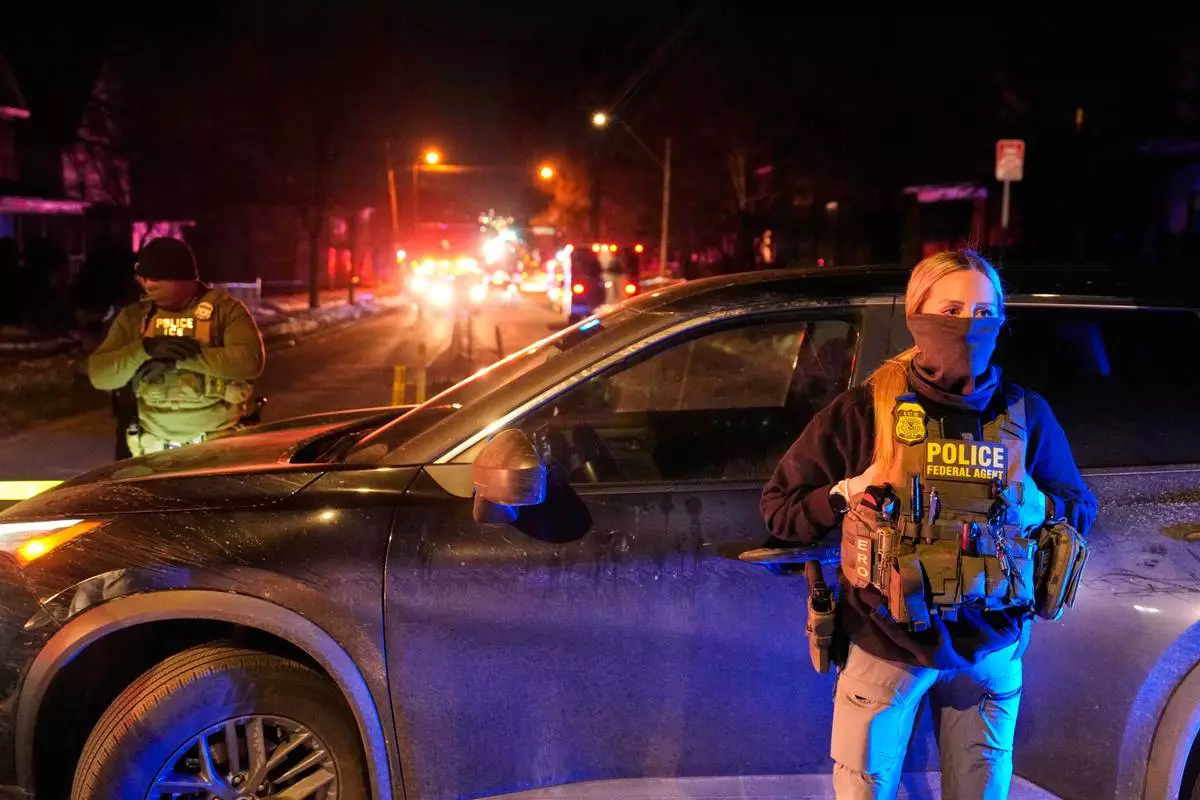
Federal immigration officers at the scene of a reported shooting Wednesday, Jan. 14, 2026, in Minneapolis. (AP Photo/John Locher)
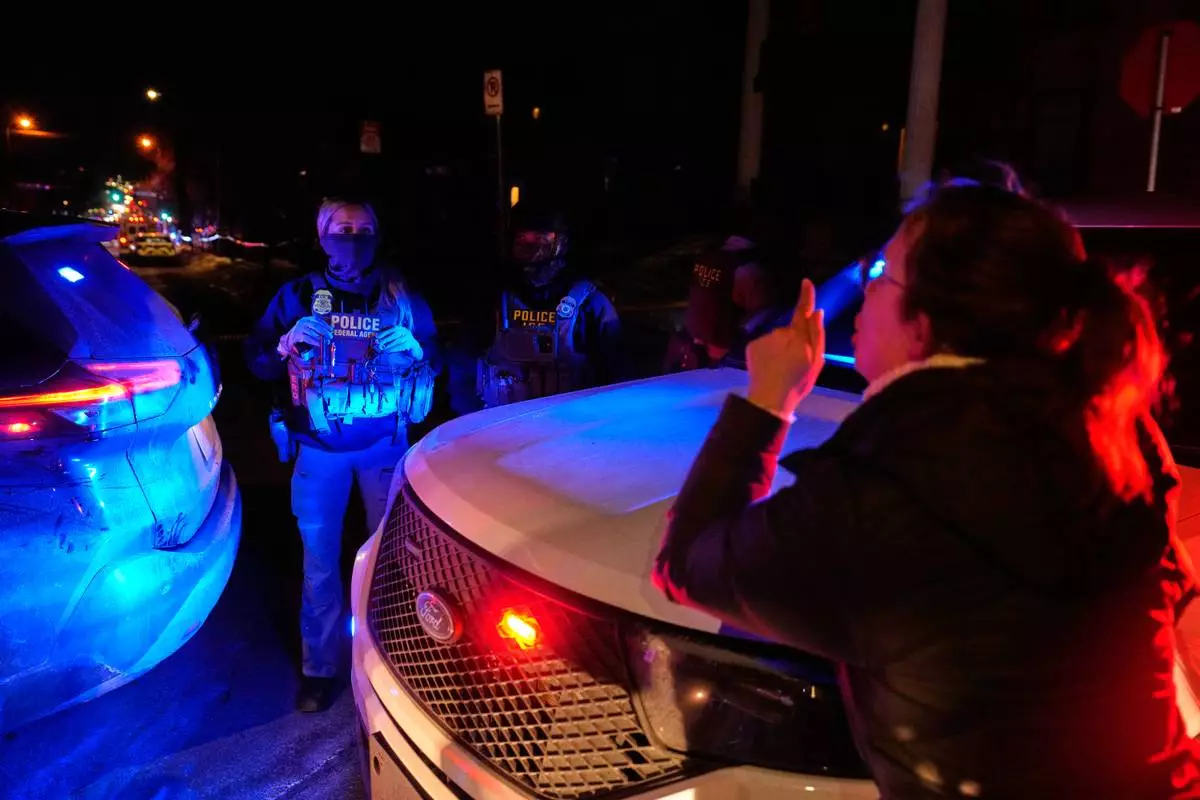
A woman confronts a federal immigration officer at the scene of a reported shooting Wednesday, Jan. 14, 2026, in Minneapolis. (AP Photo/John Locher)
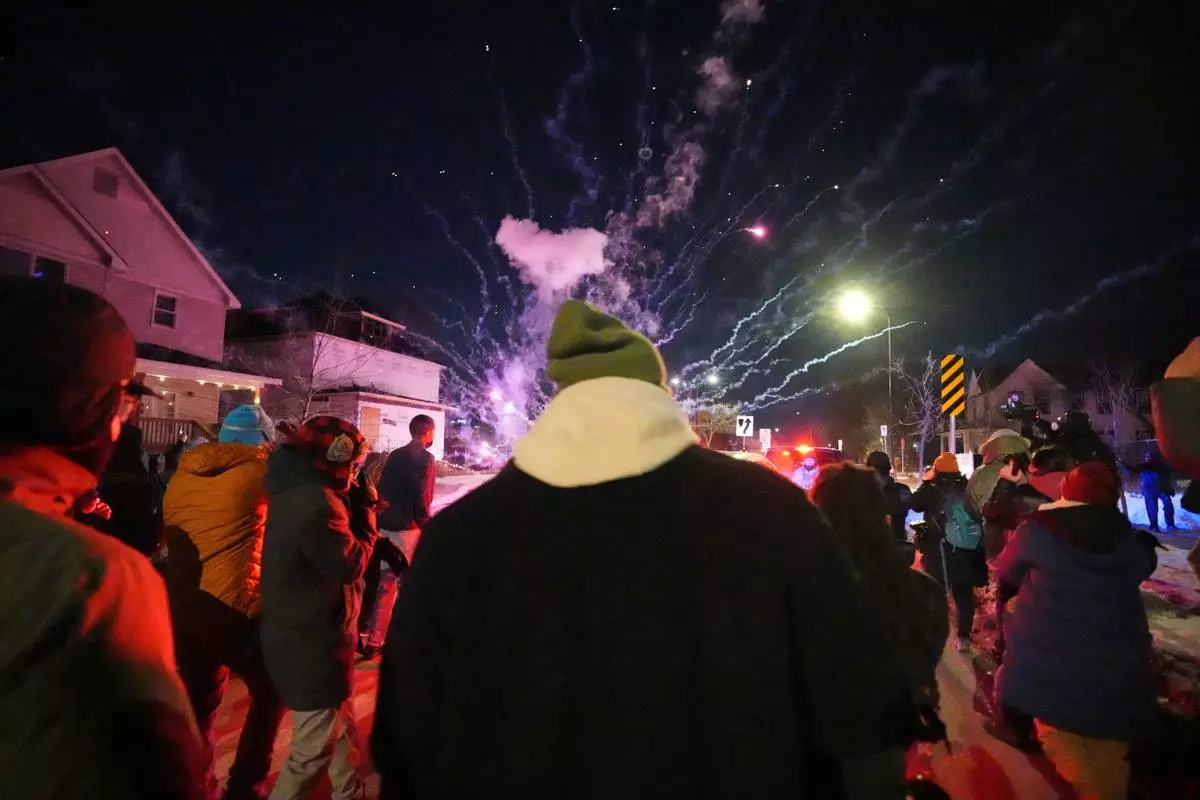
People react after a firework was set off near the scene of a reported shooting Wednesday, Jan. 14, 2026, in Minneapolis. (AP Photo/Abbie Parr)
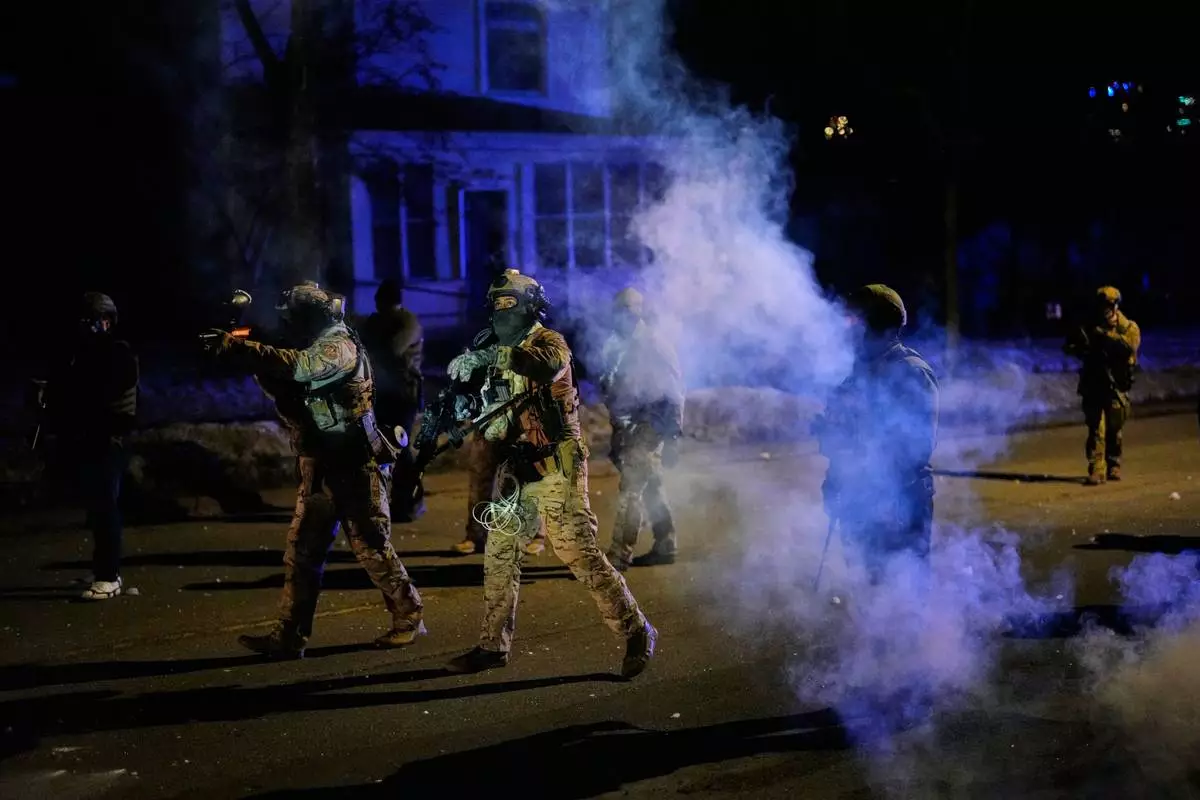
Federal immigration officers shoot pepper balls as tear gas is deployed at the scene of a reported shooting Wednesday, Jan. 14, 2026, in Minneapolis. (AP Photo/John Locher)
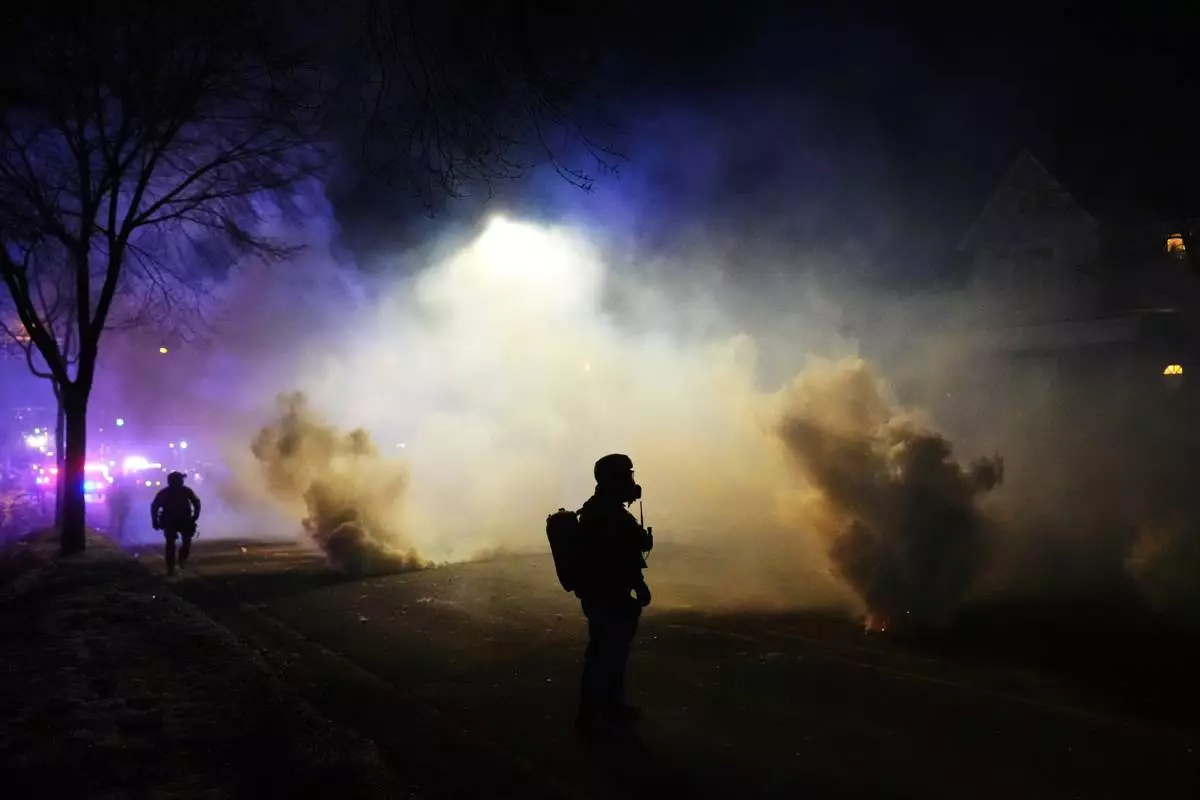
Law enforcement officers stand amid tear gas at the scene of a reported shooting Wednesday, Jan. 14, 2026, in Minneapolis. (AP Photo/Adam Gray)
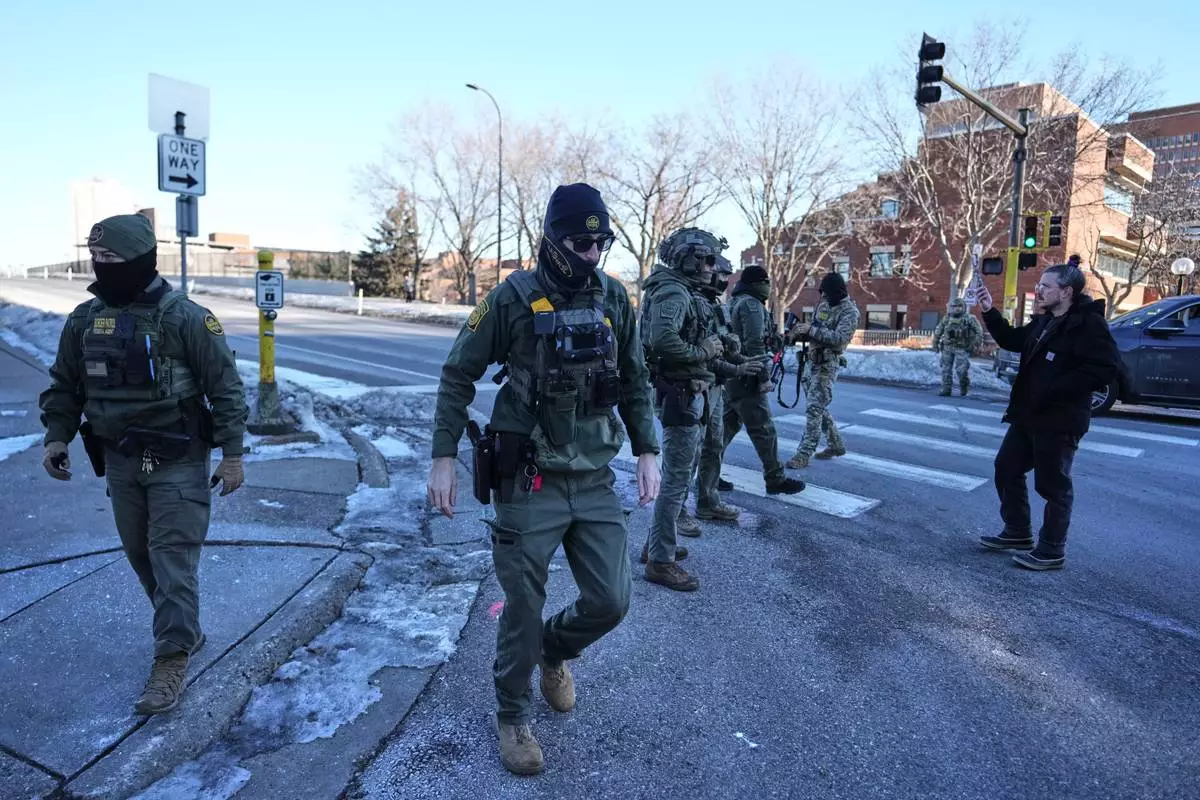
Federal immigration officers are seen Wednesday, Jan. 14, 2026, in Minneapolis. (AP Photo/Abbie Parr)
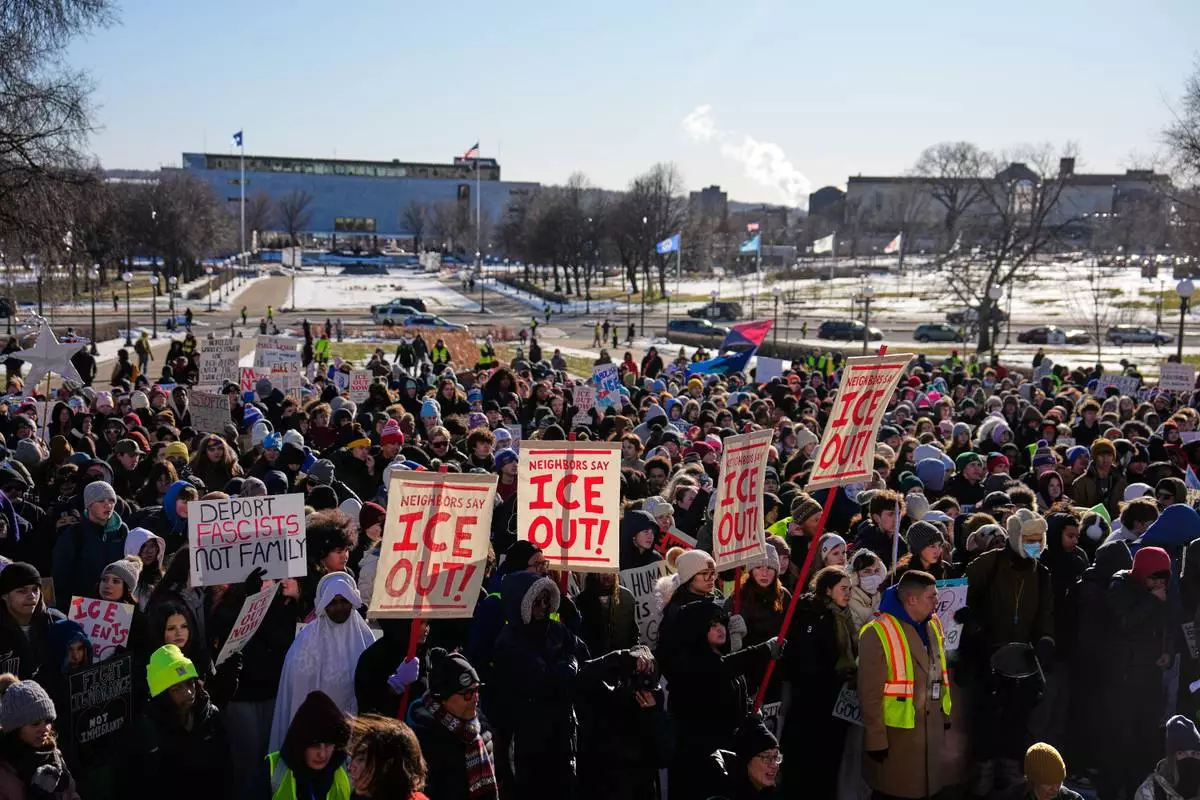
Hundreds of protesters gather in front of the Minnesota State Capitol in response to the death of Renee Good, who was fatally shot by an ICE officer last week, Wednesday, Jan. 14, 2026, in St. Paul, Minn. (AP Photo/John Locher)
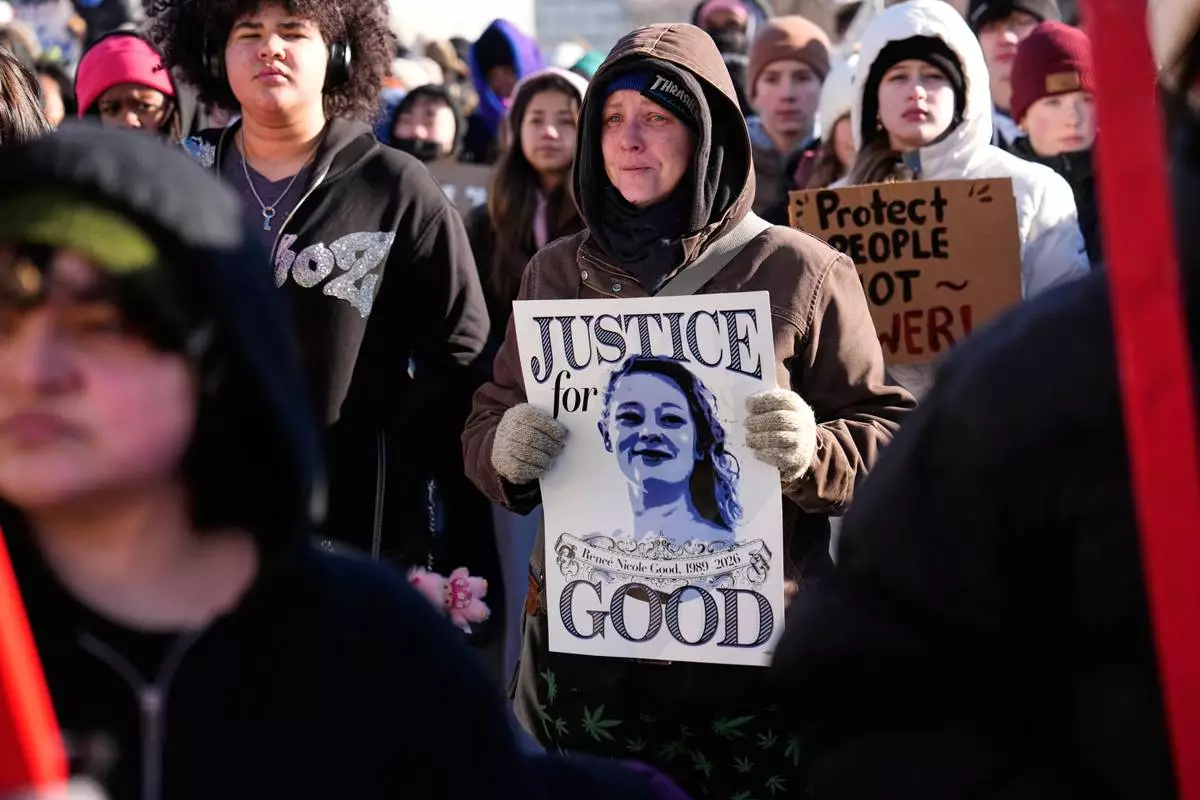
Protesters gather in front of the Minnesota State Capitol in response to the death of Renee Good, who was fatally shot by an ICE officer last week, Wednesday, Jan. 14, 2026, in St. Paul, Minn. (AP Photo/John Locher)
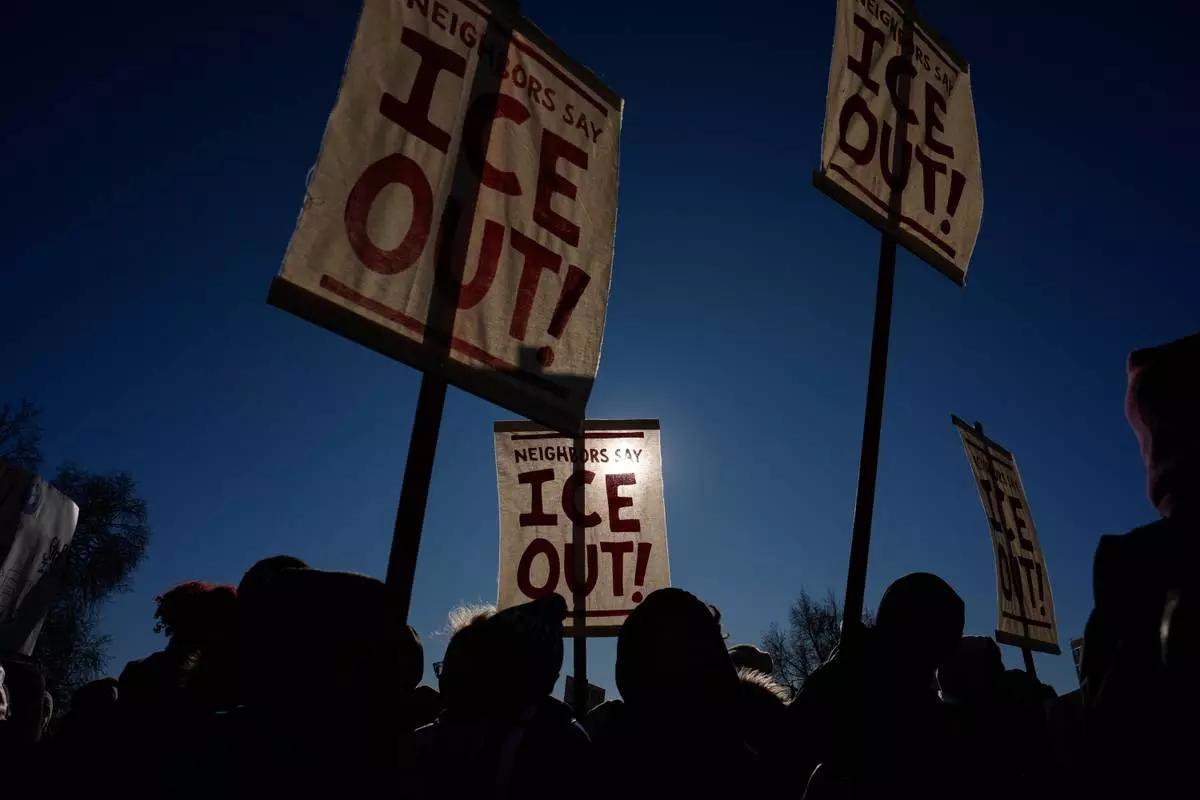
Protesters gather in front of the Minnesota State Capitol in response to the death of Renee Good, who was fatally shot by an ICE officer last week, Wednesday, Jan. 14, 2026, in St. Paul, Minn. (AP Photo/John Locher)
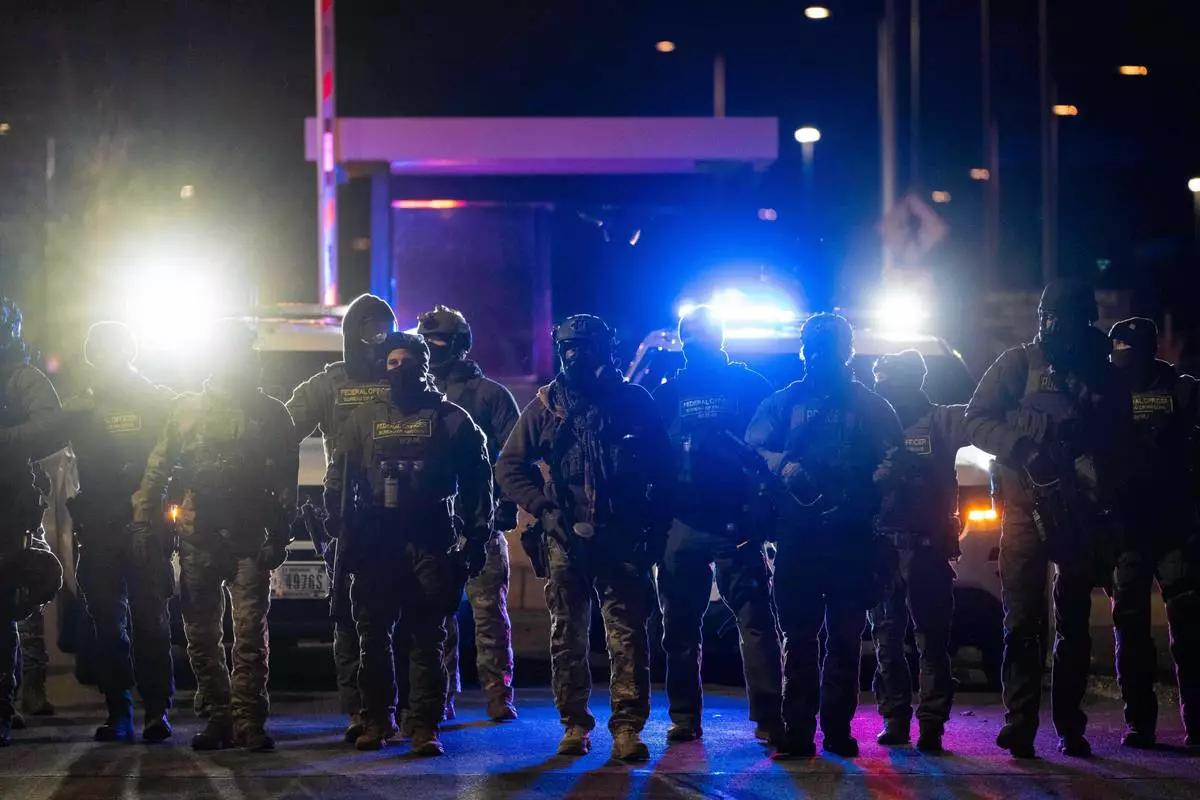
Federal officers stand guard after detaining people outside of Bishop Henry Whipple Federal Building, Tuesday, Jan. 13, 2026, in Minneapolis. (AP Photo/Adam Gray)
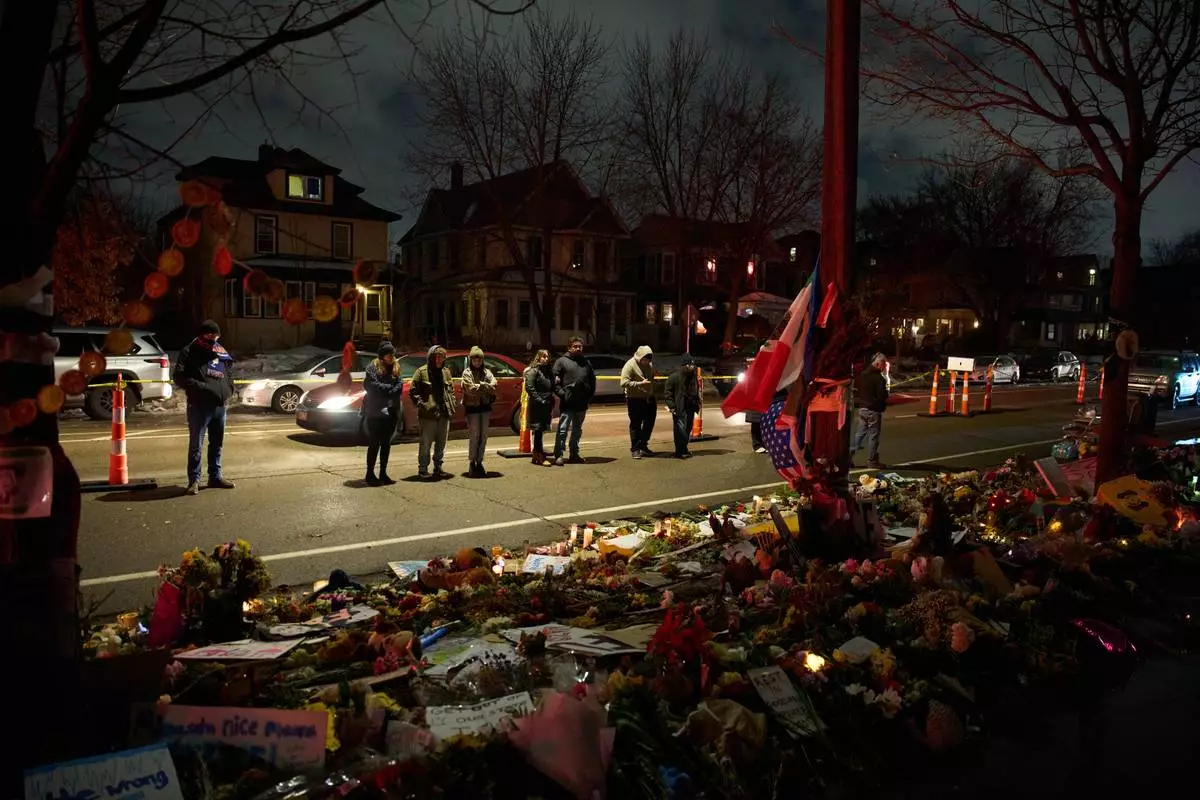
People visits a makeshift memorial for Renee Good, who was fatally shot by an ICE officer last week, Tuesday, Jan. 13, 2026, in Minneapolis. (AP Photo/John Locher)
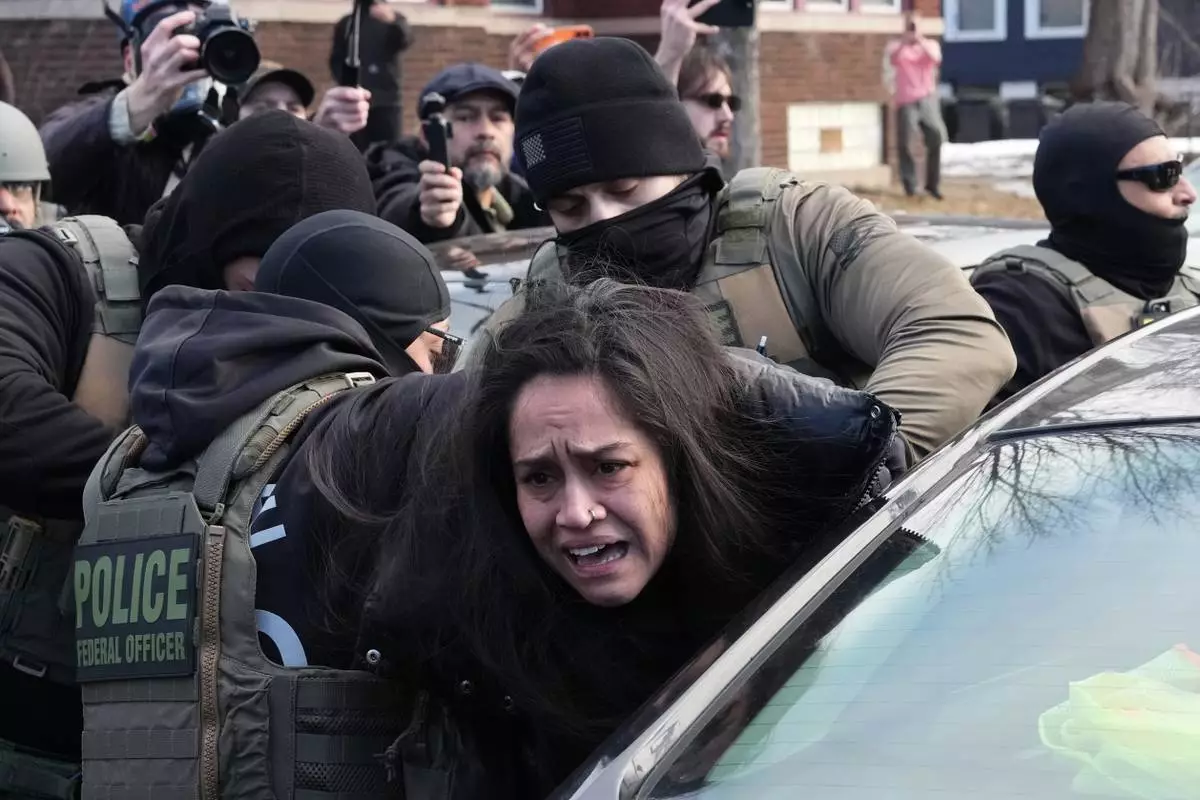
A person is detained by federal agents near the scene where Renee Good was fatally shot by an ICE officer last week, Tuesday, Jan. 13, 2026, in Minneapolis. (AP Photo/Adam Gray)