Skip to Content Facebook Feature Image

Review: Netflix's 'Have a Good Trip' is only a mild high

ENT

Review: Netflix's 'Have a Good Trip' is only a mild high
ENT

ENT

Review: Netflix's 'Have a Good Trip' is only a mild high

2020-05-11 23:11 Last Updated At:23:20

We can't take trips these days for obvious reasons. But Netflix is offering a trip into the mind with a gentle new documentary about the world of hallucinogens.

Donick Cary’s “Have a Good Trip: Adventures in Psychedelics” uses celebrities recounting their trips on LSD or mushroom to counteract built-up fears about psychotropic drugs — even offering tips about how to use them better — all against the backdrop of trippy '60s-style cartoons with rainbows and unwinding tongues.

This is a clearly pro-psychedelic film, not too preachy and not too pointed, with lazy science. There are really only two authoritative voices in the film and they both endorse investigation into hallucinogens — the alternative medicine guru Deepak Chopra (“We’re on a trip right now. Life is a trip,” he says) and UCLA psychiatry professor Dr. Charles Grob. There are no dissenting voices.
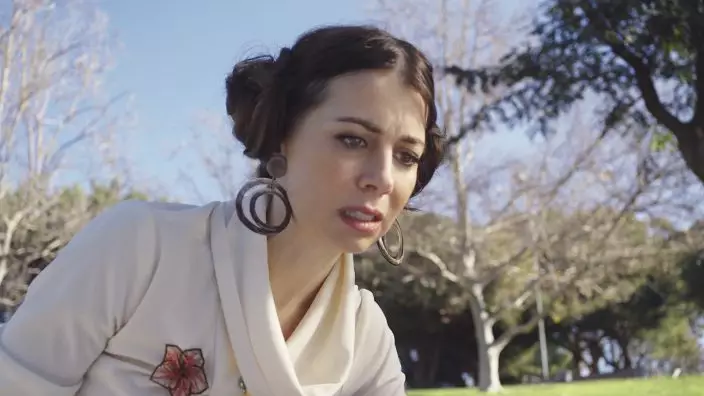
This image released by Netflix shows Natasha Legerro in a scene from "Have A Good Trip: Adventures in Psychedelics." (Netflix via AP)

This image released by Netflix shows Natasha Legerro in a scene from "Have A Good Trip: Adventures in Psychedelics." (Netflix via AP)

So if you prefer your drug advice from celebrities, this is the film for you. David Cross, Nick Kroll, Ben Stiller, Natasha Lyonne, A$AP Rocky and Sarah Silverman are among those talking about their trips, both bad and good. Silverman found herself in the passenger seat of a car driven by a man so high he’d forgotten how to drive.

That leads to one of the film's several drug tips, made to look like those “The More You Know” PSA: Don’t drive while tripping. Control your setting. Don’t ever look in the mirror. (“You can see through your skin,” Silverman warns.)

We learn that Lewis Black once got so high he forgot his own name and flipped through a dictionary for what seems like hours looking for clues. Rosie Perez tripped so bad once in the late 1980s that she was eventually doing the backstroke on a dance club floor.
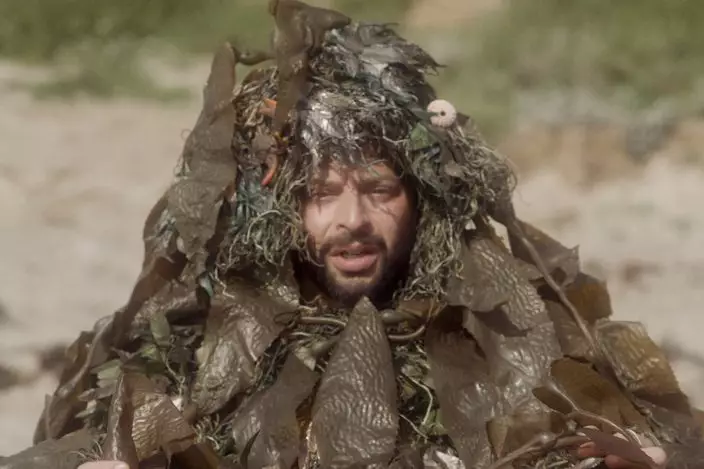
This image released by Netflix shows Nick Kroll in a scene from "Have A Good Trip: Adventures in Psychedelics." (Netflix via AP)

This image released by Netflix shows Nick Kroll in a scene from "Have A Good Trip: Adventures in Psychedelics." (Netflix via AP)

These stories are often delightful — and enhanced by great cartoons or recreations acted by many of those interviewed — but are we sure we need celebrity insights here? Rob Corddry has played a satirical journalist on “The Daily Show” but we’re not sure he’s the guy who should be dispensing advice about how the national scientific community handles testing on acid ("We blew it," he says, minus an expletive).

Two of the best anecdotes are by terrific storytellers who are no longer with us — TV host and chef Anthony Bourdain and actress Carrie Fisher, both for whom the film is dedicated. (Which makes you wonder how long this film has been on the shelf).

Bourdain talks about his attempt to mimic Hunter S. Thompson by going on a road trip with a buddy to the Catskills with “a pretty dizzying array of controlled substances” — Quaaludes, weed, coke, beer, gin, hash and LSD. They picked up two hitchhiking exotic dancers and that’s when things took a turn.

Fisher confesses she took a lot of LSD over her life, including once in a park where she witnessed a talking acorn who insisted on showing her his choreography. “I never saw anything that wasn’t there. I just saw things that were there misbehave,” she notes, brilliantly.

Some celebrities have clearly thought deeply about their trips, like Sting, who while high on peyote in the English countryside, helped a cow give birth. “For me, the entire universe cracked open.” And Reggie Watts uses this poetic metaphor for hallucinogens: “It’s like a stepladder to look over a brick wall that’s a little bit too tall for you.”

There are intriguing moments when the thread to a better movie is revealed, as when Perez confides that her LSD trip prompted her to seek out therapy to help ease her Roman Catholic guilt. Sting also reveals that some of his trips have helped him write songs. Really? Which ones? More concrete examples of how mushrooms or dropping acid aided life are sorely needed.

And another misfire: Writer and director Cary has decided to lighten the mood by periodically mocking the paranoid anti-drug public service announcements of the ’80s with his own extended send-up that gets tiresome.

Adam Scott in a black leather jacket shows up in each, being ultra-serious about the evil of drugs. “Knock, knock, knock.′ ‘Who is it?′ ’It’s a deranged drifter who wants to torture you for the next 12 hours,’” he says in one ad-within-the-film. “That’s exactly what you’re doing when you open your brain to hallucinogenics.”

And the filmmaker has employed another marvelous off-kilter figure in Nick Offerman, pretending to be a scientist. “Don’t get me wrong, drugs can be dangerous,” he tells us. “But they can also be hilarious." But Offerman is neither in this film — and so he is wasted. Like this film — wasted but not in a good way.

“Have a Good Trip,” a Netflix release, is rated TV-MA for drug substances and language. Running time: 85 minutes. One and a half stars out of four.

Online: https://www.netflix.com/browse?jbv=80231917&jbp=0&jbr=1

Mark Kennedy is at http://twitter.com/KennedyTwits

BATON ROUGE, La. (AP) — As residents across much of the country take down their holiday decorations, sobered by New Year's resolutions and a return to business as usual, in Louisiana people are ramping up for the biggest celebration of the year.

Throughout the state residents are preparing for Carnival season, a pre-Lenten and weeks-long bash that includes feasting on savory dishes, opulent balls and a stream of massive parades rolling through city streets.

The bucket-list worthy period of festivities promises indulgence, costumed revelry and literal pounds of glimmery plastic beads to carry around one’s neck. Here’s what to know about Carnival.

Carnival in Louisiana and around the world is rooted in Christian and Roman Catholic traditions. It's marked by feasting, drinking and revelry before Ash Wednesday and the fasting associated with Lent, the Christian season of preparation for Easter.

Each year, along with Louisiana residents, more than a million visitors travel to New Orleans to partake in the city’s world-famous celebration.

However, the festivities are not limited to the Big Easy. Similar celebrations stretch across Louisiana and into other Gulf Coast states, including Alabama, where Mobile lays claim to the nation’s oldest Mardi Gras celebration. Additionally, there are world-renowned celebrations in Brazil and Europe.

Although some people use the terms “Carnival” and “Mardi Gras” interchangeably, they are actually different things.

Carnival is the entire pre-Lenten period. Mardi Gras, also known as Fat Tuesday, is one day.

Mardi Gras marks the grand conclusion to Carnival Season. It falls on the day before Ash Wednesday, making it the final moments of indulgence before the solemnity of Lent.

Carnival always begins Jan. 6, which in the Catholic world is called Epiphany or Twelfth Night since it’s twelve days after Christmas. And the season always ends with Mardi Gras.

But, because it’s linked to Easter — which does not have a fixed date — Mardi Gras can fall anywhere between Feb. 3 and March 9. This year Fat Tuesday is on Feb. 17, making Carnival 43 days long.

The beginning of Carnival also marks the start of when it is socially acceptable — and encouraged — to eat king cake. Lines will snake around the block at popular bakeries known for the seasonal staple.

The brioche-style pastry, which some bakers say traces back to an ancient Roman holiday, has become one of the iconic and most-delicious symbols of Carnival.

The traditional ring-shaped and sweet-dough cake is streaked with cinnamon and adorned with decadent icing colored purple, green and gold. The cake is often filled with fruits, pecans or different flavors of cream cheese frosting.

Also in the treat is a tiny plastic baby. Whoever has the slice with the little figurine hidden inside is supposed to buy the next cake or throw the next party, lending an unending excuse for another festive gathering.

The traditional cake has evolved over the years with restaurants launching their own unique versions, including one that is filled with boudin — a Cajun-style sausage — and another that is made out of sushi rolls.

Carnival is best known for elaborate and massive parades. This season there will be more than 80 parades in and surrounding New Orleans — many of which last hours.

Energetic marching bands, costumed dancers and multi-level floats laden with fantastical hand-built figures, will wind through communities.

The parades embody their own identity. They include an all-female parade, one that pokes fun at politics, a Sci-Fi themed parade with revelers dressed as Chewbacca. The largest parade hosts 3,200 riders and more than 80 floats, and one of the smallest, in the literal sense, features floats made out of shoe boxes.

Float riders and walking members of Carnival clubs — known as krewes — pour much time and money into preparations for the extravaganza. But all that work pays off as celebrants, many donning homemade costumes, line streets and sidewalks to watch.

Most spectators will have their hands raised in hopes of catching “throws” — trinkets tossed to the crowd by float riders. While throws include plastic beads, candy, doubloons, stuffed animals, cups and toys, there are also the more coveted items such as painted coconuts, highly sought-after hand-decorated shoes and even bedazzled toilet plungers.

The krewe for the largest parade in New Orleans, Endymion, estimates that they toss more than 15 million throws along the parade route. The krewe's motto is, “Throw ’til it Hurts.”

Although Carnival is often known for fancy balls and boisterous parades, other areas and groups have their own traditions.

In central Louisiana people will take part in the Cajun French tradition of the Courir de Mardi Gras, or Fat Tuesday Run. These rural processions feature masked and costumed participants who will perform and beg for ingredients, and even chase after live chickens, to use for a communal gumbo at the end of the day.

In New Orleans, some African Americans mask in elaborate beaded and feathered Mardi Gras Indian suits, roving the city to sing, dance, drum and perform. The tradition, a central part of the Black Carnival experience in New Orleans since at least the late 1800s, is believed to have started in part as a way to pay homage to area Native Americans for their assistance to Black people and runaway slaves. It also developed at a time when segregation barred Black residents from taking part in whites-only parades.

FILE - The streets are filled during the Society of Saint Anne's parade on Mardi Gras Day, March 4, 2025 in New Orleans. (AP Photo/Gerald Herbert, File)

FILE - The streets are filled during the Society of Saint Anne's parade on Mardi Gras Day, March 4, 2025 in New Orleans. (AP Photo/Gerald Herbert, File)

FILE- People gather for the start of the Society of Saint Anne's parade on Mardi Gras Day, March 4, 2025 in New Orleans. (AP Photo/Gerald Herbert, File)

FILE- People gather for the start of the Society of Saint Anne's parade on Mardi Gras Day, March 4, 2025 in New Orleans. (AP Photo/Gerald Herbert, File)

Recommended Articles