Nightclubs, bars and beaches — some of Spain's most beloved summer venues — are facing new lockdown restrictions after turning into coronavirus hot spots.
The northeast region of Catalonia now hosts two of the most worrying virus hotspots in Spain, prompting authorities in Barcelona and an interior agricultural area around Lleida to tighten restrictions that were relaxed only a month ago when Spain had its devastating outbreak in check.
Click to Gallery
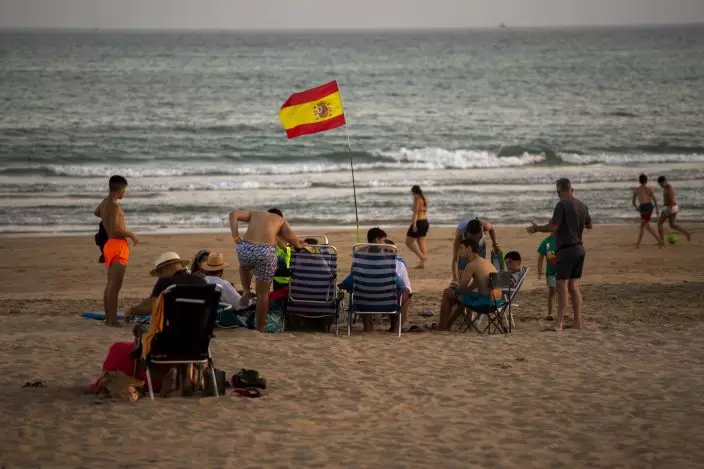
A Spanish flag waves as bathers enjoy the beach in Barbate, Cadiz province, south of Spain, on Saturday, July 25, 2020. Ministers are set to remove Spain from the Government's list of safe countries to travel to after the European country saw a rise in Covid-19 cases. The decision means those coming back from Spain will have to self-isolate for two weeks upon their return to England. (AP PhotoEmilio Morenatti)
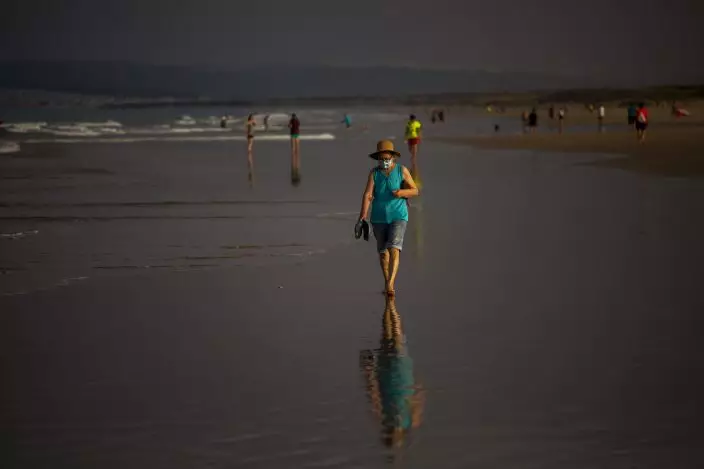
A woman wearing a face mask walks at the beach in Zahara de los Atunes, Cadiz province, south of Spain, on Saturday, July 25, 2020. Ministers are set to remove Spain from the Government's list of safe countries to travel to after the European country saw a rise in Covid-19 cases. The decision means those coming back from Spain will have to self-isolate for two weeks upon their return to England. (AP PhotoEmilio Morenatti)
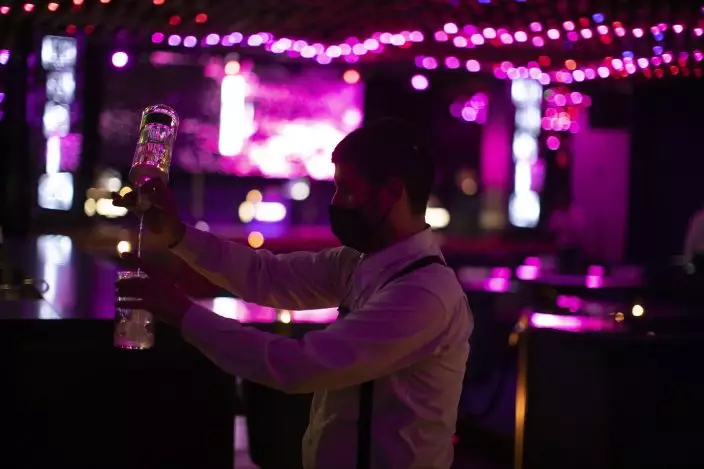
A waiter wearing a face mask to prevent the spread of coronavirus works in a discotheque in Madrid, Spain, early Saturday, July 25, 2020. Nightlife is becoming the new target of Spanish authorities attempting to contain a spike in coronavirus infections since the country ended a lockdown. The Catalonia regional government has shut nightlife venues in Barcelona, and on Friday officials in Madrid said they were considering a similar step. (AP PhotoManu Fernandez)
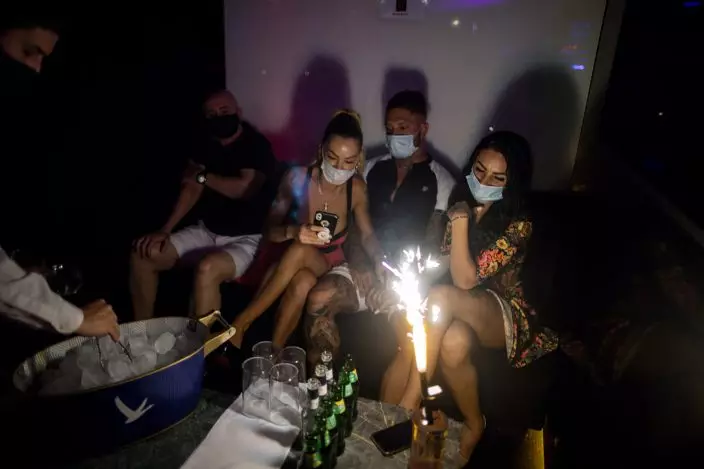
People wearing face masks to prevent the spread of coronavirus gather in a discotheque in Madrid, Spain, early Saturday, July 25, 2020. Nightlife is becoming the new target of Spanish authorities attempting to contain a spike in coronavirus infections since the country ended a lockdown. The Catalonia regional government has shut nightlife venues in Barcelona, and on Friday officials in Madrid said they were considering a similar step. (AP PhotoManu Fernandez)
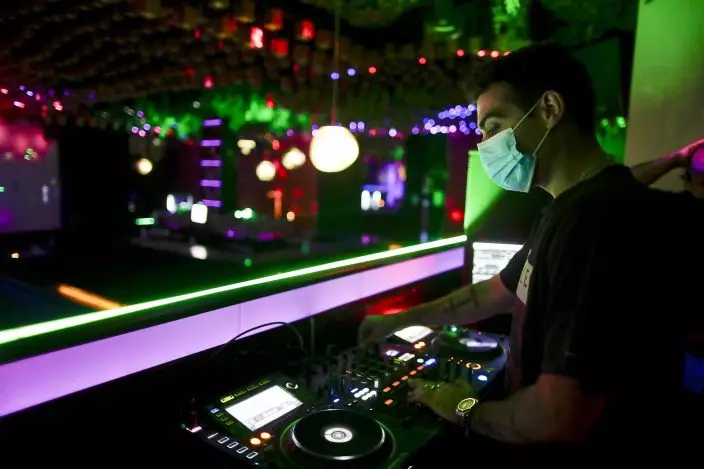
A DJ performs in a discotheque in Madrid, Spain, early Saturday, July 25, 2020. Nightlife is becoming the new target of Spanish authorities attempting to contain a spike in coronavirus infections since the country ended a lockdown. The Catalonia regional government has shut nightlife venues in Barcelona, and on Friday officials in Madrid said they were considering a similar step. (AP PhotoManu Fernandez)
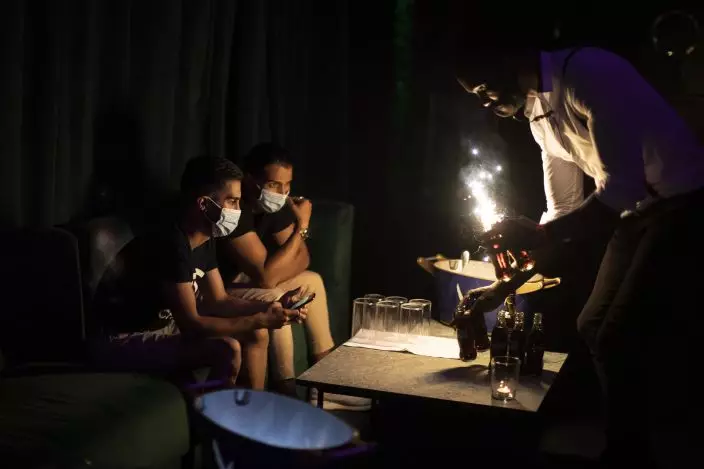
People wearing face masks to prevent the spread of coronavirus gather in a discotheque in Madrid, Spain, early Saturday, July 25, 2020. Nightlife is becoming the new target of Spanish authorities attempting to contain a spike in coronavirus infections since the country ended a lockdown. The Catalonia regional government has shut nightlife venues in Barcelona, and on Friday officials in Madrid said they were considering a similar step. (AP PhotoManu Fernandez)
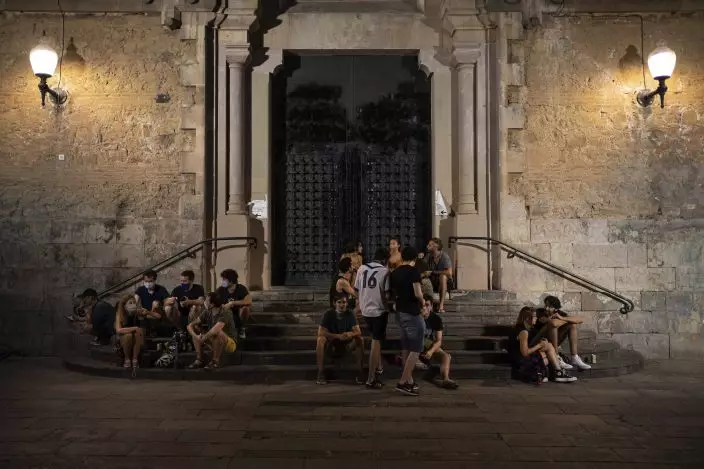
People gather at a public square at night in Gracia neighborhood, Barcelona, Spain, Friday, July 24, 2020. Health authorities in the northeastern region of Catalonia have ordered nightclubs to be fully closed and bars and restaurant in Barcelona to shut down by midnight in an effort to stem the spread of the new coronavirus. (AP PhotoFelipe Dana)
France, meanwhile, is recommending that travelers ditch plans to spend their summer vacations in Barcelona and its nearby beaches, which have seen crowds too massive to allow for social distancing. Police had to step in and take measures to reduce the number of beach-goers.
A Spanish flag waves as bathers enjoy the beach in Barbate, Cadiz province, south of Spain, on Saturday, July 25, 2020. Ministers are set to remove Spain from the Government's list of safe countries to travel to after the European country saw a rise in Covid-19 cases. The decision means those coming back from Spain will have to self-isolate for two weeks upon their return to England. (AP PhotoEmilio Morenatti)
Catalonia ordered all nightlife venues to close for 15 days and applied a midnight curfew on bars in and around Barcelona and Lleida late Friday, hours after French Prime Minister Jean Castex urged French citizens not to visit Catalonia due to the upticks in new infections.
France is also struggling to stop a spike in new cases but it apparently sees a risk in importing new infections from Spain as well.
“We know these measures are tough,” said Catalonia public health chief Josep Maria Argimon. “But we have to ask for the maximum collaboration of our citizens so they don’t last any longer than they have to. If we see that the growth of contagion is exponential, then the only way to stop it is to limit free movement.”
A woman wearing a face mask walks at the beach in Zahara de los Atunes, Cadiz province, south of Spain, on Saturday, July 25, 2020. Ministers are set to remove Spain from the Government's list of safe countries to travel to after the European country saw a rise in Covid-19 cases. The decision means those coming back from Spain will have to self-isolate for two weeks upon their return to England. (AP PhotoEmilio Morenatti)
Local mayors said the shutdown should have been ordered days earlier.
“The measures have arrived late, but they have now been taken and myself and my fellow mayors feel that they are the correct measures to take,” Barcelona Mayor Ada Colau said Saturday before asking for Catalan regional police to help her municipal police enforce the curfew and closures.
Spain reported over 900 new daily infections on Thursday and Friday as authorities warned that the country which lost at least 28,400 lives before getting its outbreak under control could be facing the start of a second major onslaught.
A waiter wearing a face mask to prevent the spread of coronavirus works in a discotheque in Madrid, Spain, early Saturday, July 25, 2020. Nightlife is becoming the new target of Spanish authorities attempting to contain a spike in coronavirus infections since the country ended a lockdown. The Catalonia regional government has shut nightlife venues in Barcelona, and on Friday officials in Madrid said they were considering a similar step. (AP PhotoManu Fernandez)
National health authorities warned that Spain already could be heading for a “second wave” of the virus that experts had forecast would come during the colder months.
Catalonia’s regional government, run by separatists who had complained about Spain’s centralization of the health crisis from March to June, are struggling to maintain tabs on the growing clusters that have overwhelmed undermanned contract tracing teams.
Over 12% of Spain’s economy is based on its huge tourism industry. Its government, unions and industry leaders are heavily invested in promoting the message that Spain is a safe destination for foreigners to salvage the tourism season.
People wearing face masks to prevent the spread of coronavirus gather in a discotheque in Madrid, Spain, early Saturday, July 25, 2020. Nightlife is becoming the new target of Spanish authorities attempting to contain a spike in coronavirus infections since the country ended a lockdown. The Catalonia regional government has shut nightlife venues in Barcelona, and on Friday officials in Madrid said they were considering a similar step. (AP PhotoManu Fernandez)
That now looks more and more like wishful thinking, meaning the economic blow heading Spain’s way will likely be greater than the deep recession already forecast.
“We have seen a wave of cancellations above all by foreign clients from France, Germany and England who were supposed to come next week, above all to Barcelona,” David Riba, president of the Federatur tourist apartments group, told Catalan broadcaster TV3.
While the families and the at-risk elderly are mostly complying with rules to wear face masks and maintain a 1.5-meter (5-foot) distance from others, teenagers and young adults in many of Spain’s cities have been completely flouting the health rules and guidelines.
A DJ performs in a discotheque in Madrid, Spain, early Saturday, July 25, 2020. Nightlife is becoming the new target of Spanish authorities attempting to contain a spike in coronavirus infections since the country ended a lockdown. The Catalonia regional government has shut nightlife venues in Barcelona, and on Friday officials in Madrid said they were considering a similar step. (AP PhotoManu Fernandez)
With Spain’s 19 regional governments back in charge of their health care systems, there's been a variety of responses to the revival of the virus.
But one shared initiative is to stop the rise of cases related to nightclubs and bars, which are supposed to applying social distancing and face mask regulations inside their venues. Many regions have reduced the occupancy of nightclubs and some have ordered clubs to put tables on the dance floors to discourage dancers from close contact.
Recent outbreaks have been linked to a discotheque in the southern city of Cordoba and to bars in Murcia, in the southeast.
People wearing face masks to prevent the spread of coronavirus gather in a discotheque in Madrid, Spain, early Saturday, July 25, 2020. Nightlife is becoming the new target of Spanish authorities attempting to contain a spike in coronavirus infections since the country ended a lockdown. The Catalonia regional government has shut nightlife venues in Barcelona, and on Friday officials in Madrid said they were considering a similar step. (AP PhotoManu Fernandez)
In Pamplona, authorities have tested 1,000 residents aged 17 to 28 after monitoring an outbreak associated with young people socializing in a neighborhood that has since been put under medical surveillance. Officials in Madrid are considering similar restrictions.
Young people are not the only ones unhappy with the moves. Two business associations for nightclubs and bars say they will take the Catalan government to court to block a decision they say puts 35,000 jobs at risk.
Follow AP coverage of the virus outbreak at https://apnews.com/VirusOutbreak and https://apnews.com/UnderstandingtheOutbreak
People gather at a public square at night in Gracia neighborhood, Barcelona, Spain, Friday, July 24, 2020. Health authorities in the northeastern region of Catalonia have ordered nightclubs to be fully closed and bars and restaurant in Barcelona to shut down by midnight in an effort to stem the spread of the new coronavirus. (AP PhotoFelipe Dana)