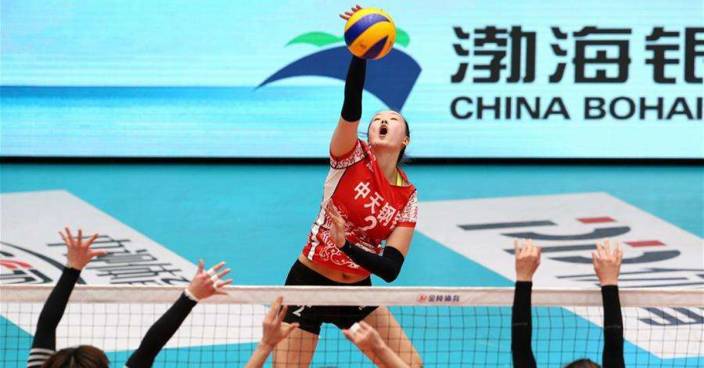
Zhang Changning stood behind the baseline of the court at Jiangsu provincial training hall, holding a ball in her right hand and spinning it for several seconds before unleashing a serve.
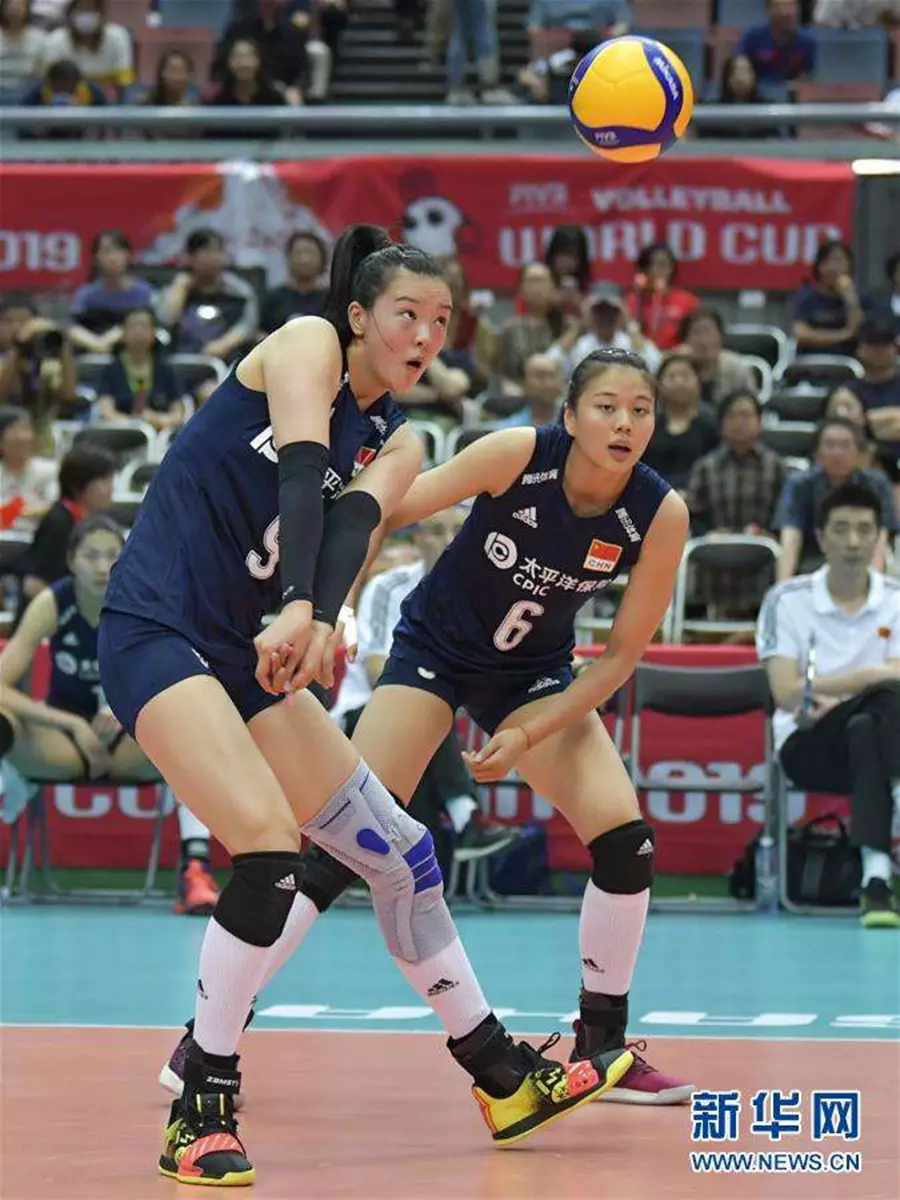
Zhang Changning (left)
That's a trademark posture for Zhang, who has played volleyball both indoors and outdoors for over 15 years.
"I always think about the direction and target point of my serve while spinning the ball," Zhang explained during a recent interview with Xinhua.
Likewise, the 25-year-old tends to set one goal after another for every stage of her career.
In 1995, Zhang was born into a volleyball-playing family - both her father and elder brother were national team players, which gave Zhang more access to volleyball than her peers.
In 2014, Lang Ping, the head coach of the Chinese women's volleyball team, drafted Zhang into the national team for a trial.
Zhang said she was very excited to achieve the "small goal" of joining the national team while still being under 20 years old. But she soon came to realize the huge gap between her and those senior players.
"At that time, I realized my weakness and then clearly set a new goal, which was to keep on going and stand firm here," Zhang said.
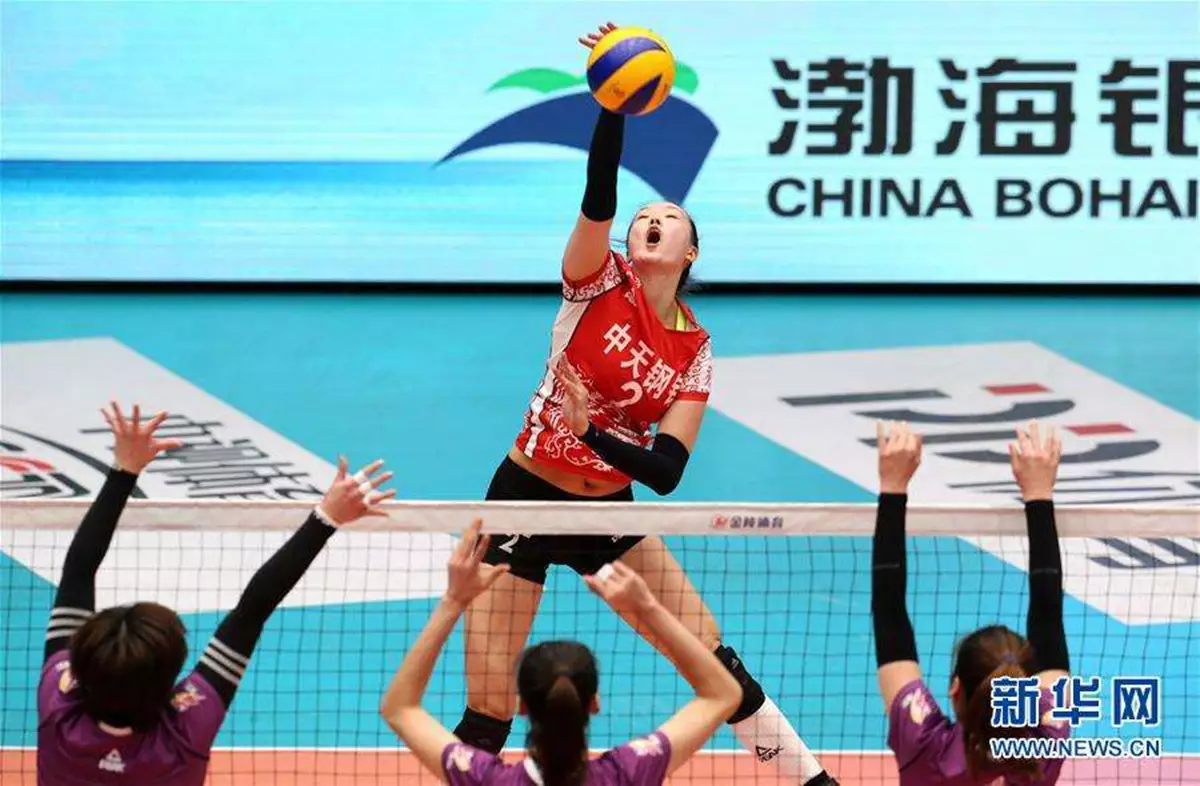
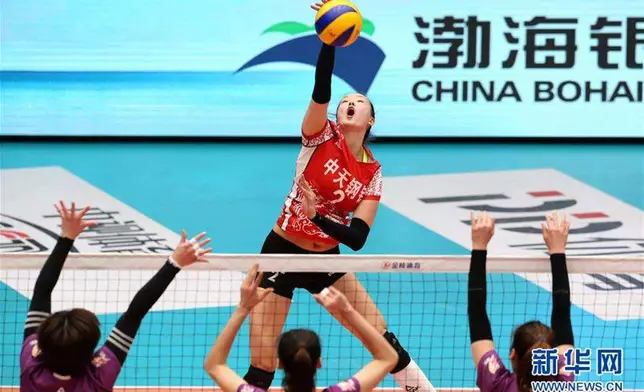
Zhang Changning
Zhang didn't stay with the national team after her trial. But coincidentally, as the schedules of the World Volleyball Championship and the Asian Games clashed that year, Zhang was called up to China's "Team B" and participated in the Asian Games.
Although the Chinese team failed to win the championship, Zhang's performance saw her promoted to the main national team. She referred to that as "the start of her dream."
In 2015, Hui Ruoqi retired due to illness, and Zhang was promoted to a leading role in the team. That same year, she helped the Chinese team win the World Cup after 12 years, and became the first under-20 spiker to win a world championship.
At the 2016 Rio Olympics, though the Chinese team was once on the brink of an exit, Zhang again tasted the joy of standing on top of the podium.
"In fact, everyone played badly in that final game, but I think that was a valuable experience that taught us how to adjust in adversity and bring out our strengths, to which nothing can compare," Zhang said.
Consecutively winning laurels at world events, Zhang also tasted the bitterness of losing in volleyball's "big three" events, namely the World Cup, the World Championship and the Olympic Games, with the first disappointment coming in the 2018 World Championships. Although the Chinese team ended up finishing third, Zhang was disappointed in her performance across the whole tournament.
"The 2018 World Championships was a serious blow for me, but it made me face up to myself and understand what I really need," Zhang said.
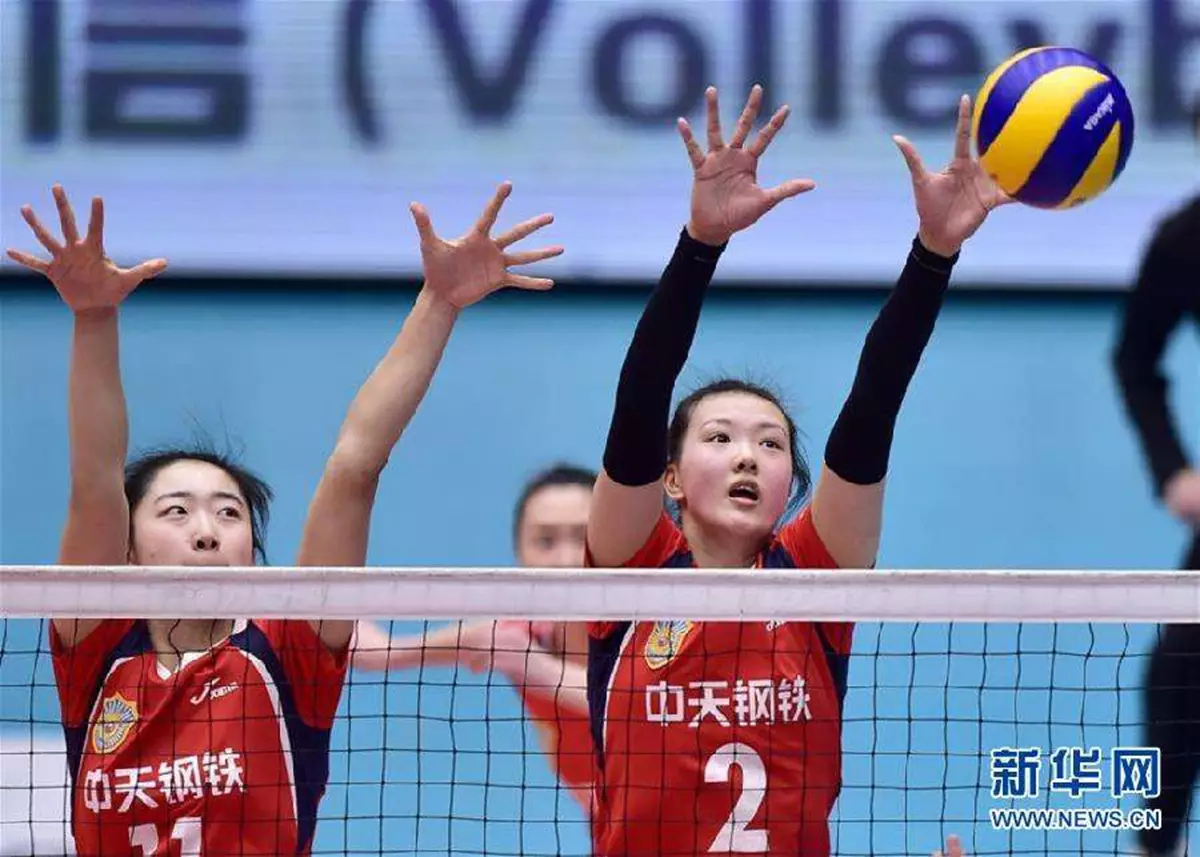
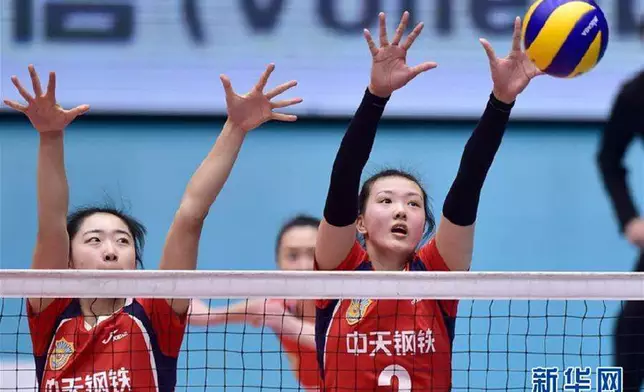
Zhang Changning
As her predecessor, coach Lang Ping provided hands-on support in Zhang's training.
"Coach Lang is very meticulous, she stands right beside us in training and teaches us the better option of each serve as an experienced witness. Being around such a good spiker, you feel like there is a solid wall behind you and get a great sense of security," said Zhang.
The Chinese women's volleyball team is preparing for next year's postponed Tokyo Olympics.
Zhang said that although the Chinese women's volleyball team may not the strongest, she believes they are "the toughest".
Besides the Olympic Games, most other competitions this year were canceled due to the pandemic, preventing the Chinese team from competing against other top teams and adding more uncertainty to next year's Olympics.
The upcoming Chinese Women's Volleyball Super League will become one of the few warm-up competitions for Tokyo 2020, and Zhang attaches great importance to this tournament.
"Everyone cherishes the opportunity to be on court, because many problems can only be found and solved in matches. We hope to do our best and get a good result," she said.
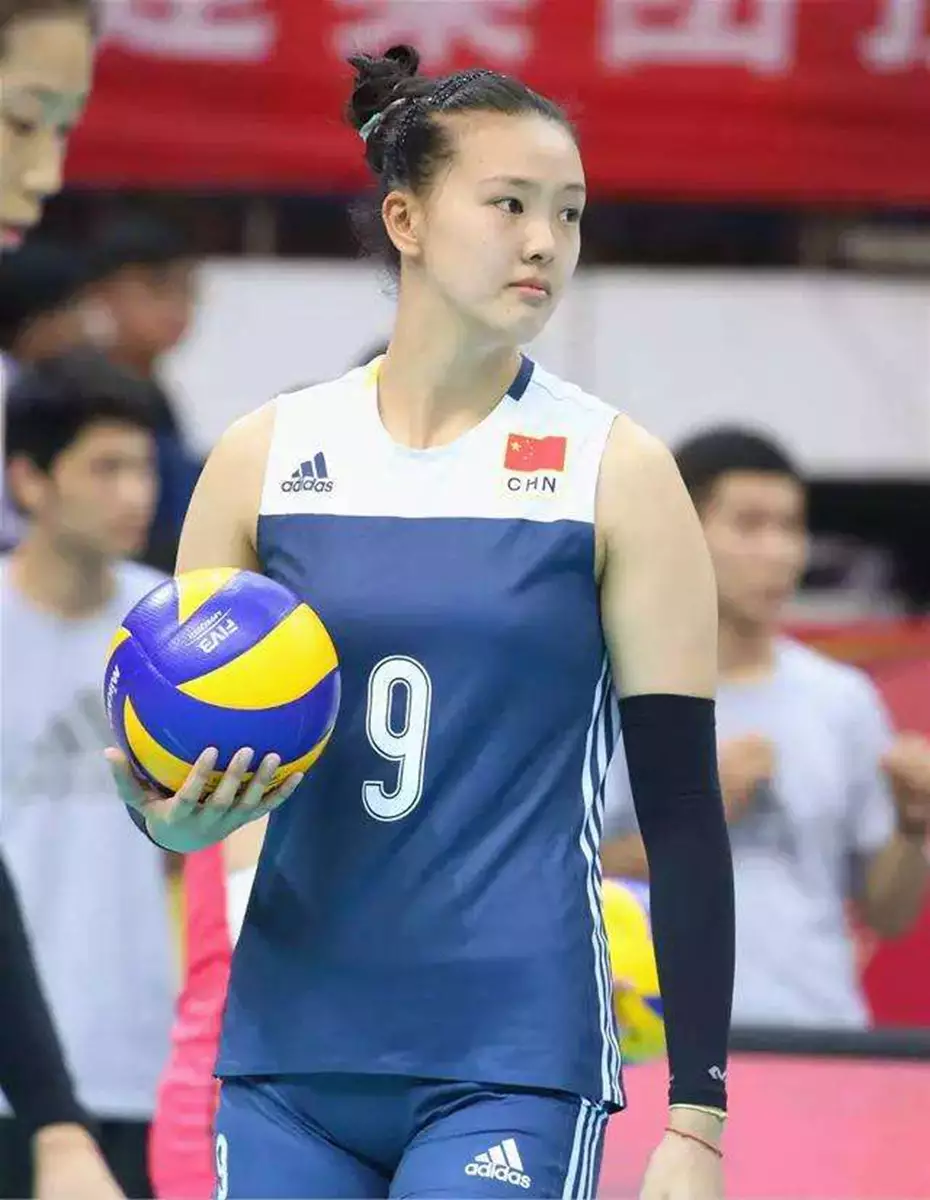
Zhang Changning
Off court, in 2018, Zhang was elected as a deputy of the 13th National People's Congress, China's national legislature. This year, she submitted a proposal on strengthening college sports.
As an elite athlete, Zhang thought it was her responsibility to do something for all athletes.
"I may be on the top of the so-called pyramid, but a lot of athletes at the bottom are often neglected. They face plenty of difficulties. I need to raise public awareness and help them with their efforts," Zhang said.
It was supposed to be a time to celebrate as the top finishers in the NCAA Division III 5,000-meter title race lined up on the eight-tiered podium to receive their trophies.
Instead, when winner Seth Clevenger’s name was announced, the other seven runners stepped off their perches and walked away.
With the NCAA holding its biggest party of the year at this week’s Final Four, the protest over Clevenger’s alleged use of performance enhancers at one of its smaller championships is a telling illustration of what critics see as a glaring weak spot in college sports.
They point to an NCAA anti-doping policy rife with imperfections, all of which undercut the association′s ability to provide a level playing field -- a responsibility that means more than ever with growing name, image and likeness opportunities that raise the stakes for players.
“In the NIL era, failing to have a robust anti-doping program doesn’t just invite doping into college athletics — it undermines fairness, the very heart of the game,” said Travis Tygart, the CEO of the U.S. Anti-Doping Agency.
USADA has no authority over the NCAA, though college athletes who also compete on national and Olympic teams are subject to the world anti-doping protocols.
Video of Clevenger being ghosted on the podium has garnered more than 10 million views on social media, part of a mushrooming protest against the former Iowa State distance runner who moved down to Division III Rowan University earlier this year. More than 750 D-III runners have since signed a letter to school and conference officials demanding a “full and public investigation” into Clevenger.
Last month, Clevenger won NCAA indoor titles at 3,000 and 5,000 meters, setting meet records in both. His wins allowed his new school to eke out the team title by one point.
Clevenger did not respond to multiple requests for comment from The Associated Press. In response to a series of questions about its anti-doping measures, the NCAA said it has a “rigorous drug-testing policy.” Shawn Tucker, the athletic director at Rowan, declined to comment on Clevenger specifically.
″In line with Rowan athletics and NCAA policies, we assure you that all rostered student-athletes competing for Rowan have been both academically and athletically eligible to compete this academic year,” Tucker said.
Clevenger is not known to have tested positive for either of the banned drugs he is alleged to have used: a hard-to-detect and widely available peptide called BP-157 that some believe is key to injury recovery; and erythropoietin (EPO), a well-known red blood cell booster detectable through blood tests, the likes of which the NCAA is not known to administer.
Because Clevenger let his membership to Olympic-affiliated USA Track and Field lapse after 2023, he only needs to follow NCAA rules, which are far less demanding than the system that governs international sports and is helmed by USADA in the United States.
With that agency on the sideline, the NCAA’s handling of cases like Clevenger's has largely stayed under the radar, below ever-rotating headlines about the transfer portal, eligibility lawsuits and, more recently, the new college landscape's impact on a March Madness tournament that was built on underdog stories but has tilted recently more toward deeper-pocketed programs.
Those who track doping issues have taken notice. They see the Clevenger case as something with implications far beyond a single D-III school.
“In this case, there was enough conversation, and you had people walking off the podium,” said researcher Oliver Catlin, president of the Anti-Doping Sciences Institute. “If you ignore something like that, that’s going to send a horrendous message through the rest of the ranks. And people pay attention and it’s going to get repeated.”
The seeds of this saga were planted at Iowa State, where Clevenger spent most of his three years low on the depth chart for the highly rated Cyclones.
Given a chance to race at the Nuttycombe Invitational in Wisconsin last October while Iowa State rested its top runners, Clevenger ran the 8-kilometer championship in 23 minutes, 37.9 seconds. That was 4.5 seconds better than a personal best he had topped by 28 seconds only three weeks earlier.
Eight days after that, Iowa State suspended multiple athletes, including Clevenger, “for breaking team rules.” The school did not specify which rules had been broken but Clevenger did not race for Iowa State again and wound up at Rowan, less than 20 miles from his childhood home of Haddonfield, New Jersey. Cyclones coach Jeremy Sudbery did not respond to requests from AP for an interview.
Since then, Clevenger has admitted to using BP-157, a person close to the case told AP, speaking only on condition of anonymity because that detail has not been made public by the runner or his attorney. The track website letsrun.com published a story last month about the allegations; an Instagram page soon after carried a post that purportedly shows a receipt for an order of EPO placed through Clevenger’s email account.
The AP could not confirm the authenticity of the email, nor of a letter to Iowa State administrators that has also shown up on social media and appears to be from Clevenger’s mother, who insists her son never took EPO.
The email and letter are among evidence that Catlin and other anti-doping experts said could be used to investigate a case under world anti-doping rules. The ability to investigate potential evidence other than blood and urine samples led to the ban of cyclist Lance Armstrong and dozens of other athletes even though they did not test positive for drugs.
The NCAA’s lack of tools to open those sort of investigations is viewed as a big hole in its drug-fighting program.
“An effective anti-doping program can’t just test -- it must also investigate,” Tygart said. “Without both, cheaters game the system and clean athletes may be falsely harmed on just suspicion, not evidence.”
Five years ago, the NCAA got great reviews for putting on a successful post-COVID version of March Madness in Indianapolis – the site of this year’s Final Four – filled with constant testing and a solid list of protocols to handle players who fell ill.
It received virtually no blowback when AP reported that not a single test for performance enhancers had been conducted the entire tournament.
Six years before that, the NCAA’s own medical chief at the time, Brian Hainline, said the association’s drug-fighting program “could be improved considerably." That was in response to AP reporting that revealed the Final Four teams were subject to different drug-testing policies based on their on-campus policies.
College sports still operates under essentially the same system, leaving schools in charge of the bulk of their anti-doping efforts and how to sanction those who get caught.
The NCAA said its program “undergoes regular review by the membership, including two reviews in the past five years.”
“Each academic year, 10,000 NCAA student-athletes are tested without notice in year-round testing or at one of the 92 NCAA championships in 24 sports," the association said. Privacy laws typically prevent schools from making public statements about doping cases and the NCAA doesn't disclose test results.
Year-round, out-of-competition testing is considered the gold standard, and while the NCAA does have a program for that in Divisions I and II,, officials in Division III studied a year-round program but never adopted it. The NCAA drug testing handbook says D-I and D-II athletic departments are, under most circumstances, notified at least two days in advance of a visit from testers.
“Giving notice of testing, even a couple of hours before the collection, is mostly theater — just to say you test," Tygart said.
The lack of a true investigatory arm also denies Clevenger the chance to clear his name if, as his school claims, he has done nothing wrong.
“There’s got to be due process,” Catlin said. “You’ve got to protect the athletes to one degree. And, from the NCAA's perspective, you have to protect your sports environment. And based on this case, it certainly doesn’t sound like that’s happening.”
AP college sports: https://apnews.com/hub/college-sports
A Rowan Athletics sign is displayed, Tuesday, March 31, 2026, on Rowan University campus in Glassboro, N.J. (AP Photo/Dan Gelston)