The China National Archives of Publications and Culture (CNAPC) has significantly expanded its repository with over 15,000 new physical and digital donations, enriching its collection with rare texts and artifacts to preserve and exhibit the depth of Chinese cultural heritage.
On Friday, these donations were added to the CNAPC collection with a ceremony held in the headquarters based in Beijing, encompassing items from public institutions and private collectors nationwide. This batch includes 131 terabytes (TB) of digital versions, along with various historical and cultural artifacts.
Among the array of donations are original ancient texts, premium ancient book publications, engraved copies, and palm leaf manuscripts. Noteworthy items also include documents from the Republic of China (1912-1949) era, financial archives such as the People's Victory Bond, and diverse digital document databases.
These items are showcased in the "Wenhan Juzhen" exhibition at the CNAPC, featuring remarkable pieces like a Western Xia Dynasty (1032-1227) movable type print. This print, one of the oldest known Chinese movable type prints, offers crucial evidence regarding the invention and dissemination of movable type printing in China.
Also on display are over 1,000 pages of letters from prominent late Qing Dynasty (1644-1911) figures. These include correspondence from military and administrative officials such as Li Hongzhang (1823-1901) and Zeng Guoquan (1824- 1890), as well as Ding Baozhen (1820-1886), who served as the governor of Sichuan Province, shedding light on the period's political and social nuances.
The letters are invaluable for understanding the dynamics of the late Qing period, including the extended French occupation of Vietnam and the potential threats to Yunnan via the Lancang River. They also reveal how Li Hongzhang urged Ding Baozhen to allocate funds from Sichuan's salt sales for emergency needs.
Additionally, the exhibition includes items that reflect daily life and societal evolution, such as a bamboo-woven representation of the "Riverside Scene at Qingming Festival" that reflects natural and cultural landscape of the Song Dynasty (960-1127), and the "People's Victory Bond," which marked the first sovereign bond issued in China after 1949.
"These are extremely precious. They mirror the entire developmental trajectory of Chinese securities through various periods," said Liu Mingwei, chairman of the China Collectors Association.
"Contributions from private and individual collections have been donated to the state, becoming part of the public cultural heritage," Liu said.
The CNAPC, structured as "one headquarters, three branches" with sub-venues in the cities of Xi'an, Hanghzou and Guangzhou, serves as a cultural "seed bank," utilizing modern technology to preserve a vast array of Chinese civilization artifacts.
Since June 2023, the CNAPC has collected about 4.5 million volumes and items, including 130,000 donated by public and private collectors, and 180,000 digital versions or issues totaling 30.5TB. Additionally, 186TB of digital resources have been received from various public institutions.
The CNAPC is actively collaborating with local libraries, museums, and universities to digitize ancient books, having completed approximately 95.8TB of digitalization. Currently, it houses over 32 million volumes and items and approximately 880TB of digital resources.
"We have continued to advance the construction of the CNAPC's data center and optimized our Chinese collections exhibition system. Through the archives, we offer a comprehensive display of China's exceptional traditional, revolutionary, and advanced socialist cultures," said Liu Chengyong, director of CNAPC.
"Our 'one headquarters, three branches' structure has welcomed over 7,600 organizations and 610,000 individuals," he said.
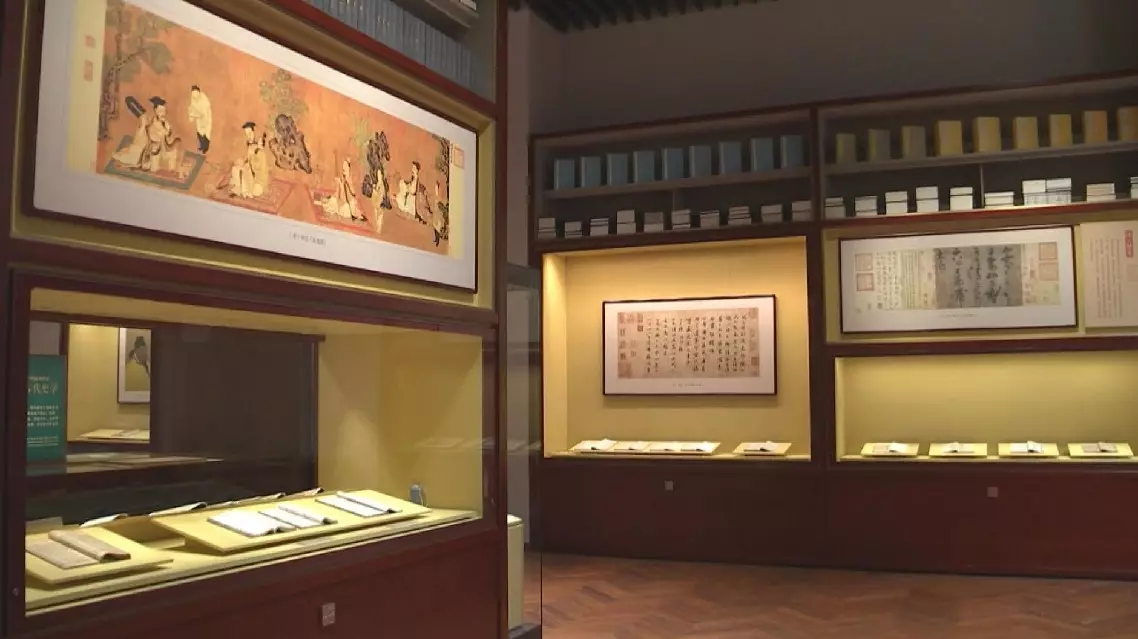
China National Archives expands with new donations, advanced digital resources