NEW YORK (AP) — It was half of the Stonewall Inn, the gay dive bar where a 1969 police raid became a landmark moment for the LGBTQ+ rights movement.
Yet for much of the 55 years since, there has been little outward indication that 51 Christopher St. was part of that history.
Click to Gallery
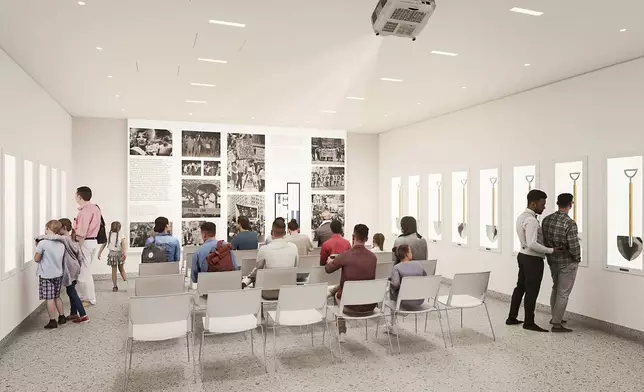
This rendering shows the proposed interior of the Stonewall National Monument Visitors Center in New York. The visitor center aims to tell the Stonewall story in more depth than the monument itself, which centers on a tiny park that features historical photographs but limited interpretive information. Overseen by the National Park Service and the LGBTQ+ advocacy group Pride Live, the $3.2 million visitor center was financed chiefly with private donations. (Courtesy of EDG Architecture and Engineering)
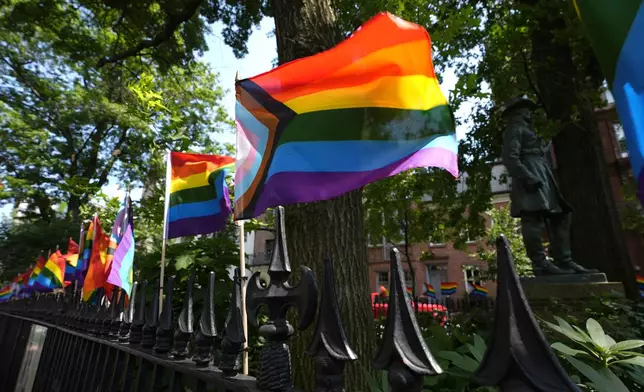
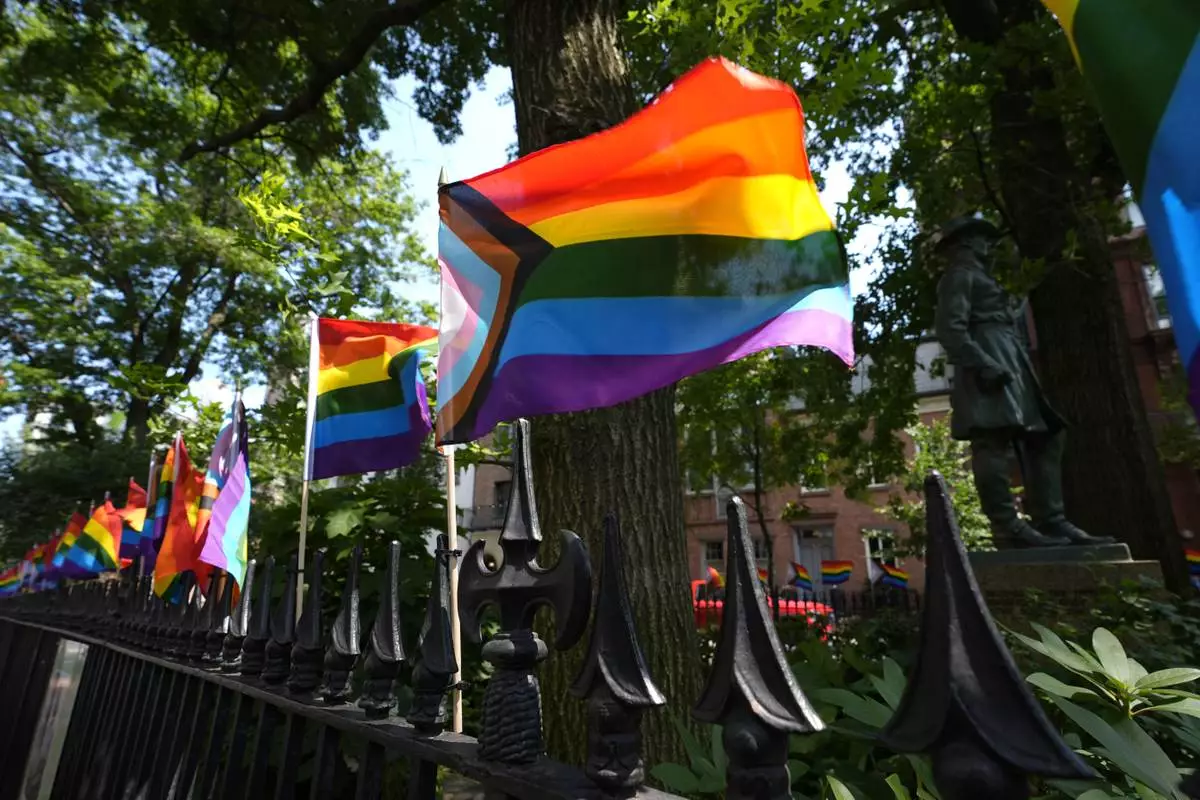
Pride flags flutter in the wind at the Stonewall National Monument, Monday, June 17, 2024, in New York. (AP Photo/Pamela Smith)
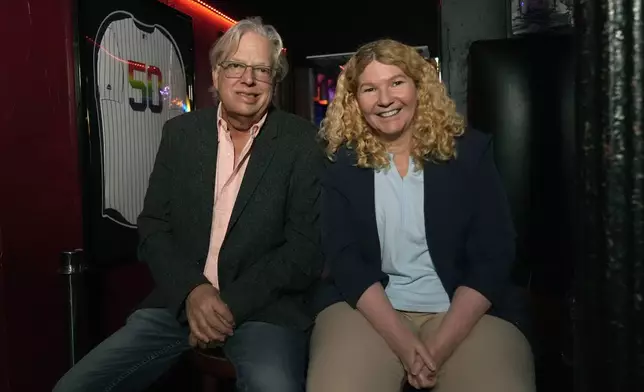
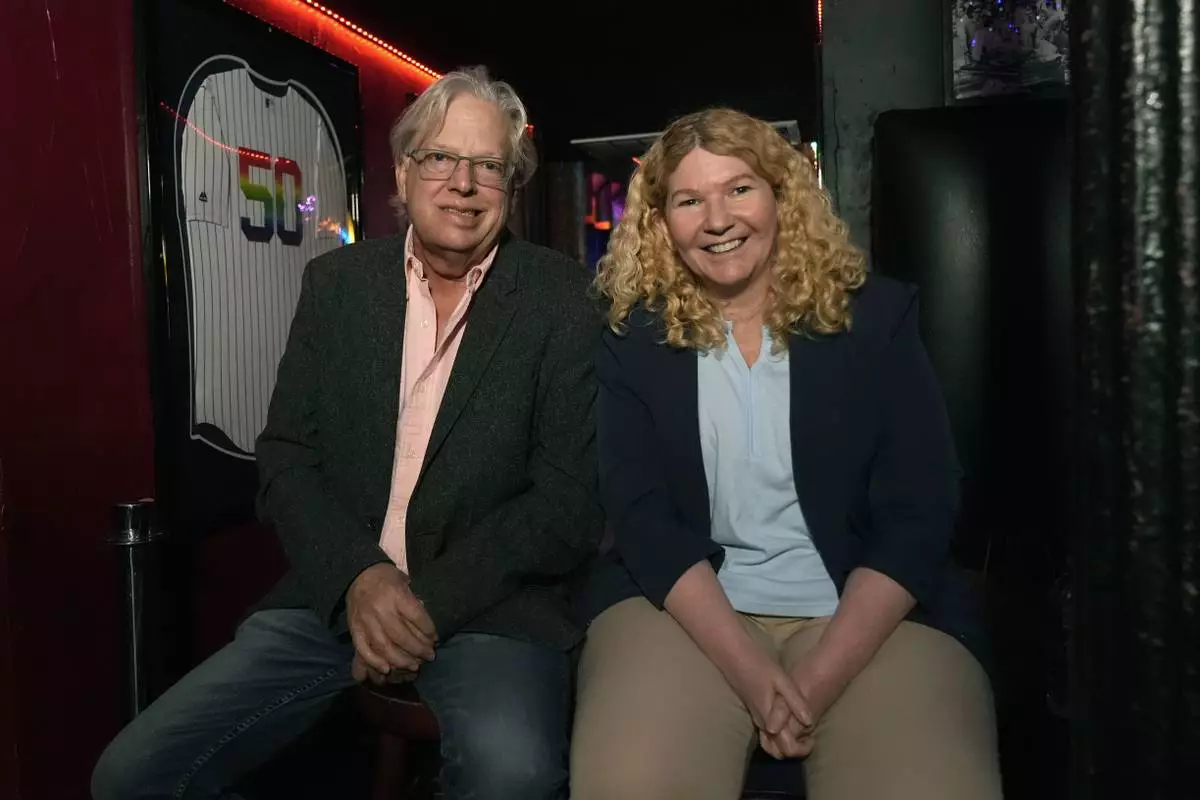
Stonewall Inn co-owners Kurt Kelly, left, and Stacy Lentz pose for a portrait inside the Stonewall Inn, Monday, June 17, 2024, in New York. The space next door to the bar will open as the new visitor center for the Stonewall National Monument on Friday, June 28, the anniversary of the 1969 rebellion that helped reshape LGBTQ+ life in the United States.The pair see the visitor center as a fitting neighbor and hope it will draw more people to the site and the bar. (AP Photo/Pamela Smith)
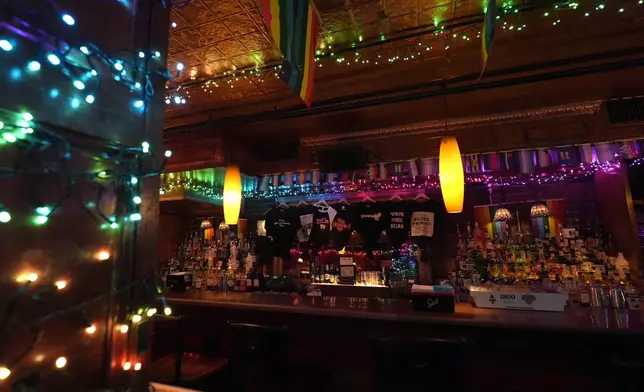
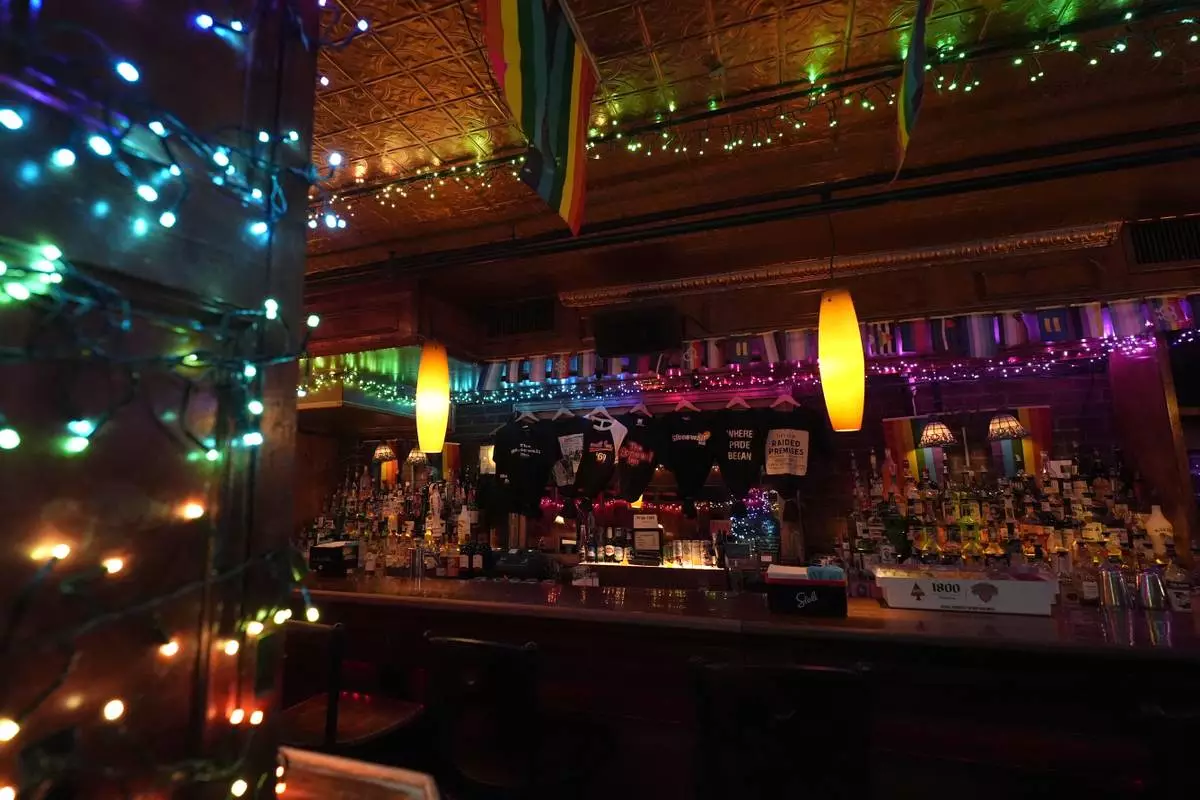
Festive lights and flags adorn the bar inside the Stonewall Inn, Monday, June 17, 2024, in New York. The space next door to the bar will open as the new visitor center for the Stonewall National Monument on the anniversary of the 1969 rebellion that helped reshape LGBTQ+ life in the United States. (AP Photo/Pamela Smith)

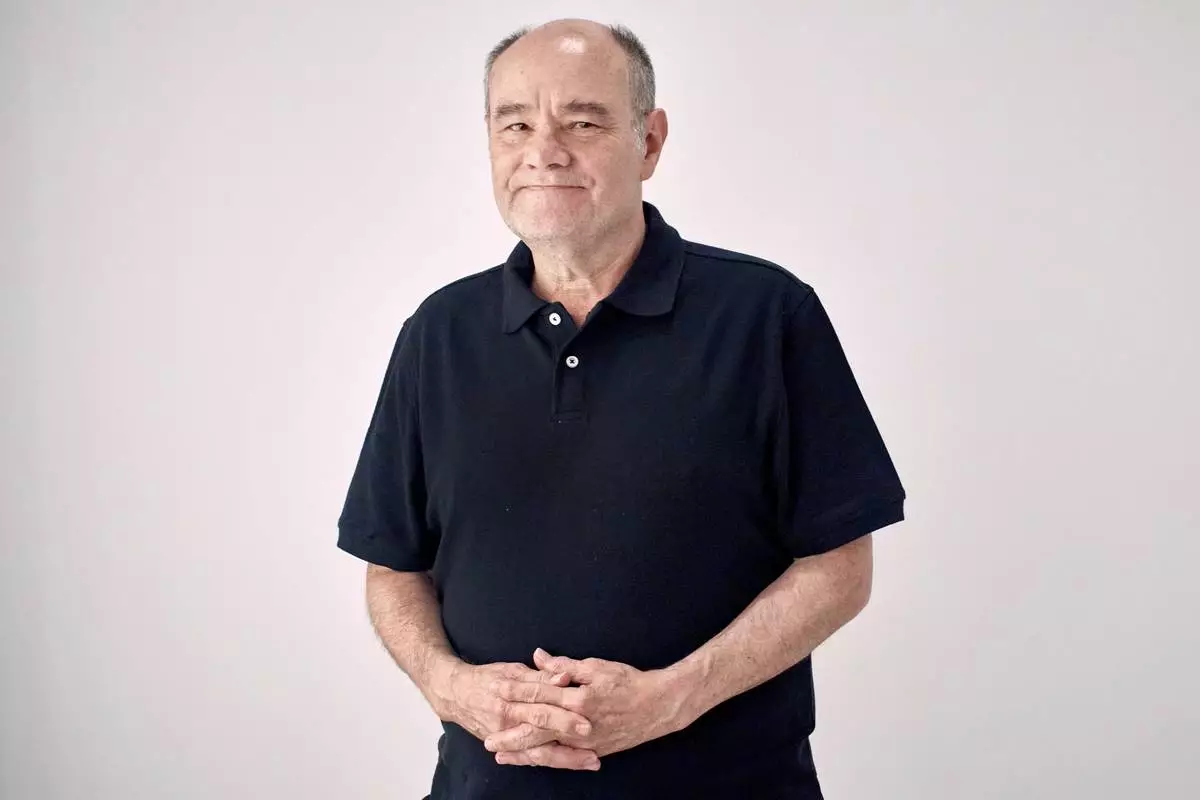
Social activist Mark Segal poses for a photograph inside the Stonewall National Monument Visitor Center, Friday, June 21, 2024, in New York. Segal, who was arrested during the 1969 Stonewall riot, was 18 years old and had just moved to New York's Greenwich Village neighborhood in 1969 from Philadelphia, where he found the LGBTQ+ community for which he'd longed. (AP Photo/Andres Kudacki)
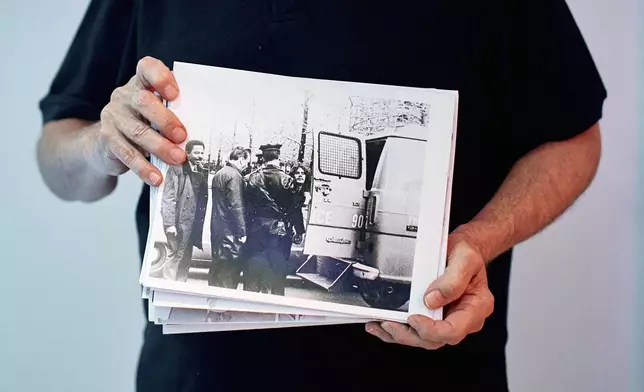
During an interview inside the Stonewall National Monument Visitor Center, Friday, June 21, 2024, in New York, social activist Mark Segal poses for a photograph while holding a picture that shows his arrest during the 1969 Stonewall Inn riot. The Stonewall National Monument's visitor center opens on Friday, June 28, the anniversary of the 1969 rebellion that helped reshape LGBTQ+ life in the United States in the ensuing decades. (AP Photo/ Andres Kudacki)
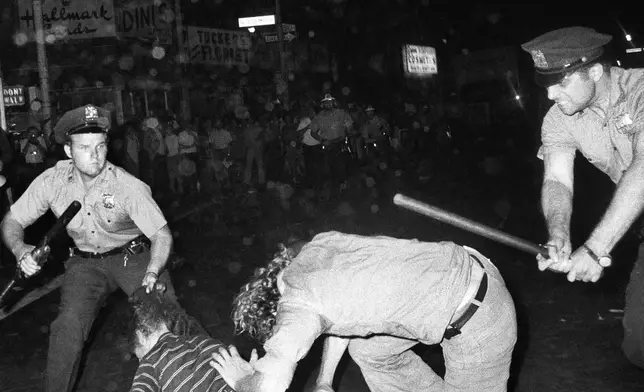
FILE - An NYPD officer grabs a youth by the hair as another officer clubs a young man during a confrontation in Greenwich Village after a Gay Power march, Aug. 31, 1970, in New York. A year earlier, the June 1969 uprising by young gays, lesbians and transgender people in New York City, clashing with police near a bar called the Stonewall Inn, was a vital catalyst in expanding LGBTQ+ activism nationwide and abroad. (AP Photo/File)
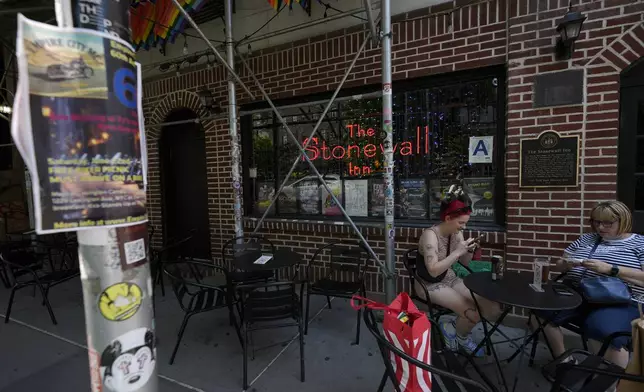
People sit outside the Stonewall Inn, Monday, June 17, 2024, in New York. The community is reclaiming the building and its place in history as it opens it as the Stonewall National Monument's visitor center on Friday, June 28, the anniversary of the 1969 rebellion that helped reshape LGBTQ+ life in the United States in the ensuing decade. (AP Photo/Pamela Smith)
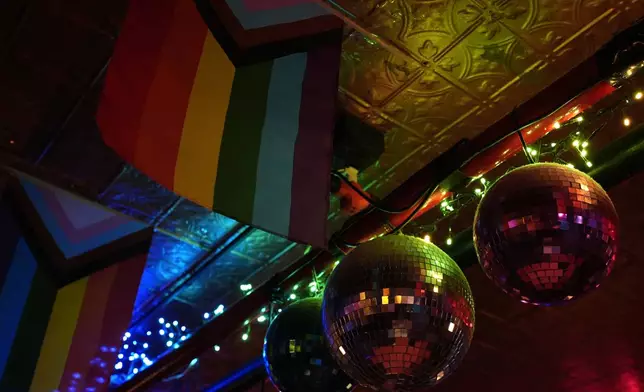
Decorations hang from the ceiling inside the Stonewall Inn, Monday, June 17, 2024 in New York. In 1969 Stonewall had the biggest bar and one of the two dance floors that drew its young, diverse crowd. But after a raid sparked an uprising and the Stonewall shut down, 51 Christopher St. became a bagel shop, a gay bar briefly again, a clothing store, a nail salon, then a vacant space. Its big “STONEWALL INN” sign came down in 1989, a few years before a new version of the tavern opened. (AP Photo/Pamela Smith)
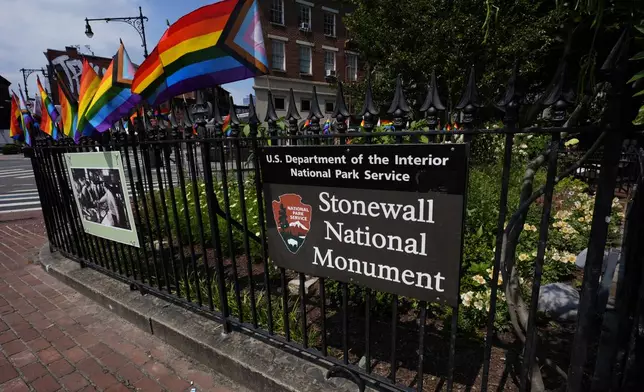
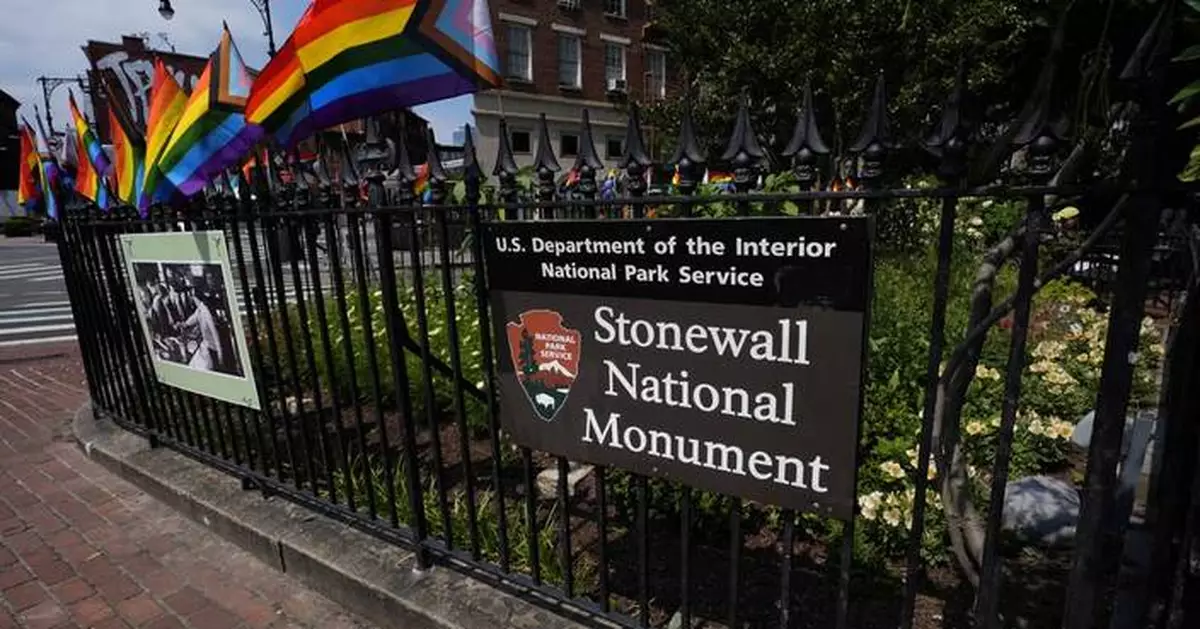
A National Park Service sign marks the Stonewall National Monument outside the Stonewall Inn, Monday, June 17, 2024, in New York. The building will open as the new visitor center for the Stonewall National Monument on Friday, June 28, the anniversary of the 1969 rebellion that helped reshape LGBTQ+ life in the United States. (AP Photo/Pamela Smith)
It had housed the Stonewall's biggest bar and one of the two dance floors that drew its young, diverse crowd. But after raid sparked an uprising and the Stonewall shut down, 51 Christopher St. became a bagel shop, a gay bar briefly again, a clothing store, a nail salon, then vacant space. Its big “STONEWALL INN” sign came down in 1989, a few years before a new version of the tavern opened next door.
Now the community is reclaiming the building and its place in history. It opens as the Stonewall National Monument 's visitor center on Friday, the anniversary of the 1969 rebellion that helped reshape LGBTQ+ life in the United States in the ensuing decades.
“Today, if you look around the world, there are millions of people who are celebrating Pride. And it all started in this building,” visitor center senior adviser Mark Segal said recently while showing it to guests.
The gay activist and publisher stood in front of a discovery made during construction: a bricked-up doorway that once connected the two sections of the original Stonewall Inn.
The very doorway Segal himself had walked through early on the morning of June 28, 1969, as an 18-year-old who'd just moved to New York's Greenwich Village neighborhood from Philadelphia and found the LGBTQ+ community for which he'd longed.
What happened in the ensuing hours would anger him, and many others — and also give them a new sense of purpose.
“It told me we had to be out, loud and proud,” he recalled.
The visitor center aims to tell the Stonewall story in more depth than the monument itself, which centers on a tiny park that features historical photographs but limited interpretive information. Overseen by the National Park Service and the LGBTQ+ advocacy group Pride Live, the $3.2 million visitor center was financed chiefly with private donations, except for $450,000 from the park service’s charitable arm, which gets private and federal money.
“When people think of the National Park Service, they don’t usually think ‘queer and urban,’” said visitor center co-founder Diana Rodriguez. “So we’re a very different type of visitor center.”
Where other such facilities might have plaques about wildlife and geology, this one has photographs of protests and a line on the floor marking where the timeworn bar once stood. A 1967 jukebox, the same model that was playing on the night of the Stonewall Rebellion, is loaded with songs from the era and beyond.
Spanning two former horse stables at 51 and 53 Christopher St., the Stonewall Inn was a speakeasy-like establishment with blacked-out windows, steel doors, a doorman who screened patrons, no liquor license and notoriously overpriced drinks.
At the time, LGBTQ+ social life in New York City was an open secret, but a risky and repressed one nonetheless. From the 1950s until 1973, the U.S. psychiatric establishment classified homosexuality as a mental illness. Law enforcement in New York and elsewhere often viewed expressions of LGBTQ+ identity — from dancing or displaying affection with a same-sex partner to wearing gender-fluid attire — as illegal.
Police often raided gay bars. Patrons usually left quietly, rather than risk an arrest that could expose their sexual orientation and cost them jobs and family relationships.
But when officers showed up at the Stonewall that day, patrons and their friends suddenly and spontaneously decided they had enough.
“If the police can do this to us, anybody can do this to us," Segal remembers thinking as he stood by the dance floor at 51 Christopher St. — his preferred side of the Stonewall — and watched what he recalls as officers harshly handling customers. News and other accounts describe police checking or threatening to check the sex of some people based on their clothing, and arresting some (the police department apologized in 2019 for its actions).
Some patrons resisted arrest as they were taken out to police vehicles. Officers responded roughly. A growing crowd began throwing coins, bottles and more at the police.
The officers then retreated and barricaded themselves inside the bar. Some in the throng outside tried to break in. Riot police showed up to clear the demonstrators away, but they kept regrouping and returning until about 4:30 a.m.
Protests and clashes with police continued the next several nights.
LGBTQ+ Americans had sometimes demonstrated and even fought with police before. But at the end of a decade of civil rights, women’s liberation and anti-Vietnam War protests, the Stonewall rebellion touched off a broader and more confrontational phase of LGBTQ+ rights activism.
Many new groups formed and pushed for anti-discrimination laws, held demonstrations and social events in the open and otherwise demanded rights and recognition.
What became annual Pride marches began on the first Stonewall anniversary. The site of the rebellion, including both parts of the original Stonewall Inn, became a National Historic Landmark in 2000 — and, in 2016, the first U.S. national monument dedicated to LGBTQ+ history.
Meanwhile, the current Stonewall Inn has served as something of an unofficial welcome and education site for the monument.
“I'm here for the history,” co-owner Kurt Kelly explained in a recent interview in the still-denlike bar, bedecked with photos and documents. The original Stonewall Inn closed soon after the uprising, but the 53 Christopher St. portion reopened as a gay bar in the 1990s. Kelly and co-owner Stacy Lentz acquired it in 2006.
They see the visitor center as a fitting neighbor and hope it will draw more people to the site and the bar. Recent years have been rough, they said, because of pandemic shutdowns, inflation, rising insurance costs and other challenges.
“It's really hard to keep this place open,” said Lentz, but she feels a responsibility that goes beyond the bar business. She also works as CEO of the Stonewall Inn Gives Back Initiative, a charity that she and Kelly launched in 2017.
“The fight that started here on Christopher Street in 1969, it’s not done,” Lentz said.
For Segal, that fight would lead him to a lifetime of advocacy, including founding a gay youth group, disrupting 1970s TV news and talk shows to press for coverage of LGBTQ+ rights issues, lobbying officials, establishing the Philadelphia Gay News and developing affordable housing for LGBTQ+ seniors.
And one day last year, it led him back inside 51 Christopher St., with the Fifth Dimension's 1969 "Aquarius/Let the Sunshine In” queued up on his cellphone.
“I went to the back of the bar, played that, and I danced in Stonewall for the first time in 50-some years,” he said. “And it brought back memories, and it brought back tears.”
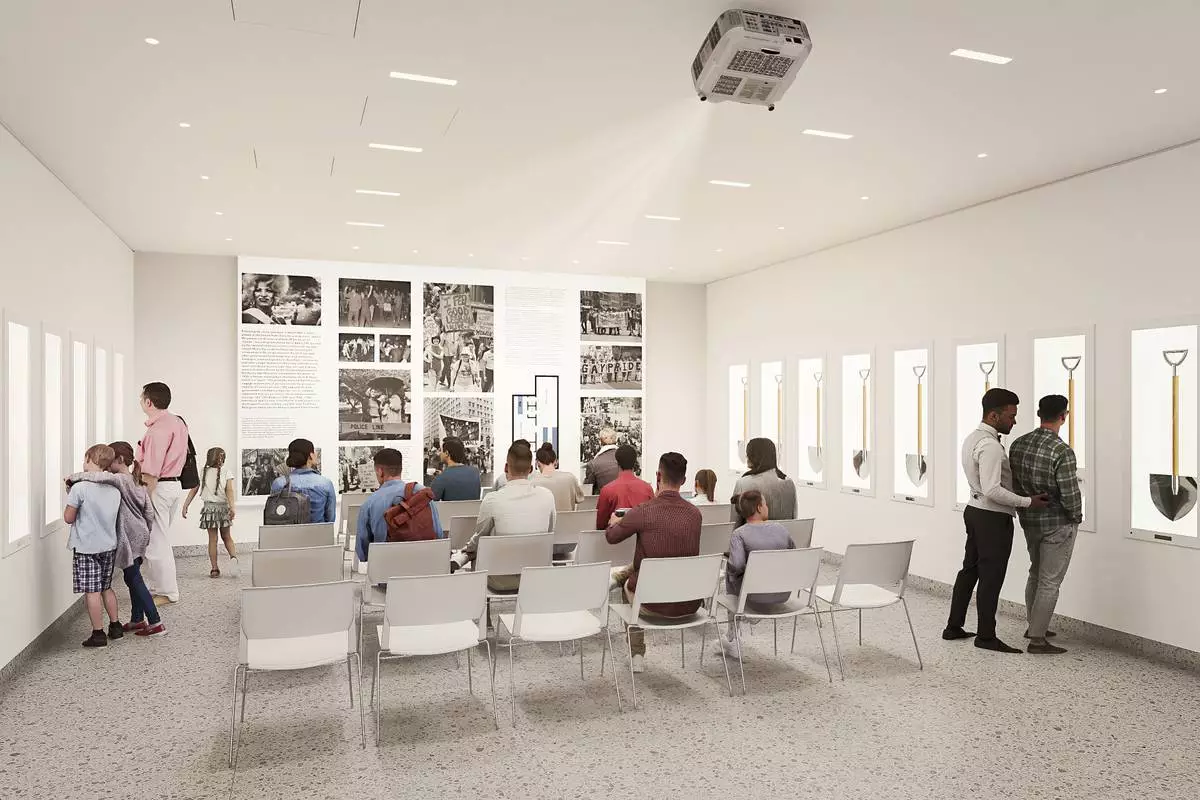
This rendering shows the proposed interior of the Stonewall National Monument Visitors Center in New York. The visitor center aims to tell the Stonewall story in more depth than the monument itself, which centers on a tiny park that features historical photographs but limited interpretive information. Overseen by the National Park Service and the LGBTQ+ advocacy group Pride Live, the $3.2 million visitor center was financed chiefly with private donations. (Courtesy of EDG Architecture and Engineering)
Pride flags flutter in the wind at the Stonewall National Monument, Monday, June 17, 2024, in New York. (AP Photo/Pamela Smith)
Stonewall Inn co-owners Kurt Kelly, left, and Stacy Lentz pose for a portrait inside the Stonewall Inn, Monday, June 17, 2024, in New York. The space next door to the bar will open as the new visitor center for the Stonewall National Monument on Friday, June 28, the anniversary of the 1969 rebellion that helped reshape LGBTQ+ life in the United States.The pair see the visitor center as a fitting neighbor and hope it will draw more people to the site and the bar. (AP Photo/Pamela Smith)
Festive lights and flags adorn the bar inside the Stonewall Inn, Monday, June 17, 2024, in New York. The space next door to the bar will open as the new visitor center for the Stonewall National Monument on the anniversary of the 1969 rebellion that helped reshape LGBTQ+ life in the United States. (AP Photo/Pamela Smith)
Social activist Mark Segal poses for a photograph inside the Stonewall National Monument Visitor Center, Friday, June 21, 2024, in New York. Segal, who was arrested during the 1969 Stonewall riot, was 18 years old and had just moved to New York's Greenwich Village neighborhood in 1969 from Philadelphia, where he found the LGBTQ+ community for which he'd longed. (AP Photo/Andres Kudacki)
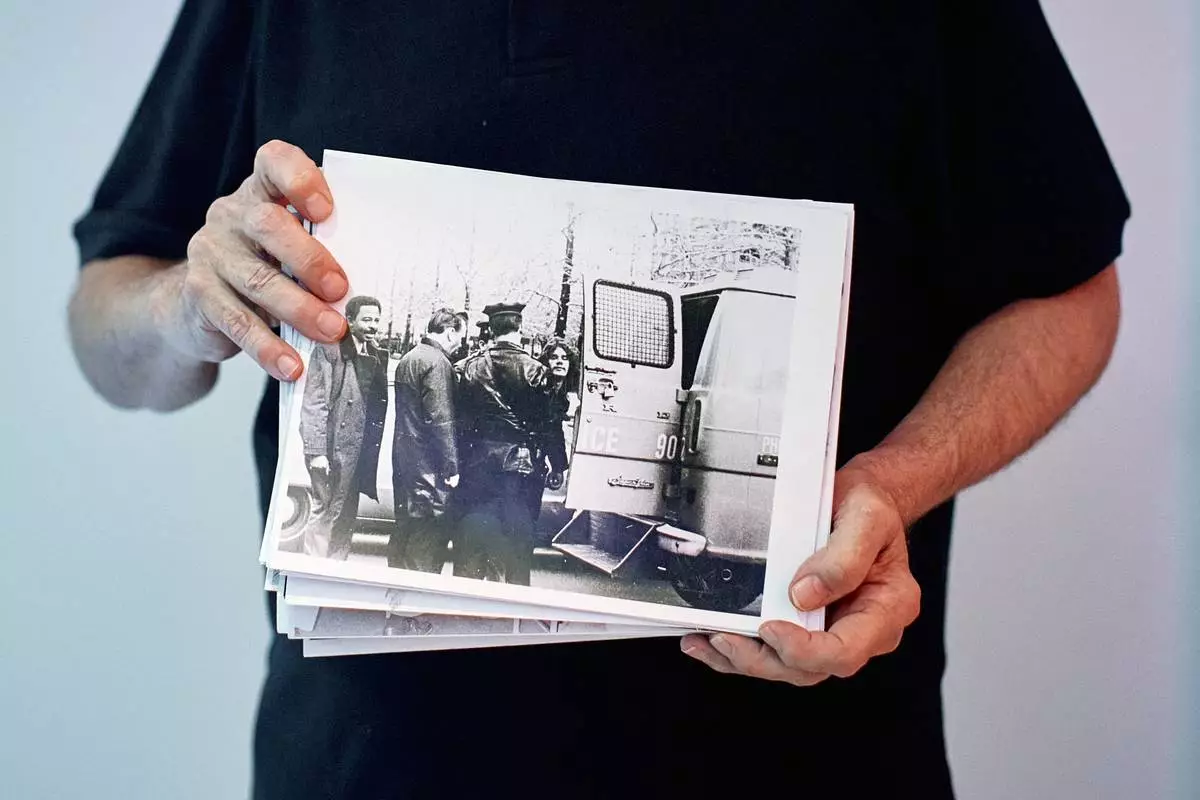
During an interview inside the Stonewall National Monument Visitor Center, Friday, June 21, 2024, in New York, social activist Mark Segal poses for a photograph while holding a picture that shows his arrest during the 1969 Stonewall Inn riot. The Stonewall National Monument's visitor center opens on Friday, June 28, the anniversary of the 1969 rebellion that helped reshape LGBTQ+ life in the United States in the ensuing decades. (AP Photo/ Andres Kudacki)
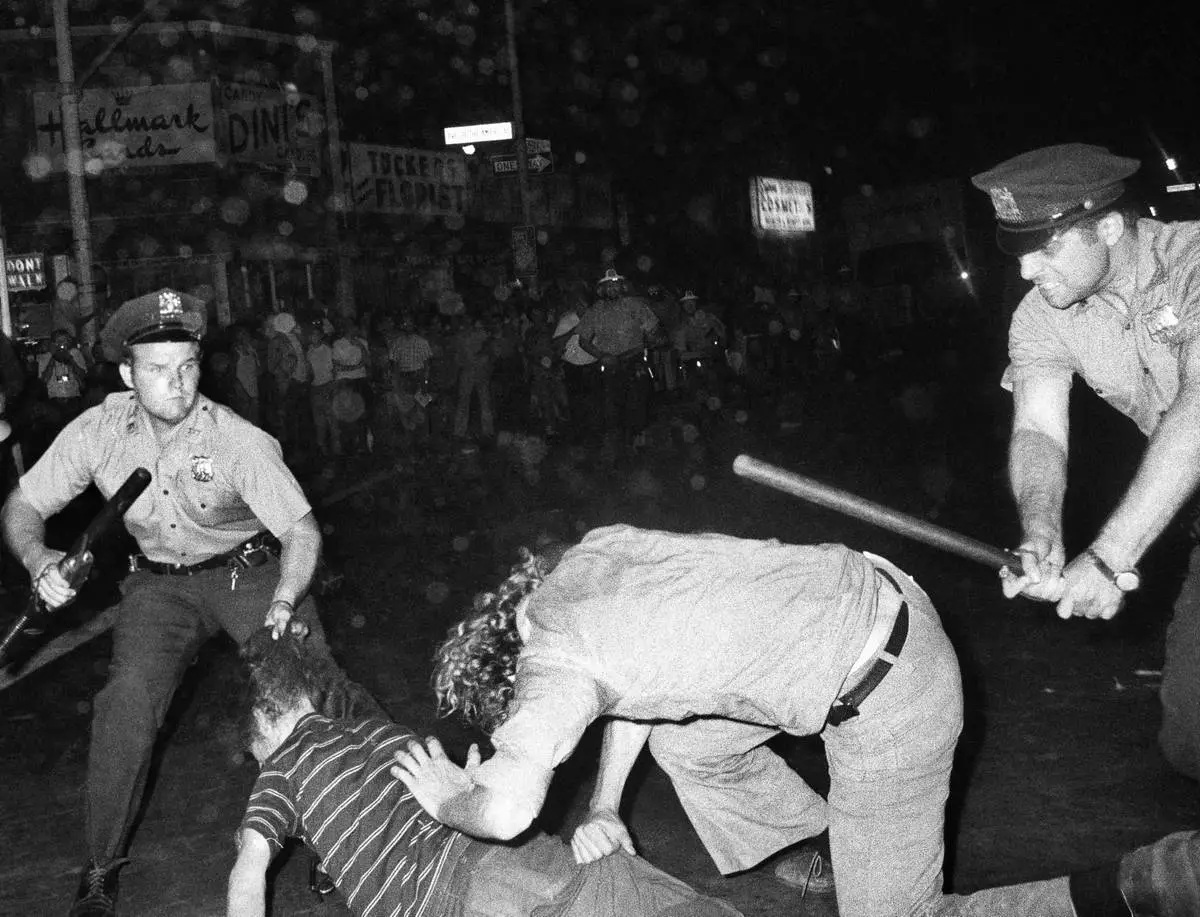
FILE - An NYPD officer grabs a youth by the hair as another officer clubs a young man during a confrontation in Greenwich Village after a Gay Power march, Aug. 31, 1970, in New York. A year earlier, the June 1969 uprising by young gays, lesbians and transgender people in New York City, clashing with police near a bar called the Stonewall Inn, was a vital catalyst in expanding LGBTQ+ activism nationwide and abroad. (AP Photo/File)
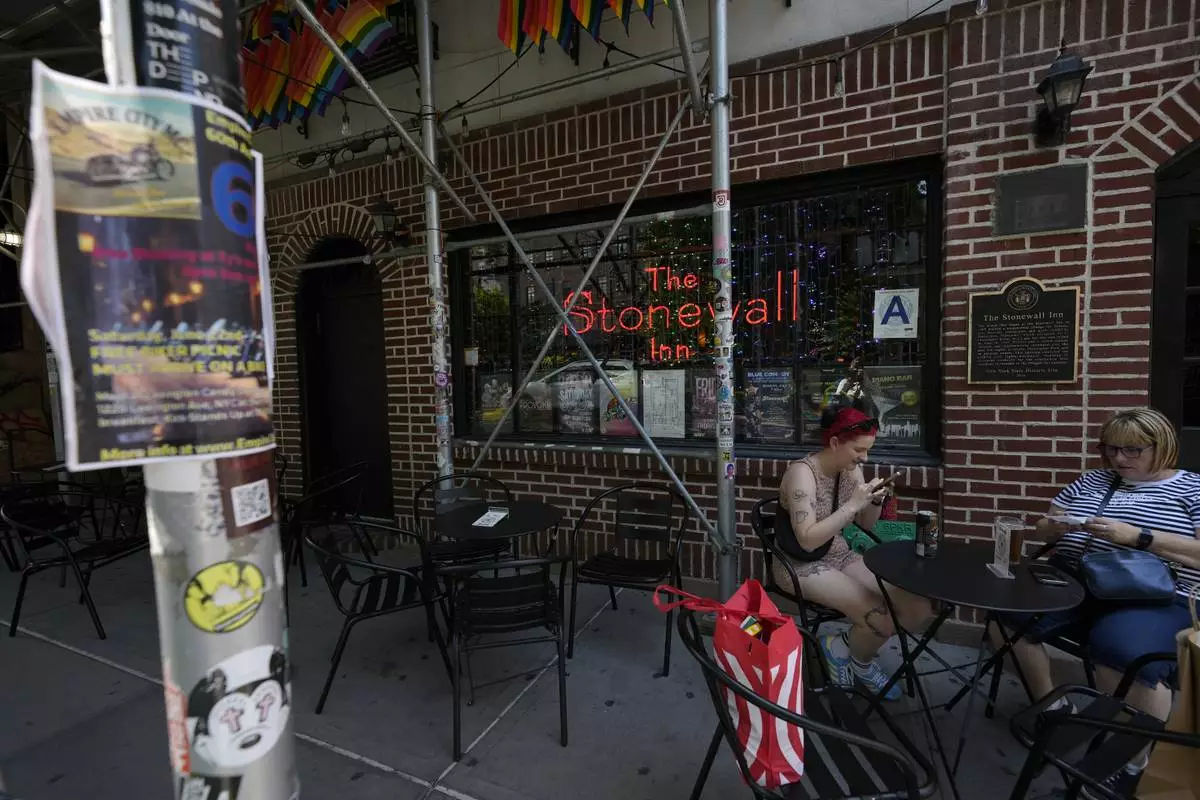
People sit outside the Stonewall Inn, Monday, June 17, 2024, in New York. The community is reclaiming the building and its place in history as it opens it as the Stonewall National Monument's visitor center on Friday, June 28, the anniversary of the 1969 rebellion that helped reshape LGBTQ+ life in the United States in the ensuing decade. (AP Photo/Pamela Smith)
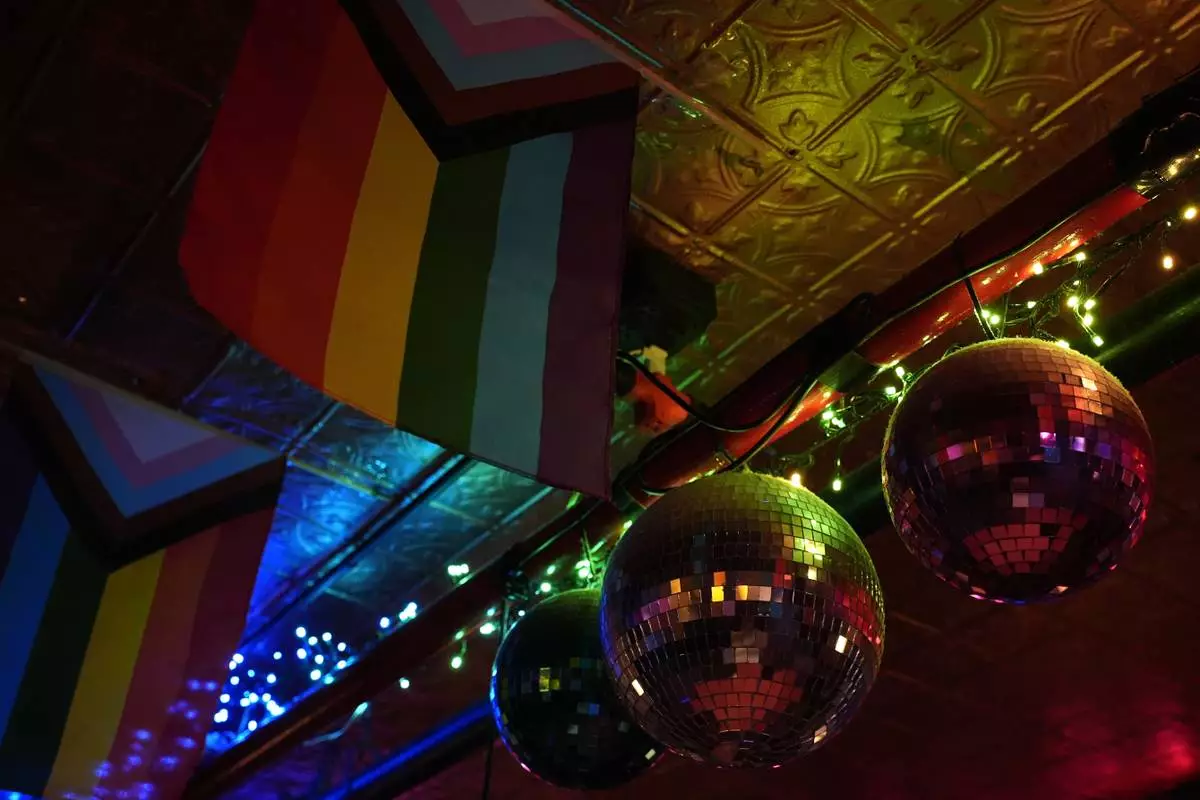
Decorations hang from the ceiling inside the Stonewall Inn, Monday, June 17, 2024 in New York. In 1969 Stonewall had the biggest bar and one of the two dance floors that drew its young, diverse crowd. But after a raid sparked an uprising and the Stonewall shut down, 51 Christopher St. became a bagel shop, a gay bar briefly again, a clothing store, a nail salon, then a vacant space. Its big “STONEWALL INN” sign came down in 1989, a few years before a new version of the tavern opened. (AP Photo/Pamela Smith)
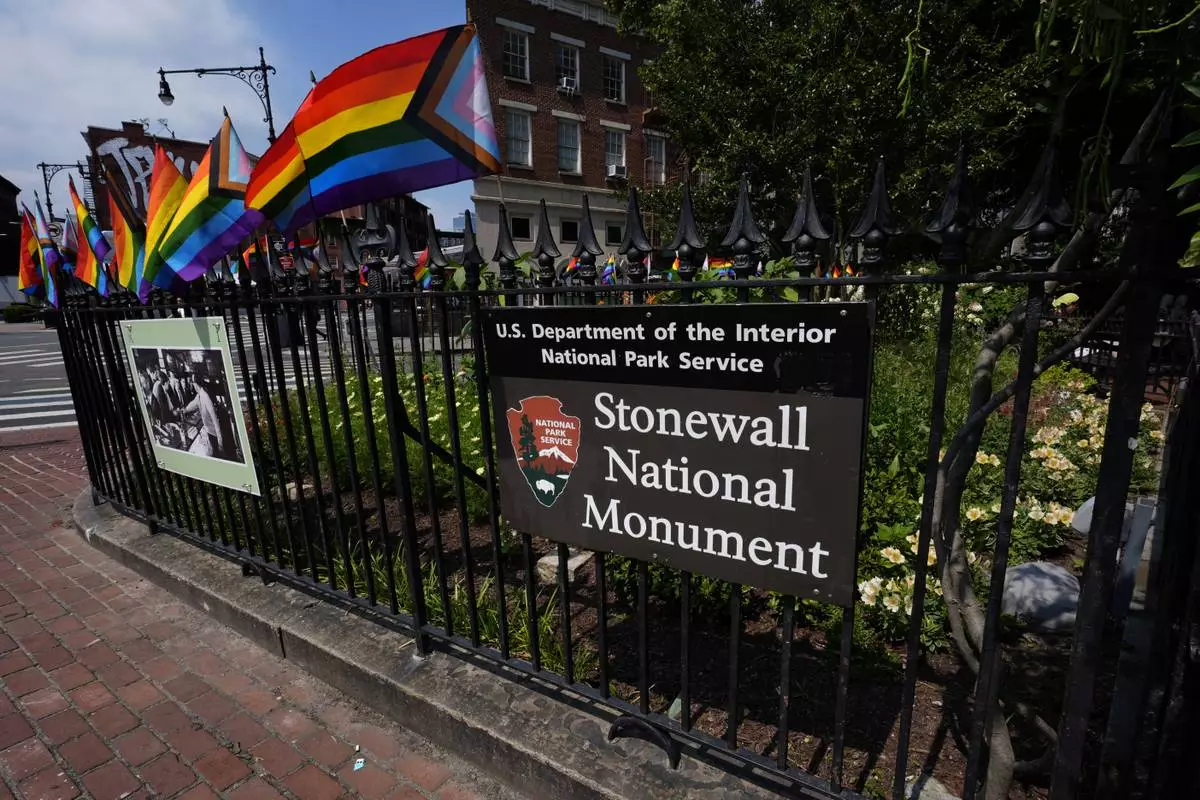
A National Park Service sign marks the Stonewall National Monument outside the Stonewall Inn, Monday, June 17, 2024, in New York. The building will open as the new visitor center for the Stonewall National Monument on Friday, June 28, the anniversary of the 1969 rebellion that helped reshape LGBTQ+ life in the United States. (AP Photo/Pamela Smith)