The development of driverless taxis in China is speeding ahead with autonomous vehicles now undergoing road trials in 20 cities across the country as the Chinese government proactively promotes its intelligent transportation plan.
A fleet of nearly 500 "Apollo Go" driverless taxis are already on the go in a test area in the central city of Wuhan, with the expansive trial and test area taking place on roads covering half of the city's main population centers.
Chinese tech giant Baidu, who has developed the vehicles, says it is aiming to double the number by putting 1,000 fully self-driving taxis on the city's roads by the end of the year.
During the trial operations, the robot taxi is tasked with smoothly handling complex urban challenges, such as making a U-turn on a ramp and safely maneuvering around obstacles like bicyclists and hesitant drivers.
Wuhan residents who have seen the cars in action say they have no doubts about the safety of the driverless taxi service.
"You'll often see Baidu robot taxis pulling up right here. People say they're pretty safe, and I guess it's because they're loaded with cameras all around, [so] they're usually better at avoiding bumps and scrapes than cars driven by people," a local resident told the China Global Television Network(CGTN).
Wuhan is one of 20 Chinese cities pioneering self-driving technology as part of a government initiative to promote "vehicle-road-cloud integration," with the goal of introducing smart, connected vehicles on the road by 2026.
Zhao Xia, an economic researcher, said that considerable financial support is needed to push forward the development of this ambitious transport integration plan.
"The initial investment for vehicle-road collaboration is significant, with costs for intelligent upgrades exceeding 2 million yuan, or [around] 280,000 U.S. dollars per kilometer," she said.
China has in recent times stressed the pursuit of high-quality development and innovation. The just-concluded third plenary session, a major political gathering held in Beijing earlier this month, emphasized the importance of planning and guiding the rapid development of emerging and future industries, which include autonomous driving.
"We must follow the directives of the third plenary session to develop new quality productive forces locally, expand emerging industries, and plan for future industries," said Han Wenxiu, executive deputy director of the Office of the Central Committee for Financial and Economic Affairs, at a press conference following the conclusion of the plenum.
Local governments across major Chinese cities are also establishing regulatory frameworks to advance the industry, with authorities in Beijing, for example, soliciting public opinion on regulations for autonomous buses, taxis, and car rentals.
Along with these measures, studies have suggested that this area also has significant revenue potential, as increased investment continues to pour in. Consulting firm McKinsey predicts that the sector could generate between 300 to 400 billion U.S. dollars in revenue by 2035, in part helped by China's support for rolling out more pilot programs.
[SOUNDBITE] Karin Kong, head of global technology research team, TianFeng Securities "The Chinese [capital] market is really excited about the potential value of robo-taxis. Self-driving cars could make profits with good [new] models this year," said Karin Kong, head of the global technology research team for TianFeng Securities, a Wuhan-based financial firm.
At least 19 Chinese automakers and their suppliers are vying for global leadership in the fast-evolving field. However, analysts like Zhao say there is still a long way to go to improve the business model for the autonomous driving sector. "Now, it's mainly market-driven, but the key to future development will be how to use fiscal funds to guide and demonstrate [the industry's potential]," she said.
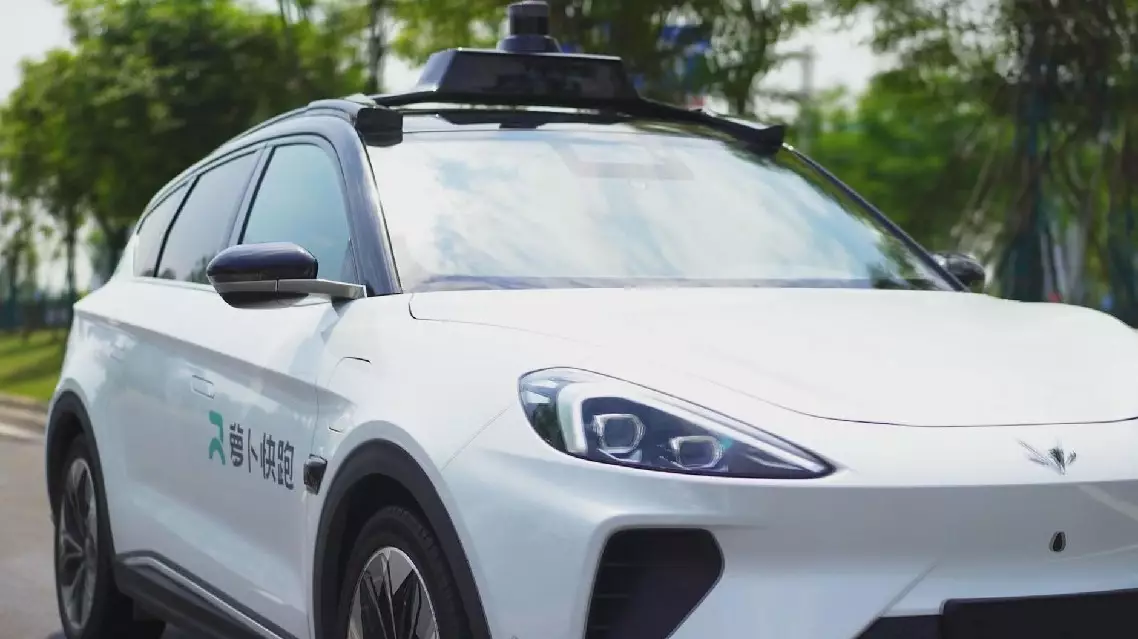
Driverless taxis hit roads as trial runs underway in 20 Chinese cities