Local fruit producers and logistics enterprises in east China's Zhejiang Province have worked to upgrade the industrial and logistics chain to facilitate the export of Chinese bayberries to reach more markets across the globe.
Earlier in June, an advertisement for Xianju bayberry from Taizhou City of Zhejiang was shown on the big screen in New York's Times Square for the first time ever.
Juicy, sour and sweet, the Chinese bayberry is a famously mouthwatering fruit and at the meantime is of significant economic value.
The months of June and July are the peak harvest season for Chinese bayberries south of the Yangtze River in China. In the past, the fruit has rather short shelf life and could be hard to transport. But late as in early August this year, fresh bayberries are still available in the major production base in Taizhou.
"These bayberries are from early July and have been stored for a month. The ones over there were picked a month and a half or a little over a month ago," said Ying Jiaoming, managing director of a local bayberry distributor.
It might be hard to imagine that bayberries can stay fresh after such a long time, all thanks to a new technology developed earlier this year.
After many attempts, local agricultural technicians have worked out a way that without adding any preservatives and additives, it is possible to keep bayberry fresh for two months by lowering the indoor temperature, reducing the respiration intensity of bayberry, and inhibiting the reproduction of harmful microorganisms.
"What we apply here is the cooling technology that the bayberries do not freeze under zero degrees Celsius. Its advantage is that the fruit does not get mold or worms or turn white. It can be applied not only to bayberry, but also to other fruits, fresh vegetables, and even some fresh meat and seafood," Ying said.
With the new cooling technology, it is now possible to keep bayberries fresh for significantly longer periods.
Meanwhile, the cold-chain logistics enterprises have also developed a standardized process allowing long-haul journey of these fragile fruits by applying methods such as microporous atmosphere preservation, vacuum packaging and nitrogen packaging.
Data from the Zhejiang Provincial Department of Agriculture and Rural Affairs show that this year the total output of bayberry from Zhejiang has reached 700,000 tonnes, and the growing area and output value both account for more than half of the country's total. Bayberries from Zhejiang are exported to more than 20 countries and regions including Europe, the Middle East, Southeast Asia, and the Americas.
"We have set up a 'green channel' for local inspection of imported and exported fresh agricultural and food products, and promoted the issuance of inspection and quarantine certificates online. Rapid inspection and release are achieved under the premise of ensuring the quality and safety of fruits," said Li Yutao, deputy section chief of the third comprehensive business section of Taizhou Customs.
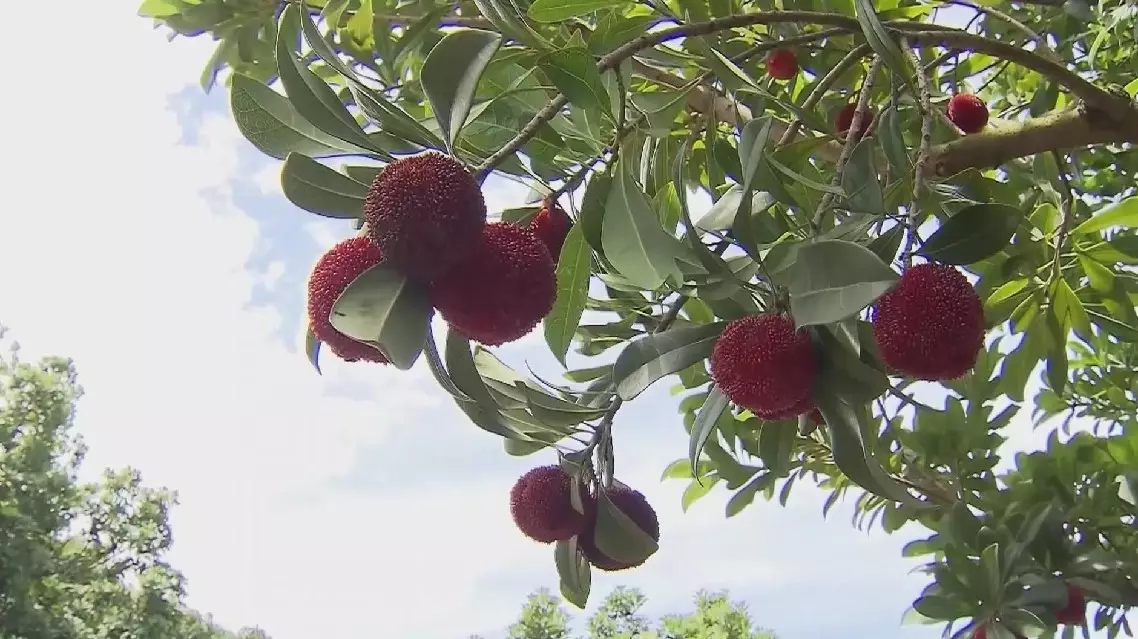
Smarter industrial, logistics chain helps fresh Chinese bayberries go global