Thailand is racing to harness artificial intelligence (AI), with people seeing opportunities in healthcare, education, agriculture, transport and elderly care, sectors they believe could lift growth and reshape the country's global standing.
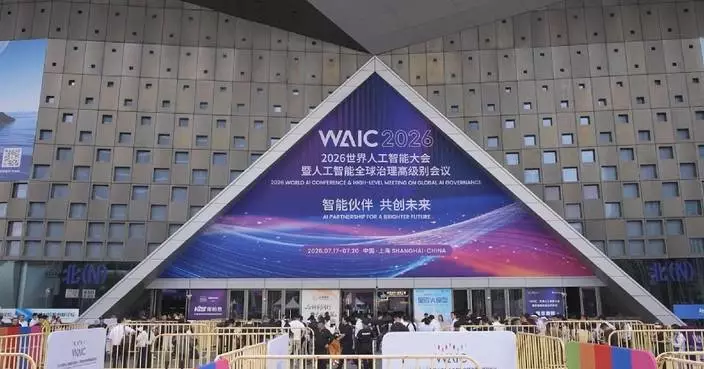
Recently, Thai Prime Minister Anutin Charnvirakul was in Shanghai for the 2026 World AI Conference (WAIC) and High-Level Meeting on Global AI Governance, which ran from July 17 to 20 under the theme "AI Partnership for a Brighter Future."
In a recent vox pop conducted by the China Global Television Network (CGTN), local people based in Thailand's capital Bangkok voiced keen anticipation for more cooperation between China and Thailand in the AI field.
"I'm really looking forward to it. I'd like artificial intelligence to have a big impact on healthcare and education," said Kanom Ko, a company employee.
"I expect to see more in terms of knowledge, medicine and education. For education, I'd like to see AI being used to assist with teaching, so students can understand things more easily," said Mint, another Bangkok-based company employee.
Many of those surveyed voiced the belief that wider access to AI technologies could help reduce development disparities.
"A really big impact! If we could make AI available to everyone, it would reduce inequality," said Kanom Ko.
Mint also said, "It's very important, particularly in the fields of medicine and knowledge, because it will help, for instance, further develop the medical field. And it will promote students to gain knowledge that incorporates AI."
Yaya, a freelancer, underscored the importance of AI accessibility and the need for the public to understand the risks associated with its use.
"First, regarding its application, we need to make people understand what AI is -- not just people in the provinces but even people in Bangkok who lack access to technology. We must make them understand its safety and risks so they can be good users," he said.
Today, using AI tools to assist with work and study has already become part of daily life for many Thais.
"Personally, I use ChatGPT. Sometimes we use it to summarize various things," said Kanom Ko.
Mint said, "Personally, I use ChatGPT to search for information on topics we don't know much about. It pinpoints the crucial details clearly."
"I use ChatGPT and Gemini, as well as some tools for generating images. As for other things, it's summarizing information, arranging words and writing work scripts," said Yaya.
Quite a few people see AI as a driver of new opportunities in healthcare, education, and transportation.
Kanom Ko said, "It can help develop healthcare and education. When we go to use various services, it helps cut down the queue waiting times."
"Nowadays, AI is everywhere. We can focus on specific areas, like vehicles. If we really think about extending its capabilities, we could even use driverless cars. For instance, we can input data to travel far away or specify a destination, and AI can process how much time we'll spend traveling, whether there are obstacles on the way or how fast AI can get us there," said Jack, a freelancer.
Yaya, in particular, highlighted AI's potential to help farmers improve agricultural management, as well as its value in enhancing elderly care services -- especially in areas like preventing online financial fraud.
"I'd like it to move towards agriculture, e-commerce and helping the elderly with making payments. For example, in agriculture here, farmers in the provinces don't always have accurate information for growing various crops. They still use traditional, local methods. If AI can assist by providing knowledge and managing agricultural practices for provincial people, it would be good. As for payments, elderly people in Thailand are often afraid of making online financial transactions. If an AI system can help elderly people who aren't tech-savvy to pay safely, I think that would be great. It would help prevent them from being deceived by scammers," he said.

Thailand eyes AI opportunities as PM joins Shanghai conference
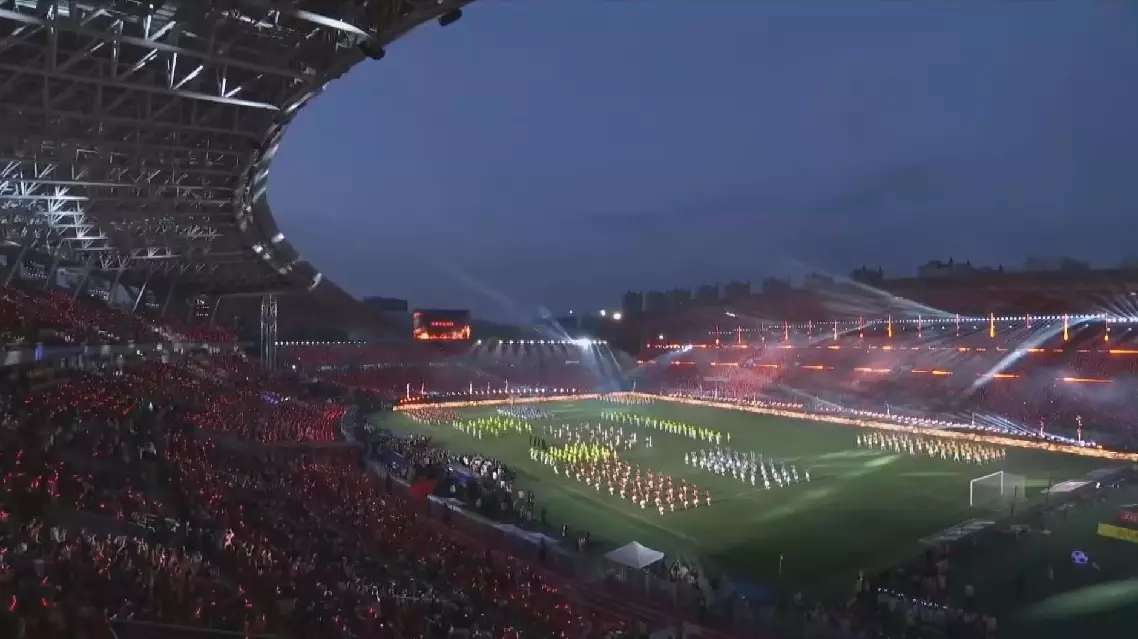
The Northeast China Football League, China's first cross-provincial city-based football tournament, is in full swing across northeast China, transforming a low-cost ticket into a golden key that unlocks regional tourism and fuels a surge in consumer spending this summer.
Fresh off the conclusion of the 2026 FIFA World Cup in North America, football fever is just heating up in China's northeastern region.
Officially called "The 2026 Northeast China City Football League," an eight-team amateur competition spanning the three northeastern provinces of Liaoning, Jilin and Heilongjiang, plus the Inner Mongolia Autonomous Region, opened simultaneously in Shenyang, Changchun, Harbin and Hohhot, the four capitals of the provinces and the region, on May 23.
While match tickets cost less than three U.S. dollars, their value extends far beyond the pitch. Ticket holders enjoy free entry to landmarks like the Shenyang Imperial Palace, as well as discounts at partner hotels, restaurants and local businesses, with a single match ticket unlocking a host of city-wide benefits.
"The ticket allows us to visit attractions such as the Shenyang Imperial Palace and Marshal Zhang’s Mansion, all of which have discounts. This is something we particularly like. So, taking advantage of the weekend, we should have a good time in the area," said a fan from Heilongjiang.
The bundled benefits have significantly lowered travel costs for fans, turning weekend trips into economical getaways.
"We can enjoy discounts on food, drink and entertainment with our ticket. Roughly calculated, it feels like this trip will save four to five hundred yuan for me," said another fan from Heilongjiang.
This tournament model, which is organized and promoted by local governments, features wide community participation and deep integration with culture, tourism and commercial sectors, and has been widely recognized as a proven success.
Since the launch of the Jiangsu Football City League in 2025, the format has been adopted by regions across China as a way to drive consumption, boost local economies and enrich public life, while also strengthening cultural exchanges between cities.
"We have nearly 20 people here. We hope to use regional football leagues to improve the exchanges between cities and deepen the bond between people. These competitions are just as popular as the World Cup among local fans. We can enjoy intense and exciting matches and their atmosphere right at our doorsteps. This is one of our original goals for football," said Hao Junjie, secretary general of the Jiangsu Zhenjiang Fan Association.
For many visiting supporters, the trip is as much about immersing themselves in local culture as it is about watching football.
"We have experienced Northeast China-style bathhouses and night market barbecue. The football culture and heritage in Shenyang are very good, and this time we are here specifically to watch the Northeast China Football League match. The overall travel cost is approximately 3,500 yuan," said a fan from Jiangsu.
Outside the stadium, thousands of "second viewing venues" have emerged across host cities' core business districts, paired with supporting services including specialty catering, cultural exhibitions and dedicated outdoor match screenings. Every weekend, host cities buzz with vibrant energy, with street stalls bustling with crowds and local businesses thriving.
Local merchants have reported a noticeable surge in activity as the league turns cities into vibrant weekend destinations.
"Business has been very good recently. Since the start of the Northeast China Football League, the customer flow in our entire neighborhood has increased significantly. For our store, the revenue has increased by 10 percent," a local coffee merchant said.
The league's vibrant atmosphere and rich local offerings have even attracted international visitors seeking an authentic cultural experience.
"I'm a Korean who came specifically from Nanjing to watch the match of the Northeast China Football League. I really like it here. It's very lively and fun. I like to eat Northeastern style pork belly and iron pot stew, which are particularly delicious," said a South Korean football fan.
The league is now serving as a powerful catalyst for renewed vitality, proving that the passion for the beautiful game can drive tangible economic and social benefits. The World Cup may be over, but in this corner of China, the season is just beginning.
Grassroots sporting events fuel regional tourism, consumption