Skip to Content Facebook Feature Image

China’s Paralympic shooters gear up for glory with intense training

China

China

China

China’s Paralympic shooters gear up for glory with intense training

2024-08-26 14:26 Last Updated At:19:07

The Chinese shooting para-sport team has been training hard for more than half a year at an intensive camp, pulling the trigger hundreds of times per day as they set their sights on gold medals at the upcoming 2024 Paris Paralympics.

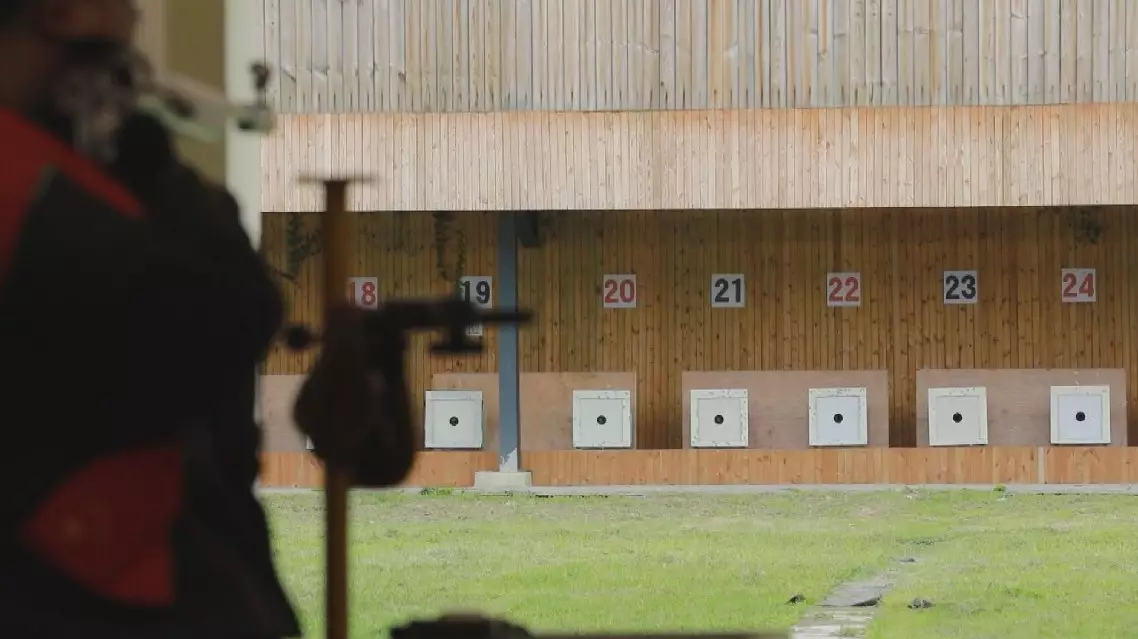
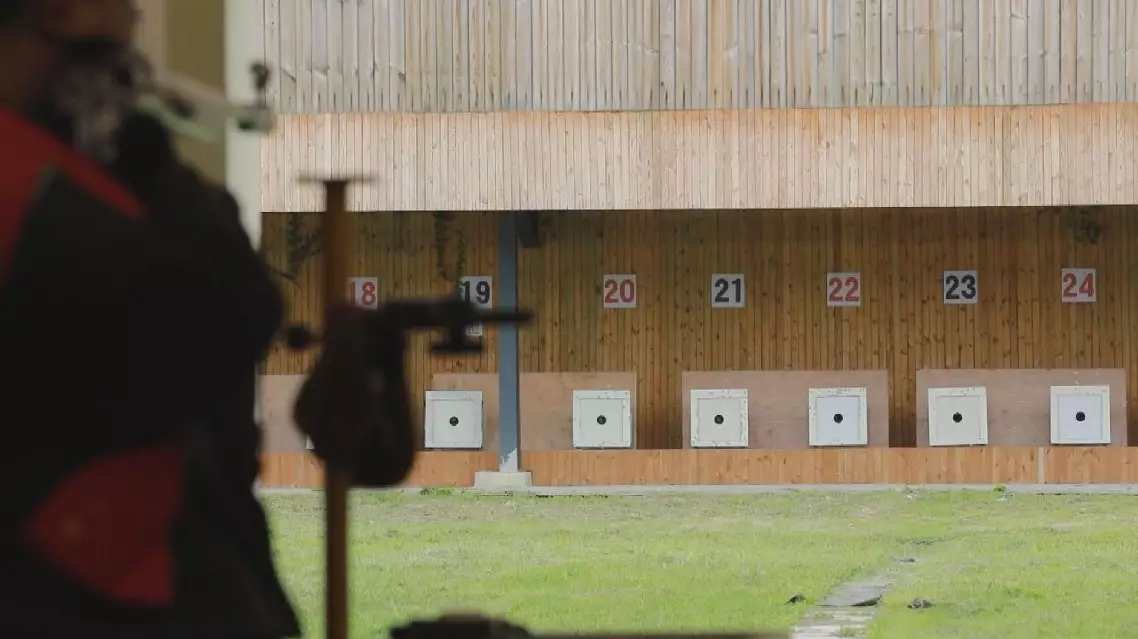
Inside southwest China's Sichuan Shooting and Archery Sports Management Center, shooters engage in rigorous training under guidance from their coaches. They arrived in December last year in preparation for the Paris Games.

As the competition approaches, the coaching team has introduced simulation drills for the finals. These exercises, while reducing physical workload, increase psychological stress to enhance their mental resilience.

Shooting para-sport events are classified into three categories: SH1 (Pistol), SH1 (Rifle) and SH2 (Rifle) according to athletes' activity limitation resulting from their limb impairment. Rifle shooting involves three positions: standing, kneeling, and prone, with distances of 10m, 25m, and 50m. At the games, the athletes will have to switch between these positions within a tight time frame.

"We now focus heavily on final simulations. Unlike the qualification rounds, in which athletes are allowed to compete from one position within a set time period, they are more pressed for time in the finals," said Wang Ping, head coach of the Chinese shooting team for Paris Paralympics.

Since its debut in Toronto 1976, shooting has evolved into a key event at Paralympic Games. There are 13 shooting events scheduled for the Paris Paralympics, and the Chinese shooting team will compete in nine of them, including men's and women's air rifle standing, men's and women's small-bore rifle 3 positions, men’s air pistol, and mixed 25m pistol.

"There's no difference between our training and that of [able-bodied athletes.] We increase the intensity and make adjustments when needed. Athletes fire over 300 shots a day, and sometimes up to 400. It's a quite large volume even when the results meet standards, and if they don't reach the required score, they must keep shooting. Sometimes, they even have their lunch at the shooting range," said Wang.

The rules for shooting para-sport are similar to those for able-bodied athletes, except that shooters with disabilities can rely on assistive devices. Even so, athletes like Dong Chao emphasize the challenge of maintaining stability.

"The most difficult position is standing, since it requires exceptional core strength and stability of the waist. Shooting in a standing position also involves more imbalance and uncertainty. Therefore, if you want good and stable results, you need consistent practice to hone your skills," said Dong.

The 2024 Paralympic Games will be held between Aug 28 and Sept 8. The Chinese delegation, consisting of 516 members including 284 athletes, will compete in 19 sports across 302 events.
China’s Paralympic shooters gear up for glory with intense training
China’s Paralympic shooters gear up for glory with intense training

China’s Paralympic shooters gear up for glory with intense training

China’s Paralympic shooters gear up for glory with intense training
The Global South could strengthen its technological capabilities and unlock new avenues for cooperation by leveraging China's push for innovation-driven development within the BRICS framework, according to a Chinese scholar.

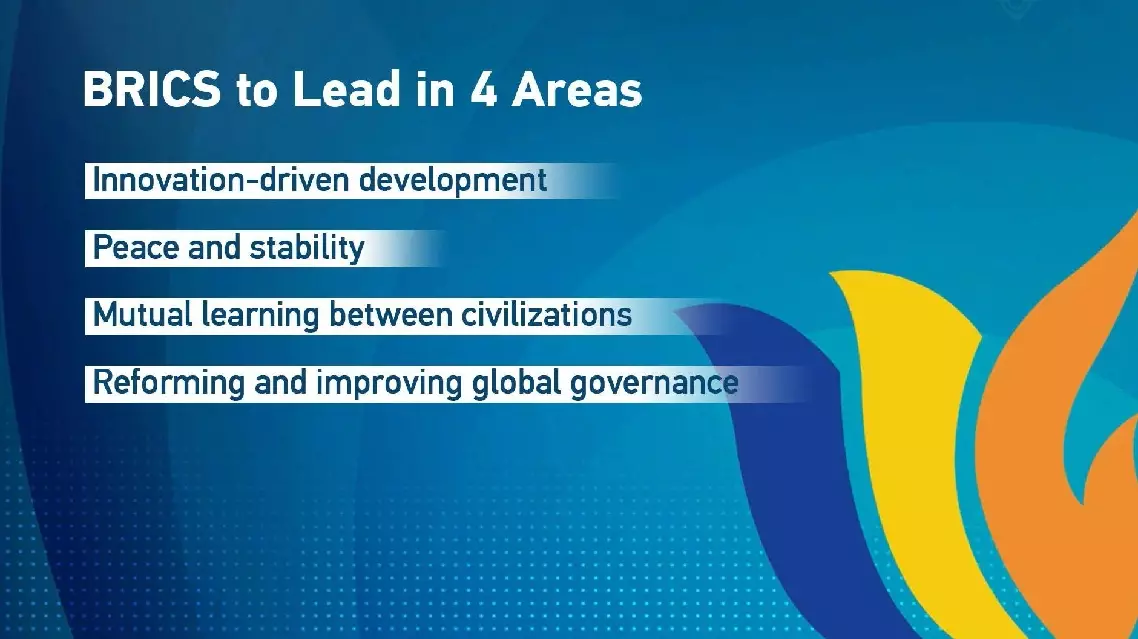
On Saturday, Chinese President Xi Jinping called on BRICS countries to become "pioneers" in four areas, including innovation-driven development, peace and stability, mutual learning among civilizations, and reform of global governance. He also proposed five initiatives to advance cooperation among the expanded BRICS membership, including deeper collaboration in artificial intelligence, trade and investment, digital industries, smart manufacturing and talent development.

In an interview with China Global Television on Monday, Qu Qiang, a research fellow at the Belt and Road Research Center at Minzu University of China, said the four proposed areas could provide a framework for Global South countries to strengthen cooperation and increase their collective voice in global affairs.

"I think this is actually a very comprehensive viewpoint. I think he actually suggested Global South nations to be the pioneering force in the four areas. I think this is very important because of innovation, peace, and stability and also the mutual respect of their civilization and also international governance. And I think these four areas, these four fronts, actually are supporting each other. I think the Global South actually needs to work with each other, sending out the message in one voice so that we can actually make the strong argument that Global South nations can actually also represent a very strong civilization. Actually we can make it work on our own feet independently," said the professor.

Xi's proposals also point to a broader readiness in the Global South community to move cooperation beyond traditional trade in commodities and infrastructure.

Greater emphasis on digitalization, e-commerce and emerging technologies could help BRICS economies upgrade their industrial structures and expand access to technological development, said Qu.

"Together, the Global South nations, even though they were making humongous and groundbreaking, all kinds of the breakthroughs, but still we're lacking of many things facing this kind of technology oriented future. As President Xi Jinping has mentioned, we need to upgrade our trade and investment. We used to have a very simple kind of the trade and investment on infrastructure, like we've just mentioned on raw materials. That is good to begin with, but eventually we're going to upgrade everything into a higher ground, like the digitalization, e-commerce, AI, green-energy, the tokens, the things that you need to upgrade your whole economy," he said.

Xi's innovation push to boost shared technological development: scholar

Xi's innovation push to boost shared technological development: scholar

Recommended Articles