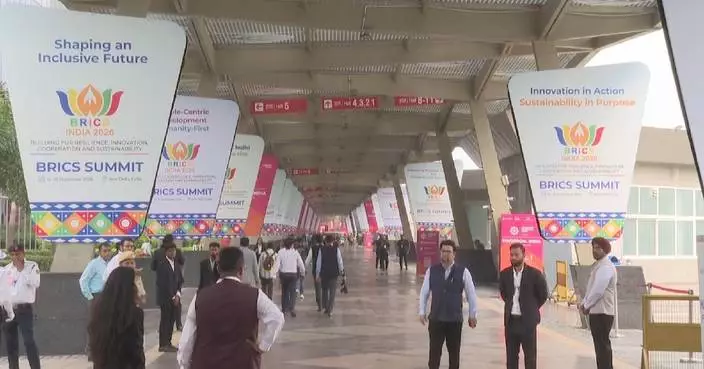
The Global South could strengthen its technological capabilities and unlock new avenues for cooperation by leveraging China's push for innovation-driven development within the BRICS framework, according to a Chinese scholar.
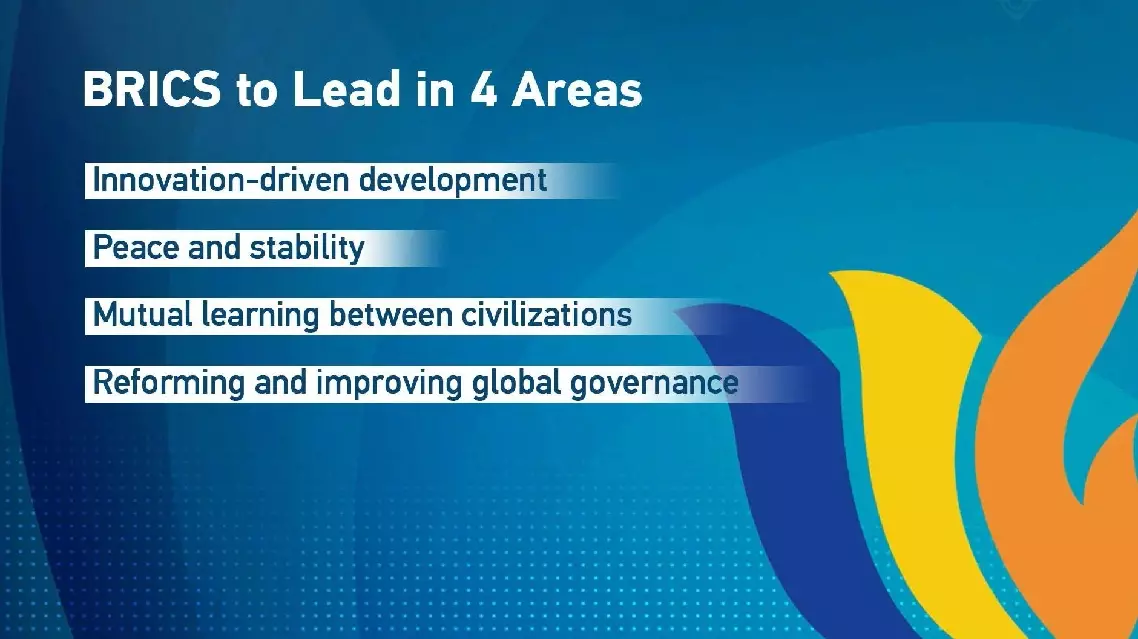
On Saturday, Chinese President Xi Jinping called on BRICS countries to become "pioneers" in four areas, including innovation-driven development, peace and stability, mutual learning among civilizations, and reform of global governance. He also proposed five initiatives to advance cooperation among the expanded BRICS membership, including deeper collaboration in artificial intelligence, trade and investment, digital industries, smart manufacturing and talent development.
In an interview with China Global Television on Monday, Qu Qiang, a research fellow at the Belt and Road Research Center at Minzu University of China, said the four proposed areas could provide a framework for Global South countries to strengthen cooperation and increase their collective voice in global affairs.
"I think this is actually a very comprehensive viewpoint. I think he actually suggested Global South nations to be the pioneering force in the four areas. I think this is very important because of innovation, peace, and stability and also the mutual respect of their civilization and also international governance. And I think these four areas, these four fronts, actually are supporting each other. I think the Global South actually needs to work with each other, sending out the message in one voice so that we can actually make the strong argument that Global South nations can actually also represent a very strong civilization. Actually we can make it work on our own feet independently," said the professor.
Xi's proposals also point to a broader readiness in the Global South community to move cooperation beyond traditional trade in commodities and infrastructure.
Greater emphasis on digitalization, e-commerce and emerging technologies could help BRICS economies upgrade their industrial structures and expand access to technological development, said Qu.
"Together, the Global South nations, even though they were making humongous and groundbreaking, all kinds of the breakthroughs, but still we're lacking of many things facing this kind of technology oriented future. As President Xi Jinping has mentioned, we need to upgrade our trade and investment. We used to have a very simple kind of the trade and investment on infrastructure, like we've just mentioned on raw materials. That is good to begin with, but eventually we're going to upgrade everything into a higher ground, like the digitalization, e-commerce, AI, green-energy, the tokens, the things that you need to upgrade your whole economy," he said.
Xi's innovation push to boost shared technological development: scholar