BRICS has grown into a vital platform for Global South countries which promotes greater solidarity and enables more developing nations to gain a stronger voice in global governance while pursuing shared development goals, according to experts.
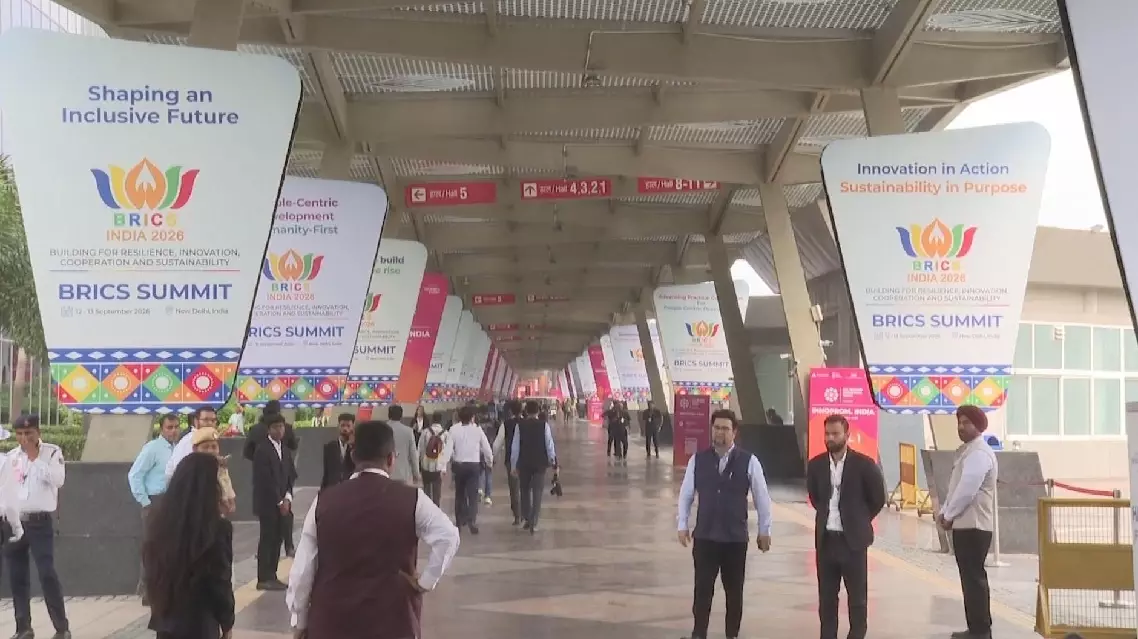
The 18th BRICS Summit concluded on Sunday in New Delhi and adopted the New Delhi Declaration, reaffirming the group's commitment to strengthening cooperation on political and security affairs, economy, trade and finance, and people-to-people and cultural exchanges, while underscoring the bloc's dedication to reforming and improving global governance.
This year marks the 20th anniversary of BRICS cooperation after it was initially formed by Brazil, Russia, India and China, before the addition of South Africa. Today, the bloc has expanded to 11 member states and 10 partner countries, and accounts for nearly half of the world's population, about 30 percent of global GDP, and one-fifth of global trade.
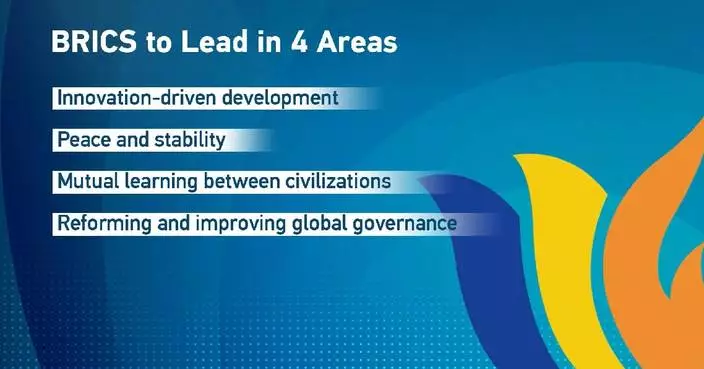
At the New Delhi summit, Chinese President Xi Jinping called on BRICS countries to be "four pioneers," including in advancing innovation-driven development, in upholding peace and stability, in facilitating mutual learning between civilizations, and in reforming and improving global governance.
Song Wei, a professor at the School of International Relations at Beijing Foreign Studies University, said the proposal sets the tone for BRICS' future direction.
"These 'four pioneers' cover development, security, mutual learning among civilizations and the direction of global governance reform, and in effect they point out the future development path for BRICS. We need to rally the broadest development consensus among developing countries under the BRICS mechanism, so as to enhance developing countries' participation, representation and voice in the process of global governance reform," she said.
As BRICS continues to grow, Frans Machat, chairman of the National Press Club of South Africa, said the expanded grouping can now undertake a broader mission which can also carry along more of the developing world.
"Particularly now we are not just acting as five countries or five BRICS countries, but an extended BRICS countries [grouping] that works as a unit for peace or for global peace and stability. And also not just global peace and stability, but development of all the BRICS countries. But not just the BRICS countries, I think this also has more interest to the Global South as a whole," he said.
Beyond political and security cooperation, the just-concluded BRICS summit also placed a strong emphasis on leveraging technology for inclusive development.
The event saw President Xi outline concrete proposals to further strengthen BRICS cooperation, with a focus on emerging areas including AI, trade, digital industries and manufacturing.
One key proposal involved the 'open source and inclusive AI initiative', in which Xi said China will be a pioneer in establishing a BRICS AI open source community, support cooperation in developing and applying large language models, hold specialized AI seminars and training courses, and build an open ecosystem for AI.
Song said these initiatives are designed to help developing countries seize the vast opportunities brought by artificial intelligence.
"The development of AI has brought development opportunities to the world. We hope to enhance the independent development momentum of developing countries in innovation-driven development, reduce the harm of the digital divide caused by AI for developing countries, and thereby enable developing countries to achieve leapfrog in AI development, further overcoming development bottlenecks for BRICS countries," she said.
Looking ahead, next year will see China assume the group's chairmanship and host the 19th BRICS summit.
Given the bloc's widening global influence and China's significant contributions as the largest BRICS economy, many have high expectations for the upcoming "China Year", which they say will help inject fresh momentum into BRICS cooperation.
"Over the past 20 years of BRICS cooperation, China has continuously provided new cooperation concepts and put forward new Chinese proposals for BRICS cooperation. These proposals and concepts have been recognized and supported by all BRICS member states. For example, important proposals on strengthening the integrated market, financial connectivity, infrastructure connectivity, and people-to-people exchanges all originated from China, making BRICS cooperation a truly important channel and platform for promoting the reform of the global governance system, as well as a major channel for Global South solidarity and mutual assistance," said Wang Lei, director of the Center for BRICS Cooperation Studies at Beijing Normal University.
BRICS emerges as vital platform for Global South solidarity, shared development: experts