Skip to Content Facebook Feature Image

Traces of this Pakistani megacity's past are vanishing, but one flamboyant pink palace endures

ENT

Traces of this Pakistani megacity's past are vanishing, but one flamboyant pink palace endures
ENT

ENT

Traces of this Pakistani megacity's past are vanishing, but one flamboyant pink palace endures

2024-09-15 12:47 Last Updated At:12:50

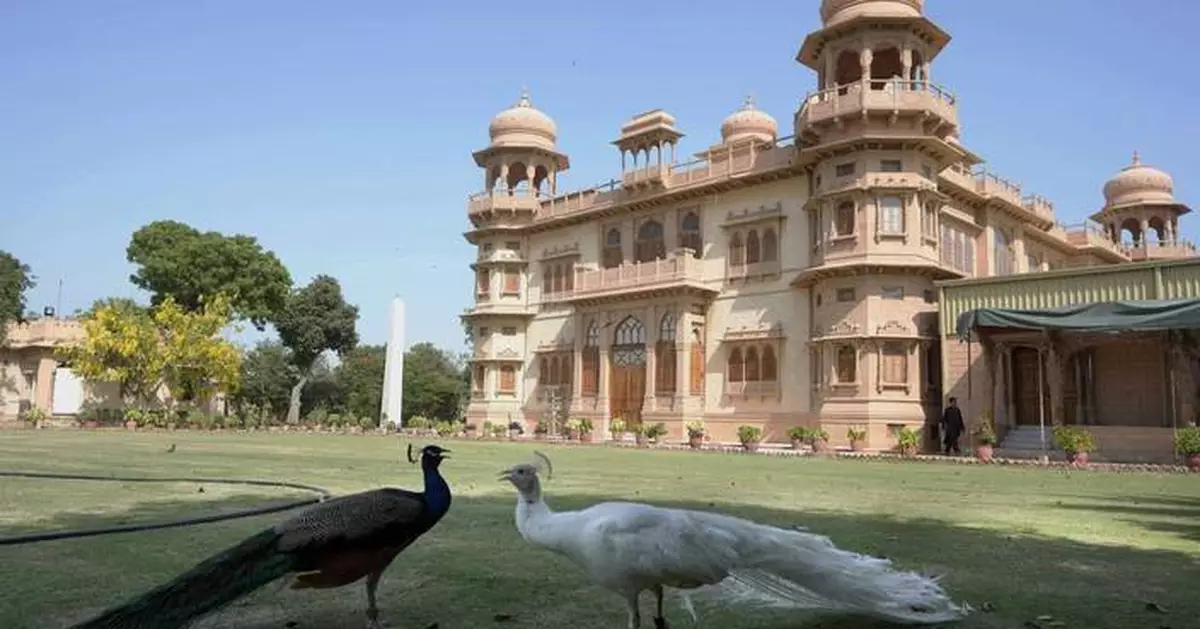
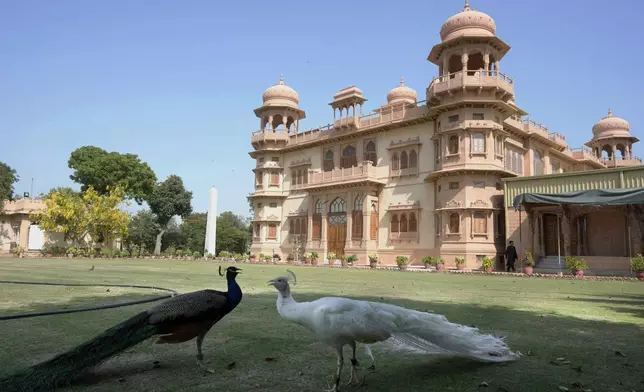
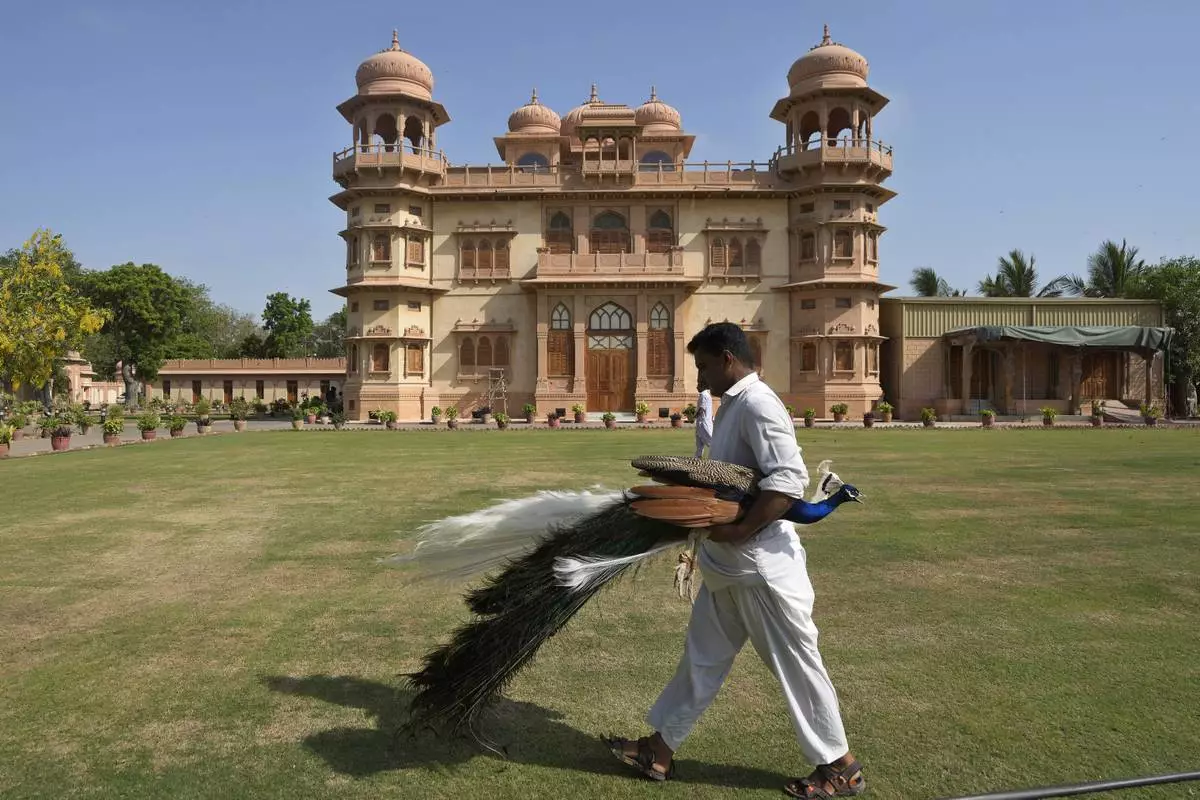
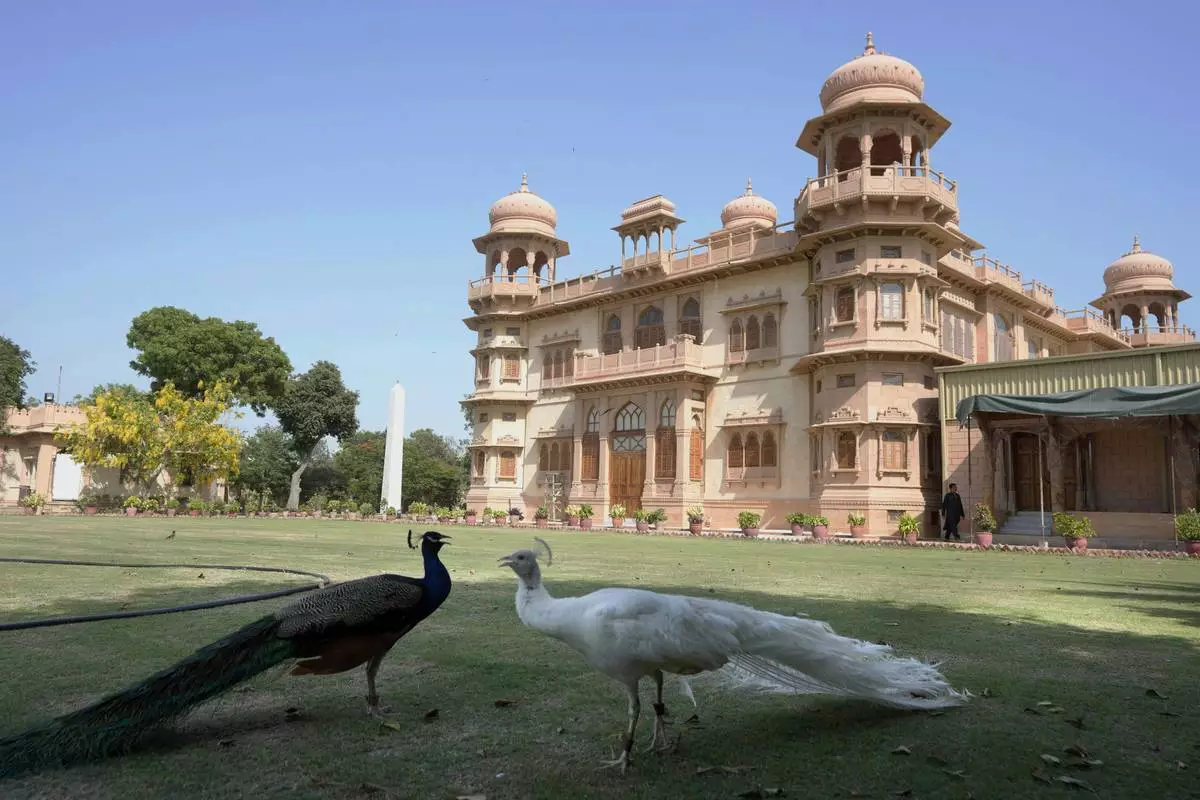
KARACHI, Pakistan (AP) — Stained glass windows, a sweeping staircase and embellished interiors make Mohatta Palace a gem in Karachi, a Pakistani megacity of 20 million people. Peacocks roam the lawn and the sounds of construction and traffic melt away as visitors enter the grounds.

The pink stone balustrades, domes and parapets look like they’ve been plucked from the northern Indian state of Rajasthan, a relic of a time when Muslims and Hindus lived side by side in the port city.

More Images
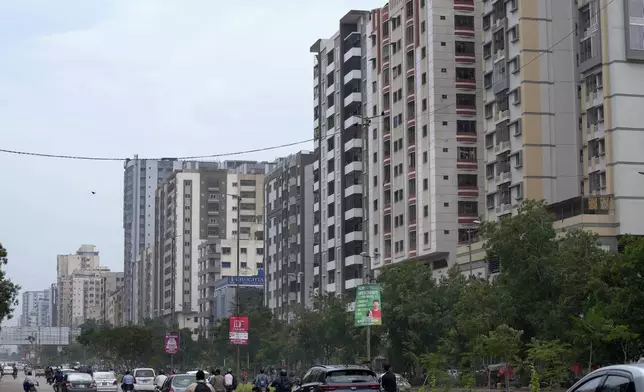
Vehicles and motorcycles move through a road with high-rise apartment buildings in Karachi, Pakistan, Thursday, Aug. 29, 2024. (AP Photo/Fareed Khan)
Vehicles and motorcycles move through a road with high-rise apartment buildings in Karachi, Pakistan, Thursday, Aug. 29, 2024. (AP Photo/Fareed Khan)

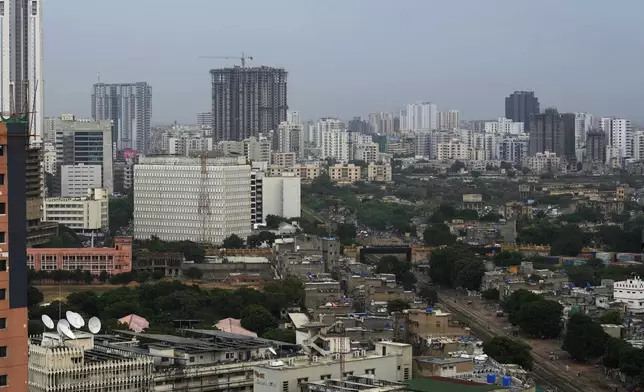
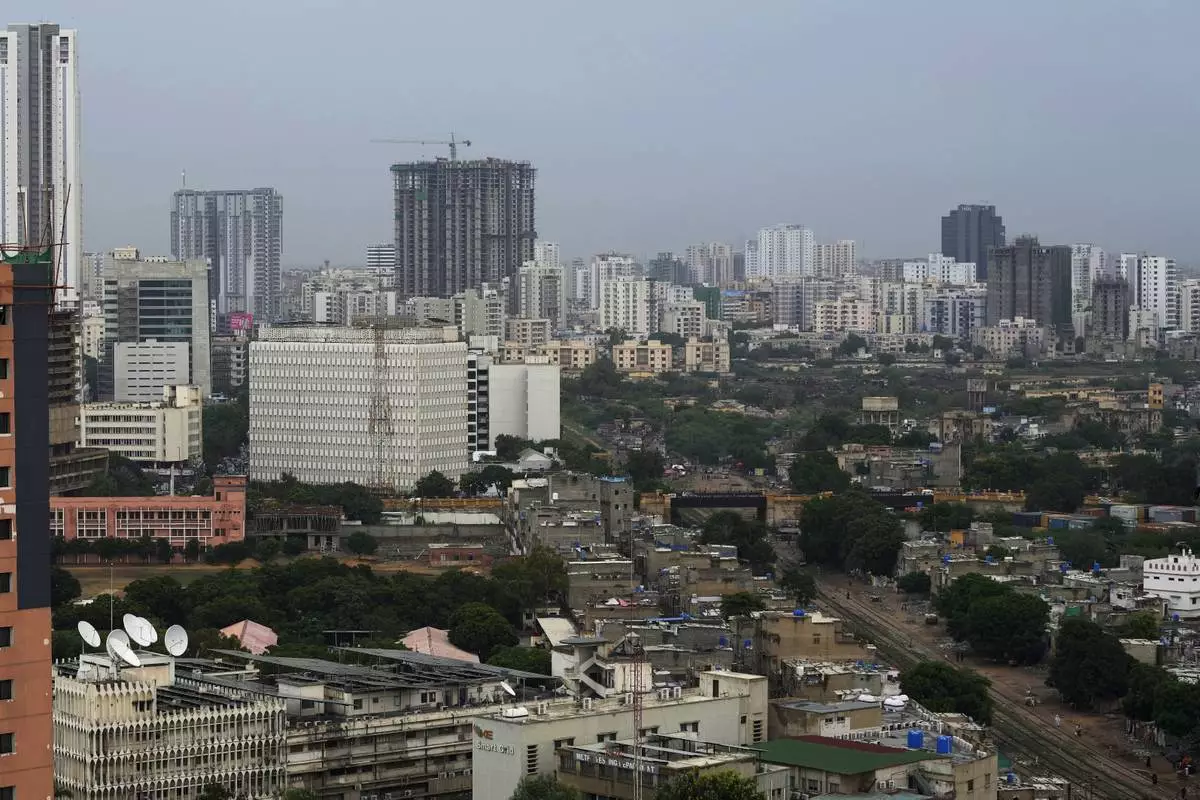
A view of a residential area is seen with skyscrapers in the background in Karachi, Pakistan, Thursday, Aug. 29, 2024. (AP Photo/Fareed Khan)
A view of a residential area is seen with skyscrapers in the background in Karachi, Pakistan, Thursday, Aug. 29, 2024. (AP Photo/Fareed Khan)

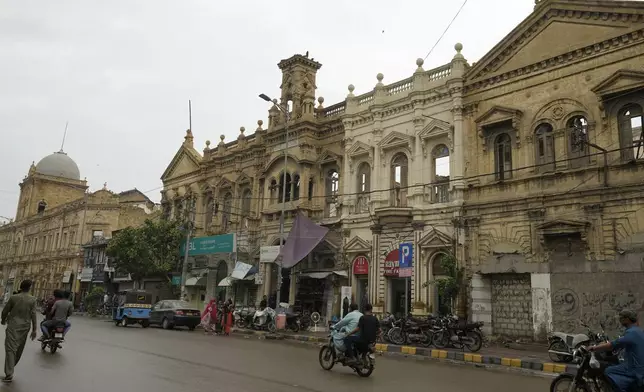
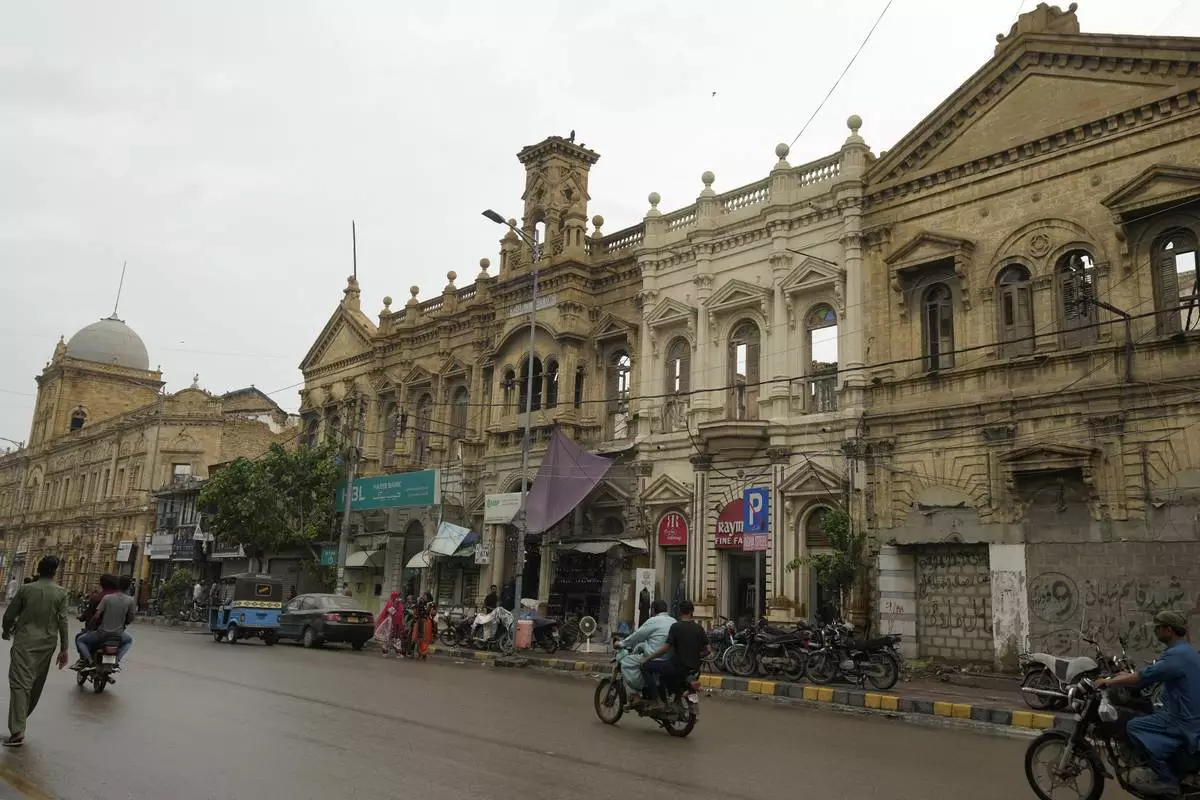
Motorcyclists drive on a road with old buildings in downtown Karachi, Pakistan, Thursday, Aug. 29, 2024. (AP Photo/Fareed Khan)
Motorcyclists drive on a road with old buildings in downtown Karachi, Pakistan, Thursday, Aug. 29, 2024. (AP Photo/Fareed Khan)

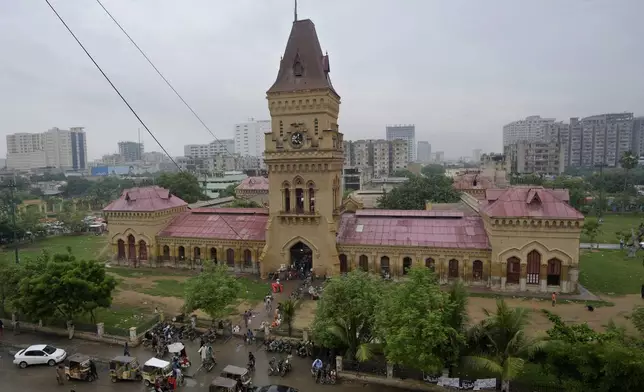
People visit the historical Empress Market in Karachi, Pakistan, Thursday, Aug. 29, 2024. (AP Photo/Fareed Khan)
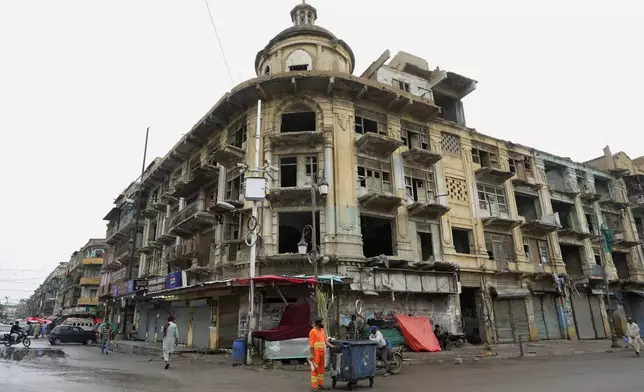
People visit the historical Empress Market in Karachi, Pakistan, Thursday, Aug. 29, 2024. (AP Photo/Fareed Khan)

People walk past an old building in downtown Karachi, Pakistan, Thursday, Aug. 29, 2024. (AP Photo/Fareed Khan)
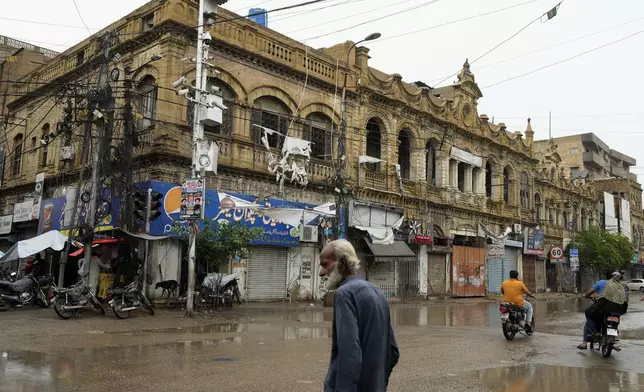
People walk past an old building in downtown Karachi, Pakistan, Thursday, Aug. 29, 2024. (AP Photo/Fareed Khan)

A man walks past an old building in downtown Karachi, Pakistan, Wednesday, Aug. 28, 2024. (AP Photo/Fareed Khan)
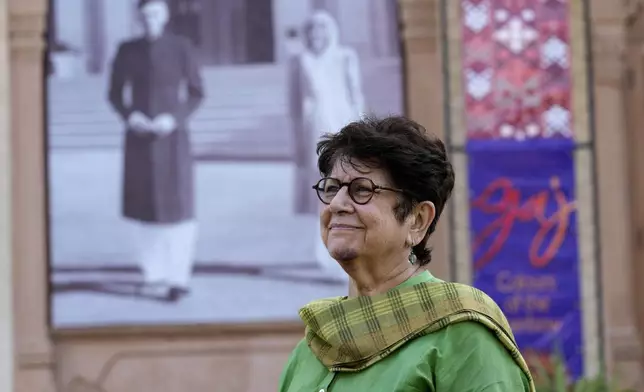
A man walks past an old building in downtown Karachi, Pakistan, Wednesday, Aug. 28, 2024. (AP Photo/Fareed Khan)

Nasreen Askari, director of the museum set up in historical building, "Mohatta Palace," poses for a photo in Karachi, Pakistan, Friday, May 24, 2024. (AP Photo/Fareed Khan)
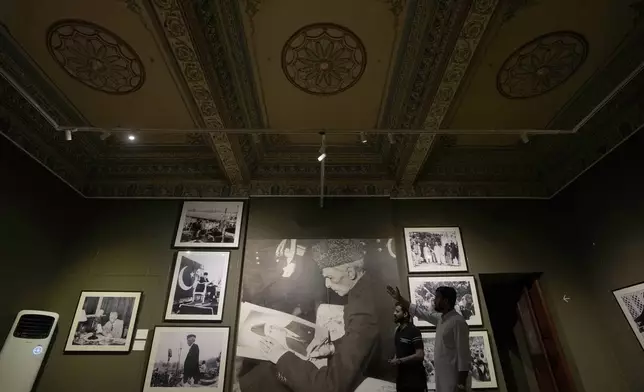
Nasreen Askari, director of the museum set up in historical building, "Mohatta Palace," poses for a photo in Karachi, Pakistan, Friday, May 24, 2024. (AP Photo/Fareed Khan)

Visitors look at pictures of Pakistan's independence movement which was started by Muhammad Ali Jinnah, later known to be the founder of Pakistan, at the museum set up in historical building "Mohatta Palace" in Karachi, Pakistan, Friday, May 24, 2024. (AP Photo/Fareed Khan)
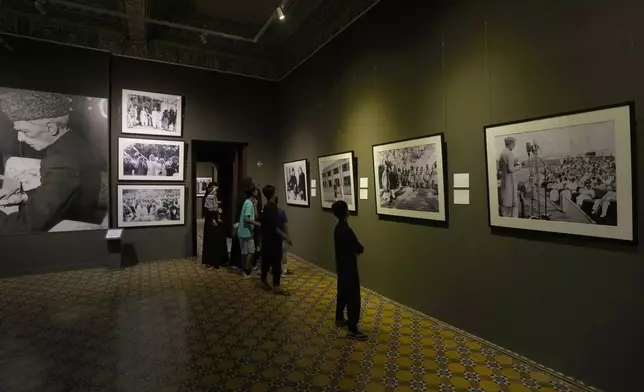
Visitors look at pictures of Pakistan's independence movement which was started by Muhammad Ali Jinnah, later known to be the founder of Pakistan, at the museum set up in historical building "Mohatta Palace" in Karachi, Pakistan, Friday, May 24, 2024. (AP Photo/Fareed Khan)
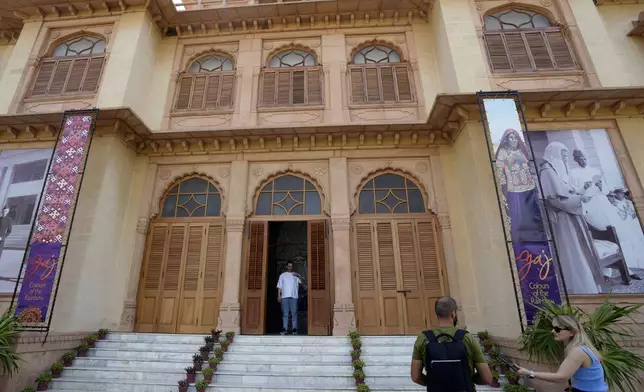
Visitors look at pictures of Pakistan's independence movement which was started by Muhammad Ali Jinnah, later known to be the founder of Pakistan, in the museum set up in the historical building "Mohatta Palace" in Karachi, Pakistan, Friday, May 24, 2024. (AP Photo/Fareed Khan)

Visitors look at pictures of Pakistan's independence movement which was started by Muhammad Ali Jinnah, later known to be the founder of Pakistan, in the museum set up in the historical building "Mohatta Palace" in Karachi, Pakistan, Friday, May 24, 2024. (AP Photo/Fareed Khan)

People visit at historical building "Mohatta Palace," which was built in 1920s and has since been turned into a museum, in Karachi, Pakistan, Friday, May 24, 2024. (AP Photo/Fareed Khan)
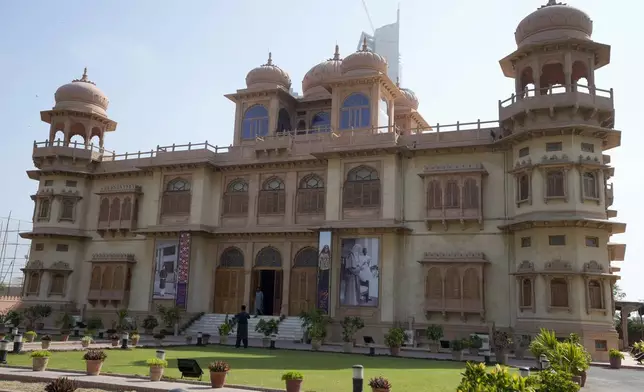
People visit at historical building "Mohatta Palace," which was built in 1920s and has since been turned into a museum, in Karachi, Pakistan, Friday, May 24, 2024. (AP Photo/Fareed Khan)
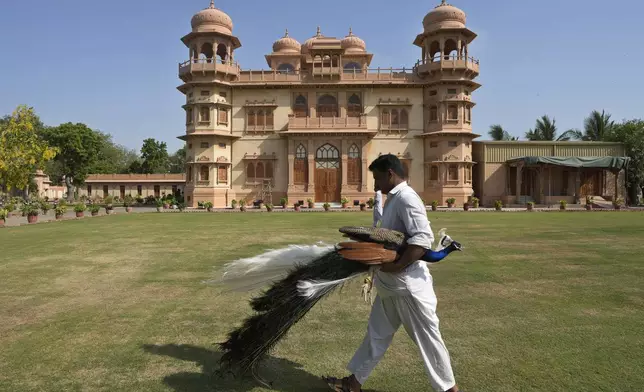
A visitor takes a picture with his mobile phone of historical building "Mohatta Palace," which was built in 1920s and has since been turned into a museum, in Karachi, Pakistan, Friday, May 24, 2024. (AP Photo/Fareed Khan)
A visitor takes a picture with his mobile phone of historical building "Mohatta Palace," which was built in 1920s and has since been turned into a museum, in Karachi, Pakistan, Friday, May 24, 2024. (AP Photo/Fareed Khan)

A worker moves a peacock from the lawn of historical building "Mohatta Palace," which was built in 1920s and has since been turned into a museum, in Karachi, Pakistan, Friday, May 24, 2024. (AP Photo/Fareed Khan)

A worker moves a peacock from the lawn of historical building "Mohatta Palace," which was built in 1920s and has since been turned into a museum, in Karachi, Pakistan, Friday, May 24, 2024. (AP Photo/Fareed Khan)

Peacocks roam on the lawn of historical building "Mohatta Palace," which was built in 1920s and has since been turned into a museum, in Karachi, Pakistan, Friday, May 24, 2024. (AP Photo/Fareed Khan)

Peacocks roam on the lawn of historical building "Mohatta Palace," which was built in 1920s and has since been turned into a museum, in Karachi, Pakistan, Friday, May 24, 2024. (AP Photo/Fareed Khan)

But magnificence is no guarantee of survival in a city where land is scarce and development is rampant. Demolition, encroachment, neglect, piecemeal conservation laws and vandalism are eroding signs of Karachi’s past.

The building's trustees have fended off an attempt to turn it into a dental college, but there’s still a decadeslong lawsuit in which heirs of a former owner are trying to take control of the land. It sat empty for almost two decades before formally opening as a museum in 1999.

The palace sits on prime real estate in the desirable neighborhood of Old Clifton, among mansions, businesses and upmarket restaurants.

The land under buildings like the Mohatta Palace is widely coveted, said palace lawyer Faisal Siddiqi. “It shows that greed is more important than heritage.”

Karachi’s population grows by around 2% every year and with dozens of communities and cultures competing for space there’s little effort to protect the city's historic sites.

For most Pakistanis, the palace is the closest they’ll get to the architectural splendor of India's Rajasthan, because travel restrictions and hostile bureaucracies largely keep people in either country from crossing the border for leisure, study or work.

Karachi's multicultural past makes it harder to find champions for preservation than in a city like Lahore, with its strong connection to the Muslim-dominated Mughal Empire, said Heba Hashmi, a heritage manager and maritime archaeologist.

“The scale of organic local community support needed to prioritize government investment in the preservation effort is nearly impossible to garner in a city as socially fragmented as Karachi,” she said.

Mohatta Palace is a symbol of that diversity. Hindu entrepreneur Shivratan Mohatta had it built in the 1920s because he wanted a coastal residence for his ailing wife to benefit from the Arabian Sea breeze. Hundreds of donkey carts carried the distinctively colored pink stone from Jodhpur, now across the border in India.

He left after partition in 1947, when India and Pakistan were carved from the former British Empire as independent nations, and for a time the palace was occupied by the Foreign Ministry.

Next, it passed into the hands of Pakistani political royalty as the home of Fatima Jinnah, the younger sister of Pakistan's first leader and a powerful politician in her own right.

After her death, the authorities gave the building to her sister Shirin, but Shirin's passing in 1980 sparked a court fight between people saying they were her relatives, and a court ordered the building sealed.

The darkened and empty palace, with its overgrown gardens and padlocked gates, caught people’s imagination. Rumors spread of spirits and supernatural happenings.

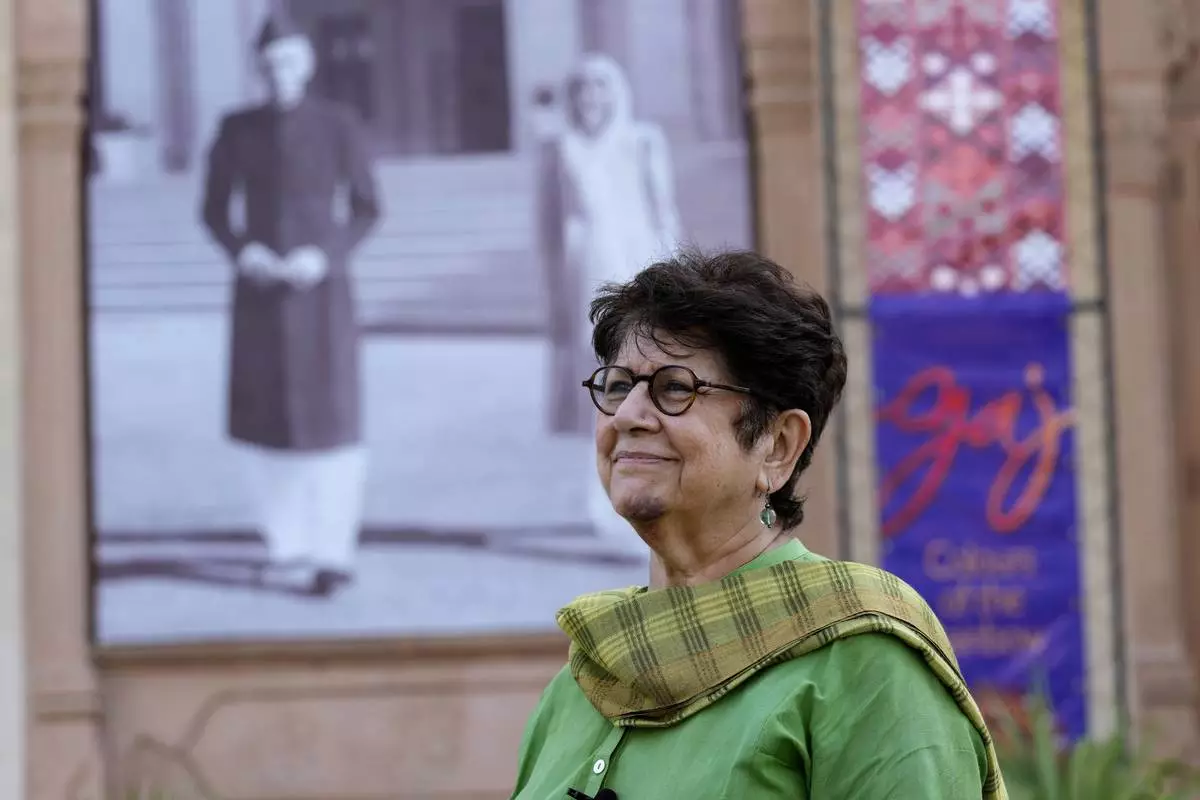
Someone who heard the stories as a young girl was Nasreen Askari, now the museum’s director.

“As a child I used to rush past,” she said. “I was told it was a bhoot (ghost) bungalow and warned, don’t go there.”

Visitor Ahmed Tariq had heard a lot about the palace’s architecture and history. “I’m from Bahawalpur (in Punjab, India) where we have the Noor Mahal palace, so I wanted to look at this one. It’s well-maintained, there’s a lot of detail and effort in the presentations. It’s been a good experience.”

But the money to maintain the palace isn't coming from admission fees.

General admission is 30 rupees, or 10 U.S. cents, and it's free for students, children and seniors. On a sweltering afternoon, the palace drew just a trickle of visitors.

It's open Tuesday to Sunday but closes on public holidays; even the 11 a.m.-6 p.m. hours are not conducive for a late-night city like Karachi.

The palace is rented out for corporate and charitable events. Local media report that residents grumble about traffic and noise levels.

But the palace doesn't welcome all attention, even if it could help carve out a space for the building in modern Pakistan.

Rumors about ghosts still spread by TikTok, pulling in influencers looking for spooky stories. But the palace bans filming inside, and briefly banned TikTokers.

“It is not the attention the trustees wanted,” said Askari. “That’s what happens when you have anything of consequence or unusual. It catches the eye.”

A sign on the gates also prohibits fashion shoots, weddings and filming for commercials.

“We could make so much money, but the floodgates would open,” said Askari. “There would be non-stop weddings and no space for visitors or events, so much cleaning up as well.”

Hashmi, the archaeologist, said there is often a strong sense of territorialism around the sites that have been preserved.

“It counterproductively converts a site of public heritage into an exclusive and often expensive artifact for selective consumption.”
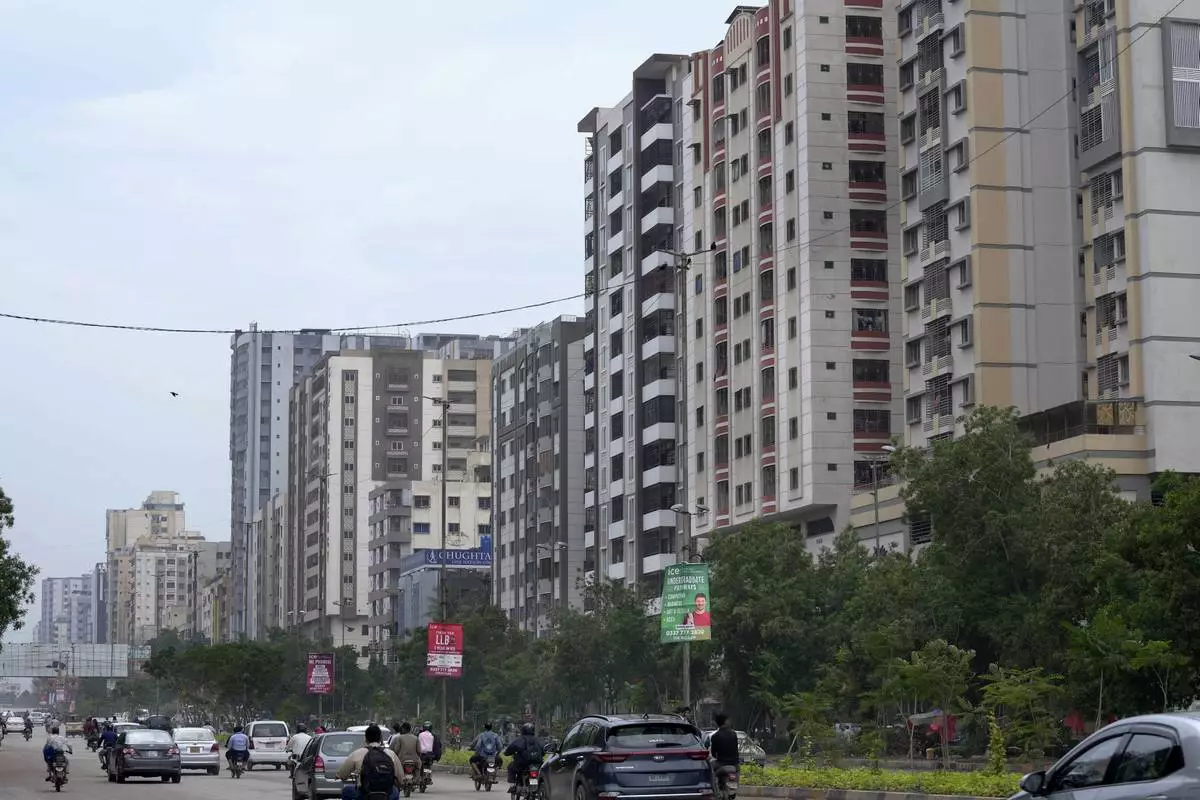
Vehicles and motorcycles move through a road with high-rise apartment buildings in Karachi, Pakistan, Thursday, Aug. 29, 2024. (AP Photo/Fareed Khan)
Vehicles and motorcycles move through a road with high-rise apartment buildings in Karachi, Pakistan, Thursday, Aug. 29, 2024. (AP Photo/Fareed Khan)

A view of a residential area is seen with skyscrapers in the background in Karachi, Pakistan, Thursday, Aug. 29, 2024. (AP Photo/Fareed Khan)
A view of a residential area is seen with skyscrapers in the background in Karachi, Pakistan, Thursday, Aug. 29, 2024. (AP Photo/Fareed Khan)

Motorcyclists drive on a road with old buildings in downtown Karachi, Pakistan, Thursday, Aug. 29, 2024. (AP Photo/Fareed Khan)
Motorcyclists drive on a road with old buildings in downtown Karachi, Pakistan, Thursday, Aug. 29, 2024. (AP Photo/Fareed Khan)

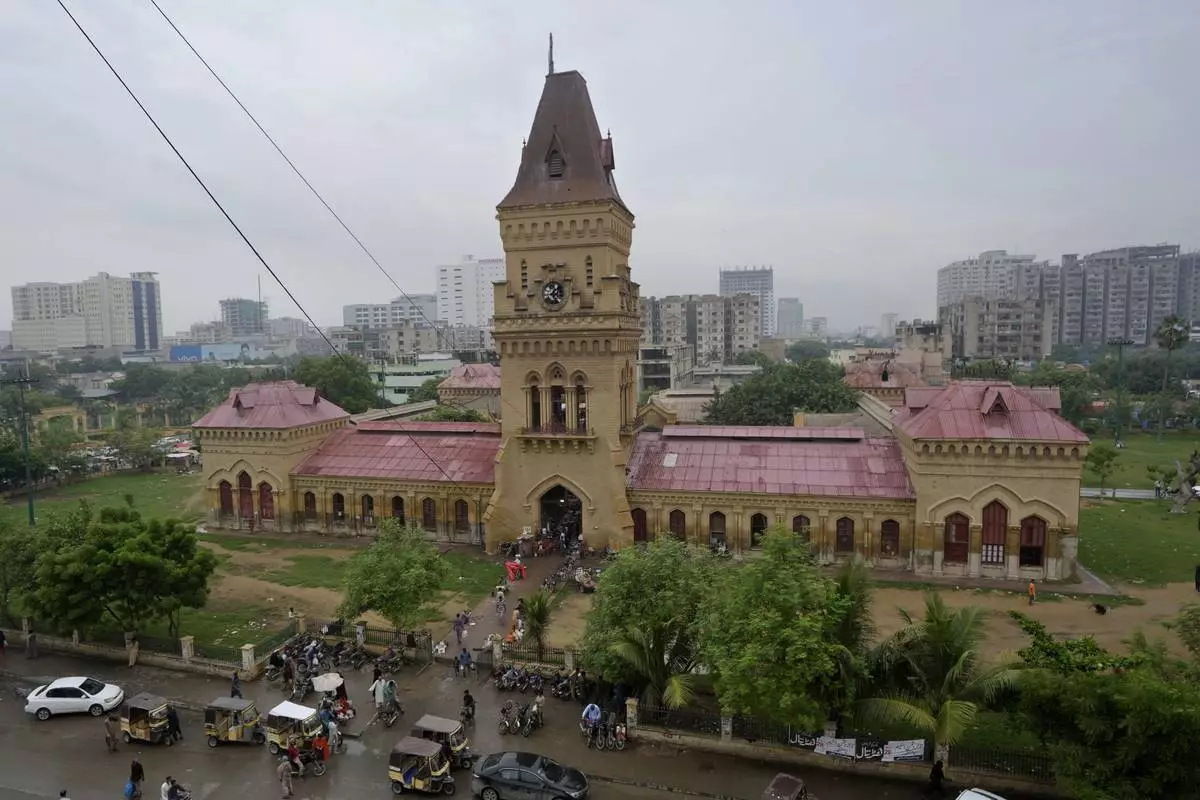
People visit the historical Empress Market in Karachi, Pakistan, Thursday, Aug. 29, 2024. (AP Photo/Fareed Khan)
People visit the historical Empress Market in Karachi, Pakistan, Thursday, Aug. 29, 2024. (AP Photo/Fareed Khan)

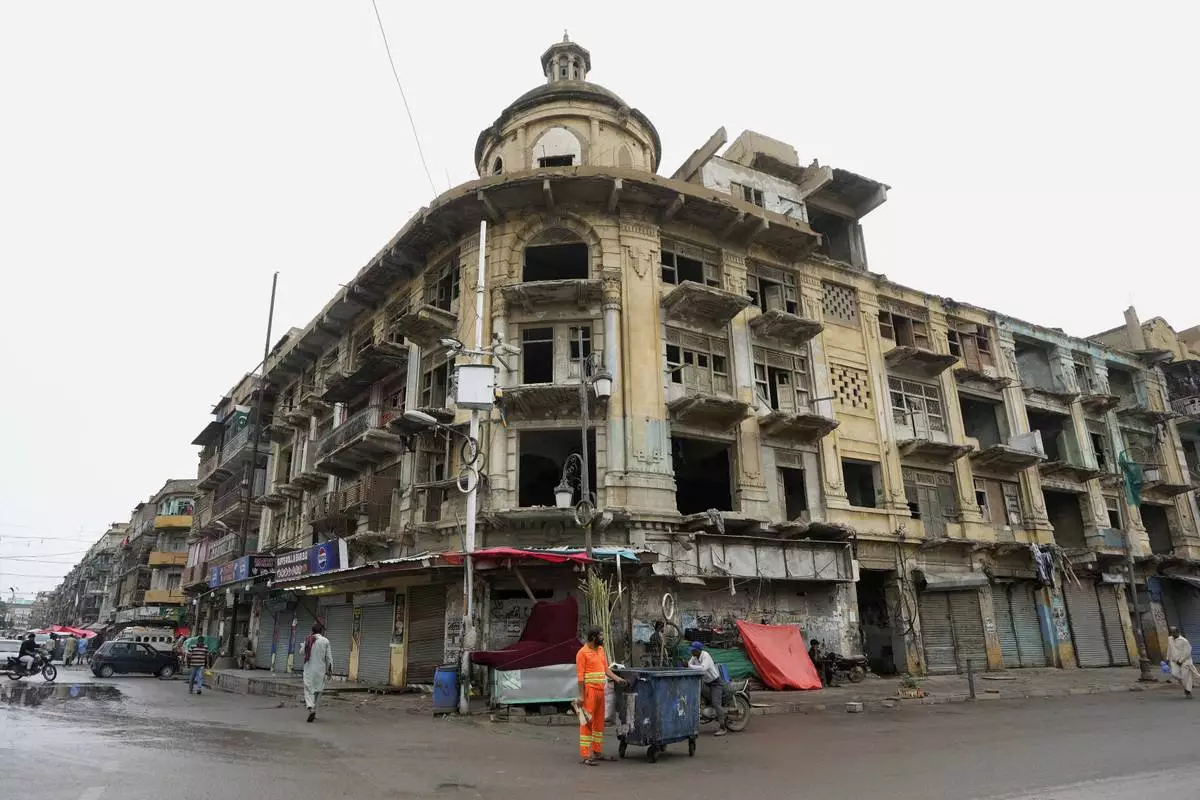
People walk past an old building in downtown Karachi, Pakistan, Thursday, Aug. 29, 2024. (AP Photo/Fareed Khan)
People walk past an old building in downtown Karachi, Pakistan, Thursday, Aug. 29, 2024. (AP Photo/Fareed Khan)

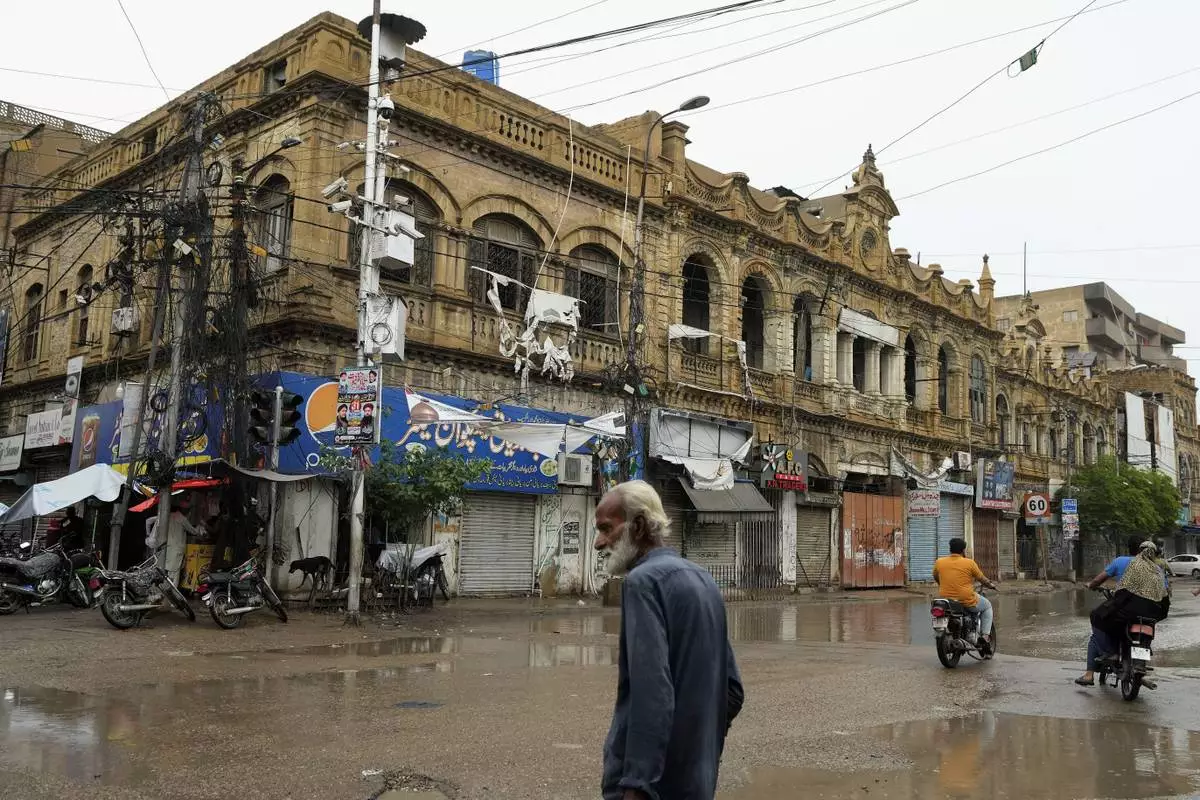
A man walks past an old building in downtown Karachi, Pakistan, Wednesday, Aug. 28, 2024. (AP Photo/Fareed Khan)
A man walks past an old building in downtown Karachi, Pakistan, Wednesday, Aug. 28, 2024. (AP Photo/Fareed Khan)

Nasreen Askari, director of the museum set up in historical building, "Mohatta Palace," poses for a photo in Karachi, Pakistan, Friday, May 24, 2024. (AP Photo/Fareed Khan)
Nasreen Askari, director of the museum set up in historical building, "Mohatta Palace," poses for a photo in Karachi, Pakistan, Friday, May 24, 2024. (AP Photo/Fareed Khan)

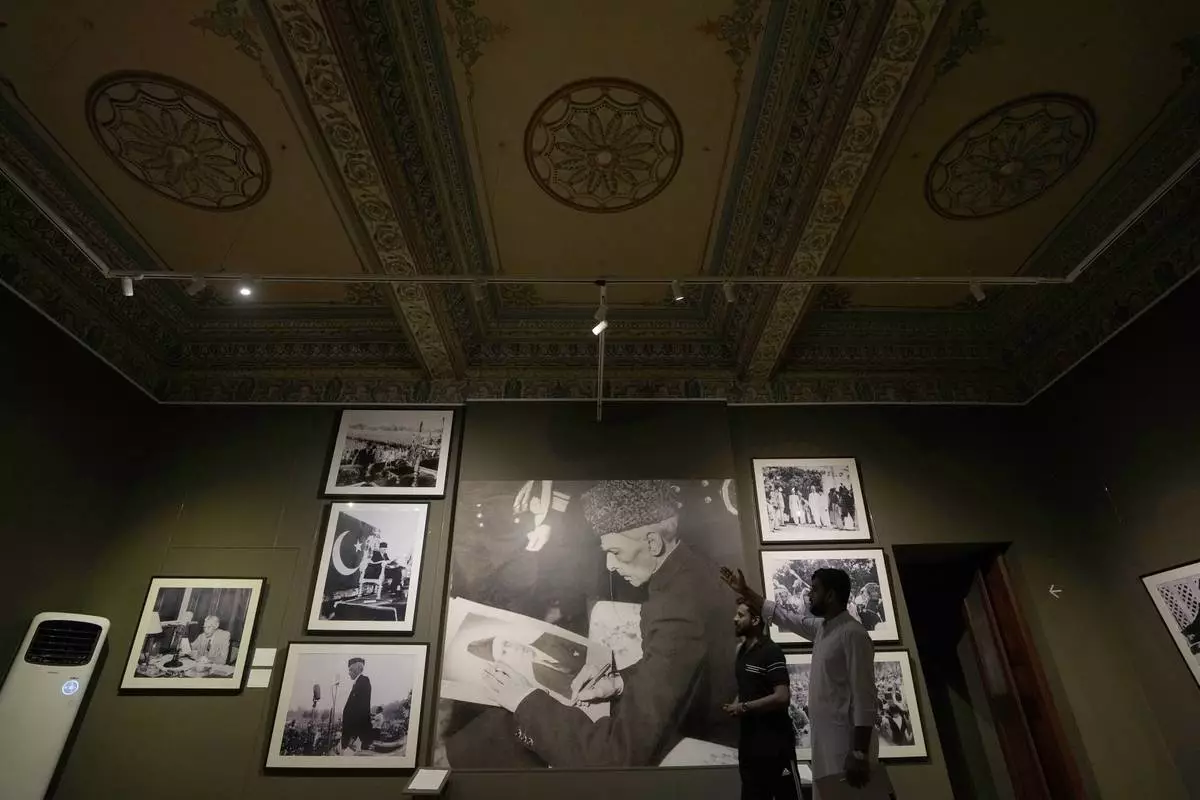
Visitors look at pictures of Pakistan's independence movement which was started by Muhammad Ali Jinnah, later known to be the founder of Pakistan, at the museum set up in historical building "Mohatta Palace" in Karachi, Pakistan, Friday, May 24, 2024. (AP Photo/Fareed Khan)
Visitors look at pictures of Pakistan's independence movement which was started by Muhammad Ali Jinnah, later known to be the founder of Pakistan, at the museum set up in historical building "Mohatta Palace" in Karachi, Pakistan, Friday, May 24, 2024. (AP Photo/Fareed Khan)
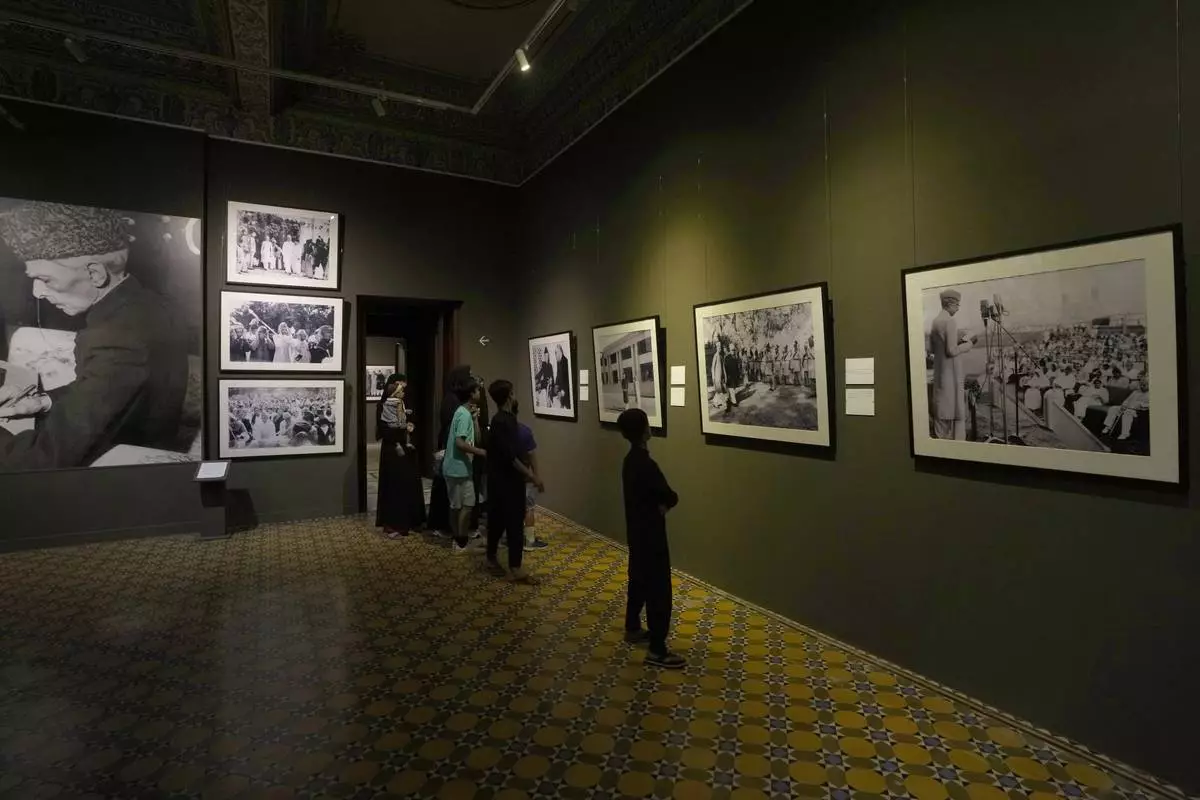
Visitors look at pictures of Pakistan's independence movement which was started by Muhammad Ali Jinnah, later known to be the founder of Pakistan, in the museum set up in the historical building "Mohatta Palace" in Karachi, Pakistan, Friday, May 24, 2024. (AP Photo/Fareed Khan)

Visitors look at pictures of Pakistan's independence movement which was started by Muhammad Ali Jinnah, later known to be the founder of Pakistan, in the museum set up in the historical building "Mohatta Palace" in Karachi, Pakistan, Friday, May 24, 2024. (AP Photo/Fareed Khan)

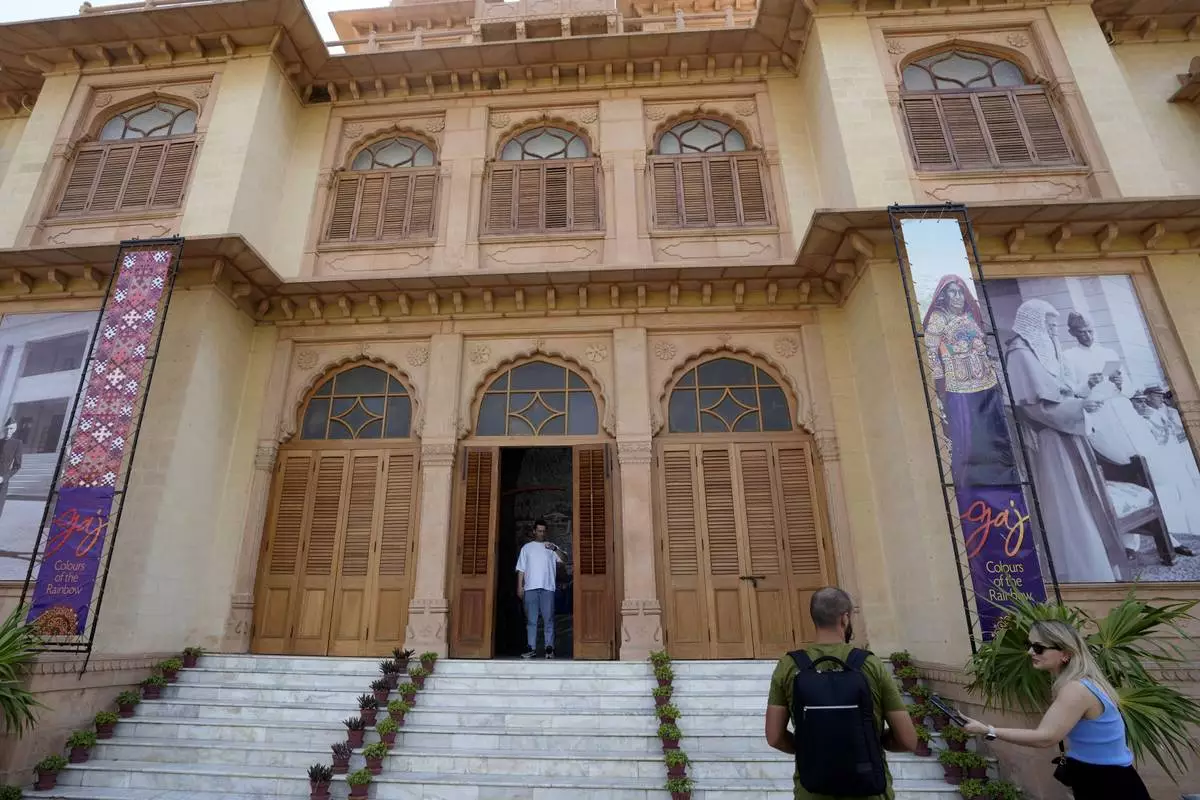
People visit at historical building "Mohatta Palace," which was built in 1920s and has since been turned into a museum, in Karachi, Pakistan, Friday, May 24, 2024. (AP Photo/Fareed Khan)
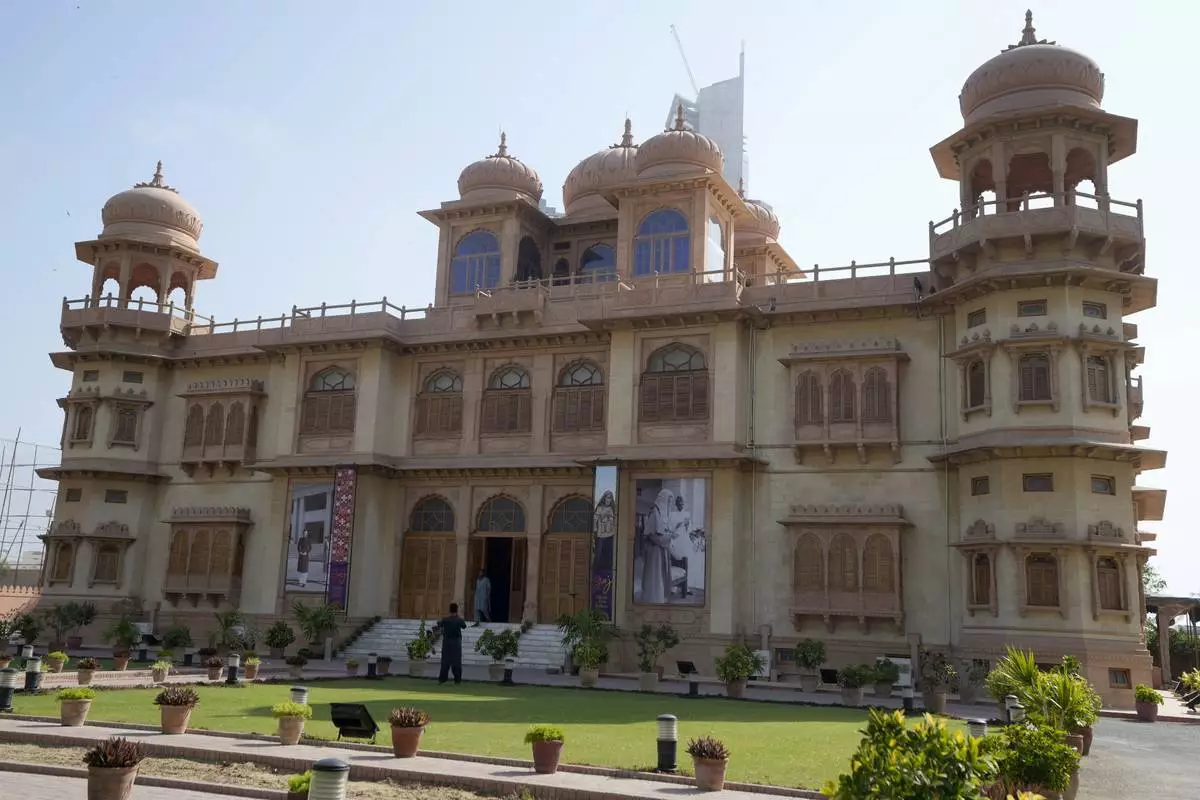
People visit at historical building "Mohatta Palace," which was built in 1920s and has since been turned into a museum, in Karachi, Pakistan, Friday, May 24, 2024. (AP Photo/Fareed Khan)
A visitor takes a picture with his mobile phone of historical building "Mohatta Palace," which was built in 1920s and has since been turned into a museum, in Karachi, Pakistan, Friday, May 24, 2024. (AP Photo/Fareed Khan)
A visitor takes a picture with his mobile phone of historical building "Mohatta Palace," which was built in 1920s and has since been turned into a museum, in Karachi, Pakistan, Friday, May 24, 2024. (AP Photo/Fareed Khan)
A worker moves a peacock from the lawn of historical building "Mohatta Palace," which was built in 1920s and has since been turned into a museum, in Karachi, Pakistan, Friday, May 24, 2024. (AP Photo/Fareed Khan)
A worker moves a peacock from the lawn of historical building "Mohatta Palace," which was built in 1920s and has since been turned into a museum, in Karachi, Pakistan, Friday, May 24, 2024. (AP Photo/Fareed Khan)
Peacocks roam on the lawn of historical building "Mohatta Palace," which was built in 1920s and has since been turned into a museum, in Karachi, Pakistan, Friday, May 24, 2024. (AP Photo/Fareed Khan)
Peacocks roam on the lawn of historical building "Mohatta Palace," which was built in 1920s and has since been turned into a museum, in Karachi, Pakistan, Friday, May 24, 2024. (AP Photo/Fareed Khan)
A Texas judge granted Texas Tech quarterback Brendan Sorsby a temporary injunction that clears the way for him to play this fall despite being declared ineligible by the NCAA for wagering on college sports, including bets made on his own team while he was at Indiana.

The decision sent shock waves across college sports since bans for gambling are a bedrock rule of the NCAA and in many professional sports.

The NCAA said it strongly disagrees with the ruling and “is deeply concerned about the damaging, far-reaching and broadly destabilizing ramifications of this outcome — which undermines and corrupts the integrity of sports.” The NCAA said it would appeal to the Court of Appeals for the Seventh District of Texas in Amarillo.

Sorsby, whose school said he has a gambling problem that he is addressing through treatment, will miss the Red Raiders’ first two games next season under a judge-approved penalty that had been proposed by his attorneys. The NCAA, which usually handles such punishments, was not involved.

The ruling by Judge Ken Curry prevents the NCAA from being able to block the transfer QB's eligibility for what will be his final college season with a team among the favorites to win the Big 12 Conference and return to the College Football Playoff for a second consecutive season.

Big 12 Commissioner Brett Yormark said the ramifications of the ruling “could have broad impacts across college athletics, creating great concern amongst our membership.” He called a meeting this week of his league's athletic directors and executive board, and been in touch with NCAA President Charlie Baker.

Texas Tech opens the season on Sept. 5 at home against Abilene Christian. The Red Raiders then play Oregon State before their Big 12 opener at home on Sept. 18 against Houston.

“I’m very grateful for the endless support I have received throughout this entire process,” Sorsby posted on social media. “I am also grateful for the chance to rejoin my teammates. This opportunity comes with the responsibility to remain focused on my personal growth, the ability to learn from this experience, and to be able to use my situation to help others going forward.”

Curry held a two-hour hearing last week in the 99th District Court in Lubbock County, where Texas Tech is located. In his decision, he wrote that he agreed Sorsby would suffer “a probable, imminent and irreparable injury” if he cannot practice or play for the Red Raiders.

The injunction comes with conditions that Sorsby must continue counseling for his gambling and to participate in peer support through Gamblers Anonymous or a similar group. He also must continue treatment to address “the underlying anxiety that served as the primary driver of (his) gambling behavior.”

Texas Tech athletic director Kirby Hocutt said a comprehensive support structure, including clinical care, monitoring and compliance checks, will remain fully in place for Sorsby during his time at the school.

“As we have said before, we do not believe that the circumstances of Brendan’s case warranted permanent ineligibility,” Hocutt said. “As he returns to our football program, we remain committed to supporting Brendan’s recovery and ensuring his compliance with the court’s order.”

Kansas State athletic director Gene Taylor told Yahoo Sports he was disappointed by the ruling.

“It is absolutely devastating for him to be able to play when every other sport, no matter the level, deems an athlete ineligible or they are punished severely for betting on their team,” he told the outlet.

“I think there needs to be serious conversations about not playing Texas Tech in any sports,” Georgia athletic director Josh Brooks, a member of the NCAA Football Oversight Committee, told Yahoo Sports. “If a state court wants to dictate eligibility rules, they can play themselves. ... We’ve officially reached the point of no return.”

NCAA attorney Taylor Askew had said during the hearing that allowing Sorsby to play another college season would provide “reputable harm” to the governing body.

“Saying the NCAA is now the first league in America that allows you, without punishment, to bet on its own contests, that’s a reputable harm to the NCAA,” Askew told the court. “This would be the first league in America that does that. ... We should not say for the first time serial gambling is OK.”

Court records show that Sorsby has acknowledged making thousands of impermissible bets totaling at least $90,000 during his time at Indiana, Cincinnati and Texas Tech. That included 40 bets on Indiana while he was a freshman there in 2022, though none on any of the games he played in with the Hoosiers.

While some guidelines for penalties related to gambling have changed in recent years, NCAA rules still call for a permanent loss of eligibility for any player who wagered on his own team.

Sorsby was at Indiana for two seasons before the past two at Cincinnati.

The Texas native transferred in January to Texas Tech for a reported multimillion-dollar deal. The Red Raiders brought him in to be the starting quarterback when trying to defend their first Big 12 title and return to the CFP.

According to court filings, on March 11 the NCAA received a tip about Sorsby’s gambling activity from an online gambling book, which had been informed by law enforcement. Texas Tech was notified April 14 that an investigation was underway by the NCAA.

Jeffrey Kessler, the attorney who negotiated the $2.8 billion House settlement against the NCAA and now represents Sorsby, told the court that the 22-year-old quarterback has a diagnosed addiction and anxiety-driven compulsion. Sorsby recently completed a monthlong stay in a residential treatment program in Arizona that he entered after the start of the NCAA’s investigation.

According to a clinician who treated Sorsby, Kessler said, not allowing the quarterback to play would hurt his mental health and hamper his recovery.

The NCAA in its statement Monday said it is “committed to supporting student-athlete mental health but must continue to aggressively defend against actions that defraud college athletics and threaten competitive integrity, such as betting on one’s own sport.”

The injunction came in Sorsby’s lawsuit filed May 18 against the NCAA seeking the restoration of his eligibility. That case was initially assigned to District Judge Phillip Hays, a Lubbock native and Texas Tech graduate who later recused himself. Curry is a retired judge from Tarrant County, nearly 300 miles away.

Since the filing of that lawsuit, the NCAA has twice denied Texas Tech’s petition to restore the quarterback’s eligibility.

When the school on May 26 revealed the first denial and its intent to appeal, university president Lawrence Schovanec wrote in a letter to the Texas Tech community that the school felt “the NCAA’s ruling should be reversed or modified.”

That comment illustrates the difficult landscape for the NCAA, which has lost multiple court cases challenging rules that were put in place by the very schools that make up its membership. Many focus on eligibility, with athletes contending they should be allowed to play and continue to earn money that was made available under the House ruling.

The NCAA is on the verge of approving a new eligibility model following meetings among stakeholders and even President Donald Trump. The NCAA continues to also seek limited antitrust protections from Congress in hopes of eliminating or at least smoothing the state-by-state rulings that have thrown the industry into chaos.

“There is no better example of why targeted intervention from Congress is necessary,” Baker said on social media after the ruling. “When you have schools and deep-pocketed supporters willing to look the other way on the glaring integrity threat of betting on your own team — and judges whose rulings effectively strip away our ability to stop them — only Congress can equip the NCAA to apply this common sense rule to everyone fairly and consistently. The Protect College Sports Act would empower the NCAA to enforce rules including the gambling restrictions — it’s needed now more than ever.”

AP college football: https://apnews.com/hub/ap-top-25-college-football-poll and https://apnews.com/hub/college-football

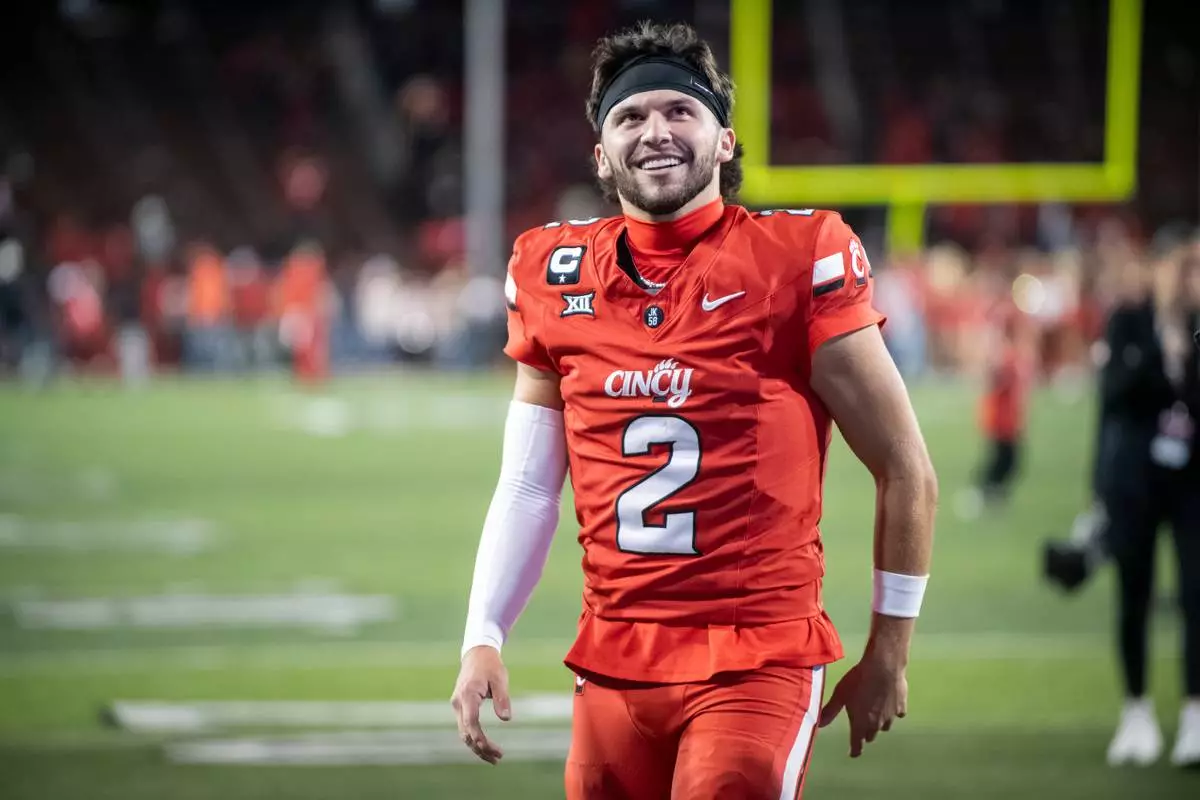
FILE - Cincinnati quarterback Brendan Sorsby (2) walks off the field after a NCAA college football game against Baylor, Oct. 25, 2025, in Cincinnati. (AP Photo/Tanner Pearson, file)

FILE - Cincinnati quarterback Brendan Sorsby (2) walks off the field after a NCAA college football game against Baylor, Oct. 25, 2025, in Cincinnati. (AP Photo/Tanner Pearson, file)

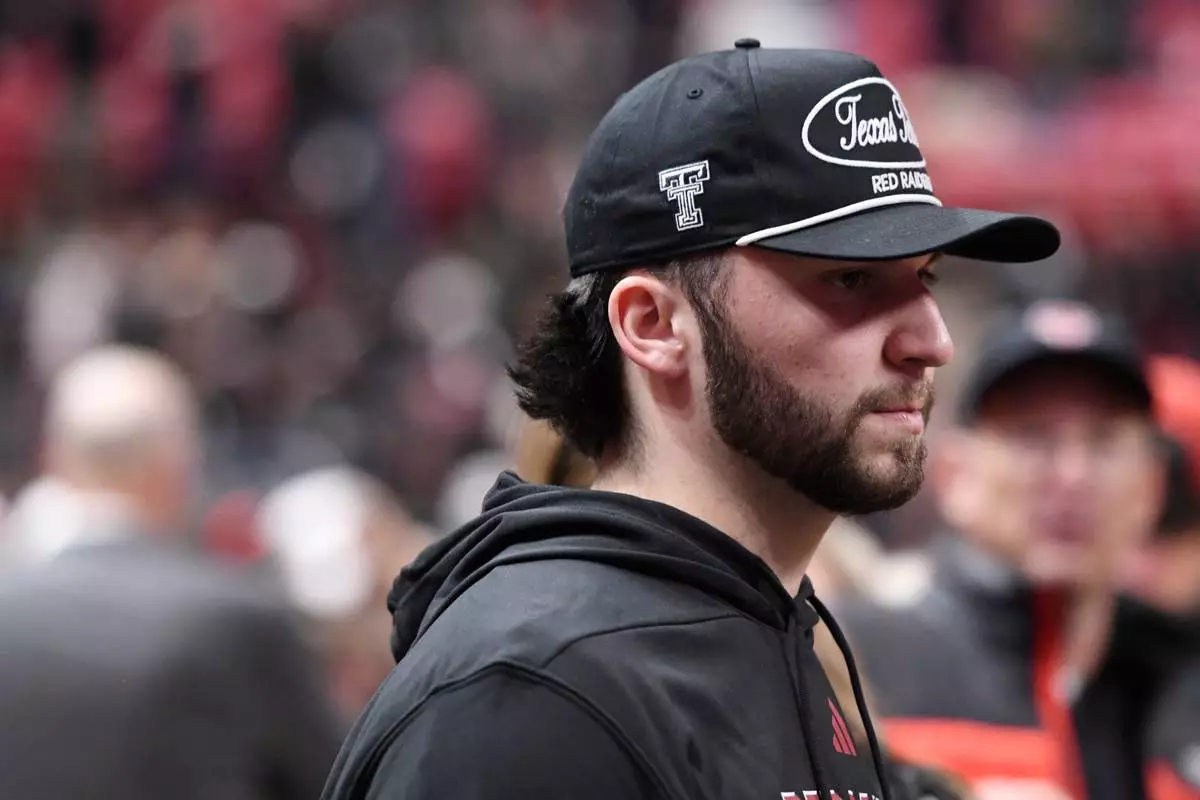
FILE - Quarterback Brendan Sorsby attends an NCAA college basketball game between Texas Tech and Houston, Jan. 24, 2026, in Lubbock, Texas. (AP Photo/Annie Rice, file)

FILE - Quarterback Brendan Sorsby attends an NCAA college basketball game between Texas Tech and Houston, Jan. 24, 2026, in Lubbock, Texas. (AP Photo/Annie Rice, file)

Recommended Articles