Skip to Content Facebook Feature Image

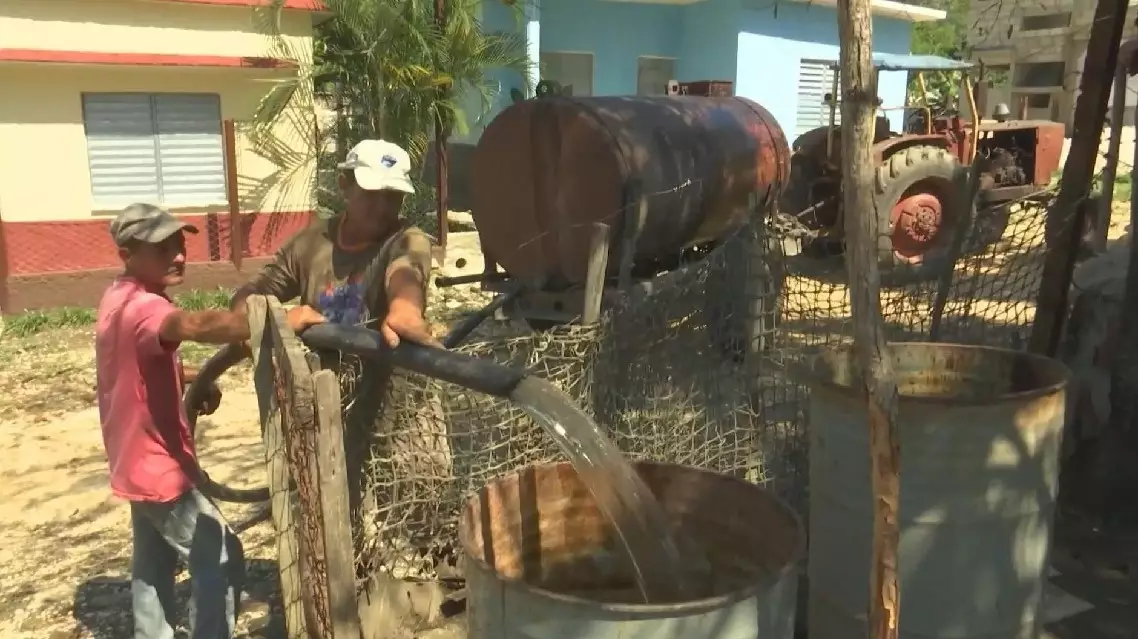
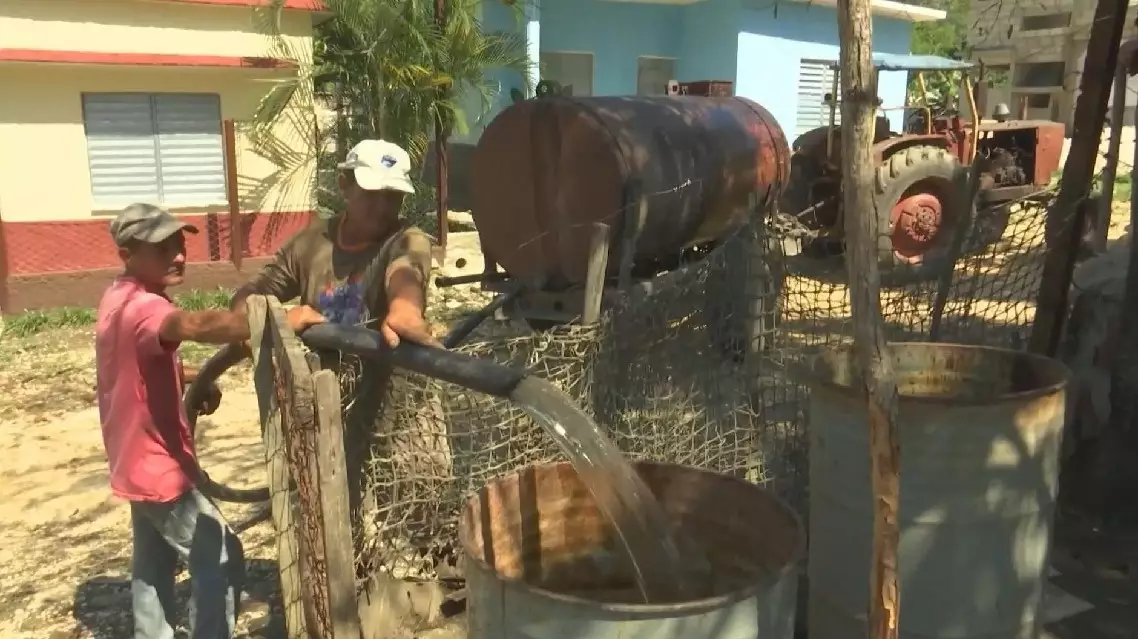
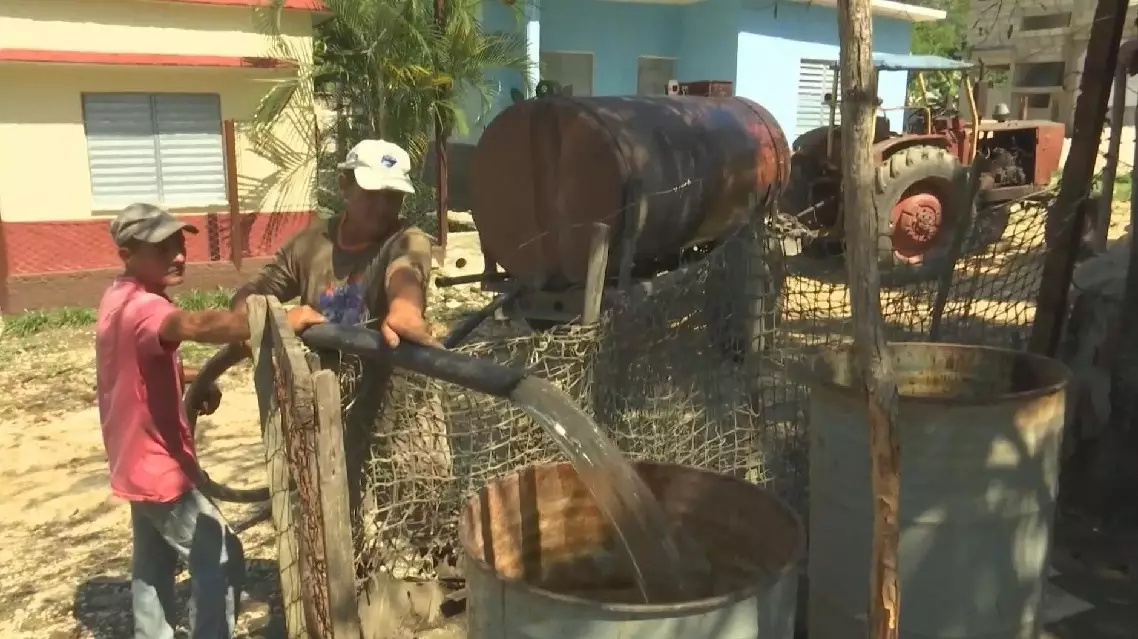
Over 600,000 people in Cuba facing shortages of safe drinking water

China

China

China

Over 600,000 people in Cuba facing shortages of safe drinking water

2024-09-15 16:11 Last Updated At:20:37

More than 600,000 people in Cuba are struggling with access to safe drinking water, with authorities ramping up repairs in the breakdown-prone water system to ease the crisis.

Cuban authorities said the current water supply problem stems from breakdowns at water pumping stations due to technical failures and constant power outages.

Access to drinking water has been an issue on the island of Cuba for some time. This has forced people to endure a hot and uncomfortable summer season.

"We have a serious water supply situation. I can't mention a specific district, the water shortage affects us all. I live near here and my case is also critical," said Mario Mustelier, a Havana resident.

"I've experienced difficult times here because water has only been supplied once every four days to this zone. I've had to go to bathe or eat at one of my sons' places, because I live alone here," said Laudelina Piero, another resident in Havana.

Laudelina said water shortages have led her sons to use containers to store water and connect them to the house pipes for some relief.

The island's old thermal power plants have faced fuel supply shortages and equipment failures, causing power outages which affect both the industry and the residents.

After authorities made repairs to water pumping equipment, some districts in Havana have already seen an improvement in access to water.

"The problems seem to be solved. Water supply is returning to normal," said Havana resident Maria Teresa Batista.

Meanwhile, water resources workers are repairing and mounting new pipes and pumps to bring the water supply system back on its feet.
Over 600,000 people in Cuba facing shortages of safe drinking water
Over 600,000 people in Cuba facing shortages of safe drinking water
Over 600,000 people in Cuba facing shortages of safe drinking water

Over 600,000 people in Cuba facing shortages of safe drinking water
Over 600,000 people in Cuba facing shortages of safe drinking water

Over 600,000 people in Cuba facing shortages of safe drinking water
China's Shenzhou-23 astronauts have spent more than 80 days aboard the Tiangong Space Station, where they have advanced a broad slate of scientific experiments and operational training drills over the past week as the mission progresses steadily.

Last week, the three astronauts, namely Zhu Yangzhu, Zhang Zhiyuan, and Lai Ka-ying, carried out multiple parallel space science experiments and tests, according to the China Manned Space Agency (CMSA).

The crew completed in-orbit electroencephalogram (EEG) tests and behavioral experiments for the microgravity intuitive physics project, examining how prolonged spaceflight affects astronauts' brain functional networks and their ability to form intuitive physical representations.

They also collected and processed blood samples for research programs including bone metabolism interactive regulation and space integrative omics, supporting studies on the changing patterns of the human skeletal, nervous and other physiological systems during long-duration spaceflight.

In addition, kinematic characteristic experiments were conducted to provide support for ergonomic design and evaluation.

In the field of psychological and behavioral research, the trio finished an emergency decision-making capability assessment and an in-orbit emotional state test, part of ongoing work to track changes in crew performance and mental status throughout long-term on-orbit missions.

Alongside scientific endeavors, the astronauts pushed ahead with scheduled in-orbit training and emergency drills to reinforce their operational skills and response readiness.

Footage from the orbital complex shows the crew honing their skills on the on-orbit teleoperation rendezvous and docking training system, practicing manual docking, teleoperated docking and manual evacuation maneuvers by operating translation and attitude control handles.

They also completed in-orbit medical rescue training to familiarize themselves with rescue procedures and force application characteristics in a microgravity environment.

Furthermore, the crew carried out the second full-system pressure emergency drill, further consolidating their emergency handling capabilities and improving space-ground coordination efficiency.

China launched the Shenzhou-23 crewed spaceship on May 24. The mission includes a one-year in-orbit study designed to gather data for future long-duration human space missions.

China's Shenzhou-23 crew advance space science experiments, in-orbit training

China's Shenzhou-23 crew advance space science experiments, in-orbit training

Recommended Articles