The lead engineer for an experimental submersible that imploded en route to the wreck of the Titanic testified Monday that he felt pressured to get the vessel ready to dive and refused to pilot it for a journey several years earlier.
“'I'm not getting in it,'” Tony Nissen said he told Stockton Rush, co-founder of the OceanGate company that owned the Titan submersible.
Click to Gallery
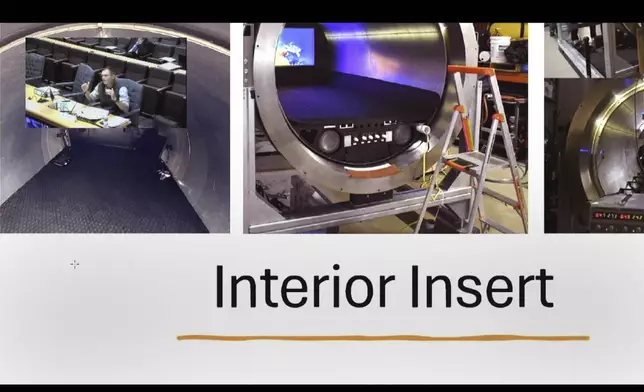
This image taken from a livestream video, provided by the United States Coast Guard, shows OceanGate's former engineering director Tony Nissen (inset at left), testifying regarding the Titan submersible failure before the U.S.C.G. Marine Board of Investigation, as file photos of the sub are displayed, Monday Sept. 16, 2024, in North Charleston, South Carolina. (United States Coast Guard via AP)
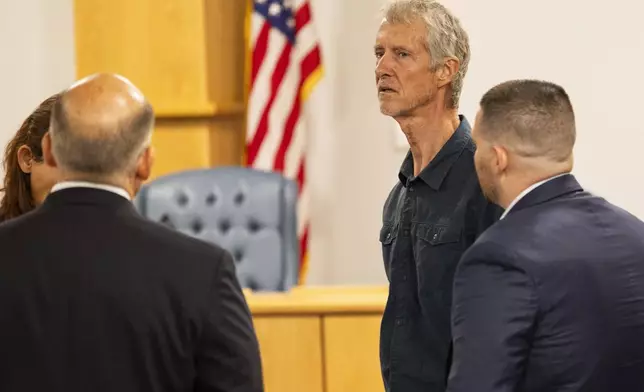
Tym Catterson, second from right, a contractor for OceanGate, talks to family members from the Titan tragedy after his testimony ended in a Coast Guard investigatory hearing on the causes of the implosion of an experimental submersible headed for the wreck of the Titanic, Monday, Sept. 16, 2024, in North Charleston, S.C. (AP Photo/Mic Smith)
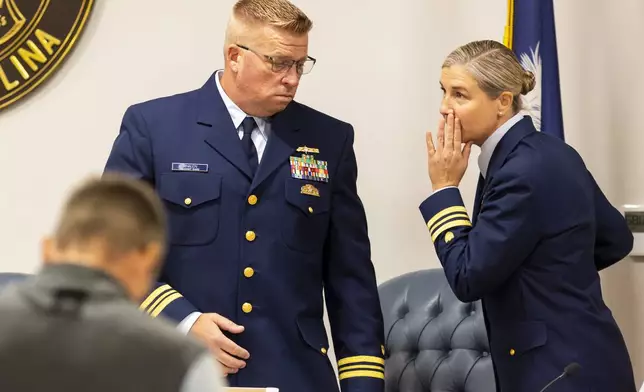
Coast Guard's Thomas Whalen, left, speaks with Nicole Emmons, right, during a break for the Titan marine board formal hearing inside the Charleston County Council Chambers, Monday, Sept. 16, 2024, in North Charleston, S.C. (AP Photo/Mic Smith)
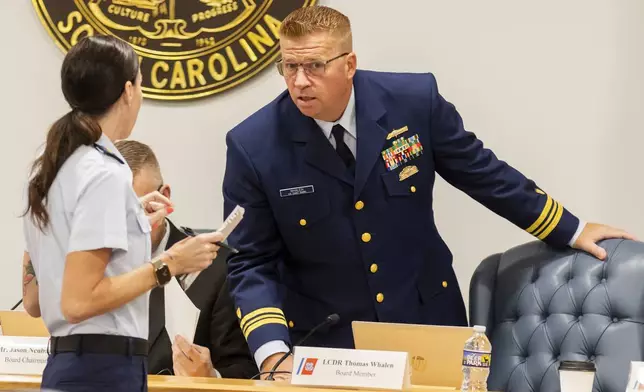
Coast Guard's Thomas Whalen speaks with another Coast Guard member during a break for the Titan marine board formal hearing inside the Charleston County Council Chambers, Monday, Sept. 16, 2024, in North Charleston, S.C. (AP Photo/Mic Smith)
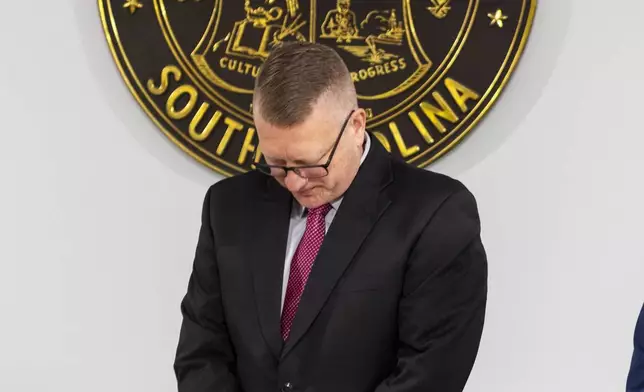
Jason Neubauer, board chairman, of the investigative board for the Titan marine board formal hearing pauses for a moment of silence inside the Charleston County Council Chambers Monday, Sept. 16, 2024, in North Charleston, S.C. (AP Photo/Mic Smith)
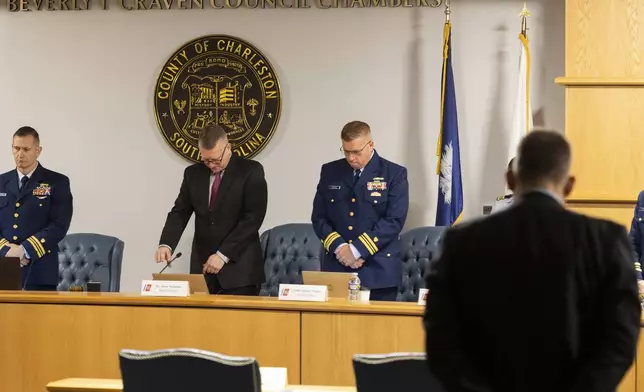
Coast Guard members of the investigative board for the Titan marine board formal hearing pause for a moment of silence inside the Charleston County Council Chambers Monday, Sept. 16, 2024, in North Charleston, S.C. (AP Photo/Mic Smith)
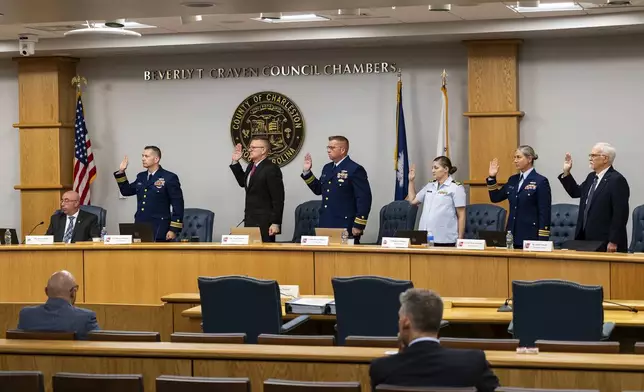
Coast Guard members of the investigative board for the Titan marine board formal hearing take an oath inside the Charleston County Council Chambers Monday, Sept. 16, 2024, in North Charleston, S.C. (AP Photo/Mic Smith)
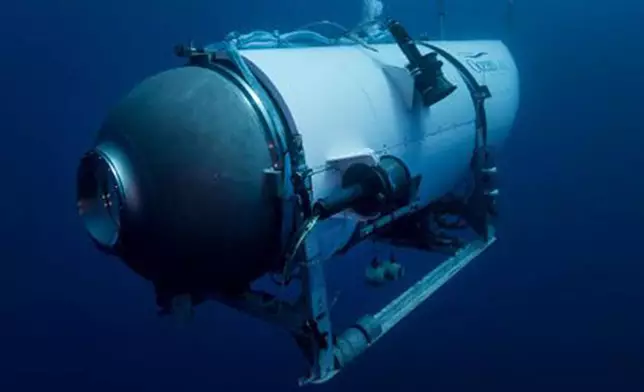
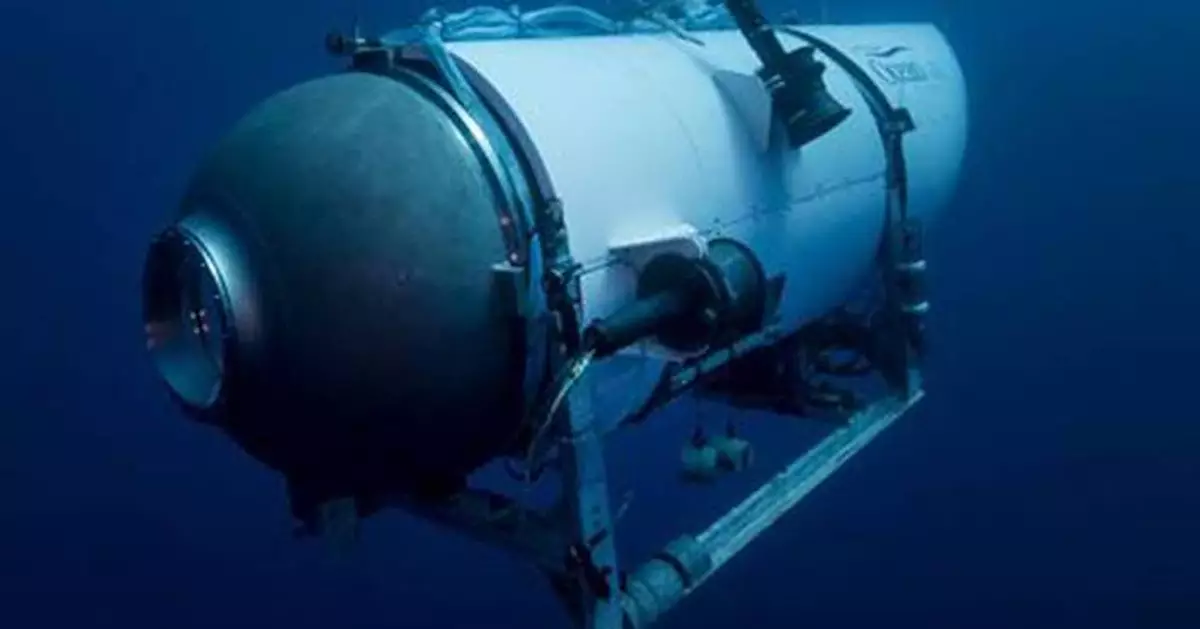
FILE - This undated image provided by OceanGate Expeditions in June 2021 shows the company's Titan submersible. (OceanGate Expeditions via AP, File)
Nissen, OceanGate’s former engineering director, was the first witness to testify at what is expected to be a two-week U.S. Coast Guard hearing. The Titan imploded on June 18, 2023, killing Rush and four others on board and setting off a worldwide debate about the future of private undersea exploration.
Nissen said Rush could be difficult to work for and was often very concerned with costs and project schedules, among other issues. He said Rush would fight for what he wanted, which often changed day to day. He added that he tried to keep the clashes between the two of them behind closed doors so that others in the company wouldn’t be aware.
“Most people would eventually just back down to Stockton,” he said at the hearing in North Charleston, South Carolina.
Nissen also noted that the Titan was struck by lightning during a test mission in 2018, and that might have compromised its hull.
When asked if there was pressure to get the Titan into the water, he responded, “100%.”
He said that he refused to pilot the Titan years ago because he didn't trust the operations staff, and that he stopped the submersible from going to the Titanic in 2019, telling Rush that the Titan was “not working like we thought it would.” He was fired that year. The Titan did undergo additional testing before it made later dives to the Titanic, Nissen added.
Asked if he felt the pressure from Rush compromised safety decisions and testing, Nissen paused, then replied, "No. And that’s a difficult question to answer, because given infinite time and infinite budget, you could do infinite testing.”
The submersible was left exposed to the elements while in storage for seven months in 2022 and 2023, and the hull was also never reviewed by any third parties, as is standard practice, Coast Guard representatives said in their initial remarks Monday. The absence of an independent review and the submersible's unconventional design subjected the Titan to scrutiny in the undersea exploration community.
One of the last messages from the Titan's crew to the support ship Polar Prince before the submersible imploded stated, “all good here,” according to a visual re-creation the Coast Guard presented earlier in the hearing.
The crew lost contact after an exchange of texts about the submersible's depth and weight as it descended. The Polar Prince then sent repeated messages asking if the Titan could still see the ship on its onboard display.
OceanGate, based in Washington state, suspended operations after the implosion. The company's former finance and human resources director, Bonnie Carl, testified Monday that she was aware of safety concerns about the Titan, and that the company’s operations director, David Lochridge, had characterized it as “unsafe.” Lochridge is scheduled to testify on Tuesday. Tym Catterson, a contractor who worked with the company, told the marine board on Monday that “training and operations at sea could have been better.”
Among those not on the witness list is Rush's widow, Wendy Rush, the company's communications director. Asked about her absence, spokesperson Melissa Leake said the Coast Guard does not comment on the reasons for not calling specific individuals to a particular hearing during ongoing investigations. She said it's common for a Marine Board of Investigation to “hold multiple hearing sessions or conduct additional witness depositions for complex cases.”
Also scheduled to appear later in the hearing are OceanGate co-founder Guillermo Sohnlein and former scientific director, Steven Ross, according to a list compiled by the Coast Guard. Numerous guard officials, scientists, and government and industry officials are also expected to testify. The Coast Guard subpoenaed witnesses who were not government employees, Leake said.
OceanGate has no full-time employees currently but will be represented by an attorney during the hearing, the company said in a statement. The company has been fully cooperating with the Coast Guard and NTSB investigations since they began, the statement said. The Titan had been making voyages to the Titanic wreckage site going back to 2021.
Last year, the submersible lost contact with its support vessel about two hours after it made its final dive. When it was reported overdue, rescuers rushed ships, planes and other equipment to an area about 435 miles (700 kilometers) south of St. John’s, Newfoundland.
The search for the submersible attracted worldwide attention, as it became increasingly unlikely that anyone could have survived the implosion. Wreckage of the Titan was subsequently found on the ocean floor about 330 yards (300 meters) off the bow of the Titanic, Coast Guard officials said.
The time frame for the investigation was initially a year, but the inquiry has taken longer. The ongoing Marine Board of Investigation is the highest level of marine casualty investigation conducted by the Coast Guard. When the hearing concludes, recommendations will be submitted to the Coast Guard’s commandant. The National Transportation Safety Board is also conducting an investigation.
“There are no words to ease the loss endured by the families impacted by this tragic incident,” said Jason Neubauer of the Coast Guard Office of Investigations, who led the hearing. “But we hope that this hearing will help shed light on the cause of the tragedy and prevent anything like this from happening again.”
This story has been edited to clarify that “all good here” was one of the last things heard from the submersible, not necessarily the very last thing heard, and that the lead engineer’s refusal to pilot the submersible was for a trip years before the fatal journey.
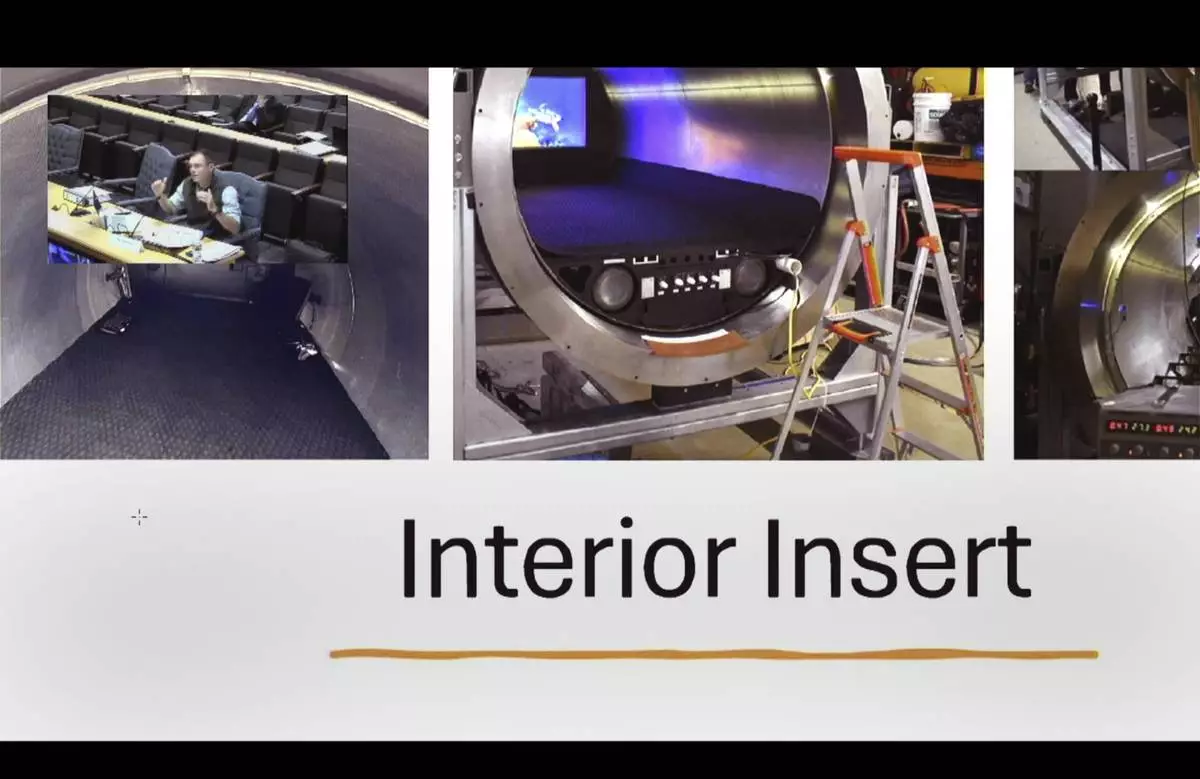
This image taken from a livestream video, provided by the United States Coast Guard, shows OceanGate's former engineering director Tony Nissen (inset at left), testifying regarding the Titan submersible failure before the U.S.C.G. Marine Board of Investigation, as file photos of the sub are displayed, Monday Sept. 16, 2024, in North Charleston, South Carolina. (United States Coast Guard via AP)
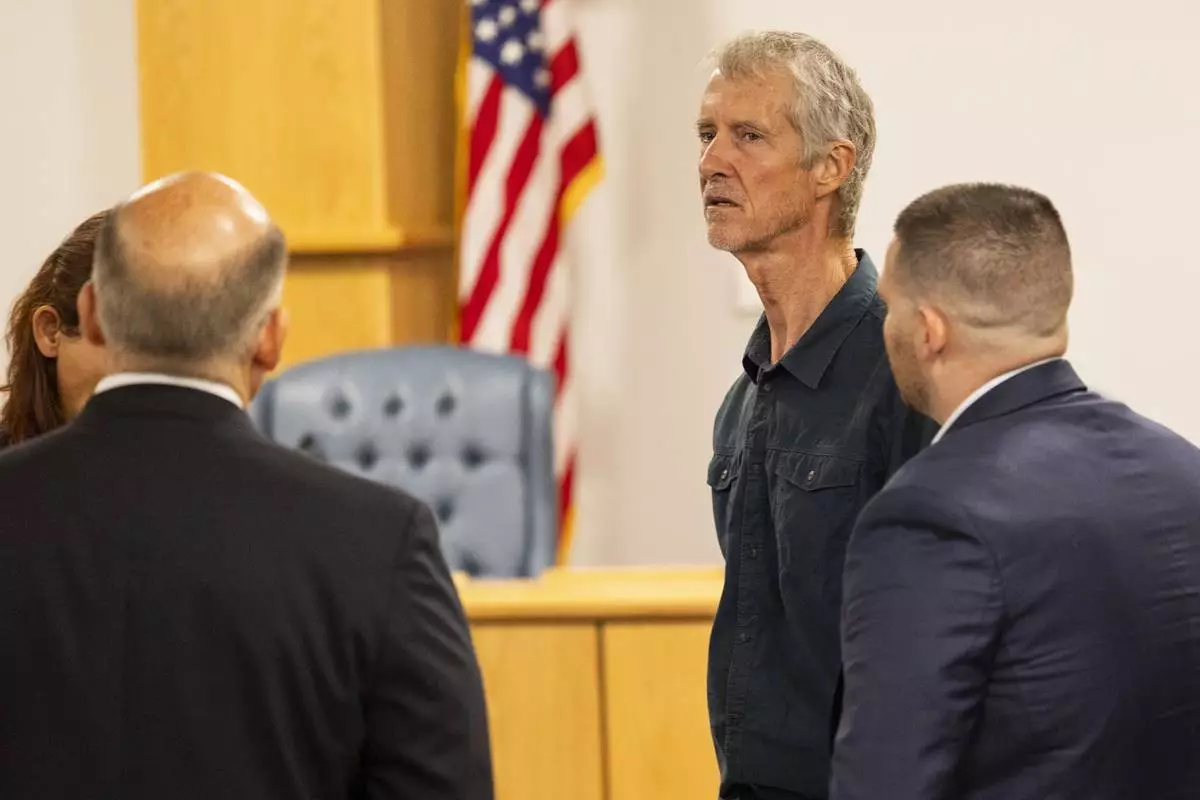
Tym Catterson, second from right, a contractor for OceanGate, talks to family members from the Titan tragedy after his testimony ended in a Coast Guard investigatory hearing on the causes of the implosion of an experimental submersible headed for the wreck of the Titanic, Monday, Sept. 16, 2024, in North Charleston, S.C. (AP Photo/Mic Smith)
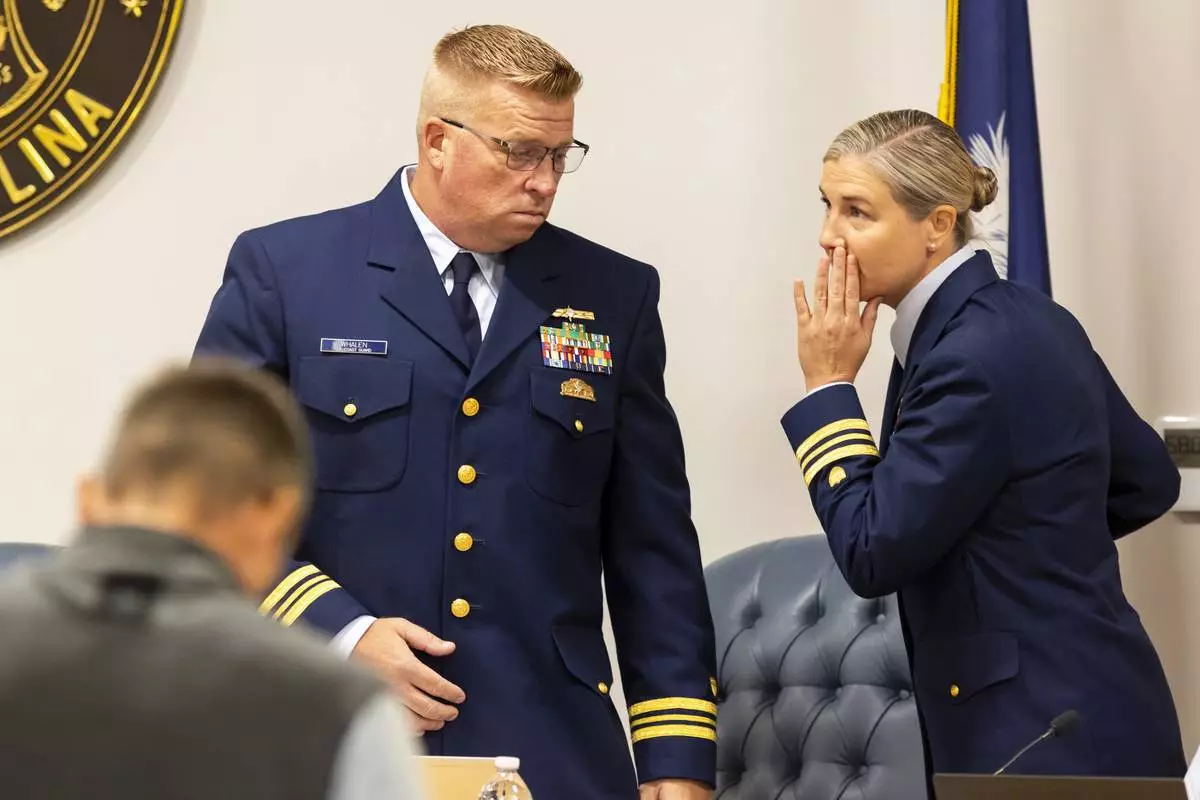
Coast Guard's Thomas Whalen, left, speaks with Nicole Emmons, right, during a break for the Titan marine board formal hearing inside the Charleston County Council Chambers, Monday, Sept. 16, 2024, in North Charleston, S.C. (AP Photo/Mic Smith)
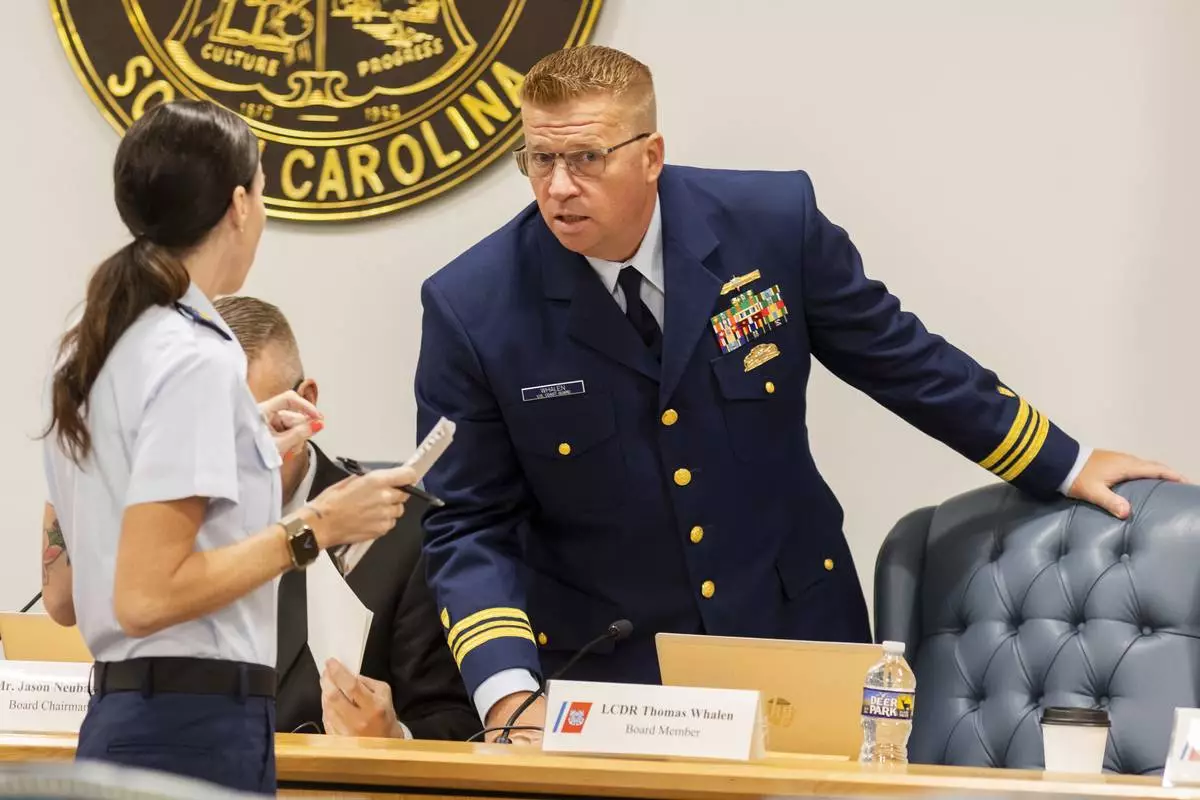
Coast Guard's Thomas Whalen speaks with another Coast Guard member during a break for the Titan marine board formal hearing inside the Charleston County Council Chambers, Monday, Sept. 16, 2024, in North Charleston, S.C. (AP Photo/Mic Smith)
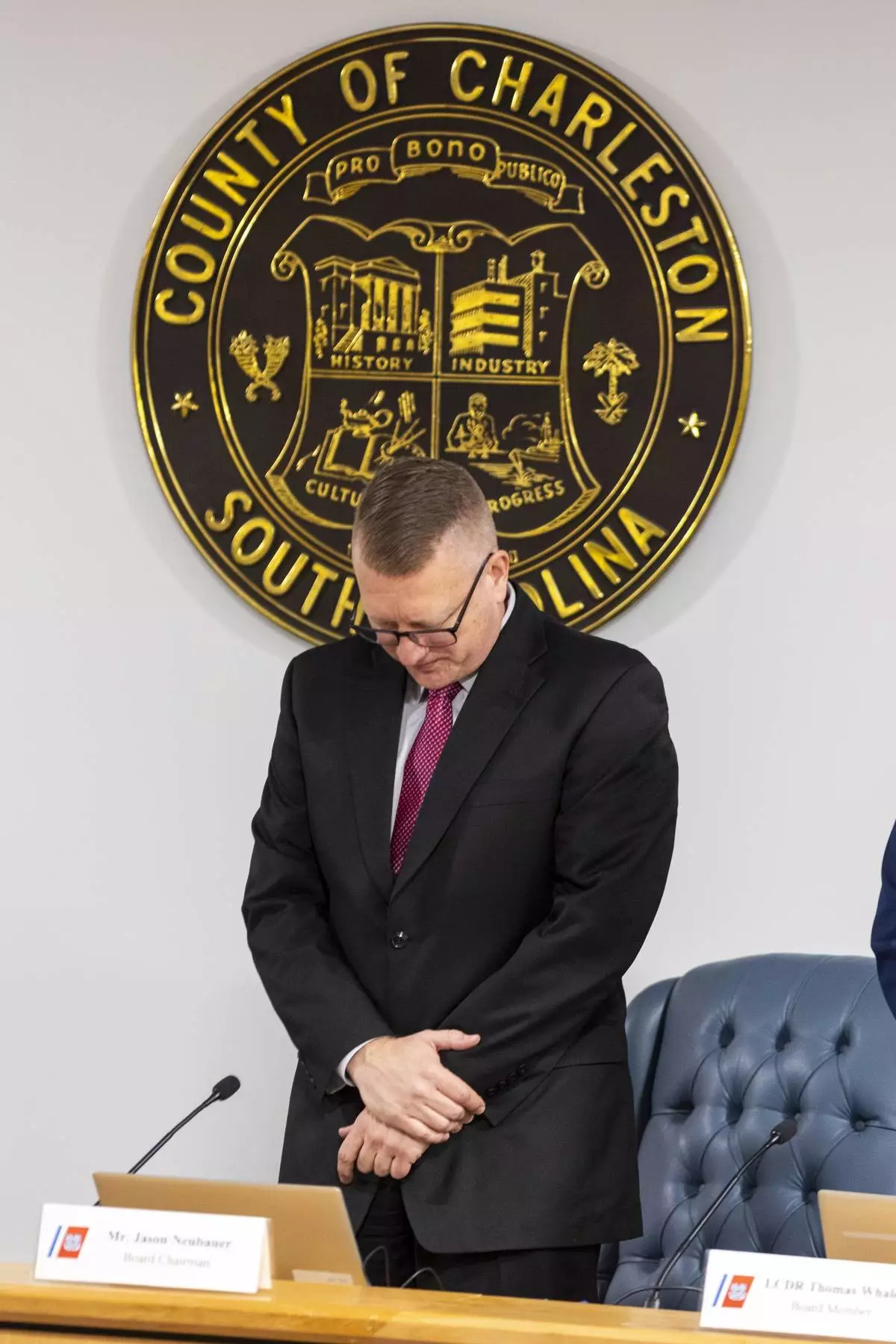
Jason Neubauer, board chairman, of the investigative board for the Titan marine board formal hearing pauses for a moment of silence inside the Charleston County Council Chambers Monday, Sept. 16, 2024, in North Charleston, S.C. (AP Photo/Mic Smith)
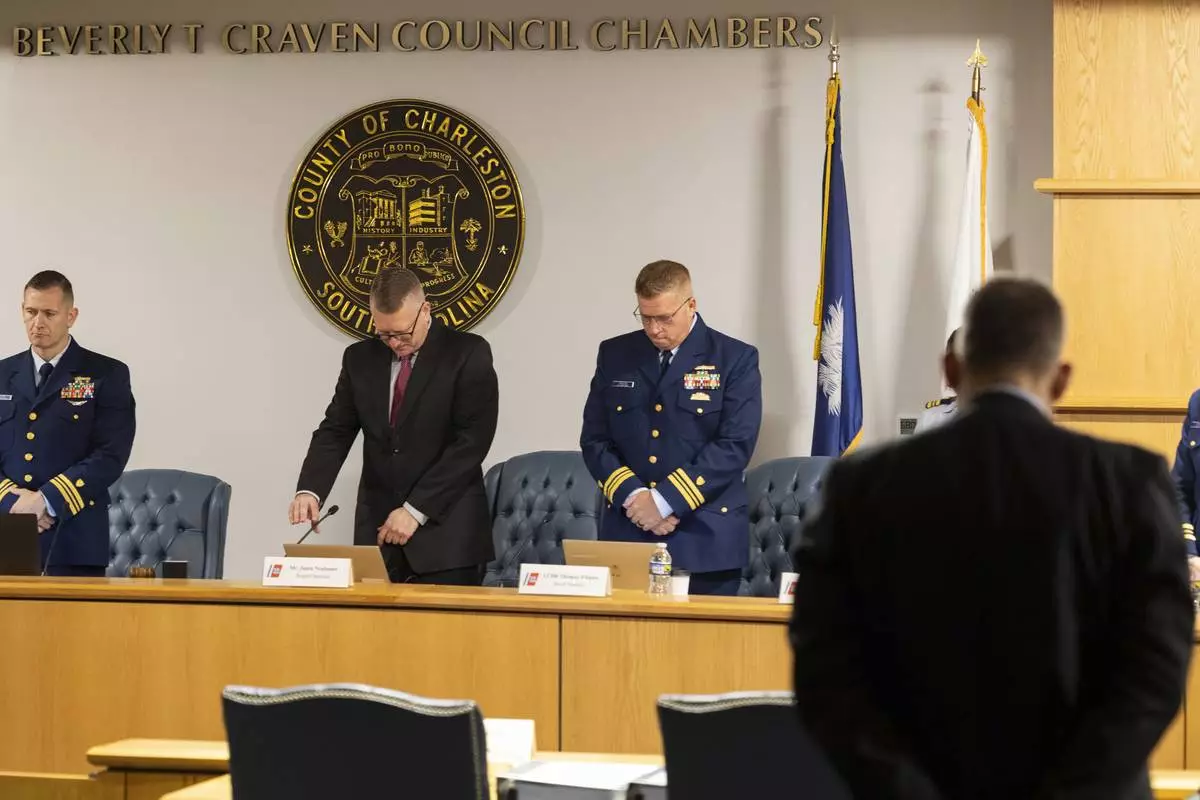
Coast Guard members of the investigative board for the Titan marine board formal hearing pause for a moment of silence inside the Charleston County Council Chambers Monday, Sept. 16, 2024, in North Charleston, S.C. (AP Photo/Mic Smith)
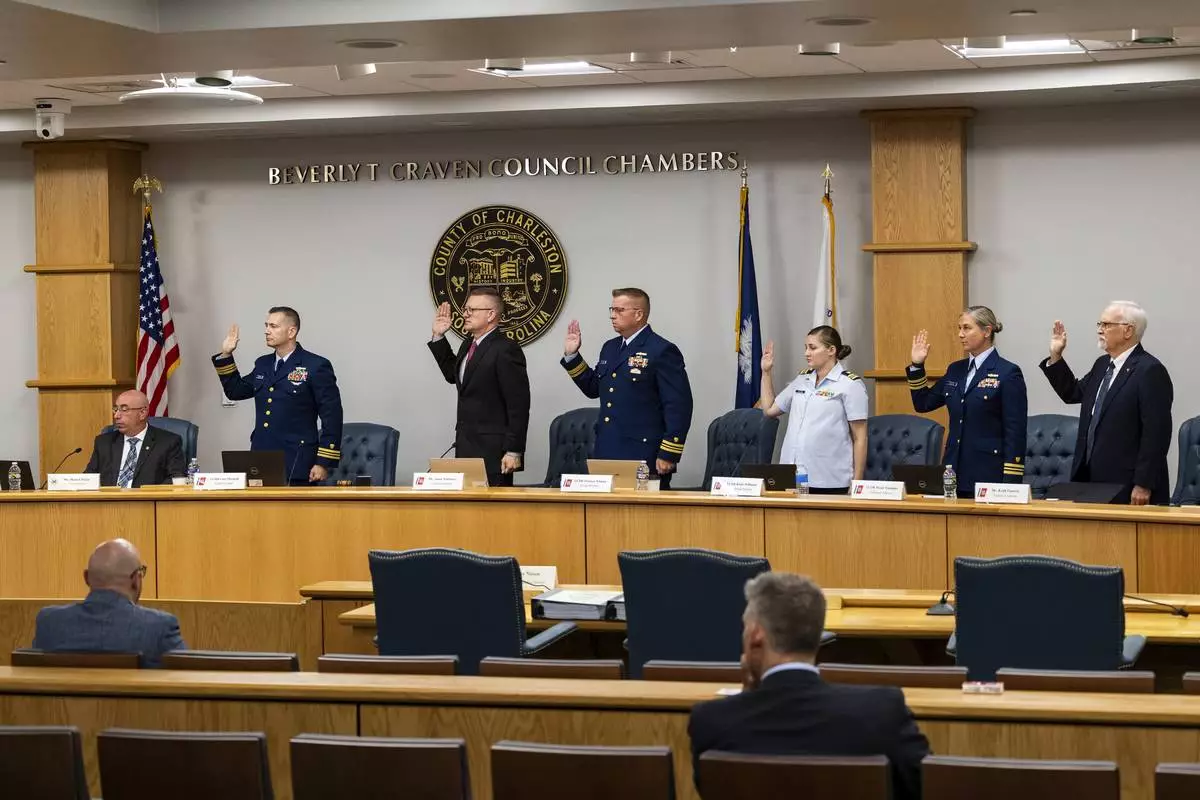
Coast Guard members of the investigative board for the Titan marine board formal hearing take an oath inside the Charleston County Council Chambers Monday, Sept. 16, 2024, in North Charleston, S.C. (AP Photo/Mic Smith)
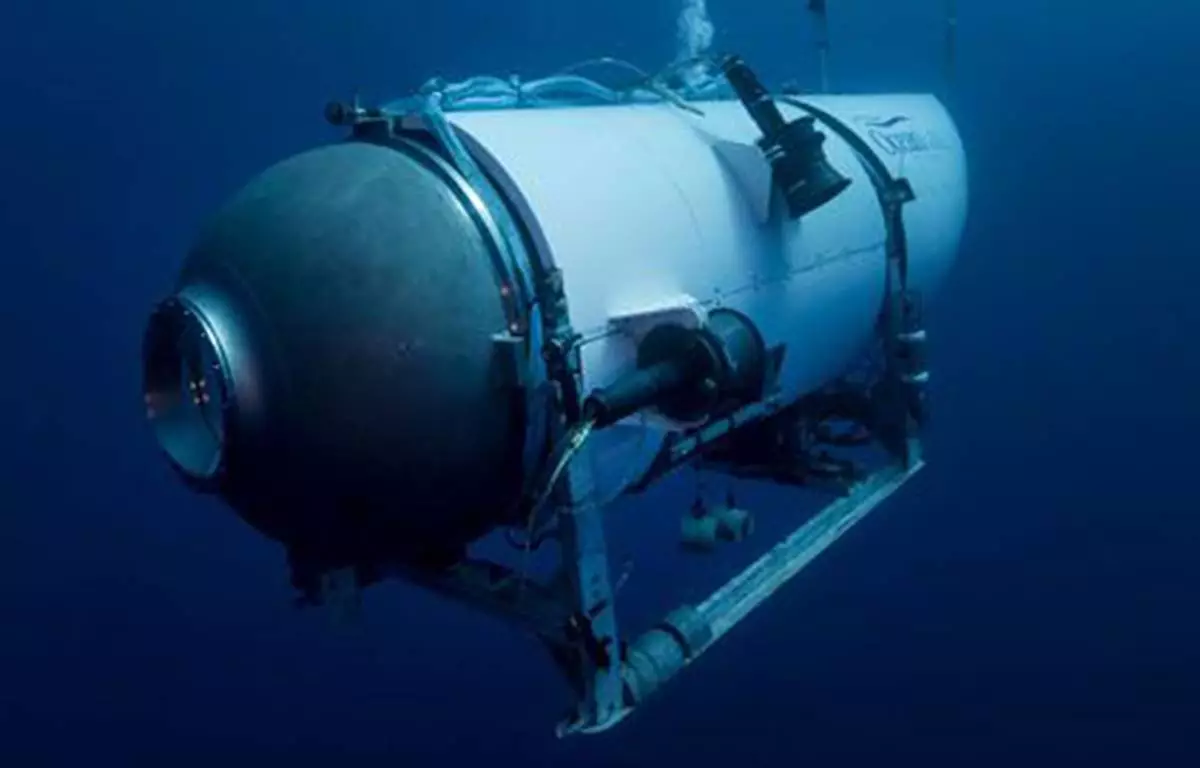
FILE - This undated image provided by OceanGate Expeditions in June 2021 shows the company's Titan submersible. (OceanGate Expeditions via AP, File)