The United Auto Workers' rift with Stellantis widened Monday as the union filed federal labor charges over possibly moving production of an SUV out of the country.
The union said it filed charges with the National Labor Relations Board accusing Stellantis of illegally refusing to release information about plans to move Dodge Durango production from a Detroit factory to one in Canada.
The union also has filed grievances over the Durango and company delays in reopening a vehicle assembly plant in Belvidere, Illinois, as well as build a parts distribution center and electric vehicle battery plant there. The UAW has threatened to strike on that issue.
The union says it based the unfair labor practices charge on media reports that the Durango would be moved from the Jefferson North Assembly Plant in Detroit.
The company committed to the Belvidere additions as well as Durango production in the union's new contract, reached last fall after a six-week strike, the UAW said.
In a statement, union President Shawn Fain said the contract gives the UAW the right to strike over contractual commitments to build vehicles in the U.S. “Now Stellantis wants to go back on the deal,” he said. “We intend to enforce our contract and to make Stellantis keep the promise.”
Stellantis denied that it's violating the contract and said that like all automakers, it is managing how and when it brings new vehicles into the market in order to be competitive. “We will communicate our plans to the UAW at the appropriate time,” the company said in a statement.
Many union members fear that if the automaker breaks its commitment to restart the Belvidere factory, it won’t keep other promises made in the new United Auto Workers contract, which runs through April of 2028. They worry, in particular, that the automaker could move production to factories in lower-cost Mexico.
Stellantis has said it still intends to reopen Belvidere and also build a battery plant and parts warehouse there, but needs to delay them because of unfavorable market conditions. It did not give dates for the changes. At stake are over 2,700 jobs.
The company agreed to reopen Belvidere Assembly in 2027, with plans to build up to 100,000 electric and gas-powered midsize pickups annually. It also agreed to open the parts hub this year and the battery factory in 2028. In all, the company pledged $18.9 billion of U.S. investments during the contract, which runs until April 2028.
It also agreed to build gas and electric versions of the next generation of Durango at Jefferson North starting in 2026.
The letter said Stellantis and the UAW agree that investment and jobs in North America are “contingent upon plant performance, changes in market conditions, and consumer demand continuing to generate sustainable and profitable (sales) volumes.”
This story has been corrected to change the reason for the union filing an unfair labor practice charge. It was filed over the company's alleged refusal to give the UAW information on a potential move of Dodge Durango production to Canada.
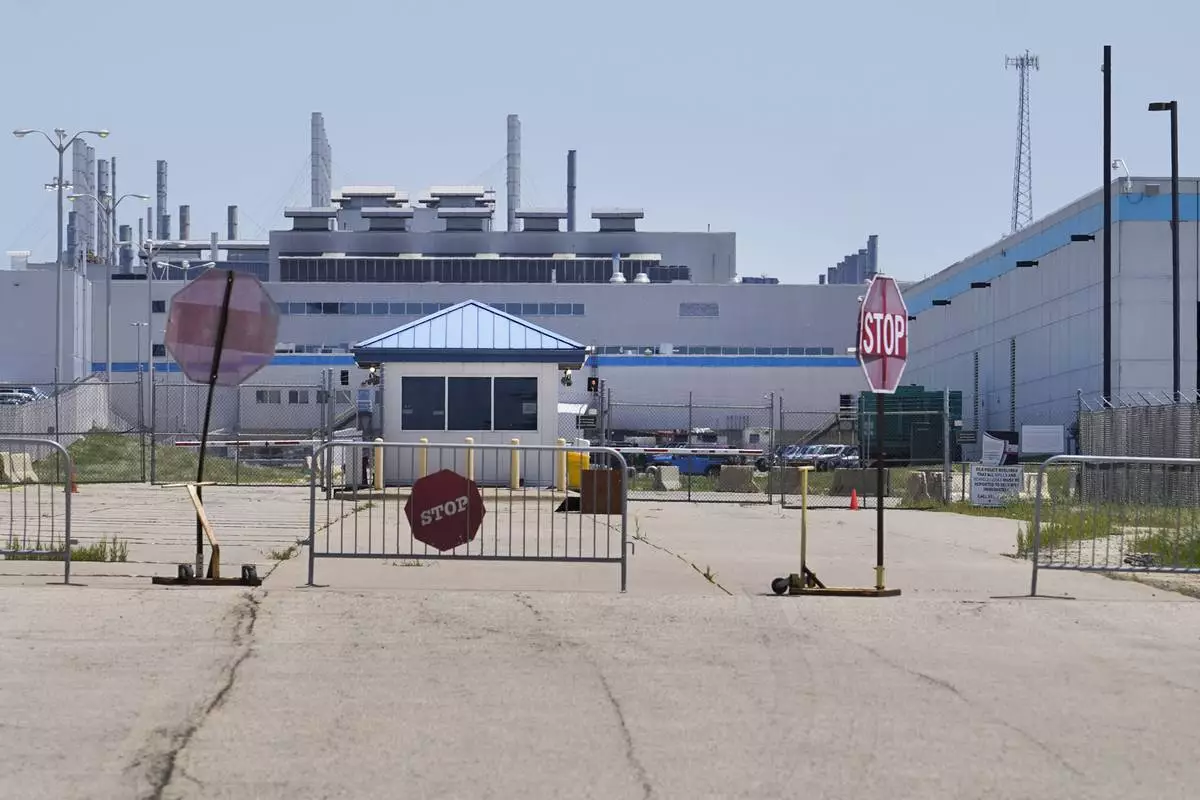
FILE - An entrance to the Stellantis factory in Belvidere. Ill., is shown on July 10, 2023. (AP Photo/Charles Rex Arbogast, File)
LOS GATOS, Calif. (AP) — Like many retirement communities, The Terraces serves as a tranquil refuge for a nucleus of older people who no longer can travel to faraway places or engaging in bold adventures.
But they can still be thrust back to their days of wanderlust and thrill-seeking whenever caretakers at the community in Los Gatos, California, schedule a date for residents — many of whom are in their 80s and 90s — to take turns donning virtual reality headsets.
Within a matter of minutes, the headsets can transport them to Europe, immerse them in the ocean depths or soar them on breathtaking hang-gliding expeditions while they sit by each other. The selection of VR programming was curated by Rendever, a company that has turned a sometimes isolating form of technology into a catalyst for better cognition and social connections in 800 retirement communities in the United States and Canada.
A group of The Terraces residents who participated in a VR session earlier this year found themselves paddling their arms alongside their chairs as they swam with a pod of dolphins while watching one of Rendever's 3D programs. “We got to go underwater and didn't even have to hold our breath!” exclaimed 81-year-old Ginny Baird following the virtual submersion.
During a session featuring a virtual ride in a hot-air balloon, one resident gasped, “Oh my God!” Another shuddered, “It's hard to watch!”
The Rendever technology can also be used to virtually take older adults back to the places where they grew up as children. For some, it will be the first time they've seen their hometowns in decades.
A virtual trip to her childhood neighborhood in New York City's Queens borough helped sell Sue Livingstone, 84, on the merits of the VR technology even though she still is able to get out more often than many residents of The Terraces, which is located in Silicon Valley about 55 miles south of San Francisco.
“It isn't just about being able to see it again, it's about all the memories that it brings back,” Livingstone said. “There are a few people living here who never really leave their comfort zones. But if you could entice them to come down to try out a headset, they might find that they really enjoy it.”
Adrian Marshall, The Terraces' community life director, said that once word about a VR experience spreads from one resident to another, more of the uninitiated typically become curious enough to try it out — even if it means missing out on playing Mexican Train, a dominoes-like board game that's popular in the community.
“It turns into a conversation starter for them. It really does connect people,” Marshall said of Rendever's VR programming. “It helps create a human bridge that makes them realize they share certain similarities and interests. It turns the artificial world into reality.”
Rendever, a privately owned company based in Somerville, Massachusetts, hopes to build upon its senior living platform with a recent grant from the National Institutes of Health that will provide nearly $4.5 million to study ways to reduce social isolation among seniors living at home and their caregivers.
Some studies have found VR programming presented in a limited viewing format can help older people maintain and improve cognitive functions, burnish memories and foster social connections with their families and fellow residents of care facilities. Experts say the technology may be useful as an addition to and not a replacement for other activities.
“There is always a risk of too much screen time," Katherine “Kate” Dupuis, a neuropsychologist and professor who studies aging issues at Sheridan College in Canada, said. “But if you use it cautiously, with meaning and purpose, it can be very helpful. It can be an opportunity for the elderly to engage with someone and share a sense of wonder.”
VR headsets may be an easier way for older people to interact with technology instead of fumbling around with a smartphone or another device that requires navigating buttons or other mechanisms, said Pallabi Bhowmick, a researcher at the University of Illinois Urbana-Champaign who is examining the use of VR with older adults.
“The stereotypes that older adults aren’t willing to try new technology needs to change because they are willing and want to adapt to technologies that are meaningful to them,” Bhowmick said. "Besides helping them to relieve stress, be entertained and connect with other people, there is an intergenerational aspect that might help them build their relationships with younger people who find out they use VR and say, ‘Grandpa is cool!’"
Rendever CEO Kyle Rand's interest in helping his own grandmother deal with the emotional and mental challenges of aging pushed him down a path that led him to cofound the company in 2016 after studying neuroengineering at Duke University.
“What really fascinates me about humans is just how much our brain depends on social connection and how much we learn from others,” Rand said. “A group of elderly residents who don't really know each other that well can come together, spend 30 minutes in a VR experience together and then find themselves sitting down to have lunch together while continuing a conversation about the experience.”
It's a large enough market that another VR specialist, Dallas-based Mynd Immersive, competes against Rendever with services tailored for senior living communities.
Besides helping create social connections, the VR programming from both Rendever and Mynd has been employed as a possible tool for potentially slowing down the deleterious effects of dementia. That's how another Silicon Valley retirement village, the Forum, sometimes uses the technology.
Bob Rogallo, a Forum resident with dementia that has rendered him speechless, seemed to be enjoying taking a virtual hike through Glacier National Park in Montana as he nodded and smiled while celebrating his 83rd birthday with his wife of 61 years.
Sallie Rogallo, who doesn't have dementia, said the experience brought back fond memories of the couple's visits to the same park during the more than 30 years they spent cruising around the U.S. in their recreational vehicle.
“It made me wish I was 30 years younger so I could do it again,” she said of the virtual visit to Glacier. “This lets you get out of the same environment and either go to a new place or visit places where you have been.”
In another session at the Forum, 93-year-old Almut Schultz laughed with delight while viewing a virtual classical music performance at the Red Rocks Amphitheatre in Colorado and later seemed to want to play with a puppy frolicking around in her VR headset.
“That was quite a session we had there,” Schultz said with a big grin after she took off her headset and returned to reality.
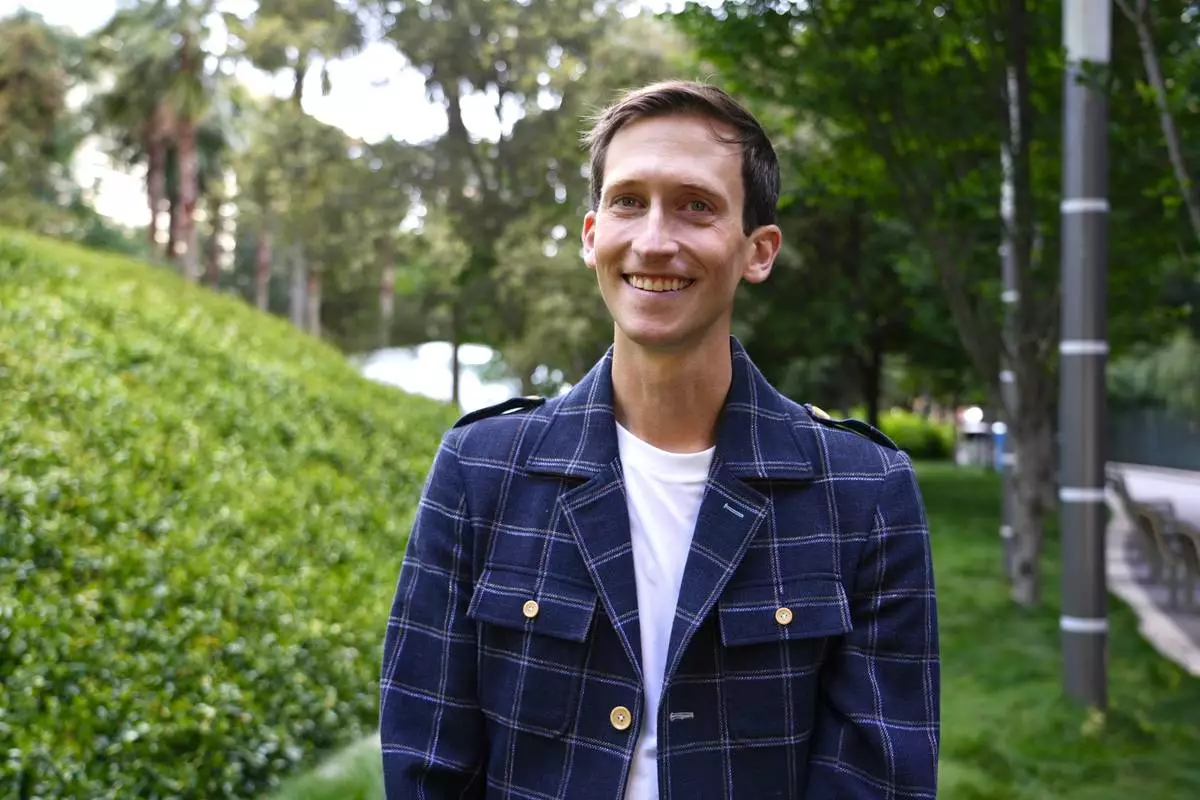
Rendever CEO Kyle Rand is pictured at Salesforce Park in San Francisco on June 27, 2025. (AP Photo/Terry Chea)
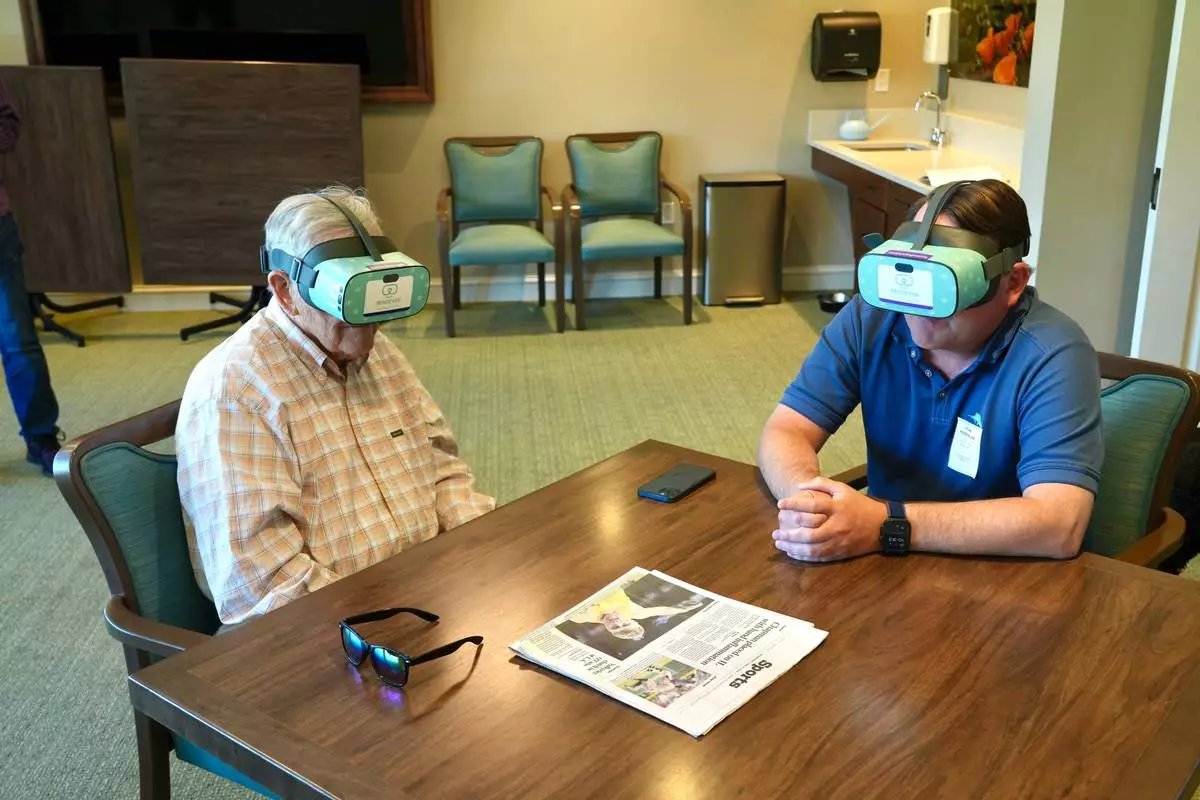
Jim Holtshouse and his son, Mike Holtshouse, watch video through Rendever virtual-reality headsets at the Forum at Rancho San Antonio retirement community in Cupertino, Calif. on June 11, 2025. (AP Photo/Terry Chea)
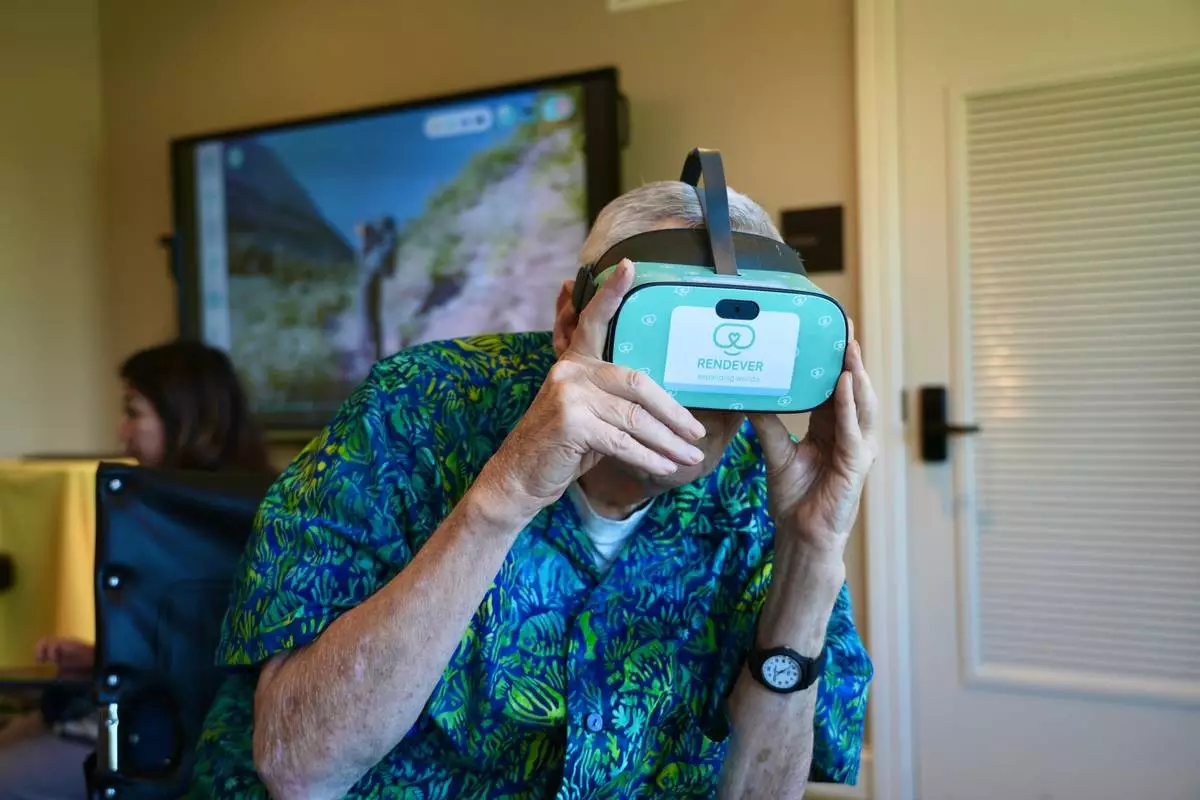
Bob Rogallo watches video through a Rendever virtual-reality headset at the Forum at Rancho San Antonio retirement community in Cupertino, Calif. on June 11, 2025. (AP Photo/Terry Chea)
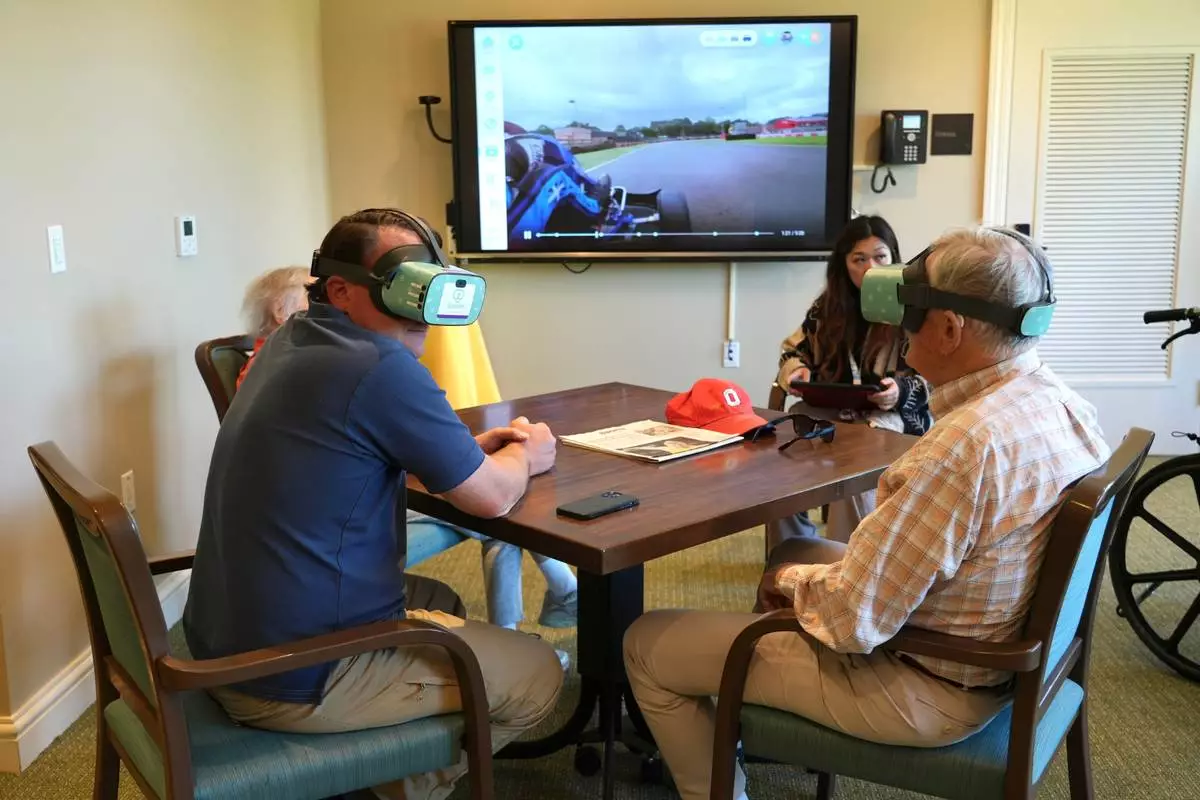
Mike Holtshouse and his father, Jim Holtshouse, watch video through Rendever virtual-reality headsets at the Forum at Rancho San Antonio retirement community in Cupertino, Calif. on June 11, 2025. (AP Photo/Terry Chea)
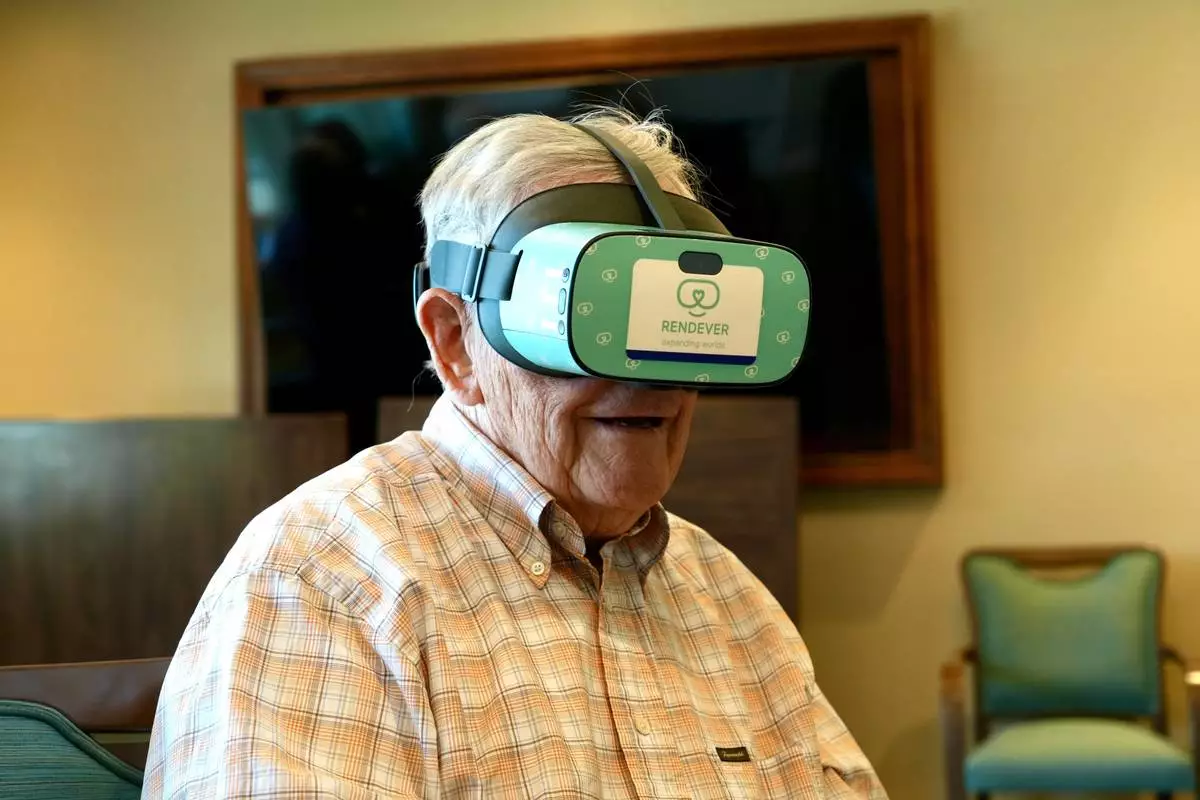
Jim Holtshouse watches video through a Rendever virtual-reality headset at the Forum at Rancho San Antonio retirement community in Cupertino, Calif. on June 11, 2025. (AP Photo/Terry Chea)