Skip to Content Facebook Feature Image

New technologies protect ancient Buddhist artwork in Dunhuang caves, cliffs

China

China

China

New technologies protect ancient Buddhist artwork in Dunhuang caves, cliffs

2024-09-17 16:28 Last Updated At:17:17

Environmental simulation and digital replication are among the new technologies now employed to protect the Dunhuang Mogao Grottoes, a 1,600-year-old UNESCO World Heritage site located in the Gobi Desert in Dunhuang City, northwest China's Gansu Province.

Researchers for decades have tried to find ways to protect the cultural heritage site, home to a vast collection of Buddhist artworks carved into the cliffs, from damage caused by natural or human factors.

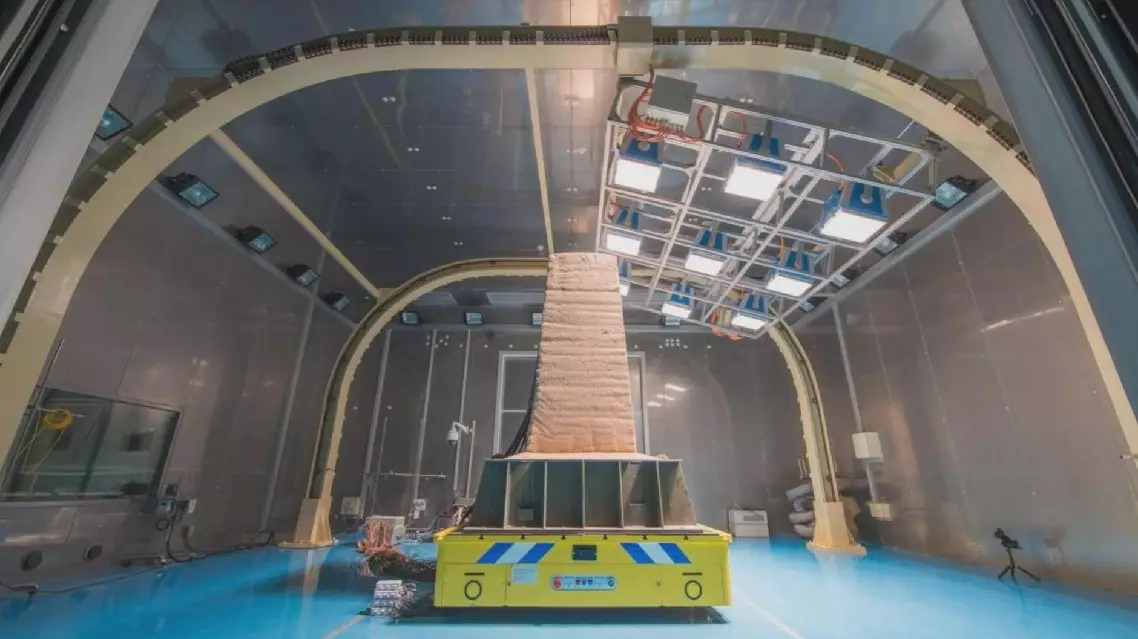
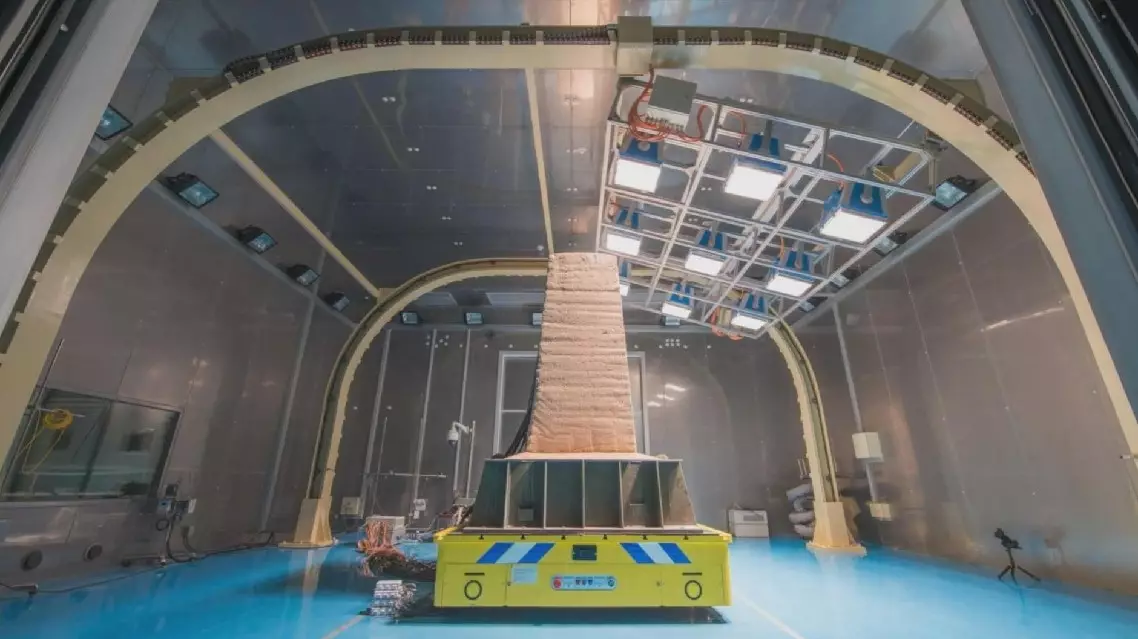
A multi-field coupling lab on murals and ancient ruins protection under the Dunhuang Academy, the first of its kind in China to be employed in cultural relics preservation, was put into use by the end of 2020.

Located in the city of Dunhuang, the lab covers an area of 16,000 square meters. It is able to simulate the four seasons and the erosion by wind, rain and snow that the earthen relics could experience in a natural environment. It can also simulate temperatures ranging from minus 30 to 60 degrees Celsius and relative humidity ranging from 10 to 90 percent.

"In the 'summer house', we can simulate the environment in the southern region which is hot and humid. We can also simulate a dry environment with a temperature of over 40 degrees Celsius. [The temperatures and lighting] have impacts on the heritage sites," said Liu Xiaoying, a research fellow at the Multi-field Coupling Environmental Lab of Immovable Heritage under the academy.

Researchers at the lab not only study the local soil, but have also brought samples from heritage sites in other areas such as the northwestern city of Xi'an and Sichuan Province in southwest China to the lab.

The academy has been working with academic institutions including the University of Oxford and China's Northwest University in an international synchronous field trial.

With a controlled environment to its merit, the lab will play an important role in cultural heritage protection across the country, according to the academy.

"The time and conditions are controllable and the data is precise. We can also test samples with a larger size - which can better protect the immovable cultural heritage," Liu said.

Dunhuang Academy is now also using digital technology to record all the paintings and sculptures in the Dunhuang Mogao Grottoes in order to permanently preserve the relics in the database.

The Dunhuang Academy started its digitization project in the 1990s to create digital versions of the Mogao Grottoes and other grotto temples and has accumulated massive digital cultural resources.

With digital technology, murals, grottoes, painted sculptures and other splendid cultural heritage items have been reproduced and thus are able to be shared with the world.
New technologies protect ancient Buddhist artwork in Dunhuang caves, cliffs
New technologies protect ancient Buddhist artwork in Dunhuang caves, cliffs

New technologies protect ancient Buddhist artwork in Dunhuang caves, cliffs

New technologies protect ancient Buddhist artwork in Dunhuang caves, cliffs

Thai and Cambodian leaders must find a way to resolve their differences through talks and not on the battlefield, according to a former Thai foreign minister, who also believes China could be in a unique position to serve as a mediator given its strong ties with both sides.

Border clashes between the two sides have reignited since Dec 7 -- less than two months after the two sides signed a joint peace declaration -- with both trading the blame for instigating the attacks.

The latest round of fighting has left at least 19 Thai soldiers and 19 Thai civilians dead, with over 270,000 people displaced, Thailand's defense ministry announced on Wednesday.

Meanwhile, on the same day, the Cambodian Defense Ministry said that 17 civilians have been killed and 77 injured as the Thai military forces have continued airstrikes and artillery shelling into Cambodian territory, with over 438,000 individuals fleeing their homes.

With the two sides continuing to point the finger of blame and trade accusations of attacks on civilians, peace talks appear to be a long way off.

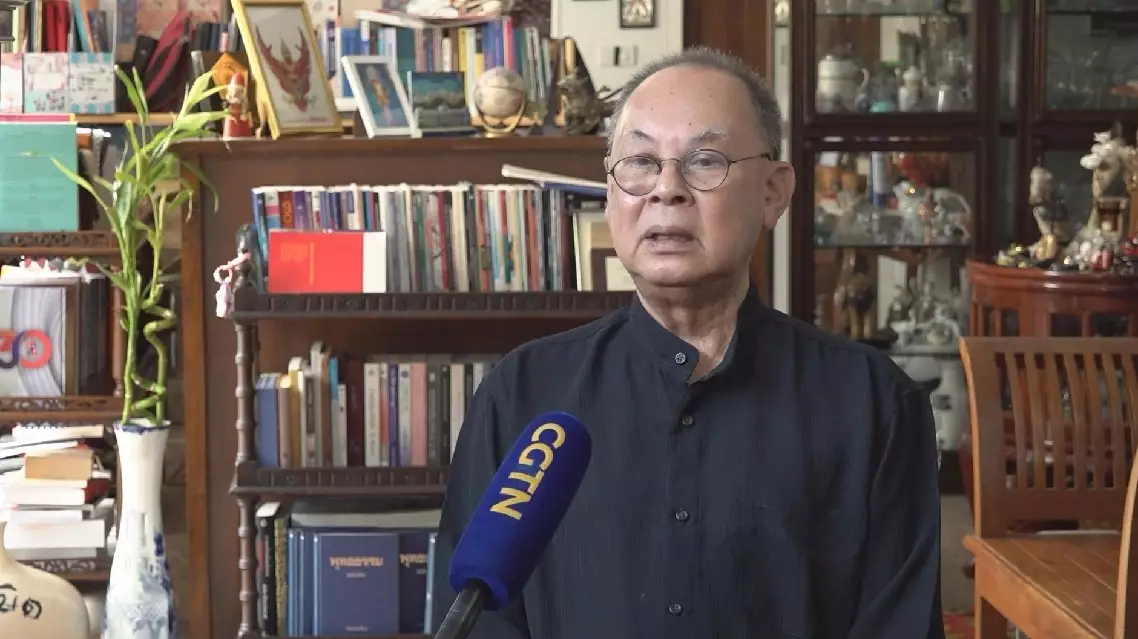
Kasit Piromya, who formerly served as Thailand's Minister of Foreign Affairs, urged the two countries' leaders to put people first, set aside their pride and find a resolution.

"The people must be the priority, not the victory or losses or the battlefield. It's detrimental and destructive to all. It is easy to arouse the passion, but [the sign of] great leaders, great statesmen is to be able to overcome the nationalistic sentiment and come back to the sense and sensibility and to start to talk with one another," he said.

China has called for utmost restraint and every possible measure conducive to a ceasefire to ensure de-escalation of tensions as soon as possible, a Chinese foreign ministry spokesman told a daily press briefing on Monday.

China supports direct dialogue and consultation between the two countries, as well as the efforts of ASEAN -- and Malaysia, in particular -- to promote peace talks, and the pursuit of a mutually acceptable solution within the ASEAN framework, according to the spokesman.

Piromya said he believes China could play a constructive role in a peace process between the two sides.

"China has been having, I think, more or less an excellent bilateral relationship respectively with Thailand and Cambodia. So China is in a very unique and great position to bring the two sides, Cambodia and Thailand, together," Piromya said.

Former official urges Thailand, Cambodia to make people priority, end border clashes

Former official urges Thailand, Cambodia to make people priority, end border clashes

Recommended Articles