The lunar samples collected by China's Chang'e-6 mission from the far side of the moon were unveiled for the first time on Saturday.
The samples, weighing a total of 1,935.3 grams, were retrieved by Chang'e-6 in June this year, marking the first time humans have obtained research samples directly from the moon's far side.
Earlier the week, a Chinese team of scientists published the first research paper on these lunar samples, saying that they exhibit "distinct characteristics" compared to previously obtained lunar samples.
The team found out that the Chang'e-6 soil samples have a lower density than previous samples, indicating a more porous and loosely structured composition. The plagioclase content of the Chang'e-6 samples is significantly higher than that of the Chang'e-5 samples, while their olivine content is significantly lower.
The study has also revealed that the Chang'e-6 lithic fragment samples are primarily composed of basalt, breccia, agglutinate, glasses and leucocrate.
Geochemical analysis of the Chang'e-6 lunar samples has shown that their concentration of trace elements such as thorium, uranium and potassium is markedly different from the samples retrieved by the Apollo missions and the Chang'e-5 mission. The Chang'e-6 samples also appear slightly lighter in color due to their different mineral composition.
"The Chang'e-6 lunar samples contain a significant amount of white material, including feldspar minerals, which are more abundant than in the Chang'e-5 samples. Additionally, there are significantly more glass fragments, contributing to a lighter overall appearance for the Chang'e-6 samples," said Li Chunlai, deputy chief designer of the Chang'e-6 mission and researcher with the National Astronomical Observatory of the Chinese Academy of Sciences.
In the lunar sample laboratory, the surface samples have largely be separated and packaged. Experts explained that the process of unsealing, dividing, and preparing the samples for experimentation took approximately two months. "For the surface samples, we will separate any rock fragments larger than 1 millimeter. These larger samples may have originated from different locations, and their research methods differ from those used for powdered samples. The remaining powder samples, smaller than 1 millimeter, will be thoroughly mixed and packaged into 10-11 bottles, each containing approximately 150 grams," Li said.
In contrast, the processing of the drilled samples is more complex and is expected to take an additional one to two months. Researchers are currently handling the remaining samples in a nitrogen-filled unit.
"In terms of weight, the scooped samples make up the majority of the total 1935.3 grams, roughly 1610 grams, and the remaining is drilled samples. But a significant portion of these drilled is stuck to the sample bag and cannot be removed, complicating the determination of their exact weight. The drilled samples account for less than 20 percent of the total and are all contained within a single sample bag. We need to divide them into 1.5-centimeter segments to represent different depths. This process, which involves separating over 100 individual samples, requires extreme care. So, we may still need another month or two to finish the pre-processing," Li said.
The Chang'e-6 probe was launched from the Wenchang Spacecraft Launch Site in south China's Hainan Province on May 3, 2024. It touched down on the far side of the moon on June 2. During its two-day stay, Chang'e-6 used a scoop and drill, collecting nearly 2 kilograms of lunar material. On June 25, its returner brought back the samples and made a landing in north China.
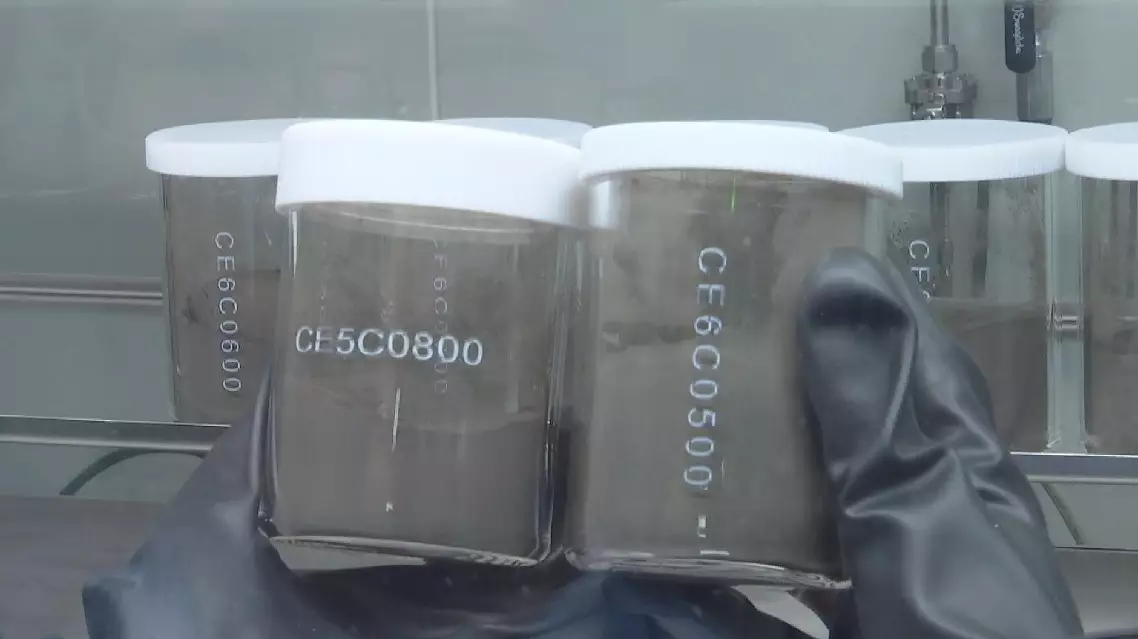
Chang'e-6 lunar samples from moon's far side unveiled for first time
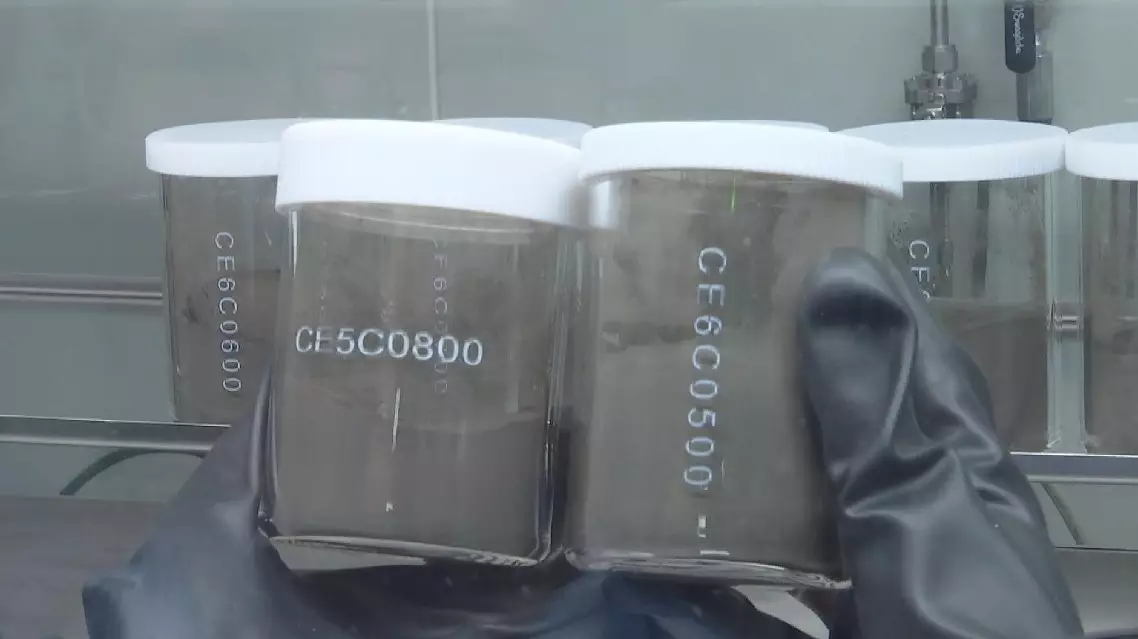
Chang'e-6 lunar samples from moon's far side unveiled for first time
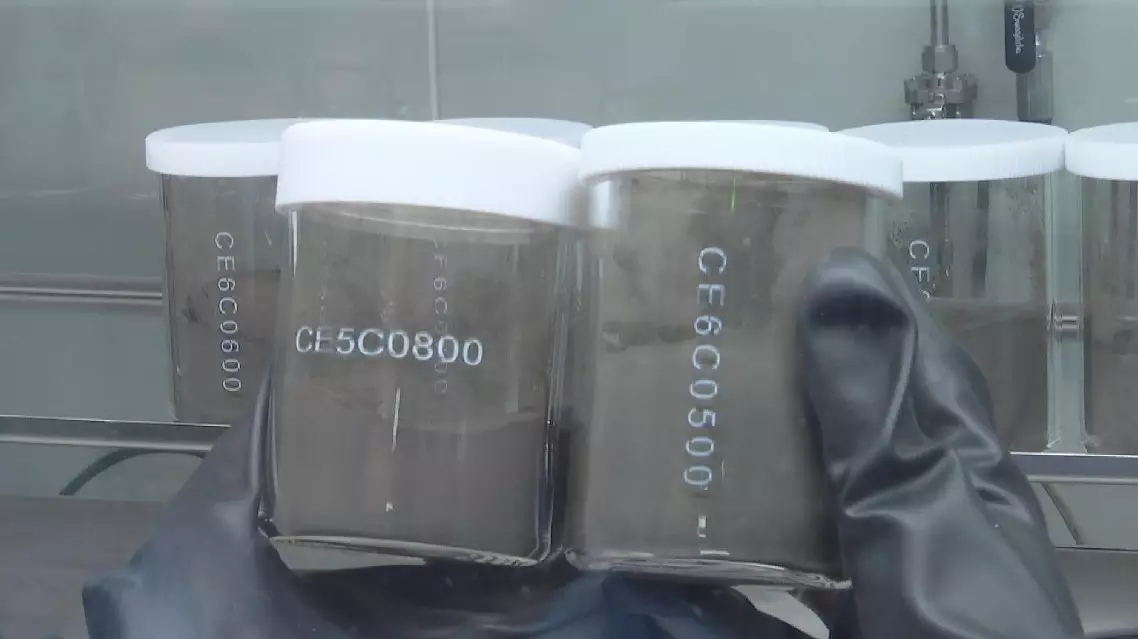
Chang'e-6 lunar samples from moon's far side unveiled for first time