Singapore, like many other Southeast Asian countries, is riding on the wave of China's rapidly evolving electric vehicle (EV) industry, as it charges ahead toward a green transition of its transport sector and economy.
A special program produced by China Global Television Network (CGTN) explores the rise of Chinese electric vehicle (EV) brands like BYD, Zeekr, and Omoda in Singapore as they transform the market with cutting-edge technology and affordable pricing. As Singapore scales up efforts to reduce carbon emissions, these EVs are not just vehicles -- they represent a shift towards a greener, more sustainable future.
Featuring insights from industry experts, the CGTN production highlights the challenges and opportunities of EV adoption in a dense urban landscape, offering a glimpse into how Chinese innovation is powering a new era of transportation in Southeast Asia.
"In Singapore, we have seen quite a spectacular growth in the availability of electric vehicles in recent years. But in particular, when you look at mass market electric vehicles targeted at the middle-income consumer, the majority of that growth has actually come from Chinese electric vehicle brands," said Walter Edgar Theseira, associate professor of economics at the Singapore University of Social Sciences.
China, a global leader in electric vehicle production, has been ramping up its export strategy, looking to capture international markets, particularly in Southeast Asia like Singapore.
"Historically, our Singapore car market was dominated by continental manufacturers as well as a Japanese and Korean mix. And I think what Chinese EV brands have brought to the table is an alternative for consumers, which has been focused in electrification, but also high technology," said Edgar Theseira.
With sleek designs and cutting-edge technology, these Chinese-made electric vehicles have rapidly expanded their presence and injected a fresh wave of innovation and affordability into Singapore's automotive market.
"In terms of pricing, they (Chinese EV brands) have also gone for the mass market to a mass premium end of pricing. And so, in presenting the Singapore consumers electric vehicles of high technology premium models, but at a very good price, I think that has shaken up the car market in Singapore quite a lot," said Edgar Theseira.
As the leading and first ever EV brand to enter Singapore's market, BYD has seen reception to EVs warming over the past few years.
"Over the past few years, the government of Singapore has been setting up a lot of good infrastructure supporting EV operation. The government has been giving a lot of support as well by giving concessions in taxes, so that more people find it affordable to buy, to own an EV," said James Ng, managing director of BYD Singapore and Philippines.
Aside from increased affordability, doubts about whether electric vehicles are able to match traditional cars performance-wise have also begun to diminish among consumers.
"The most important thing is the considerations of range anxiety, particular the fact that the battery capacity is limited. But in today's context, in terms of technology, our average range of vehicles is basically about plus or minus 500km. So, considering that every day you are driving about 30km to 50km in Singapore, you have a good range to be driven within the country. All the initial worries have been erased quite significantly over the past few years," Ng said.
Despite all the enthusiasm around EVs, the road to full EV adoption is not without its potholes.
"I think the challenge there in terms of infrastructure is going to be the match between charging availability and how many EVs there are actually on the road, because recovering is in the early stages of EV deployment. Singapore is an urban environment. Most of the population lives in highrise housing. So basically, the majority of EV owners have to share their charging at a public housing board, or carpark lots throughout Singapore. From what we hear from charge planning operators, there are too few EVs on the road and too many charge points available. But at the same time, in certain local areas, there could also be maybe too many EVs and not enough charging points. So, these are things we have to iron out, as things go along," said Edgar Theseira.
The influx of Chinese EVs isn't just about expanding market share -- it's a crucial step in Singapore's journey toward its carbon reduction goals, as the country aims to phase out internal combustion engine vehicles by 2040.
"Singapore is an urban environment and one of our concerns with motor vehicle use would be local pollution. Singapore has already made quite a lot of improvements in that area, but we also recognize that electric vehicles are an important part of the solution. Using public transport is the greenest form of land transport available. But if you have to use a private motor vehicle, then an electric vehicle is definitely greener than any petrol or conventional vehicle would be," said Edgar Theseira.
With Chinese EV brands leading the charge, Singapore's roads are not only becoming cleaner but also setting the pace for the future of transportation in Southeast Asia.
A recent report by Counterpoint Research, a global research firm, revealed that Chinese brands accounted for over 70 percent of EV sales in Southeast Asia this year, with BYD leading the market. Chinese brands have remained ahead in the EV race there, overtaking Japanese and South Korean ones which have long dominated Southeast Asia's internal combustion engine car market.
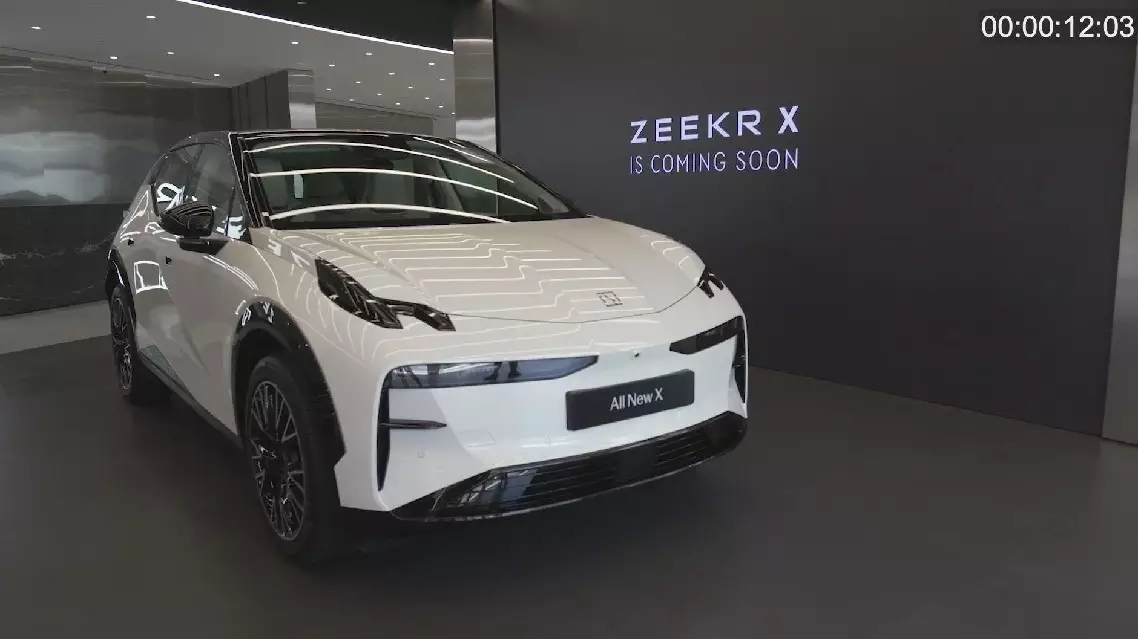
Chinese EV innovation drives evolution of Singapore's transport sector