Obesity is high and holding steady in the U.S., but the proportion of those with severe obesity — especially women — has climbed since a decade ago, according to new government research.
The U.S. obesity rate is about 40%, according to a 2021-2023 survey of about 6,000 people. Nearly 1 in 10 of those surveyed reported severe obesity, the U.S. Centers for Disease Control and Prevention found. Women were nearly twice as likely as men to report severe obesity.
The overall obesity rate appeared to tick down vs. the 2017-2020 survey, but the change wasn’t considered statistically significant; the numbers are small enough that there’s mathematical chance they didn’t truly decline.
That means it’s too soon to know whether new treatments for obesity, including blockbuster weight-loss drugs such as Wegovy and Zepbound, can help ease the epidemic of the chronic disease linked to a host of health problems, according to Dr. Samuel Emmerich, the CDC public health officer who led the latest study.
“We simply can’t see down to that detailed level to prescription medication use and compare that to changes in obesity prevalence,” Emmerich said. “Hopefully that is something we can see in the future.”
Most telling though, the results that show that the overall obesity rate in the U.S. has not changed significantly in a decade, even as the rate of severe obesity climbed from nearly 8% in the 2013-2014 survey to nearly 10% in the most recent one. Before that, obesity had increased rapidly in the U.S. since the 1990s, federal surveys showed.
Measures of obesity and severe obesity are determined according to body mass index, a calculation based on height and weight. People with a BMI of 30 are considered to have obesity; those with a BMI of 40 or higher have severe obesity. BMI is regarded as a flawed tool but remains widely used by doctors to screen for obesity.
“Seeing increases in severe obesity is even more alarming because that’s the level of obesity that’s most highly associated with some of the highest levels of cardiovascular disease and diabetes and lower quality of life,” said Solveig Cunningham, an Emory University global health professor who specializes in obesity.
Cunningham, who was not involved in the new study, said it’s not clear why rates of severe obesity are going up, or why they were higher among women. Factors could include the effects of hormones, the impact of childbearing or other causes that require further study, she said.
The new study also found that obesity rates varied by education. Almost 32% of people with a bachelor’s degree or higher reported having obesity, compared with about 45% of those with some college or a high school diploma or less.
The new report follows the release earlier this month of data from U.S. states and territories that showed that in 2023, the rate of obesity ranged widely by place, from a high of more than 41% of adults in West Virginia to a low of less than 24% of adults in Washington, D.C. Rates were highest in the Midwest and the South.
All U.S. states and territories posted obesity rates higher than 20%. In 23 states, more than 1 in 3 adults had obesity, the data showed. Before 2013, no state had a rate that high, said Dr. Alyson Goodman, who leads a CDC team focused on population health.
Color-coded U.S. maps tracking the change have gradually shifted from green and yellow, the hues associated with lower obesity rates, to orange and dark red, linked to higher prevalence.
“Sometimes, when you look at all that red, it’s really discouraging,” Goodman said.
But, she added, recent emphasis on understanding obesity as a metabolic disease and new interventions, such as the new class of weight-loss drugs, gives her hope.
The key is preventing obesity in the first place, starting in early childhood, Cunningham said. Even when people develop obesity, preventing additional weight gain should be the goal.
“It’s really hard to get obesity to reverse at the individual level and at the population level,” Cunningham said. “I guess it’s not surprising that we’re not seeing downward shifts in the prevalence of obesity.”
The Associated Press Health and Science Department receives support from the Howard Hughes Medical Institute’s Science and Educational Media Group. The AP is solely responsible for all content.
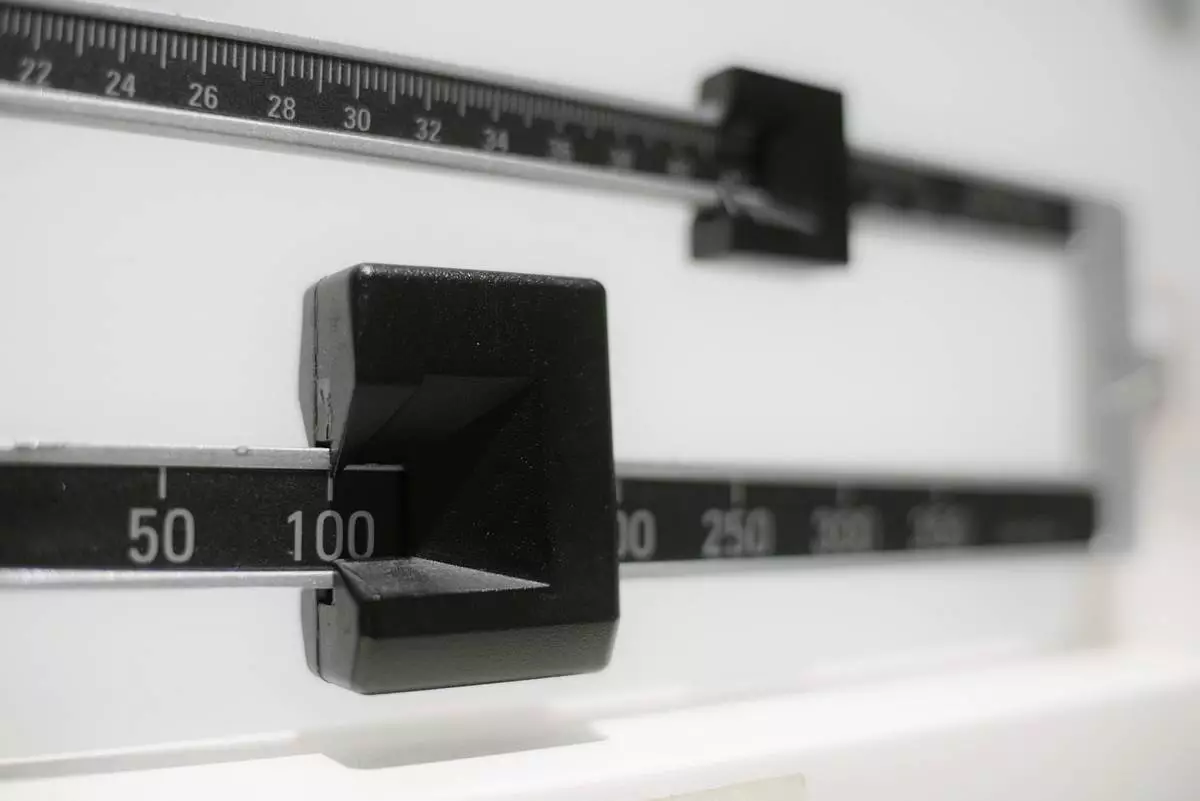
FILE - This file photo shows a closeup of a beam scale in New York, April 3, 2018. (AP Photo/Patrick Sison, File)
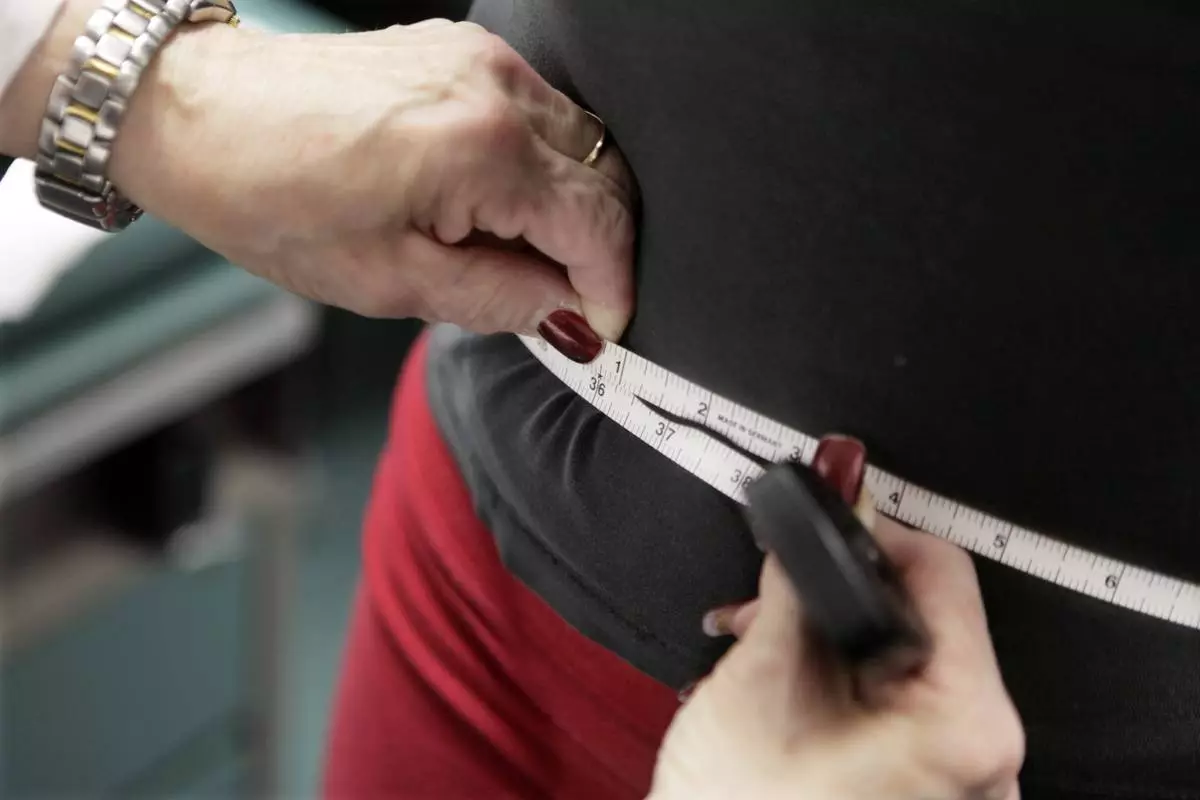
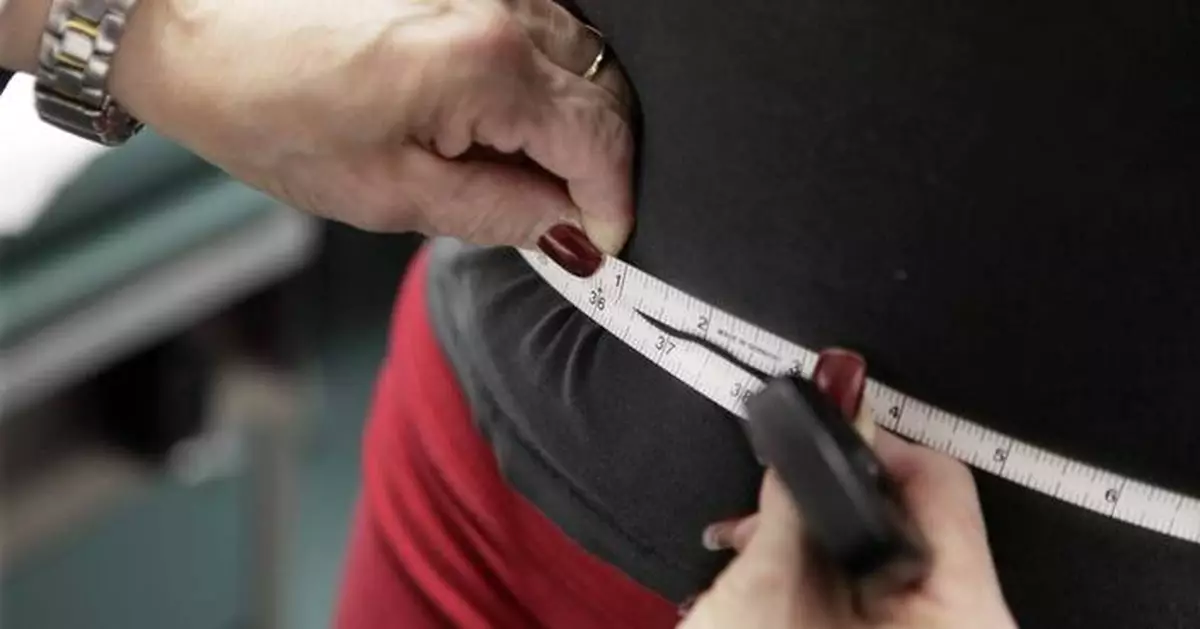
FILE - A subject's waist is measured during an obesity prevention study in Chicago on Jan. 20, 2010. (AP Photo/M. Spencer Green, File)
BEIRUT (AP) — Israeli troops have captured a strategic mountain topped with a Crusader-built castle in southern Lebanon in the deepest incursion into the country in more than a quarter-century, the military said Sunday.
The taking of Beaufort castle, near the city of Nabatiyeh, followed days of airstrikes and intense fighting in nearby villages between Israeli troops and Hezbollah militants.
The capture marked a major Israeli advance in the latest Israel-Hezbollah war, which began on March 2, when Hezbollah fired rockets into northern Israel two days after the U.S. and Israel attacked its main backer, Iran.
Since then, Israel has launched a ground invasion, capturing dozens of Lebanese villages and towns close to the border. Hezbollah has launched thousands of missiles and drones at Israeli soldiers in southern Lebanon and northern Israel.
The Israeli push came despite a nominal ceasefire that has been in place since April 17 and just days before Lebanon and Israeli hold their next round of direct talks in Washington starting Tuesday.
Lebanese Parliament Speaker Nabih Berri, a key Hezbollah ally, said he can guarantee the militant group's “full, comprehensive and immediate commitment to a ceasefire."
“But who will force Israel to stop its aggression?” he said in a statement on his television station, NBN.
French Foreign Minister Jean-Noël Barrot requested an emergency meeting of the United Nations Security Council to discuss Israeli military operations in Lebanon, which he described as “unacceptable.”
“Nothing can justify the prolongation of Israeli military operations in Lebanon and its increasingly deep occupation of Lebanese territory,” Barrot said Sunday on French television BFM TV.
The Israeli military's Arabic-language spokesperson, Avichay Adraee, posted photographs on X showing Israeli troops walking outside the castle, and Defense Minister Israel Katz wrote on X that they raised an Israeli flag over the castle. Israeli troops previously captured the castle in 1982 and held it until they withdrew from Lebanon in 2000.
“Twenty six years after the withdrawal from the security zone in Lebanon, the Israeli flag has returned to fly on the peaks that overlook the Galilee towns,” Katz said Sunday at a memorial ceremony for Israeli soldiers killed in its previous occupation of southern Lebanon.
Katz said Israel intends to hold the castle as its troops work to destroy thousands more homes that he says were used by Hezbollah and other military infrastructure in southern Lebanon.
The Beaufort fortress, perched high atop Lebanon’s rolling green hills and overlooking the Litani River, has been a strategic military asset for centuries.
Built as a Crusader castle around the 12th century on top of previous fortifications, it has also been used by Saladin’s Jerusalem army, Mamluks, Ottomans, the French and the Palestine Liberation Organization. The Crusaders named it Beaufort, which is Old French for “beautiful fortress.”
The 1982 capture of the castle from the PLO was a major victory for the Israeli military, which was then led by Defense Minister Ariel Sharon, who later became prime minister. At the time, the Israeli army pushed all the way north and occupied Beirut.
In 2000, the castle was partially restored and opened to visitors.
During the previous Israel-Hezbollah war in 2024, UNESCO gave enhanced protection to 34 cultural sites in Lebanon, including Beaufort Castle, to safeguard them from damage.
The castle is a few kilometers north of the Israel border and overlooks wide parts of southern Lebanon and northern Israel. In Arabic, it is called Al-Shaqif castle, an old Syriac word referring to the formidable rocky area.
Beaufort is symbolic across the region, including in Israel, where it was one of the best-known places Israel controlled during the 18-year occupation. An Israeli war film titled “Beaufort” explores moral questions about war in the last days before the military withdrew.
In recent days, Israel has expanded the scope of its operations in Lebanon, sending troops across the Litani River, which previously served as a de-facto boundary, and demanding that residents leave much of southern Lebanon.
“The occupation of Beaufort is a dramatic stage and a dramatic shift in the policies we are leading,” Israeli Prime Minister Benjamin Netanyahu said Sunday, citing the military occupation of security zones in Syria, Lebanon and Gaza along Israel’s borders. He said Israel has killed 3,000 Hezbollah militants since the start of the war. Hezbollah has not disclosed its casualty numbers.
Israel has designated the area from the Litani up to the Zahrani River a combat zone. Some residents have already left the area due to intense strikes in recent days, but people remain.
Israeli troops have been advancing for days in villages close to Beaufort castle. They are now about 5 kilometers (3 miles) from Nabatiyeh, a major center in southern Lebanon. They have called on people to leave that area, as well as the coastal city of Tyre, the country’s fourth-largest city, and its surroundings.
There was no immediate comment from Hezbollah or the Lebanese government on the Israeli push.
The expanded operation would give Israel an upper hand in the upcoming talks with Lebanon in Washington, said Beirut geopolitical analyst Joe Macaron.
“We are at a tipping point,” Macaron said, adding that it is still too early to say how Hezbollah will react to the loss of land. “The more land they (the Israeli military) can grab before the ceasefire, the more they can impose conditions on Hezbollah before their withdrawal.”
Israel has continued striking near Tyre, including near the Hiram Hospital. Lebanon's Health Ministry said 13 health workers were wounded in the strike. Elsewhere, a strike in Deir al-Zahrani, near Nabatiyeh, killed eight people and wounded 16 others, according to Lebanon's state-run National News Agency.
Hezbollah overnight claimed two attacks targeting Israeli troops and a Merkava tank in the southwestern town of Bayada near the border. In recent days, the group has said it has clashed with Israeli troops in several towns just north of the river near Nabatiyeh and the strategic castle. It also claimed attacks deeper into Israel near the northern city of Haifa, Nahariya, as well as border areas.
Hezbollah on Saturday fired salvos of rockets into northern Israel, including Kiryat Shmona, the largest city in the area.
Hezbollah's use of hard-to-detect fiber optic drones has been deadly for the Israeli military, which is struggling to respond. There have been nearly 200 alerts for Israeli civilians across northern Israel warning of drones and missiles in the past 24 hours, according to Israel's military.
The latest round of fighting between Israel and Hezbollah has killed 3,350 people in Lebanon and displaced more than 1 million people.
According to Netanyahu’s office, at least 25 Israeli soldiers and a defense contractor have been killed in or near southern Lebanon, including one on Saturday. Two civilians have also been killed in northern Israel.
Lidman reported from Tel Aviv, Israel.
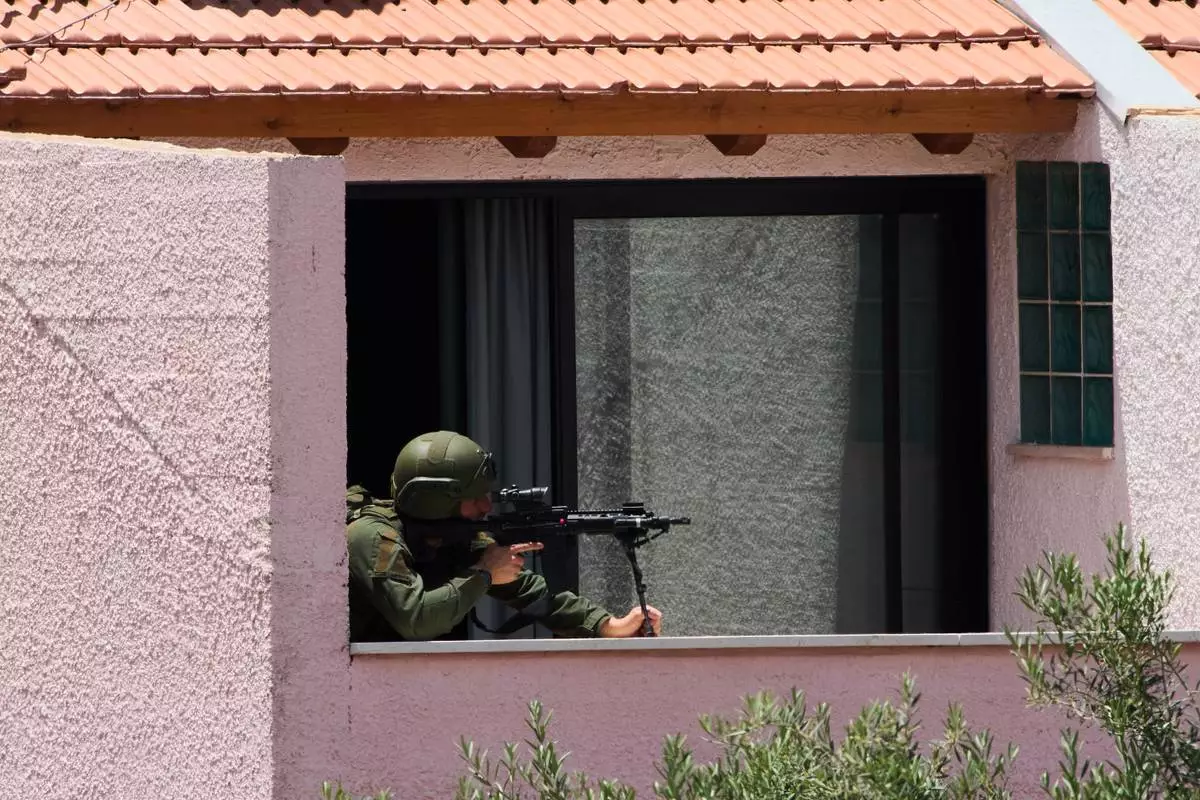
An Israeli solider takes a position in a house in the community of Metula, northern Israel, on the border with Lebanon Sunday, May 31, 2026. (AP Photo/Ariel Schalit)
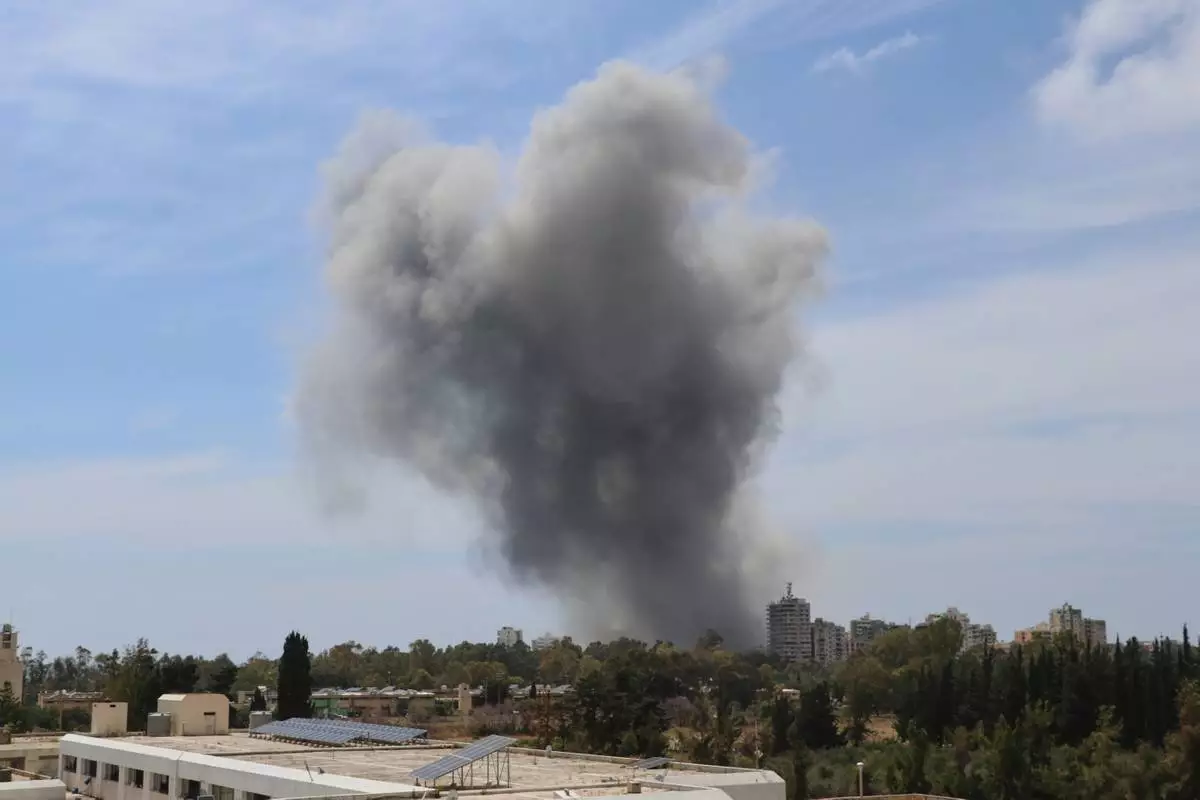
Smoke rises following an Israeli airstrike in the southern port city of Tyre, Lebanon, Sunday, May 31, 2026. (AP Photo)
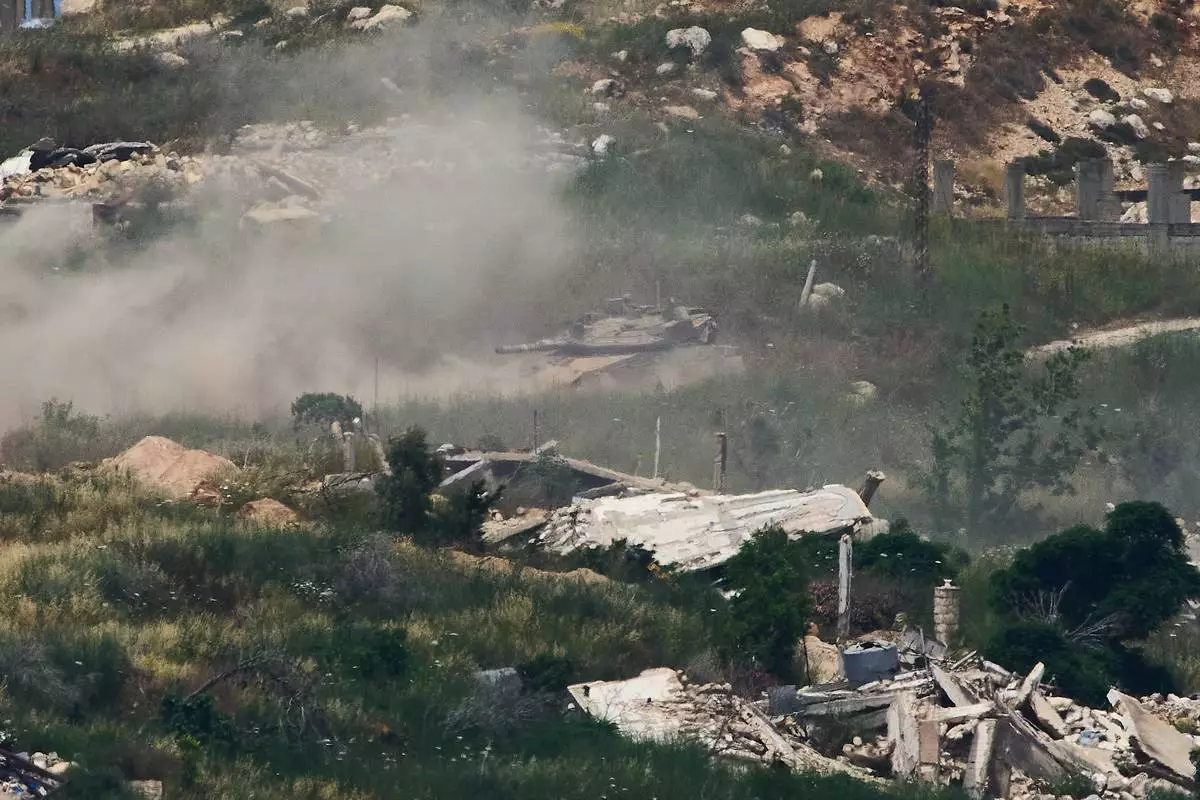
Israeli soldiers drive a tank in southern Lebanon as seen from northern Israel, Sunday, May 31, 2026. (AP Photo/Ariel Schalit)
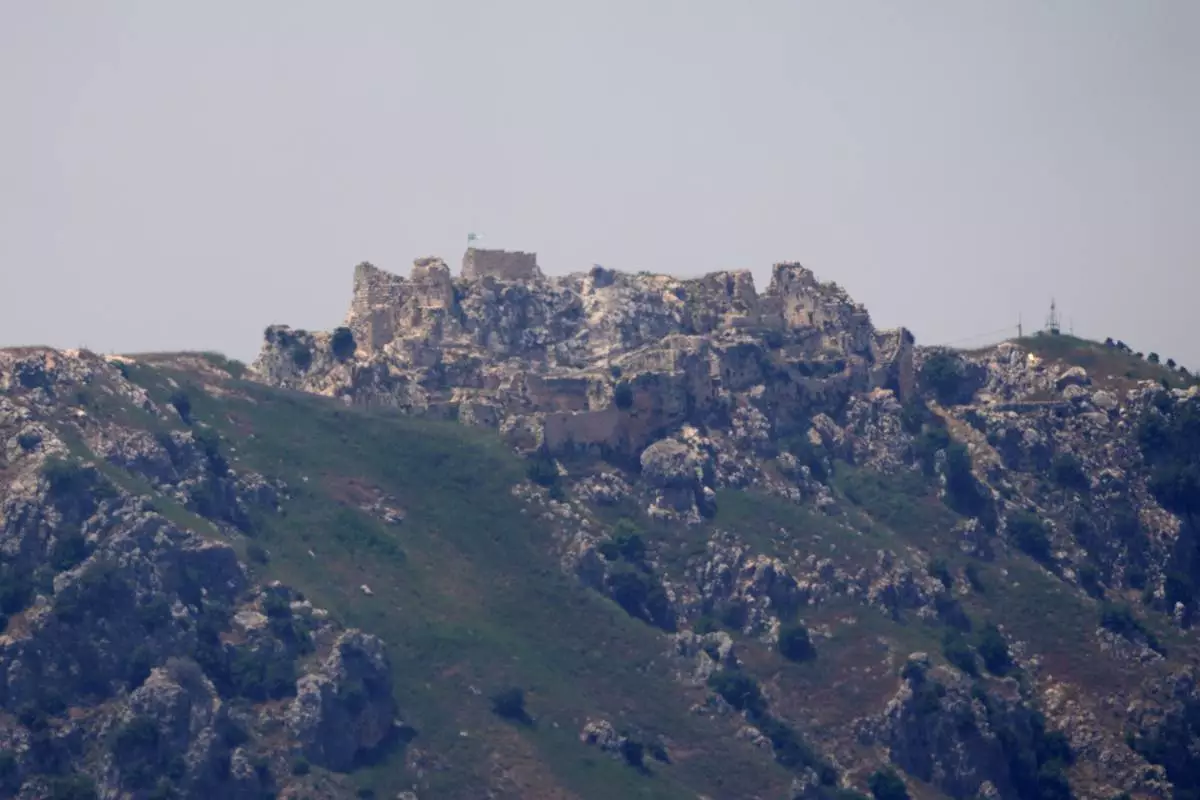
A view of he Beaufort Castle in southern Lebanon as seen from northern Israel, Sunday, May 31, 2026. (AP Photo/Ariel Schalit)
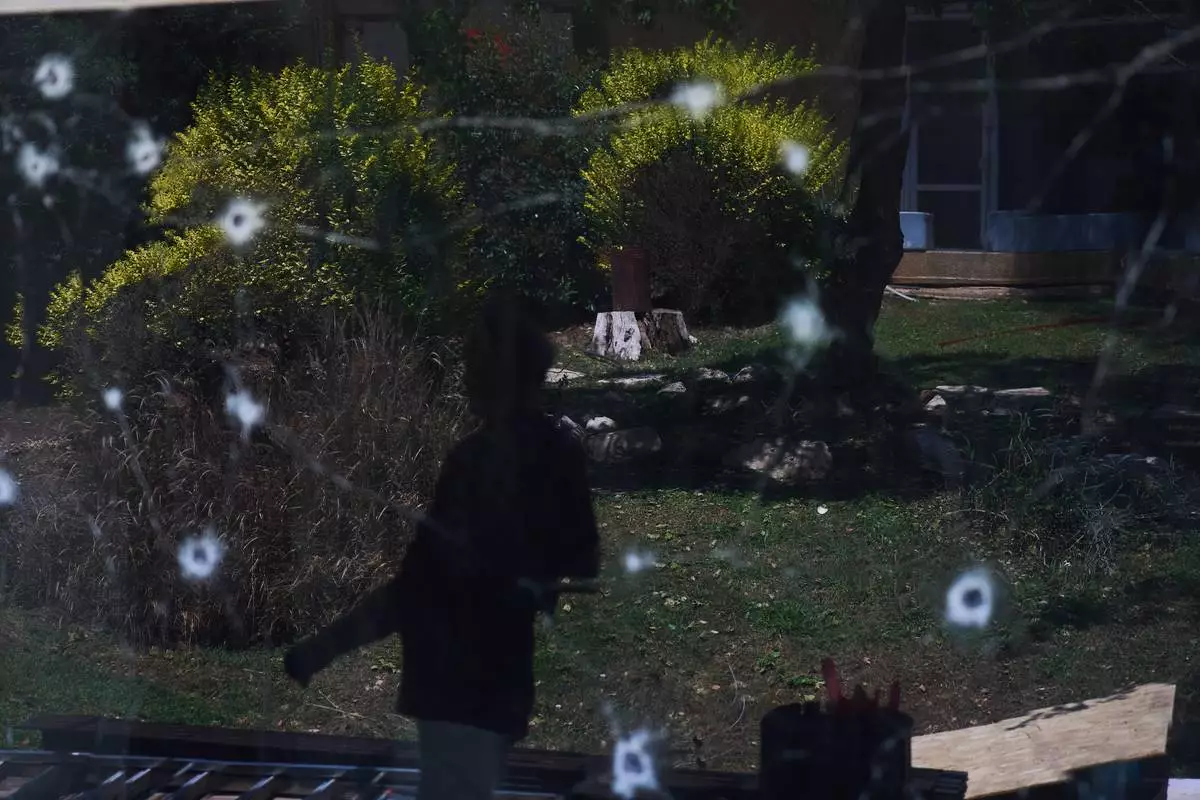
A person walks past the site struck by a rocket fired from Lebanon on Saturday in Kiryat Shmona, northern Israel, Sunday, May 31, 2026. (AP Photo/Ariel Schalit)
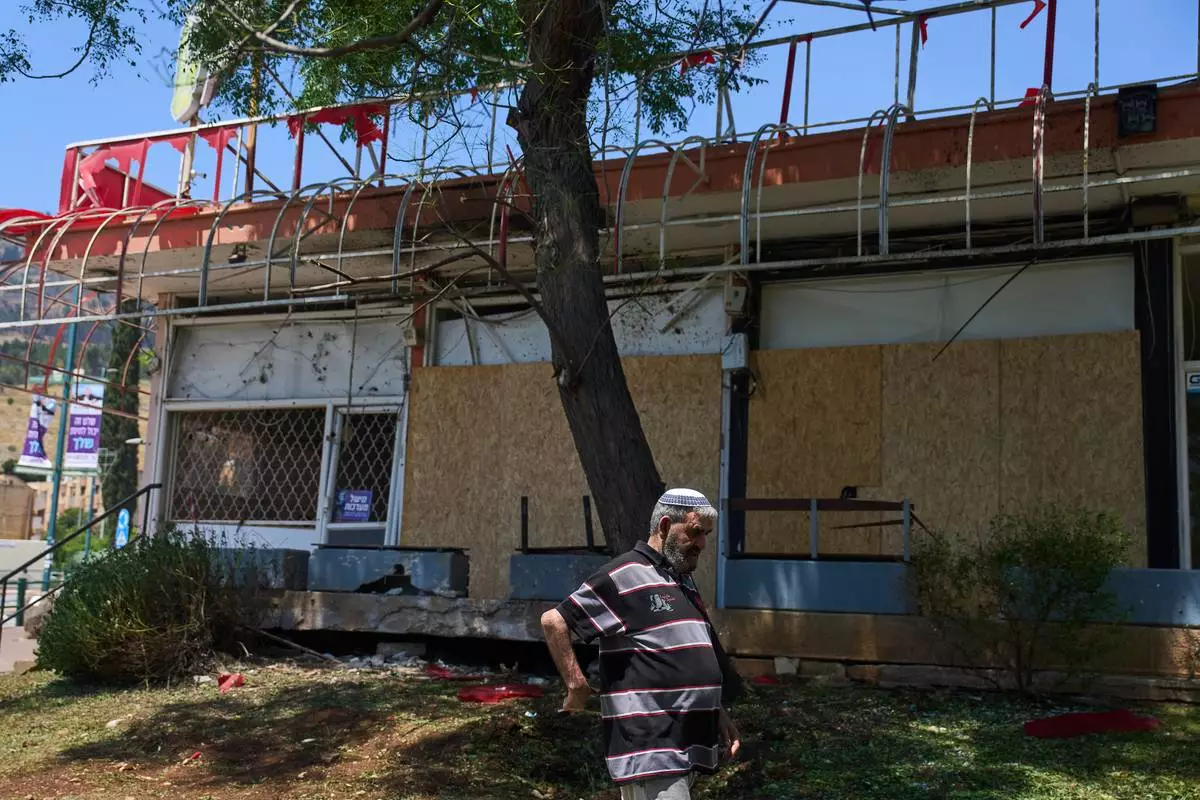
A local resident walks past the site struck by a rocket fired from Lebanon on Saturday in Kiryat Shmona, northern Israel, Sunday, May 31, 2026. (AP Photo/Ariel Schalit)
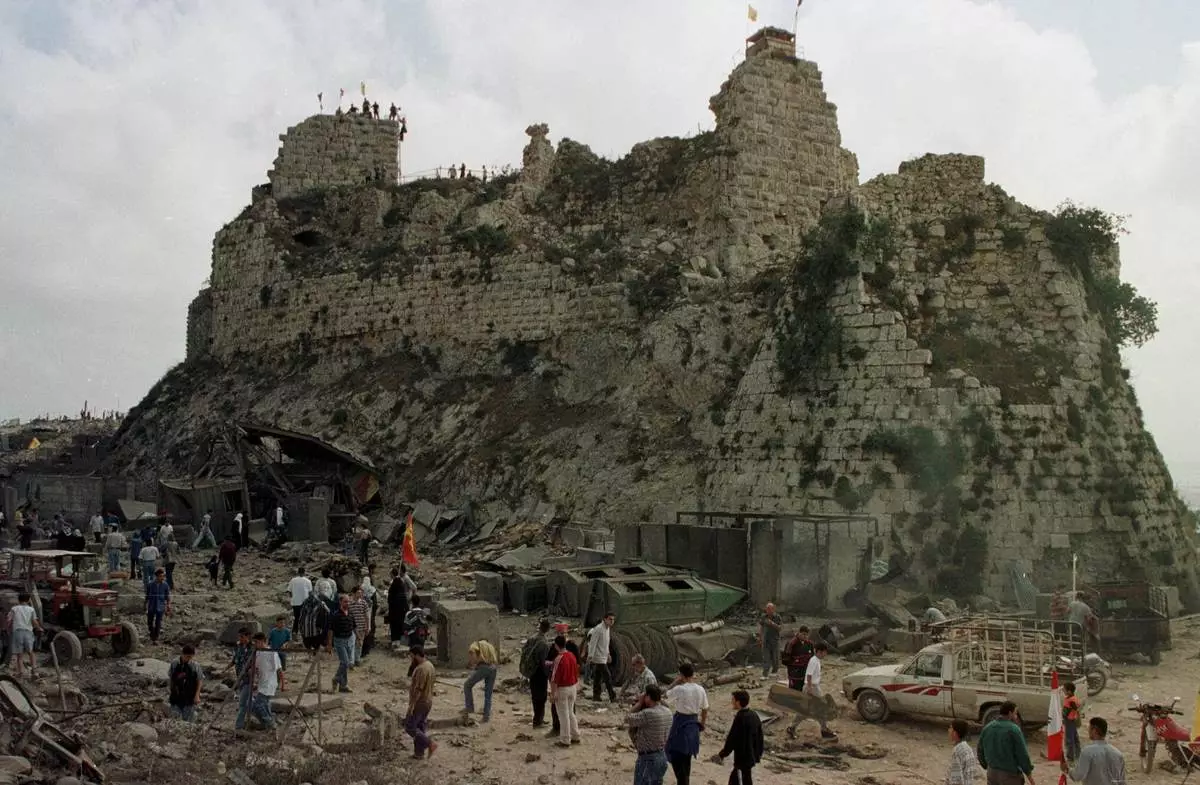
FILE -Villagers inspect the damage to Beaufort Castle, 10 kilometers (6 miles) northwest of the southern market town of Nabatiyeh, Lebanon, Wednesday, May 24, 2000. (AP Photo/Ahmed Mantash, File)