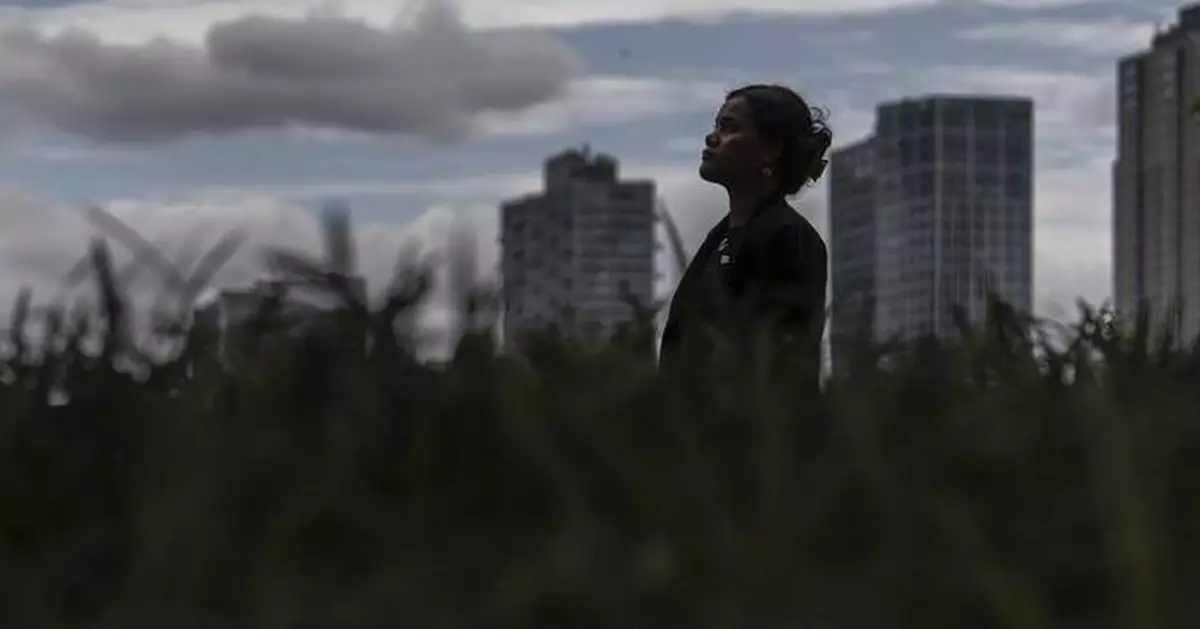
UNITED NATIONS (AP) — It's the uncomfortable talk that as a young woman, she knows she should have with her parents. They alluded to it, once, but couldn't quite address it directly. And Grace Malie was glad to avoid the subject with them, though she and her friends do discuss it.
As her home, the tiny but shrinking island of Tuvalu, slowly erodes from climate change's rising seas, should she rough it out on the remaining high land? Or should she flee her home, her culture, her heritage and her past to go to Australia — in what her government negotiated as “Plan B?”
Click to Gallery
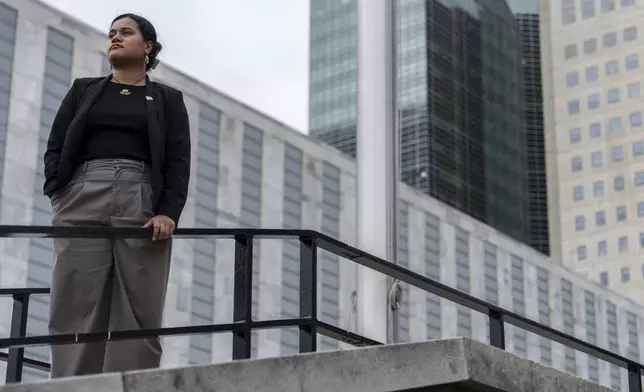
Grace Malie poses for a photo, Monday, Sept. 23, 2024, at the United Nations headquarters. (AP Photo/Julia Demaree Nikhinson)
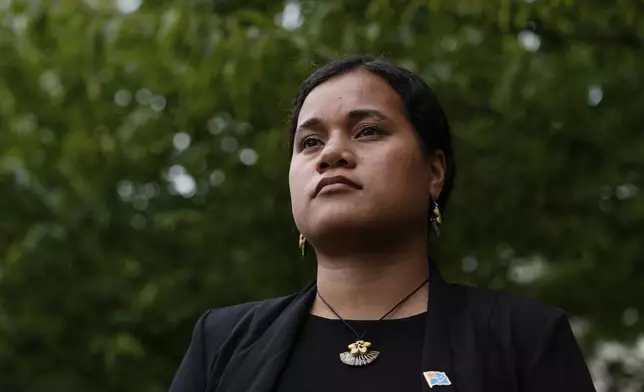
Grace Malie poses for a photo Monday, Sept. 23, 2024, at the United Nations headquarters. (AP Photo/Julia Demaree Nikhinson)
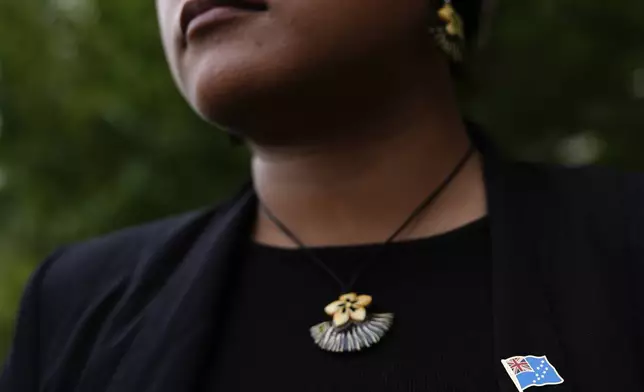
Grace Malie wears a pin of the Tuvalu flag while posing for photos, Monday, Sept. 23, 2024, at the United Nations headquarters. (AP Photo/Julia Demaree Nikhinson)
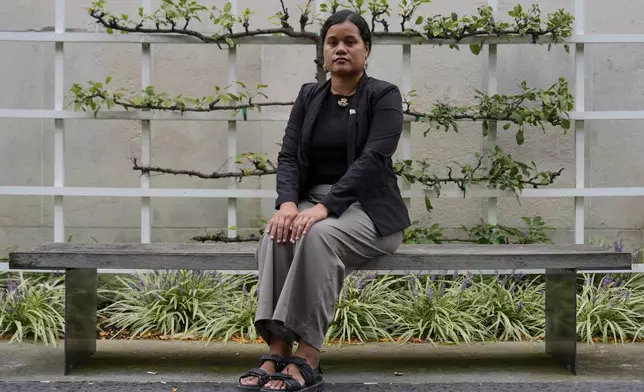
Grace Malie poses for a photo Monday, Sept. 23, 2024, at the United Nations headquarters. (AP Photo/Julia Demaree Nikhinson)
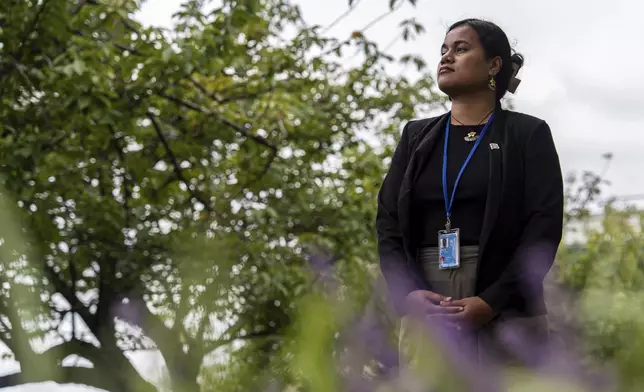
Grace Malie poses for a photo Monday, Sept. 23, 2024, at the United Nations headquarters. (AP Photo/Julia Demaree Nikhinson)
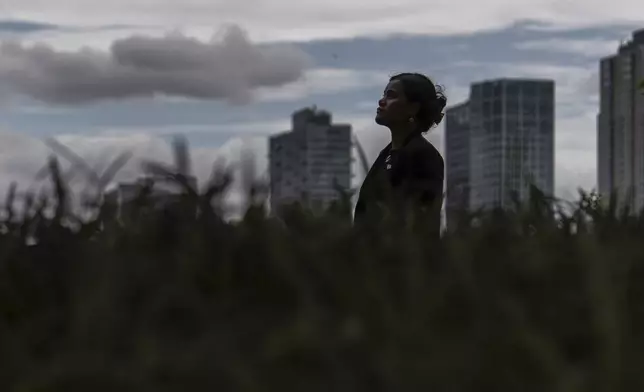
Grace Malie poses for a photo Monday, Sept. 23, 2024, at the United Nations headquarters. (AP Photo/Julia Demaree Nikhinson)
The 25-year-old, who on Wednesday addresses a special U.N. General Assembly summit on sea level rise as a representative for her country, has years to decide — decades, even. But it's a decision that, like the mythical sword of Damocles, hangs over a nation's entire generation. And two of the biggest issues facing the summit are what to do about people like Grace Malie and how countries like Tuvalu will keep the sovereignty even when they lose their land.
“This is not about leaving," said Kamal Amakrane, managing director of the Global Center for Climate Mobility and climate envoy to the president of the General Assembly. “This is not about giving up. This is not about giving in. This is about agency."
Such a situation is like no other. It can't be compared to when other climate, conflict or economic refugees have to flee with little or no notice as storms hit or drought takes away livelihoods, said Alex Randall, the United Kingdom-based coordinator of the Climate and Migration Coalition.
The vast majority people permanently fleeing climate-related disasters stay within their own country and travel short distances — such as those who left New Orleans after 2005's Hurricane Katrina. This is about young people today making a long-term, stay-or-go decision that lingers in the back of their minds. It's a conversation that's happening now, even though the fleeing won't happen until later.
“It’s a very difficult conversation, very emotional,” Malie said in an interview. “And it’s 50-50. Some of us wish to stay. Some of them, because they have families,” will probably head to Australia.
And that's what Malie thinks will be her own future. If she has children, she would think about “the life of my children. I would have to opt for Plan B. Worst comes to worst, relocate.”
“I want them to have a safe and to have access to quality living, access to quality water, quality life. And in order for me to have that for them to have that, relocation is an option,” she said. “But if I were to live by myself, you know, no children in the future as planned, then I would choose to stay.”
Her parents wouldn't come right out and say it, but they have dropped hints that she should think about going to Australia, Malie said. She said they want what's best for her.
Tuvalu Climate Minister Maina Talia has had the same discomfort but from the father’s point of view. He said he talked to his four young children about the inexorable threat of sea-level rise on their home and future, but he has not yet quite raised the idea of leaving the island to them.
Talia said he fears that if his children leave Tuvalu for higher ground, “their identity would be compromised.”
“It’s not an easy conversation because I want my kids to grow up the way I grew up,’’ Talia said. “It’s an emotional thing to go through.”
Talia calls sea-level rise “an existential threat.” And it's those two words — "existential threat'' — that are at the heart of Wednesday's summit.
“The existential threat that we face is not of our making, but it will remake us,” Tuvalu's prime minister, Feleti Teo, told the U.N. summit Wednesday. He said the voices of nearly 1 billion people in low-lying nations must be heard. “Heritage is lost, and the very fabric of our nations become increasingly threatened.”
For years, small island nations have used that phrase, as have leaders of the United Nations and climate activists. But now it's coming back to bite them because island nations want their sovereignty, their culture, to exist — even if their land does not.
“We’ve been trying really hard to as (the Alliance of Small Island States) to move away from that concept of existential threat given the fact that if we say that that means, does that mean that the State no longer exists? The people no longer exist? And that’s not the case," said Michai Robertson, an advisor to the small island states' alliance.
Belize Prime Minister John Briceño said: "Sovereignty is defined by the will of the people, not by the whims of climate change. Once a state is established, it will endure and thrive, no matter the challenges it faces.“
The UN's Amakrane said Wednesday's summit main aims is to re-affirm the issue of sovereignty despite what the oceans do.
“The land is still there," he said. “It's just the surface is submerged under water.”
For most of the young people's lives, if not all, there will be some land on Tuvalu, just less and less of it — with more of it inundated during storms, king tides and the rise of the oceans. And if she doesn't have to worry about a family, Malie said the increasing hardship of living there will be worth it.
The threat of her home disappearing, slowly, has been hanging over her head since birth. Even when she went to school in Fiji, she and her fellow Tuvalu students “were usually mocked as the `sinking island kids,'” she said. “That's something that pushes us to continue our fight."
The Associated Press’ climate and environmental coverage receives financial support from multiple private foundations. AP is solely responsible for all content. Find AP’s standards for working with philanthropies, a list of supporters and funded coverage areas at AP.org. Follow Seth Borenstein at http://x.com/ borenbears and read more of AP’s climate coverage at http://www.apnews.com/climate-and-environment
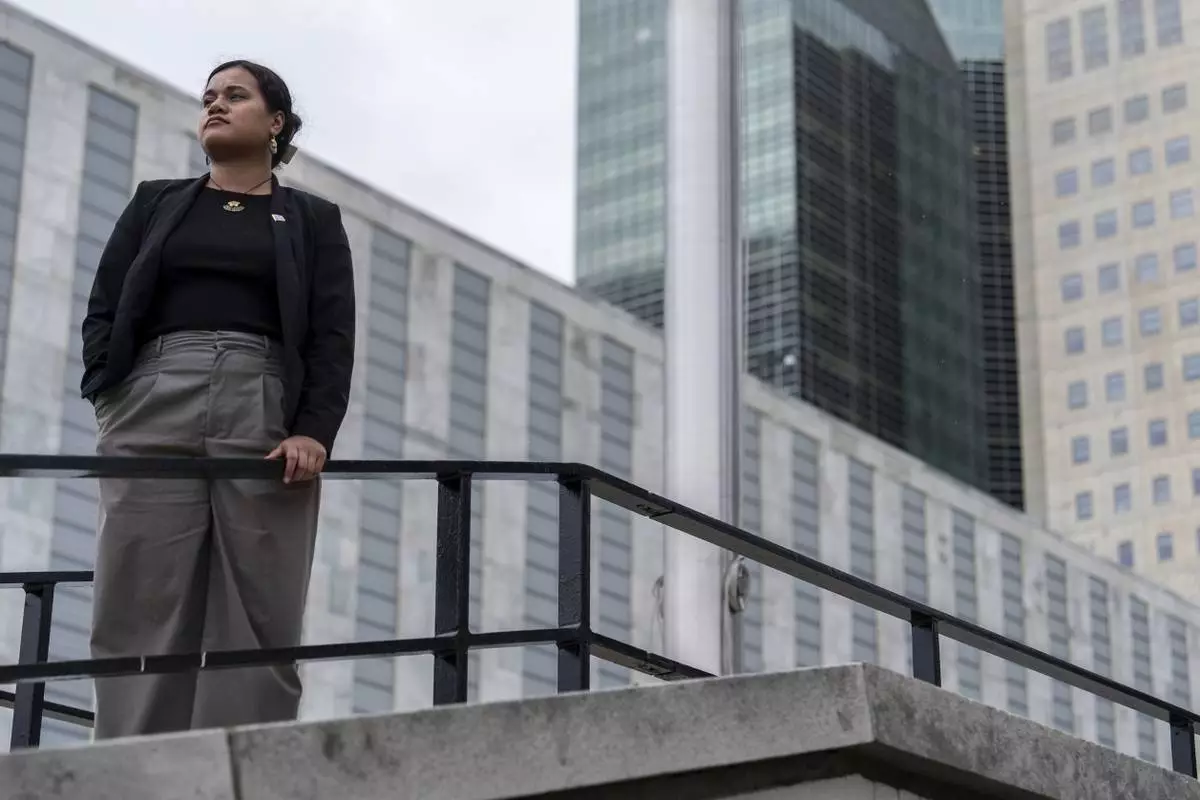
Grace Malie poses for a photo, Monday, Sept. 23, 2024, at the United Nations headquarters. (AP Photo/Julia Demaree Nikhinson)
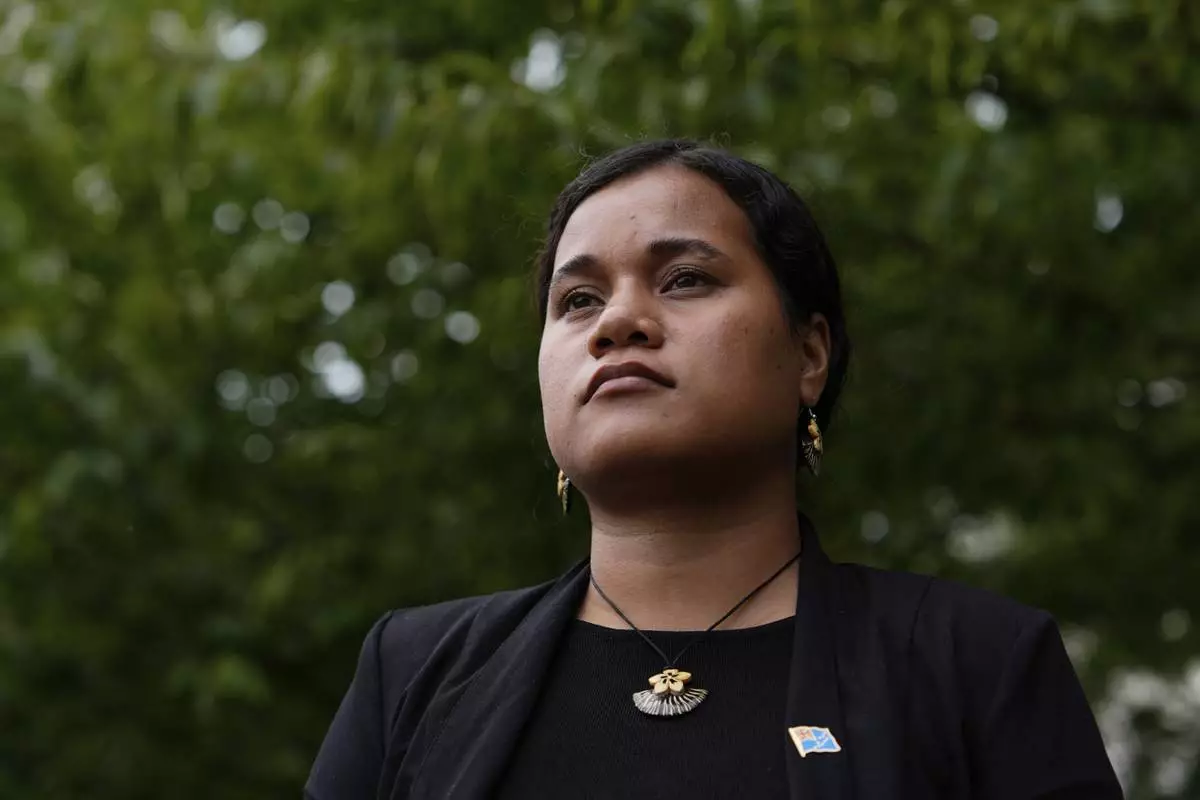
Grace Malie poses for a photo Monday, Sept. 23, 2024, at the United Nations headquarters. (AP Photo/Julia Demaree Nikhinson)
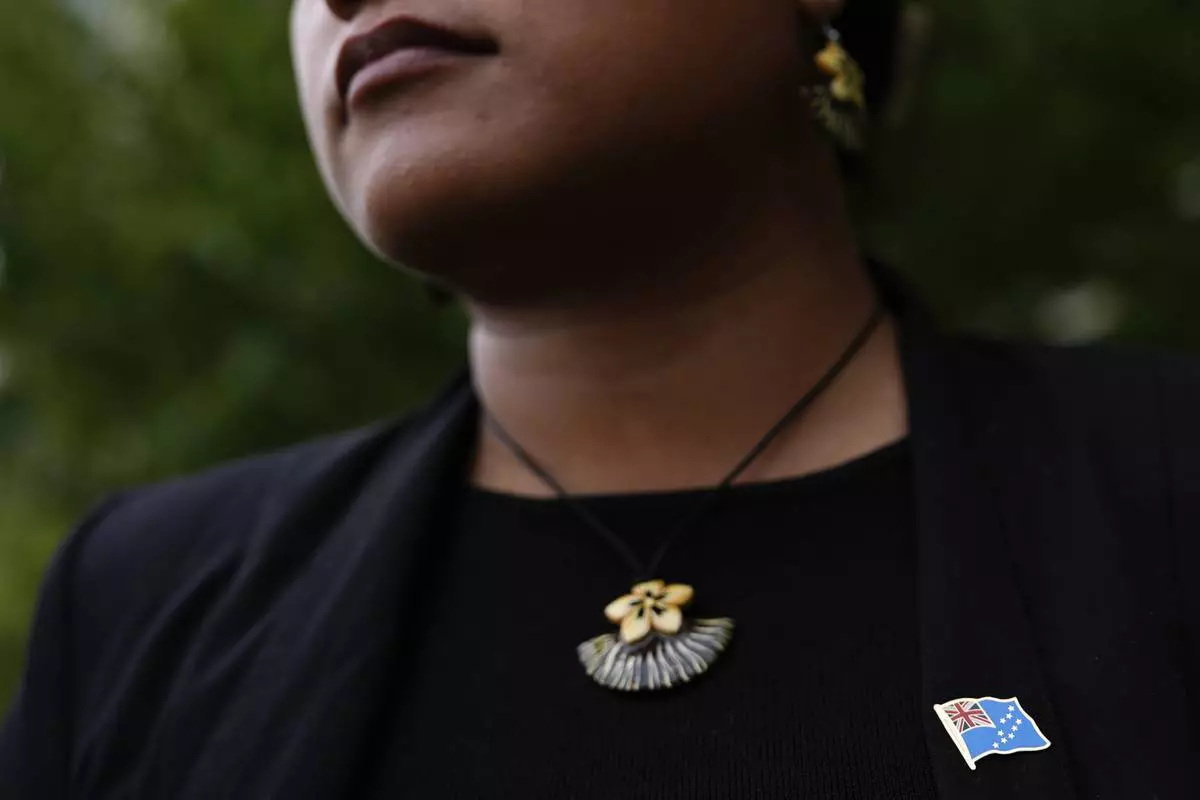
Grace Malie wears a pin of the Tuvalu flag while posing for photos, Monday, Sept. 23, 2024, at the United Nations headquarters. (AP Photo/Julia Demaree Nikhinson)
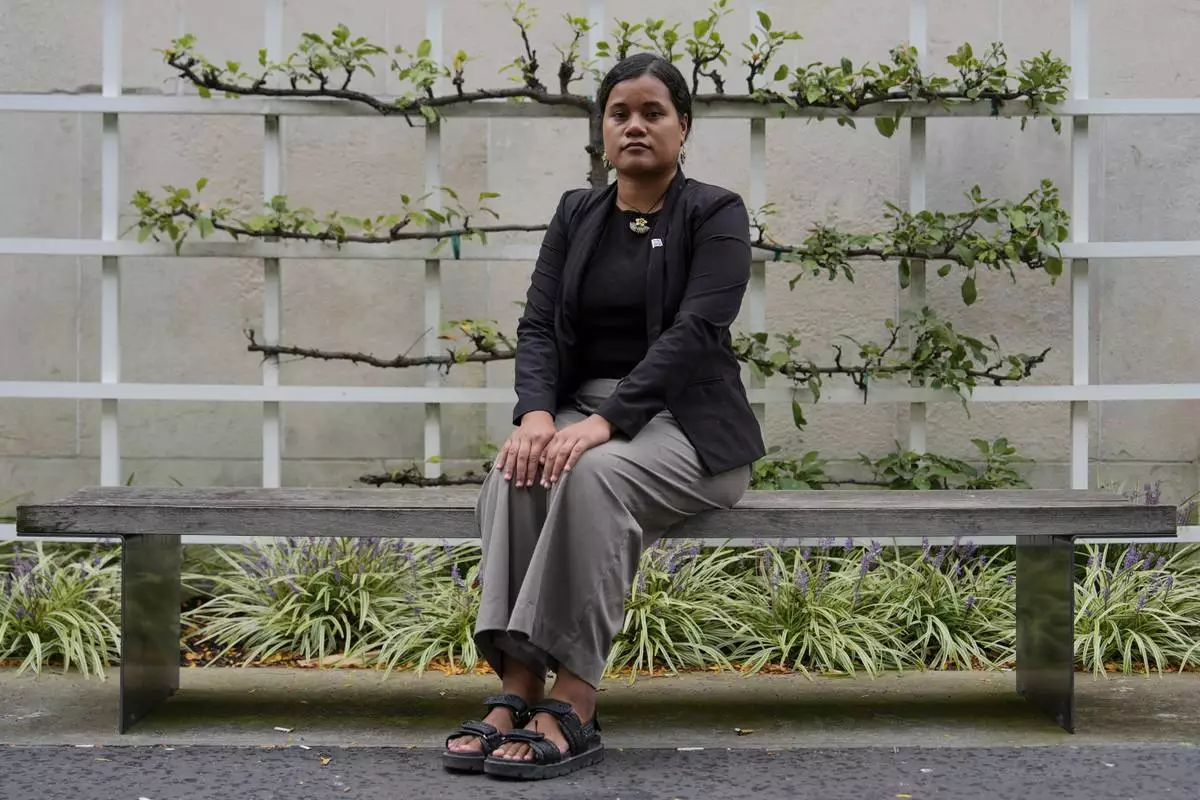
Grace Malie poses for a photo Monday, Sept. 23, 2024, at the United Nations headquarters. (AP Photo/Julia Demaree Nikhinson)
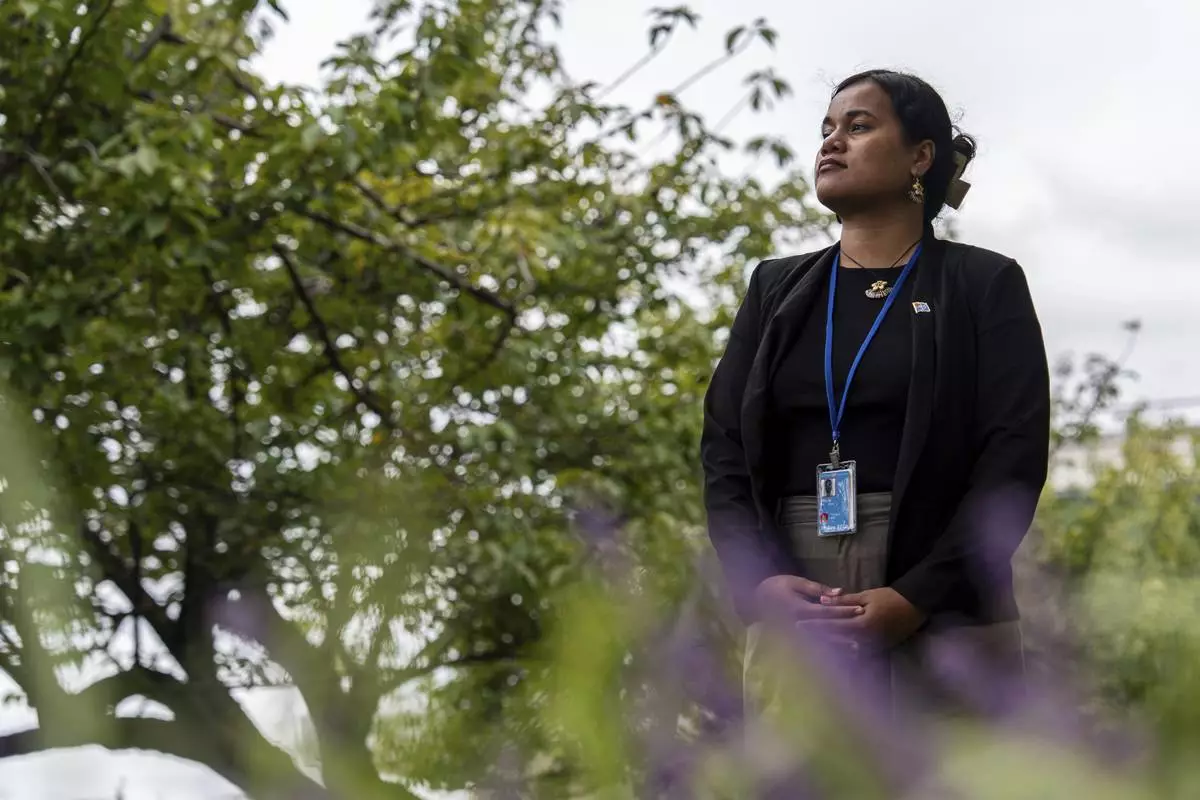
Grace Malie poses for a photo Monday, Sept. 23, 2024, at the United Nations headquarters. (AP Photo/Julia Demaree Nikhinson)
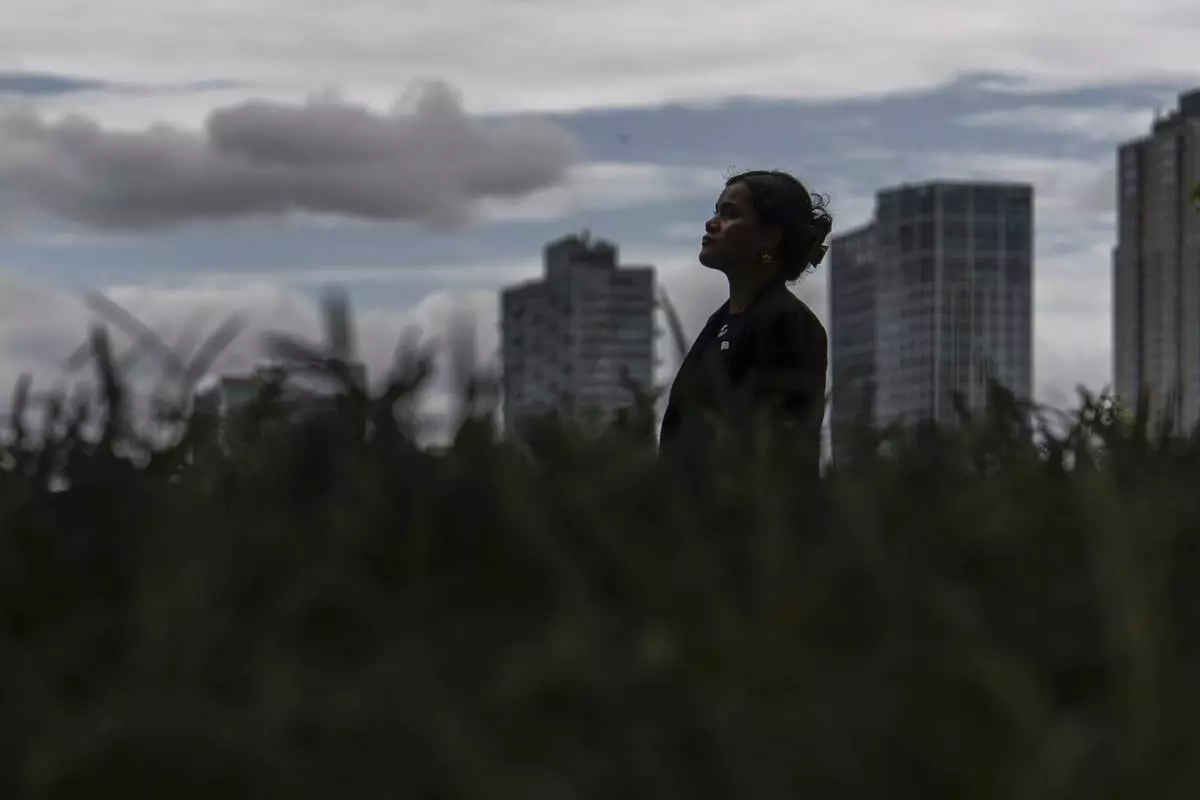
Grace Malie poses for a photo Monday, Sept. 23, 2024, at the United Nations headquarters. (AP Photo/Julia Demaree Nikhinson)