Ethnic Lhoba, one of the least populous ethnic minority groups in southwest China's Xizang Autonomous Region, have seen their living environment and life dramatically improved over the past decade, as a result of government-sponsored relocation programs and enhancement of essential infrastructure in the remote mountainous region.
The ethnic group once lived in the deep mountains and old forests where they could barely find enough food to eat. The relocation programs have enabled them to live a prosperous life with brand new houses equipped with modern facilities.
Yadar and her husband Zheng Lin operate a homestay in Caizhao Village in Nanyi Lhoba Ethnic Township of Nyingchi City. Yadar is from the local Lhoba ethnic group while Zheng is an ethnic Han from southwest China's Sichuan Province. The two met 23 years ago when Zheng drove motorbike taxi as his livelihood.
"I drove motorbike taxi back then and Yadar was my customer. After serving her for a while, we made acquaintance with each other and became a couple in 2001.It's been 23 years," Zheng said.
The couple's daughter just graduated from the Zhejiang University in east China’s Zhejiang Province, one of China's top universities, and is preparing for her postgraduate examination. Their son studies in a local middle school.
The beautiful natural landscape and unique folk culture in their village have prompted the couple to open a homestay which has eight beds and receives more than 500 tourist stays each year. As a result, their annual income has soared to over 100,000 yuan (about 14,250 U.S. dollars) now.
There are three villages in Nanyi Lhoba Ethnic Township, with Qionglin Village being the most remote one.
In 2020, the whole village was moved 14.5 kilometers southward as the local government invested 75 million yuan (about 10.69 million U.S. dollars) in the relocation program. Now all the 57 households of the village live in newly built houses with new furniture and convenient home appliances.
The Lhasa-Nyingchi Railway, the first electrified railway in Xizang which opened in 2021, has greatly enhanced the connectivity of the village with the outside world. And since the village's new location is in the core area of the Nanyigou Valley scenic area -- a national 4A-class tourist attraction which boasts rich natural resources, locals now plant traditional Tibetan herbal medicines, such as Ganoderma lucidum mushrooms, for a living.
"The medical efficacy of Ganoderma lucidum mushrooms growing in this area is the best," said a local resident named Nimatashi.
Another villager named Yaga moved from the deep mountains to the village with her family in 1959. With the great enhancement in the medical and educational levels of the village, the 75-year-old just happily welcomed the birth of her great-granddaughter.
In 2023, the per capita disposable annual income of farmers and herdsmen in Qionglin Village reached more than 32,000 yuan (about 4,560 U.S. dollars), an increase of more than 10,000 yuan (1,425 U.S. dollars) from a decade ago.
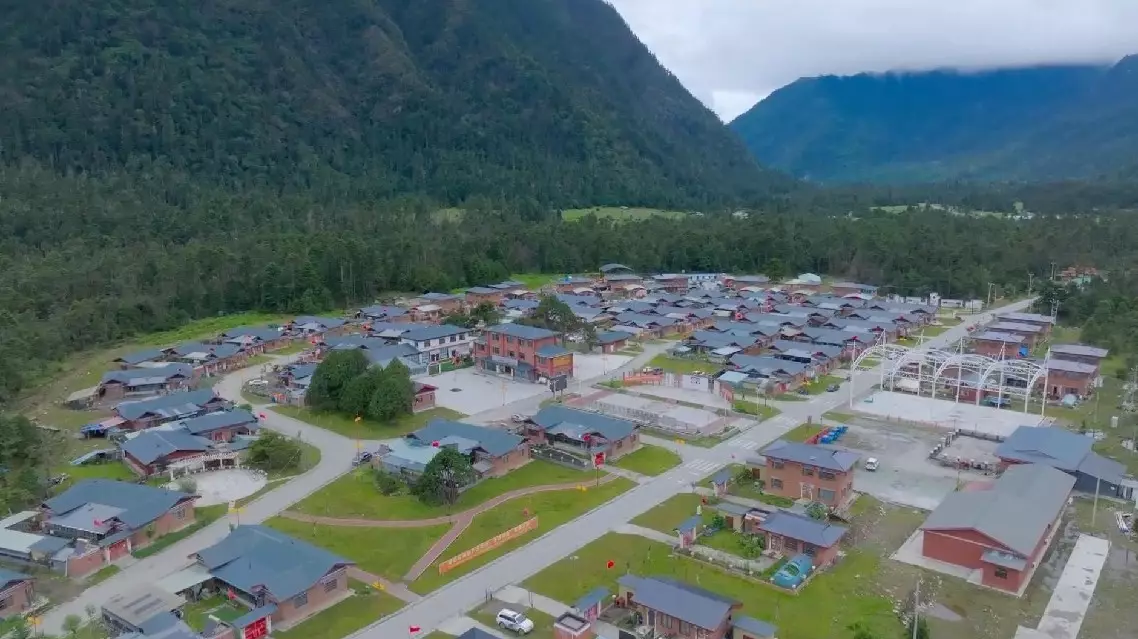
Government relocation projects dramatically improve life of Lhoba ethnic group in Xizang
Government relocation projects dramatically improve life of Lhoba ethnic group in Xizang