WASHINGTON (AP) — Three Iranian operatives have been charged with hacking Donald Trump’s presidential campaign as part of what the Justice Department says was a sweeping effort to undermine the former president and erode confidence in the U.S. electoral system.
The action, coupled with sanctions and rewards for information leading to the accused hackers' capture, is the latest U.S. government effort to call out what’s seen as Iran’s attempts to interfere in the election by damaging Trump and sowing general chaos. It comes as Iran has also been accused of threatening the lives of Trump and former officials and as US-Iran relations remain especially tense, with Israel fighting Hamas in Gaza and Hezbollah in Lebanon.
Click to Gallery
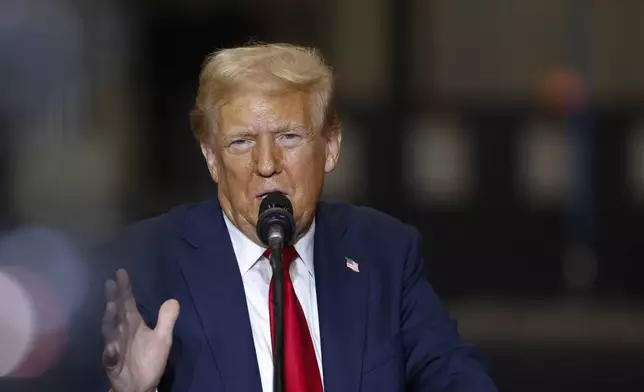
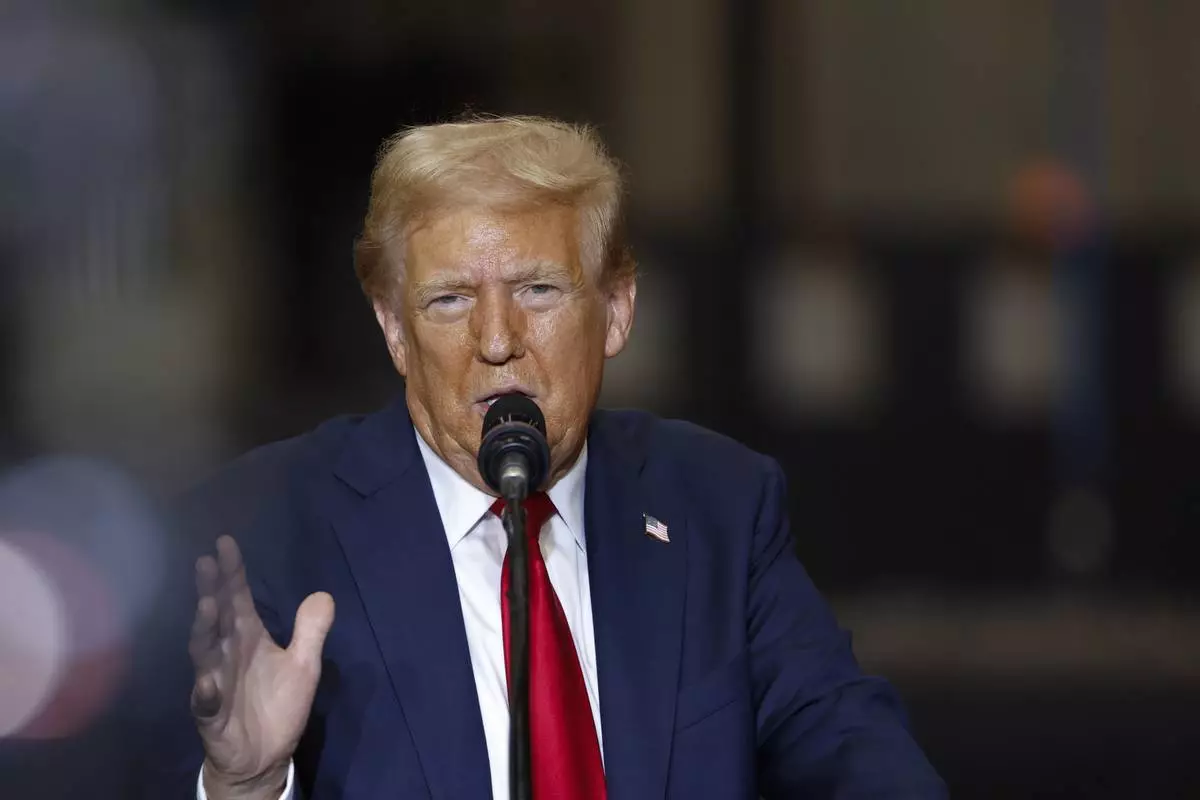
Republican presidential nominee former President Donald Trump speaks at a campaign event in Mint Hill, N.C., Wednesday, Sept. 25, 2024. (AP Photo/Nell Redmond)
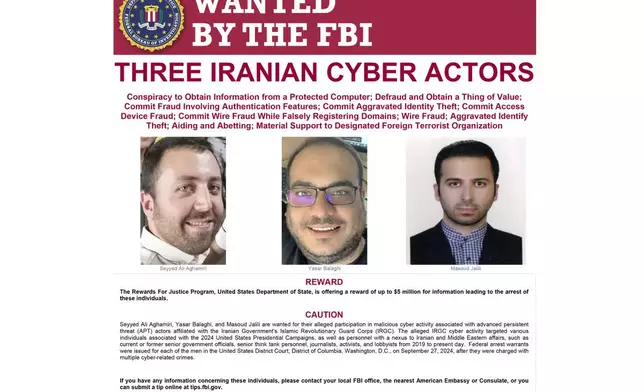
This image provided by the FBI shows three accused hackers, Seyyed Ali Aghamiri, Yasar Balaghi and Masoud Jalili, who were employed by Iran's paramilitary Revolutionary Guard, as the Justice Department unsealed criminal charges Friday, Sept. 27, 2024, against the three Iranian operatives suspected of hacking former President Donald Trump's campaign and disseminating stolen information to media organizations. (FBI via AP)
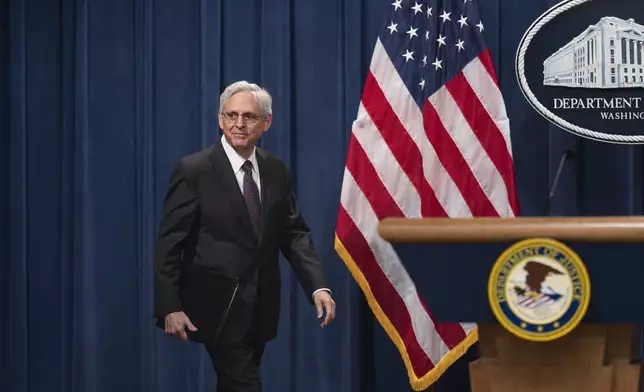
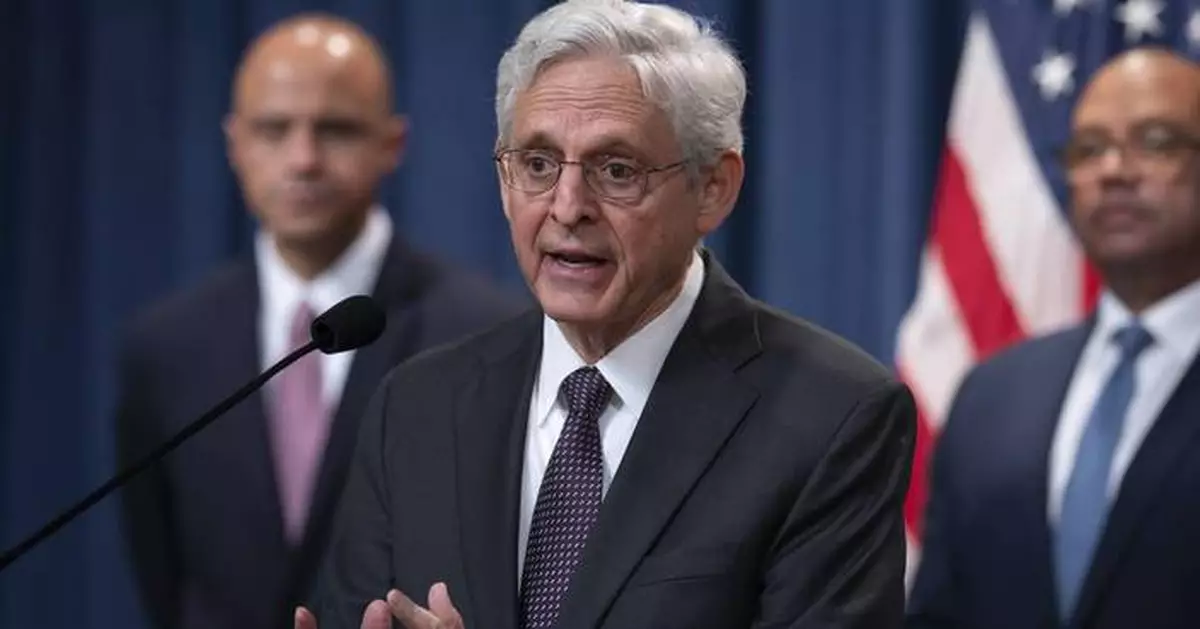
Attorney General Merrick Garland arrives for a news conference as the Justice Department announced criminal charges against Iranian operatives suspected of hacking Donald Trump's presidential campaign and disseminating stolen information to media organizations, at the Justice Department in Washington, Friday, Sept. 27, 2024. (AP Photo/J. Scott Applewhite)
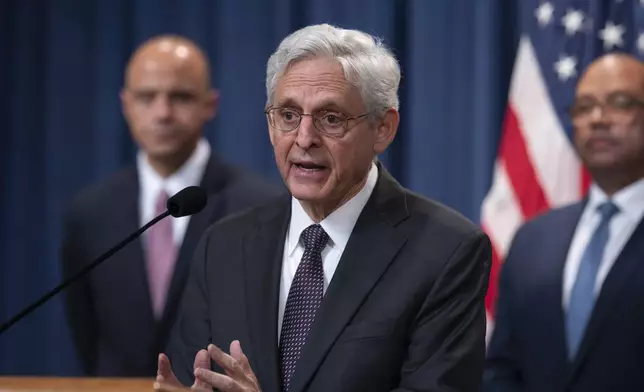
Attorney General Merrick Garland, flanked by Matt Graves, U.S. attorney for the District of Columbia, left, and Ronald Davis, director of the United States Marshals Service, holds a news conference as the Justice Department announced criminal charges against Iranian operatives suspected of hacking Donald Trump's presidential campaign and disseminating stolen information to media organizations, at the Justice Department in Washington, Friday, Sept. 27, 2024. (AP Photo/J. Scott Applewhite)
The three accused hackers were employed by Iran's paramilitary Revolutionary Guard, which the U.S. government has designated as a foreign terrorist organization. Since 2020, their operation has sought to compromise email accounts of a broad swath of targets, which in addition to the Trump campaign also includes a former ambassador to Israel, a former CIA deputy director, officials at the State and Defense departments, a former U.S. homeland security adviser and journalists, according to the indictment.
In May, prosecutors say, the defendants began trying to penetrate the Trump campaign, successfully breaking into the email accounts of campaign officials and other Trump allies. They then sought to “weaponize” the stolen campaign material by spreading it to media organizations and people associated with President Joe Biden's campaign in what's familiarly known as a “hack-and-leak” operation.
“The defendants’ own words make clear that they were attempting to undermine former President Trump’s campaign in advance of the 2024 U.S. presidential election. We know that Iran is continuing with its brazen efforts to stoke discord, erode confidence in the U.S. electoral process and advance its malign activities,” Attorney General Merrick Garland said at a news conference Friday announcing the charges.
U.S. intelligence officials have said Iran opposes Trump’s reelection, seeing him as more likely to increase tension between Washington and Tehran. Trump’s administration ended a nuclear deal with Iran, reimposed sanctions and ordered the killing of Iranian Gen. Qassem Soleimani, an act that prompted Iran’s leaders to vow revenge.
Trump’s campaign said earlier this week that it had been briefed by U.S. officials on “real and specific” Iranian assassination threats, though one official told The Associated Press that the briefing had been requested by the campaign and did not include any suggestion of a new threat against Trump.
Iran’s mission to the United Nations last month denied the hacking allegations as “unsubstantiated and devoid of any standing,” saying that Iran had neither the motive nor intention to interfere with the election. It challenged the U.S. to provide evidence and said if the U.S. does so, “we will respond accordingly.”
The U.S. government has sought this year across multiple agencies to aggressively call out election interference and foreign influence operations — a stark turnabout from the government’s response in 2016, when Obama administration officials were criticized for not being forthcoming about the Russian interference they were seeing on Trump’s behalf as he ran against Democrat Hillary Clinton.
The Treasury Department issued sanctions Friday related to the hacking and the State Department offered rewards of up to $10 million for information leading to the arrests of the defendants, who remain in Iran.
FBI Director Christopher Wray said in a video statement that the FBI has been working to publicly condemn Iran's “aggressive behavior,” including a plot to murder a journalist in New York City and a ransomware attack targeting a children's hospital.
Even with the recent focus on Iran, U.S. officials have said Russia remains the primary threat to the elections.
The Justice Department earlier this month charged two employees of RT, the Russian-state media organization, with covertly funding a Tennessee-based content creation company with nearly $10 million to publish English-language videos on social media platforms favorable to Russia's interests and agenda, and also seized dozens of internet domains that officials said were used to spread propaganda.
The Trump campaign disclosed on Aug. 10 that it had been breached and said Iranian actors had stolen and distributed sensitive internal documents.
Multiple major news organizations that said they were leaked confidential information from inside the Trump campaign, including Politico, The New York Times and The Washington Post, declined to publish it.
U.S. intelligence officials subsequently publicly blamed Iran for that hack and for an attempted breach of the Joe Biden-Kamala Harris campaign.
They have said the hack-and-dump operation was meant to sow discord, exploit divisions within American society and potentially influence the outcome of elections that Iran perceives to be “particularly consequential in terms of the impact they could have on its national security interests."
Among the tactics the accused hackers used, the indictment said, is impersonating U.S. officials and creating fake email personas to try to dupe their victims.
Politico has reported that it began receiving emails on July 22 from an anonymous account. The source — an AOL email account identified only as “Robert” — passed along what appeared to be a research dossier that the campaign had apparently done on the Republican vice presidential nominee, Ohio Sen. JD Vance. The document was dated Feb. 23, almost five months before Trump selected Vance as his running mate.
Last week, officials also revealed that the Iranians in late June and early July sent unsolicited emails containing excerpts of the hacked information to people associated with the Biden campaign. None of the recipients replied. The Harris campaign said the emails resembled spam or a phishing attempt and condemned the outreach by the Iranians as “unwelcome and unacceptable malicious activity.”
One of the emails was sent June 27, the date of the Biden-Trump debate, when a halting performance by the president laid the groundwork for his announcement weeks later that he would not seek reelection. An email offering the stolen information, according to the indictment, stated that the debate was likely to be Biden's “last chance” in the race.
The author stated negative feelings for Trump and wrote, “So I'm going to pass some materials along to you that would be useful to defeat him.”
Republican presidential nominee former President Donald Trump speaks at a campaign event in Mint Hill, N.C., Wednesday, Sept. 25, 2024. (AP Photo/Nell Redmond)
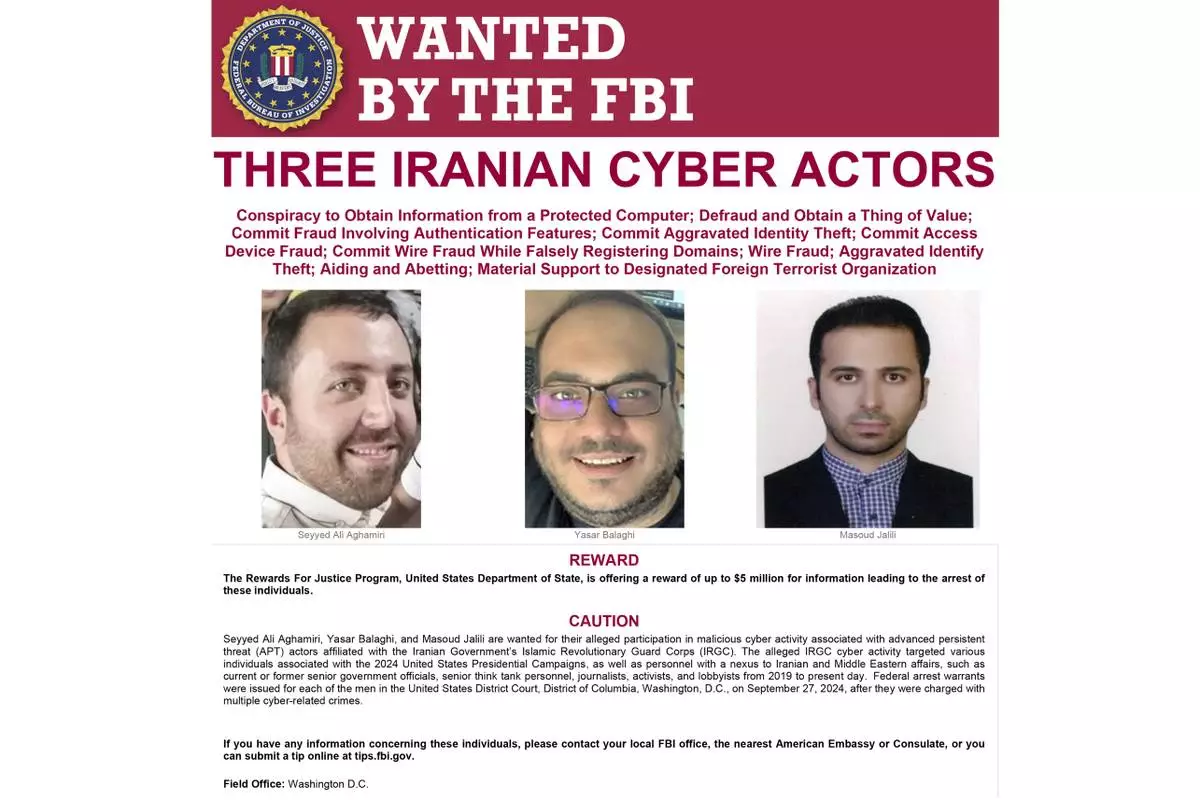
This image provided by the FBI shows three accused hackers, Seyyed Ali Aghamiri, Yasar Balaghi and Masoud Jalili, who were employed by Iran's paramilitary Revolutionary Guard, as the Justice Department unsealed criminal charges Friday, Sept. 27, 2024, against the three Iranian operatives suspected of hacking former President Donald Trump's campaign and disseminating stolen information to media organizations. (FBI via AP)
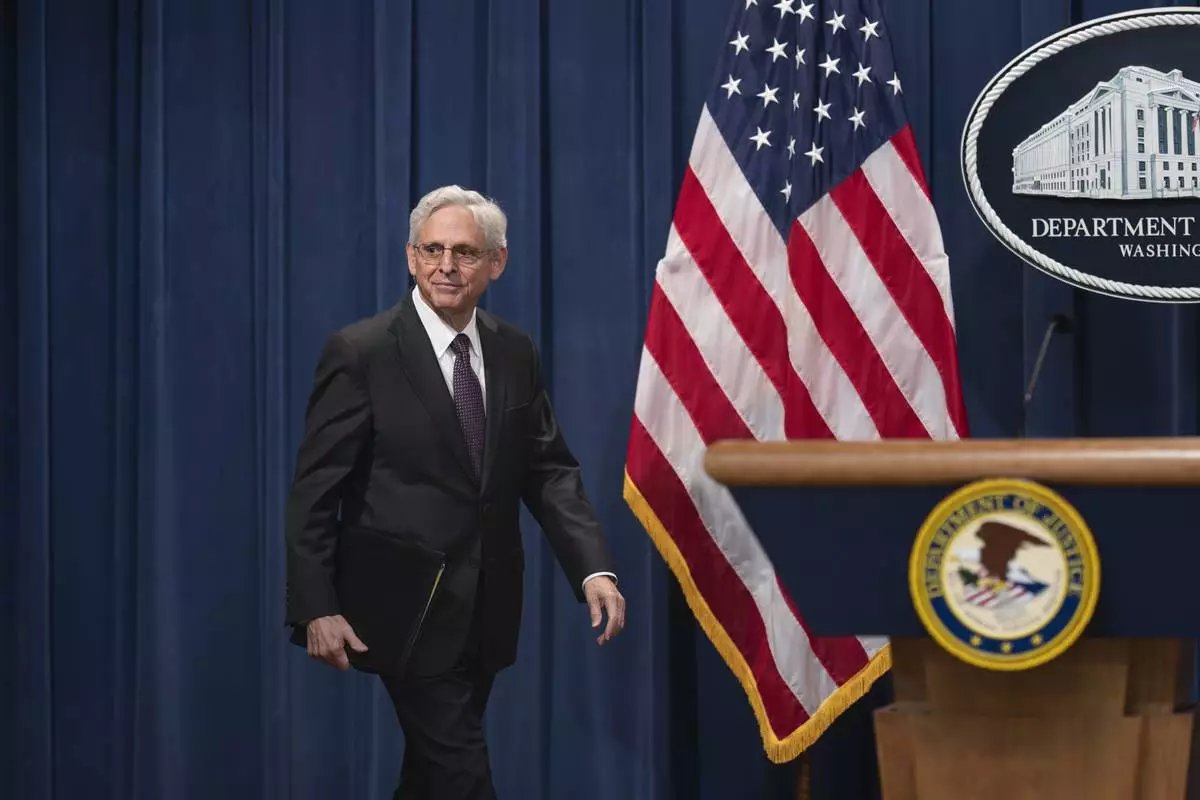
Attorney General Merrick Garland arrives for a news conference as the Justice Department announced criminal charges against Iranian operatives suspected of hacking Donald Trump's presidential campaign and disseminating stolen information to media organizations, at the Justice Department in Washington, Friday, Sept. 27, 2024. (AP Photo/J. Scott Applewhite)
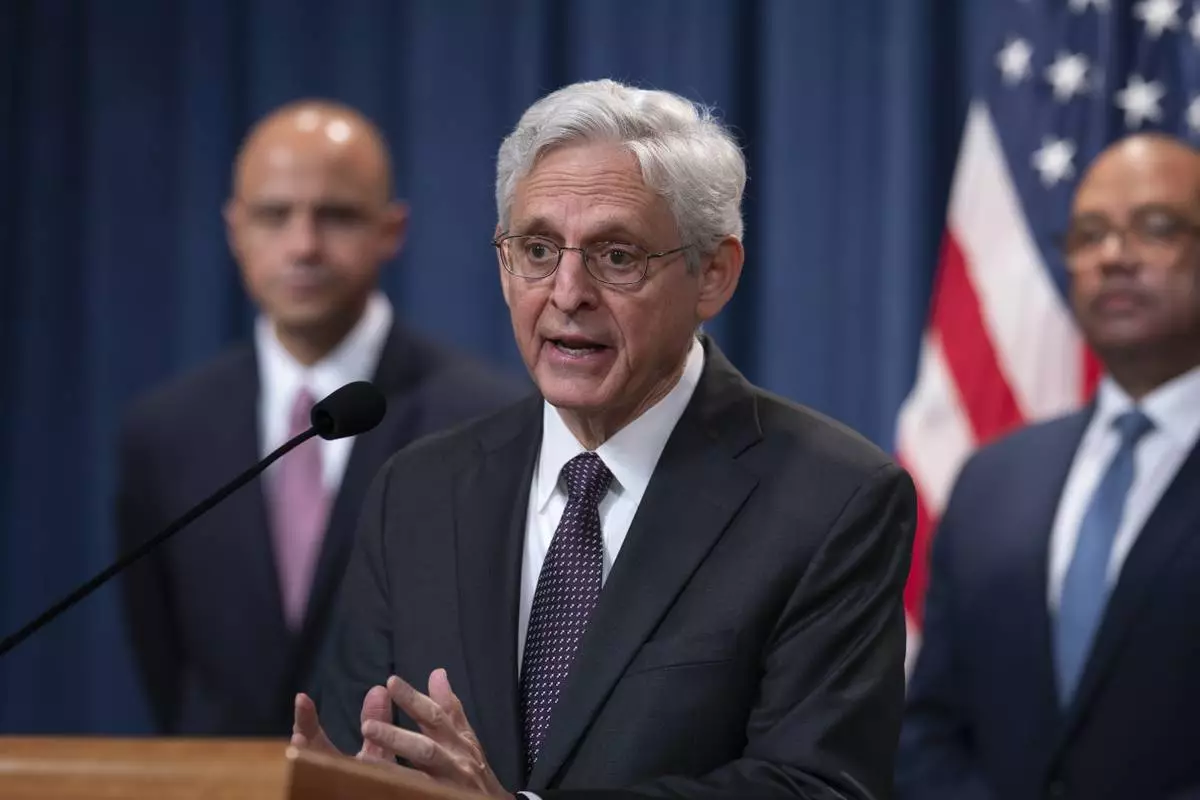
Attorney General Merrick Garland, flanked by Matt Graves, U.S. attorney for the District of Columbia, left, and Ronald Davis, director of the United States Marshals Service, holds a news conference as the Justice Department announced criminal charges against Iranian operatives suspected of hacking Donald Trump's presidential campaign and disseminating stolen information to media organizations, at the Justice Department in Washington, Friday, Sept. 27, 2024. (AP Photo/J. Scott Applewhite)