President Xi Jinping's people-centered philosophy has pushed many mega cities like Shanghai that faces high housing prices during fast urban development to place greater priority on making cities more liveable for residents, especially low-income newcomers.
Zhang Songwei, a father of two who comes from a small county in north China's Hebei Province, is one of many drawn to Shanghai with dreams of a better life. But the city's soaring housing costs often make it hard for newcomers to find a place they can truly call home.
"After two or three months of struggle, I thought about coming to the big city to explore, and to give it my all," said Zhang.
He later found a job as security guard in Shanghai.
"At the time, I wondered if there would be large communal dormitories in Shanghai, with many people living in a cramped room. I had many concerns," he said.
Zhang's concerns are shared by people from almost all walks of life.
"Before deciding to come, I had concerns about the stereotypes about Shanghai, especially the high housing prices and cost of living," said Zheng Lanyu, an accountant of the Shanghai Academy of Spaceflight Technology.
"Without a higher salary, I'm worried I won't be able to afford the rent," said Qian Lili, a nursing worker in Shanghai.
During an inspection tour to the city in 2019, President Xi first emphasized the idea that cities are built by the people and are for the people who build them. Since then, the city of Shanghai has not only aimed to lead in technological innovation or economic growth but also endeavored to set a model for people-centered urban development.
"Ultimately, the city belongs to its people, and should be a paradise for its people," said Xi, adding, "So the people living in the city need to feel a sense of gain and happiness."
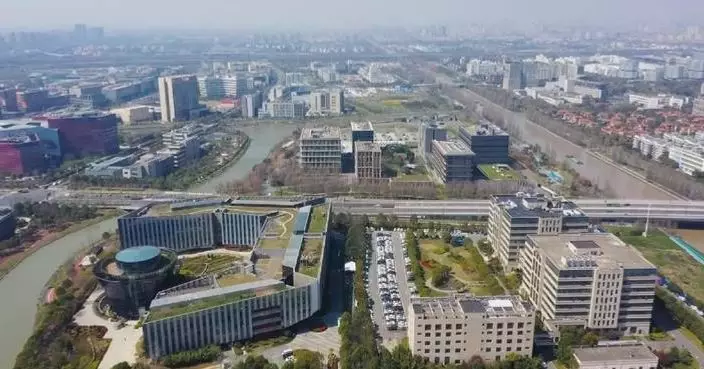
The concept continues to inspire the city's progress. Shanghai has been accelerating housing projects aimed at providing affordable homes to ensure newcomers can stay.
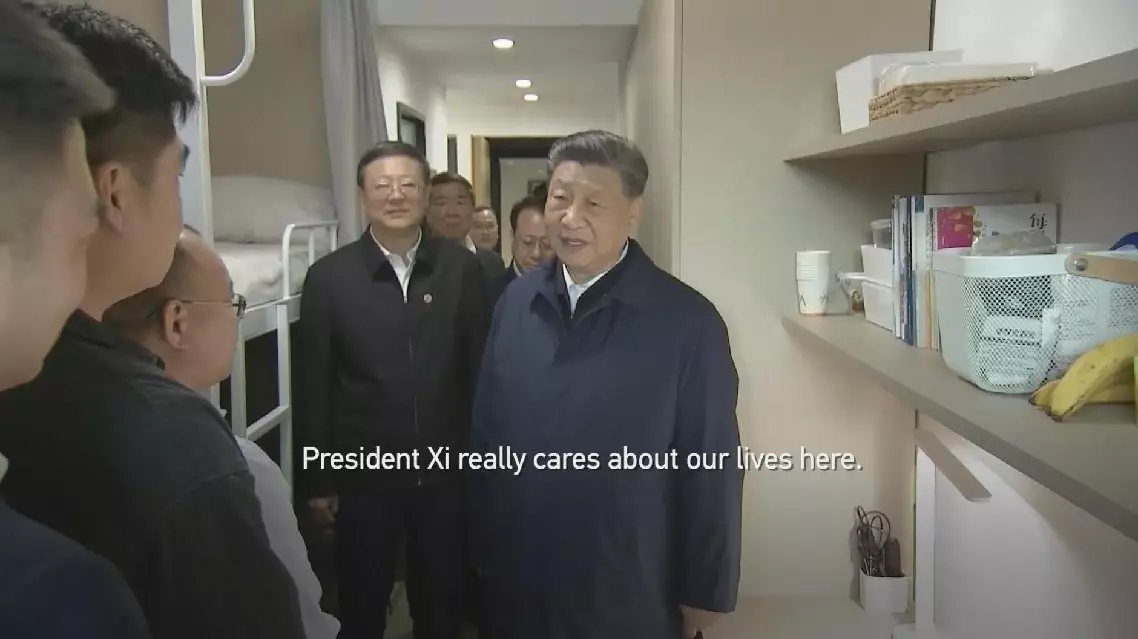
Zhang was among the first batch who moved into a new government-supported community where each bed costs only 500 yuan (about 70 U.S. dollars) per month in a four-bed room.
He never expected that last year, President Xi would visit his new home, as well as his neighbors.
"We were super excited when President Xi walked from the room next door to ours. Since we work in the sector in Shanghai, President Xi really cares about our life here. I told him just one thing: I feel that Shanghai is a very inclusive city," he said.
"You are also urban developers and contributors to Shanghai, so the city should take care of you, too," Xi told them.
"I feel this comment is incredibly high for our industry, to be called the developers and contributors of this city. When we think about the seemingly insignificant things we do, we never expected them to have such a significant impact on the city. It strengthened my resolve to keep moving forward," Zhang said.
The security guard said he is working hard to become a new Shanghai resident, buy a home, and bring over his family.
Driven by President Xi's encouragement, Zhang has become more determined than ever to make his mark in the city.
He started taking steps to integrate more deeply into his new home. When he struggled with not understanding the Shanghai dialect at work, he started to learn it.
"I hope we can have Shanghainese language classes in our community, so I can understand and speak with the local people," he said.
He began studying to earn more certificates to improve his chances of securing residency in Shanghai.
"This is the firefighter certificate I've just received after three months of hard study this year," he said.
He began actively participating in the community's development. He suggested expanding a gym so that young people living there can find space to work out after getting off work.
A few weeks later, a new bus station requested by the residents emerged, and an expanded gym area is under construction. And the Shanghai dialect class is bustling with newcomers eager to integrate more fully into the city.
"Whether you are a constructor or a technology professional, everyone should have access to the same facilities and public services. This is a really good thing," said Li Jianjun, head of the Huarunyouchao Maqiao Community.
"'People's cities are built by the people, and are for the people.' And during his visit last year, he also mentioned that while workers serve others outside, here at home they are the hosts. They should be taken care of," Li said.
Every newcomer can find a place where they truly belong. Every resident has the right to voice their needs. Democracy is embedded at the grassroots level, and everyone can access to the same opportunities. These are no longer some Utopian dreams. The vision is becoming a reality.
"Chinese-style modernization prioritizes people's well-being," Xi said during his inspection tour to southwest China's Chongqing Municipality in 2024.
"Urban development must prioritize making cities livable and ensuring people can live in peace and comfort," Xi said while attending an event marking the 30th anniversary of the development and opening-up of Pudong in Shanghai in 2020.
"I hope your life be peaceful, convenient, and comfortable. I wish everyone the best!" said Xi during his visit to Shanghai in 2023.
People-centered concept benefits low-income group in Shanghai
People-centered concept benefits low-income group in Shanghai