Cheng Li-wun, chairwoman of the Chinese Kuomintang (KMT) party, observed technological advances and innovation-driven growth on a visit in Beijing from Friday to Sunday, highlighting the potential for cross-Strait cooperation.
On Saturday morning, the delegation paid tribute to Sun Yat-sen (1866-1925), a great forerunner of China's democratic revolution, at the cenotaph in Beijing.
The cenotaph is located in the Biyun Temple at the Fragrant Hills in the western suburbs of Beijing. Sun, a founding figure of the KMT and a revered revolutionary leader who played a pivotal role in overthrowing imperial rule in China, died in 1925 in Beijing. His remains were kept in the temple before being transferred to the Sun Yat-sen Mausoleum in Nanjing in 1929.
In a memorial hall dedicated to Sun, the delegation bowed three times in front of a full-length white marble statue of Sun and then visited the cenotaph to pay their respects.
On the same day, Cheng and her entourage also visited the Palace Museum, touring historic sites to explore the roots of Chinese culture.
Visiting the Tsinghua University High School on Friday, the delegation learned about the application of AI in teaching. In school laboratories, the delegation watched student-developed projects including robot football matches, robotic dogs and robotic arms.
Cheng engaged with students and teachers during the visit, highly commending on their work.
"As a tech enthusiast, I'm also very much interested in Taiwan's technological innovations. I'd like to welcome the students from Taiwan to visit Beijing, and I would love to visit a high school in Taiwan to experience your school life, play a game of basketball with you, or work together with you on a tech innovation project," said student Li Zhuoxiu.
"I think educators on both sides of the Taiwan Strait share the same fundamental aspirations. After all, we teach the same Tang (618-906) and Song (618-906) Dynasties' poetries, write the same Chinese characters, and emphasize the same principles of 'benevolence, righteousness, propriety, wisdom and integrity.' In the light of the rapidly advancing AI era, we face a common challenge: how to nurture our children so that they possess a modern perspective while retaining a strong cultural foundation," said the school's deputy head Xu Wenbing.
On Saturday, the delegation visited the Zhongguancun Exhibition Center, where they gained firsthand experience of Beijing's strong momentum in building itself into an AI innovation hub.
Cheng showed strong interest in a "bionic intelligent hand" on display, examining its movements closely and encouraging other delegation members to try it.
"This is our L20 model, which has 21 degrees of freedom, exactly matching the joints of a human hand. It can not only be used in factories to tighten screws, but also thread a needle and make dumplings. It can perform many tasks to assist us in our daily lives," said Zuo Jiaping, co-founder of the hand's developer LinkerBot. The delegation later held discussions with representatives from technology companies to explore new opportunities for cross-Strait sci-tech cooperation, during which Cheng called for more cross-Strait cooperation in the tech sector.
"It was truly worth the trip. I've been asking in Taiwan what we should do about traditional industries and the service sector, and how we can integrate innovation and technology into our industries to achieve a comprehensive upgrade of Taiwan's economy. Today, I've got the answer: a powerful partnership between the two sides of the Strait. On this stage, such a partnership not only solves the challenges facing both sides but also benefits all of humanity. I believe what we need to provide for young people are 'incubators' and 'accelerators.' With the necessary support and a platform, they will show their potential and talent," Cheng said.
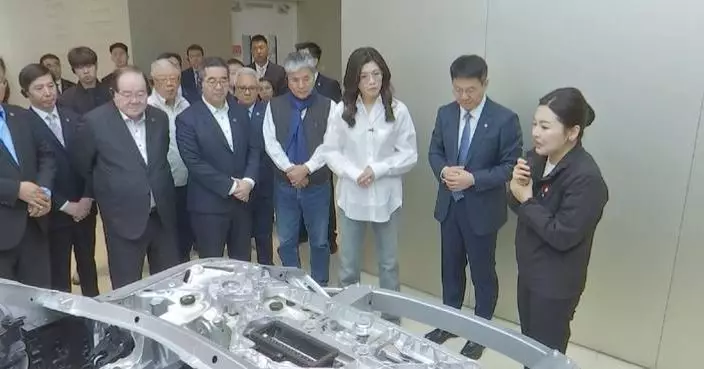
On Sunday morning, Cheng and her entourage visited a Xiaomi auto factory, where they were briefed on the latest developments in the production and research of new energy vehicles on the mainland.
At the point, Cheng sat in the driver's seat of a vehicle, appreciating its intelligent and user-friendly design.
The delegation wrapped up its six-day visit to the Chinese mainland and departed Beijing for Taiwan on Sunday afternoon.
Cheng is the first KMT chairperson to have led a delegation to the Chinese mainland in the past decade. The visit ran from Tuesday to Sunday. The delegation had visited Jiangsu Province and Shanghai before coming to Beijing.
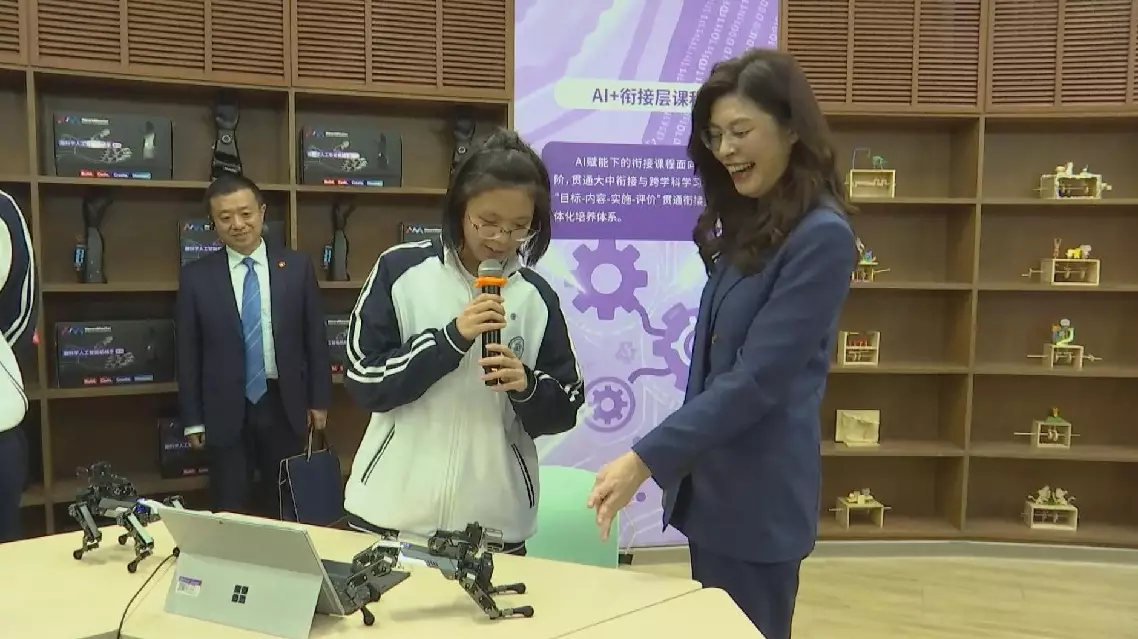
KMT leader observes tech development in Beijing, highlighting cross-Strait cooperation