COYUCA DE BENITEZ, Mexico (AP) — Along Mexico’s southern Pacific coast, floodwaters receded Monday, leaving behind devastated towns and 17 dead, after John struck the coast once as a hurricane and again as tropical storm last week.
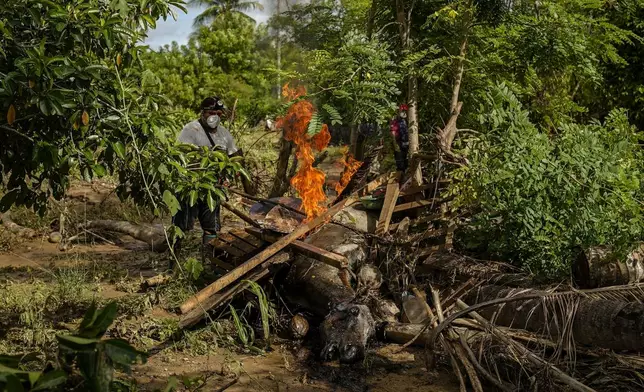
Desperate residents in the town of Coyuca de Benitez, about 35 miles west of the resort city of Acapulco, organized volunteers to go to outlying areas to burn the bloated bodies of farm animals that drowned.
Click to Gallery
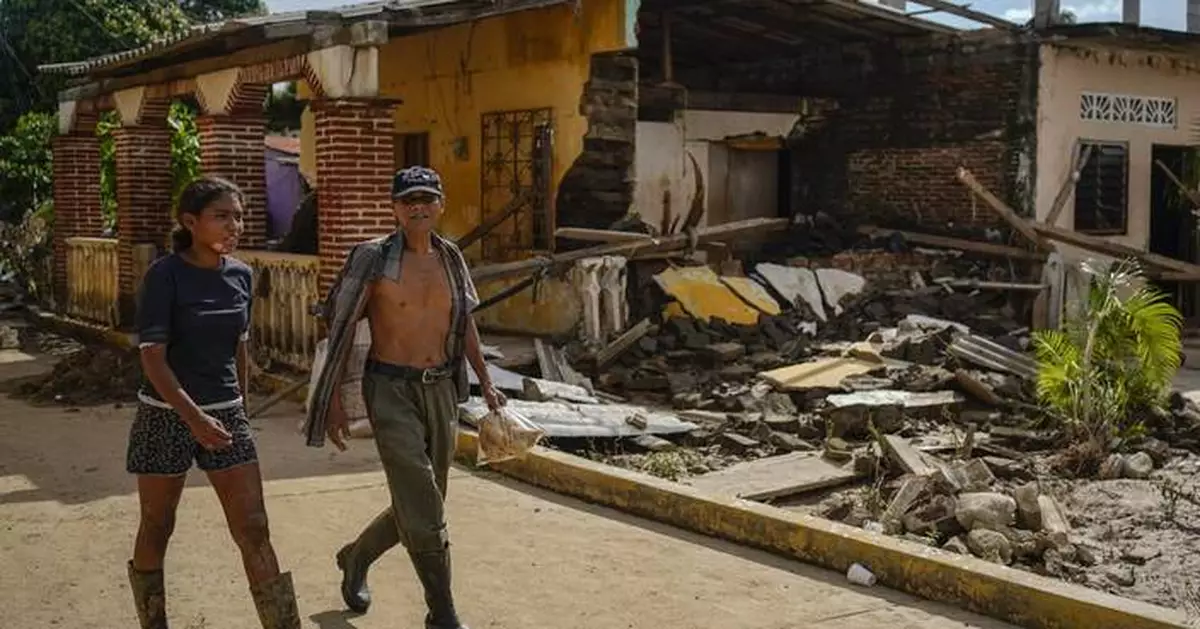
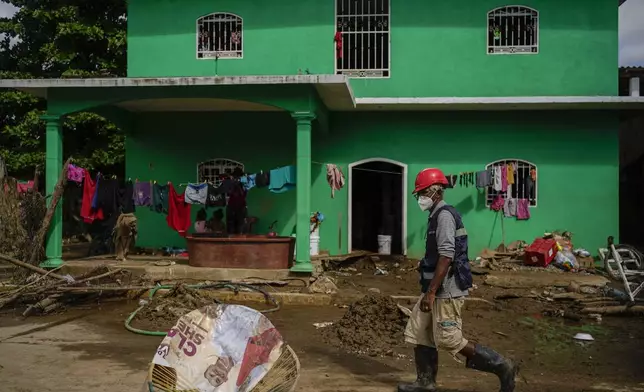
A volunteer inspects the damage in Coyuca de Benitez, Guerrero state, Mexico, after Hurricane John passed through, Monday, Sept. 30, 2024. (AP Photo/Felix Marquez)
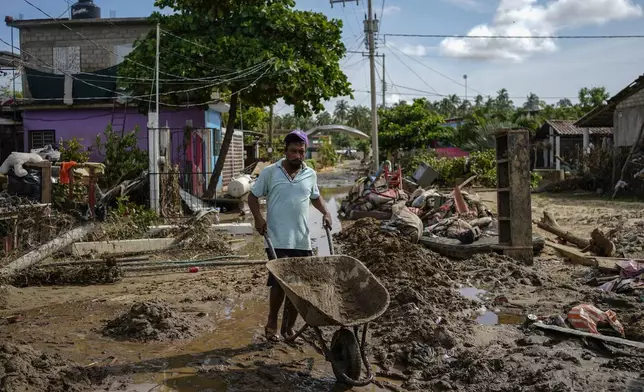
A man pushes a wheelbarrow through a damaged street after Hurricane John passed through Coyuca de Benitez, Guerrero state, Mexico, Monday, Sept. 30, 2024. (AP Photo/Felix Marquez)
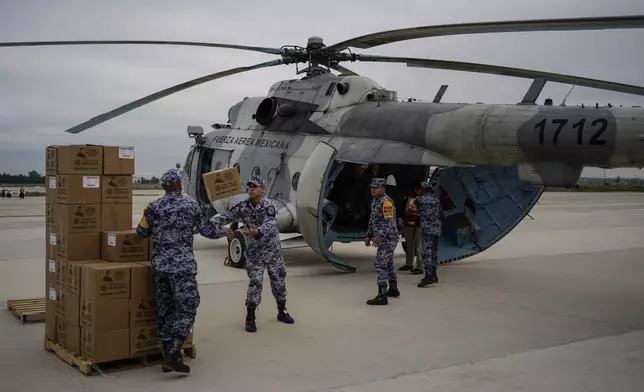
Mexican Air Force officers pack food for victims of Hurricane John, which hit the state of Guerrero, in Mexico City, Monday, Sept. 30, 2024. (AP Photo/Felix Marquez)
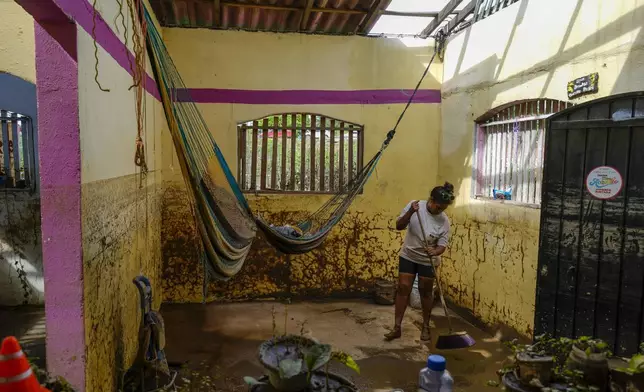
Yahaira Garcia, 32, cleans her damaged house after Hurricane John passed through Coyuca de Benitez, Guerrero state, Mexico, Monday, Sept. 30, 2024. (AP Photo/Felix Marquez)
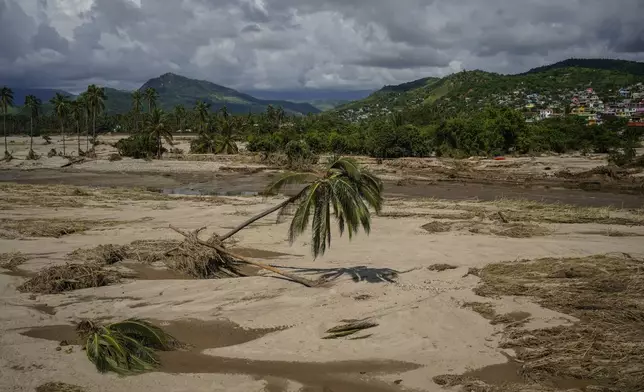
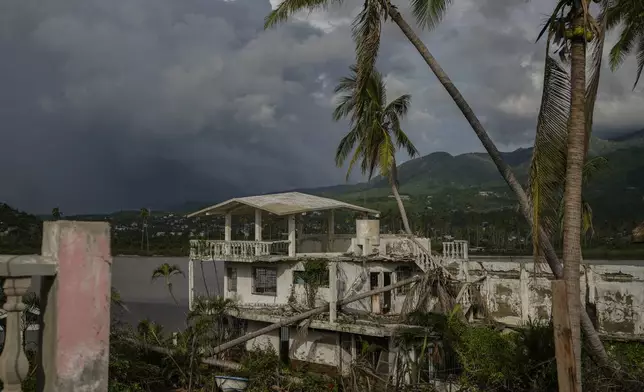
An uprooted palm tree withers near what used to be a road before before Hurricane John passed through Coyuca de Benitez, Guerrero state, Mexico, Monday, Sept. 30, 2024. (AP Photo/Felix Marquez)
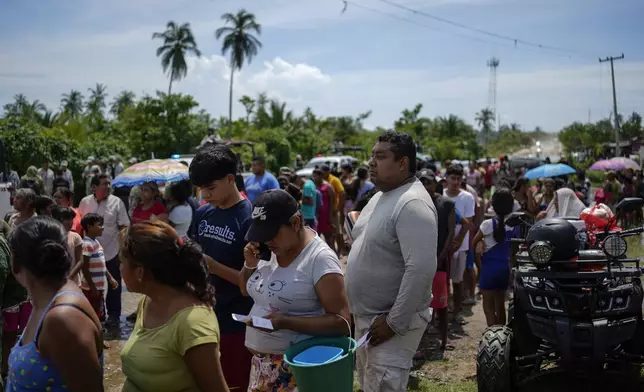
Residents line up to receive food delivered by the Army after Hurricane John passed through Coyuca de Benitez, Guerrero Mexico, Monday, Sept. 30, 2024. (AP Photo/Felix Marquez)
A man burns a dead horse after Hurricane John passed through Coyuca de Benitez, Guerrero state, Mexico, Monday, Sept. 30, 2024. (AP Photo/Felix Marquez)
A house lies damaged after the impact of Hurricane John, in Pie de la Cuesta, Guerrero state, Mexico, Monday, Sept. 30, 2024. (AP Photo/Felix Marquez)
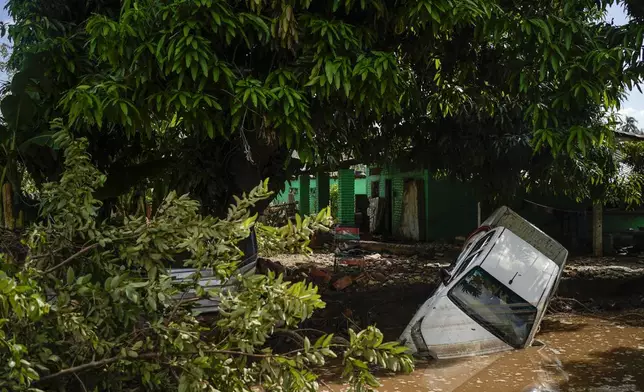
A vehicle lies damaged after Hurricane John passed through Coyuca de Benitez, Guerrero state, Mexico, Monday, Sept. 30, 2024. (AP Photo/Felix Marquez)
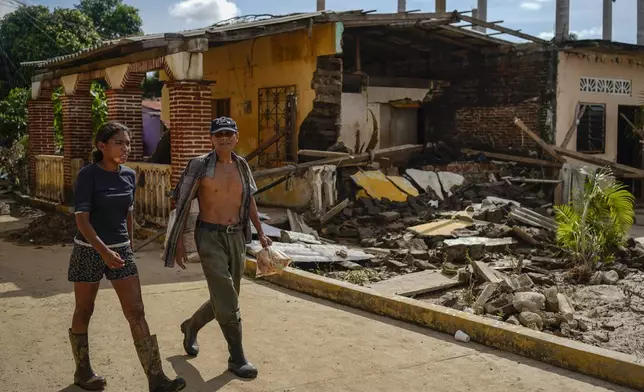
Residents walk past a house damaged by Hurricane John in Coyuca de Benitez, Guerrero state, Mexico, Monday, Sept. 30, 2024. (AP Photo/Felix Marquez)
The carcasses could become a health risk, so teams of townspeople set out with cans of diesel to help them in their grim work.
The Mexican army began delivering aid packages to families in the town that were hit last year by Hurricane Otis and then last week — twice — by John.
Some are becoming so tired of the repeated hurricane impacts every year they have almost given up.
“I don't want to buy anything anymore, if this is going to continue happening every year,” said Yahaira García Marín, 32, as she began to clear out her shattered house in Coyuca de Benitez. Around her, little was left except the shoulder-high brown marks on the wall showing where the water reached.
García Marín had to flee in the night last week with her 80-year-old grandmother. “It was terrible, we had to grab what little we had and get out,” she recalled.
Outgoing President Andrés Manuel López Obrador — whose last day in office was Monday — has not visited the disaster zone, but he confirmed Sunday that 15 people had died. Two more people were reported dead by authorities in the state of Oaxaca, which borders Guerrero to the east.
Officials in Guerrero state, where both Coyuca and Acapulco are located, said more than 3 feet of rain (95 centimeters) had fallen in the region between Sept. 23 when John made landfall to the east of Acapulco as a Category 3 hurricane, and Friday, when the rejuvenated Tropical Storm John came ashore again to the west of Coyuca.
That meant the era got the equivalent of about 80% of the rain it would normally expect to see in a year, in just four or five days.
The rain also set off landslides that collapsed houses and blocked roads in the mountainous terrain behind the coast.
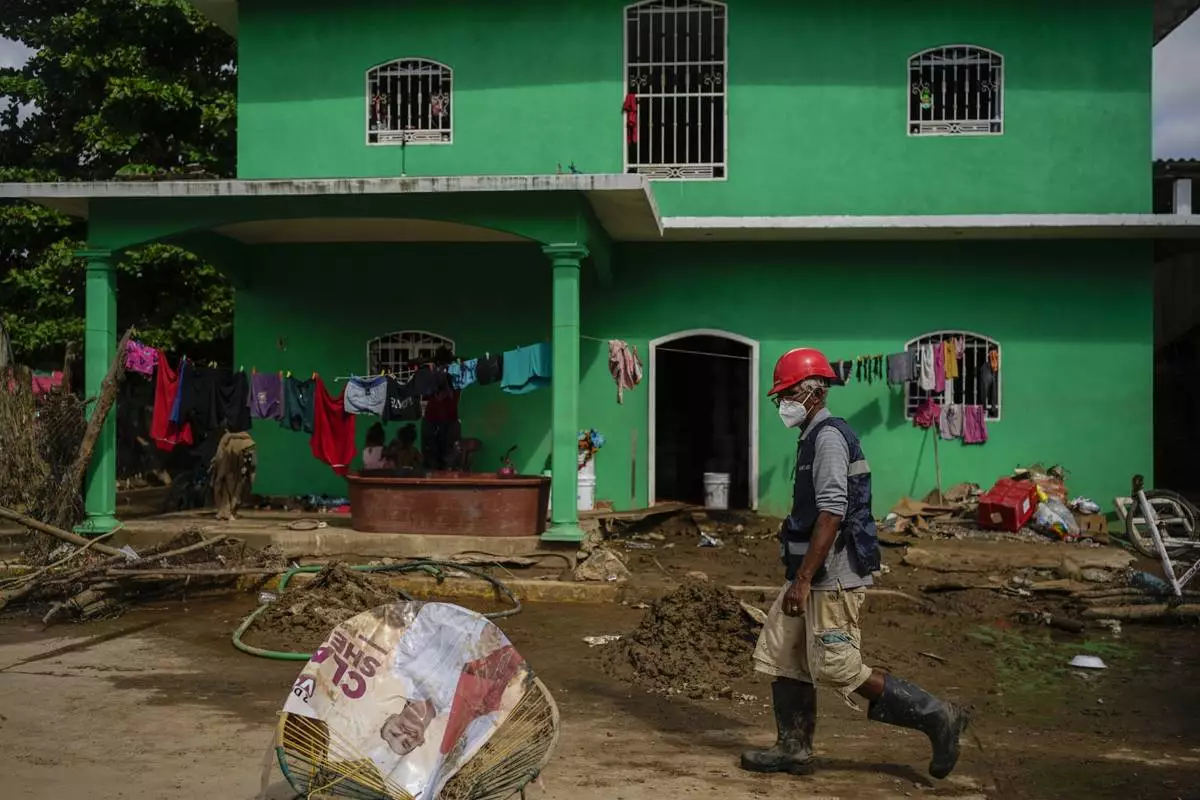
A volunteer inspects the damage in Coyuca de Benitez, Guerrero state, Mexico, after Hurricane John passed through, Monday, Sept. 30, 2024. (AP Photo/Felix Marquez)
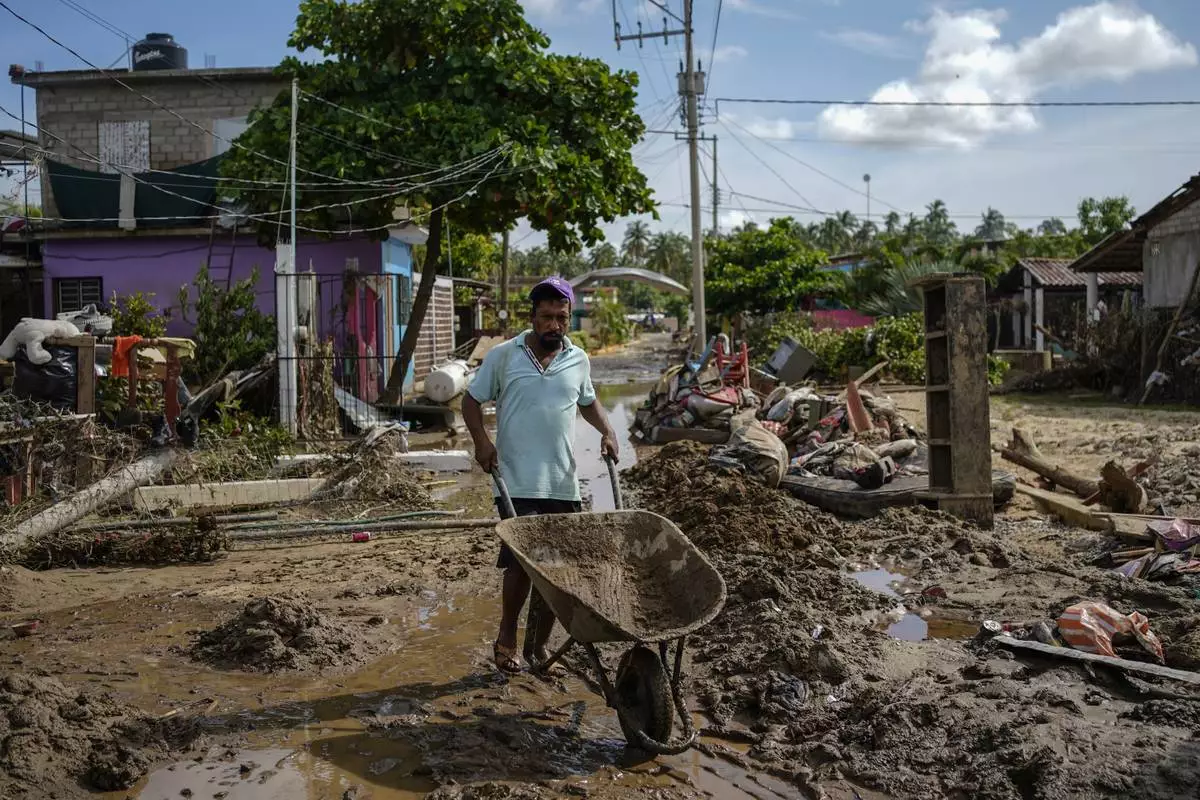
A man pushes a wheelbarrow through a damaged street after Hurricane John passed through Coyuca de Benitez, Guerrero state, Mexico, Monday, Sept. 30, 2024. (AP Photo/Felix Marquez)
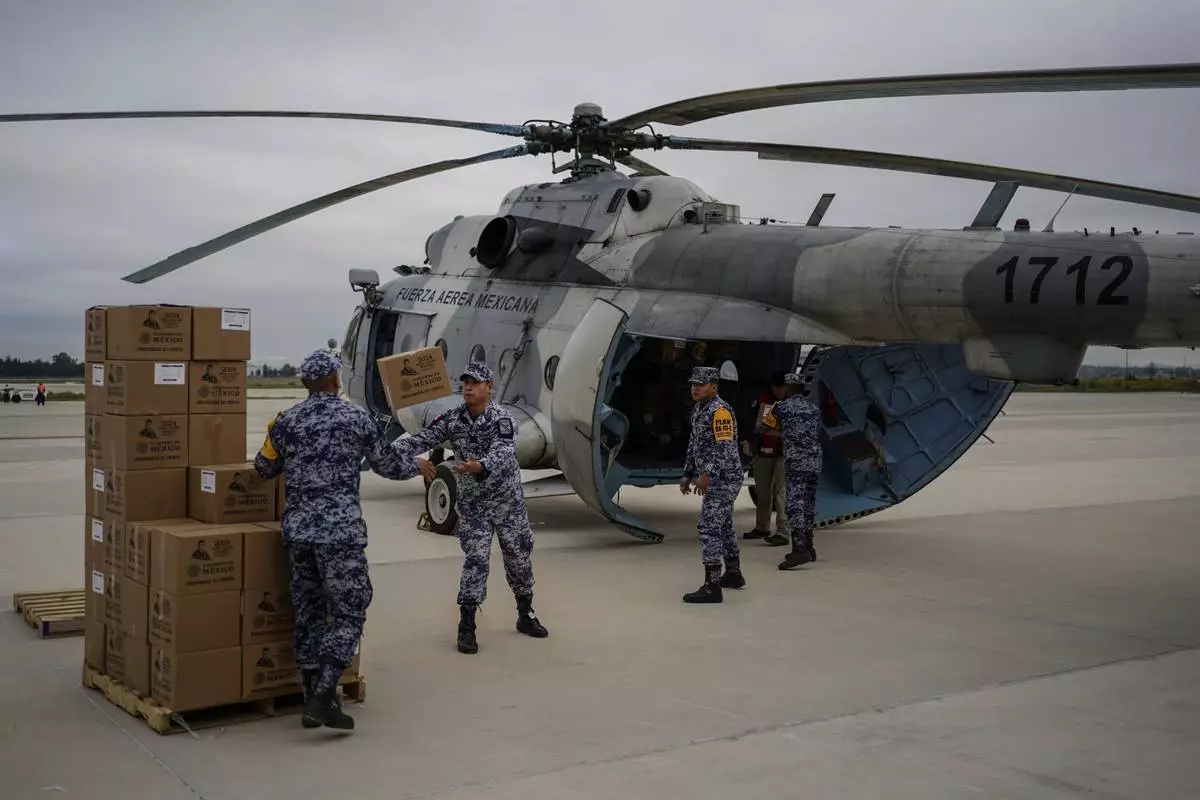
Mexican Air Force officers pack food for victims of Hurricane John, which hit the state of Guerrero, in Mexico City, Monday, Sept. 30, 2024. (AP Photo/Felix Marquez)
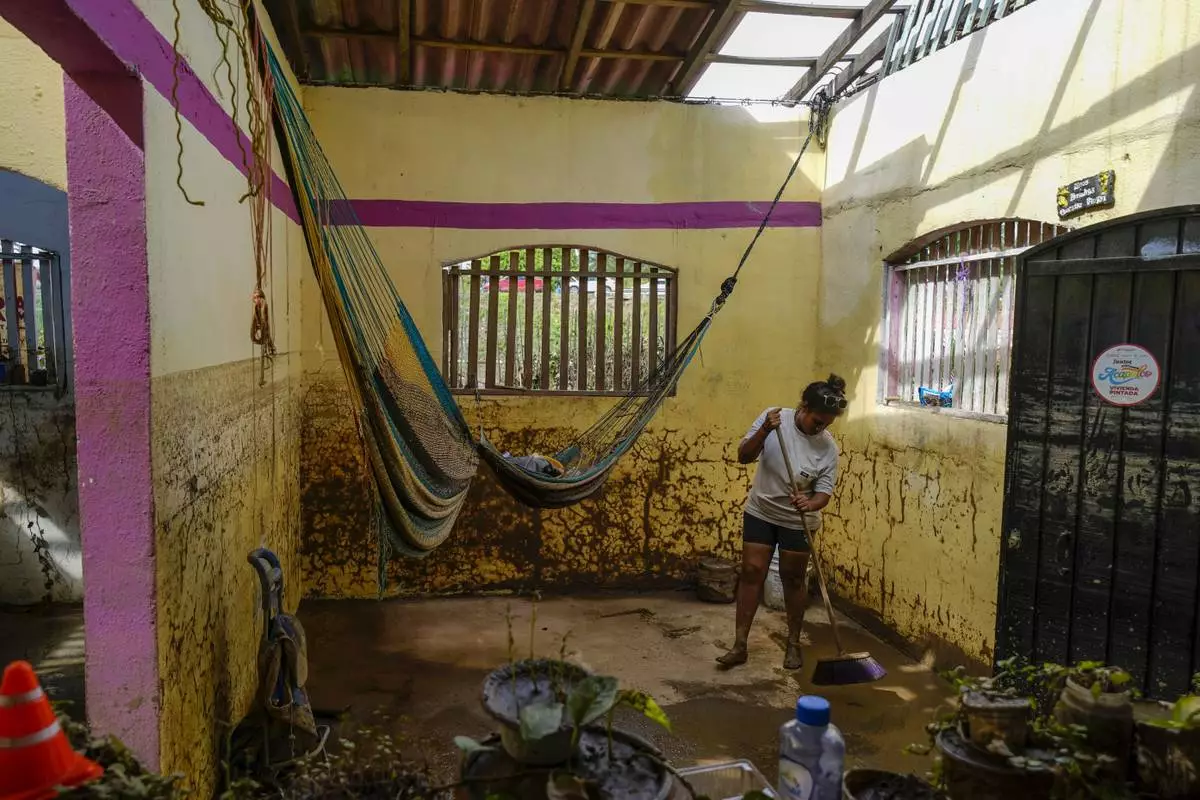
Yahaira Garcia, 32, cleans her damaged house after Hurricane John passed through Coyuca de Benitez, Guerrero state, Mexico, Monday, Sept. 30, 2024. (AP Photo/Felix Marquez)
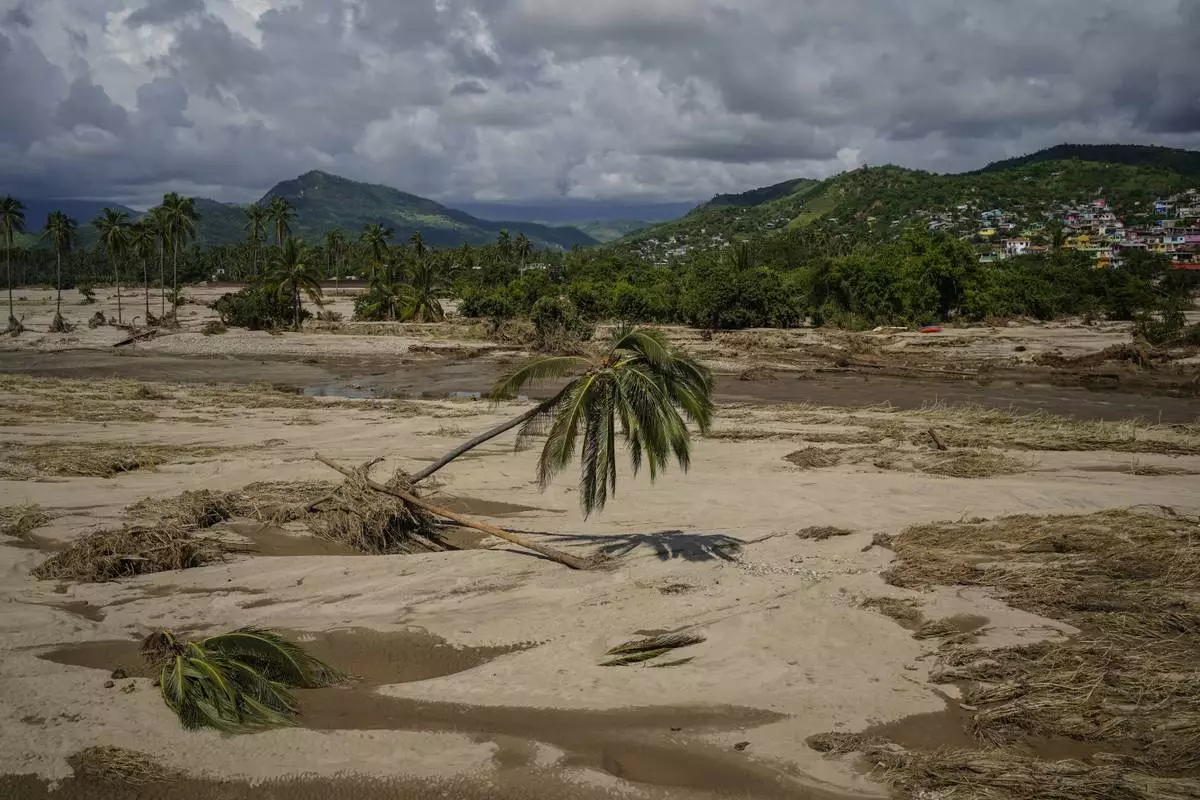
An uprooted palm tree withers near what used to be a road before before Hurricane John passed through Coyuca de Benitez, Guerrero state, Mexico, Monday, Sept. 30, 2024. (AP Photo/Felix Marquez)
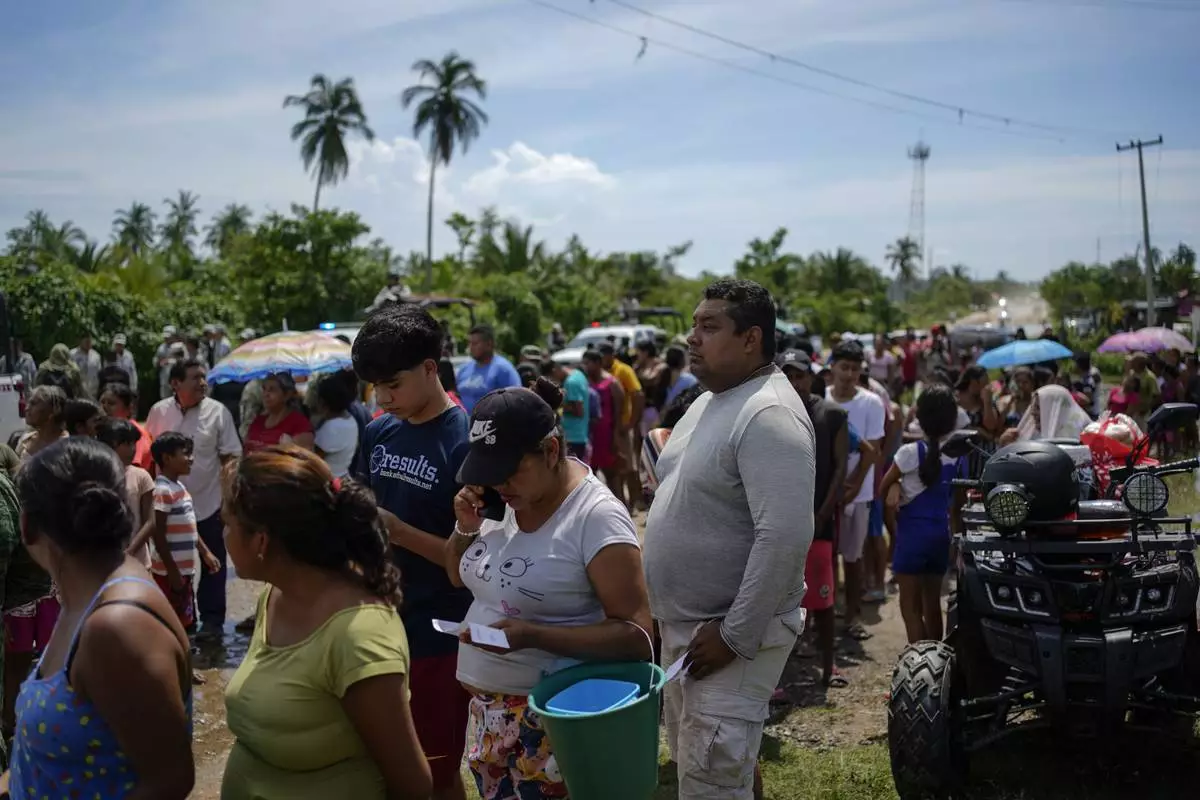
Residents line up to receive food delivered by the Army after Hurricane John passed through Coyuca de Benitez, Guerrero Mexico, Monday, Sept. 30, 2024. (AP Photo/Felix Marquez)
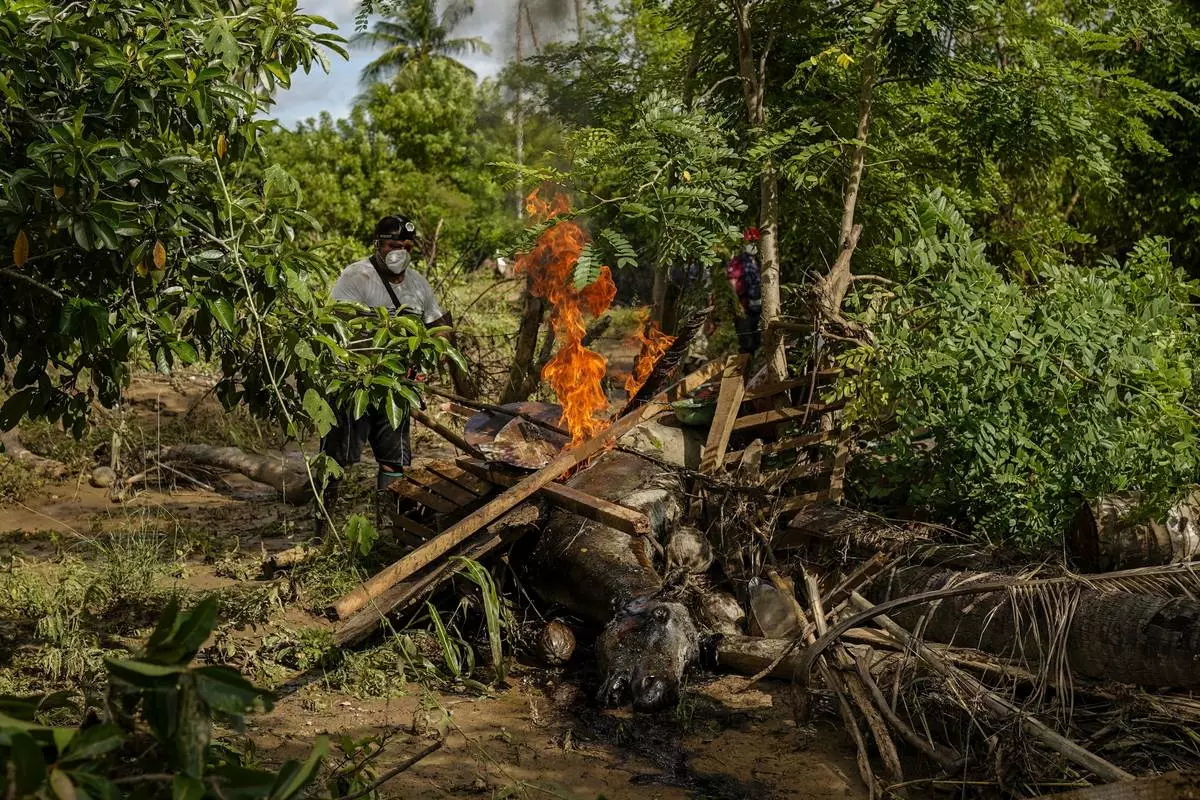
A man burns a dead horse after Hurricane John passed through Coyuca de Benitez, Guerrero state, Mexico, Monday, Sept. 30, 2024. (AP Photo/Felix Marquez)
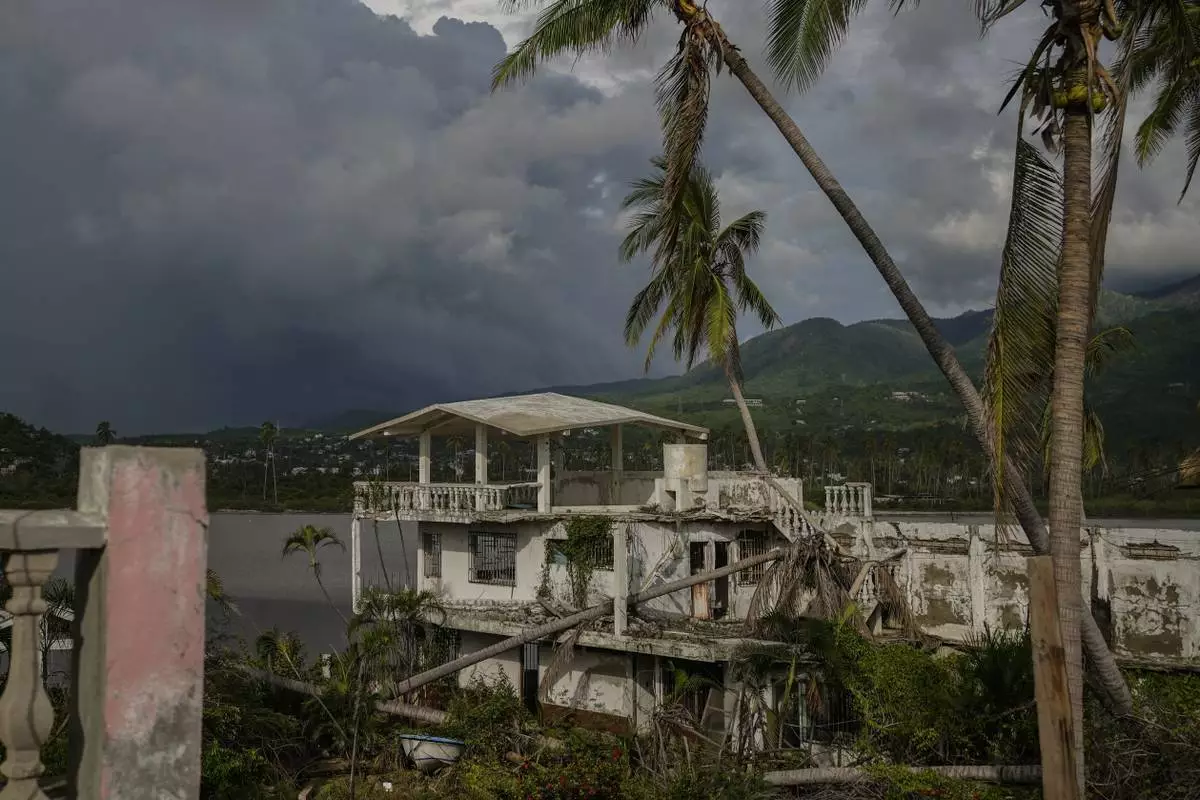
A house lies damaged after the impact of Hurricane John, in Pie de la Cuesta, Guerrero state, Mexico, Monday, Sept. 30, 2024. (AP Photo/Felix Marquez)
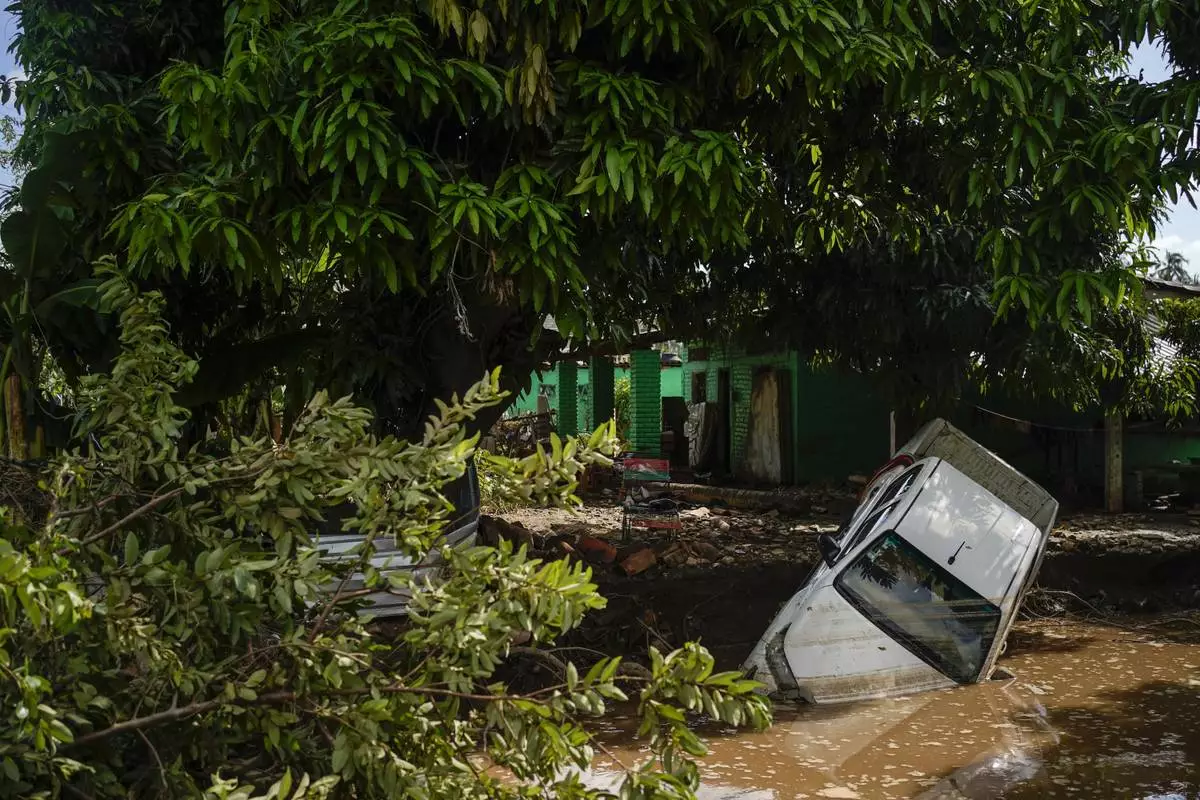
A vehicle lies damaged after Hurricane John passed through Coyuca de Benitez, Guerrero state, Mexico, Monday, Sept. 30, 2024. (AP Photo/Felix Marquez)
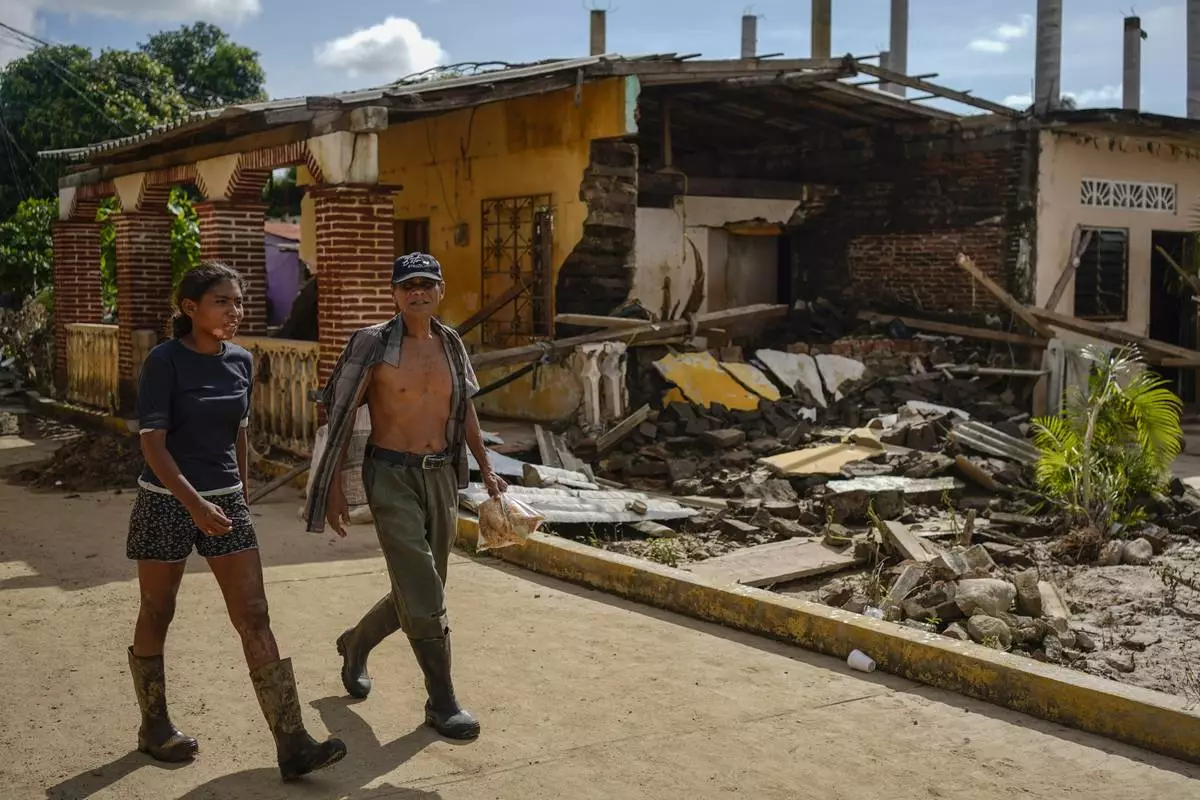
Residents walk past a house damaged by Hurricane John in Coyuca de Benitez, Guerrero state, Mexico, Monday, Sept. 30, 2024. (AP Photo/Felix Marquez)
WASHINGTON (AP) — President Donald Trump has arrived at a delicate moment as he weighs whether to order a U.S. military response against the Iranian government as it continues a violent crackdown on protests that have left nearly 600 dead and led to the arrests of thousands across the country.
The U.S. president has repeatedly threatened Tehran with military action if his administration found the Islamic Republic was using deadly force against antigovernment protesters. It's a red line that Trump has said he believes Iran is “starting to cross” and has left him and his national security team weighing “very strong options.”
But the U.S. military — which Trump has warned Tehran is “locked and loaded” — appears, at least for the moment, to have been placed on standby mode as Trump ponders next steps, saying that Iranian officials want to have talks with the White House.
“What you’re hearing publicly from the Iranian regime is quite different from the messages the administration is receiving privately, and I think the president has an interest in exploring those messages,” White House press secretary Karoline Leavitt told reporters Monday. “However, with that said, the president has shown he’s unafraid to use military options if and when he deems necessary, and nobody knows that better than Iran.”
Hours later, Trump announced on social media that he would slap 25% tariffs on countries doing business with Tehran “effective immediately” — his first action aimed at penalizing Iran for the protest crackdown, and his latest example of using tariffs as a tool to force friends and foes on the global stage to bend to his will.
China, the United Arab Emirates, Turkey, Brazil and Russia are among economies that do business with Tehran. The White House declined to offer further comment or details about the president’s tariff announcement.
The White House has offered scant details on Iran's outreach for talks, but Leavitt confirmed that the president's special envoy Steve Witkoff will be a key player engaging Tehran.
Meanwhile, Vice President JD Vance, Secretary of State Marco Rubio and key White House National Security Council officials began meeting Friday to develop a “suite of options,” from a diplomatic approach to military strikes, to present to Trump in the coming days, according to a U.S. official familiar with the internal administration deliberations. The official was not authorized to comment publicly and spoke on the condition of anonymity.
Trump told reporters Sunday evening that a “meeting is being set up” with Iranian officials but cautioned that “we may have to act because of what’s happening before the meeting.”
“We’re watching the situation very carefully,” Trump said.
Demonstrations in Iran continue, but analysts say it remains unclear just how long protesters will remain on the street.
An internet blackout imposed by Tehran makes it hard for protesters to understand just how widespread the demonstrations have become, said Vali Nasr, a State Department adviser during the early part of the Obama administration, and now professor of international affairs and Middle East studies at Johns Hopkins University.
“It makes it very difficult for news from one city or pictures from one city to incense or motivate action in another city,” Nasr said. “The protests are leaderless, they're organization-less. They are actually genuine eruptions of popular anger. And without leadership and direction and organization, such protests, not just in Iran, everywhere in the world — it’s very difficult for them to sustain themselves.”
Meanwhile, Trump is dealing with a series of other foreign policy emergencies around the globe.
It's been just over a week since the U.S. military launched a successful raid to arrest Venezuela's Nicolás Maduro and remove him from power. The U.S. continues to mass an unusually large number of troops in the Caribbean Sea.
Trump is also focused on trying to get Israel and Hamas onto the second phase of a peace deal in Gaza and broker an agreement between Russia and Ukraine to end the nearly four-year war in Eastern Europe.
But advocates urging Trump to take strong action against Iran say this moment offers an opportunity to further diminish the theocratic government that's ruled the country since the Islamic revolution in 1979.
The demonstrations are the biggest Iran has seen in years — protests spurred by the collapse of Iranian currency that have morphed into a larger test of supreme leader Ayatollah Ali Khamenei's repressive rule.
Iran, through the country’s parliamentary speaker, has warned that the U.S. military and Israel would be “legitimate targets” if Washington uses force to protect demonstrators.
Some of Trump's hawkish allies in Washington are calling on the president not to miss the opportunity to act decisively against a vulnerable Iranian government that they argue is reeling after last summer's 12-day war with Israel and battered by U.S. strikes in June on key Iranian nuclear sites.
Sen. Lindsey Graham, R-S.C., said on social media Monday that the moment offers Trump the chance to show that he's serious about enforcing red lines. Graham alluded to former Democratic President Barack Obama in 2012 setting a red line on the use of chemical weapons by Syria's Bashar Assad against his own people — only not to follow through with U.S. military action after the then-Syrian leader crossed that line the following year.
“It is not enough to say we stand with the people of Iran,” Graham said. “The only right answer here is that we act decisively to protect protesters in the street — and that we’re not Obama — proving to them we will not tolerate their slaughter without action.”
Former Republican House Speaker Newt Gingrich, another close Trump ally, said the “goal of every Western leader should be to destroy the Iranian dictatorship at this moment of its vulnerability.”
“In a few weeks either the dictatorship will be gone or the Iranian people will have been defeated and suppressed and a campaign to find the ringleaders and kill them will have begun,” Gingrich said in an X post. “There is no middle ground.”
Indeed, Iranian authorities have managed to snuff out rounds of mass protests before, including the “Green Movement” following the disputed election in 2009 and the “woman, life, freedom” protests that broke out after 22-year-old Mahsa Amini died in custody of the state’s morality police in 2022.
Trump and his national security team have already begun reviewing options for potential military action and he is expected to continue talks with his team this week.
Behnam Ben Taleblu, senior director of the Iran program at the Foundation for Defense of Democracies, a hawkish Washington think tank, said “there is a fast-diminishing value to official statements by the president promising to hold the regime accountable, but then staying on the sidelines.”
Trump, Taleblu noted, has shown a desire to maintain “maximum flexibility rooted in unpredictability” as he deals with adversaries.
“But flexibility should not bleed into a policy of locking in or bailing out an anti-American regime which is on the ropes at home and has a bounty on the president’s head abroad,” he added.
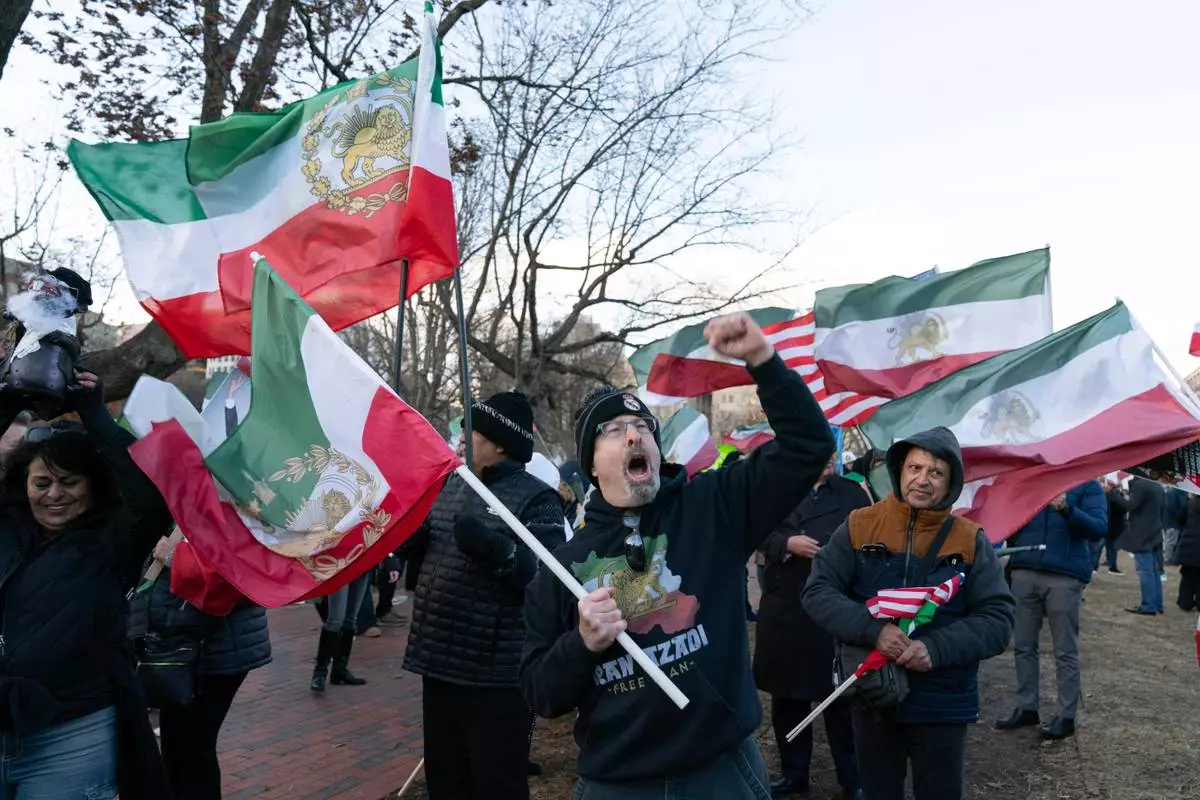
Activists take part in a rally supporting protesters in Iran at Lafayette Park, across from the White House, in Washington, Sunday, Jan. 11, 2026. (AP Photo/Jose Luis Magana)
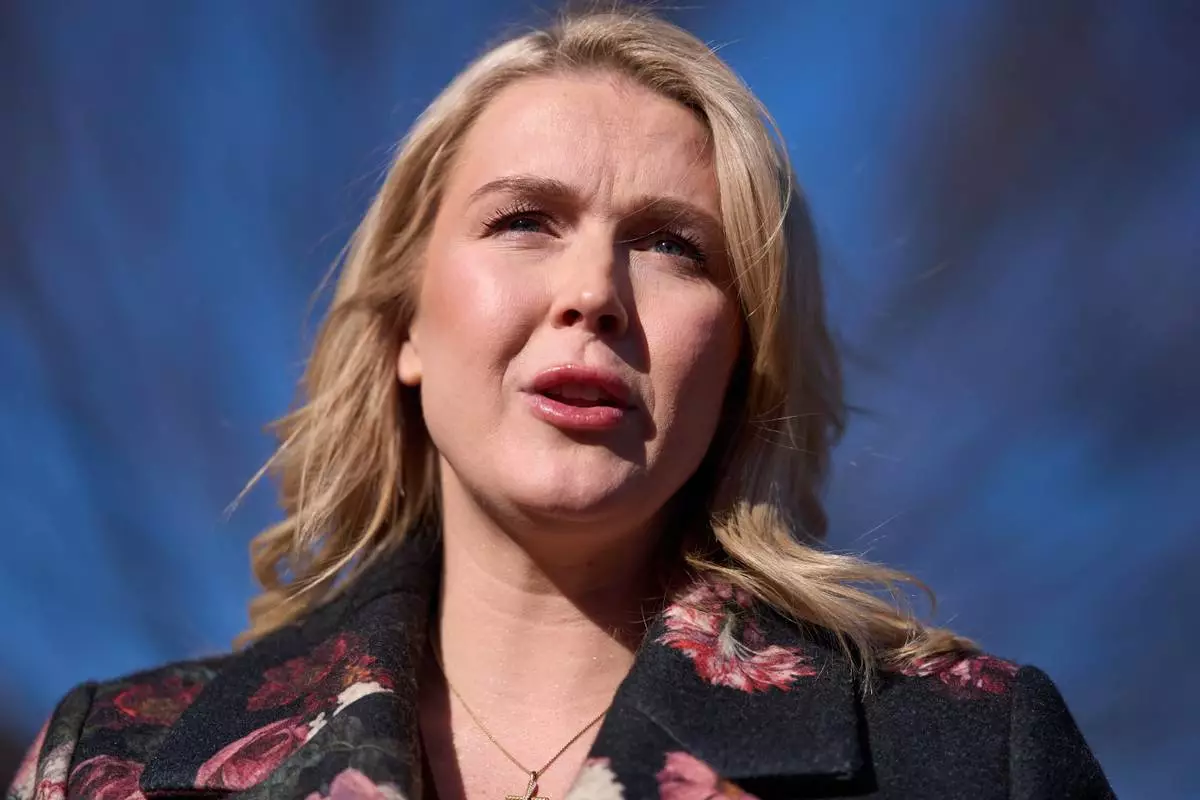
White House press secretary Karoline Leavitt speaks with reporters at the White House, Monday, Jan. 12, 2026, in Washington. (AP Photo/Evan Vucci)
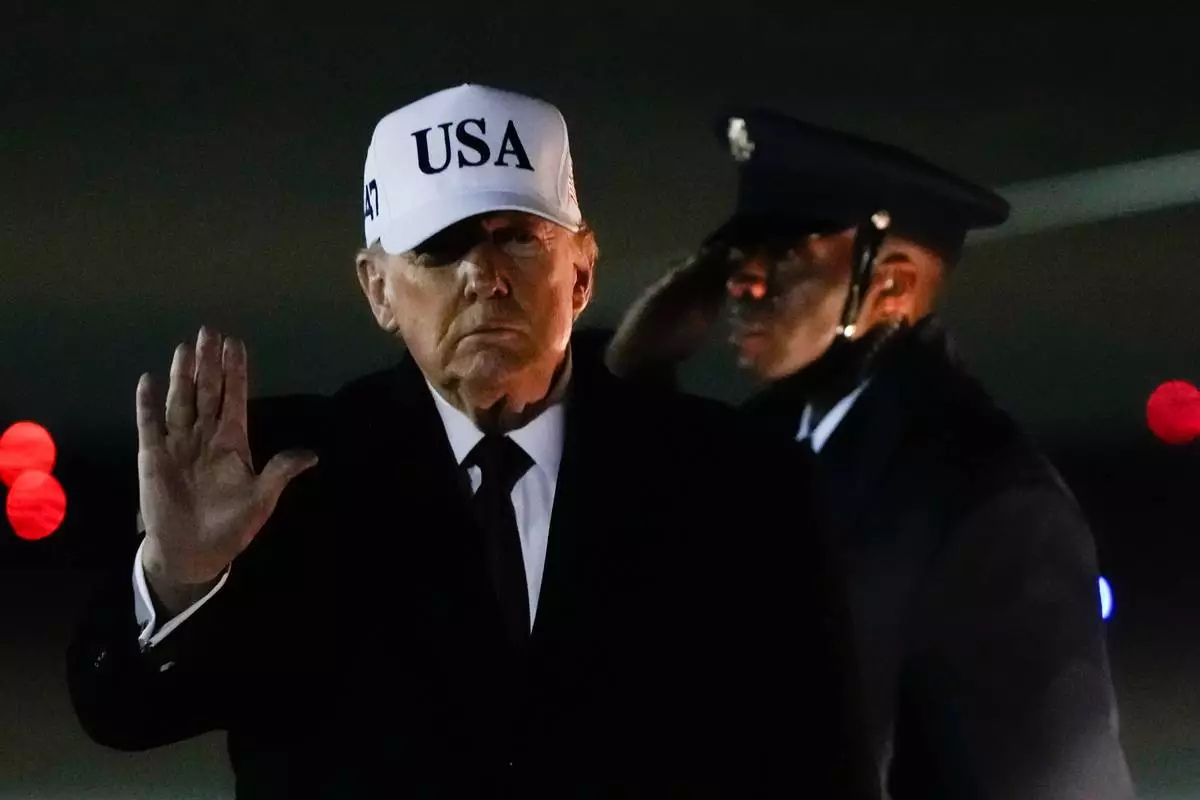
President Donald Trump waves after arriving on Air Force One from Florida, Sunday, Jan. 11, 2026, at Joint Base Andrews, Md. (AP Photo/Julia Demaree Nikhinson)