WASHINGTON (AP) — A bipartisan U.S. congressional delegation is headed to Copenhagen later this week in an attempt to show unity between the United States and Denmark as U.S. President Donald Trump continues to threaten to seize Greenland, a semiautonomous territory of the NATO ally.
Sen. Chris Coons, D-Del., is leading the trip of at least nine members of Congress, including Republican Sen. Thom Tillis of North Carolina. The group will be in Copenhagen on Friday and Saturday and will meet with high-level Danish and Greenlandic government officials and business leaders.
Click to Gallery
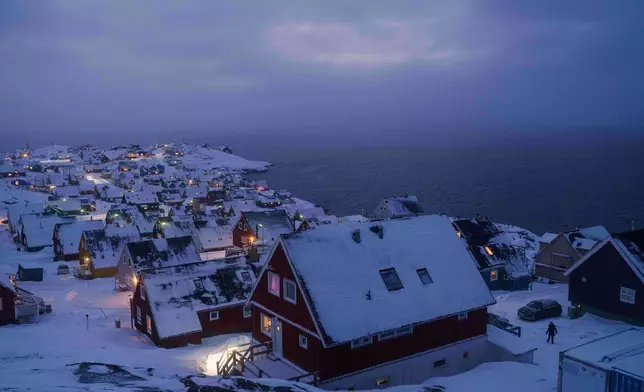
Houses covered by snow are seen on the coast of a sea inlet of Nuuk, Greenland, on Monday, Jan. 12, 2026. (AP Photo/Evgeniy Maloletka)
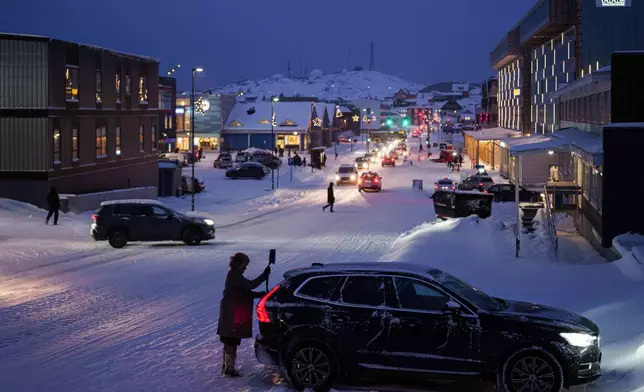
A woman cleans her car from snow in Nuuk, Greenland, on Monday, Jan. 12, 2026. (AP Photo/Evgeniy Maloletka)
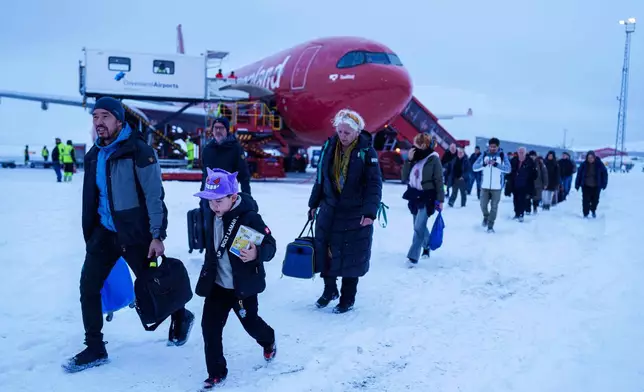
People walk out from a plane after arriving at the airport, in Nuuk, Greenland, on Monday, Jan. 12, 2026. (AP Photo/Evgeniy Maloletka)
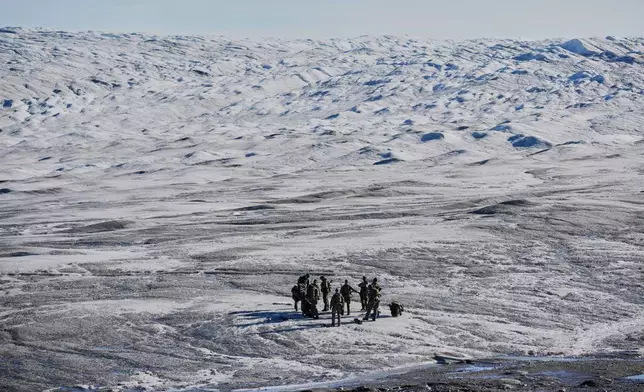
FILE - Danish military forces participate in an exercise with hundreds of troops from several European NATO members in Kangerlussuaq, Greenland, Sept. 17, 2025. (AP Photo/Ebrahim Noroozi, File)
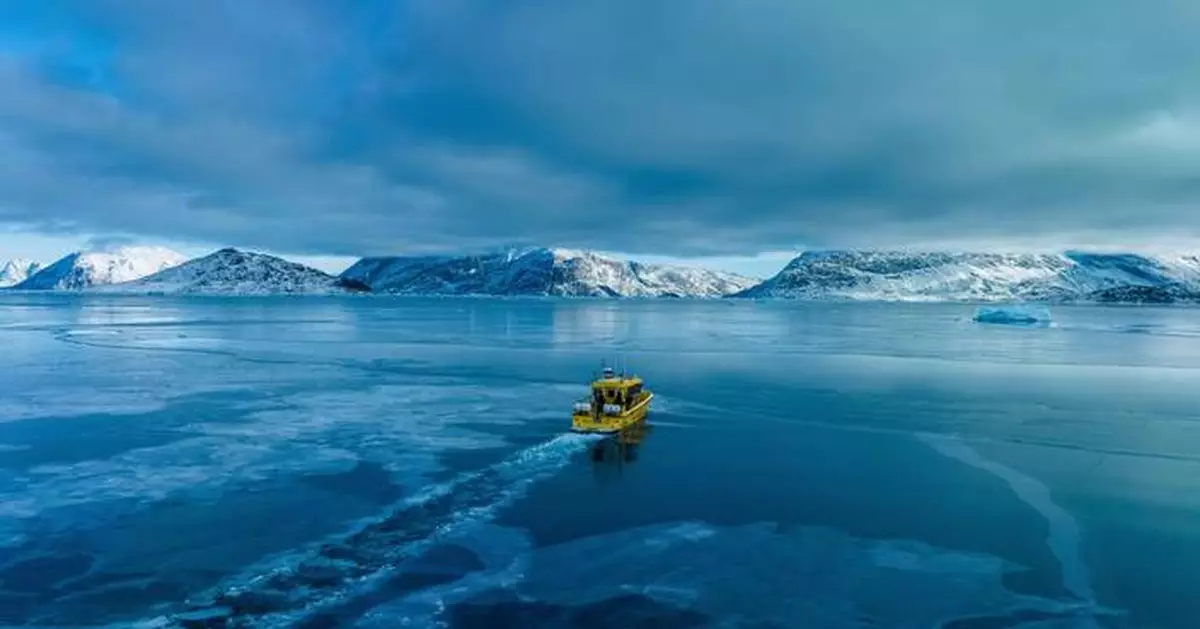
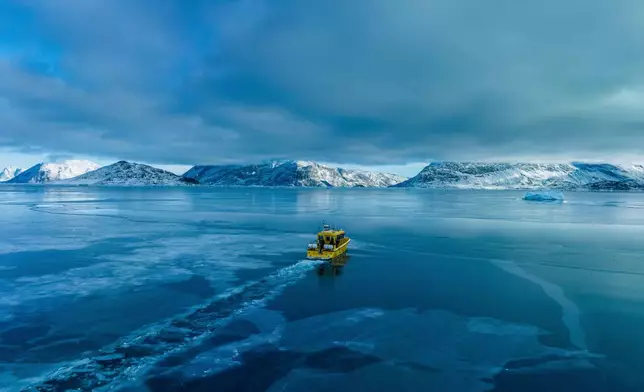
FILE - A boat rides though a frozen sea inlet outside of Nuuk, Greenland, on March 6, 2025. (AP Photo/Evgeniy Maloletka, File)
In an interview with the Associated Press on Monday, Coons said the delegation wants to send a message that “we understand the value of the partnership we have long had with them, and in no way seek to interfere in their internal discussions about the status of Greenland.”
Coons stressed that the United States and Denmark have long been allies, noting that the northern European nation came to the U.S.'s defense in the immediate aftermath of the Sept. 11, 2001 attacks and have for years worked in tandem on other priorities.
“As long as we have been constructive and respectful allies, the Danes have been open arms with us on security and investment and the region,” Coons said, adding: “I think the only thing that has changed is the recent statements by the president and the extent to which it seems to have gone from casual to serious, and I just think it’s important for us to be heard as strongly supporting NATO and our alliance.”
The delegation considered traveling to Greenland on the trip, but ultimately could not due to logistical issues, according to a person familiar with the trip planning who was granted anonymity to discuss earlier private discussions.
Tensions have grown between Washington, Denmark and Greenland this month as Trump and his administration push the issue and the White House considers a range of options, including military force, to acquire the vast Arctic island. Trump reiterated his argument that the U.S. needs to “take Greenland,” otherwise Russia or China would, in comments aboard Air Force One on Sunday.
He said he’d rather “make a deal” for the territory, “but one way or the other, we’re going to have Greenland.” Danish and Greenlandic envoys are expected in Washington this week for talks with Secretary of State Marco Rubio.
China responded in kind on Monday, saying the United States should not use other countries as a “pretext” to pursue its interests in Greenland and said that China’s activities in the Arctic comply with international law.
Asked in Beijing about U.S. statements that it is necessary for Washington to take over Greenland to prevent China and Russia from taking control, Chinese Foreign Ministry spokesperson Mao Ning replied that “China’s activities in the Arctic are aimed at promoting peace, stability, and sustainable development in the region and are in accordance with international law.” She didn’t elaborate on those activities.
“The rights and freedoms of all countries to conduct activities in the Arctic in accordance with the law should be fully respected,” Mao said, without mentioning Greenland directly. “The U.S. should not pursue its own interests by using other countries as a pretext.”
She said that “the Arctic concerns the overall interests of the international community.”
Coons said in addition to reinforcing the U.S.’s relationship with Denmark, he wants the trip to emphasize that “there is no imminent threat to Greenland from the Chinese and the Russians.”
Danish Prime Minister Mette Frederiksen has warned that an American takeover of Greenland would mark the end of NATO. On Friday, Greenland Prime Minister Jens-Frederik Nielsen and the leaders of the four other parties in the territory's parliament issued a joint statement reiterating that Greenland's future must be decided by its people and emphasizing their “wish that the United States’ contempt for our country ends.”
Greenland’s leader also issued another statement on Monday, saying Greenland is part of the Kingdom of Denmark and part of NATO through the Realm.
“This means that our security and defense belong within NATO. This is a fundamental and firm line,” he said.
“We are a democratic society that makes our own decisions. And our actions are based on international law and the rule of law.”
China in 2018 declared itself a “near-Arctic state” in an effort to gain more influence in the region. Beijing has also announced plans to build a “Polar Silk Road” as part of its global Belt and Road Initiative, which has created economic links with countries around the world.
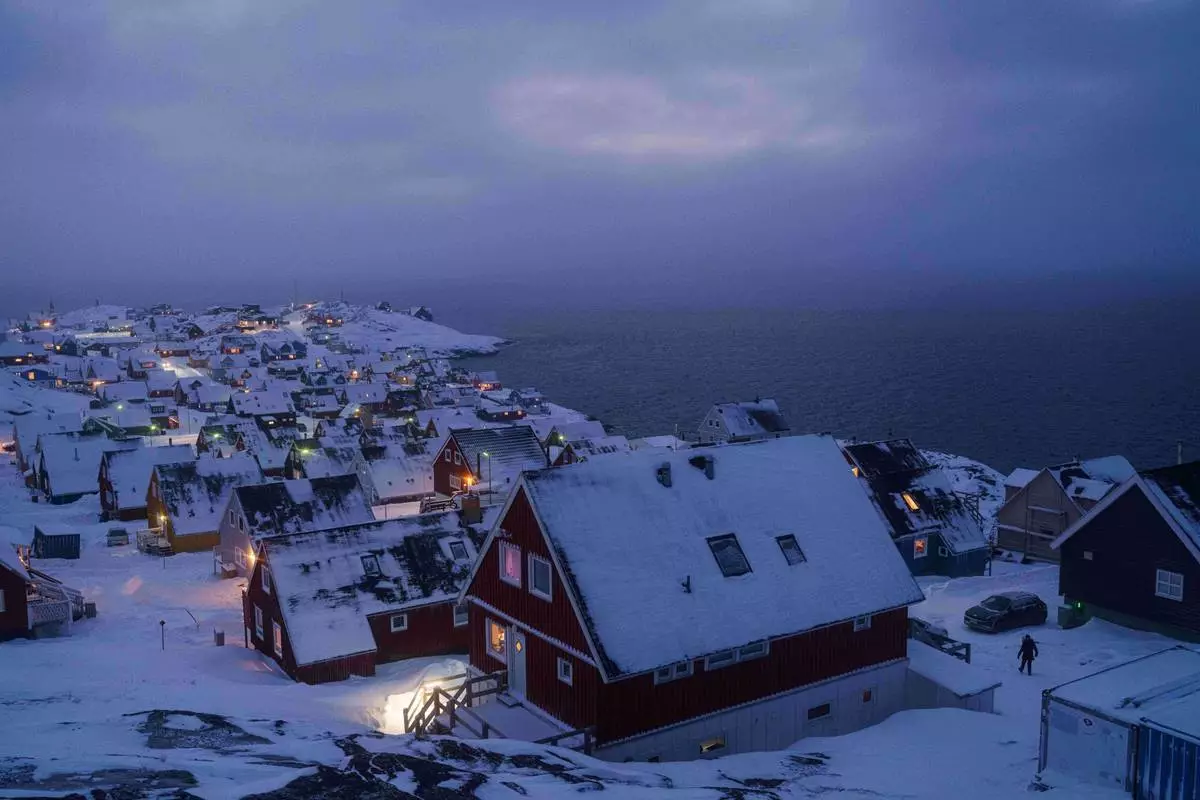
Houses covered by snow are seen on the coast of a sea inlet of Nuuk, Greenland, on Monday, Jan. 12, 2026. (AP Photo/Evgeniy Maloletka)
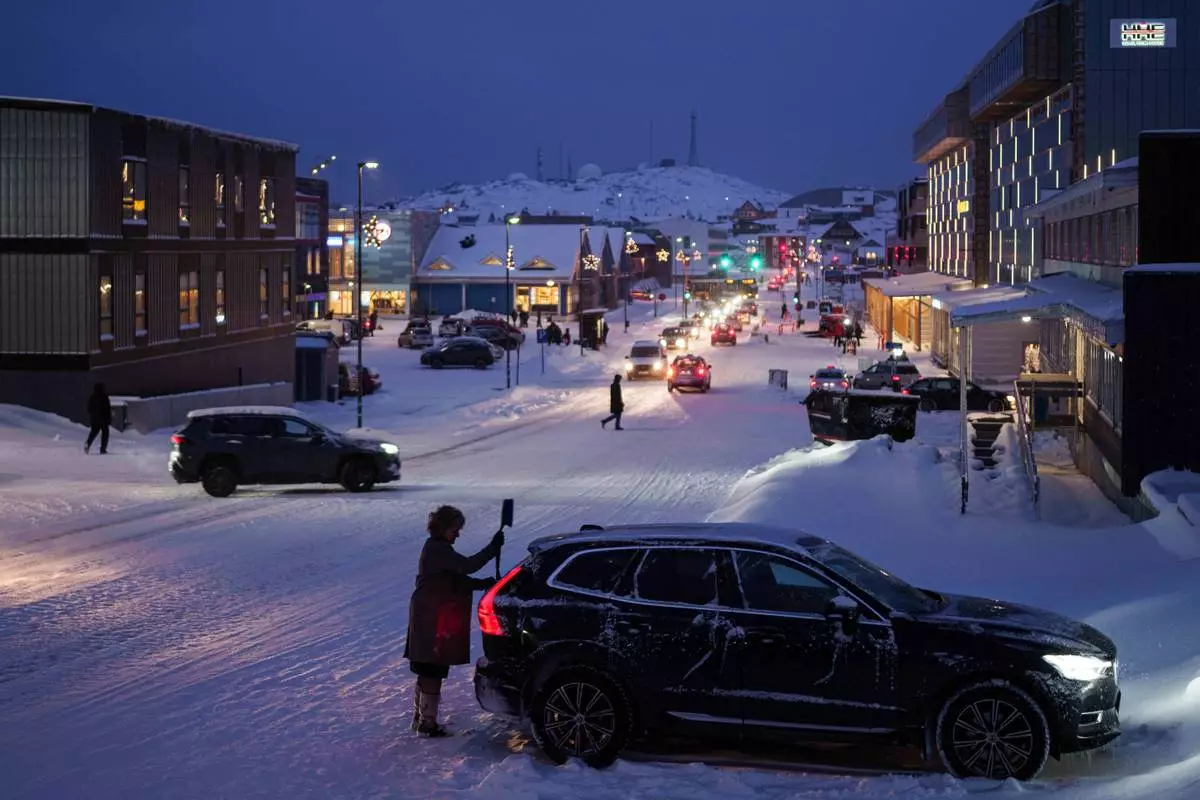
A woman cleans her car from snow in Nuuk, Greenland, on Monday, Jan. 12, 2026. (AP Photo/Evgeniy Maloletka)
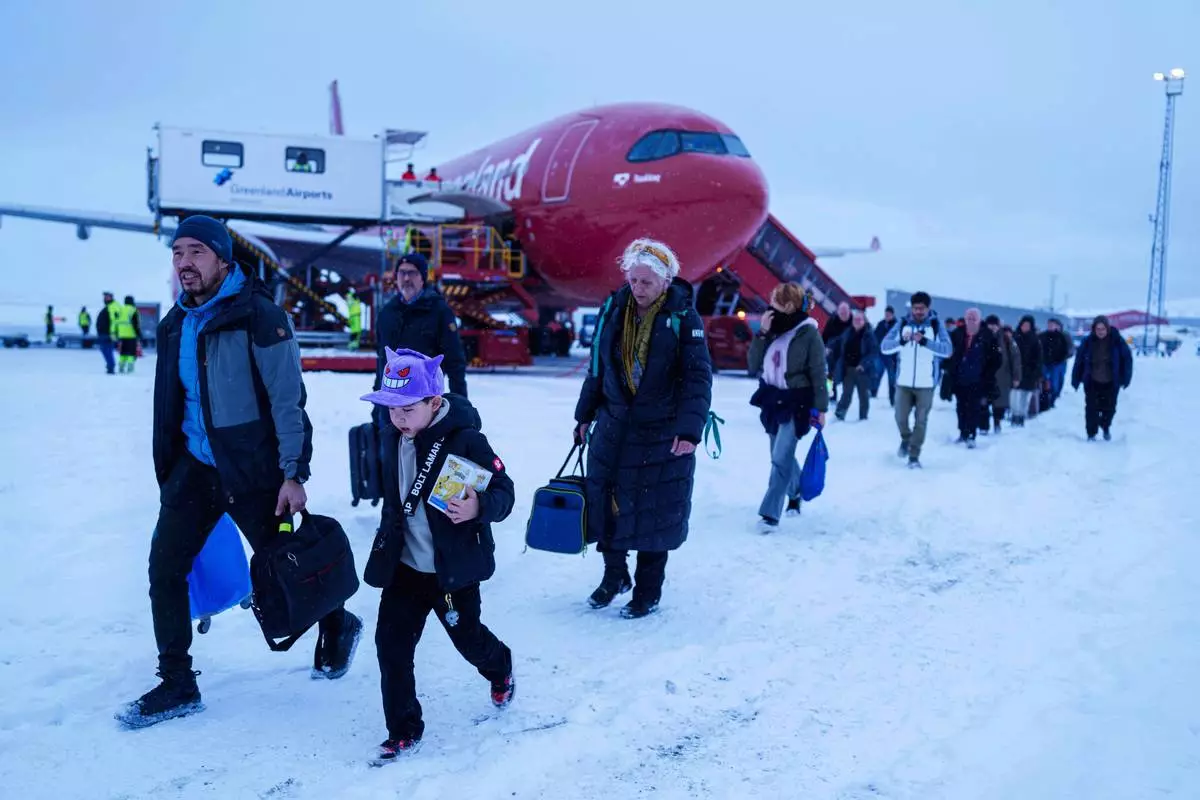
People walk out from a plane after arriving at the airport, in Nuuk, Greenland, on Monday, Jan. 12, 2026. (AP Photo/Evgeniy Maloletka)
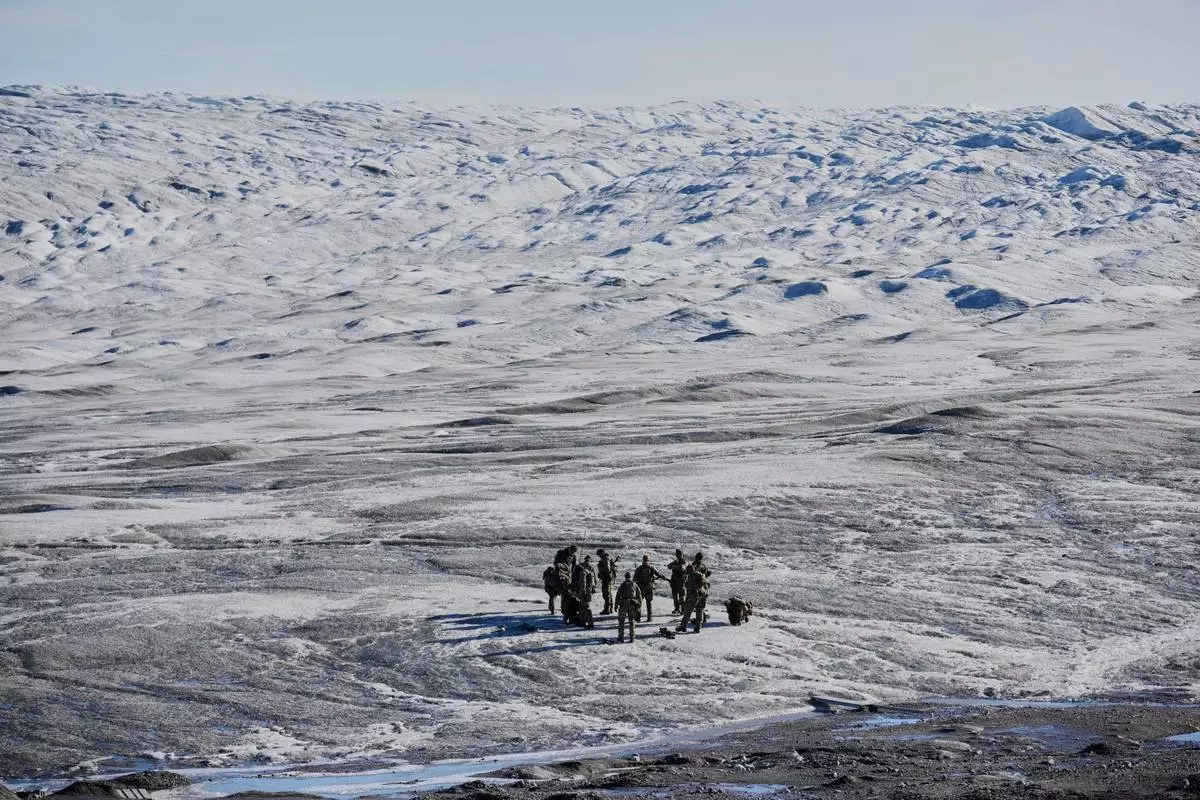
FILE - Danish military forces participate in an exercise with hundreds of troops from several European NATO members in Kangerlussuaq, Greenland, Sept. 17, 2025. (AP Photo/Ebrahim Noroozi, File)
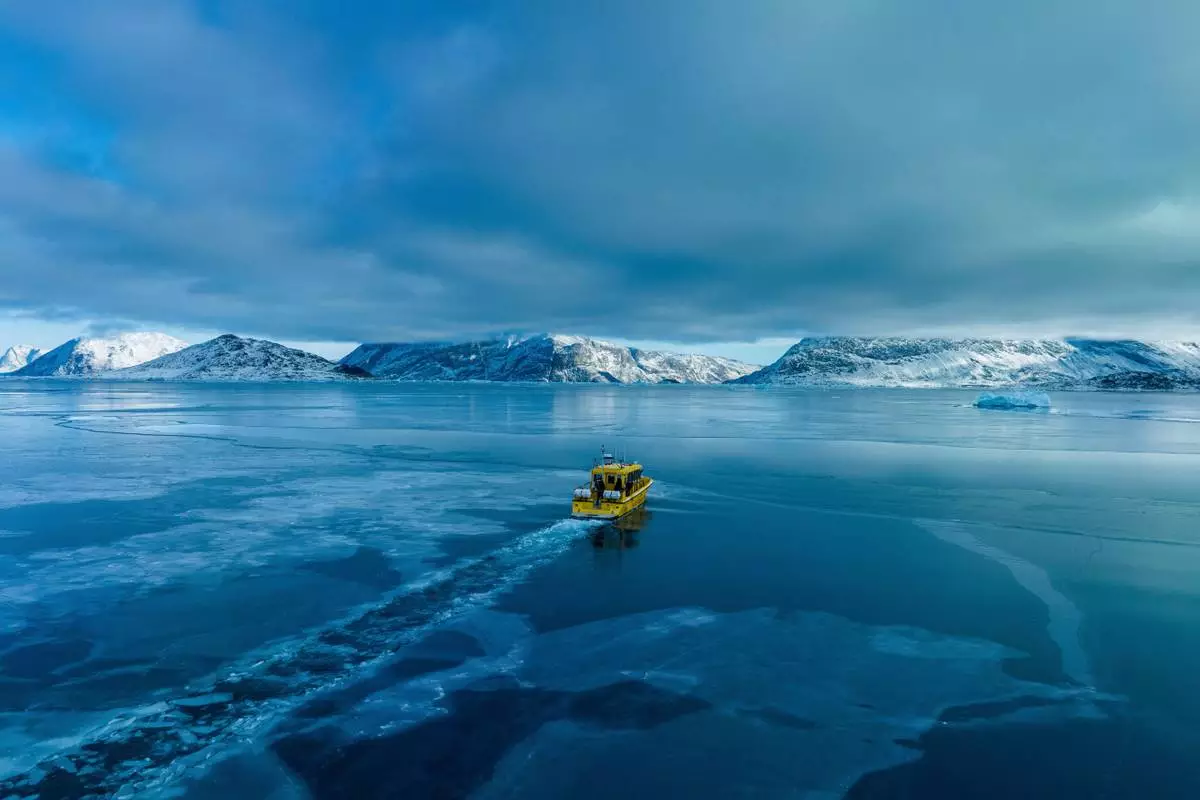
FILE - A boat rides though a frozen sea inlet outside of Nuuk, Greenland, on March 6, 2025. (AP Photo/Evgeniy Maloletka, File)
PARIS (AP) — Activists worldwide held May Day rallies and street protests Friday, calling for peace, higher wages and better working conditions as many workers grapple with rising energy costs and shrinking purchasing power tied to the Iran war.
May 1 is a public holiday in many countries to mark International Workers’ Day, or Labor Day, when workers’ unions traditionally rally around wages, pensions, inequality and broader political issues. Demonstrations were held from Seoul, Sydney and Jakarta to many European capitals. In the U.S., activists opposing President Donald Trump’s policies also were holding marches and boycotts.
“Working people refuse to pay the price for Donald Trump’s war in the Middle East,” the European Trade Union Confederation, which represents 93 trade union organizations in 41 European countries, said. “Today’s rallies show working people will not stand by and see their jobs and living standards destroyed.”
What to know about May Day:
Rising living costs linked to the conflict in the Middle East emerged as a key theme in Friday’s rallies.
In the Philippine capital, Manila, large crowds denounced the U.S. role in the Iran war. Protesters clashed with police blocking the way near the U.S. Embassy.
Indonesian President Prabowo Subianto joined a rally in Jakarta where workers called for stronger government protection from rising prices and difficulties in finding raw materials for key industries.
On a main avenue in Casablanca, Morocco’s largest city, taxi drivers honked their horns and bus drivers parked their vehicles to protest rising fuel costs.
“All my expenses have gone up, but my wages haven’t budged,” Akherraz Lhachimi of the Moroccan Labor Union said.
Turkish authorities in Istanbul detained hundreds of demonstrators for attempting to march in areas declared off-limits on security grounds, most notably central Taksim Square, the epicenter of 2013 protests. May Day rallies in Turkey are frequently marred by clashes with authorities.
Tens of thousands of people crowded into a public square across from the U.S. Embassy in Havana, celebrating Cuba's workers and decrying U.S. sanctions. Many held banners that read, “Down with Imperialism” and “U.S. hands off Cuba.” President Miguel Díaz-Canel and former President Raúl Castro attended the event.
Several rallies were staged in South Africa, where the head of the Congress of South African Trade Unions, Zingiswa Losi, said workers were “suffocating” under rising costs of food, electricity, transport and healthcare.
May Day carries special meaning this year in France, after a heated debate about whether employees should be allowed to work on the country’s most protected public holiday — the only day when most employees have a mandatory paid day off.
Almost all businesses, shops and malls are closed, and only essential sectors such as hospitals, transport and hotels are exempt. A recent parliamentary proposal to expand work on the day prompted major outcry from unions and left-leaning politicians.
“Don’t touch May Day,” unions said in a joint statement.
Tens of thousands of people joined marches across the country, including in Paris, where brief scuffles with police broke out.
“May 1 is not just any day,” Small and Medium-sized Businesses Minister Serge Papin said. “It symbolizes social gains stemming from a century of building social rules that have led to the labor code we know in France. It is indeed a special day.”
In the United States, where May Day is not a federal holiday, May Day Strong, a coalition of activist groups and labor unions, called on people to protest under the banner of “workers over billionaires.”
Voicing strong opposition to Trump's policies, organizers listed thousands of May Day actions across the country and called for an economic blackout through “no school, no work, no shopping.”
Demands include taxing the rich and putting an end to the Trump administration’s immigration crackdown.
While labor and immigrant rights are historically intertwined, the focus of May Day rallies in the U.S. shifted to immigration in 2006. That’s when roughly 1 million people, including nearly half a million in Chicago alone, took to the streets to protest federal legislation that would have made living in the U.S. without legal permission a felony.
May Day, or International Workers’ Day, traces back more than a century to a pivotal period in U.S. labor history.
In the 1880s, unions pushed for an eight-hour workday. A Chicago rally in May 1886 turned deadly when a bomb exploded and police responded with gunfire. Several labor activists — most of them immigrants — were convicted of conspiracy and other charges; four were executed.
Unions later designated May 1 to honor workers. A monument in Chicago’s Haymarket Square commemorates them with the inscription: “Dedicated to all workers of the world.”
Associated Press journalists Barry Hatton in Lisbon, Portugal, Giada Zampano in Rome, Munir Ahmed in Islamabad, Niniek Karmini in Jakarta, Indonesia, Jim Gomez in Manila, Philippines, Cinar Kiper in Istanbul, Turkey, Akram Oubachir in Casablanca, Morocco, and Dánica Coto in Havana contributed to this report.

Turkish, right, and Greek Cypriots gathering s they marking May Day inside the U.N. buffer zone at Ledra Palace hotel in the divided capital of Nicosia, Friday, May 1, 2026. (AP Photo/Petros Karadjias)

People gather before a May Day rally in Chicago, Friday, May 1, 2026. (AP Photo/Nam Y. Huh)

An effigy of U.S. President Donald Trump burns during an International Workers' Day march marking May Day in Panama City, Friday, May 1, 2026. (AP Photo/Matias Delacroix)
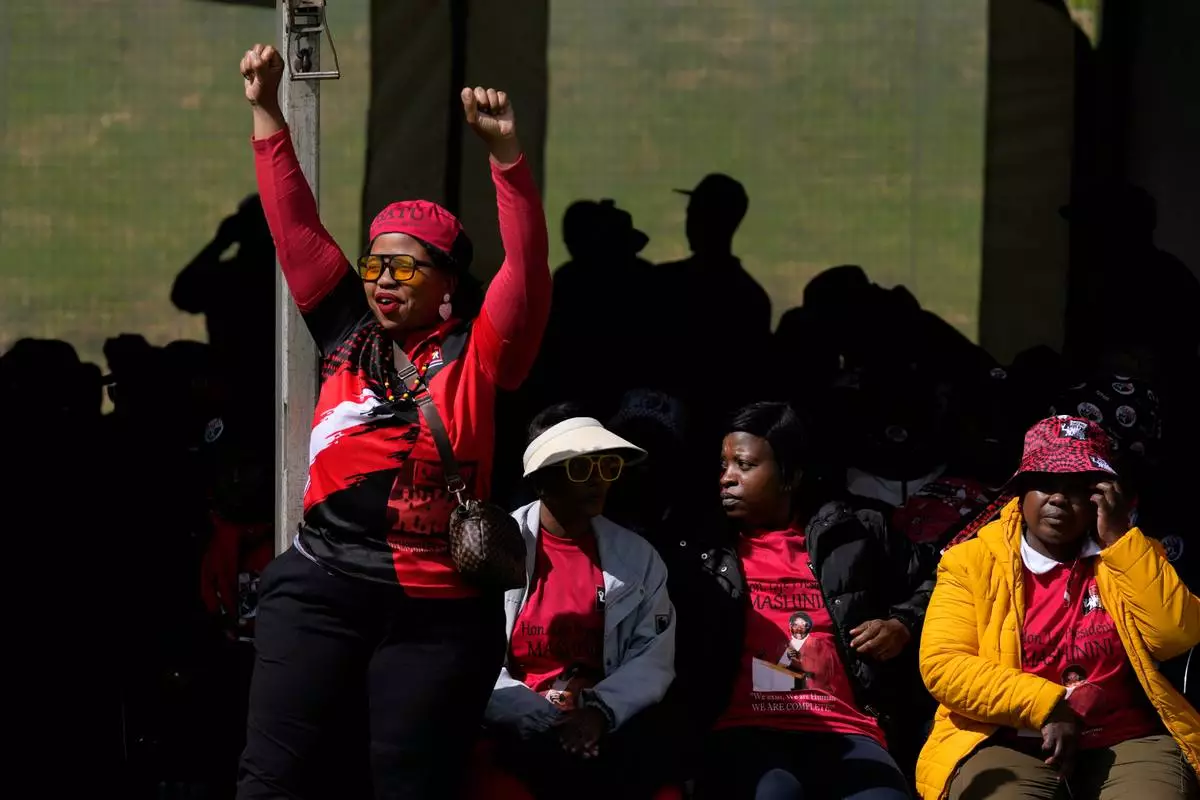
Members of trade unions take part in a May Day rally in Tsakane, east of Johannesburg, South Africa, Friday, May 1, 2026. (AP Photo/Themba Hadebe)

Protesters march during the May Day demonstration in Rennes, western France, Friday, May 1, 2026. (AP Photo)
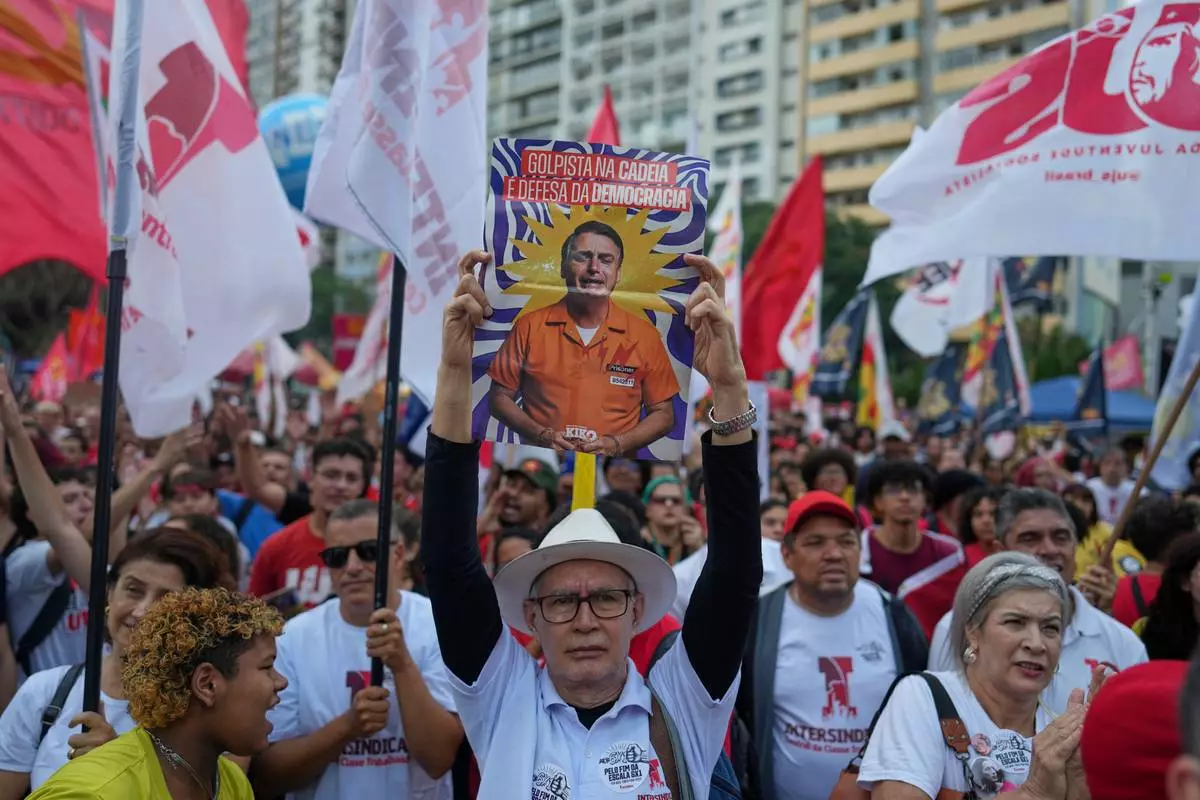
A man holds a picture or former Brazilian President Jair Bolsonaro wearing a prison uniform during a May Day rally demanding greater labor rights in Sao Paulo, Brazil, Friday, May 1, 2026. (AP Photo/Andre Penner)
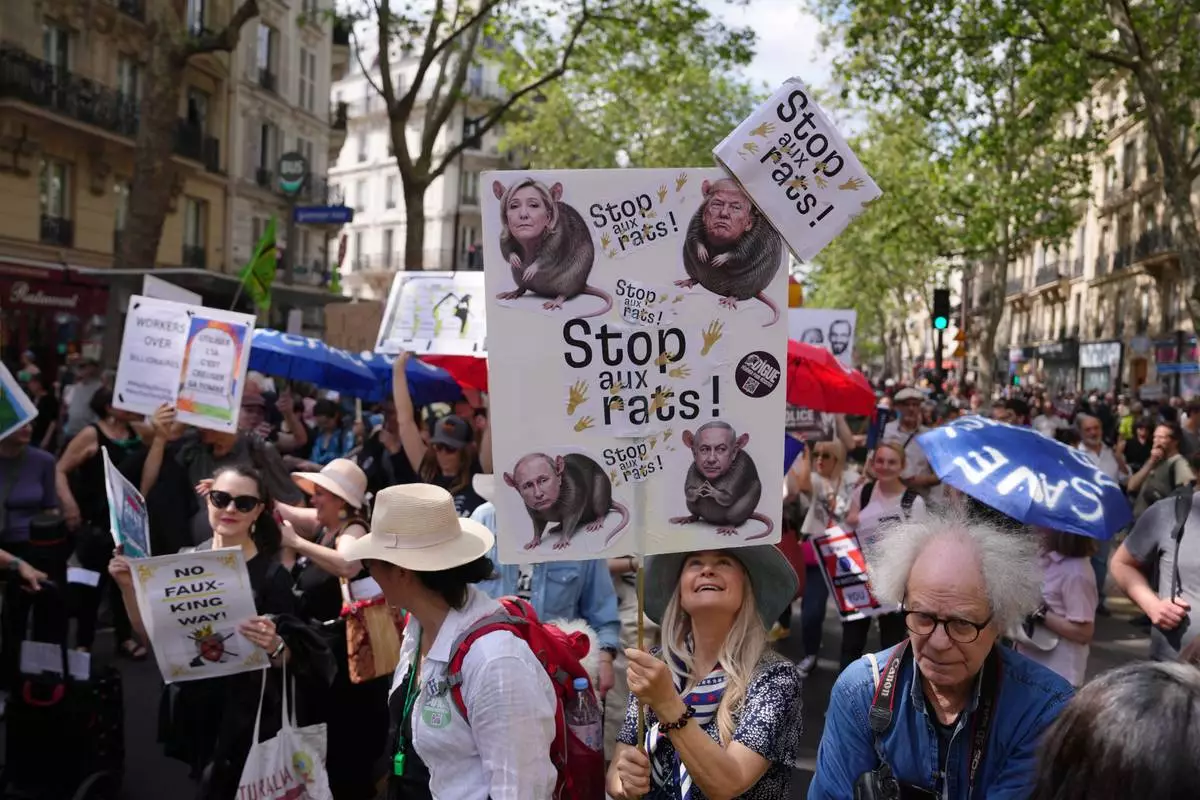
Protesters march during the May Day demonstration in Paris, Friday, May 1, 2026. (AP Photo/Aurelien Morissard)
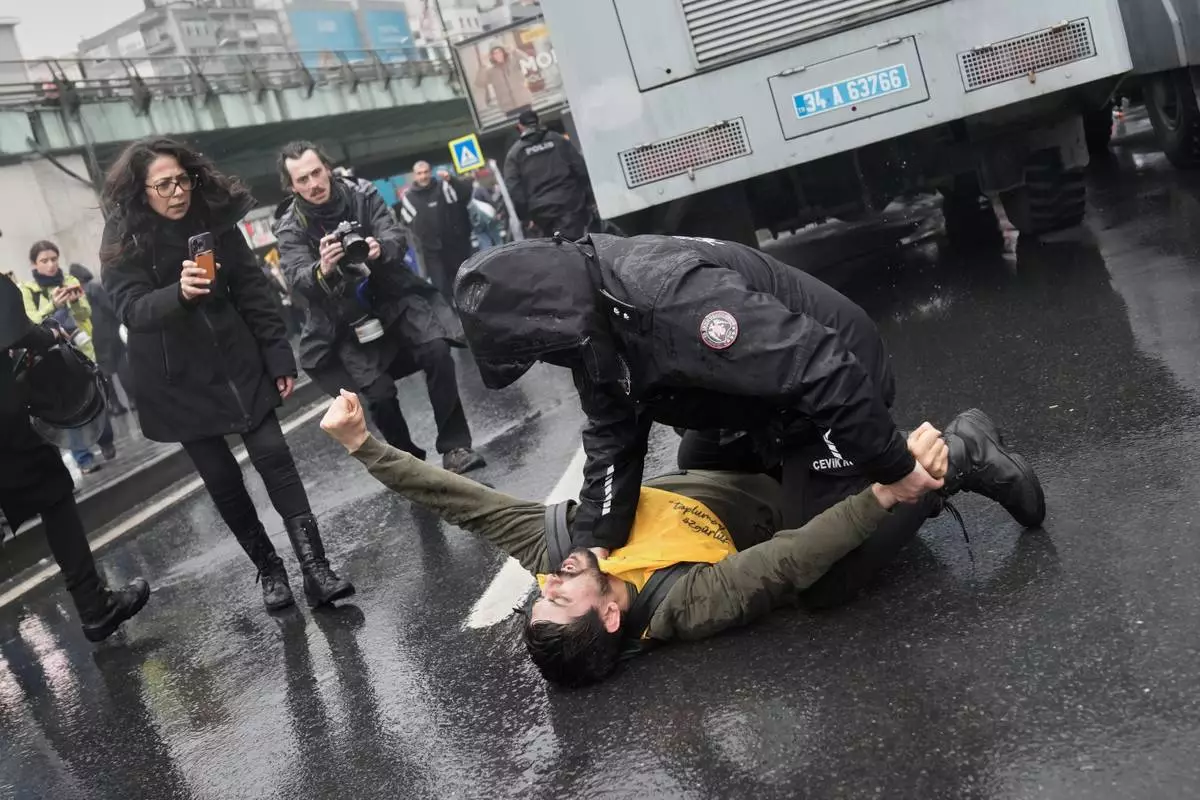
An union member is detained by a Turkish police officer as people try to march towards Taksim square in Istanbul, Turkey, Friday, May 1, 2026, during Labor Day celebrations. (AP Photo/Khalil Hamra)
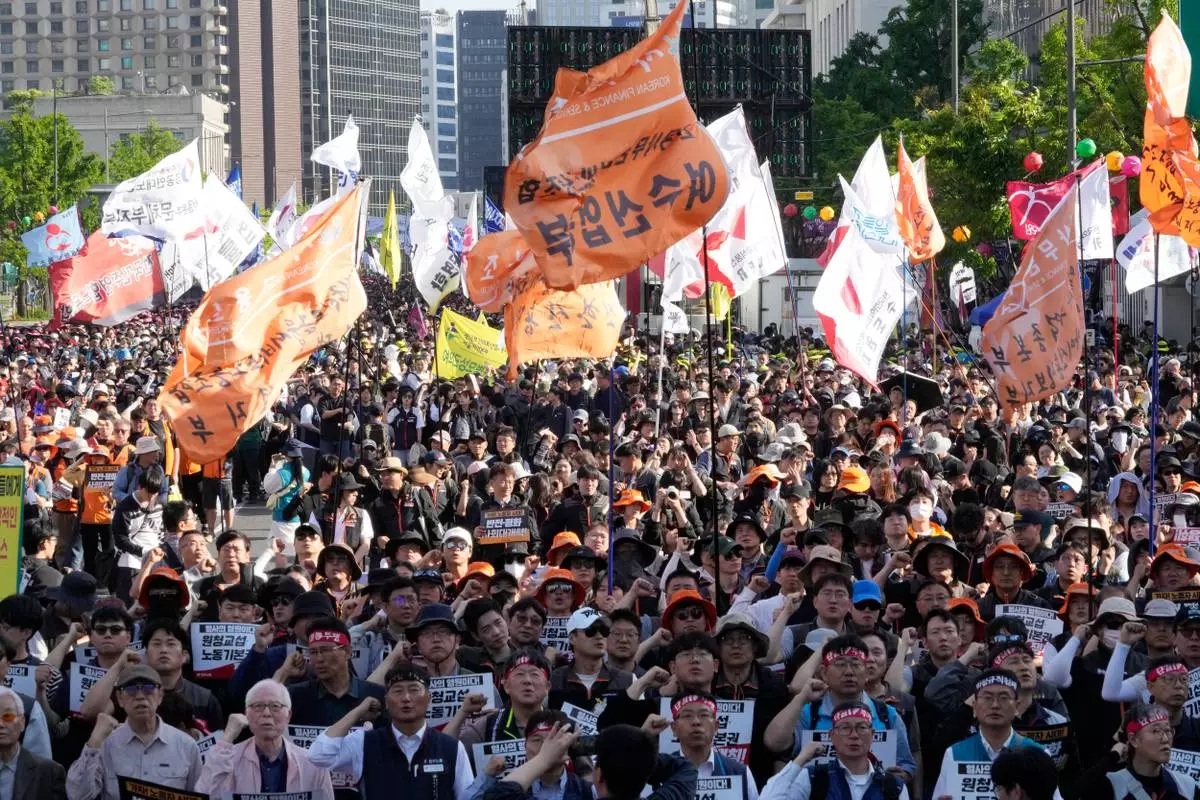
Members of the Korean Confederation of Trade Unions stage a rally on May Day in Seoul, South Korea, Friday, May 1, 2026. (AP Photo/Ahn Young-joon)
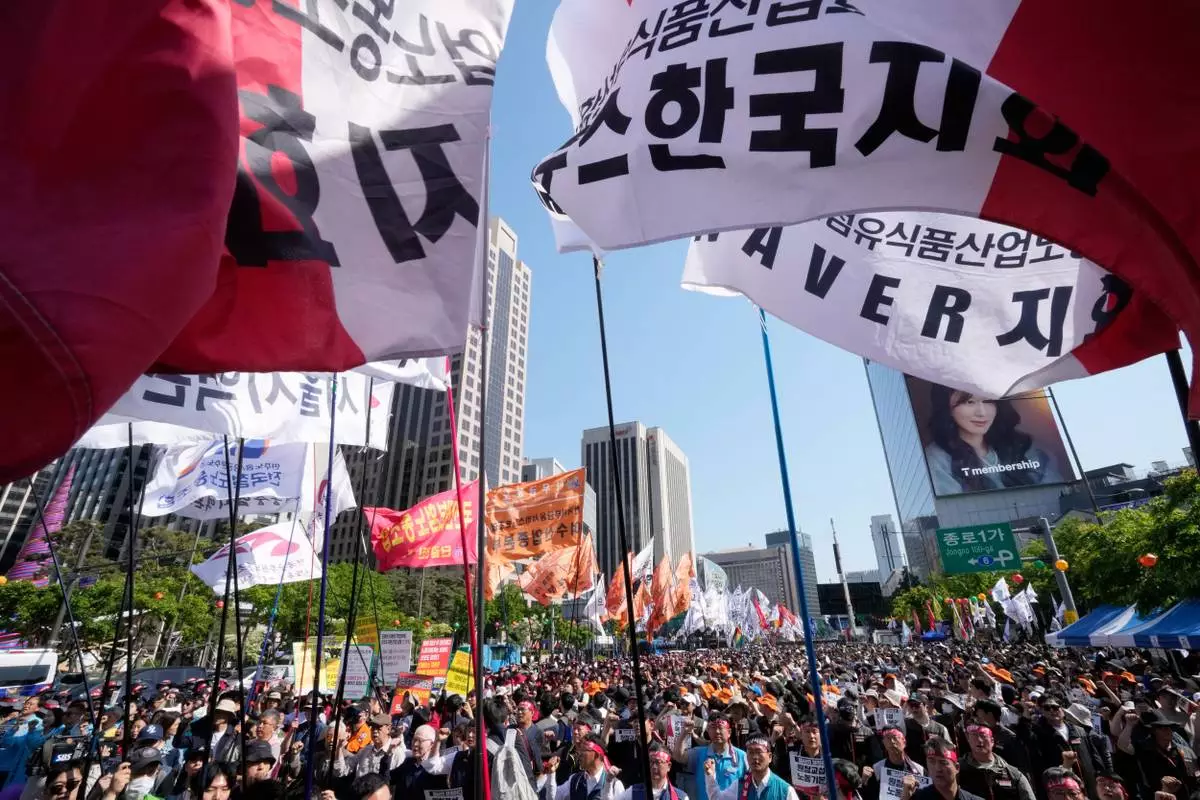
Members of the Korean Confederation of Trade Unions stage a rally on May Day in Seoul, South Korea, Friday, May 1, 2026. (AP Photo/Ahn Young-joon)
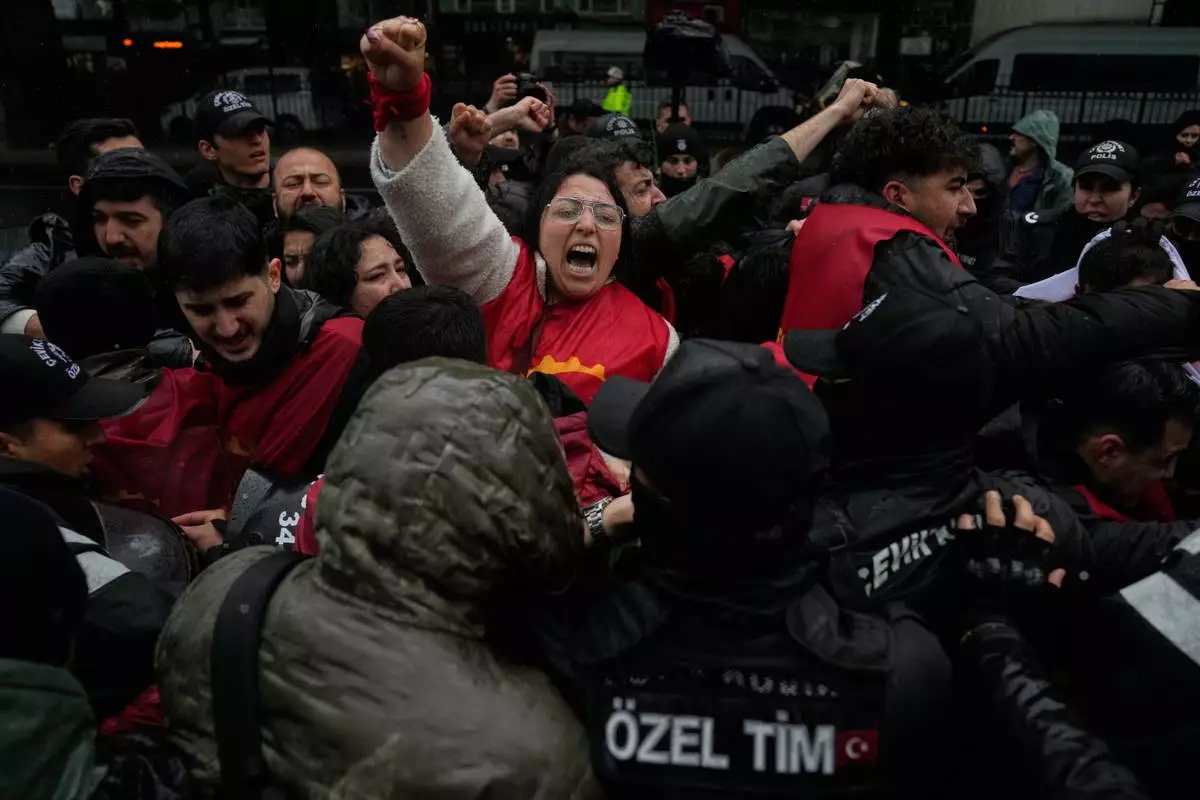
Union members scuffle with Turkish police officers as they try to march towards Taksim square in Istanbul, Turkey, Friday, May 1, 2026, during Labor Day celebrations. (AP Photo/Khalil Hamra)
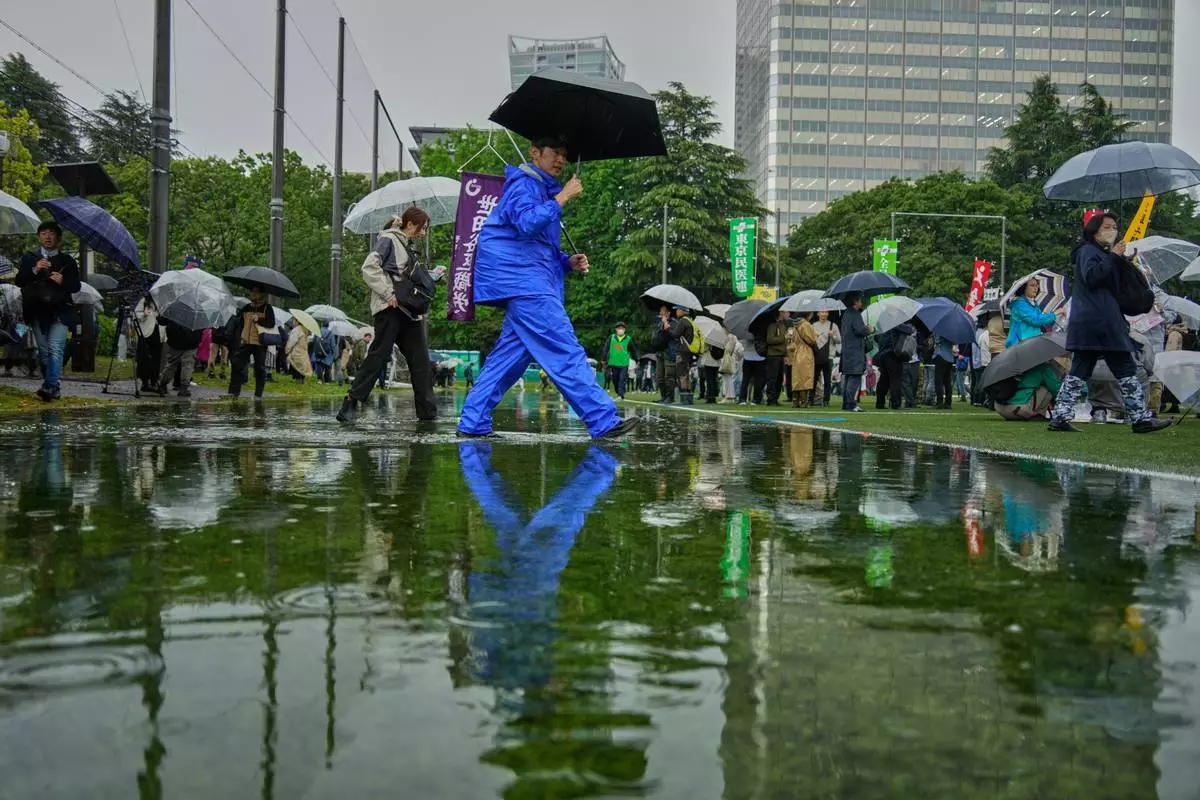
Union members carefully step through rain-formed puddles to participate in a May Day rally in the rain Friday, May 1, 2026, in Tokyo. (AP Photo/Eugene Hoshiko)
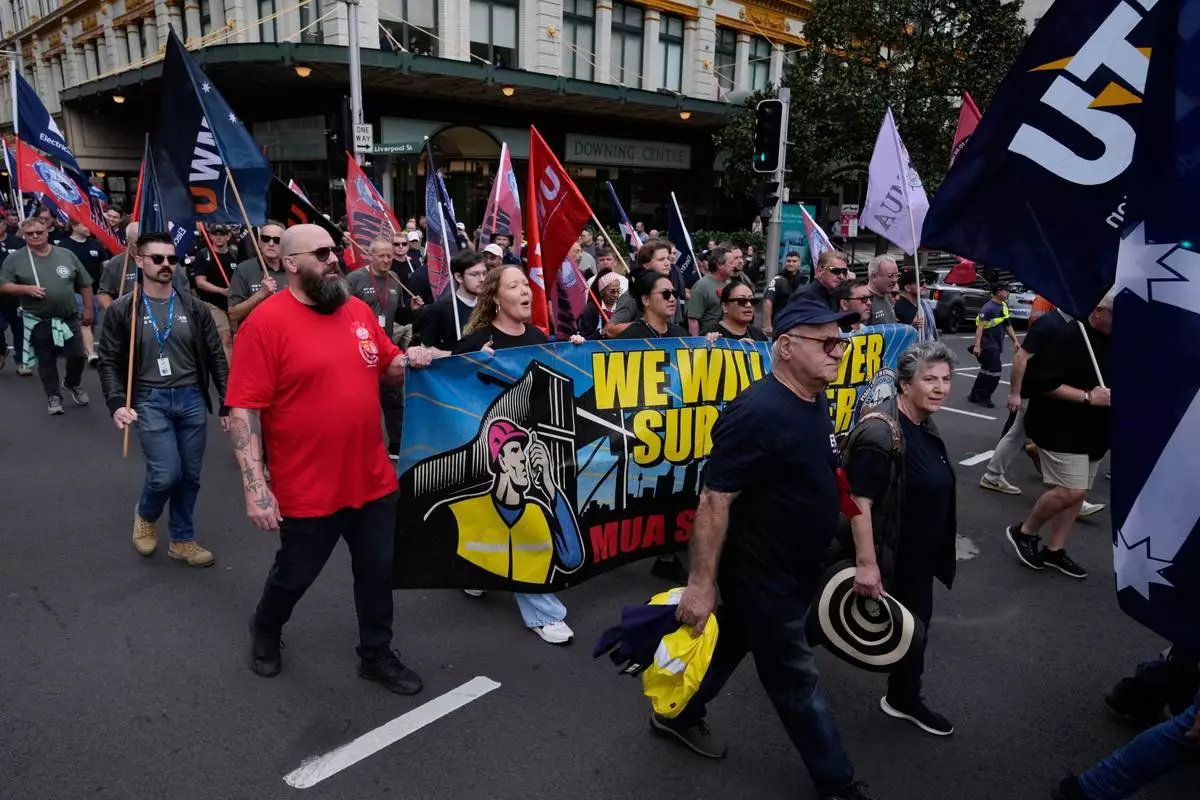
People march to mark International Workers' Day, also known as May Day, in Sydney, Friday, May 1, 2026. (AP Photo/Rick Rycroft)

People march to mark International Workers' Day, also known as May Day, in Sydney, Friday, May 1, 2026. (AP Photo/Rick Rycroft)
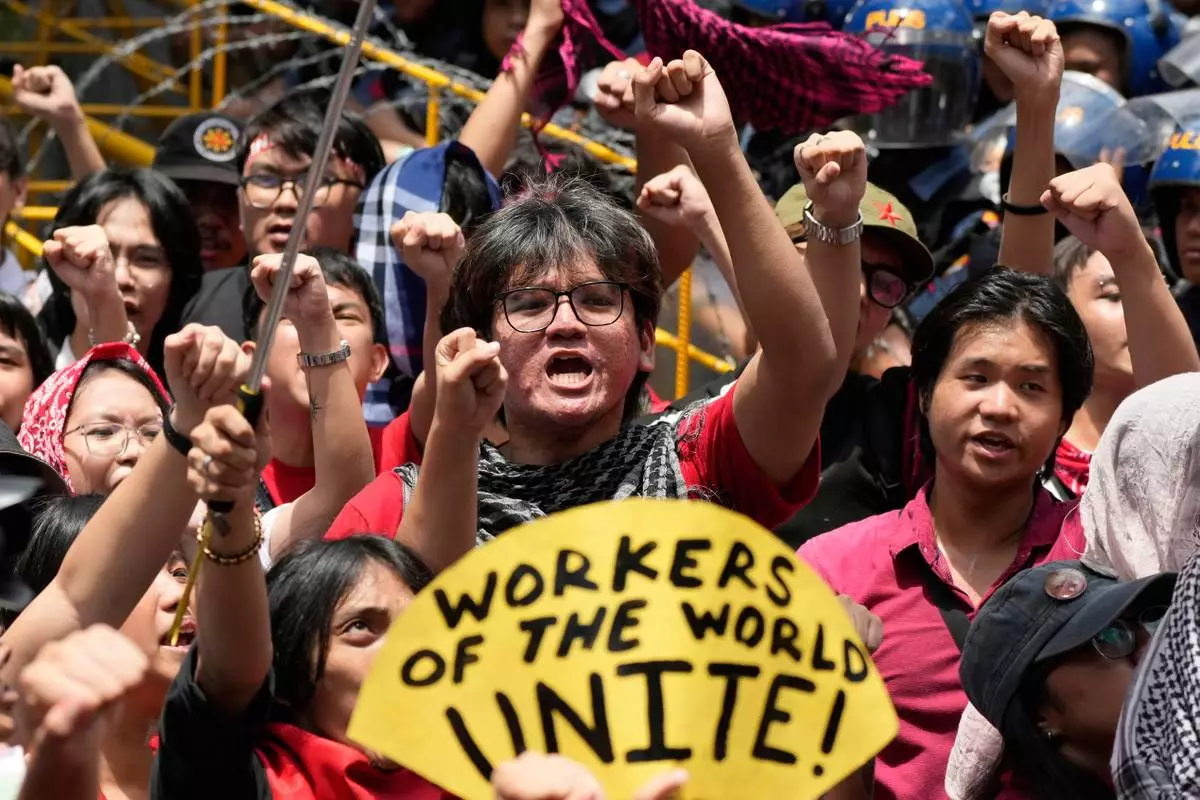
FILE - Activist and workers raise their clenched fists during a May Day rally in Manila, Philippines, May 1, 2025. (AP Photo/Aaron Favila, File)
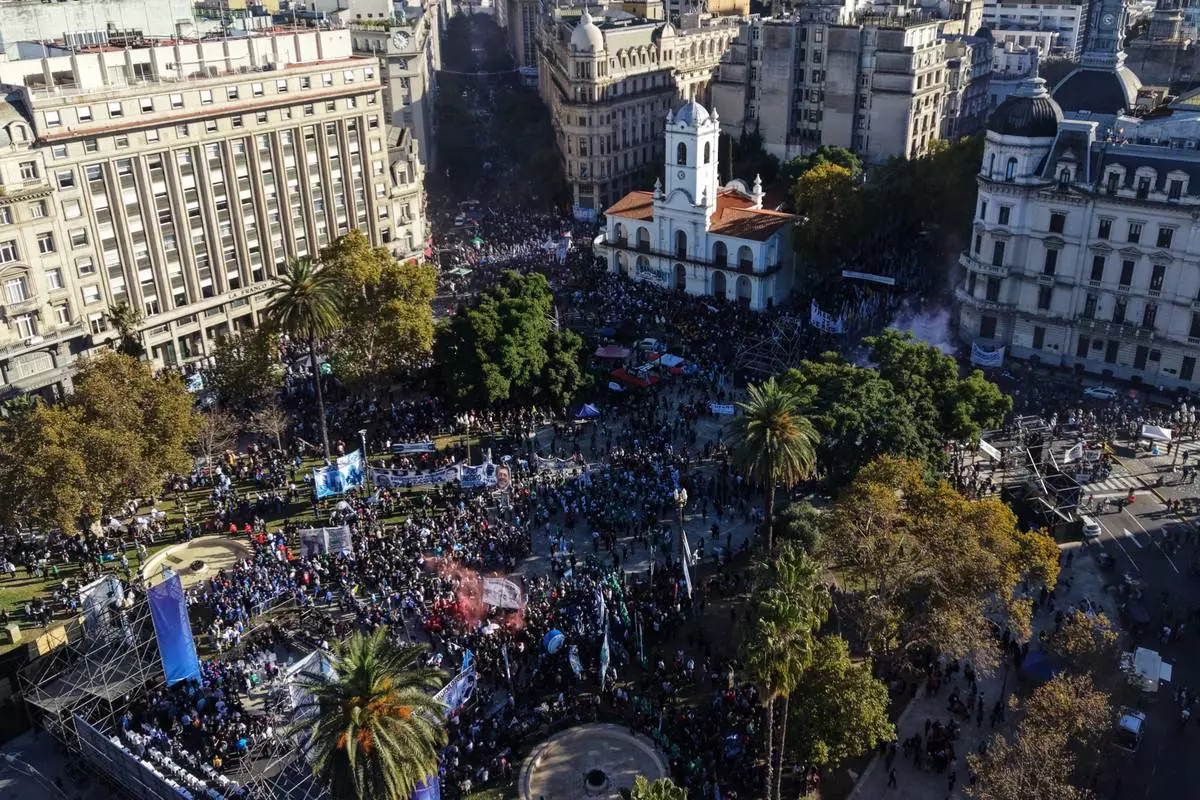
Laborers protest during a May Day demonstration in Buenos Aires, Argentina, Thursday, April 30, 2026. (AP Photo/Rodrigo Abd)
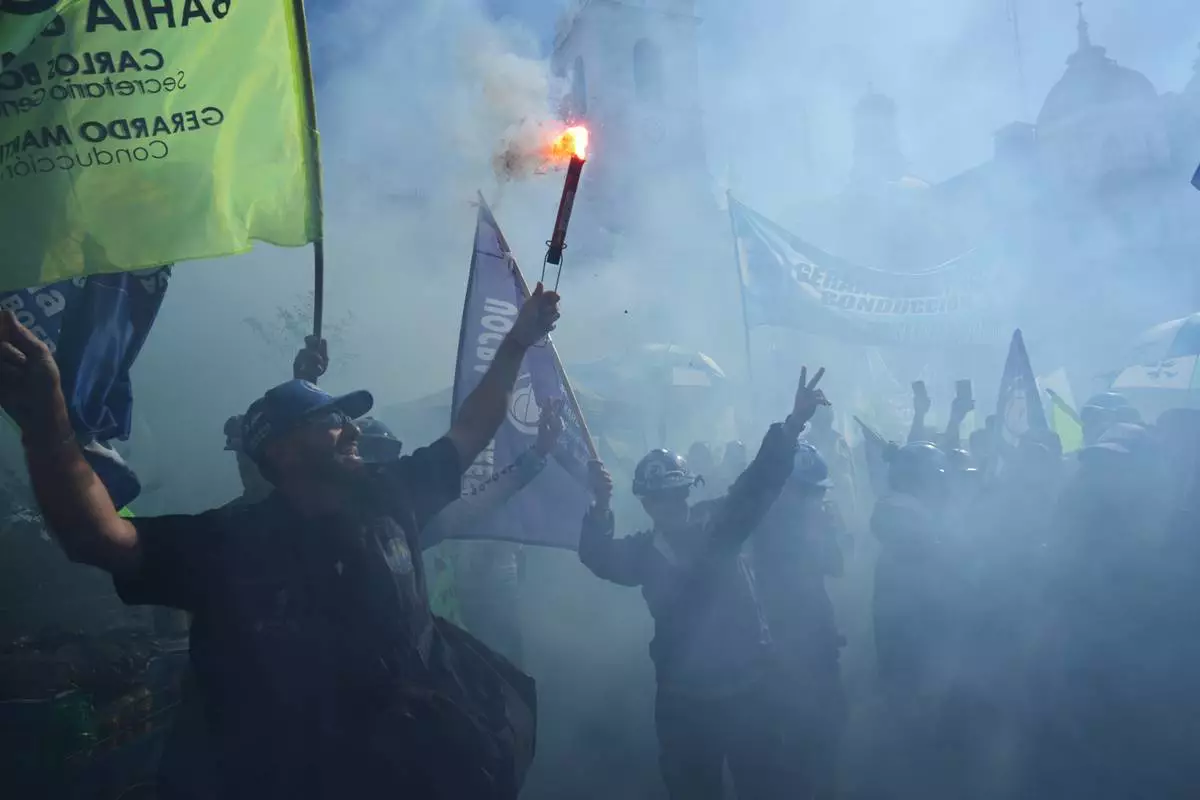
Laborers hold flares during a May Day demonstration in Buenos Aires, Argentina, Thursday, April 30, 2026. (AP Photo/Rodrigo Abd)
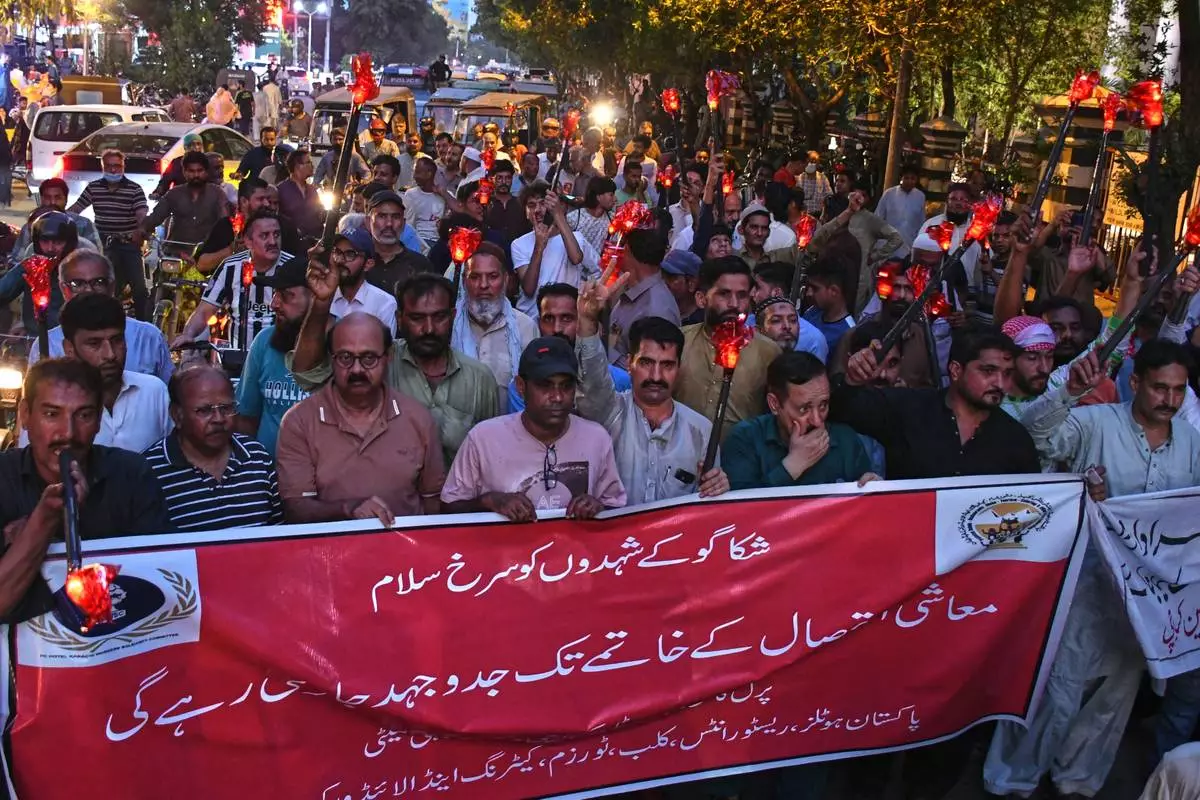
Members of trade unions take part in a rally a day ahead of the International Labor Day, in Karachi, Pakistan, Thursday, April 30, 2026. The banner in center reading as 'red salute to the martyrs of Chicago and the struggle will continue until economic exploitation is ended' (AP Photo/Ali Raza)
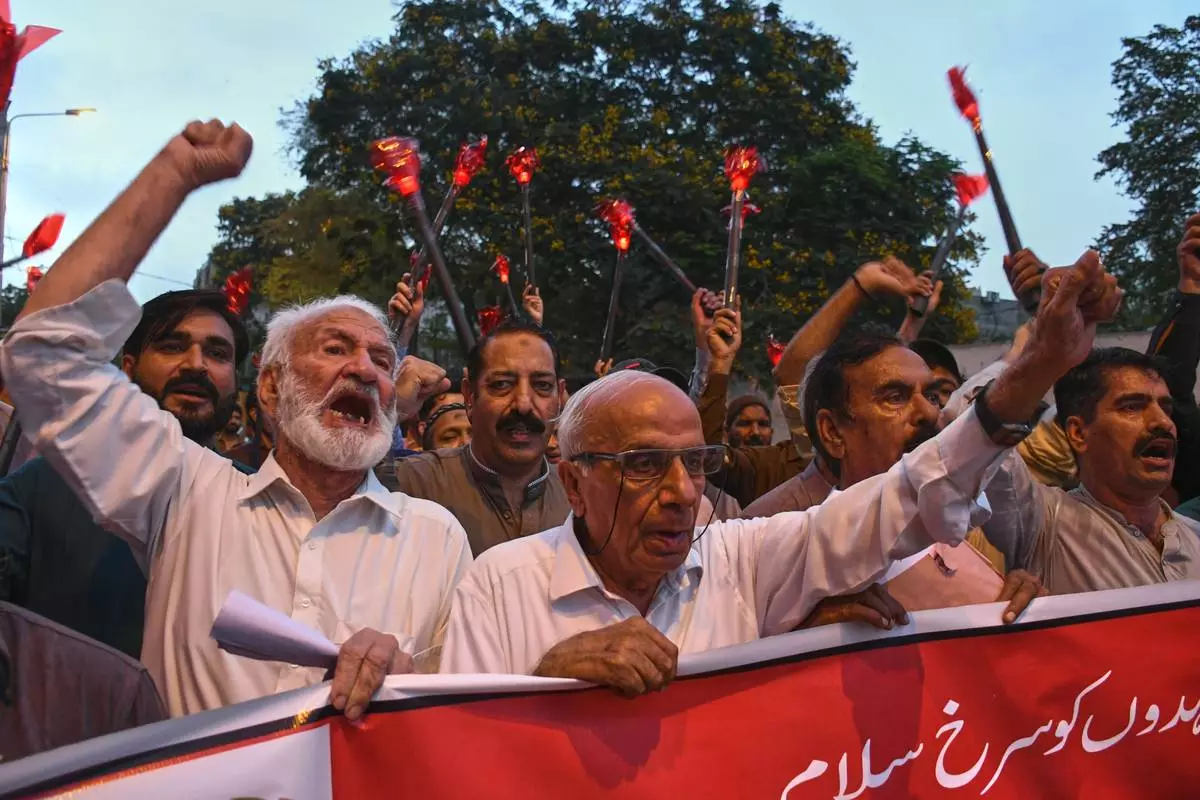
Members of trade unions take part in a rally a day ahead of the International Labor Day, in Karachi, Pakistan, Thursday, April 30, 2026. (AP Photo/Ali Raza)