The first shopping mall established in Shanghai after the founding of People's Republic of China (PRC) 75 years ago has witnessed the growth of consumption levels of the Chinese people and the increasing diversification of business forms in the world's second largest economy.
Located in the city's landmark Nanjing Road Pedestrian Street, the Shanghai No.1 Department Store is the first state-owned shopping center established after 1949. It used to be the first choice for older generations of people in Shanghai to buy things.
"At that time, the goods were relatively scarce. The No.1 department store was the top brand in Shanghai. Half an hour before the store opened, huge crowds of customers were already waiting outside all the entrances, all trying to be the first one in," said Shao Kaiping, 69, who used to work at the department store.
The shopping center was called "our own store" by Shanghai people in those years. With up to 35,000 categories of goods available, it was worthy of the name of "China's largest department store" at that time.
"Purchasing famous, quality and time-honored local products, as well as scarce commodities such as home appliances and bikes required ration stamps at that time. So, the No.1 Department Store, as the largest window for serving consumers, saw demand exceeding the supply," said Zhao Weigang, general manager of the store's commercial center. As the fast-growing Chinese economy drives people to seek richer consumption options and personalized products, the popular shopping center has been upgrading itself. Nowadays, it has expanded the business area to 70,000 square meters and has become a major complex for leisure and entertainment.
The century-old Nanjing Road Pedestrian Street has also been keeping up with the trend to stay competitive and unleash new potential. The more than 1,500-meter-long commercial street now gathers various emerging business forms, such as ACG (anime, comics and games)-themed shops, exhibitions and immersive performances, and is the destination for international and domestic brands to set up their first stores.
In the past 75 years, Chinese people's consumption concepts and patterns have changed a lot.
In 2023, the total retail sales of consumer goods in China increased from 27.7 billion yuan (about 3.94 billion U.S. dollars) in 1952 to 47 trillion yuan (about 6.68 trillion U.S. dollars), becoming the second largest consumer market in the world.
The per capita disposable income of Chinese residents has increased by 75.8 times over 1949, and the per capita consumption expenditure has increased by 35.5 times over 1956.
Today, people don't have to rush to stores to compete for the scarce goods. They just stay at home and shop online to get products from all over the country and even the world.
In 2023, there were more than 900 million consumers shopping online in China, with more than 400 million packages handled by express delivery every day.
The country recorded a national online retail sales of 15.4 trillion yuan, ranking first in the world for 11 consecutive years.

Shanghai department store witnesses consumption upgrading in past 75 years
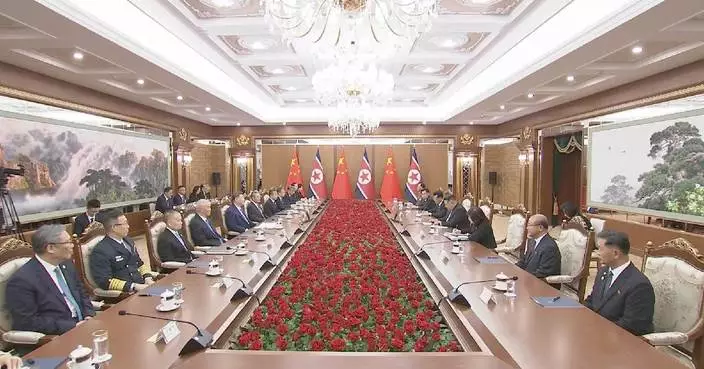
Xi Jinping, general secretary of the Communist Party of China (CPC) Central Committee and Chinese president, said on Monday that the relationship between China and the Democratic People's Republic of Korea (DPRK) stands at a new historical starting point.
Xi arrived in the DPRK capital of Pyongyang earlier on Monday to begin a two-day state visit at the invitation of Kim Jong Un, general secretary of the Workers' Party of Korea and president of the State Affairs of the DPRK, marking his first trip to the country in seven years.
Delivering a speech at a welcome banquet hosted by Kim, Xi pointed out that China and the DPRK, linked by mountains and rivers and sharing a common future, have seen their traditional friendship passed down across generations and grow ever stronger over time through the test of the evolving international landscape.
This year marks the 65th anniversary of the China-DPRK Treaty of Friendship, Cooperation and Mutual Assistance, and the China-DPRK relationship stands at a new historical starting point, Xi said, noting that he has reached important consensus with Kim during his visit.
From the strategic perspective of the future and destiny of socialism, both leaders have agreed to seize the general trend of the times, respond to the shared aspirations of the two peoples, strengthen high-level exchanges, deepen strategic communication, expand practical cooperation, enhance people-to-people bonds, promote the high-level development of China-DPRK relations, jointly open up brighter prospects for the socialist cause of both countries, and contribute to the continuous progress of human society, Xi said.
The successful convening of the Ninth Congress of the WPK this year has made strategic plans and major arrangements for the long-term development of the Party and the country's cause, ushering in a new period of comprehensive development of the DPRK's socialist cause, Xi said.
As good neighbors, good friends and good comrades, the Chinese side sincerely wishes that, under the strong leadership of the Central Committee of the WPK headed by General Secretary Kim, the DPRK people will successfully accomplish the goals and tasks set by the Ninth Congress of the WPK and make constant new achievements in the socialist cause of the DPRK, Xi said.
On behalf of the WPK, the government and the people of the DPRK, Kim extended the warmest welcome to Xi on his visit. Kim said that Pyongyang was filled with an atmosphere of friendship on this special day as the DPRK's Party, government and people warmly welcomed their most distinguished guest.
Noting that Xi's first overseas trip of the year had brought him to the DPRK, Kim said this fully demonstrated the great importance Xi attached to developing relations between the two parties and the two countries, and constituted the most valuable support for the DPRK's socialist cause.
Noting the meeting with Xi came nine months after their previous meeting, Kim said that during this meeting, they reached important consensus on further advancing DPRK-China relations with new contemporary connotations in light of new changing circumstances, and exchanged views on international and regional issues of mutual concern, which will surely accelerate the development of the DPRK-China friendship with profound historical traditions, and contribute to peace and stability in the region and the world.
The DPRK people take heartfelt joy in the remarkable achievements made by the brotherly Chinese people, Kim said, expressing belief that under the leadership of the CPC with Xi at its core, the great Chinese people will surely create greater achievements in building a great modern socialist country in all respects, realizing the Second Centenary Goal, and completing the new journey toward the great rejuvenation of the Chinese nation.
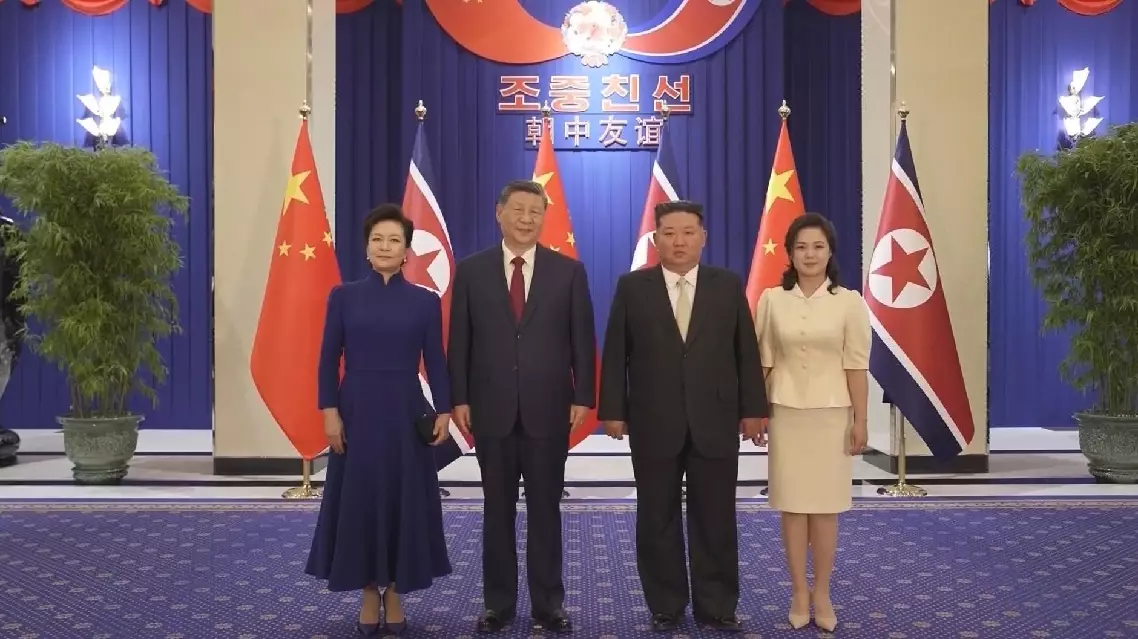
Xi says China-DPRK ties stand at new historical starting point