The Beipanjiang Bridge in southwest China, the world's highest bridge, has become a popular tourist attraction boasting an integration of heartpounding extreme sports and breathtaking scenery. Construction of the bridge began in 2013 and was completed in 2016. The bridge sits over 565.4 meters above a valley, equivalent to the height of a building with over 200 stories. Spanning 1,341.4 meters, the bridge links Duge Township of Liupanshui in Guizhou Province with Puli Township of Xuanwei in southwest China's Yunnan Province. The bridge has significantly improved local transportation and is providing a substantial boost to tourism in the area. "Before the bridge was built, if we wanted to go out of the village, we had to climb up the mountain first, then down the mountain to the river, often taking four hours. Now we can earn a living at home, as tourists from many countries including Britain, Germany, France, Russia, Israel and Lebanon are coming to visit my hometown," said Ma Xuanjun, a local villager. Thanks to the popularity of the Beipanjiang Bridge, over 10 homestays and farm stays have emerged in the region, leading to a rapid growth in rural tourism.
"Since the Beipanjiang Bridge was completed, we have combined its transportation benefits with tourism initiatives. For example, we organized high-bridge low-altitude skydiving competition events in recent years, which has attracted more visitors as the bridge increased its popularity," said Zhu Rong, a local official on culture and tourism. Another bridge crossing the Beipanjiang River is the Huajiang Grand Canyon Bridge, which has incorporated tourism elements right from the start of its construction. A series of projects aiming at blending bridge infrastructure with tourism has been planned. The 2,890-meter-long Huajiang Grand Canyon Bridge, with a designed height of 625 meters between the bridge deck and the Beipanjiang River below, is set to be the highest bridge in the world after it is completed in 2025. Guizhou has built several iconic bridges and integrated the bridges with various industries including tourism, culture and sports by establishing attractions such as bridge museums, astronomical science museums and cliffside hotels. By doing so, the province aims to breathe new life into its cultural and tourism sectors.
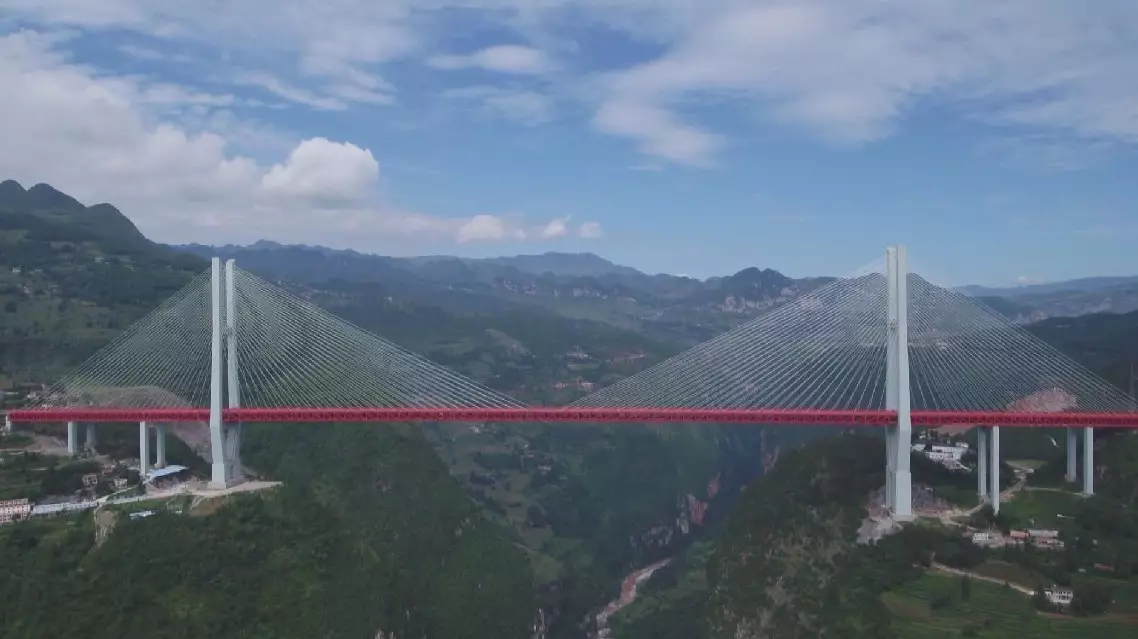
World's highest bridge in southwest China gains popularity among tourists
A former television host from Taiwan, Zhai Xuan, has made a pivotal decision to leave mainstream broadcasting in order to create content that provides a better understanding of the Chinese mainland and cross-strait relations.
Zhai, a seasoned television host with over a decade of experience in Taiwan's media landscape, recently addressed an audience at an event in Beijing, where she revealed her complete transition into independent online media.
In her remarks, she articulated her aspiration to bridge what she perceives as a significant information gap between audiences on both sides of the Strait, highlighting her commitment to fostering a deeper understanding and connection through her new endeavors.
"I was really surprised by all the fake news. There were stories saying people on the mainland can't afford tea eggs or that they live in mud houses and in Taiwan, this was the main information many people received," said Zhai.
Zhai said she initially began producing online videos to challenge such perceptions while continuing her work as a television host.
In April 2025, she travelled to the mainland with her father to fulfill her late grandfather's wish to return to his hometown. The trip, which reunited family members separated since 1949, was recorded in a video series titled "Journey to Find Our Roots", drawing attention from viewers in both Taiwan and the mainland.
"Many people in Taiwan told me that after watching, they wanted to apply for a mainland travel permit immediately and go looking for their relatives. Some had long forgotten these things, but after seeing my story, they began thinking about their hometowns and family members they had never met and decided to search for their roots," Zhai shared her story at the event.
By mid-2025, Zhai said she began to feel increasing pressure amid rising political tensions and a tightening atmosphere around cross-Strait exchanges in Taiwan.
After more than 12 years in the industry, Zhai resigned from her position, believing it was the right thing to do.
"At that moment, I felt this was a major issue,not just for me, but for Chinese people on both sides of the Strait. If I backed down then, I wouldn’t be standing on the right side," said Zhai.
Since leaving television, Zhai has broadened her online programming to encompass a range of daily-life topics, including practical guidance on applying for a mainland travel permit and using commonly employed mobile applications, in addition to content that delves into historical memory and cultural connections across the Strait.
As the debate over cross-Strait relations continues in Taiwan, Zhai said she remains committed to her current path.
Former Taiwan TV host bridges cross-Strait divide via online media