China's top housing authority has noted "overall positive changes" in the real estate market, as homebuyer confidence was revived by a series of beneficial measures announced by major Chinese cities since September to boost the country's property markets.
The Ministry of Housing and Urban-Rural Development said most cities have seen a rise in visits to property projects by over 50 percent from a year ago.
Thanks to new policy adjustments on Sept 30, both transaction volume and inquiries for second-hand homes in Beijing increased notably during the week-long National Day holiday, which runs from Oct 1 to 7.
"On Oct 1, four orders were signed at our store and on Oct 2, one order was signed, bringing the total number to five. This marks a historical peak in our transaction records," said Liu Qiujing, a house agent at Huilongguan sub-branch of Lianjia Real Estate Brokerage in Beijing.
She also reported that property viewings at her store stood at 39 groups during the holiday, an increase of 15 groups over the previous week.
According to a circular jointly issued by six municipal departments on Sept 30, non-Beijing residents are allowed to purchase homes inside the city's fifth ring road if they have a record of paying social insurance or individual income tax in the city for at least three years - down from five years as was previously required.
The new policies which took effect on Oct 1 also lift the housing purchase restrictions in Tongzhou District, where the Beijing Municipal Administrative Center is located, to allow the district's homebuying rules to comply with the city's unified property market policy.
Under the new rules, homebuyers face less financial pressure, as the minimum down payment ratio for individual commercial mortgages are reduced from 20 percent to 15 percent for first-home purchases, and from 30 percent to 20 percent for second homes.
"Following the introduction of the new regulations, buyers have shown a stronger willingness to purchase properties, acquiring them more swiftly. Clients with rigid demand for residential housing are swiftly entering the market. From the perspective of homebuyers, their confidence has significantly increased," said Liu.
Between Oct 1 and noon of Oct 3, on-site inquiries for second-hand homes in Beijing jumped by 104.1 percent year on year, according to a report on the Ministry of Housing and Urban-Rural Development.
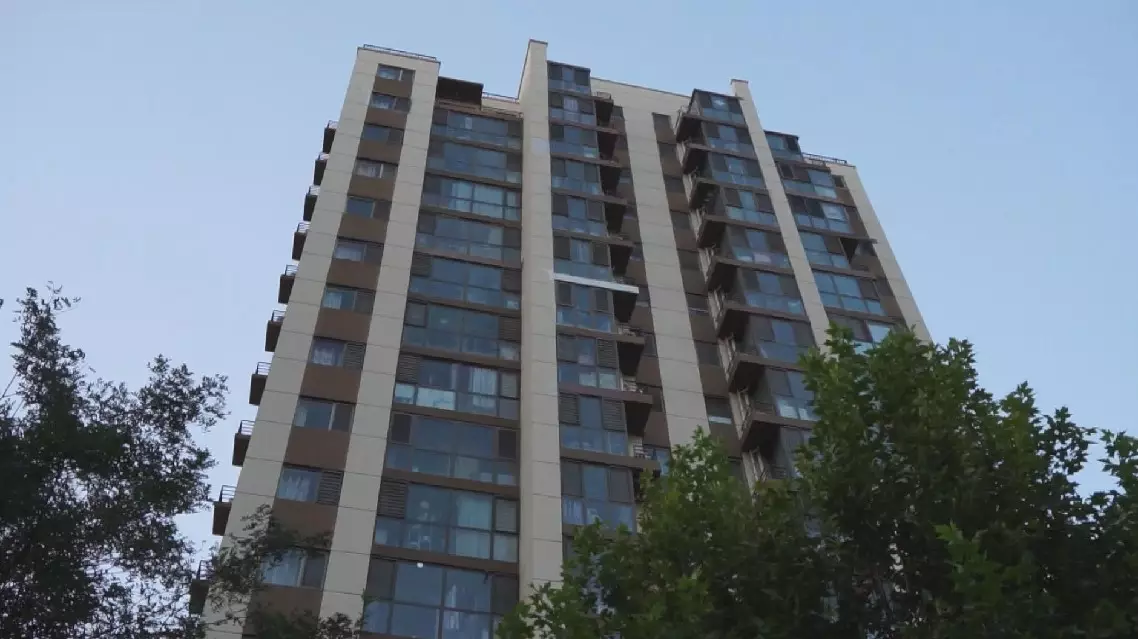
China's housing market sees positive changes following eased homebuying rules

China will strengthen fiscal and financial coordination to amplify policy effectiveness, experts said as the draft central and local budgets for 2026 were unveiled on Friday at the ongoing fourth session of the 14th National People's Congress.
According to the draft central and local budgets for 2026, 1.3 trillion yuan (190 billion U.S. dollars) of ultra-long special treasury bonds will be issued to provide continued support for the implementation of major national strategies and security capacity-building in key areas and for large-scale equipment upgrades and consumer goods trade-in programs.
Ultra-long special treasury bonds totaling 800 billion yuan will be allocated to support the implementation of major national strategies and security capacity-building in key areas, and 250 billion yuan in ultra-long special treasury bonds will be earmarked for consumer goods trade-in programs.
The country will refine these programs in terms of their scope and subsidy standards, and continue to support the scrapping and replacement of automobiles, home appliance trade-in schemes, and purchases of new digital and smart products.
China will also set up a 100-billion-yuan fiscal-financial coordination fund to boost domestic demand. The fund will support consumption and private investment through loan interest subsidies, financing guarantee, and risk compensation.
"Fiscal and monetary policies are the two major macroeconomic tools for macro-control, and their coordination is crucial. For instance, fiscal funds primarily serve as a guiding role, while financial institutions provide the capital. When fiscal guidance and financial resources are combined, the synergistic effect creates a result greater than the sum of its parts," said Yang Zhiyong, director of the Chinese Academy of Fiscal Sciences.
"By leveraging interest subsidies, we can mobilize substantial credit from financial institutions, thereby naturally stimulating consumption. The Ministry of Finance, in collaboration with the People's Bank of China, has introduced highly innovative measures, such as providing guarantees for the issuance of corporate bonds by small and medium-sized enterprises (SMEs), and compensating investors for losses. I believe the leveraging effect, making minimal efforts for maximum results, will become even more potent," said Yao Dongmin, director of the Center for China Fiscal Development under the Central University of Finance and Economics.
China's top legislature opened its annual session on Thursday morning at the Great Hall of the People in Beijing, with Chinese President Xi Jinping and other Party and state leaders attending the opening meeting alongside more than 2,700 NPC deputies. This year's NPC session is scheduled to run till March 12.
China to strengthen fiscal, financial coordination to amplify policy effectiveness: experts