Chinese People's Liberation Army (PLA) Navy training ship, Polang, started a three-day friendly visit to Sri Lanka, on Tuesday.
A crowd of around 100 people, including Chinese embassy staff, overseas Chinese nationals, representatives of Chinese-funded companies and Sri Lankan navy officers and service members, welcomed the ship when it docked in Colombo. During their stay, the Chinese navy crew and midshipmen are scheduled to take part in exchanges at the General Sir John Kotelawala Defense University, attend meetings and participate in sports games with their Sri Lankan counterparts, and hold open-day activities and receptions on the ship.
Polang is on an ocean-going midshipmen training voyage lasting from mid-August to late November, with its destinations including Vietnam, Indonesia, Sri Lanka, Singapore, and Hong Kong in China.
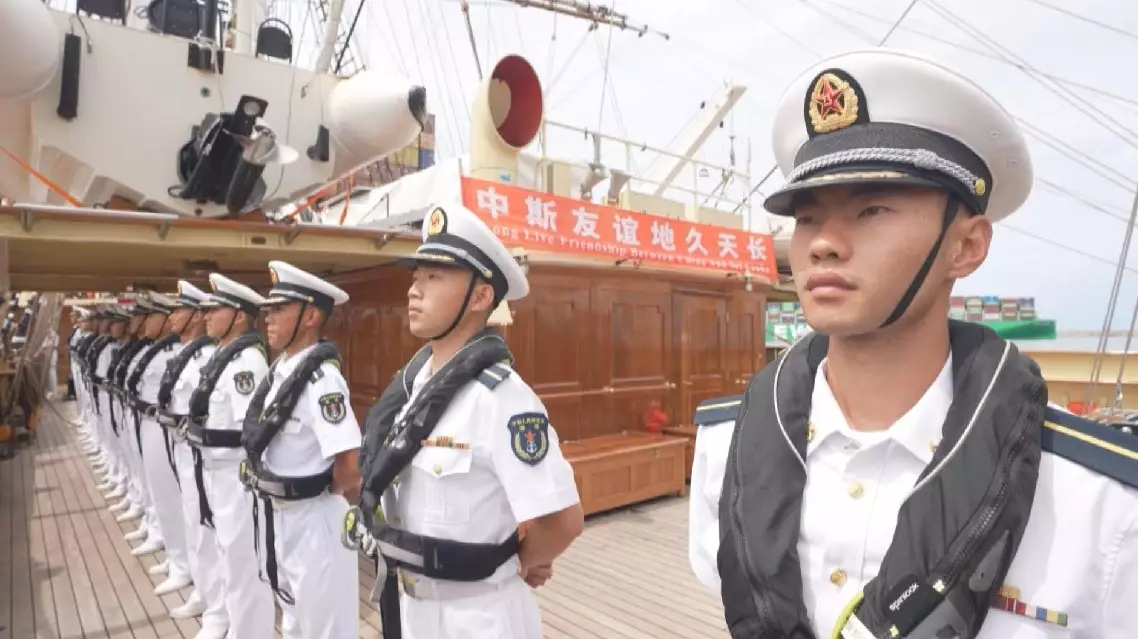
PLA Navy training ship Polang visits Sri Lanka
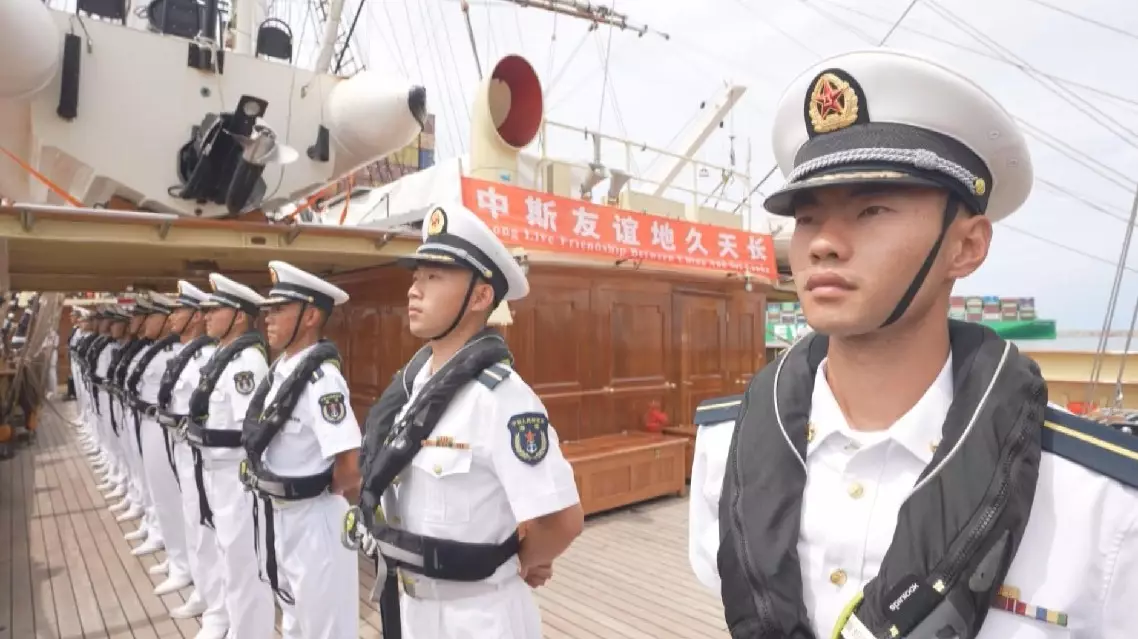
PLA Navy training ship Polang visits Sri Lanka
The people-to-people exchanges should be encouraged rather than limited as they can promote relations among countries, said an expert from the United States.
On April 10, 1971, the U.S. table tennis delegation visited China, breaking the ice for China-U.S. relations and is remembered as the Ping-Pong Diplomacy.
This year marks the 55th anniversary of the Ping-Pong Diplomacy.
Odd Arne Westad, a renowned historian and a global Cold War scholar at Yale University, said in a recent interview with the China Global Television Network (CGTN) that history shows sports and cultural links can steer state relations toward positive interaction.
"I'm glad that we are celebrating the anniversary of the Ping-Pong Diplomacy, because I think all kinds of exchanges, including sports exchanges and cultural exchanges among countries, are really important, particularly in the kind of setting that we are seeing today. And as you rightly said, the kind of sports links that gradually started to develop between the United States and China, then became a kind of conduit over onto much more significant positive changes in the relationship between the two countries. What I want to see today is much more interaction in terms of those people-to-people contacts between the United States and China," he said.
The scholar said such exchanges should develop naturally rather than be restricted.
"Instead, we are heading, it seems to me, in the opposite direction. There are far fewer American students in China now than was the case a decade ago. The number of Chinese students coming to the United States also seemed to be going down. At Yale, some of my very best students are Chinese. As an institution, we take enormous pride in the more than 100-year-old relationship that we have with China. I think it's very important for those kinds of links to continue, not just because they are good for the people involved, but much more importantly, as the Ping-Pong Diplomacy shows that they can influence the broader relationships, including even issues that have to do with high politics and strategy, if we let them develop naturally instead of trying to limit it," he said.
In April 1971, nine players from the U.S. Table Tennis team took a historic trip to China, becoming the first delegation of Americans to visit China in decades. Their trip helped lay the groundwork for the establishment of official diplomatic relations between China and the United States.
Later that year, then U.S. Secretary of State Henry Kissinger secretly visited Beijing in July, paving the way for a groundbreaking 1972 meeting in Beijing between then U.S President Richard Nixon and China's late Chairman Mao Zedong.
On Feb 28, 1972, as Nixon's visit to China drew to an end, the historic Shanghai Communique was issued, becoming the political foundation for normalizing China-U.S. relations.
The two countries officially established diplomatic relations in 1979.

US scholar stresses importance of people-to-people exchanges in promoting ties among countries