At the invitation of the government of the Republic of the Union of Myanmar, Jiang Xinzhi, Chinese President Xi Jinping's special envoy and vice chairperson of the National Committee of the Chinese People's Political Consultative Conference, attended the inauguration ceremony of Myanmar's President Min Aung Hlaing in Naypyidaw on Friday.
Min Aung Hlaing met with Jiang on the same day.
Noting that the pauk-phaw (fraternal) friendship between China and Myanmar has a long history, Jiang said the two countries have long enjoyed a harmonious relationship and mutual assistance, which fully demonstrates the profound significance of the China-Myanmar community with a shared future. China supports Myanmar in pursuing a development path that suits its own national conditions, Jiang said, adding that the country is willing to work with Myanmar to deepen high-quality Belt and Road cooperation, maintain stability along the China-Myanmar border, and ensure the safety of Chinese personnel and projects in Myanmar.
For his part, Min Aung Hlaing expressed gratitude for China's long-term and valuable assistance to Myanmar's economic and social development.
Myanmar firmly adheres to the one-China principle and supports the four global initiatives proposed by China, Min Aung Hlaing said.
The president pledged that Myanmar would make every effort to ensure China's security interests in the country, and expressed Myanmar's willingness to deepen practical cooperation with China across various fields.
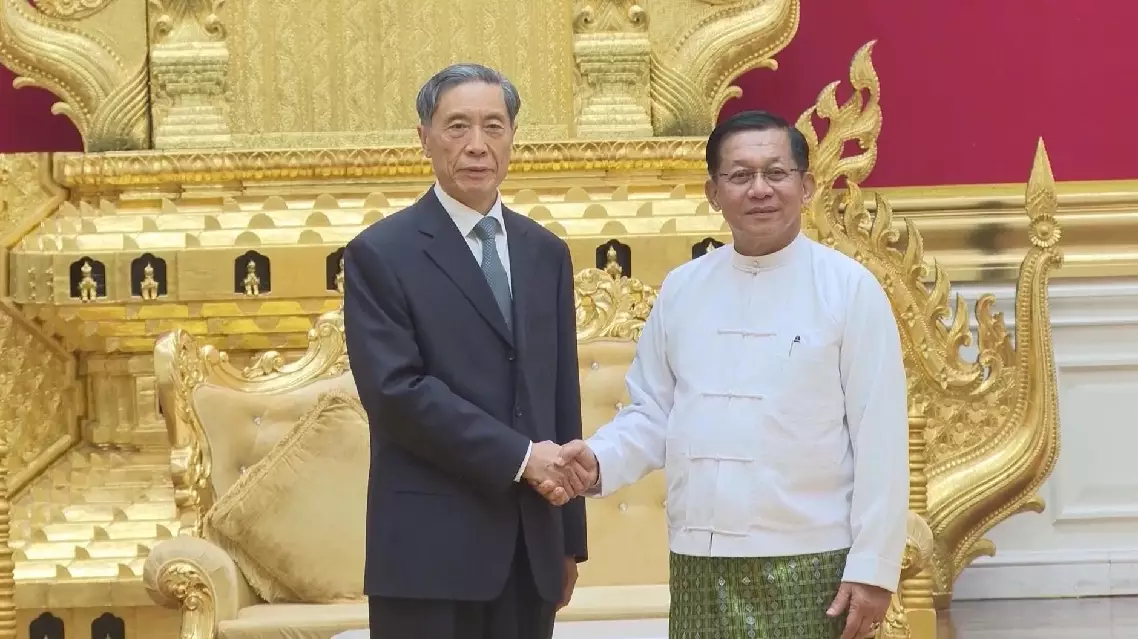
Xi's special envoy attends inauguration of Myanmar's president
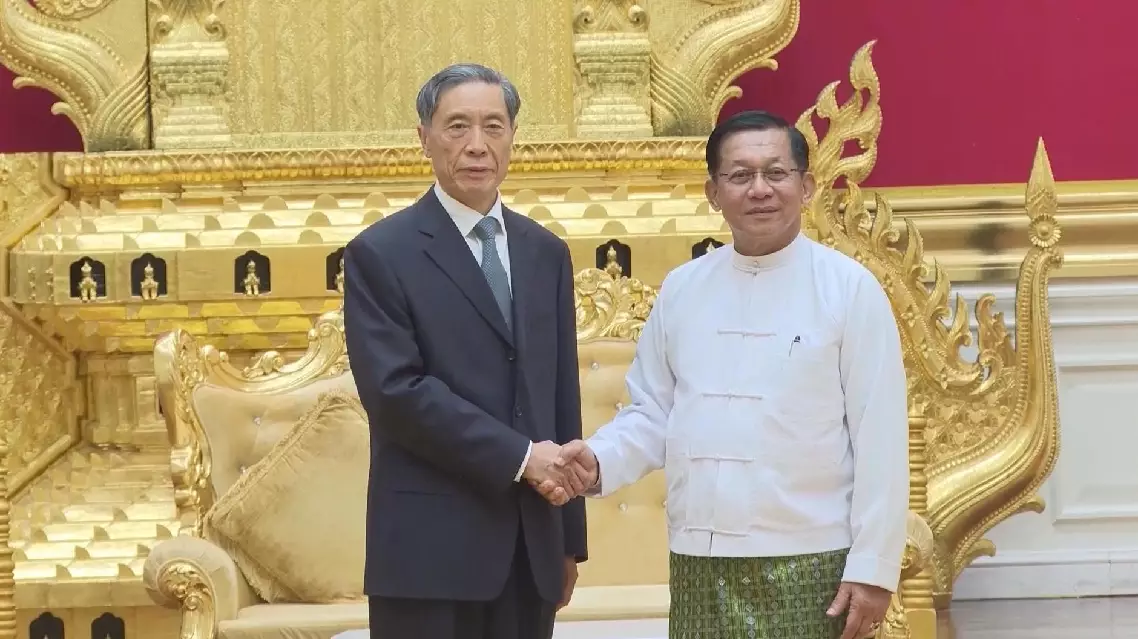
Xi's special envoy attends inauguration of Myanmar's president
At least 8,000 or more remains are still buried in the rubble in Gaza Strip, and desperate local residents are appealing for international assistance to recover the dead and deliver humanitarian aid to the survivors.
Around half the remains recovered from Gaza City's rubble this month were women and children, the head of the UN Human Rights Office in the Occupied Palestinian Territory, Ajith Sunghay, said on Tuesday.
It is estimated that at the current pace, recovering those still buried in the rubble could take more than a decade.
Sunghay said that Israel has been obstructing excavation and forensic work, making identification harder and risking the loss of evidence.
"The search efforts faced numerous obstacles, including a lack of resources, the Israeli blockade, and the difficulty of official institutions in responding to these accidents and disasters," said Aref Abdul Fattah, a local security officer.
"The civil defense rescue teams in the Gaza Strip are working hard to recover bodies from under the rubble. They have made tremendous efforts. About 8,000 bodies under the rubble are buried beneath more than 300 buildings in Gaza. Rescue workers are cooperating with the International Committee of the Red Cross to search for the victims under the debris. It is exhausting. This is economically, physically, and mentally draining, especially for the civil defense rescue workers. Because of this, they have made enormous efforts on the ground," said Mahmoud Bassal, a civil defense spokesman.
In Islam, burying the deceased is a sacred communal obligation that must be carried out with dignity and care. That is why Gazans are going to extraordinary lengths to recover the bodies of the victims.
"This is one of the most important matters in the lives of Gazans. Their beliefs and Islamic faith urge them to honor the dead by burying them," Aref said.
"Burying the dead is a very important matter, and this, of course, is among the values of our faith," said Bassal.
Calling on Israel to halt the war and destruction and allow aid into the territory, Gazans hope that the international community and relevant institutions will help recover the victims buried beneath the rubble.
"The support of the international community and relevant institutions is crucial, as it helps preserve evidence and confirm identities,"said Bassal.
"We hope to end the war and destruction, and for the Israeli army to withdraw from the Gaza Strip and open the border crossings, so that aid can enter and construction materials can be brought in. In this way, we can rebuild our homes and return to our homeland, so that we can live with dignity on this land," said Tareq Ghanem, a refugee camp representative.
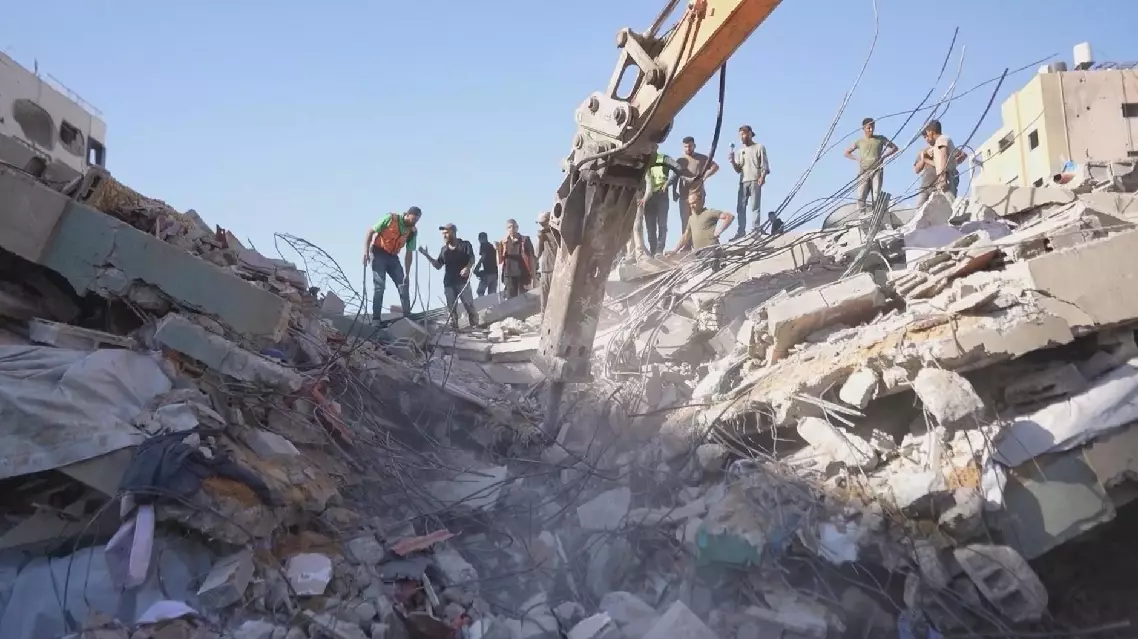
Gazans call for int’l assistance as at least 8,000 bodies still under rubble