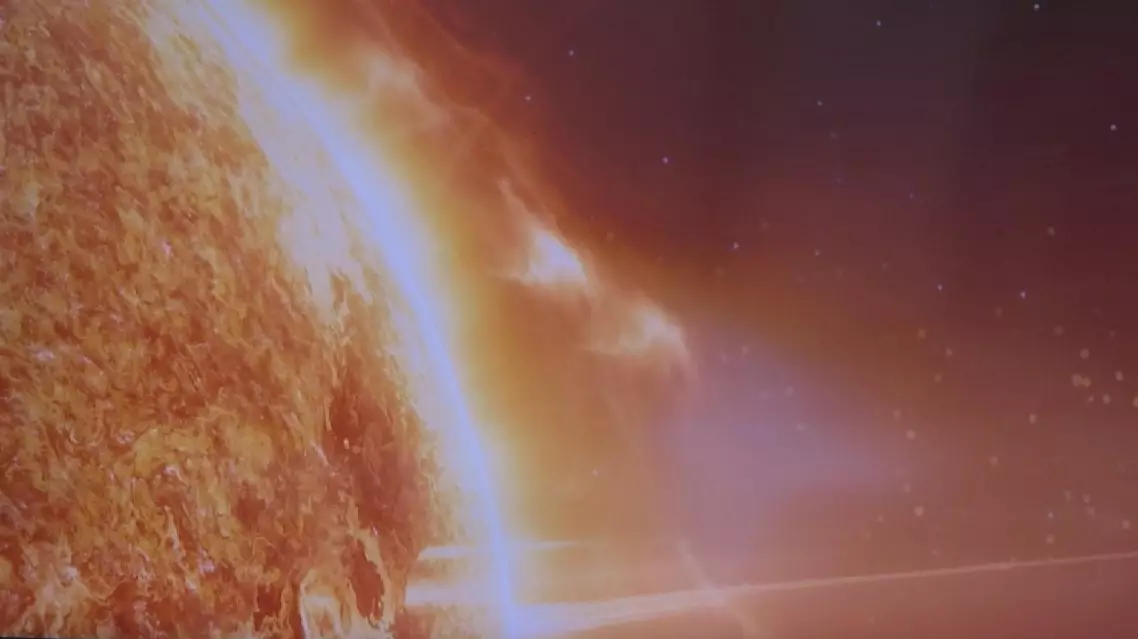
Geomagnetic storms are expected to occur in the next two days following a series of intense solar flares, according to China's National Center for Space Weather on Thursday.
Geomagnetic storms are global disturbances in the Earth's magnetic field caused by solar activity. They primarily affect areas such as aerospace, shortwave communication, and power systems.
A total of five solar flares were observed between 08:00 on Tuesday and 08:00 on Thursday (Beijing time), two of which reached the level of X-class. Solar flares are rated based on their strength, with A-class being the weakest, followed by B, C, M and X as the most potent.
Accompanying the solar flares, the Sun also experienced coronal mass ejections (CMEs), meaning large expulsions of plasma from the sun's outermost layer. As a result, geomagnetic storms are expected to occur on Earth on Friday and Saturday.
Colorful auroras will be observable in the two days, but the storms are not likely to present danger, the center said.
"The Earth's atmosphere acts like a 'shield,' protecting us from X-rays and high-energy particles. When these particles reach the outer layers of the Earth's atmosphere, they are absorbed or blocked, meaning they generally do not affect human health on the ground," said Song Qiao, chief forecaster of the China's National Center for Space Weather, China Meteorological Administration.
Intense geomagnetic activities can affect the migration and navigation abilities of animals. Homing pigeons, which rely on solar and geomagnetic navigation, are particularly impacted, according to the center.
China's space weather center forecasts geomagnetic storms
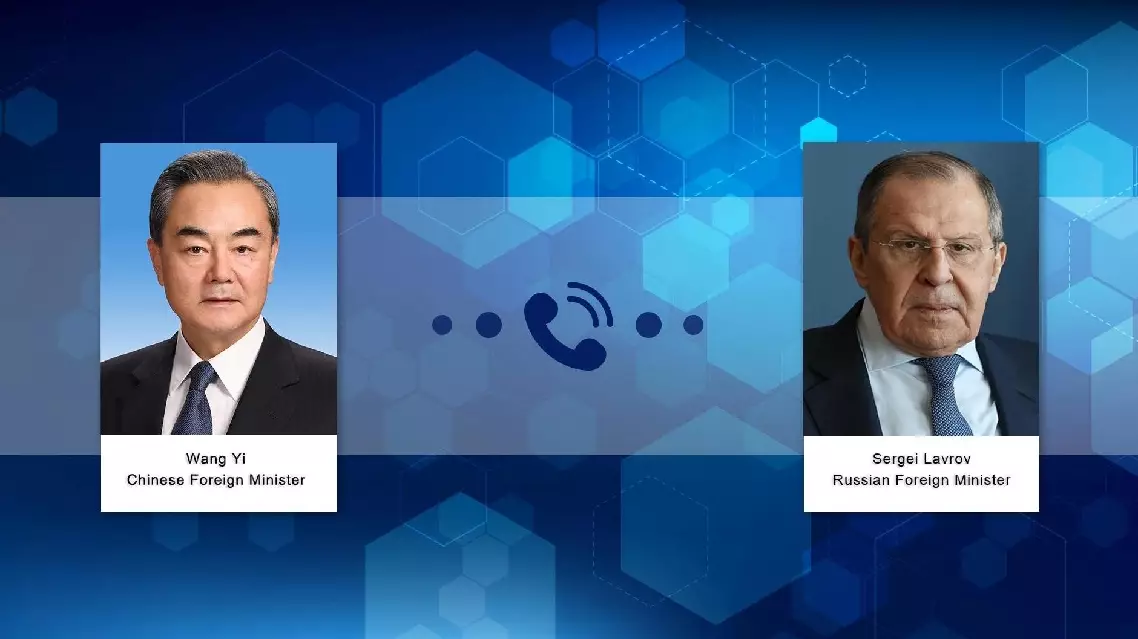
China is willing to continue working with Russia within the framework of the United Nations (UN) Security Council, maintain timely communication on major issues, and make joint efforts to help de-escalate the situation in the Middle East, safeguard regional peace and stability, and uphold common security for the world, Chinese Foreign Minister Wang Yi said on Sunday.
Wang, also a member of the Political Bureau of the Communist Party of China Central Committee, made the remarks in a phone conversation with Russian Foreign Minister Sergei Lavrov.
China and Russia, as permanent members of the UN Security Council, should uphold fairness and justice on matters of principle, adopt an objective and balanced approach, and seek greater understanding and support from the international community, Wang said.
Noting that China has consistently advocated the resolution of international and regional hotspot issues through dialogue and negotiation, Wang said that the situation in the Middle East continues to deteriorate, hostilities are still escalating, and the fundamental solution to ensuring navigation through the Strait of Hormuz lies in achieving an early ceasefire and bringing the war to an end.
For his part, Lavrov said Russia is highly concerned about the continued escalation of tensions in the Middle East.
Regarding the ongoing conflict and the issue of the Strait of Hormuz, Lavrov said Russia maintains that military operations must be stopped immediately and efforts should return to the track of political and diplomatic settlement to address the root causes of the conflict, and the UN Security Council should play a constructive role in this regard.
Russia stands ready to maintain close communication and coordination with China and continue to make efforts and speak out in support of a ceasefire and the end of the war, he said.
China willing to cooperate with Russia to de-escalate Mideast situation: FM