Saturday's press conference by China's Minister of Finance demonstrated that the country still has plenty of tools at its disposal to stimulate the economy, boosting confidence in China's economic outlook, according to two Chinese experts.
Lan Fo'an, China's Minister of Finance, announced at a press conference on Saturday morning that the country will soon introduce a package of targeted, incremental fiscal policy measures to boost the economy.
He stated that China has increased its fiscal expenditure, setting a government deficit of 4.06 trillion yuan (about 568.4 billion U.S. dollars) for 2024, which is 180 billion yuan more than what was budgeted at the start of last year.
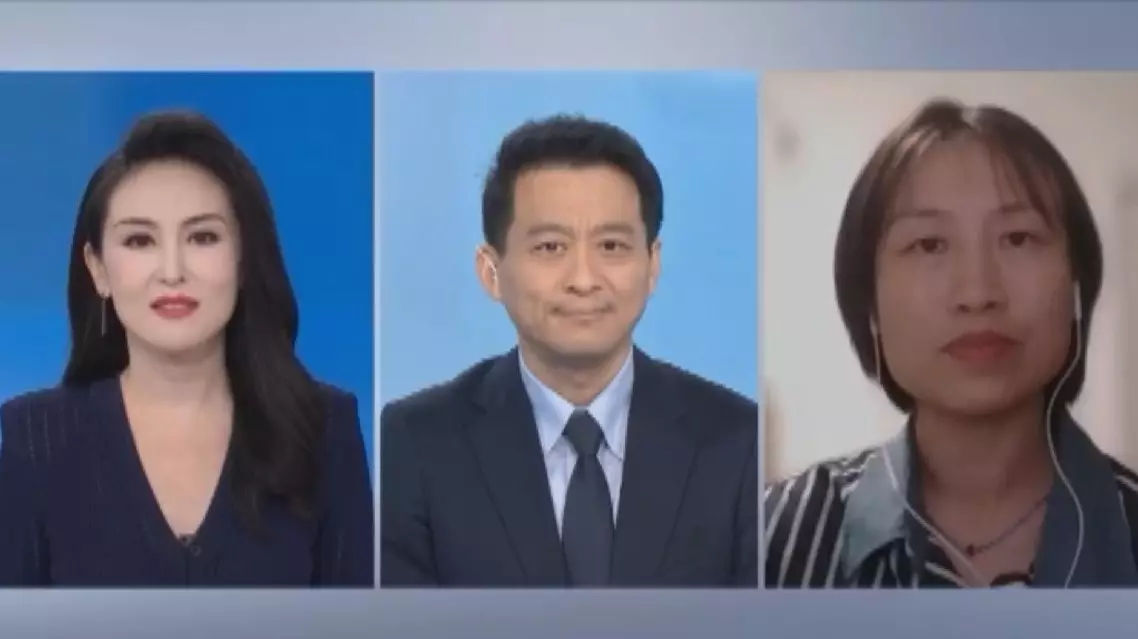
In an interview with China Global Television Network, Qu Qiang, a research fellow at the Belt and Road Research Center of Minzu University of China in Beijing, summarized four key points from Lan's briefing, highlighting that the expansion of fiscal expenditure demonstrates China has ample tools to drive economic development.
"I think there might be four key takeaways in here. I think number one is, money will be used to help the local government with local platforms. And the second one is to support the property market. And the third one, I think a lot of people probably didn't pay enough attention to it, that is, to supplement the big giant banks for their core capitals. As well as for the last but not least, I think for the consumption part, he mentioned very clearly about supporting the students, job training, education, and senior citizens with nursing homes, old age care, as well as for the vulnerable groups with the minimum allowance uplifting to a very large extent, to make sure that people can actually have more money in their pocket for further consumption. So, all in all, I think what Minister Lan trying to get their ears is: we have a lot of weapons in the pocket, just to be patient, and we're going to take it out one by one. So, I think the long-term effect of sustainability is the key. I think from this briefing conference, everybody should be confident about it," he said.
Meanwhile, Wang Yaojing, an assistant professor in economics from Peking University, emphasized the importance of the issuance of ultra-long special bonds to support the major national projects and boost the economy.
"The ultra-long term special bonds are designed to provide financial support for a major national strategy, the key area of security capacity building. This will include areas like technological innovation, urban-rural integration, regional coordinated development, food and energy security and such. So the most direct way how the insurance of these bonds can affect domestic demand is that these major projects create immediate demand for capital and labor inputs, giving a direct boost to the domestic demand. And there are two other indirect ways how the ultra-long term special bond could help strengthening domestic demand. One is by supporting high-quality economic development from promoting technological innovation. This is a more long-term economic structure upgrade, but would eventually lead to higher quality domestic demand through improved production efficiency and quality. And finally, the issuance of these bonds sends a strong signal of the government's commitment to support the economy, which can boost market confidence and encourage private investment and consumption," said Wang.
Saturday's press conference followed a policy package announced by China's financial authorities last month aimed at stimulating economic recovery. The measures include reducing the reserve requirement ratio for banks, lowering mortgage rates for existing homes, and introducing new monetary programs to boost the capital market, among other initiatives.
A meeting of the Political Bureau of the Communist Party of China Central Committee, held on Sept. 26, called for increased efforts to implement incremental policies as the country works to achieve its annual economic and social development targets.
China's fiscal policy measures boost confidence in economic growth: experts